Best Bait for Muskellunge in Indiana’s Glacial Lakes
Catching a muskellunge in Indiana's glacial lakes isn't just fishing; it's often described as an addiction, a quest, or even a battle of wits. Many anglers spend countless hours, throw hundreds of casts, and try every trick in the book only to be met with frustrating follows or, worse, nothing at all. This guide will cut through the noise, offering you a comprehensive look at the best baits and strategies to finally land one of these elusive freshwater giants in our Hoosier waters.
Understanding Muskie Behavior and Diet in Indiana's Glacial Lakes
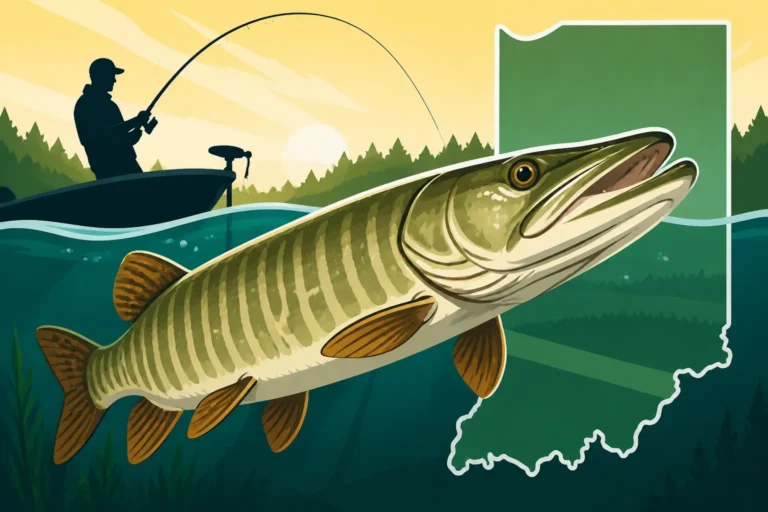
Before we even talk about specific baits, it's crucial to understand the creature you're trying to fool. Muskellunge, often affectionately called "muskies," are apex predators in the ecosystems they inhabit. In Indiana's glacial lakes, like the legendary Lake Wawasee, James Lake, or the Tippecanoe Chain, their behavior is largely dictated by their predatory instincts and the available forage. They are not random feeders; every movement and every strike is a calculated effort to consume large, high-calorie meals.
Muskie as Apex Predators in Glacial Lake Ecosystems
Picture this: You're floating on a clear, cold glacial lake. Beneath the surface, the muskie is king. These fish have evolved to be incredibly efficient hunters, using ambush tactics from weed lines, submerged structures, or deep breaks. They are visual predators with excellent eyesight, meaning that what your bait looks like, how it moves, and even its color can make a huge difference. They possess a powerful tail for explosive bursts of speed and a mouth full of razor-sharp teeth designed to hold onto struggling prey. Unlike a bass that might hit a small jig, a muskie is looking for a meal that justifies the energy expenditure of an attack. This "eat big or go home" mentality is why understanding their predatory nature is paramount when selecting your bait. They aren't interested in a snack; they want a full-course dinner.
Forage Base: What Are They Really Eating?
The muskie's diet in Indiana's glacial lakes is primarily composed of whatever large baitfish are abundant in that specific water body. Common forage species include yellow perch, cisco (sometimes called lake herring), suckers, whitefish, and various panfish like larger bluegill or crappie. On a lake like James Lake, where trophy muskies are well-known, they're likely targeting larger and fatter prey items to sustain their impressive growth. This understanding is your secret weapon. If you know what they're naturally hunting, you can present a bait that closely mimics it. For instance, if a lake is teeming with yellow perch, a perch-pattern crankbait or swimbait could be incredibly effective. The goal is to "match the hatch" – or, in this case, "match the forage." Pay attention to baitfish schools you see on your fish finder, or even what fish other anglers are catching. What fish are being pursued by other predators? These observations provide invaluable clues.
Live Bait for Muskellunge: The Traditional Approach
For many years, and still today for a dedicated subset of anglers, live bait is considered one of the most effective ways to tempt a muskie. There's an undeniable allure to presenting a struggling, natural baitfish that few artificials can fully replicate. However, live bait fishing for muskie comes with its own set of considerations, from sourcing and handling to specific rigging techniques and, of course, legalities.
Large Live Baits: Suckers and Ciscoes
When it comes to live bait for muskie, large suckers (often white suckers or redhorse suckers) and ciscoes are at the top of the list. These are substantial baitfish, ranging anywhere from 8 to 14 inches or even larger, providing the kind of caloric payoff a muskie seeks.
- Suckers: These are readily available at many bait shops, especially those catering to muskie or pike anglers. They're hardy fish, tolerating a wide range of water temperatures, which makes them easier to keep alive in a baitwell. When rigging a sucker, most anglers use a large circle hook or a treble hook placed near the dorsal fin, allowing the fish to swim naturally. A weight might be added a foot or two above the bait to get it down to the desired depth, whether fishing over submerged weed beds or along deep breaks. The sucker's slow, deliberate movements and natural scent trail are incredibly enticing to a lurking muskie.
- Ciscoes (Lake Herring): In lakes where they are abundant, like some of Indiana's deeper glacial lakes, ciscoes are a premier muskie bait. They are fattier and often considered a more natural food source in these specific environments. However, ciscoes are more delicate than suckers and can be harder to keep alive, requiring excellent oxygenation in your baitwell and specific water temperatures. If you're fortunate enough to find a bait shop that carries them, don't hesitate. Rigging is similar to suckers, ensuring the hook placement doesn't impede the bait's natural swimming action.
Remember to always check Indiana's current fishing regulations for specific rules regarding the use of live bait, including size restrictions and approved species. What's legal in one state or even one lake might be prohibited elsewhere.
Other Live Bait Options
While suckers and ciscoes are primary choices, other live bait can also be effective, especially if primary forage is different in your target lake or if you're trying to match a specific size profile.
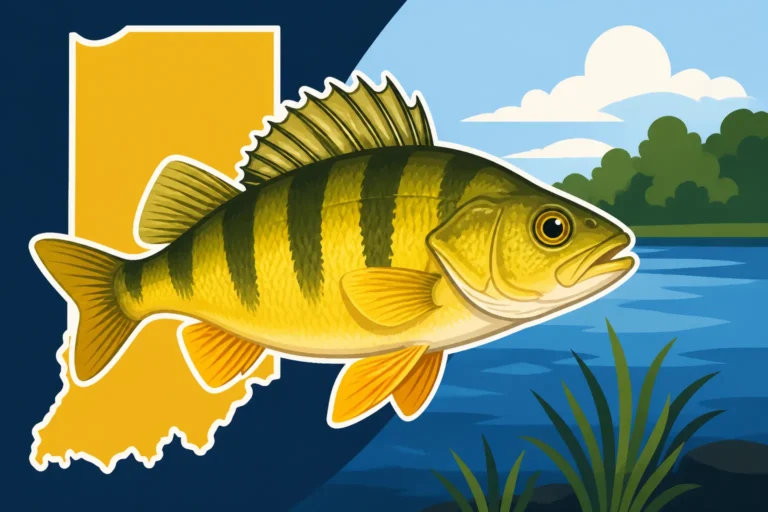
- Large Perch: Yellow perch are a common food source for muskie in many Indiana lakes. A large, lively perch, hooked through the back, can be a tempting meal. The distinct stripes and fins of a perch can be a strong visual trigger.
- Bluegill/Crappie: Again, depending on local regulations, larger panfish can be used. These baits provide a broader, flatter profile than a sucker, which might be exactly what a muskie is keying in on if that's a prevalent food source. They can also be quite hardy and active on the hook.
- Chubs: Various species of chubs can be found in bait shops and make excellent muskie bait. They are generally tough and active, providing a good struggling action that attracts attention.
The key to all live bait fishing is presentation. The bait needs to look natural, swim freely, and be at the correct depth. Using a stout rod and reel, heavy-duty line, and a strong steel or fluorocarbon leader is non-negotiable to handle the raw power and sharp teeth of a muskie. Setting your drag correctly is also vital to avoid breaking off when a muskie finally decides to strike.
The Pros and Cons of Live Baiting for Muskie
Live bait fishing offers some distinct advantages, but it also comes with its challenges. Weighing these can help you decide if it's the right approach for your muskie hunt.
| Feature | Pros | Cons |
|---|---|---|
| Natural Appeal | Unmatched natural scent, movement, and vibration; often triggers strikes when artificials fail. | Requires careful handling to keep bait alive; sometimes less active or dies on the hook. |
| Effectiveness | Can be incredibly effective for finicky fish, particularly in cold water or when fish are sluggish. | Passive fishing, requires patience; limited casting distance; risk of deep hooking if not monitored closely. |
| Sourcing | Readily available at many bait shops (suckers); can sometimes be caught by the angler. | Availability can be inconsistent for specific types (e.g., ciscoes); cost adds up, especially for large baits. |
| Effort | Once set, requires less active casting and retrieving than artificials; good for multi-rod setups. | Requires specialized equipment (aerated baitwell); constant monitoring for depth and action; messy clean-up. |
| Regulations | Certain live baits are legal and widely used. | Strict regulations on species, size, and source; potential for disease transmission to waterways if not sourced properly. |
For many, the sheer thrill of a bobber disappearing or a rod bending with a live bait takes precedence over the effort. It's a method that rewards patience and a keen understanding of fish behavior. However, it requires a commitment to responsible handling and strict adherence to local regulations to protect our precious Indiana waterways.
Artificial Lures for Muskellunge: The Modern Arsenal
While live bait holds a special place, artificial lures are the bread and butter for most muskie anglers today. The sheer variety, the active nature of casting and retrieving, and the ability to cover vast amounts of water efficiently make artificials incredibly popular. These lures are designed to mimic injured baitfish, provoke aggression, or simply create enough commotion to get a muskie's attention.
Bucktails and Inline Spinners: Classic Muskie Catchers
If there's one lure type synonymous with muskie fishing, it's the bucktail. These are incredibly versatile and effective, responsible for countless muskie catches across Indiana's glacial lakes and beyond.
- Bucktails: A classic bucktail consists of a spinning blade (or multiple blades), a heavy wire shaft, and a skirt made of deer hair (bucktail) or synthetic fibers, often adorned with flashabou. The spinning blade creates vibration and flash, while the skirt provides an enticing pulsating action in the water.
- Colors and Sizes: You'll find bucktails in every color imaginable, but common favorites for Indiana include black, black and nickel, white, chartreuse, and perch patterns. Sizes range from smaller #5 and #7 blades up to massive #10 and even larger "double Cowgirl" style bucktails with two large blades. The size choice often depends on water clarity, light conditions, and the size of the forage the muskie are targeting. For example, Best Muskie Lures for Fall Fishing often lean towards larger, bulkier offerings as muskie feed heavily.
- Retrieve Speed: The key to bucktails is often a fast, steady retrieve. The blades need to spin efficiently to create maximum flash and vibration. Anglers often employ a "figure-eight" at the boat, keeping the lure in the water as it reaches the boat, to entice any following muskie to strike at the last second. This technique alone can turn follows into actual catches. You can find a huge variety of bucktails on Amazon, often including specialty brands that might not be stocked at your local bait shop.
Jerkbaits and Gliders: Mimicking Wounded Prey
Jerkbaits and gliders are designed to imitate erratic, wounded baitfish, and their tantalizing side-to-side or darting action can be irresistible to an aggressive muskie. These lures require active manipulation from the angler to give them their characteristic movement.
- Jerkbaits: These are typically long, slender hard baits with little to no inherent action. It's up to you, the angler, to "jerk" or "rip" them with your rod tip, causing them to dart wildly, then pause. The pause is often when the muskie strikes, as the bait appears vulnerable.
- Types: Some jerkbaits are floaters, some are suspenders (staying at a certain depth when paused), and some are sinkers. Choosing the right type depends on the depth you want to work and how long you want the pause to last. Wooden jerkbaits are renowned for their buoyancy and unique action.
- Technique: A common technique involves a series of sharp jerks, followed by a slack-line pause, allowing the bait to glide or suspend. Experiment with the length of your jerks and pauses until you find what triggers a strike.
- Gliders: Gliders are a specific type of jerkbait designed to glide from side to side with a subtle wobble when retrieved with short, sharp twitches of the rod. They are incredibly effective at imitating a slow-moving, disoriented baitfish. Much like bucktails, gliders are often kept in the water for a figure-eight maneuver at the boat, as muskie are notorious for following these lures right to the rod tip before striking. These can be particularly effective on clear lakes like those in Indiana's Glacial Lake District: Home to Muskie, Pike, and Walleye.
Crankbaits and Trolling Plugs: Deep Dives and Broad Swims
Crankbaits and trolling plugs are workhorses for covering water, especially when muskie are holding deeper or spread out across expansive flats. They offer a strong vibrating action and a wide wobble, appealing to a muskie's lateral line.
- Crankbaits: These lures have a bill or lip that causes them to dive to specific depths when retrieved. They come in various sizes and shapes, from slender profiles mimicking ciscoes to fatter, rounder ones imitating perch or suckers.
- Depth Control: You can get shallow-diving crankbaits that run just a few feet deep, or deep-diving models that can reach 15-20 feet or more on a cast. When trolling, specialized plugs can dive even deeper. Matching your crankbait's running depth to where you believe the muskie are holding is crucial.
- Action: Look for lures with a wide, erratic wobble to displace a lot of water. Colors often mirror natural baitfish, but bright, obnoxious colors can also trigger aggressive reaction strikes, especially in stained water or on overcast days.
- Trolling Plugs: For big water, especially on larger glacial lakes or when fishing for species like those found in Lake Michigan Salmon and Steelhead Run Guide in Indiana, trolling can be highly effective. Trolling plugs are generally larger crankbaits designed to be pulled behind a boat. They reach consistent depths and cover vast areas, making them ideal for finding scattered muskie. Downriggers and planer boards can be used with these lures to present them at precise depths and away from the boat's path. While not as common as casting, trolling can be a deadly tactic, particularly during mid-summer when muskie move deeper, or in fall, when they are chasing schools of pelagic baitfish.
Soft Plastics and Swimbaits: Newer, Yet Highly Effective
Soft plastics and large swimbaits are a relatively newer addition to the muskie angler's arsenal, but they've quickly proven their worth. They offer a more subtle, natural presentation than many hard baits and can be incredibly effective when muskie are finicky or heavily pressured.
- Large Swimbaits: These are realistic, often segmented or paddle-tail soft plastic lures designed to imitate live baitfish with incredible accuracy. They have a natural swimming action that can be difficult for a muskie to distinguish from the real thing.
- Retrieval: Swimbaits are typically retrieved with a steady, moderate speed, allowing their natural action to take over. They can also be "ripped" and paused like a jerkbait for an erratic presentation. Their soft texture often results in longer "holds" by the muskie once they strike, giving you more time to set the hook.
- Rigging: Many large swimbaits come pre-rigged with internal weights and hooks, while others are designed to be rigged on heavy-duty jig heads or screw-in weighted hooks. Ensure your rigging can withstand the violent strike and fight of a muskie. Look for brands that offer robust hooks and durable plastic, as one muskie can destroy a lesser swimbait.
- Soft Plastic Jerkbaits/Flipping Baits: While less common than hard jerkbaits, large soft plastic jerkbaits can be deadly when fished weightless or lightly weighted over weed beds. Their subtle shimmy on the fall can trigger strikes from muskie that are wary of more aggressive presentations. These are particularly useful in dense cover where hard baits might snag.
The beauty of soft plastics and swimbaits lies in their versatility and realism. They offer a different profile and action, providing another tool in your muskie fishing arsenal, especially for those challenging days on lakes like Lake Wawasee: Indiana's Largest Natural Lake.
Topwater Lures: The Thrill of the Surface Strike
Nothing gets the heart pumping quite like a muskie exploding on a topwater lure. These baits are designed to be fished on the surface, creating a ruckus that drives muskie into a frenzy.
- Walkers and Poppers:
- Walkers: These lures are designed to be "walked the dog" – an erratic, side-to-side gliding motion created by twitching the rod tip while reeling in slack. This action mimics a distressed baitfish struggling on the surface.
- Poppers: Poppers have a cupped face that "pops" or "chugs" water when retrieved, creating a loud splash and disturbance. They're great for calling muskie up from deeper water or attracting attention in low light.
- Prop Baits: Prop baits feature one or more propellers, either at the front or back (or both), that churn water and create a commotion as they're retrieved. These are often fished with a straight retrieve or short pauses.
- Buzzbaits: While more commonly associated with bass, oversized buzzbaits can also be effective for muskie, especially over shallow, weedy flats. The sputtering, gurgling sound and surface disturbance can draw aggressive strikes.
Topwater fishing is usually best in low-light conditions (dawn and dusk) or on overcast days, particularly during the warmer months of summer and early fall. The excitement of seeing a muskie wake trailing your lure, only to erupt in a violent strike, is an unforgettable experience. However, a muskie often misses a topwater lure on the first strike, so resist the urge to set the hook prematurely. Wait until you feel the weight of the fish.
Seasonal Strategies for Muskie Bait Selection
Muskie, like most fish, are highly influenced by water temperature, available forage, and their own biological cycles throughout the year. What works in spring might be entirely ineffective in mid-summer or fall. Adapting your bait choices and presentation to the season is paramount for consistent success.
Spring and Early Summer: Post-Spawn Hunger and Shallower Waters
As ice recedes and water temperatures begin to rise in Indiana's glacial lakes, muskie will enter their spawning phase. Immediately following the spawn, they enter a period of recovery and intense feeding.
- Spring (Post-Spawn): In early spring, once water temperatures hit the mid-40s to low 50s Fahrenheit, muskie are recovering from the spawn and are often found in shallower areas adjacent to spawning grounds. They're hungry but might not be chasing baits at lightning speed.
- Bait Choice: Slower presentations can be effective. Medium-sized crankbaits, gliders, and even live bait like suckers fished slowly can entice these post-spawn fish. Don't be afraid to work jerkbaits with longer pauses. Bucktails in moderate sizes can also work, but a slower retrieve might be more productive than the high-speed burn of summer. Pay attention to warming shallow bays and transition areas near deeper water.
- Early Summer: As water temperatures continue to climb into the mid-50s and 60s, muskie become more active and aggressive. They'll start to spread out, often relating to the first significant weed growth of the year.
- Bait Choice: This is when bucktails really start to shine. Experiment with speed; sometimes a moderate retrieve is best, other times, a faster pace will trigger strikes. Medium- to large-sized crankbaits covering various depths are also effective, as muskie move from shallower feeding flats to slightly deeper weed edges. Topwater lures can also start to produce, especially during dawn and dusk. Targeting green weed lines, fallen timber, and rocky points will be key during this time on lakes like those in Kosciusko County's Best Lakes for Northern Pike.
Mid-Summer Patterns: Deeper Water, Thermoclines, and Night Fishing
Summer brings warmer water temperatures, and with that, muskie behavior shifts. They often move deeper, seeking cooler, oxygenated water, or will relate tightly to the deep edges of robust weed beds.
- Deeper Structures: As surface water warms, a thermocline often develops, a layer of water where temperature changes rapidly. Muskie will often suspend or relate to structure just above or within this thermocline.
- Bait Choice: Deep-diving crankbaits and large swimbaits become highly effective for reaching these deeper fish. Trolling with large plugs is also a prime tactic, allowing you to cover vast areas of deeper water efficiently. Think about imitating pelagic baitfish like ciscoes if they are present in your lake. On the deep, clear waters of some glacial lakes, you'll need baits that can get down to where the fish are comfortable.
- Weed Edges and Cover: While some muskie go deep, others will hold tight to the densest weed beds, particularly those bordering deeper water. These weeds provide ambush points and shade.
- Bait Choice: Jerkbaits, large soft plastics, and even spinnerbaits can be worked effectively along these edges. Topwater lures are still excellent choices, especially in low light or over shallow, matted vegetation.
- Night Fishing: Mid-summer can be a challenging time during the day due to boat traffic and bright sunlight. This is when night fishing for muskie can be incredibly productive.
- Bait Choice: Large, dark-colored bucktails, topwater lures that create a lot of commotion, and noisy crankbaits are prime choices. Muskie rely heavily on their lateral line at night, so vibration and sound are key. Just remember to be extra cautious and adhere to all boating safety regulations when fishing after dark.
Fall "Feed Bag" Period: Bulking Up and Aggressive Strikes
Fall is arguably the most anticipated season for muskie anglers. As water temperatures drop and days shorten, muskie enter a "feed bag" mentality, aggressively bulking up for the lean winter months. This is often when the biggest muskie of the year are caught.
- Intense Feeding: Muskie are focused on consuming as much food as possible. They will often follow baitfish into shallower bays or relate to prominent structures that hold schools of forage.
- Bait Choice: Go big! This is the time for oversized bucktails, large crankbaits, huge swimbaits, and big gliders. Muskie are less wary and more willing to chase down a large meal. Fall Muskie Fishing Patterns in Indiana often involve presenting these larger baits at varied depths, from shallow flats to deep breaks.
- Speed and Aggression: While slower presentations can still work, aggressive retrieves with bucktails and hard-hitting jerks with glide baits often trigger violent strikes. Don't be afraid to experiment with faster retrieves and different actions.
- Timing: The fall muskie bite can be fantastic, but it's often dictated by cold fronts. A stable period of cooling temperatures can be excellent, but a sudden, sharp drop in temperature can temporarily shut down the bite. Stay persistent, though; a muskie on the feed in fall is a truly magnificent catch. You'll want to ensure you have the right gear for this season, and shopping on Amazon can help you find specialized cold-weather fishing apparel and accessories to stay comfortable during those long, chilly days on the water.
Sourcing Your Muskie Baits and Essential Gear
Once you've got a handle on muskie behavior, bait types, and seasonal strategies, the next step is actually getting your hands on the right gear. Sourcing your baits and ensuring you have the necessary equipment is crucial for a successful and safe muskie fishing experience.
Local Bait Shops vs. Online Retailers for Baits and Lures
Both local bait shops and online retailers like Amazon have their distinct advantages when it comes to stocking up for muskie fishing.
- Local Bait Shops: These are often invaluable resources.
- Pros: Local shops provide real-time, hyper-local advice on what's biting, current water conditions, and which specific baits are working on particular lakes. You can physically see and feel the lures, assess their quality, and get immediate answers to your questions. For live bait, local shops are often your only reliable source. They also foster a sense of community among anglers.
- Cons: Selection can sometimes be limited, especially for highly specialized or boutique muskie lures. Prices might be slightly higher than online, and their operating hours might not always align with your impromptu fishing trips.
- Online Retailers (like Amazon):
- Pros: The sheer variety of lures available online is unmatched. You can find virtually any brand, color, or size imaginable, including many that local shops might not carry. Prices can often be competitive, and the convenience of having baits delivered directly to your door is hard to beat. Reading reviews from other anglers can also provide insights into a lure's effectiveness.
- Cons: You can't physically inspect the lure before buying, which can be an issue if quality control varies. Shipping times mean you need to plan ahead, and you miss out on that critical local knowledge you'd get from a bait shop owner. Online is great for stocking up on trusted brands or hard-to-find items, but it's not the place for last-minute live bait.
A balanced approach often works best: use local bait shops for fresh intel and live bait, and supplement your artificial lure collection with specialty items or bulk purchases from online platforms.
Essential Gear to Complement Your Bait
Having the best bait in the world won't matter if your other gear isn't up to the task. Muskie fishing demands heavy-duty equipment built to withstand powerful strikes, sharp teeth, and heavy lures.
- Rods and Reels: You'll need a stout, heavy-action muskie rod, typically 7'6" to 9' in length, capable of handling lures weighing several ounces. Pair this with a heavy-duty baitcasting reel with a strong drag and ample line capacity. Look for a reel with a high retrieve ratio for bucktail fishing and a lower ratio for cranking. Best Rods for Muskie Fishing will give you more specific details on selecting the right setup.
- Line: Braided line, typically 80-100 lb test, is the standard for muskie fishing. Its lack of stretch provides excellent sensitivity and hook-setting power, and its strength is crucial for muskie's powerful runs and resistance to abrasion.
- Leaders: This is non-negotiable. Muskie teeth will slice through monofilament or fluorocarbon line instantly. You need a bite-proof leader made of heavy fluorocarbon (100-150 lb test) or wire. Many anglers prefer fluorocarbon for its stealth and abrasion resistance, but a high-quality steel leader is still a viable option, especially for toothy fish. The leader should be at least 12-18 inches long.
- Landing Net: A muskie-specific landing net is essential for safely landing and releasing these fish. It should have a large hoop and a deep, rubberized, tangle-free mesh to protect the fish's fins and slime coat. Never try to boat flip or hand-land a muskie. A good net helps ensure a quick, clean release, minimizing stress on the fish. You can find great muskie nets on Amazon with various handle lengths and hoop sizes.
- Hook Cutters and Jaw Spreaders: Again, crucial for safety – both yours and the fish's. Muskie have rows of sharp teeth, and trying to remove hooks by hand is dangerous. Hook cutters (long-nosed pliers or bolt cutters) allow you to quickly snip hooks, and jaw spreaders can help keep the muskie's mouth open while you work.
- Measuring Board: A large, easy-to-read measuring board is vital for recording the length of your catch accurately for catch-and-release records or tournaments.
Investing in quality gear for muskie fishing isn't just about catching more fish; it's about doing so safely and responsibly, ensuring these incredible predators continue to thrive in Indiana's glacial lakes for future generations.
Comparing Popular Muskie Baits
To help you visualize the different options, here's a quick comparison of some of the most popular muskie baits we've discussed, highlighting their key characteristics and ideal situations.
| Bait Type | Best For | Action/Movement | Pros | Cons |
|---|---|---|---|---|
| Sucker (Live) | Cold water, finicky fish, slower bite | Natural, slow swim, struggling | Unmatched natural appeal, scent, subtle vibration | Requires aerated baitwell, potential for deep hooking |
| Bucktail | Active fish, covering water, aggressive bite | Flash, vibration, pulsating skirt, fast retrieve | Extremely effective, versatile, provokes reaction strikes | High energy fishing, can cause arm fatigue |
| Jerkbait/Glider | Erratic action, wounded baitfish imitation | Side-to-side glide, darting, suspend/float/sink | Triggers strikes from wary fish, works in varied depths | Requires active angler input, can be slow to work |
| Crankbait/Plug | Covering deep water, trolling, consistent depth | Strong wobble, vibration, dives to specific depths | Excellent for locating scattered fish, consistent action | Less subtle than some, depth limitations without weight |
| Large Swimbait | Realistic imitation, finicky fish | Natural swimming motion, subtle vibration | Highly realistic, often leads to longer 'holds' | Can be expensive, may be easily damaged by teeth |
| Topwater | Low light, calm water, shallow cover | Surface commotion, splashing, walking the dog | Exciting visual strikes, calls fish from below | Limited to specific conditions, frequent misses |
This table provides a snapshot, but remember that experimentation is key. What works one day might not work the next, and what's hot on Lake Wawasee might be different on James Lake. Stay adaptable and open to trying new things.
Conclusion
The pursuit of muskellunge in Indiana's glacial lakes is a journey of passion, patience, and often, sheer stubbornness. There's no single "magic" bait that guarantees a catch every time, but by understanding muskie behavior, matching your bait to the forage base, adapting to seasonal patterns, and equipping yourself with the right gear, you drastically improve your odds. Whether you choose the undeniable allure of a struggling live sucker, the flash and vibration of a bucktail, the erratic dance of a jerkbait, or the heart-stopping explosion of a topwater strike, each cast is a lesson learned. So gear up, respect these incredible fish, and get ready for the fight of a lifetime on the clear, cold waters of our Hoosier state.
Disclaimer
This article is for general informational purposes only and does not constitute professional advice. Laws, prices and regulations vary by location and change over time. Consult a qualified professional for guidance on your specific situation.