Muskellunge Fishing in Indiana: What Anglers Need to Know
There's a unique thrill in muskie fishing that many Indiana anglers dream of experiencing, but often find themselves frustrated by the elusive nature of these magnificent predators. It's a challenge that tests patience, skill, and dedication, and frankly, it can feel overwhelming trying to figure out where to even begin. This comprehensive guide is designed to demystify muskie fishing in the Hoosier State, offering practical advice, detailed strategies, and local insights to help you land the fish of a lifetime.
The Allure of Muskellunge Fishing in Indiana
Muskellunge, often simply called "muskie," are the undisputed kings of Indiana's freshwater predators. They're not just big fish; they're intelligent, powerful, and incredibly challenging to catch, which is precisely why they hold such a legendary status among anglers. For many, a muskie isn't just a fish; it's an obsession, a symbol of dedication and perseverance.
Why Muskie Are Called the Fish of 10,000 Casts
You've likely heard the saying: "the fish of 10,000 casts." It's not an exaggeration; it's a badge of honor in the muskie community. Unlike a hungry bass or a schooling crappie, a muskie strike is rarely a given. These fish are apex predators, keenly aware of their surroundings, and they rarely make impulsive decisions. They'll follow a lure to the boat, eyeball it, and then turn away without a hint of aggression, leaving an angler with a racing heart and an empty net.
This elusive nature is what drives many of us to pursue them. The sheer anticipation, the sudden, violent strike that feels like hitting a submerged log, the explosive fight—it's an adrenaline rush unlike any other in freshwater fishing. It teaches you patience, resilience, and the value of every single cast. When you finally connect with a muskie, it's not just a catch; it's a hard-earned victory, a testament to countless hours on the water.
Compared to other Indiana fish species, like the abundant bluegill or even a feisty largemouth bass, muskie demand a completely different level of commitment and specialized approach. You can often catch a mess of panfish in an hour, or several bass in a morning. Landing even one muskie in a season is considered a success for many dedicated anglers. This distinction elevates muskie fishing to a revered status, a pursuit for those who truly love the challenge.
Identifying Indiana's Muskellunge
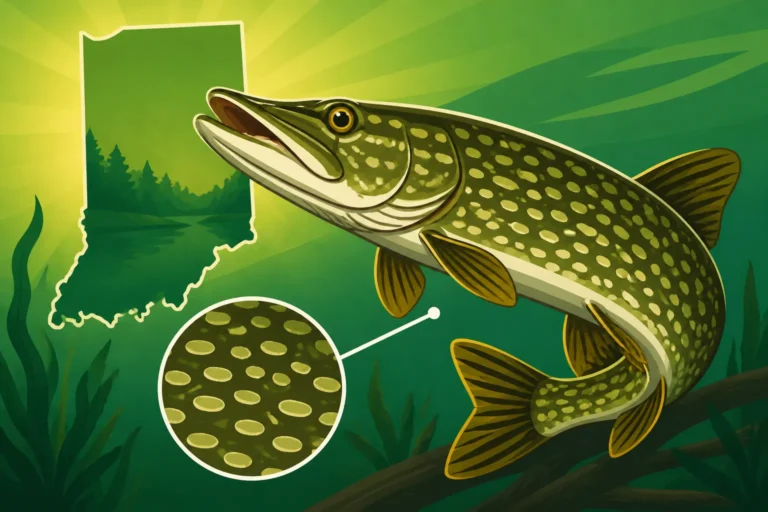
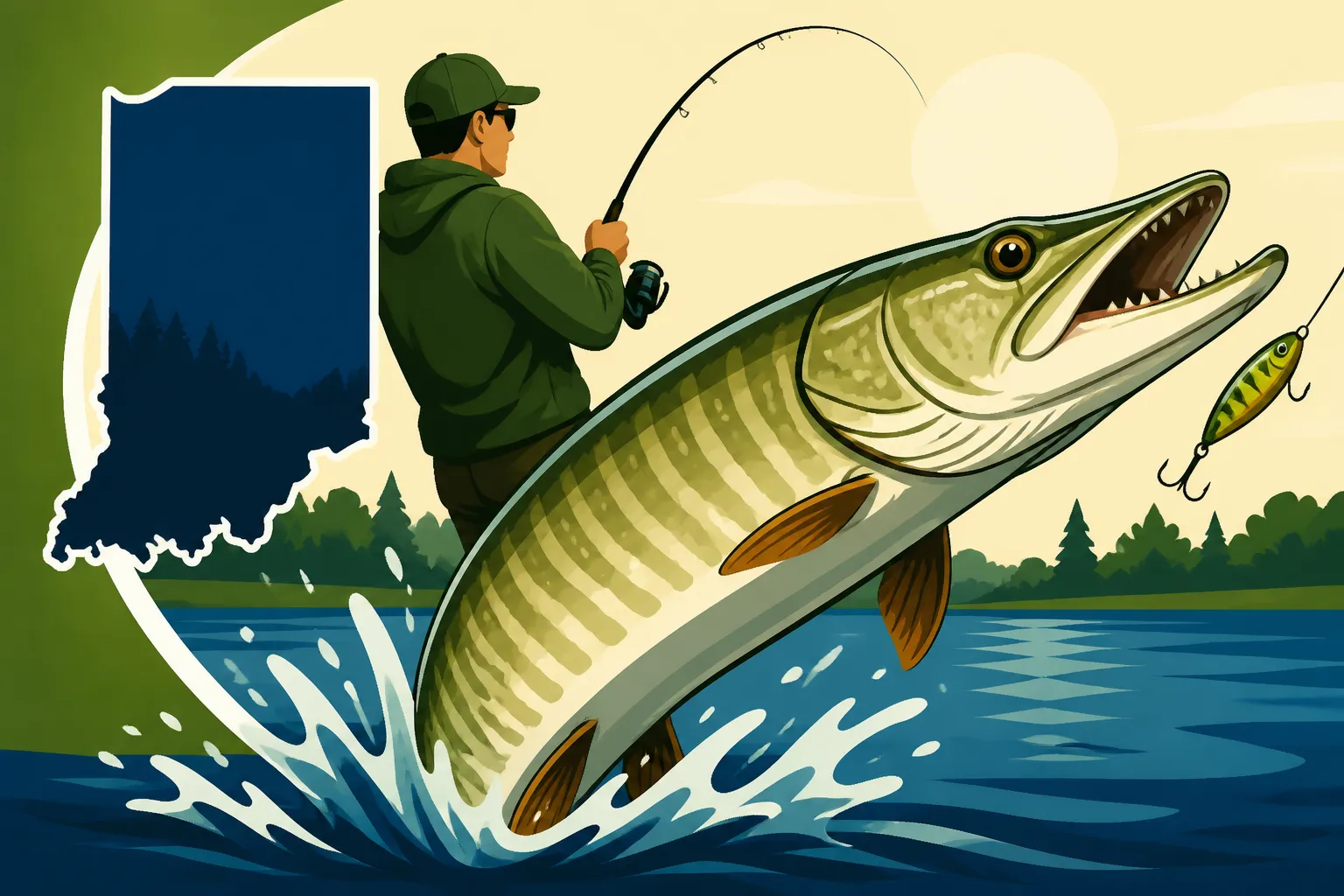
Before you can target them, you need to know how to spot a muskie! Muskellunge Identification: Spotting Indiana's Toothiest Fish is a great resource. In Indiana, the muskie you'll encounter are primarily the pure strain, though hybrids (tiger muskie) can occasionally show up. Pure muskie typically have a light body color with dark markings, which can be spots, bars, or a mottled pattern. The key is that the markings are darker than the background color. Their fins are often pointed, not rounded like a northern pike, and their tail fin is deeply forked.
Their coloration can vary quite a bit depending on the water clarity and bottom composition of the lake they inhabit. Some muskie will appear golden-brown, others more greenish, but the dark markings on a lighter background remain a consistent identifier. They possess a long, cylindrical body, a duck-bill shaped mouth armed with rows of razor-sharp teeth, and a powerful tail that allows for incredible bursts of speed.
When it comes to size, Indiana muskie can grow impressively large. While not every fish will be a monster, a muskie in the 30- to 40-inch range is a common and respectable catch, and fish pushing or exceeding 50 inches are caught every year. How Big Do Muskellunge Get in Indiana Waters? will give you a better idea of the potential. These larger fish are often older, wiser, and have survived countless encounters with anglers, making their capture even more rewarding. Imagine fighting a fish that's longer than your arm and can weigh upwards of 30 or 40 pounds!
Muskie as a Top Predator in Indiana's Ecosystem
Muskellunge aren't just an exciting sport fish; they play a crucial role as apex predators in the ecosystems they inhabit. Sitting at the very top of the food chain, they help regulate populations of other fish species, ensuring a healthy and balanced aquatic environment. Their presence often indicates a thriving ecosystem with abundant forage.
What do these powerful fish eat? Mostly other fish, and usually large ones! They're opportunistic feeders, and their diet can include substantial meals like suckers, carp, large panfish, and even smaller game fish. They've also been known to snatch unsuspecting waterfowl or rodents that venture too close to the water's edge. This predatory nature is why they grow so large and why they are such a powerful force in their environment.
From a fisheries management perspective, muskie are often stocked to create a trophy fishery and to help control overpopulated panfish or rough fish species. Their natural reproduction in many Indiana lakes is limited, which is why stocking programs are so vital to maintaining their populations. When you catch and safely release a muskie, you're not just respecting the fish; you're contributing to the health and sustainability of Indiana's prized muskie fisheries for future generations of anglers.
Prime Indiana Waters for Muskie Fishing
Indiana might not be nationally famous for muskie fishing like some northern states, but we have several fantastic muskie waters that offer legitimate trophy potential. Knowing where to go is the first step in stacking the odds in your favor for that 10,000th cast.
Indiana's Glacial Lakes: Muskie Hotbeds
When you talk about muskie fishing in Indiana, the conversation invariably turns to the state's northern glacial lakes. This region, particularly around Kosciusko and Noble counties, is truly the heart of Hoosier muskie country. Indiana's Glacial Lake District: Home to Muskie, Pike, and Walleye perfectly describes this unique region. Lakes like Webster, Tippecanoe, Lake Wawasee, and the Barbee Chain are renowned for their muskie populations and their potential to produce truly massive fish. James Lake, in particular, has a reputation for being a top-tier muskie lake and has even produced the state record muskie.
These lakes offer the perfect habitat for muskie: deep, clear waters, abundant forage, and complex underwater structure. They were carved by ancient glaciers, leaving behind diverse bottom contours, steep drop-offs, and numerous weed beds that muskie love to patrol. The sheer size and interconnectedness of some of these lake systems, like the Barbee Chain, provide muskie with vast territories to roam and ambush prey.
Anglers often spend countless hours patrolling these waters, looking for subtle signs of muskie activity. It's not uncommon to hear tales of giant muskie caught from Webster Lake or of anglers battling powerful fish on Lake Wawasee. Lake Wawasee: Indiana's Largest Natural Lake and Its Fish provides more insights into this specific fishery, while What Makes James Lake's Muskie Different From Wawasee's highlights the unique aspects of another legendary muskie lake. These lakes are truly where dedicated muskie anglers converge.
Understanding Muskie Habitat in These Lakes
To consistently find muskie in these glacial lakes, you need to think like a muskie. These are ambush predators, meaning they prefer to lie in wait, hidden from their prey, before launching a lightning-fast attack. This behavior dictates where you'll find them. Look for key structures: dense weed lines, particularly those with a sharp edge where deep water meets shallow; rock piles or humps that rise from the lake bed; sudden depth changes like creek channels or pronounced drop-offs; and submerged timber or brush piles.
Healthy aquatic vegetation is absolutely critical. Muskie use these weed beds not only for ambush points but also for cover, especially during bright sunny days. They might sit just inside the edge of a vast weed bed, waiting for smaller fish to swim by, or they might patrol the open water adjacent to it. Different weed types, like coontail, milfoil, or cabbage, can all hold fish. Learning to identify these different types of cover and understanding how muskie relate to them is a game-changer.
Modern electronics, like high-definition fish finders with side imaging, are invaluable tools for locating these features. You can literally "see" the weed lines, submerged timber, and schools of baitfish that muskie are targeting. Don't just motor over the top; take your time to scan and understand the underwater landscape. Mark potential spots on your GPS, and then return to fish them thoroughly, making casts from various angles to cover all possible ambush points.
Exploring Lesser-Known Muskie Fisheries
While the glacial lakes are the undisputed champions, Indiana has a few other spots that sometimes produce muskie, often as a result of stockings or occasional rogue fish. These aren't typically "destination" fisheries for muskie, but they can offer a surprise for local anglers. Some reservoirs might occasionally turn up a muskie, though they are less common and typically not self-sustaining populations like in the glacial lakes.
The challenge with these lesser-known or non-traditional muskie waters is that the fishing can be highly inconsistent. You might go many trips without a single follow, let alone a strike. However, the reward of finding an unexpected muskie in a lake not known for them is immense. It truly adds to the mystique of the fish.
If you're adventurous, consider studying stocking reports from the Indiana Department of Natural Resources (IDNR). While specific muskie stocking details might not always be publicly highlighted for all locations, the IDNR does work to manage various fisheries. You could also keep an eye on local fishing forums and reports. Scouting new locations often involves looking for deep, clear water bodies with good forage bases and diverse structure. It's a long shot, but sometimes, fortune favors the bold and observant angler.
Unraveling Muskie Behavior and Habits for Better Success
Muskie are creatures of habit, yet they can be incredibly unpredictable. Understanding their general behavioral patterns throughout the year and even within a day can give you a significant edge in your pursuit of these elusive fish.
Seasonal Movement Patterns
Muskie, like most fish, are highly influenced by water temperature and the changing seasons, which dictates their movement and feeding patterns. In spring, after the ice melts and the water begins to warm, muskie will move shallower, often towards northern bays or flats that warm up faster. This is their post-spawn recovery period, and while they might be aggressive, they can also be a bit sluggish initially. They're looking for easy meals to regain energy lost during spawning.
As summer progresses and water temperatures climb, muskie will often retreat to deeper, cooler water, especially during the brightest parts of the day. They might suspend over deep water, or hold tight to deep weed edges, rock piles, or thermoclines. Their feeding windows tend to shrink, becoming more pronounced during low-light conditions like dawn, dusk, or even at night. This is a challenging time, requiring anglers to adapt their presentations to deeper structures.
Fall is arguably the most anticipated season for muskie anglers, often referred to as "the bite" or "the fall feed." As water temperatures begin to cool, muskie enter a pre-winter feeding frenzy. They become incredibly aggressive, bulking up on forage to prepare for the lean winter months. They can be found in various depths, from deep points to shallower flats, often relating to baitfish concentrations. Best Fall Months for Muskie Fishing in Kosciusko County Indiana will tell you why this period is so important. Finally, in winter, under the ice, muskie become very lethargic, but they can still be caught by dedicated ice anglers, though it's certainly not a common target during this season.
Feeding Habits and Prey Selection
Muskie are the ultimate ambush predators. They don't typically chase prey over long distances; instead, they position themselves strategically near cover, waiting for an unsuspecting meal to swim by. Their attack is an explosion of power and speed, engulfing their prey in a single, violent strike. This is why you often find them tucked into weed lines, next to submerged logs, or on the deep side of a rock pile—places where they can surprise their next meal.
Their prey selection often leans towards larger offerings. While they'll eat smaller fish, they're not afraid to tackle a substantial meal, which is why muskie lures are famously enormous. They're looking for efficiency – a big meal for minimal energy expenditure. This means they'll target suckers, ciscoes, yellow perch, and various panfish, depending on what's most abundant in their particular lake. The size of the available forage often dictates the size of the muskie you'll find in a particular system.
Water temperature and clarity significantly impact their feeding. In warmer water, their metabolism is higher, and they may feed more frequently, but they can also be highly selective. In cooler water, their metabolism slows, but they become more opportunistic, often striking at larger, slower-moving baits. In clear water, they tend to be more wary, requiring longer casts and more subtle approaches. In stained or cloudy water, they might be bolder, and brightly colored or noisy baits can be more effective.
Understanding Muskie Moods and "Follows"
One of the most frustrating, yet strangely captivating, aspects of muskie fishing is the "follow." You'll be retrieving your lure, feeling confident, and then suddenly, a massive shadow emerges from the depths, silently trailing your bait right to the boat. It's an incredible sight, often leaving you breathless, but if the fish simply turns away without striking, it can be infuriating. This is where understanding muskie moods comes into play.
A follow indicates interest, but not necessarily a willingness to strike. It could be curiosity, or the fish might just not be in an aggressive feeding mood. This is precisely why the "figure-eight" maneuver at the boat is absolutely critical. How to Figure-Eight a Muskie at the Boat is a must-read for any muskie angler. Instead of lifting your lure out of the water, you immediately plunge your rod tip into the water and trace a large figure-eight pattern beside the boat. This continuous, erratic movement often triggers a reactive strike from a following fish that might have otherwise turned away.
Weather and barometric pressure can also profoundly influence muskie moods. Stable, high-pressure systems often lead to lethargic fish, while falling barometric pressure or approaching fronts can sometimes trigger an aggressive bite. Cloud cover and wind chop can also be beneficial, as they break up the surface, making it harder for muskie to detect your presence and providing more ambush opportunities. Paying attention to these subtle environmental cues can help you predict when the muskie might be more inclined to cooperate.
Essential Gear for Serious Muskie Anglers in Indiana
Muskie fishing isn't for the faint of heart, and neither is the gear required. These are big, powerful fish with nasty teeth, and your equipment needs to be up to the task. Skimping on tackle is a surefire way to lose fish, break rods, and feel thoroughly defeated.
Rods, Reels, and Line Built for Battle
When it comes to muskie fishing, "heavy-duty" is the name of the game. Your rod needs to have serious backbone to cast massive lures and handle a thrashing muskie. For casting, look for rods that are 8 to 9.5 feet long with a heavy or extra-heavy action. This length helps with leverage, casting distance, and handling large baits. For trolling, you might opt for slightly shorter, stiffer rods designed to withstand the constant pull of big crankbaits. Best Rods for Muskie Fishing offers a great overview, and for local waters, Best Rods for Muskie in Kosciusko County Lakes provides more specific recommendations.
Reels are equally important. You need a muskie-specific baitcasting reel. These aren't your average bass reels. They feature robust gearing, a powerful drag system that can withstand intense runs, and a high line capacity to hold thick braided line. Look for models from reputable brands known for their durability. The retrieve ratio should be moderate to high, allowing you to work large baits effectively and quickly pick up slack after a strike.
As for line, braided line is the only way to go for muskie. You'll want a heavy test, typically 80 to 100-pound braid. This offers incredible strength, extreme abrasion resistance against rough fish mouths and sharp teeth, and absolutely no stretch, which is crucial for solid hook sets with big, stiff hooks. Always attach a heavy-duty leader, usually 100 to 150-pound fluorocarbon or steel, directly to your braid to prevent bite-offs. These leaders are essential for protecting your main line from their razor-sharp teeth.
Lure Selection: Size, Color, and Type
Muskie lures are notorious for their size, and for good reason—muskie eat big! You'll need a diverse arsenal to cover different conditions and fish moods. Bucktails are a staple, producing vibration and flash that can trigger strikes. They come in various blade configurations (single, double, triple) and sizes. Crankbaits (shallow, mid-range, deep divers) are excellent for covering water and trolling. Jerkbaits and glide baits require specific retrieve techniques, mimicking injured baitfish, and can be deadly for triggering reaction strikes. Topwater lures are thrilling for surface blow-ups, especially during low-light conditions.
The importance of large profiles cannot be overstated. We're talking lures that are 8, 10, even 12 inches long, sometimes more. Muskie are looking for a meal, and they don't expend energy on tiny snacks. As for color, it often depends on water clarity and light conditions. In clear water, natural baitfish patterns or subtle colors can be effective. In stained or cloudy water, brighter, more visible colors like chartreuse, orange, or firetiger can stand out. Don't be afraid to experiment! You can find a huge variety of these specialized lures, often with detailed descriptions and reviews, by searching on a platform like Amazon. It's a great way to explore options and compare different brands.
It’s also crucial to have lures that create significant water displacement and vibration. Muskie have a highly developed lateral line system, allowing them to detect subtle movements in the water. Lures that push a lot of water or have rattling chambers can be more easily detected, especially in murky conditions or when fish are in thick cover. Having a range of diving depths for your crankbaits is also key, ensuring you can present a lure effectively whether the muskie are holding shallow or deep.
Critical Accessories for Safety and Handling
Because muskie are so large and powerful, and have teeth that can easily cause serious injury, a dedicated set of safety and handling tools isn't optional; it's absolutely mandatory for both your safety and the fish's well-being. First and foremost, you need a heavy-duty, rubberized landing net with a large hoop. This net should be specifically designed for muskie, with a wide, deep basket that can fully contain a thrashing fish without damaging its fins or scales. The rubberized mesh prevents hooks from tangling and is much gentler on the fish's slime coat. Best Nets for Landing Muskie in Indiana can help you choose the right one.
Next, you'll need specialized tools for unhooking. Long-nose pliers, preferably 11-inch or longer, are essential for reaching deep-set hooks. Bolt cutters are also a non-negotiable item. If a hook is deeply embedded or difficult to remove, cutting the hook will save the fish, and potentially your fingers. You can find robust pairs for a good price on Amazon. A quality jaw spreader can also be helpful for keeping the mouth open while you work on hooks, but use it sparingly and carefully to avoid injuring the fish's jaw.
Finally, a sturdy pair of protective gloves can save your hands from sharp teeth and gill plates. A measuring board or bump board, preferably one that floats, is vital for quickly and accurately measuring your catch without excessive handling. Remember, the goal is to get the fish back in the water as quickly and safely as possible. Having all these tools organized and readily accessible before you even make your first cast will significantly improve your chances of a successful and safe catch-and-release experience.
Proven Muskie Fishing Techniques for Indiana Waters
Successfully catching a muskie often comes down to employing a combination of effective techniques, covering water efficiently, and executing your presentation with precision. There's no single "magic bullet" technique, but these proven methods will put you in a better position to hook up.
Casting Techniques for Covering Water
Casting is the bread and butter of muskie fishing for many anglers. It allows you to systematically cover prime muskie habitat, from weed edges and submerged structures to open water breaks. The key is to make long, accurate casts that land your lure precisely where you believe a muskie might be ambushing prey. Think about "fan casting," where you cast in a fan-like pattern, covering all angles of a specific area before moving on. This ensures you're presenting your lure to any fish that might be holding tight to cover.
Once your lure hits the water, the retrieve is critical. Muskie often prefer an erratic retrieve, mimicking a wounded or fleeing baitfish. Experiment with varying retrieve speeds, incorporating pauses, twitches, and sudden jerks. Don't be afraid to burn a bucktail one moment and slow-roll a large swimbait the next. The goal is to trigger a reaction strike, to make the muskie feel like it needs to attack now or lose its meal.
Perhaps the most crucial casting technique happens at the end of your retrieve: the figure-eight. How to Figure-Eight a Muskie at the Boat is essential reading for this. Many muskie will follow a lure all the way to the boat, inspecting it before turning away. By immediately plunging your rod tip into the water and tracing a large figure-eight or "L" pattern beside the boat, you keep the lure in the water and moving, often triggering a strike from a hesitant fish right at the boat. This technique accounts for a significant percentage of muskie catches and is a skill every muskie angler must master.
Trolling for Deeper Water and Suspended Muskie
While casting is effective, trolling offers a fantastic way to cover large expanses of water, particularly in Indiana's bigger glacial lakes, and target muskie that might be suspended in deeper water or cruising along extensive contours. The precision of your boat control is paramount when trolling for muskie. You need to maintain a consistent speed, often around 3-6 miles per hour, adjusting it based on lure action and fish activity. GPS-enabled trolling motors can be incredibly helpful for holding a precise course.
Utilizing planer boards is a game-changer for trolling. These devices attach to your line and pull your lures out to the sides of the boat, allowing you to cover a much wider swath of water than just dragging lures directly behind the boat. This also helps present lures to less-spooked fish, as the boat passes further away. For Lake Michigan specifically, How to Troll for Muskie in Deep Water can provide more in-depth knowledge on trolling strategies, although the principles apply to large inland lakes as well.
Matching your lure depth to the depth where muskie are holding is key. Use deep-diving crankbaits, weighted lures, or even downriggers if necessary, to get your baits down to the thermocline or to the specific depth where you're marking baitfish or suspended muskie on your fish finder. Pay attention to your electronics, and don't be afraid to adjust your speed, direction, and lure choices until you start marking fish or getting strikes. Remember, many muskie-specific lures can be quite expensive, but you can always check Amazon for a wide selection across different price points to build out your trolling arsenal.
Mastering Presentation and Hook Sets
Beyond simply casting or trolling, the nuance of your presentation can make all the difference. Muskie are wary creatures, and a subtle variation in retrieve, a slight change in angle, or a perfectly placed cast can be what convinces them to strike. Always aim for your lure to "bump" or "deflect" off structure – a quick change in direction often triggers a reactionary bite from a lurking muskie. Don't just cast blindly; visualize where the muskie might be hiding and present your lure accordingly.
When a muskie finally strikes, it's usually with incredible violence. Many anglers, especially those new to muskie fishing, are often so startled that they hesitate or don't set the hook properly. This is a critical mistake. You need a massive, sweeping hook set with the power of your entire body, not just your arms. Lean into it, often multiple times, to drive those large, heavy-duty hooks into the muskie's bony mouth. Remember, braided line has no stretch, which aids in direct power transfer for hook setting.
Finally, patience and persistence are not just virtues in muskie fishing; they are absolute necessities. You will make hundreds, if not thousands, of casts without a single bump. You will have fish follow to the boat and turn away. You will have fish strike and miss. But the angler who keeps casting, who analyzes the conditions, who adjusts their techniques, and who maintains unwavering faith in that next cast is the one who will eventually be rewarded with the fight of a lifetime. The mental game is as important as the physical one.
Navigating Indiana's Muskie Fishing Seasons and Timing
Just like their unpredictable moods, muskie activity changes significantly throughout the year. Knowing when and where to focus your efforts during each season is crucial for increasing your chances of success in Indiana's muskie waters.
Spring Muskie Fishing: Post-Spawn Opportunities
As the ice finally retreats from Indiana's northern lakes and the water temperatures slowly creep into the upper 40s and low 50s, muskie begin to stir. This period, typically from late April through May, marks the post-spawn phase. The fish have just completed their arduous spawning ritual and are often found in shallower bays and flats, particularly those with dark bottoms that absorb sunlight and warm up fastest. They're looking to recover energy, so they'll be on the hunt for easily accessible forage.
During this time, while they can be aggressive, their metabolism might still be a bit sluggish due to the cooler water. Focus your efforts on shallower presentations. Medium-sized bucktails, gliders, or shallower-running crankbaits can be very effective. Work these baits slowly and methodically, allowing the muskie time to react. Target the warming pockets of water, new weed growth, and areas where baitfish are congregating. This can be a great time to catch a truly large muskie that's less pressured than it might be later in the year.
While the spring bite can be fantastic, it's often dependent on how quickly the water warms up. A sudden cold snap can shut down the bite immediately, sending the muskie back to deeper, more stable temperatures. Keep an eye on water temperature gauges and local fishing reports. Sunny, calm days that allow the shallow waters to warm up quickly can be prime opportunities, especially in the afternoons.
Summer Challenges and Night Fishing
Summer muskie fishing in Indiana presents its own unique set of challenges. As lake temperatures rise into the 70s and beyond, muskie often become less active during the bright daylight hours. Their metabolism is high, but they become more selective and often retreat to deeper, cooler water, or suspend in the water column. You might find them relating to the thermocline (the layer where warm surface water meets colder deep water) or holding tight to deep weed edges and submerged structures.
During the summer, your best opportunities often come during low-light periods: dawn, dusk, and especially at night. Best Time of Day to Catch Muskie emphasizes how critical these periods can be. Night fishing for muskie can be incredibly exciting, with violent strikes often occurring right at the boat. Large topwater lures, big shallow-running crankbaits, or noisy bucktails can be effective at night, relying on sound and vibration to draw strikes in the dark. Always prioritize safety if you decide to venture out after dark, ensuring you have proper lighting and know the water well.
Daytime summer muskie fishing often requires deeper presentations. Use large crankbabaits that dive to significant depths, or heavy jigs and soft plastics fished near deep structure. Look for schools of baitfish on your electronics, as muskie won't be far behind. It's a grind during the summer, but the dedicated angler can still be rewarded with a powerful fish, especially if they embrace the night bite.
Fall: The Legendary Muskie Prime Time
Ah, fall. This is the season that muskie anglers dream about all year long. As air temperatures cool and water temperatures begin their slow descent, muskie enter an intense feeding period, often referred to as "the fall feed." They are instinctively driven to bulk up on calories in preparation for the long, lean winter months. This translates into some of the most aggressive and consistent muskie fishing of the year in Indiana. Best Fall Months for Muskie Fishing in Kosciusko County Indiana specifically highlights the importance of this season.
During the fall, muskie can be found in a variety of depths, from relatively shallow flats to deep main lake points, depending on baitfish movements and water temperatures. They'll often follow schools of ciscoes, suckers, or perch as these forage fish migrate. Larger, slower-moving baits tend to be incredibly effective during this time, such as big crankbaits, glide baits, and heavy swimbaits. Don't be afraid to throw the biggest lures you own!
The window for fall muskie fishing can extend from September through November, or even into early December if the weather holds and lakes don't freeze over too quickly. It's a time when you have a genuine chance at catching a true trophy-sized muskie, as these fish are at their heaviest and most aggressive. Dress in layers, pack a thermos of hot coffee, and prepare for long, cold days on the water. The dedication required during the fall often pays off with unforgettable encounters with these magnificent fish.
Regulations and Conservation of Indiana's Muskie Fishery
Part of being a responsible muskie angler in Indiana means understanding and adhering to the specific regulations designed to protect and sustain this prized fishery. Muskie are a special fish, and their conservation is paramount.
Understanding Indiana Muskie Regulations
Indiana has specific regulations in place to manage its muskie populations, which often vary from general fishing rules for other species. While I can't provide exact real-time numbers, typical muskie regulations usually include a significant minimum length limit, often 36 inches or even 40 inches, and a very restrictive daily bag limit, usually one fish per angler. These regulations are designed to protect the muskie population, especially larger, older fish that are crucial for potential natural reproduction and for providing a trophy fishery.
It's absolutely critical to check the current Indiana Fishing Guide published by the Indiana Department of Natural Resources (IDNR) before every fishing season. Regulations can change, and specific lakes might have special rules that differ from the statewide standard. Indiana Fishing Regulations and Bag Limits Guide is your go-to resource for accurate and up-to-date information. Never assume; always verify. Ignorance of the law is not an excuse, and penalties for violations can be significant, including fines and potential loss of fishing privileges.
These regulations are not meant to make fishing harder; they are a direct reflection of the conservation efforts needed for a slow-growing, long-lived, and highly sought-after species like the muskie. By adhering to these rules, you're playing your part in ensuring that future generations of anglers can also experience the thrill of chasing Indiana's muskie.
The Importance of Catch and Release
For muskie, catch and release isn't just a suggestion; it's a fundamental principle of the fishery. Most muskie anglers practice 100% catch and release, and for very good reason. Muskie are a relatively slow-growing fish that don't reach sexual maturity until several years old, and their natural reproduction rates in many Indiana waters are limited. The state invests heavily in stocking programs to maintain and enhance these populations.
Every muskie, especially the larger ones, represents a significant investment of time and resources by the IDNR, and a substantial amount of growth over many years in the wild. Keeping a muskie, even if it meets the legal length, removes a valuable breeding fish and a potential trophy from the system. The sheer sporting value of a muskie far outweighs its value as table fare, especially considering their generally tough, flaky meat.
Practicing careful catch and release ensures that these fish can continue to grow, reproduce, and provide thrilling catches for countless anglers. It's about respecting the fish and understanding its place in the ecosystem. When you release a muskie, you're sending it back to fight another day, contributing to a sustainable and exciting trophy fishery for everyone.
Indiana's Muskie Stocking Programs
Given the limited natural reproduction of muskie in many of Indiana's lakes, the Indiana Department of Natural Resources (IDNR) actively manages and enhances muskie populations through strategic stocking programs. These programs are vital for maintaining the quality and abundance of muskie fishing opportunities across the state. The IDNR typically raises muskie in hatcheries from eggs collected from wild broodstock or purchased from other states. Once the muskie fingerlings reach a certain size, usually 8-12 inches, they are released into designated muskie waters.
These stocking efforts are carefully planned, taking into account the carrying capacity of each lake, the availability of forage, and the overall health of the ecosystem. Lakes like Webster, Tippecanoe, Lake Wawasee, and James Lake are prime examples of fisheries that benefit greatly from these ongoing stocking initiatives. Without them, the vibrant muskie fishing we enjoy in Indiana today would likely not exist to the same extent.
The future outlook for muskie fishing in Indiana largely depends on the continued success of these stocking programs and the commitment of anglers to responsible catch-and-release practices. As fishing pressure increases, the importance of these management strategies only grows. Supporting conservation organizations and staying informed about IDNR efforts can help ensure that Indiana's muskie fishery remains a premier destination for trophy fish for years to come.
Safe Handling and Photography for a Successful Release
Catching a muskie is an exhilarating experience, but the job isn't done until the fish is safely back in the water. Proper handling is absolutely crucial to ensure the survival of these magnificent creatures, allowing them to fight another day.
Prioritizing Fish Health During the Fight
The moment a muskie strikes, the adrenaline takes over, but it's important to remember that a prolonged fight can be detrimental to the fish's health, especially in warmer water. While you don't want to horse the fish in and risk losing it, you also shouldn't "overplay" it. Try to bring the muskie to the boat as quickly and efficiently as possible, applying steady pressure without completely exhausting it.
During the fight, keep the fish in the water as much as possible. Avoid dragging it across boat carpets, gunwales, or shorelines, as this can remove its protective slime coat, making it susceptible to disease and infection. If you're fishing from shore, try to fight the fish into an area where you can safely net or cradle it in shallow water without it thrashing on rocks or mud.
If the fish makes a long run, let it take line, but try to regain control quickly. A tired muskie will have a harder time recovering and swimming off strongly after release. Your powerful rod and reel, combined with heavy braided line, are designed to put the brakes on these fish, so use your equipment effectively to land it without unduly stressing the fish.
Best Practices for Unhooking and Measurement
Once the muskie is at the boat, use your large, rubberized net to scoop it up headfirst. Keep the muskie in the net and partially submerged in the water while you prepare for unhooking. This keeps the fish calm and prevents it from thrashing uncontrollably, which can lead to injury for both the fish and you. Having your tools—long-nose pliers, bolt cutters, and gloves—readily accessible is essential.
Before attempting to unhook, try to identify where the hooks are. If the fish is hooked deeply or the hooks are difficult to access, use your bolt cutters to snip the hooks. This is far less traumatic for the fish than trying to wrench out deeply embedded trebles. If the hooks are easily accessible, use your long-nose pliers to carefully remove them. If you're fishing with someone else, one person can gently hold the muskie in the net while the other works on the hooks.
Minimize the fish's air exposure during this process. Aim to have the hooks out and the fish ready for measurement within a minute or two. If you need to measure the fish, gently place it on a wetted measuring board, supporting its body horizontally. Never hold a large muskie vertically by the jaw or gills, as this can severely damage its internal organs and spinal column.
| Muskie Handling Step | Key Action | Reason | Essential Tool |
|---|---|---|---|
| Landing | Use a large, rubberized net | Prevents injury to fish, less tangling, keeps fish calm | Large Rubberized Net |
| Unhooking | Keep fish in water/net, use long pliers | Minimizes air exposure, protects hands, efficient hook removal | Long-nose Pliers, Bolt Cutters |
| Measurement | Use a wetted measuring board | Accurate measurement, minimal contact, supports fish horizontally | Measuring Board |
| Photography | Quick, supported, minimal air time | Reduces stress, allows for proper support and quick release | Camera (pre-set) |
| Release | Hold upright in water, allow to revive | Aids recovery, ensures fish can swim off strongly, prevents floaters | Your hands, the water |
Quick Photos and a Gentle Release
If you want a photo, which most muskie anglers do, have your camera ready and pre-set before you even start unhooking. The goal is to get one or two good shots and get the fish back in the water as fast as possible. With the fish in the net and the hooks removed, gently lift the muskie horizontally, supporting its belly with one hand and its tail with the other. Keep its head out of the water only long enough for a quick photo, then immediately return it to the net or water.
Never hold a muskie vertically by the jaw, eye sockets, or gill plates. This puts immense stress on their internal organs, spine, and jaw, often resulting in delayed mortality. Always support the fish horizontally, allowing its weight to be distributed evenly. Some anglers will even keep the fish partially submerged for "in-water" photos, which is even better for the fish.
Once your quick photo is taken, place the muskie back into the water, preferably in a calm, shaded area. Hold it gently by the tail and allow it to revive. If the fish is disoriented or sluggish, gently move it back and forth in the water to force water over its gills. This helps to re-oxygenate its blood. Only release the fish when it can swim off under its own power. Watch it for a moment to ensure it doesn't roll over or float away. A strong, vibrant release is the ultimate goal of muskie fishing, ensuring these incredible fish continue to thrive in Indiana's waters.
Disclaimer
This article is for general informational purposes only and does not constitute professional advice. Laws, prices and regulations vary by location and change over time. Consult a qualified professional for guidance on your specific situation.