Best Catfish Rigs for Muddy Water
Fishing for catfish in Indiana can be incredibly rewarding, but when the water turns muddy after a storm or due to heavy currents, it can feel like you're casting into a void. It's a common frustration for many anglers: you know the catfish are there, but how do you get your bait to them effectively when visibility is next to nothing? This comprehensive guide will walk you through the best catfish rigs specifically designed for muddy water conditions in Indiana, along with essential gear and techniques to boost your success.
The Unique Challenges of Catfishing in Muddy Water
Muddy water isn't just an aesthetic inconvenience; it fundamentally changes how fish perceive their environment and how anglers need to approach their craft. The reduced visibility forces both fish and fisher to adapt, relying on senses other than sight.
Understanding How Catfish Thrive in Low Visibility
Catfish are master predators in low-visibility environments, possessing an incredible array of senses that allow them to hunt and feed even in the murkiest of conditions. Unlike many other fish that rely heavily on sight, catfish have small eyes and instead use their barbels – those distinctive whiskers around their mouth – as highly sensitive detectors. These barbels are packed with chemoreceptors and touch receptors, essentially acting like both noses and fingertips, allowing them to "taste" and "feel" the water for food.
Beyond their barbels, catfish have an excellent sense of smell, capable of detecting minute traces of food from a considerable distance. Their lateral line system, a sensory organ running along their sides, also picks up subtle vibrations in the water, helping them detect prey movement or changes in current flow. In muddy water, these senses become paramount. A catfish might not see your bait, but it will certainly smell it, feel the vibrations it creates, or detect its presence with a sweep of its barbels across the bottom. This means our rigs need to deliver bait with maximum scent dispersal and, ideally, keep it accessible where catfish are actively sweeping.
Why Turbid Water Makes Traditional Angling Tough
When the water clarity drops, traditional rigs and techniques that rely on visual appeal often become less effective. A shiny spoon or a brightly colored crankbait, usually irresistible in clear water, might go completely unnoticed by a catfish in murky conditions. Similarly, light lines and small hooks, perfect for finessing a bite from wary fish, can become a liability when you're trying to punch through heavy current or pull a big cat out of thick cover that's now obscured by mud.
The added suspended sediment in muddy water also creates practical challenges. It can make lines more prone to fraying, reduce the effectiveness of your knot strength against unseen snags, and make it harder to feel subtle bites. Furthermore, muddy water often indicates a stronger current, which can drag light baits away from prime feeding zones or tangle flimsy rigs. Anglers need to adjust their thinking, prioritizing scent, vibration, and robust gear that can withstand the tougher conditions while presenting bait in a way that truly caters to a catfish's dominant senses. This is where specialized catfish rigs for muddy water truly shine, providing the structural integrity and bait presentation needed to cut through the confusion.
Gearing Up Right: Rods, Reels, and Bait for Murky Indiana Waters
Success in muddy water catfishing often starts before you even tie on a rig. Having the right foundational gear and the most appealing bait can make all the difference when visibility is low.
Selecting Robust Rods, Reels, and Line
When targeting catfish in Indiana's murky waters, especially larger species like channel catfish or flatheads, your gear needs to be up to the task. You're not just fighting the fish; you're contending with currents, submerged debris, and the sheer power of a big cat. This means opting for rods and reels with backbone and lines with serious strength.
Look for a medium-heavy to heavy action rod, typically 7 to 9 feet in length. Longer rods give you better casting distance, crucial for covering more water, and provide better leverage when fighting a strong fish or when trying to steer them away from submerged obstacles. A good Best Catfish Rods for Indiana Rivers will have enough sensitivity in the tip to detect subtle bites but plenty of power in the butt section to handle heavy sinkers and powerful runs.
For reels, a baitcasting reel is often preferred for its robust construction and cranking power, especially when you're using heavier lines and baits. Look for models with a strong drag system and a good line capacity. If you prefer spinning gear, choose a larger, heavy-duty spinning reel capable of holding at least 150-200 yards of stout line.
Line choice is critical. Monofilament lines in the 15-30 lb test range are popular for their abrasion resistance and stretch, which can act as a shock absorber. However, many experienced anglers now turn to braided line, typically 30-65 lb test, especially in muddy water. Braided line offers superior strength, incredible abrasion resistance against unseen snags, and virtually no stretch, which translates to enhanced sensitivity. This sensitivity is a game-changer when bites are subtle in murky water – you'll feel every tap and nudge. Even if you're using a leader, having a strong main line is paramount. For those looking for durable options, many reputable brands are available on platforms like Amazon, offering a wide range of braided and monofilament lines suitable for these conditions.
High-Scent, High-Impact Baits for Catfish
Since catfish rely so heavily on smell and vibration in muddy water, your bait choice becomes incredibly important. Visual appeal takes a backseat to olfactory power. The goal is to create an irresistible scent trail that leads catfish directly to your hook.
Fresh cut bait is a consistent winner. Species like shad, skipjack, or even common panfish cut into chunks or strips release a strong scent and blood trail that catfish can detect from afar. Small bluegill, often found in Indiana ponds, can make excellent cut bait. Just make sure to check Indiana Fishing Regulations and Bag Limits Guide for regulations on using game fish as bait. Other fantastic options include chicken livers, which are notoriously messy but incredibly potent, and nightcrawlers, especially when balled up to create a larger, more enticing target.
Prepared "stink baits" are also extremely effective, engineered specifically to emit powerful odors. These come in various forms – dough balls, dip baits, and punch baits – often infused with cheese, blood, or other strong aromas. You can find a huge variety of these specialized baits on retailer sites like Amazon, where anglers review their effectiveness in different conditions. Make sure your chosen bait disperses its scent effectively in the water. Sometimes, a slightly firmer bait that slowly releases its scent is better than one that washes off too quickly in a strong current.
For a comprehensive dive into what catfish crave, check out our guide on the Best Bait for Channel Catfish in Indiana Rivers. Experimentation is key; sometimes, what works best on the Wabash River might be different from what's most effective on the White River.
The Best Catfish Rigs to Conquer Muddy Conditions
When the water is muddy, presenting your bait effectively is crucial. The right rig ensures your bait stays where the fish are, delivers maximum scent, and can withstand the challenges of turbid environments. Let's break down some of the most reliable options.
The Carolina Rig: A Bottom-Contact Classic
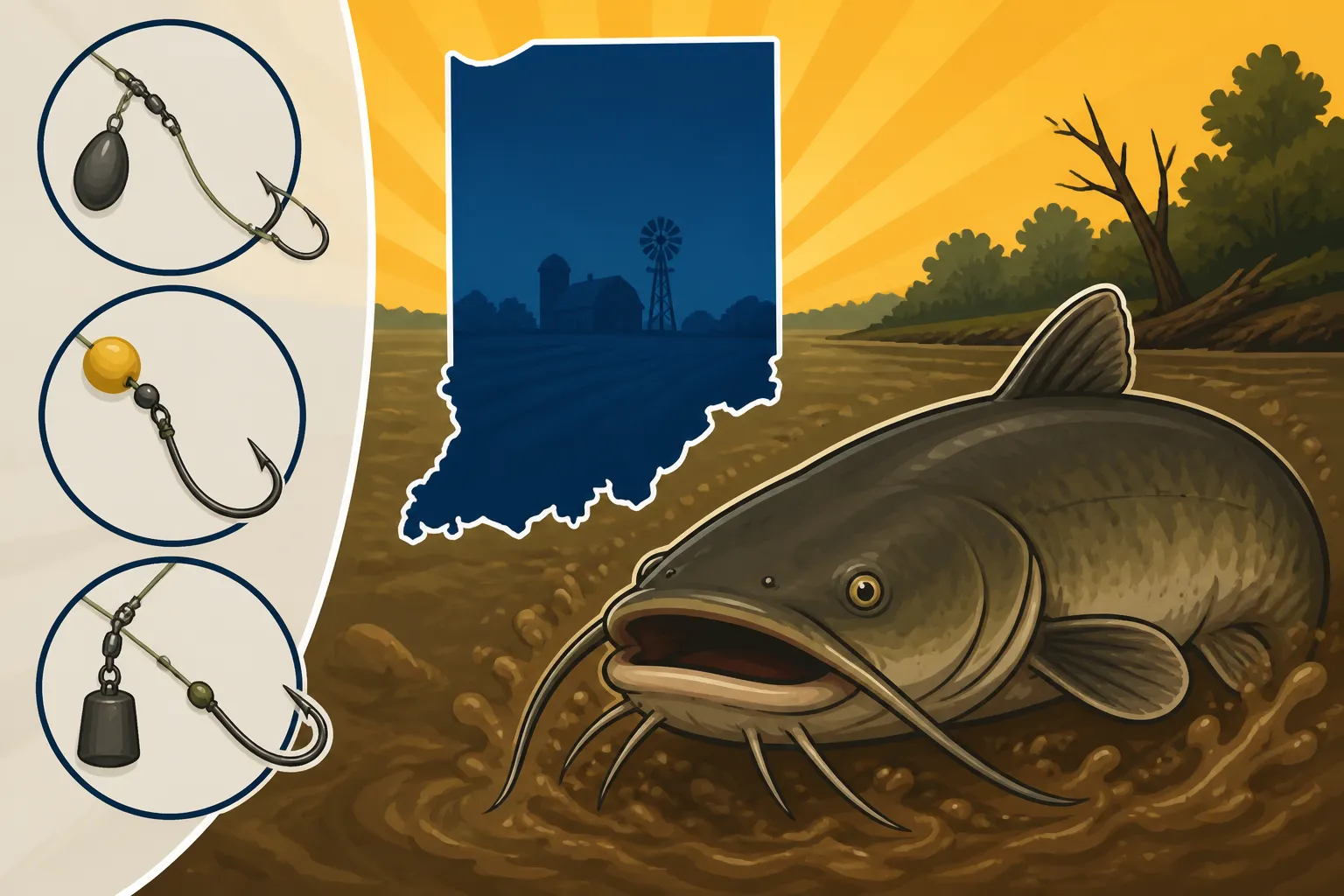
The Carolina rig, also known as a slip sinker rig, is a perennial favorite among catfish anglers, and for good reason. It’s incredibly versatile and highly effective in muddy water because it keeps your bait firmly on the bottom, where catfish frequently cruise and feed by sweeping their barbels.
To tie a Carolina rig, you'll first thread an egg sinker (or a no-roll sinker, which is great for strong currents) onto your main line. The weight of the sinker will depend on the current and depth, but typically ranges from ½ ounce to 3 ounces. After the sinker, slide on a bead. The bead serves a couple of purposes: it protects your knot from the sinker's repeated impact and adds a little extra noise and vibration when the sinker shifts on the bottom, which can attract curious catfish in low visibility. Finally, tie a barrel swivel to the end of your main line. From the other end of the swivel, attach a leader line, usually 12-24 inches long, using a strong monofilament or fluorocarbon. The leader length allows your bait to drift naturally, slightly away from the heavier sinker, preventing it from being buried in the mud while still staying in the catfish's strike zone. Complete the rig by tying a sturdy circle hook to the end of your leader.
The beauty of this rig in muddy water is its direct bottom contact. As the current moves, the sinker may roll or bounce, stirring up a bit of mud, which can actually draw attention to your bait through sound and vibration, mimicking a feeding fish. Plus, the separation of the sinker and bait means a catfish can pick up the bait without immediately feeling the full weight of the sinker, leading to more confident bites. For beginners learning Catfish Bottom Fishing Techniques, this is often one of the first and most effective rigs to master.
The Santee Cooper Rig: Lifting Bait Above the Debris
While the Carolina rig is excellent, sometimes the bottom is just too mucky, or there's too much debris to present your bait effectively. That's where the Santee Cooper rig comes into play. It's essentially a modified Carolina rig designed to lift your bait slightly off the bottom, keeping it visible (or rather, "smell-able") and free from snags in heavily sedimented or trash-filled environments.
You start building a Santee Cooper rig much like a Carolina rig: thread a sinker (often a flat, no-roll sinker is preferred here to keep it stable) onto your main line, followed by a bead. Then, tie on a barrel swivel. The key difference lies in the leader and the addition of a peg float or small, buoyant foam float. Instead of tying your hook directly to a leader, you'll attach your float to the leader, positioning it a few inches above your hook. The leader length can vary, but typically 12-18 inches works well.
This float causes your bait to hover a few inches to a foot above the riverbed. This slight elevation prevents your bait from sinking into soft mud, getting tangled in submerged weeds or debris, or being obscured by bottom sediment. It presents your high-scent bait in the water column where cruising catfish can easily detect it. This rig is particularly effective when you suspect catfish are slightly suspended off the bottom, perhaps due to warmer water or higher oxygen levels just above the muck. It's a fantastic rig when you’re fishing rivers like the Tippecanoe or Wabash that can carry a lot of sediment.
The Three-Way Swivel Rig: Presenting Multiple Options
When you're fishing in muddy water, sometimes it pays to offer more than one presentation or to cover a wider area. The three-way swivel rig, also known as a Wolf River rig, is perfect for this, allowing you to present your bait at a specific depth and perhaps even offer two different baits simultaneously.
As its name suggests, the core of this rig is a three-way swivel. Tie your main line to one eye of the swivel. To the second eye, attach a short leader (6-12 inches) with a sinker at the end. This leader should be a lighter test line than your main line, acting as a "breakaway" if your sinker gets snagged, allowing you to retrieve the rest of your rig and fish. To the third eye of the swivel, tie a longer leader (18-36 inches) with your hook and bait.
This setup offers incredible flexibility. The sinker hits the bottom and holds your rig in place, while your bait drifts enticingly in the current, just above the bottom. The longer leader allows for natural movement, and the placement of the sinker below the bait helps keep your presentation stable, especially in moving water. In extremely muddy conditions, you can even tie two hook leaders to the swivel's third eye (with different lengths) to present two different baits or cover a wider strike zone. This rig is particularly effective when you're fishing areas with moderate current or when trying to determine the catfish's preferred feeding height above the riverbed. It's a key part of many How to Catch Catfish: Bottom Fishing and Trotline Techniques strategies.
The Slip Bobber Rig: When Catfish Are Looking Up
While catfish are often thought of as bottom feeders, they will absolutely feed higher in the water column, especially when conditions warrant it. In muddy water, if oxygen levels are better or if prey fish are suspended, catfish might follow suit. This is where a slip bobber rig becomes invaluable.
A slip bobber rig consists of a bobber stop, a bead, a slip bobber, another bead, and finally, a hook (or a small jig head) tied directly to your line or a short leader with split shot weights added above it to get your bait down. The bobber stop allows you to adjust the depth at which your bait will suspend, from just below the surface to several feet down, keeping it precisely in the zone where you're marking fish on your fish finder or where you suspect they are cruising.
This rig excels in muddy water because it provides precise depth control and keeps your bait completely off the bottom and its potential debris. The bobber also acts as a highly visible strike indicator, which is a huge advantage when you can't see your line moving in murky conditions. When a catfish takes the bait, the bobber will dip, lay flat, or pull under, giving you an unmistakable signal. Using a high-scent bait is crucial with this setup, as the catfish still won't be able to see it. This rig is often overlooked for catfish but can be incredibly effective, especially in calmer areas of lakes or slower river sections where fish might be suspended.
Here's a quick comparison of these popular rigs:
| Rig Type | Key Feature | Muddy Water Advantage | Best For |
|---|---|---|---|
| Carolina Rig | Sinker slides on main line, leader to hook | Keeps bait on bottom, allows natural drift, sinker noise attracts fish. | Hard bottoms, moderate current, targeting actively feeding bottom dwellers. |
| Santee Cooper | Float on leader lifts bait off bottom | Prevents bait from sinking into muck/debris, presents bait in water column. | Soft, silty bottoms, areas with heavy submerged vegetation or debris. |
| Three-Way Swivel | Three attachment points for main, sinker, hook | Stable presentation in current, allows two baits, sinker breakaway protects main line. | Moderate to strong currents, deeper channels, varied presentations. |
| Slip Bobber | Adjustable depth, bobber as strike indicator | Precise depth control, keeps bait out of bottom muck, visible strike detection. | Suspended fish, calmer waters, when fish are off the bottom. |
Strategic Fishing Approaches for Turbid Indiana Rivers and Lakes
Knowing your rigs is one thing; putting them to effective use in muddy water is another. Adapting your overall strategy to the murky conditions of Indiana's waterways is paramount for consistent success.
Locating Catfish When Visibility is Zero
When you can't see into the water, finding catfish requires a different mindset. You need to think like a catfish and rely on indirect cues. Catfish are often drawn to structure, current breaks, and areas with available food, regardless of water clarity.
Start by targeting known catfish holding areas. In rivers, look for deeper holes, outside bends where current carves out depressions, and areas downstream of fallen trees or log jams. These structures provide cover and ambush points. The mouth of a tributary where slightly clearer water might be entering, or where food is washing in, can also be a hotspot. On lakes and reservoirs, focus on main lake points, submerged humps, creek channels, and areas near artificial structures like brush piles or rip-rap. If you're fishing a popular spot, talk to locals or check reports to see what areas are currently producing. Our guide on Best Catfish Fishing Spots in Indiana can help you pinpoint some prime locations.
A fish finder, even a basic portable unit, can be incredibly useful. While you won't be able to distinguish species in murky water, you can certainly identify depth changes, humps, and most importantly, schools of baitfish or larger fish arches. If you see baitfish suspended or near structure, there's a good chance predatory catfish are lurking nearby. Pay attention to changes in water temperature or current. Catfish will often move to find more comfortable temperatures or areas with slightly less brutal current.
Finessing Your Presentation in the Murk
Once you've identified a likely spot, your presentation becomes key. Since visual cues are out, you need to maximize scent and vibration. Cast your rigs upstream of your target zone and allow the current to carry your bait naturally into the area. This helps disperse the scent downcurrent, leading catfish to your offering. Don't be afraid to make multiple casts to the same spot, allowing your bait to sit for 15-30 minutes before reeling in and re-casting. Catfish are patient hunters.
With a Carolina rig, let the current bump your sinker along the bottom, creating subtle vibrations and stirring up scent. With a Santee Cooper rig, the float keeps your bait tantalizingly suspended. For a three-way swivel rig, ensure your sinker holds steady while your bait flutters in the current. And with a slip bobber, adjust the depth to match any fish you might be marking or to cover different parts of the water column if you're not getting bites on the bottom.
Consider adding scent attractants to your bait, even if it's already a high-scent option. Gels, sprays, or dips can be applied to cut bait or artificial options to amplify their odor, making them even more irresistible in muddy water. Some anglers even use glow beads on their leaders, hoping a subtle glow might be perceived by the catfish's sensitive eyes, though scent remains the primary attractant. Remember, patience is a virtue in muddy water. Bites can be subtle, so having a sensitive rod and braided line will help you feel those light taps.
Environmental Factors to Consider for Peak Success
Beyond just the muddiness, other environmental factors can influence catfish activity and your success rates. The Best Time of Year to Catch Catfish in Indiana typically involves warmer months, but even within those seasons, specific conditions can create prime opportunities.
- Temperature: Catfish are generally more active in warmer water, but extreme heat can make them lethargic. In muddy conditions, slightly cooler, well-oxygenated water can be more productive. They might move to deeper, cooler areas during hot days.
- Current: Muddy water is often associated with increased current. Catfish will use current breaks to conserve energy while waiting for food to wash by. Focus on the slower side of a current seam, behind rocks, logs, or other obstructions. Too much current, however, can make it difficult for them to hold position and feed.
- Time of Day: Catfish are notoriously nocturnal, and fishing at night can be incredibly productive, especially in muddy water where their natural advantages are amplified. Consider using Night Fishing Techniques for Catfish to maximize your chances. During the day, early morning and late evening often yield the best results.
- Recent Rain: A fresh rain can muddy up waters, but it also washes in a lot of terrestrial food sources, which can put catfish into a feeding frenzy. However, too much rain can cause flooding, making fishing dangerous and the fish scattered. Aim for the "sweet spot" a day or two after a significant rain, when water levels might be stabilizing but the turbidity is still high.
By combining the right gear, the perfect rig, and a strategic understanding of catfish behavior in murky conditions, you'll be well on your way to consistent success on Indiana's muddy waterways. Don't let the brown water deter you; it often holds some of the best fishing opportunities!
Disclaimer
Fishing regulations and conditions can change. Always check the latest Indiana Department of Natural Resources (DNR) rules and local advisories before heading out. Safety first, always wear a life jacket and be aware of your surroundings, especially on unfamiliar waters.