Bass Limit Applies to Largemouth and Smallmouth Combined
There's a common misunderstanding out there among anglers, especially those new to fishing Indiana's beautiful lakes and rivers: exactly how many bass can you keep in a day? It's not always about individual species, and getting it wrong can lead to some unwanted hassles. This guide is here to clear up any confusion, explaining Indiana's daily bag limit for both largemouth and smallmouth bass, and what "combined" really means for your fishing trip.
Understanding Indiana's Combined Bass Limit
When you're out on the water, whether you're chasing that monster largemouth in a weed bed or a feisty smallmouth in a rocky river, it's crucial to know the rules. Indiana’s fishing regulations are designed to protect our fish populations and ensure sustainable fishing for everyone, and the bass limit is a prime example of this approach. It's not just about how many of one kind of bass you can keep; it's about the total.
Why Combined Limits Exist
You might wonder why Indiana groups largemouth and smallmouth bass together for the daily limit. It's a question many anglers ponder, especially when they're targeting one species specifically. The main reason boils down to conservation and simplifying enforcement. Largemouth and smallmouth bass often share similar habitats, even if they prefer slightly different structures or forage. From a biological standpoint, both species play a vital role in the ecosystem, and managing their populations together helps maintain overall bass health across various water bodies. If individual limits were set for each, it could create loopholes or make it harder for conservation officers to ensure compliance on the water, potentially leading to overharvesting of one species.
The Statewide Rule for Largemouth and Smallmouth
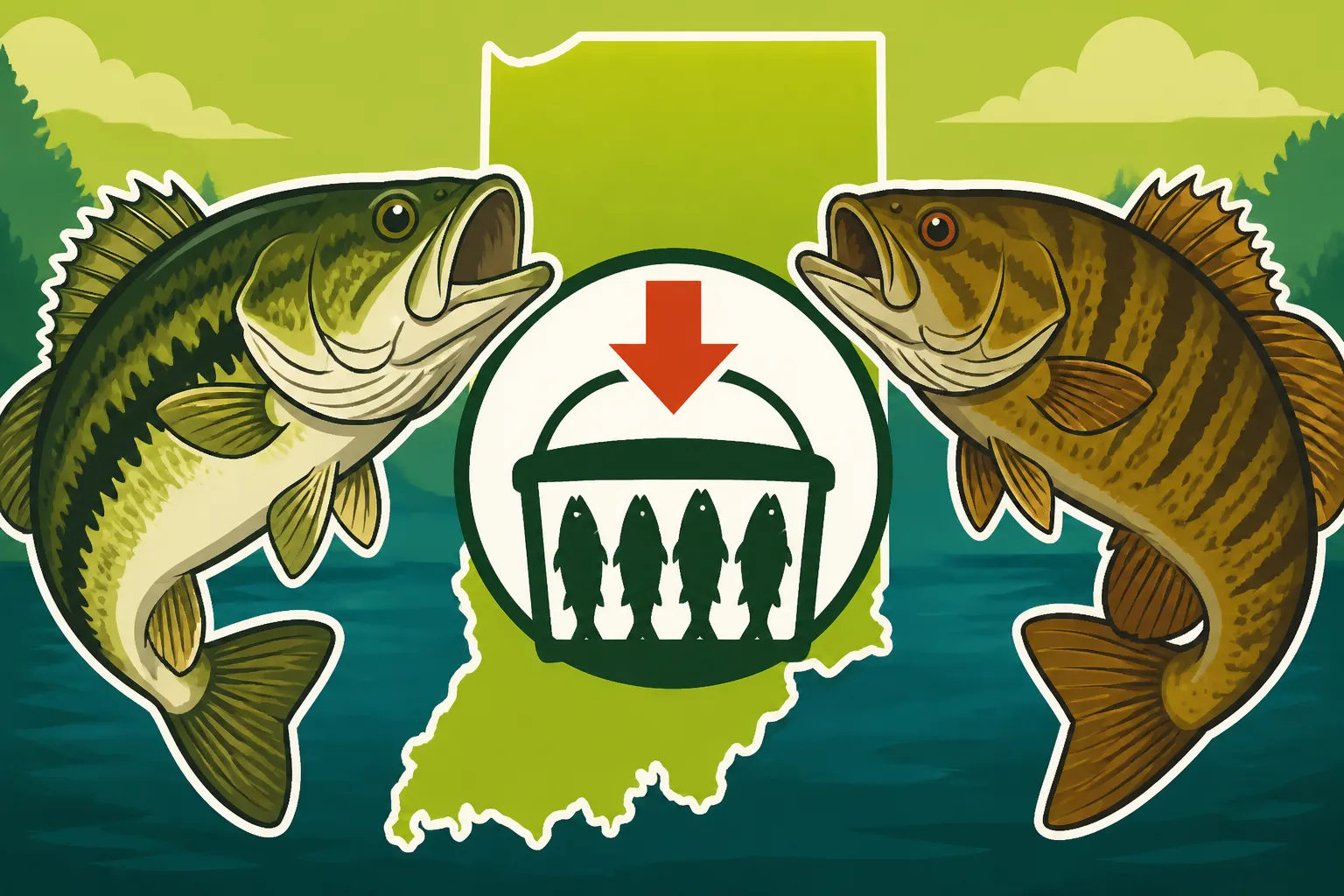
So, let's get down to the brass tacks. Across Indiana, the daily bag limit for largemouth and smallmouth bass is set at five fish. This isn't five largemouth AND five smallmouth. It's a combined total. This means that once you've landed and decided to keep five bass of either species, or any combination thereof, you've reached your limit for the day. For more comprehensive details on all state regulations, you might want to check out the official Indiana Fishing Regulations and Bag Limits Guide.
For instance, if you're having an incredible day on Monroe Lake and catch three beautiful largemouth bass that meet the size requirements, and then you move to a different spot and land two keeper smallmouth, your day is done if you intend to keep them. That’s five fish total. It’s a straightforward rule designed to be easy to understand but often overlooked in the excitement of a good bite. This specific regulation is consistently applied, as detailed in Indiana's Statewide Bass Daily Bag Limit.
What "Combined" Truly Means for Anglers
The term "combined" is really the key here. It removes any ambiguity about targeting one species over another while still adhering to the law. Imagine you’re fishing a stretch of the Tippecanoe River, known for its smallmouth bass. You catch four healthy smallmouth and decide to keep them. Later, you cast into a quiet backwater and pull out a nice largemouth. At that point, you’ve reached your daily limit of five bass (four smallmouth + one largemouth). You cannot keep any more bass, regardless of species, until the next fishing day. This also applies when fishing on bigger bodies of water. The Combined Bass Limit for Indiana Lakes and Rivers article further elaborates on this consistency.
This rule encourages anglers to be mindful of their catch throughout the day, rather than waiting until they have a mix of fish to count. It’s also why many experienced anglers carry a simple clicker counter or keep a running mental tally. This way, there are no surprises when you’re heading back to the boat ramp.
Navigating Specific Indiana Waters and Their Bass Rules
While the five-fish combined limit for largemouth and smallmouth bass is a statewide rule, it's always smart to be aware of any potential local nuances. Indiana is a diverse state with many different types of water bodies, from expansive reservoirs to winding rivers and small farm ponds.
Statewide Application Versus Special Regulations
Generally speaking, the statewide rule of a combined five-bass daily limit holds true across almost all public waters in Indiana. This makes it quite consistent for anglers, which is a big relief. You won't typically find specific lakes or rivers with different combined bass limits, as the Indiana Department of Natural Resources (DNR) aims for clear, easy-to-follow guidelines. However, what you will sometimes encounter are special size restrictions for certain lakes or specific stretches of river. For example, a particular lake might have a slot limit for bass, meaning you can only keep fish below a certain size or above another, while fish within the "slot" must be released. These special regulations usually pertain to the size of the fish you can keep, not the overall number in your daily bag, though they definitely impact how many legal fish you can actually take home.
It's absolutely critical to consult the most current Indiana fishing guide (often available online from the DNR or at your local bait shop) for the specific body of water you plan to fish. Before heading out, especially if you're visiting a new spot, a quick check can save you from an unintended violation. For anyone targeting these popular sport fish, our Largemouth Bass Fishing in Indiana: The Complete Guide offers even more detailed insights into tactics and locations.
Impact on Your Daily Catch
Knowing the combined limit directly influences how you approach your fishing day. If your goal is to bring some fish home for dinner, you'll need to decide which bass you want to keep once you start catching them. For example, if you catch a smallmouth that's just legal and a largemouth that’s a bit bigger and healthier, you might choose to keep the largemouth and release the smallmouth, making sure to stay within your five-fish total. It also means you need to quickly and accurately identify your catch. While most anglers can tell the difference between a largemouth and smallmouth, a quick refresher never hurts.
This mindful approach not only keeps you compliant but also promotes responsible angling. You're making conscious decisions about your harvest, which is exactly what conservation efforts aim to instill. It encourages selective harvesting, allowing smaller fish or those crucial for breeding to remain in the water, contributing to a healthy fishery for years to come.
Measuring and Releasing Fish
Proper measurement and safe release are just as important as knowing the bag limit. When you catch a bass, quickly measure it against a reliable bump board or measuring tape. If it meets the legal size requirements and you decide to keep it, that fish counts towards your combined five-bass limit. If it’s undersized or you’ve already hit your limit, it's essential to release the fish with as little harm as possible.
Here’s how to do it effectively:
- Handle with care: Minimize handling time and keep the fish in the water as much as possible. Avoid touching its gills or eyes.
- Wet hands: Always wet your hands before touching the fish to protect its slime coat, which is vital for its immune system.
- Use appropriate tools: A good pair of needle-nose pliers can help remove hooks quickly. If a fish is deeply hooked, sometimes it's better to cut the line rather than try to extract the hook, especially if it's in the gills or gut.
- Support the fish: When holding a bass, support its body horizontally. Avoid holding large bass vertically by the jaw alone, as this can injure its spine and jaw.
- Revive if necessary: If a fish looks sluggish after being caught, gently hold it upright in the water, facing into a mild current, until it can swim away on its own.
These practices contribute significantly to fish survival post-release, ensuring that the next angler (or you, on another day!) has a chance to catch that same fish. Remember, our article on Largemouth Bass vs Smallmouth Bass: Key Differences can help you quickly identify your catch.
Why Indiana Groups Bass Species Together
The decision to apply a combined limit for largemouth and smallmouth bass isn't arbitrary. It's a well-thought-out strategy by wildlife biologists and conservation experts to manage our precious aquatic resources effectively. This approach serves multiple important functions beyond just simplifying the rules.
Conservation Efforts and Management
Grouping these two popular sport fish under one daily limit is a cornerstone of Indiana's bass conservation strategy. While largemouth bass tend to prefer warmer, clearer, vegetated waters, and smallmouth lean towards cooler, rocky, and often riverine environments, there's significant overlap in many Indiana waters. By implementing a combined limit, the DNR can manage the overall pressure on the bass population as a whole, rather than trying to track and regulate each species separately in every single water body. This is especially important because both species are popular targets for anglers, and overharvesting of one could indirectly impact the other, or the overall health of the ecosystem.
This management approach helps ensure that there are enough breeding adults to sustain future generations of bass, protecting the genetic diversity and vigor of the populations. It's a proactive measure designed to prevent localized depletion and maintain healthy sportfishing opportunities across the state. The goal is to keep Indiana a premier fishing destination for years to come. For example, you can learn more about where to find these fish in Indiana's Best Lakes for Trophy Largemouth Bass.
Simplifying Regulations for Anglers
Let's be honest: no one wants to carry a thick rulebook to the lake and spend their fishing time deciphering complex regulations. One of the major benefits of a combined bass limit is simplicity. Imagine if you had to remember a different limit for largemouth and smallmouth for every single lake or river you visited. It would be a nightmare! By having one overarching rule, the Indiana DNR makes it much easier for anglers, from seasoned veterans to beginners, to understand and comply with the law.
This simplification reduces the chance of accidental violations, allowing anglers to focus more on the joy of fishing and less on the fear of breaking an obscure rule. It's about making fishing accessible and enjoyable for everyone, while still upholding crucial conservation principles. When regulations are clear and straightforward, compliance naturally improves, leading to better outcomes for fish populations. Our guide to Indiana Fishing License Requirements Explained also emphasizes the importance of clear rules.
Distinguishing Between Bass Species
Even with a combined limit, being able to tell a largemouth from a smallmouth is still a super useful skill. It helps you understand what kind of habitat you're fishing, and which techniques might be most effective. Plus, while the bag limit is combined, there might be specific size limits that vary slightly between the two species in certain bodies of water, though usually the length limits are standardized across both where applicable.
Here’s a quick rundown of how to tell them apart:
| Feature | Largemouth Bass | Smallmouth Bass |
|---|---|---|
| Mouth | Jaw extends past the rear edge of the eye | Jaw does not extend past the rear edge of the eye |
| Dorsal Fin | Deep notch between spiny and soft-rayed dorsal fins | Shallow notch, appears more connected |
| Coloration | Dark, distinct horizontal stripe along the side | Vertical bars or blotches, often bronze or brown |
| Body Shape | More elongated, somewhat football-shaped | Stockier, more compact body |
| Scales | Smaller scales on cheeks than on body | Similar sized scales on cheeks and body |
Understanding these differences not only helps with identification but also enhances your overall angling experience. Knowing what you've caught adds to the satisfaction and helps you fine-tune your techniques for future trips. If you want a more detailed look at identification, read How to Identify a Largemouth Bass in Indiana Waters.
Essential Gear and Best Practices for Bass Anglers
Fishing for largemouth and smallmouth bass in Indiana is an incredibly rewarding experience, offering thrilling fights and beautiful scenery. To make the most of your time on the water, having the right gear and adopting best practices are just as important as knowing the regulations.
Recommended Gear for Bass Fishing
Outfitting yourself for bass fishing doesn't have to break the bank, but having quality, species-appropriate gear will definitely increase your chances of success and enjoyment.
- Rods and Reels: For largemouth, a medium-heavy to heavy action casting rod (6'6" to 7'6") paired with a baitcasting reel is often preferred, especially when fishing heavier cover with jigs or Texas rigs. For smallmouth, a medium-light to medium action spinning rod (6' to 7') with a matching spinning reel offers better sensitivity for lighter lures and finesse techniques, which smallmouth often respond well to. Many excellent options for both types of setups can be found on online retailers like Amazon, where you can compare different brands and read angler reviews.
- Line: For largemouth, consider 12-20 lb fluorocarbon or monofilament, or 30-50 lb braided line when fishing dense vegetation. For smallmouth, 6-10 lb fluorocarbon or monofilament often works well, especially in clearer water.
- Lures and Baits: Bass are notoriously aggressive and will hit a wide variety of offerings. For largemouth, think plastic worms, jigs, crankbaits, spinnerbaits, and topwater frogs. Smallmouth often prefer tubes, grubs, Ned rigs, jerkbaits, and small crankbaits. Having a diverse tackle box is key, and you can often find great deals on assorted lure kits on Amazon to get started.
- Terminal Tackle: Don't forget essentials like hooks (various sizes for different plastics), weights (bullet weights for Texas rigs, drop-shot weights), swivels, and perhaps some soft plastic scent to entice those finicky biters.
- Accessories: A good pair of pliers or a hook remover, a landing net (especially for bigger fish), a measuring board or tape, and polarized sunglasses are indispensable. A sturdy tackle box or bag to organize your gear is also crucial, and many anglers find innovative storage solutions readily available on Amazon. Don't forget a Fishing License Checklist Before Your First Cast!
Ethical Angling and Compliance
Being an ethical angler goes beyond just following the legal limits; it's about respecting the fish, the environment, and your fellow anglers. This includes things like:
- Catch and Release Practices: As discussed earlier, proper handling of fish you intend to release is vital for their survival. Even if you're keeping your limit, practicing catch and release for fish you don't intend to harvest helps ensure future fishing opportunities.
- Leave No Trace: Always pack out everything you pack in. This means no discarded fishing line, bait containers, or food wrappers left behind. Our natural spaces are precious, and it's our responsibility to keep them clean.
- Respect Private Property: Be aware of where you are fishing and respect private property boundaries. Accessing private land without permission is trespassing and gives anglers a bad name.
- Boat Etiquette: If you're on a boat, be mindful of other anglers. Don't crowd someone's fishing spot, and be aware of your wake when passing other boats or shore anglers. This creates a much more pleasant experience for everyone.
Adhering to these best practices makes you not just a law-abiding angler, but a responsible steward of Indiana's natural resources.
Staying Informed on Regulations
Indiana's fishing regulations, while generally stable, can sometimes change. New special regulations might be implemented for specific lakes to address population issues, or statewide rules might see minor adjustments. It's your responsibility as an angler to stay up-to-date.
Here are the best ways to do that:
- Indiana DNR Website: The official Indiana Department of Natural Resources (DNR) website is the definitive source for current fishing regulations. They typically publish an annual fishing guide.
- Local Bait and Tackle Shops: These shops are often treasure troves of local knowledge. The owners and staff are usually avid anglers themselves and stay informed about local and statewide changes. They often have printed copies of the current regulations, too.
- Fishing Forums and Groups: Online communities can be great for sharing information, but always cross-reference anything you hear there with official DNR sources.
- Renewing Your License: When you go through the process of Renewing an Indiana Fishing License Online, you'll often find links to the most current regulations, making it easy to stay informed.
Staying informed ensures you’re always compliant and helps you fish with confidence, knowing you’re contributing to the sustainability of Indiana’s fantastic bass fishery. Having a good fish finder, perhaps one you scouted on Amazon, can also help you understand the underwater environment and locate bass more effectively, improving your fishing experience even further.
Disclaimer
Please note that fishing regulations can change. While every effort has been made to provide accurate and up-to-date information in this guide, it is ultimately the angler's responsibility to verify current rules and regulations with the Indiana Department of Natural Resources (DNR) before fishing. Always consult the official Indiana Fishing Guide or the DNR website for the most current and complete information.