How Many Crappie Can You Keep in a Day?
It’s easy to feel overwhelmed by all the rules and regulations when you’re just trying to enjoy a peaceful day on the water. You cast your line, you get a bite, and suddenly you’re wondering, "Wait, how many of these can I actually keep without breaking the law?" For crappie anglers in Indiana, this question is a common one, and getting it right is crucial for both your peace of mind and the health of our fisheries. This guide is here to clear up the confusion around Indiana's crappie daily limits, so you can focus on the thrill of the catch.
Understanding Indiana's Crappie Daily Limit
Navigating fishing regulations can sometimes feel like trying to untangle a stubborn fishing knot – frustrating and a bit confusing. But when it comes to crappie in Indiana, the rules are thankfully pretty straightforward. Knowing these limits isn't just about avoiding a fine; it's about being a responsible angler and ensuring there are plenty of crappie for everyone to enjoy for years to come.
The Statewide Crappie Bag Limit
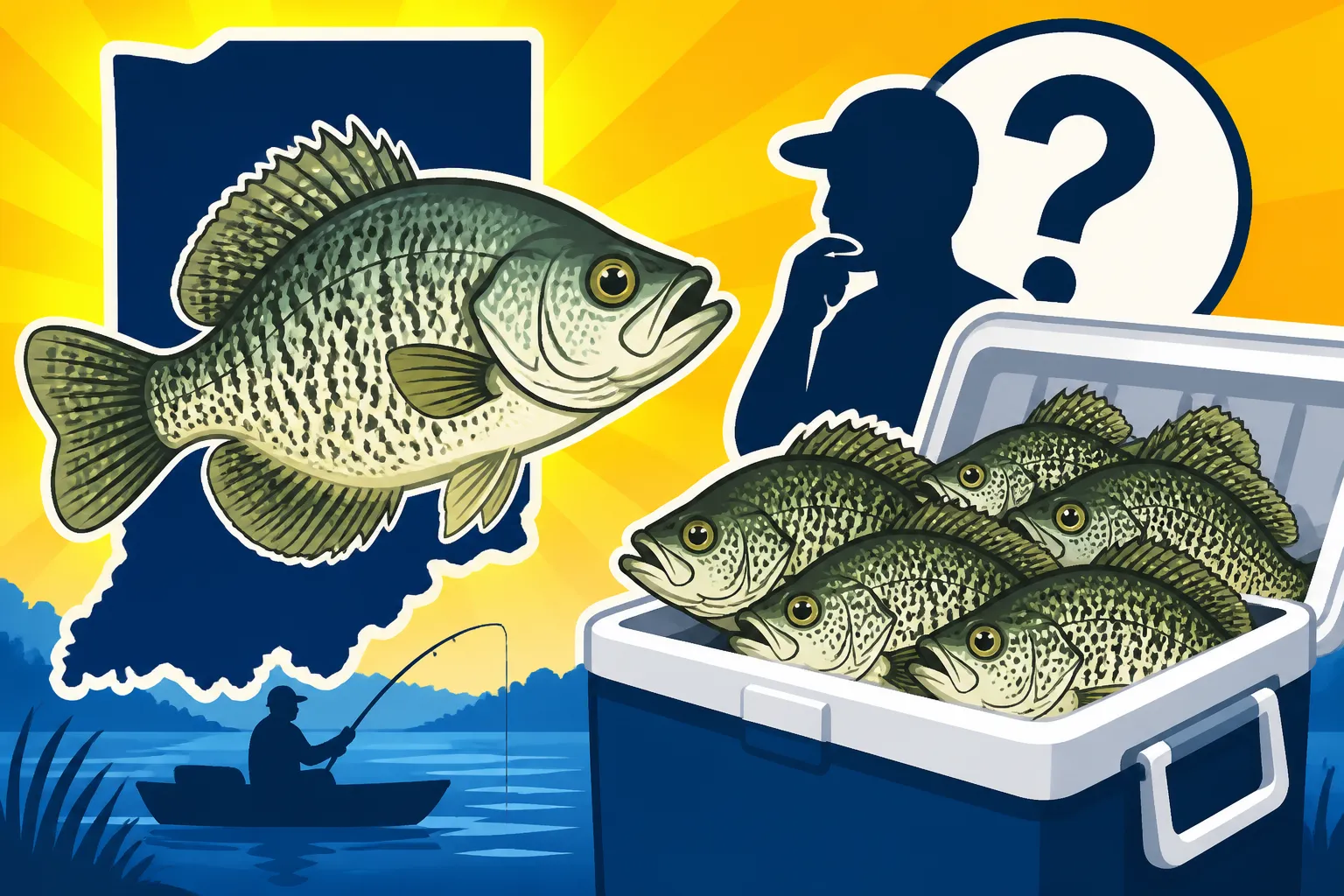
When you’re out on your favorite Indiana lake or river, eagerly anticipating that tell-tale tap on your line, the statewide daily bag limit for crappie is a firm number you need to keep in mind. In Indiana, the daily limit for crappie – both black crappie and white crappie combined – is 25 fish per angler per day. This means that no matter how many hot spots you find or how many bites you get, you can only legally keep 25 crappie within a 24-hour period. This limit applies to most public waters across the state, from the big reservoirs down to smaller public access ponds.
Think of it this way: you wake up early, grab your coffee, and head out to Monroe Lake or Patoka Lake, ready for a productive morning. If you're on a roll and by lunchtime you've already boated 25 nice crappie, your day of keeping fish is done. You can absolutely continue to fish, but any additional crappie you catch must be immediately released back into the water, unharmed. It’s a simple rule, but one that’s easy to forget in the excitement of a good bite. This specific number is part of the larger panfish regulations, which also cover species like bluegill and redear sunfish, though each species often has its own distinct limit. For a broader overview, you might want to check out the official Indiana Panfish Daily Limits by Species guide.
Why Daily Limits Are So Important
Now, you might be thinking, "Why can't I keep more if I catch them? What's the harm?" And it’s a fair question, especially when the fish are biting aggressively. However, these daily limits aren't arbitrary. They are carefully set by the Indiana Department of Natural Resources (DNR) based on extensive scientific research into fish populations, spawning success, and overall ecological health of our waterways. The goal is always sustainability. If every angler kept every fish they caught on a banner day, certain popular species like crappie, which are known for schooling and being relatively easy to catch, could face significant pressure.
Imagine a scenario where thousands of anglers descend upon a lake during the crappie spawn, all keeping 50 or 100 fish each. It wouldn't take long for the population to dwindle, impacting not just the fishing quality for future seasons but also the entire aquatic ecosystem. Crappie play a vital role in the food web, both as predators of smaller insects and baitfish, and as prey for larger species like bass and walleye. By adhering to the 25-fish limit, we're actively participating in conservation efforts, ensuring that our children and grandchildren will also have the opportunity to experience the joy of crappie fishing in Indiana. It's a small sacrifice, perhaps, but one that has a huge positive impact on the long-term health of our beloved fishing spots. If you're looking to brush up on all the rules, the Indiana Fishing Regulations and Bag Limits Guide is an invaluable resource.
Specific Scenarios and Exceptions for Crappie
While the 25-fish daily limit for crappie is a broad rule that covers most of Indiana's waters, anglers often wonder if there are any specific local exceptions or nuances they should be aware of. It's always smart to question these things, as fishing regulations can sometimes have those tricky little footnotes. After all, you don’t want to inadvertently break a rule just because you fished a different body of water.
Crappie Limits in Different Water Bodies
For the most part, the 25-crappie daily limit holds true across the vast majority of Indiana's lakes, reservoirs, and rivers. This consistency is actually a good thing, as it simplifies things for anglers. You don't usually have to memorize a different crappie limit for every single lake you visit. Whether you're dropping a jig into the murky waters of a private pond (with permission, of course!), exploring the famous crappie grounds of Lake Wawasee, or venturing to a lesser-known local spot, that 25-fish rule is almost always in effect.
However, it's always, always a good idea to check the current Indiana Fishing Guide, issued annually by the DNR, before heading out. While crappie limits rarely change on a lake-by-lake basis, individual properties or specific waters might have unique management plans or experimental regulations in place for other species that could indirectly affect your trip planning. For instance, some lakes might have specific size restrictions for bass or walleye, but for crappie, the statewide daily bag limit of 25 is typically universal. If you're specifically targeting crappie, you might find some excellent information and insights in our article on Best Crappie Lakes in Indiana or dive deeper into Crappie Fishing in Indiana: Black Crappie Basics. Remember that regulations can change from year to year, so always verify the most up-to-date information before your trip.
How to Legally Transport and Possess Your Catch
So, you’ve had a fantastic day, and you’ve successfully caught your 25 crappie. Now what? The rules don't stop once the fish are in your cooler. There are specific guidelines for transporting and possessing your catch to ensure that conservation officers can easily verify compliance with bag limits. The most important rule to remember is that all crappie you have in your possession must be kept in such a state that they can be readily counted and identified. This usually means keeping them whole, or at least with the head and tail still attached, until you've reached your final destination for cleaning.
What does "final destination" mean? It means your home, camp, or the cleaning station at the marina – not just stashed in a cooler on the back of your truck while you run errands. If you decide to fillet your fish while still out on the water, or at a public access point before getting home, you risk a citation because it becomes impossible for a conservation officer to verify the species and count the total number of fish you've caught. You should also be aware that the possession limit for crappie in Indiana is the same as the daily bag limit: 25 fish. This means you can't accumulate multiple days' worth of limits in your freezer if you go out fishing for several days in a row without consuming or sharing your previous catch. Always make sure your fish are properly chilled to maintain freshness and prevent spoilage. Investing in a good cooler, maybe even one you found on Amazon, will help keep your crappie in prime condition until you're ready to fillet and prepare them.
Common Misconceptions and Best Practices
When you're out on the water, enjoying the peace and quiet, it's easy to get lost in the moment and forget some of the finer points of fishing regulations. Many anglers, even seasoned ones, can sometimes get confused about the nuances between daily and possession limits, or overlook the importance of ethical angling beyond just what’s legal. Let's clear up some of these common areas of confusion and talk about how we can all be better stewards of Indiana's fisheries.
The Difference Between Daily and Possession Limits
This is a big one that trips up a lot of folks. In Indiana, for crappie, the daily bag limit and the possession limit are essentially the same: 25 fish. A daily bag limit refers to the maximum number of fish you can catch and keep within a single 24-hour period, which typically runs from midnight to midnight. The possession limit, on the other hand, refers to the maximum number of fish you can have in your physical control at any given time, regardless of when they were caught.
Because the numbers are identical for crappie, it simplifies things. You can't, for example, catch 25 crappie on Monday, put them in your freezer, and then catch another 25 crappie on Tuesday and keep them if the first 25 are still in your possession (e.g., in your cooler or boat). If you fish for two consecutive days and catch a limit each day, you must have consumed or otherwise legally disposed of the first day's catch before retaining the second day's limit. This rule helps prevent commercial exploitation of public resources and ensures that the limits are genuinely about daily recreational take. It’s always important to understand these distinctions to avoid legal trouble, as penalties for fishing without a license or exceeding limits can be substantial. Our guide on Penalties and Fines for Fishing Without a License sheds more light on the serious consequences of not following the rules.
Ethical Angling and Responsible Harvest
Beyond simply following the letter of the law, ethical angling encourages us to think about the spirit of conservation. While the 25-crappie daily limit is a legal maximum, it doesn't mean you have to keep that many every time you go out. Responsible harvest means making smart choices about which fish you keep and which ones you release, even if you’re well under the legal limit. Many anglers practice selective harvest, choosing to keep medium-sized crappie for the dinner table while releasing the very largest and the very smallest fish.
Why do this? The largest crappie are often the most prolific breeders, contributing significantly to the population's health. Releasing them back allows them to continue spawning and producing more fish. The smallest fish, of course, need time to grow. Keeping those "dinner plate" sized crappie (usually 9-12 inches) helps maintain a healthy population structure in the lake. When you do release fish, handle them gently. Wet your hands before touching them to protect their protective slime coat, minimize air exposure, and support their body weight. If a fish is deeply hooked and you can't remove the hook without causing significant damage, it's often best to cut the line as close to the hook as possible. Having a sturdy measuring board or ruler, readily available on Amazon or at your local tackle shop, can help you quickly assess a fish's size before deciding to keep or release it.
Where to Find Official Regulations and Get Your License
Staying informed is one of the most important responsibilities of any angler. Regulations change, fisheries are managed, and new rules can be implemented. Relying on old knowledge or hearsay can lead to unintentional violations, which no one wants. That’s why knowing where to access the most accurate and up-to-date information is key.
Accessing the Latest Indiana Fishing Guide
The absolute best and most reliable source for current crappie limits, and all other fishing regulations in Indiana, is the official Indiana Department of Natural Resources (DNR) website and their annual Fishing Guide. Every year, typically in late March or early April, the DNR publishes a new comprehensive guide that outlines all the rules, bag limits, size restrictions, and special regulations for specific lakes or species. This guide is your bible for fishing in the Hoosier State.
You can usually download a PDF version directly from the DNR website, or pick up a physical copy at most bait shops, sporting goods stores like Cabela's or Bass Pro Shops, or DNR offices. I always recommend having a copy, digital or physical, on hand whenever you’re planning a trip or out on the water. It’s a small effort that saves a lot of potential headaches. Regulations like Indiana Walleye Length Limits by Lake or specific rules about Lake Michigan Fishing Rules for Indiana Anglers are all meticulously detailed in this guide. Don't rely on information from forums or social media unless it links directly back to an official DNR source.
Getting Your Indiana Fishing License
Before you even think about how many crappie you can keep, you need to make sure you have the proper authorization to fish in Indiana waters in the first place. With very few exceptions (like Indiana's special Indiana Free Fishing Days Guide or specific age requirements for kids), every angler aged 18 and older needs a valid Indiana fishing license. Fishing without one is a surefire way to ruin your day and potentially face fines.
Getting your license is super easy these days. You can purchase one online through the Indiana DNR's licensing system, which is convenient and fast, allowing you to print a temporary license immediately. This is probably the quickest way, especially if you suddenly decide to go fishing. You can also buy licenses in person at hundreds of authorized retailers across the state, including many bait shops, sporting goods stores, and even some Walmart locations. They usually have an electronic system that can get you set up in minutes. For a detailed walkthrough of the process, our How to Get an Indiana Fishing License guide is a great resource, and you can also find specific steps for Buying a Fishing License Online in Indiana. Make sure to check what kind of license you need, be it an annual resident license, a nonresident option, or perhaps a senior license. And while you're getting your license squared away, don't forget to stock up on essential gear. You can often find great deals on crappie jigs, bobbers, and small tackle boxes on Amazon to round out your fishing arsenal.
Disclaimer
The information provided in this guide is for general informational purposes only and is subject to change. While we strive to provide accurate and up-to-date content, fishing regulations are issued and enforced by the Indiana Department of Natural Resources (DNR) and can be modified at any time. It is always the angler's responsibility to consult the current official Indiana Fishing Guide or the Indiana DNR website for the most accurate and up-to-date regulations before engaging in any fishing activities. Compliance with all applicable laws and regulations is solely the responsibility of the individual angler.