Ohio Anglers Fishing in Indiana: License Rules
It's incredibly frustrating when you're just looking to enjoy a peaceful day of fishing, but the rules about crossing state lines turn into a confusing tangle of licenses and regulations. Ohio anglers often find themselves scratching their heads, wondering if their home state license covers them in Indiana, especially when the mighty Ohio River is involved. This guide is here to untangle that knot, making sure you know exactly what permits you need to cast your line legally and confidently in Hoosier waters.
Understanding Reciprocity Between States
When you live right on a state border, the concept of "reciprocity" for fishing licenses comes up a lot. Essentially, it's an agreement between states that allows anglers from one state to fish in shared border waters with just their home state's license. It sounds simple, but like many things in fishing, there are always a few caveats. For Ohio anglers looking to fish in Indiana, it's vital to understand where these lines are drawn – both literally on the map and figuratively in the rulebook. Ignoring these details can quickly turn a relaxing day into a costly encounter with a conservation officer.
Ohio River Specifics
Now, let's talk about the big one: the Ohio River. This isn't just any river; it's a significant boundary and a prime fishing destination for both Ohio and Indiana residents. Here's where reciprocity shines brightest. If you're an Ohio resident with a valid Ohio fishing license, you can legally fish the main stem of the Ohio River that borders Indiana without needing an additional Indiana license. This includes all its embayments and tributaries up to the first highway bridge. This is a huge relief for many, as it means less paperwork and more time spent chasing catfish or sauger.
However, it's crucial to grasp the nuances. This reciprocity only applies to the Ohio River itself and its immediate tributaries up to that first bridge. It doesn't magically extend to every pond, lake, or river within Indiana's interior. So, if you're planning to spend the morning on the Ohio River, and then head inland to, say, a reservoir like Brookville Lake or a river like the Blue River, your Ohio license won't cut it for those inland Indiana waters. You'd need to have the appropriate Indiana license in your tackle box. Always remember that while fishing the Ohio River, you must abide by the fishing regulations of the state whose license you hold. For example, if you have an Ohio license, you follow Ohio's bag and size limits, even if you're technically casting towards the Indiana bank.
Indiana's General License Requirement for Ohio Anglers
Outside of the specific, reciprocal arrangement on the Ohio River, the general rule is clear: if you are an Ohio resident and want to fish in Indiana's inland lakes, ponds, or rivers (anywhere other than the main stem of the Ohio River within the reciprocal zone), you absolutely need an Indiana fishing license. There's no getting around this. This includes popular destinations like Monroe Lake, Patoka Lake, or even smaller local ponds. It doesn't matter if you're visiting for a day, a weekend, or a week; you'll need the proper permit. Think of it this way: when you step off the Ohio River and into Indiana's jurisdiction, you play by Indiana's rules.
This requirement often catches visiting anglers off guard, especially if they're used to more expansive reciprocity agreements in other parts of the country. But Indiana, like many states, maintains its licensing requirements to fund its wildlife and fisheries management programs. Buying an Indiana Nonresident Fishing License Guide isn't just a legal obligation; it's a direct contribution to maintaining the healthy fish populations and access points you'll enjoy. It ensures the waters you love remain vibrant for future generations of anglers.
Types of Indiana Fishing Licenses for Nonresidents
So, you're an Ohio angler, and you've decided to explore Indiana's fantastic fishing opportunities beyond the Ohio River's main stem. Great choice! Indiana offers several convenient nonresident fishing license options tailored to different trip durations, so you don't have to break the bank for a short visit. Understanding these options will help you choose the most economical and appropriate license for your angling adventure. You can explore the full range of options in our comprehensive guide on Indiana Fishing License Costs for Residents and Nonresidents.
Nonresident Annual Fishing License
For those Ohio anglers who plan to make multiple trips to Indiana throughout the year, or even just one extended trip, the Nonresident Annual Fishing License is often the most cost-effective solution. This license covers you for a full Indiana fishing license year, which runs from April 1st through March 31st of the following year. It's a single purchase that grants you access to all of Indiana's non-reciprocal waters for a significant period.
Currently, the What a Nonresident Fishing License Costs in Indiana is around $60. While this might seem like a bit of an investment compared to a single-day pass, it quickly pays for itself if you visit Indiana more than a couple of times. Imagine planning a spring bass trip to Monroe Lake, a summer family vacation with some bluegill fishing in a state park, and then a fall walleye excursion to a glacial lake up north. With an annual license, you're covered for all of it, without the hassle of buying a new license each time. This option is perfect for dedicated anglers who see Indiana as a regular part of their fishing rotation.
Short-Term Nonresident Licenses
If your Indiana fishing plans are more spontaneous or limited to just a day or a single weekend, the short-term nonresident licenses are an absolute godsend. These options are designed for maximum flexibility and minimal commitment, ensuring you only pay for the time you'll actually be fishing.
- Nonresident 1-Day Fishing License: This is the perfect choice for a quick day trip across the border. Maybe you heard the crappie are biting on a lake just a short drive from Cincinnati, or you want to try your luck at one of the state park lakes for an afternoon. The Nonresident 1-Day Fishing License Cost in Indiana is typically around $9. It's affordable, convenient, and covers you for a full 24-hour period from the time of purchase.
- Nonresident 7-Day Fishing License: Planning a longer weekend getaway or a full week-long fishing vacation? The 7-day license is your best bet. For approximately $20, this license allows you to fish Indiana waters for seven consecutive days. This is ideal for family camping trips to places like Patoka Lake or extended visits to the Chain O'Lakes area. It offers more flexibility than the 1-day pass without committing to the full annual cost. This is a popular choice for nonresidents, as detailed in our guide, Nonresident 7-Day Fishing License Cost in Indiana.
Comparing these options, it's clear that the choice depends entirely on your planned frequency and duration of fishing trips in Indiana. Here's a quick comparison to help you decide:
| License Type | Duration | Approximate Cost | Best For |
|---|---|---|---|
| Nonresident Annual License | April 1 – Mar 31 | $60 | Multiple trips, extended stays, regular Indiana visitors |
| Nonresident 7-Day License | 7 Consecutive Days | $20 | Week-long vacations, long weekends, occasional longer trips |
| Nonresident 1-Day License | 1 Day | $9 | Quick day trips, spontaneous outings, trying out a new spot |
Remember, purchasing the correct license type is a fundamental part of Indiana Fishing License Requirements Explained.
How Ohio Anglers Can Purchase an Indiana Fishing License
Alright, you've figured out which Indiana license is right for your Ohio-to-Indiana fishing adventure. Now comes the practical part: actually getting your hands on it. Thankfully, Indiana has made the process pretty straightforward, with several convenient ways to purchase your fishing license. You don't need to drive across the state line just to buy a piece of paper anymore!
Online Purchase Process
For most folks, buying an Indiana fishing license online is by far the easiest and quickest method. You can do it from the comfort of your home in Ohio, even moments before you head out the door for your trip.
- Visit the Indiana DNR Website: The official Indiana Department of Natural Resources (DNR) website is your go-to. They have a dedicated online licensing system. You'll want to navigate to their "Buy a License" section.
- Create an Account or Log In: If you've never purchased an Indiana license before, you'll need to create a customer profile. This usually involves providing some basic personal information like your name, address, date of birth, and driver's license number. If you're a returning customer, you can simply log in.
- Select License Type: Once logged in, you'll see a list of available licenses. Choose the appropriate nonresident option (annual, 7-day, or 1-day) and any necessary stamps, like the Trout/Salmon Stamp if you're planning to fish for those species. We'll talk more about stamps in a bit.
- Complete Purchase: Add your selected licenses to your cart, review your order, and proceed to payment. You'll typically use a credit or debit card.
- Print or Save: After a successful purchase, you'll receive a confirmation, usually via email. It's highly recommended to either print a physical copy of your license to carry with you or save a digital version on your smartphone. While a digital copy is often acceptable, having a physical backup is always a good idea, especially in areas with spotty cell service. This seamless online process is detailed further in our guide on Buying a Fishing License Online in Indiana.
In-Person and Phone Purchase Options
While online is popular, not everyone prefers to do things digitally. Maybe you like the personal touch, or perhaps you're already in Indiana and just realized you forgot to buy your license. No worries, you still have options.
- Authorized License Vendors: Indiana has a network of authorized license vendors located throughout the state. These are often bait and tackle shops, sporting goods stores (like some larger retail chains such as Walmart or Meijer), or even some county clerk offices. You can usually find a list of these vendors on the Indiana DNR website. Just walk in, provide your information, pay the fee, and they'll print your license for you on the spot. This is a great way to pick up some local bait or get last-minute tips while you're there.
- Phone Purchase: Yes, you can still buy your license over the phone! The Indiana DNR typically provides a phone number for their licensing division. You'll give your information and payment details over the phone, and they can email you a digital copy of your license. This can be a lifesaver if you're in a remote area without internet access but can get a phone signal.
No matter which method you choose, always make sure you have your license on your person (or easily accessible on your phone) whenever you are fishing in Indiana waters. Conservation officers conduct routine checks, and being unprepared can lead to fines and a ruined fishing day. Carrying a laminated copy in your wallet or tackle box, perhaps even one you purchased through a convenient online retailer like Amazon that offers various fishing accessories, is a common practice among seasoned anglers.
Important Considerations for Ohio Anglers
So, you've got your Indiana nonresident fishing license in hand – fantastic! But holding the license is just the first step. To ensure a truly smooth and enjoyable fishing experience, Ohio anglers need to be aware of a few other Indiana-specific rules and regulations. These often include additional stamps, species-specific limits, and, of course, the consequences of not playing by the rules. Getting caught without the right stamp or with too many fish can quickly turn a memorable trip into a legal headache. Our comprehensive Indiana Fishing Regulations and Bag Limits Guide is an invaluable resource for all anglers.
Trout and Salmon Stamp Requirements
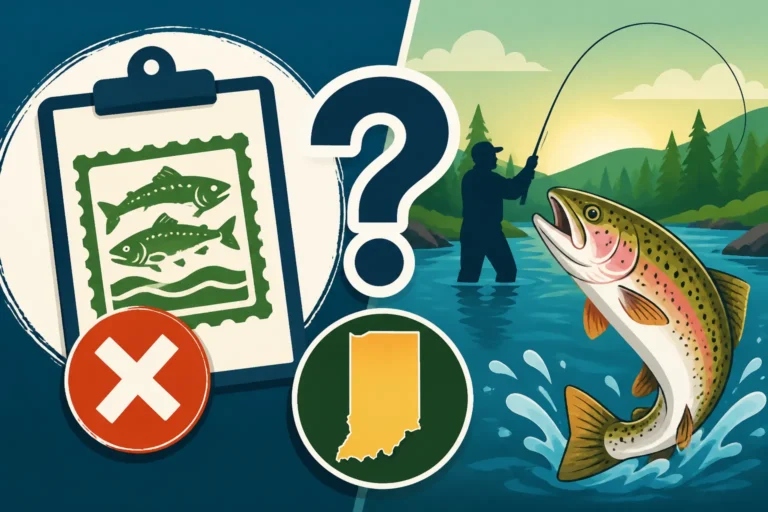
One of the most common oversights for visiting anglers is the Indiana Trout and Salmon Stamp. Many states include trout and salmon privileges within a general fishing license, but Indiana requires a separate stamp if you plan to target these species. This is particularly relevant for Ohio anglers who might be venturing to Lake Michigan's Indiana shoreline or its tributaries to chase the fall salmon run or spring steelhead.
- When You Need It: If you intend to fish for trout (like rainbow trout in stocked streams) or salmon (Chinook, Coho, or Atlantic salmon, as well as steelhead, which are migratory rainbow trout) anywhere in Indiana, you must purchase this additional stamp. This includes Lake Michigan, its tributary rivers like the St. Joseph River, and any designated trout streams throughout the state.
- Cost and Purchase: The Indiana Trout and Salmon Stamp Cost: $11 is typically around $11 for residents and nonresidents alike. You can purchase it at the same time you buy your main fishing license online, by phone, or from an authorized vendor. It's a small additional cost that saves you a lot of potential trouble if you're checked by a conservation officer while pursuing these exciting fish. For more details, check out Do You Need a Trout and Salmon Stamp to Fish for Trout?. Understanding What the Indiana Trout and Salmon Stamp Covers can prevent unexpected fines.
Adhering to Indiana's Fishing Regulations
Once you're fishing in Indiana's waters (outside of the reciprocal Ohio River zone where you follow Ohio rules with an Ohio license), you are fully subject to Indiana's fishing regulations. This means adhering to their specific daily bag limits, minimum size limits, and any gear restrictions. These rules can vary significantly from what you might be used to in Ohio, so it's critical to familiarize yourself with them before you cast your first line.
- Species-Specific Limits: Indiana has different rules for different species. For example, the daily bag limit for largemouth, smallmouth, and spotted bass combined might be different than Ohio's. Walleye have minimum length limits that vary by region or even specific lake. Panfish like bluegill and crappie also have daily limits.
- Special Regulations: Some lakes or rivers in Indiana have unique or experimental regulations designed to manage specific fisheries. Always check the Indiana DNR's current fishing guide, which is updated annually. You can usually find a digital copy on their website, or pick up a physical copy at most bait shops and DNR offices.
- Gear Restrictions: Pay attention to rules regarding the number of poles you can use, bait restrictions, or any closed seasons for certain species. For instance, while Amazon offers a wide variety of fishing gear, it's up to you to ensure any specific item meets Indiana's regulations.
The bottom line: Don't assume Indiana's rules are the same as Ohio's. A few minutes of research can save you a lot of hassle.
Consequences of Fishing Without a License
This is the part nobody wants to talk about, but it's vital for every angler to understand. Fishing without the required license or stamp in Indiana can lead to significant penalties. It's not just a slap on the wrist; it can be a costly mistake that ruins your entire trip and potentially impacts future fishing privileges.
- Fines: The most immediate consequence is typically a monetary fine. These fines can vary depending on the specific violation (e.g., no license versus no trout stamp) and whether it's a first offense or a repeat violation. Expect fines to be in the hundreds of dollars, far exceeding the cost of a license.
- Court Appearances: Depending on the severity of the violation or if it's a repeat offense, you might be required to appear in an Indiana court. This means taking time off work and traveling back to Indiana, adding significant inconvenience and expense. Our guide on Penalties and Fines for Fishing Without a License lays out the specifics.
- Seizure of Equipment: In some cases, conservation officers have the authority to seize your fishing equipment (rods, reels, tackle) and even your catch.
- Loss of Privileges: Serious or repeated violations can lead to the suspension of your fishing privileges in Indiana, and potentially in other states through interstate compacts.
It simply isn't worth the risk. Always double-check that you and everyone in your fishing party (especially if they are over the age requirement for a license) have the proper Indiana fishing license and any necessary stamps before you head out. A quick check of How to Get an Indiana Fishing License can prevent these issues.
Disclaimer
Please note that fishing regulations, license costs, and reciprocity agreements can change. While every effort has been made to provide accurate and up-to-date information in this guide, it is ultimately the angler's responsibility to verify the most current rules and regulations directly with the Indiana Department of Natural Resources (DNR) or other official sources before fishing. This guide is for informational purposes only and does not constitute legal advice.