Is a 1-Day or 7-Day License Cheaper for a Short Trip?
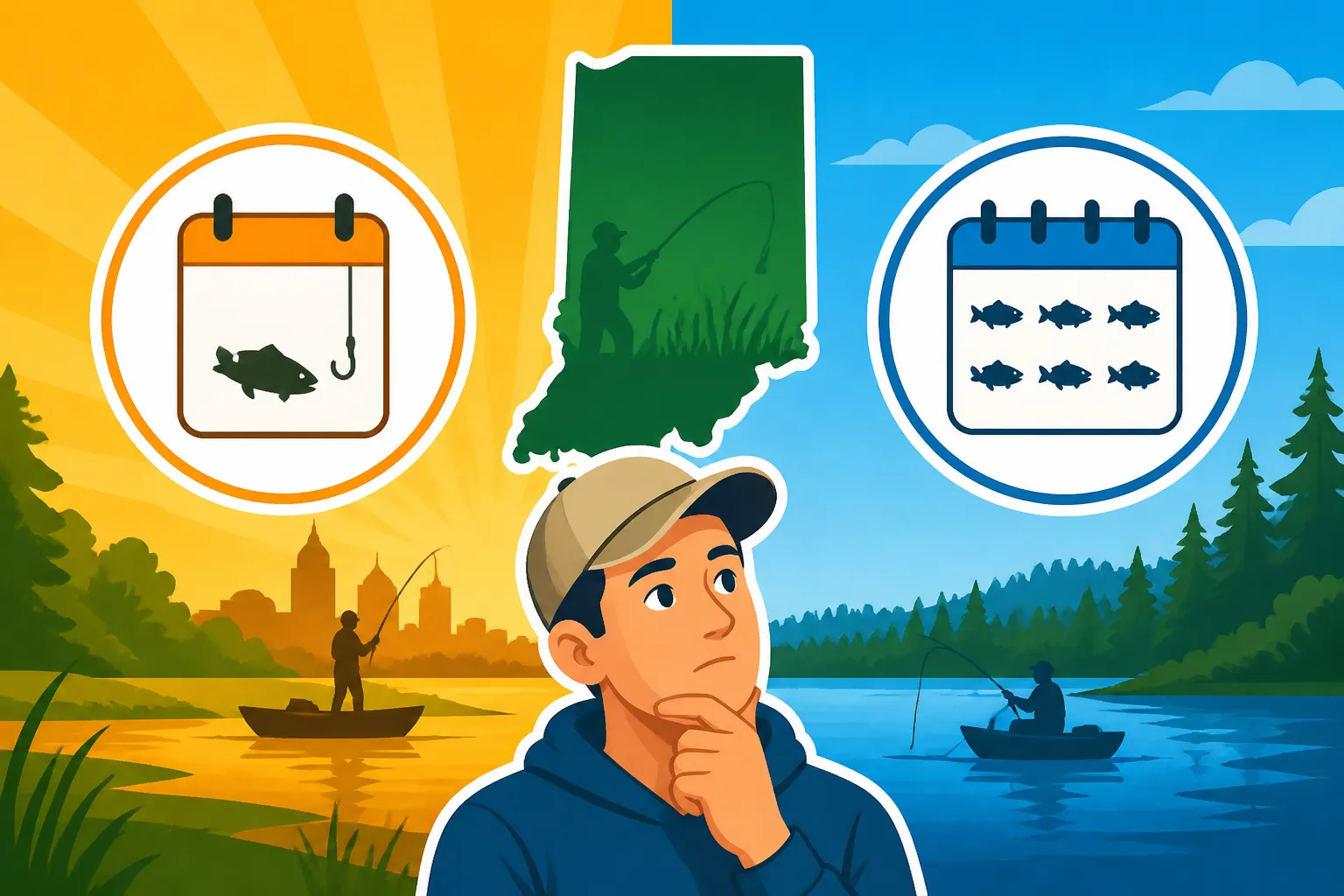
It's a common dilemma for anyone planning a quick fishing getaway to the Hoosier State: do you shell out for the 1-day nonresident license, or is it actually more cost-effective to spring for the 7-day option, even if you're only staying for a couple of days? This confusion is totally understandable, especially when you're trying to budget your trip and just want to enjoy some time on the water without overspending. This guide is here to break down the costs, benefits, and practical considerations for both Indiana nonresident fishing license options, helping you make the smartest choice for your short trip.
Understanding Indiana's Nonresident Fishing License Options
Indiana truly welcomes anglers from all over, offering a couple of flexible short-term fishing license options designed specifically for nonresidents. These aren't just arbitrary prices; they're set to give visitors a choice depending on how long they plan to wet a line. It’s all about making fishing accessible, whether you’re passing through for a day or enjoying a full week exploring our beautiful lakes and rivers. Getting familiar with these choices is the first step to a hassle-free trip.
The Nonresident 1-Day Fishing License
Let’s talk about the shortest-term option first: the nonresident 1-day fishing license. This license is perfect for those spontaneous fishing trips or if you’re just visiting for a single day and know that's all the time you'll have on the water. Maybe you’re on a road trip, and a shimmering lake just catches your eye, or perhaps you're visiting family and want to sneak in a quick morning of fishing on one of Indiana's many diverse waterways.
Currently, the price for a Nonresident 1-Day Fishing License Price is $9. It's a straightforward fee, and what you get is valid for a 24-hour period from the time of purchase, giving you the flexibility to start fishing whenever it suits your schedule. This can be particularly convenient if you decide last-minute to try your luck at a local hot spot. However, remember this doesn't include the Trout and Salmon Stamp, which you'll need if you're targeting those specific species in designated waters. If you're planning on fishing Lake Michigan or some of our stocked trout streams, you'll need to factor in that additional cost.
The Nonresident 7-Day Fishing License
For those who might be staying a bit longer, even if it's not a full seven days, Indiana offers the nonresident 7-day fishing license. This option gives you a whole week of fishing opportunities, which can be fantastic if your plans are a bit more fluid, or if you anticipate getting out on the water for more than just one day. Think of a long weekend getaway, a family vacation where you might fish a few times, or even a work trip with a couple of free evenings.
The Nonresident 7-Day Fishing License Price is $20. While it's more than the 1-day license, the value becomes apparent when you consider multiple fishing outings. For instance, if you fish two separate days within a week, you've already saved money compared to buying two 1-day licenses. This license is valid for seven consecutive days from the date of purchase, offering a broader window of opportunity. Like the 1-day option, it generally does not include the Trout and Salmon Stamp, so keep that in mind if you're targeting those cold-water species, especially if you're headed up to Lake Michigan or any of Indiana's other trout-stocked waters.
Comparing Costs: 1-Day Versus 7-Day for Your Trip
This is where the rubber meets the road! The biggest question on most anglers' minds is whether to get the 1-day or 7-day license. It really boils down to simple math and understanding your own trip dynamics. Nobody wants to pay more than they have to, and it’s a valid concern when you're just looking to enjoy a bit of fishing without breaking the bank. Let’s look at some common scenarios to help clarify the decision.
The Breakeven Point: When Does the 7-Day Become Cheaper?
It might seem obvious, but the 7-day license truly starts to pay for itself when your fishing plans extend beyond a single day. At $9 for a 1-day license and $20 for a 7-day license, the math is pretty clear. If you anticipate fishing for two full days within a seven-day period, two 1-day licenses would cost you $18 ($9 x 2), making the $20 7-day license only slightly more expensive but giving you five extra potential fishing days.
However, the real value kicks in on the third day. If you fish for three days in a week, three 1-day licenses would set you back $27, while the 7-day license remains at a flat $20. This makes the 7-day license significantly more economical if your trip is going to span more than two separate days of fishing. For example, if you're visiting a friend near Monroe Lake: Indiana's Largest Lake for Bass Fishing for a long weekend, Friday, Saturday, and Sunday, the 7-day license is definitely the smarter choice. It gives you the flexibility to fish all three days, or even more, without worrying about individual daily purchases.
Additional Costs: The Trout and Salmon Stamp
It's really important not to forget about the Indiana Trout and Salmon Stamp Requirements. If your fishing adventure in Indiana involves targeting trout or salmon, particularly in our beautiful Lake Michigan waters or specific stream stocking locations, you'll need this additional stamp. The Indiana Trout and Salmon Stamp Cost is $11. This stamp is an add-on to your base fishing license, whether you choose the 1-day or 7-day nonresident option.
So, for example, if you're coming to Indiana specifically for the Fall Salmon Run Fishing on Lake Michigan in Indiana and plan to fish for a day, your total cost would be $9 (1-day license) + $11 (Trout/Salmon Stamp) = $20. If you plan a longer trip, say three days to really get after those coho and chinook, your cost would be $20 (7-day license) + $11 (Trout/Salmon Stamp) = $31. Always factor this into your budgeting, especially if you're heading to the northern part of the state where these species are prevalent. Many anglers realize this crucial detail too late, leading to an unexpected expense at the tackle shop.
Practical Considerations for Your Short Fishing Trip
Beyond just the dollars and cents, there are practical aspects that can influence your decision. Sometimes convenience or the sheer unpredictability of a trip can steer you toward one option over another. It's not always about the absolute lowest price; sometimes it's about peace of mind or flexibility.
Flexibility and Convenience for Unpredictable Schedules
Life happens, and sometimes a planned single day of fishing turns into two, or vice-versa. The 7-day license offers a lot more wiggle room for those unpredictable moments. Imagine you buy a 1-day license, fish hard, and then the weather turns perfect the next day, or a friend calls with an invitation to hit another lake. If you had the 7-day license, you're covered! You can just grab your gear and go.
With a 1-day license, you'd have to go through the purchasing process again, which, while easy online or at a local retailer, still takes time out of your fishing day. For me, the peace of mind that comes with a 7-day license when I'm on a short trip is often worth the small extra cost. It removes the stress of needing to purchase another license if plans change, allowing you to truly relax and focus on the fishing. You can purchase your Indiana Fishing License Online in Indiana through the DNR website or even through authorized retailers like Walmart or some bait shops.
Considering the Indiana Fishing License Year
One often-overlooked detail for nonresidents is how Indiana's fishing license year works. Unlike some states that run licenses on a calendar year, Indiana's licenses run from April 1st through March 31st of the following year. This means if you buy an annual license in, say, February, it's only good for about two months. For short-term nonresident licenses, this isn't as critical, but it's good to be aware of if you ever consider a full-year nonresident license.
For a 1-day or 7-day license, the validity period starts from your purchase date, regardless of the overall license year. So if you buy a 7-day license on September 15th, it's good through September 21st, even though the state's official license year ends the following March. This system makes the short-term licenses much simpler to understand for visitors, as you don't have to worry about prorated costs or how much "time" you're losing on an annual pass. You simply pay for the specific duration you need.
Shopping for Gear and Supplies
While you're planning your trip and considering license options, don't forget to stock up on the right gear. Whether you need new lures, a heavier fishing line, or maybe even a new tackle box, there are plenty of resources available. Many anglers find great deals and a wide selection of fishing tackle on Amazon, from popular brands like Bass Pro Shops to smaller, specialty items.
Having the right equipment can make all the difference, especially if you're targeting specific species. For instance, if you’re trying to catch walleye in our glacial lakes, you might need specific jigs or crankbaits. If you’re just getting into fishing, a basic setup is fine, and you can often find affordable starter kits. Even small things, like a good pair of polarized sunglasses (often available on Amazon) can greatly enhance your ability to spot fish and protect your eyes on the water. Make sure you're prepared for your adventure!
When to Opt for Each License Type
Let's summarize the ideal scenarios for each license type to give you a clear roadmap. It’s all about aligning your license choice with your actual trip plans and desired flexibility. There's no single "best" option; it's truly about what fits your specific needs.
Ideal Scenarios for the 1-Day License
The 1-day nonresident license is truly designed for precision and brevity. If you are absolutely certain that you will only be fishing for a single day, this is your most economical choice. Think of a spontaneous afternoon trip while visiting friends in Indianapolis, or a quick stop at a local pond on your way through the state. It’s for those moments when you just want to dip a line for a few hours and aren't planning a multi-day fishing excursion.
This option is perfect for:
- One-off fishing outings: You have one specific day blocked out for fishing and no intention of going out again during your stay.
- "Testing the waters": You're unsure if you'll enjoy fishing in Indiana or if the conditions will be good, so you commit to just one day.
- Travel layovers: You have a long layover near a fishing spot and want to kill a few hours productively.
- Free Fishing Days: Remember that you don't need a license on Indiana Free Fishing Days Guide, so if your single day coincides, you're set! But if it's any other day, the 1-day option is your go-to.
Ideal Scenarios for the 7-Day License
The 7-day nonresident license offers superior value and flexibility for almost any trip lasting more than a single day. As we saw earlier, even two separate days of fishing within a week make the 7-day license a financially savvy decision. But the real benefit comes in the freedom it provides. You won't have to worry about buying another license if your plans extend or if the fishing is just too good to quit.
This option is perfect for:
- Weekend trips: If you're coming for a Friday-Sunday or Saturday-Monday trip, this license covers all your bases. You can fish every day if you want!
- Vacations and extended stays: Even if you only plan to fish on 2 or 3 separate days during a week-long vacation, the 7-day license is more cost-effective.
- Uncertain schedules: If you're unsure how many days you'll actually get to fish but know it could be more than one, the 7-day license is a safe bet.
- Exploring multiple locations: Planning to hit a few different spots, like perhaps a day on Patoka Lake Fishing Guide for Bass and Crappie and another day on a smaller local river? The 7-day license means you're covered for all your explorations.
Ultimately, the choice comes down to your individual itinerary. If you know you’re truly only fishing for one calendar day, the 1-day license saves you $11. But for any multi-day trip, even if it’s just a couple of days, the 7-day license offers better value and a lot less hassle.
Important Information for Nonresident Anglers
Beyond just the license cost, there are a few other bits of information that every nonresident angler visiting Indiana should be aware of. Knowing these details can save you from potential headaches and ensure your fishing trip is as enjoyable and legal as possible.
Age Requirements for Fishing Licenses
One of the best things about fishing in Indiana is that it's very family-friendly when it comes to licenses. Do Indiana Residents Under 18 Need a Fishing License? The answer is no, and this applies to nonresidents too! Kids Fish Free Until Age 18 in Indiana, so if you're planning a trip with your youngsters, they don't need their own license. This is a huge bonus for family vacations and can save you a good chunk of change, letting you focus on teaching them the joys of the sport.
However, once someone turns 18, the adult nonresident license requirements kick in. So, while your 17-year-old might be fishing for free, their 18-year-old sibling will definitely need to purchase either a 1-day or 7-day nonresident license (plus the Trout and Salmon Stamp if applicable). It's a small detail that can make a big difference in planning your family's fishing budget.
Reciprocity with Neighboring States
If you live in a state bordering Indiana, you might wonder if your home state's fishing license works here, or vice-versa. Unfortunately, for most general fishing, there's no widespread reciprocity. Does an Ohio Fishing License Work in Indiana? Generally, no. Does a Michigan Fishing License Work in Indiana? Again, usually not for the entirety of the state's waters.
Indiana Fishing License Reciprocity With Ohio, Michigan, Illinois, and Kentucky is quite limited. While there are some very specific exceptions on border waters, especially for certain parts of the Ohio River or Lake Michigan, for the most part, if you are fishing in Indiana waters, you need an Indiana fishing license. Always assume you need an Indiana license unless you have explicitly confirmed a specific, narrow reciprocity agreement for the exact body of water you plan to fish. It's better to be safe than sorry and avoid potential Penalties and Fines for Fishing Without a License. When in doubt, buy the Indiana license.
Where and How to Purchase Your License
Getting your Indiana nonresident fishing license is thankfully pretty easy these days. You have a few convenient options, so you won't have to jump through hoops just to get on the water.
You can always head to the Indiana Department of Natural Resources (DNR) website. This is often the quickest and most direct way to get your license. The process for Indiana Fishing License Sign-Up Takes Just a Few Minutes Online, and you can print your license right from home or save it digitally on your phone. If you prefer to buy in person, many sporting goods stores, bait shops, and even some Walmart or Kmart locations throughout Indiana are authorized license vendors. This allows you to chat with local experts and maybe pick up some essential gear at the same time.
For those who prefer to call, you can also purchase a license over the phone through the DNR's customer service line. This offers a great alternative if you're not near a computer or vendor. Just remember that no matter how you buy it, make sure you have it with you while fishing – either a physical copy or an accessible digital one on your device.
License Cost Comparison Table for Nonresidents
To give you a quick visual summary, here’s a breakdown comparing the 1-day and 7-day nonresident fishing licenses in Indiana. This table includes the base cost and what it looks like if you add the Trout and Salmon Stamp, which is often a necessary addition for certain types of fishing.
| License Type | Base Cost | Cost with Trout/Salmon Stamp | Validity Period | Best For |
|---|---|---|---|---|
| Nonresident 1-Day | $9 | $20 ($9 + $11) | 24 hours from purchase | Single, planned fishing day; spontaneous trips |
| Nonresident 7-Day | $20 | $31 ($20 + $11) | 7 consecutive days | Any trip involving 2+ fishing days in a week |
As you can see, if you're planning on fishing for any more than a single 24-hour period, especially if you need that Trout and Salmon Stamp, the 7-day option quickly becomes the more economical and convenient choice. It's a small difference that can save you both money and hassle in the long run.
Final Thoughts on Your Indiana Fishing Adventure
Choosing between a 1-day or 7-day nonresident fishing license for your short trip to Indiana doesn't have to be a complicated decision. By considering the length of your stay, how many times you truly plan to fish, and whether you'll need the additional Trout and Salmon Stamp, you can easily determine which option offers the best value and convenience for your specific needs. Most visitors find that for anything beyond a truly one-off fishing experience, the 7-day license is the smartest investment, giving you peace of mind and more flexibility to enjoy Indiana's incredible fishing opportunities. Don't let license choices overshadow the excitement of your trip; get the right one, grab your gear (perhaps from Amazon for convenience), and hit the water!
Disclaimer
Please remember that fishing regulations, license costs, and requirements can change. While every effort has been made to provide accurate and up-to-date information, it is always your responsibility to verify the latest regulations directly with the Indiana Department of Natural Resources (DNR) before you go fishing. This content is for informational purposes only and should not be considered legal advice.