Walleye Length Exceptions at Bass Lake, Wolf Lake, and Lake George
It's incredibly frustrating when you're just trying to enjoy a peaceful day of fishing, but the rules seem to change depending on which body of water you're casting into. You thought you had a handle on the statewide walleye regulations, only to discover that certain lakes have their own unique set of rules, leaving you second-guessing every keeper. This guide is designed to clear up that confusion, specifically diving deep into the walleye length exceptions found at Bass Lake, Wolf Lake, and Lake George in Indiana, so you can fish with confidence and stay on the right side of the law.
The Standard Statewide Walleye Rule in Indiana
Before we dive into the exceptions, it's crucial to understand the baseline. Indiana has a general set of fishing regulations that apply to most of its inland waters, and walleye are no exception. These rules are put in place to manage fish populations, ensure sustainable harvesting, and provide good fishing opportunities for everyone. Deviating from these can lead to penalties and fines for fishing without a license.
Understanding the Standard Minimum Length
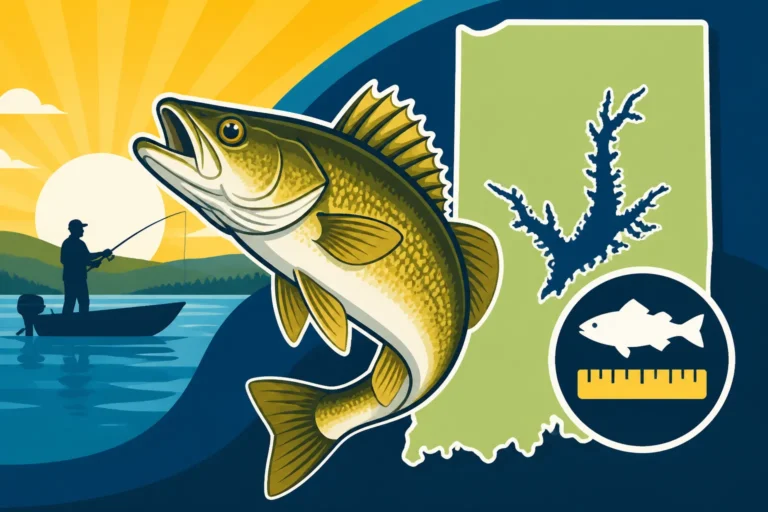
For the vast majority of Indiana's lakes and rivers, if you're lucky enough to hook into a walleye, it needs to be at least a certain size to be legally kept. The standard minimum length for walleye throughout much of Indiana is 14 inches. This means if your walleye measures less than that from the tip of its nose to the end of its tail, it needs to be immediately and carefully released back into the water. This rule applies whether you're fishing north of State Road 26 or south of it, making it fairly straightforward for most anglers.
The daily bag limit for walleye across the state generally follows a similar pattern, allowing anglers to keep a certain number of fish per day, provided they meet the length requirement. For most areas, this limit is six walleye per person per day. It’s a pretty generous limit, designed to allow anglers to take home a good meal while still protecting the overall population from overfishing. Always remember to check the current Indiana Fishing Regulations and Bag Limits Guide before heading out, as rules can occasionally be updated.
Why Statewide Rules Are in Place
The Indiana Department of Natural Resources (IDNR) doesn't just pull these numbers out of a hat. These statewide regulations are the result of extensive biological research and population surveys. The 14-inch minimum length for walleye, for instance, is typically set to allow fish to reach sexual maturity and spawn at least once, if not multiple times, before they're harvested. This ensures that enough fish reproduce each year to maintain healthy population levels.
Without these kinds of rules, it would be all too easy for anglers to decimate a walleye population, especially with modern fishing techniques and gear. Imagine if everyone kept every small walleye they caught; the next generation of fish would suffer dramatically, leading to a decline in fishing quality for everyone in the long run. These rules act as a critical conservation tool, balancing recreational fishing opportunities with the long-term health of the fishery. They aim to create a sustainable environment where walleye can thrive, providing a consistent challenge and reward for anglers for years to come.
Bass Lake's Unique Walleye Regulations
Now, let's talk about where things get a little different. Bass Lake, nestled in Starke County, is a popular destination for many Indiana anglers, and it's one of those places that marches to the beat of its own drum when it comes to walleye. If you're planning a trip there, ignoring these specific rules could turn a great day into a frustrating one.
Specific Length and Bag Limits for Bass Lake
At Bass Lake, the walleye length limits diverge significantly from the statewide standard. Instead of the typical 14-inch minimum, anglers at Bass Lake are allowed to keep walleye that are at least 10 inches long. Yes, you read that right – 10 inches! This is a notable departure, and it's one of the specific rules detailed in the Bass Lake Walleye Length Limit Is Different From the Rest of the State article. However, there’s an important catch: only one walleye over 18 inches can be included in your daily bag.
The daily bag limit at Bass Lake is also set at six walleye per day, similar to the statewide rule. But the combination of the lower minimum length and the "one over 18 inches" restriction creates a very different fishing dynamic. It means you can keep more of the smaller, eater-sized walleye, but you can only take one trophy-sized fish home. This is a critical detail that often catches anglers off guard if they're not accustomed to localized regulations.
Reasons Behind Bass Lake's Exceptions
So, why the special treatment for Bass Lake? The IDNR has specific management goals for each body of water, and Bass Lake presents a unique set of circumstances. Often, a lower minimum length limit is implemented in lakes where walleye growth rates might be slower, or where the population dynamics suggest that harvesting smaller fish can actually be beneficial. For instance, if there's an abundance of smaller walleye and a relative scarcity of larger forage fish, allowing anglers to remove some of the smaller walleye can reduce competition and allow the remaining fish to grow larger and healthier.
Furthermore, the "one over 18 inches" rule is a common strategy to protect the lake's breeding stock of larger, more mature walleye. These bigger fish are crucial for successful spawning and ensuring future generations. By limiting the harvest of large individuals, the IDNR helps maintain a healthy age structure within the population, which contributes to overall fishery stability. This nuanced approach helps tailor regulations to the specific ecological conditions and angler desires for Bass Lake, aiming for a robust and self-sustaining walleye population.
Wolf Lake's Special Walleye Zone
Moving to the northwest corner of the state, we encounter Wolf Lake, a unique urban fishery that straddles the Indiana-Illinois border. Its geographical position, and the management decisions stemming from it, make its walleye regulations particularly interesting and distinct from the rest of Indiana.
Navigating Walleye Rules on Wolf Lake
Wolf Lake presents a truly unique scenario for anglers due to its shared waters. Unlike most Indiana lakes, Wolf Lake’s walleye regulations are a result of a cooperative agreement between Indiana and Illinois. For Indiana waters of Wolf Lake, the general walleye regulations stipulate a 14-inch minimum length and a daily bag limit of six fish. However, the wrinkle comes into play because Illinois has slightly different rules, and anglers often cross the invisible state line without realizing it.
If you're fishing specifically in the Indiana portion of Wolf Lake (predominantly the eastern section), you'll adhere to Indiana's standard 14-inch minimum and six-fish bag limit. But the close proximity to Illinois waters, where regulations might vary, makes it crucial to be aware of your exact location. For instance, sometimes Illinois might have a different slot limit or even a more restrictive minimum length. The IDNR website, or an official printed guide, found on sites like Amazon if you're looking for a physical copy, is your best bet for the most current information regarding Wolf Lake Walleye Length Exception in Lake County.
The Interstate Agreement's Impact
The shared nature of Wolf Lake means that fisheries management isn't solely in the hands of the Indiana DNR. Instead, it often involves discussions and agreements with the Illinois Department of Natural Resources. These interstate agreements are put in place to ensure consistency and effective management of the shared resource. Without such coordination, one state's regulations could undermine the conservation efforts of the other, leading to confusion for anglers and potential harm to fish populations.
For example, if Indiana allowed a much smaller minimum length and Illinois didn't, anglers might flock to the Indiana side to keep smaller fish, disproportionately impacting the walleye population in that section of the lake. Conversely, if one state had very restrictive rules and the other didn't, it could create unfair advantages or disadvantages for anglers depending on which side of the lake they chose to fish. These agreements aim to harmonize the rules as much as possible, or at least clearly delineate where different rules apply, providing clarity and promoting effective, collaborative conservation of the Lake Michigan Fishing Rules for Indiana Anglers and its surrounding waters.
Lake George's Distinct Walleye Management
Nestled in Steuben County in the northeastern part of Indiana, Lake George is another water body with specific walleye regulations that every angler should be aware of. While not as dramatically different as Bass Lake, its rules still deviate from the statewide norm and are important for responsible fishing.
Unpacking Lake George's Walleye Size Restrictions
For Lake George, the walleye length limit is set at 15 inches. This is slightly higher than the general statewide minimum of 14 inches. The daily bag limit, however, remains consistent with the statewide rule at six fish per day. This minor increase in the minimum length means that any walleye caught in Lake George must be an inch longer than what's permitted in many other Indiana lakes before it can be legally harvested.
This seemingly small difference of one inch can be significant in terms of fish management. It means that walleye in Lake George have an extra period of growth, potentially allowing them to mature further or contribute more to the lake's ecosystem before they are eligible for harvest. Anglers accustomed to the 14-inch rule might inadvertently keep an undersized fish if they're not specifically aware of Lake George's slightly stricter requirement. This is another example of how Indiana Walleye Length Limits by Lake can vary.
Conservation Efforts and Local Ecosystems
The decision to implement a 15-inch minimum length for walleye in Lake George is typically driven by specific conservation goals tailored to that particular lake's ecosystem and walleye population dynamics. Factors such as natural reproduction rates, growth rates, forage availability, and angling pressure all play a role. If the IDNR determines that walleye in Lake George might benefit from an extra year of growth to ensure more successful spawning or to reach a more robust size, a slightly higher minimum length is a logical step.
This tailored approach demonstrates a commitment to managing each fishery as a unique entity rather than applying a blanket rule across the entire state. Lake George’s ecosystem might support walleye growth that allows them to reach 15 inches fairly consistently, and by protecting them for that extra inch, the IDNR can ensure a more stable and productive fishery. These localized rules are fundamental to ensuring the long-term health and vitality of our natural resources, providing consistent fishing opportunities for generations to come.
Why These Lakes Are Different
It’s easy to get frustrated when you encounter different rules for different lakes, but there's always a solid reason behind these variations. Fisheries management is a complex science, and the goal is always to maximize both conservation and recreational opportunities. Understanding the "why" can help ease the frustration.
Factors Influencing Localized Regulations
Several key factors contribute to the establishment of localized walleye regulations. It's not arbitrary; it's a calculated decision based on scientific data and management objectives.
- Population Dynamics: The current health, density, and age structure of the walleye population in a specific lake are paramount. For instance, if a lake has a booming population of smaller walleye, reducing the minimum length (like at Bass Lake) might be a way to thin the population, reduce competition for food, and allow the remaining fish to grow faster. Conversely, if a lake’s population is struggling, a higher minimum length might be imposed to protect more fish until they can spawn.
- Growth Rates: Walleye growth rates can vary significantly from lake to lake, influenced by water temperature, food availability, and genetics. In colder, less fertile lakes, walleye might grow slower, necessitating a different length limit to ensure they reach maturity before harvest. The Walleye Minimum Length North of State Road 26 and Walleye Minimum Length South of State Road 26 in Indiana often consider these regional differences.
- Forage Base: The types and abundance of prey fish available to walleye play a huge role. Lakes with a rich supply of shad, alewives, or other baitfish might support faster-growing, larger walleye, while lakes with a sparser forage base might produce smaller fish. Regulations are adjusted to reflect what the lake can naturally sustain.
- Angling Pressure: Lakes that receive heavy fishing pressure might require more restrictive rules (like slot limits or higher minimums) to protect the fish from overharvest. Conversely, lesser-fished lakes might have more liberal rules.
- Habitat Quality: The overall health of the lake's habitat, including water quality, spawning areas, and cover, impacts fish populations. Regulations can be part of a broader plan to support a struggling habitat.
- Interstate Agreements: As seen with Wolf Lake, shared bodies of water often require collaboration between states, leading to unique, harmonized, or specifically delineated rules that address multi-jurisdictional challenges. This highlights Why Bass Lake and Wolf Lake Have a Lower Walleye Limit.
Impact on Anglers and Conservation
These localized rules, while sometimes confusing, are ultimately beneficial for both anglers and conservation. For anglers, they contribute to more sustainable and often higher-quality fishing experiences. When regulations are tailored to a specific lake, it helps prevent overfishing, maintains healthy populations, and can even lead to better chances of catching larger fish in the long term. Imagine a lake where all walleye are harvested young; you'd never catch a trophy.
From a conservation standpoint, these exceptions are a testament to adaptive management. The IDNR monitors these fisheries closely, using data to make informed decisions that ensure biodiversity and ecological balance. It's about preserving the natural resources for future generations of anglers. So, while it might mean an extra glance at the rulebook before you hit a new lake, it's a small price to pay for ensuring our incredible Indiana fisheries remain vibrant and productive. Always consult the latest Indiana Fishing License Requirements Explained as well, as these can also affect your ability to fish legally.
Staying Informed and Compliant
It's clear that fishing in Indiana, especially for popular species like walleye, isn't a one-size-fits-all endeavor. The nuances of regulations, particularly concerning length and bag limits, mean that staying informed isn't just a good idea—it's essential for a successful and legal outing.
Checking Current Regulations Before You Go
The single most important piece of advice for any angler in Indiana is to always check the most current regulations before you head out to fish, especially if you're visiting a new lake or haven't fished in a while. Rules can change, and what was valid last year might not be this year.
The primary source for all Indiana fishing regulations is the Indiana Department of Natural Resources (IDNR). They publish an annual Fishing Guide, which is available in print at bait shops, license vendors, and DNR offices, or as a downloadable PDF on their website. This guide is your bible when it comes to understanding all the rules, from walleye limits to Indiana Trout and Salmon Stamp Requirements. It's also where you'll find details on Walleye Minimum Length North of State Road 26 and south.
Beyond the official guide, many local bait shops or marinas at specific lakes often have signs or handouts detailing the local rules. Don't be shy about asking the folks behind the counter; they're usually a wealth of knowledge about local conditions and regulations. A quick search on your phone before you leave home can also save you a lot of hassle. Just be sure you're getting information from an official source like the IDNR website.
Tools and Resources for Anglers
In today's digital age, staying informed is easier than ever. There are several tools and resources available that can help you keep track of regulations and enhance your overall fishing experience.
- Official IDNR Website and Mobile Apps: The IDNR website is continually updated and is the definitive source for all regulations. They also have mobile applications that can provide quick access to rules, license purchasing (Buying a Fishing License Online in Indiana), and even fish identification. Keeping these on your phone is a smart move.
- Waterproof Regulation Cards/Guides: Some companies produce laminated cards or small guides that summarize regulations for specific states or regions. While not always official, they can be a handy quick-reference, especially if you confirm their accuracy with the official IDNR guide. You might find some useful accessories like waterproof cases for your phone or printed regulations on Amazon to keep them safe and accessible while on the water.
- Fish Measuring Tools: A good, accurate fish measuring board or tape is indispensable, especially when dealing with specific length limits like those for walleye. Make sure your measuring device is clearly marked and easy to read. Many online retailers and local tackle shops carry a variety of these, including those designed for specific fish species.
- Community Forums and Social Media Groups: While not official sources, local fishing forums and social media groups can be great places to ask questions and learn from experienced local anglers about current conditions and nuances of regulations. Just remember to cross-reference any information with official IDNR sources. Discussions around topics like Best Walleye Fishing in Indiana often involve detailed rule discussions.
- The Power of Observation: When you're on the water, pay attention to what other anglers are doing. If you see someone measuring every fish meticulously or releasing fish you thought were keepers, it might be a sign to double-check your understanding of the rules for that specific lake.
By utilizing these resources, you can ensure that your fishing adventures in Indiana are both enjoyable and compliant, allowing you to focus on the thrill of the catch rather than worrying about the rules. Remember, understanding the specifics of Walleye Fishing in Indiana: A Complete Guide will vastly improve your success.
Walleye Length and Bag Limits: At a Glance
Here's a quick comparison of the walleye regulations for the general statewide rule versus the specific lakes discussed:
| Body of Water | Minimum Length (Inches) | Daily Bag Limit | Notes |
|---|---|---|---|
| Statewide (General) | 14 | 6 | Applies to most inland waters in Indiana. |
| Bass Lake | 10 | 6 | Only one walleye over 18 inches may be kept in daily limit. |
| Wolf Lake (Indiana) | 14 | 6 | Be aware of Illinois regulations if fishing near the border. |
| Lake George | 15 | 6 | Slightly higher minimum length than statewide rule. |
This table serves as a handy reminder, but always refer to the official IDNR fishing guide for the most up-to-date and complete information.
Disclaimer
The information provided in this article is for general guidance and informational purposes only. While we strive to provide accurate and up-to-date content, fishing regulations can change. It is always the angler's responsibility to consult the most current official Indiana Department of Natural Resources (IDNR) fishing guide or website before engaging in any fishing activities to ensure full compliance with all applicable laws and regulations.