Best Fish Finders Under $300 for Indiana Anglers
It’s a common frustration among Indiana anglers: you want to up your fishing game with a fish finder, but the thought of dropping a massive chunk of change on a high-end unit makes your wallet weep. Many of us feel like we need to choose between a month's worth of bait or a fancy piece of electronics. This guide is here to tell you that you absolutely can get a capable fish finder without emptying your savings, offering solid options and practical advice for under that $300 mark, specifically for our diverse Indiana waters.
The Truth About Affordable Fish Finders in Indiana
Let's be real, the world of fishing electronics can feel incredibly intimidating. You see professional anglers on TV with screens that look like fighter jet cockpits, and it's easy to assume that anything less just won't cut it. But for the vast majority of us who fish Indiana's lakes, rivers, and reservoirs, a feature-rich, yet affordable fish finder can make a world of difference without requiring a second mortgage. You’re not just guessing anymore; you’re seeing structure, reading depths, and yes, even spotting fish.
Why You Don't Need to Break the Bank for Great Fishing
The biggest secret many seasoned anglers will tell you is that the most expensive unit doesn't automatically make you a better fisherman. What makes you better is understanding your equipment and the water you're fishing. A sub-$300 fish finder provides all the fundamental information you need to make informed decisions. You'll gain crucial insights into bottom composition, water depth, and the presence of fish or bait schools – information that can drastically improve your catch rates. Think of it as a solid pair of binoculars versus a high-powered telescope; both let you see a long way, but one is perfectly sufficient for most everyday observations, and certainly for spotting a deer in a distant field. For exploring Best Fishing Spots in Indiana, a reliable, affordable fish finder is more than enough to get started.
You might be surprised by the capabilities packed into these budget-friendly units. Many come from reputable brands that also make the top-tier models, so you're still getting quality engineering, just with a more focused feature set. They’re designed for people like us who love to fish but have other bills to pay. You'll find these dependable units at retailers like Bass Pro Shops or even online at Amazon, making them easily accessible.
Common Misconceptions About Entry-Level Units
One of the biggest myths is that cheaper fish finders are unreliable or inaccurate. While they might not have the ultra-high-definition screens or advanced networking capabilities of units costing thousands, their core sonar functionality is often remarkably accurate. They'll tell you the depth, show you the bottom contour, and indicate fish arches with precision. Another misconception is that they're hard to use. In fact, many affordable units are designed with simplicity in mind, featuring intuitive interfaces that are perfect for beginners or those who just want to spend more time fishing and less time fiddling with settings.
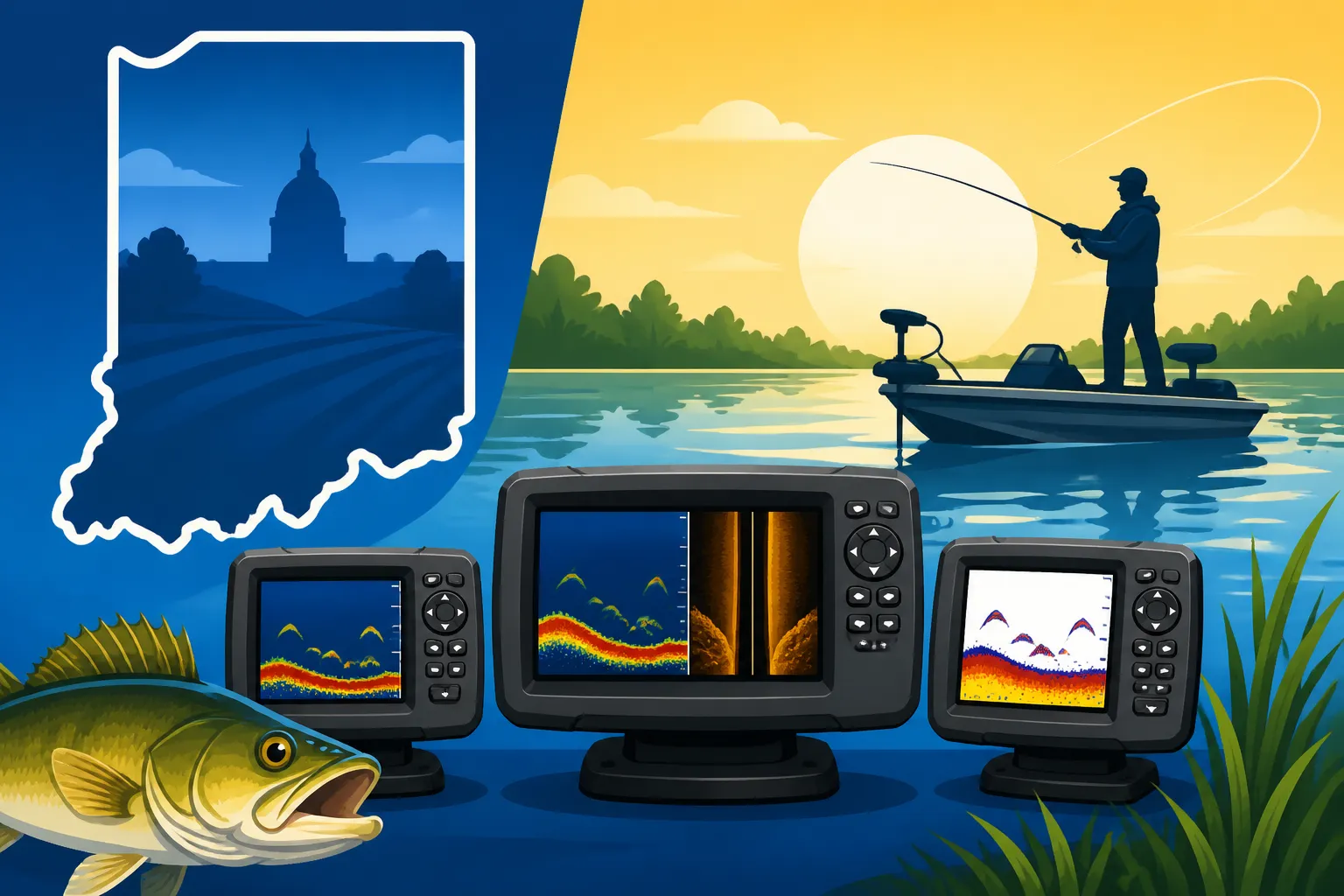
You might also hear that you can't get advanced features like Down Imaging (DI) or CHIRP sonar in this price range. While premium Side Imaging might be a stretch, many units under $300 do offer excellent Down Imaging, which gives you a photo-like view of what's directly beneath your boat. This feature alone can be a game-changer for identifying submerged timber, rock piles, or weed lines where fish love to hide. So, don't let the marketing hype of the super-expensive units scare you away from exploring genuinely powerful options within your budget.
Essential Features to Prioritize for Under $300
When you're shopping for a fish finder with a strict budget, it’s all about making smart choices and prioritizing what genuinely helps you on the water. You can't have every bell and whistle, but you can certainly get the crucial ones. Understanding the core technologies and features will help you pick the perfect companion for your Indiana fishing adventures, whether you’re on a small jon boat or a Kayak Fishing Gear for Indiana Waters setup.
Sonar Technology: Traditional, DownScan, and SideScan Realities
- Traditional Sonar (2D): This is the bread and butter of all fish finders, and even the most affordable units excel at it. It uses a cone-shaped beam to show you depth, bottom structure, and fish as "arches." For most general fishing, especially in Indiana's smaller lakes and rivers, this is all you truly need. It’s excellent for finding ledges, drop-offs, and general fish presence.
- Down Imaging (DI) / DownScan: This is where budget units really start to shine. Many fish finders under $300 now include Down Imaging, which provides a much clearer, photo-like view of what's directly below your boat. Instead of abstract arches, you'll see detailed images of submerged trees, brush piles, or individual rock structures. This is invaluable for pinpointing exactly where fish might be relating to cover. If you can get a unit with this feature, it's highly recommended.
- Side Imaging (SI) / SideScan: This is generally the feature that pushes units beyond the $300 price point. Side Imaging allows you to scan areas to the left and right of your boat, covering a much wider swath of water. While it's incredibly powerful, it's also more expensive. For the under-$300 category, expect it to be rare or absent. Don't fret, though; a good Down Imaging unit combined with smart boat positioning can still give you a fantastic advantage. For many of us, knowing what's under the boat is the most immediate priority.
Display Quality and User-Friendliness on a Budget
When you're keeping costs down, you might not get a massive, ultra-high-definition touchscreen. However, you can expect a perfectly functional color display that's easy to read in most conditions.
- Screen Size: Units in this price range typically have screens from 3.5 inches up to 5 inches. While bigger is always nice, a 5-inch screen offers plenty of real estate for displaying sonar data clearly. Prioritize resolution over sheer size; a higher pixel count on a smaller screen can be more detailed than a low-resolution image on a large one.
- Color vs. Black & White: Nearly all new fish finders, even at this price point, come with color displays. Color helps immensely in distinguishing between different types of returns – for instance, hard bottom might appear red, soft bottom blue, and fish arches in yellow or orange. This makes interpretation much easier than older black and white units.
- Ease of Use: This is crucial. Look for units with simple menu navigation, dedicated buttons for common functions, and clear, understandable icons. You don't want to spend half your fishing trip trying to figure out how to zoom in or adjust sensitivity. Many entry-level fish finders from popular brands are designed with intuitive interfaces, making them perfect for those who are just getting into using electronics.
Transducers and Mounting Options
The transducer is the "eye" of your fish finder, sending and receiving sonar waves. The quality and type of transducer bundled with your unit are very important.
- Included Transducers: Most sub-$300 units come with a transom-mount transducer. This is the most common type and works great for most boats. Ensure it supports the sonar technologies your head unit offers (e.g., if the unit has Down Imaging, make sure the transducer is capable of it).
- Beam Angle and Frequencies: Look for transducers that offer dual-beam or multi-frequency capabilities. This allows you to switch between wider cones for general coverage and narrower cones for more detailed bottom views. CHIRP sonar, even in its more basic forms, can be found in some budget units and offers improved target separation and clarity.
- Mounting: Consider how you'll mount both the head unit and the transducer. Most units come with gimbal brackets for the display and standard transom mounts for the transducer. If you're using a Kayak Fishing Gear for Indiana Waters setup, you might need specific kayak mounting kits or scupper mounts, which might be an additional cost but are widely available from retailers like Amazon. Make sure your chosen unit offers flexible mounting solutions that fit your particular boat or angling style.
Making Your Sub-$300 Fish Finder Work for Indiana Waters
Having a fish finder is one thing; truly maximizing its potential to help you catch more fish in Indiana's diverse environments is another. It's not just about turning it on and looking at the screen; it's about understanding what you're seeing and how to apply that information to your fishing strategy.
Best Practices for Installation and Setup
A proper installation is the foundation of good fish finder performance. Even the best unit won't work well if it's installed incorrectly.
- Transducer Placement: This is critical. For transom-mount transducers, make sure it's mounted in an area free from turbulence caused by your motor or hull irregularities. It should be slightly below the hull's bottom and level with the water flow. If it's too high, it might lose bottom contact at speed; too low, and it can create drag or be damaged. For kayak anglers, ensure the transducer is fully submerged and has a clear "view" of the water below, whether through a scupper hole or an in-hull shoot-through setup. Getting a clean signal means clearer images on your screen.
- Power Supply: Ensure your unit is connected to a reliable power source with sufficient voltage. Poor wiring or a weak battery can lead to intermittent power or fuzzy readings. Use the appropriate gauge wire and a fuse for protection. For small boats or kayaks, a dedicated small 12V battery is often perfect.
- Cable Management: Run your transducer and power cables neatly, avoiding sharp bends or interference with other electronic devices. This helps prevent signal loss and keeps your boat clutter-free. Taking the time to do it right from the start will save you headaches later.
Interpreting Your Screen: What to Look For
Understanding what those lines, arches, and blobs on your screen mean is key to turning technology into fish in the livewell.
- Depth and Bottom Composition: Your fish finder will show you the exact depth. Beyond that, pay attention to the bottom line's thickness and color. A thick, vibrant line often indicates a hard bottom (rock, gravel), while a thinner, less intense line suggests a softer bottom (mud, silt). This is vital because different fish species prefer different substrates. For example, walleye often relate to hard bottoms, while catfish might favor softer, muddier areas.
- Structure is Key: Look for changes in bottom contour like humps, ledges, or drop-offs. These are prime fish-holding areas. If you have Down Imaging, identify submerged trees, brush piles, or rock formations. These are natural ambush points for bass, crappie, and other predatory fish. Best Bass Fishing Lakes in Indiana often have excellent underwater structure that these units can reveal. Even a basic unit will show a rise or fall in the bottom.
- Identifying Fish: Fish usually appear as arches or blobs. A strong, well-defined arch often indicates a larger fish directly under the transducer. Smaller or partial arches might be smaller fish, fish on the edge of the beam, or fish moving quickly. Learn to differentiate between baitfish schools (which appear as dense clouds) and larger predator fish often lurking nearby. Don't chase every arch; instead, look for fish relating to promising structure.
Leveraging Your Unit for Specific Indiana Fish Species and Locations
Different Indiana fish species behave differently, and your fish finder can help you tailor your approach.
- Bass and Crappie: For species like largemouth bass and crappie, especially in places like Monroe Lake: Indiana's Largest Lake for Bass Fishing or Patoka Lake Fishing Guide for Bass and Crappie, focus on finding submerged cover. Use your Down Imaging to pick out brush piles, standing timber, or rock formations. These fish love to ambush prey from cover. Once you find a promising spot, mark it on your simple GPS (if your unit has one) or with a physical marker buoy.
- Walleye: Walleye often relate to humps, points, and transition areas between hard and soft bottom. They're also known to suspend in open water, especially around baitfish. Use your fish finder to locate these subtle changes in structure and look for fish arches close to the bottom or suspended bait schools. Knowing the depth they're holding at is crucial for presenting your lure correctly. You can even use your unit to verify the Walleye Minimum Length North of State Road 26 or Walleye Minimum Length South of State Road 26 in Indiana by getting a rough estimate of their size if the arches are distinct.
- Catfish: While catfish are often bottom dwellers, a fish finder can still help. Look for deep holes, channel swings, and areas with debris or cover. Catfish will also congregate around baitfish. Even when they're hugging the bottom, your sonar can show you if the bottom is "active" with fish, or if it's just barren. For Best Catfish Fishing Spots in Indiana, understanding river contours is key, and your fish finder will be your guide.
Remember, your fish finder is a tool, not a magic bullet. It gives you information, but it's up to you to interpret that information and make educated decisions about where and how to fish. Combine what you see on the screen with your knowledge of the water, local patterns, and even what you can find in resources like Best Time of Year to Fish in Indiana to become a more successful Indiana angler.
| Feature Category | Basic Traditional Sonar (e.g., Entry-level Garmin Striker) | Down Imaging Capable (e.g., Entry-level Humminbird HELIX) |
|---|---|---|
| Price Point | Typically under $150 | Usually $150 – $300 |
| Core Sonar | Excellent 2D Traditional Sonar | Excellent 2D Traditional Sonar + Down Imaging |
| Screen Size | 3.5 to 4.3 inches | 3.5 to 5 inches |
| Display Type | Color LCD | Color LCD |
| GPS Functionality | Basic GPS, waypoint marking, speed | Basic GPS, waypoint marking, speed |
| Mapping Capability | None (just a plotter showing boat track) | None (just a plotter showing boat track) |
| Transducer Included | Transom Mount (2D) | Transom Mount (2D & DI) |
| Ideal Use | General fishing, depth finding, basic structure | Detailed structure identification, finding specific cover |
| Benefit | Great value, easy to use, fundamental information | Enhanced detail, clearer imagery of what's below |
Disclaimer
This article is for general informational purposes only and does not constitute professional advice. Laws, prices and regulations vary by location and change over time. Consult a qualified professional for guidance on your specific situation.