Why Inflatable Vests Fail Indiana PWC Rules
There's a common misconception out there, especially among new personal watercraft (PWC) owners or folks looking to upgrade their safety gear: "an inflatable life vest is so streamlined and comfortable, it must be perfect for my Jet Ski or WaveRunner!" And while these modern, low-profile vests seem like a great idea for high-energy water sports, the truth for PWC riders in Indiana is that many popular inflatable options simply don't cut it. This guide is here to clear up the confusion and explain exactly why some inflatable vests, despite their US Coast Guard approval, won't meet Indiana's specific PWC rules and, more importantly, might not keep you safe when you need it most.
The Core Issue: Indiana's Specific PWC Life Jacket Regulations
When you're out on the water, whether it's the broad expanse of Monroe Lake or the winding channels of Lake Wawasee, knowing the rules is paramount. And for PWC operators and passengers, Indiana has some very clear, non-negotiable requirements about life jackets. It's not just about having any PFD on board; it's about having the right kind and wearing it correctly.
Understanding the "Wear It" Rule for PWCs
One of the foundational rules for personal watercraft in Indiana is that every single person on board, or being towed by, a PWC must wear a US Coast Guard-approved life jacket. This isn't like a traditional boat where you just need to have enough life jackets for everyone on board and they can be stowed. No, on a PWC, that vest needs to be on your body, zipped or buckled up, and ready to do its job the moment you hit the water. This "wear it" rule is critical because PWC activities often involve higher speeds, quick turns, and a greater likelihood of being unexpectedly thrown from the vessel. A life jacket that's stored away, even if it's right under your seat, is completely useless if you're suddenly in the water. For more general information, you might find our guide on Indiana Life Jacket Requirements for Every Boater helpful.
This requirement stems from the dynamic nature of PWC operation. Unlike cruising leisurely on a pontoon, PWC riders are typically exposed to sudden impacts, changes in speed, and the potential for a high-velocity ejection from the craft. In such scenarios, there's no time to grab a stowed vest or to manually inflate one. The vest needs to be doing its job instantly to provide buoyancy and keep your head above water, especially if you're stunned, injured, or unconscious after an unexpected fall. The rules are designed to ensure immediate protection, which is where many inflatable vests fall short for this particular type of watercraft.
Why Inflatables Don't Meet the PWC Standard
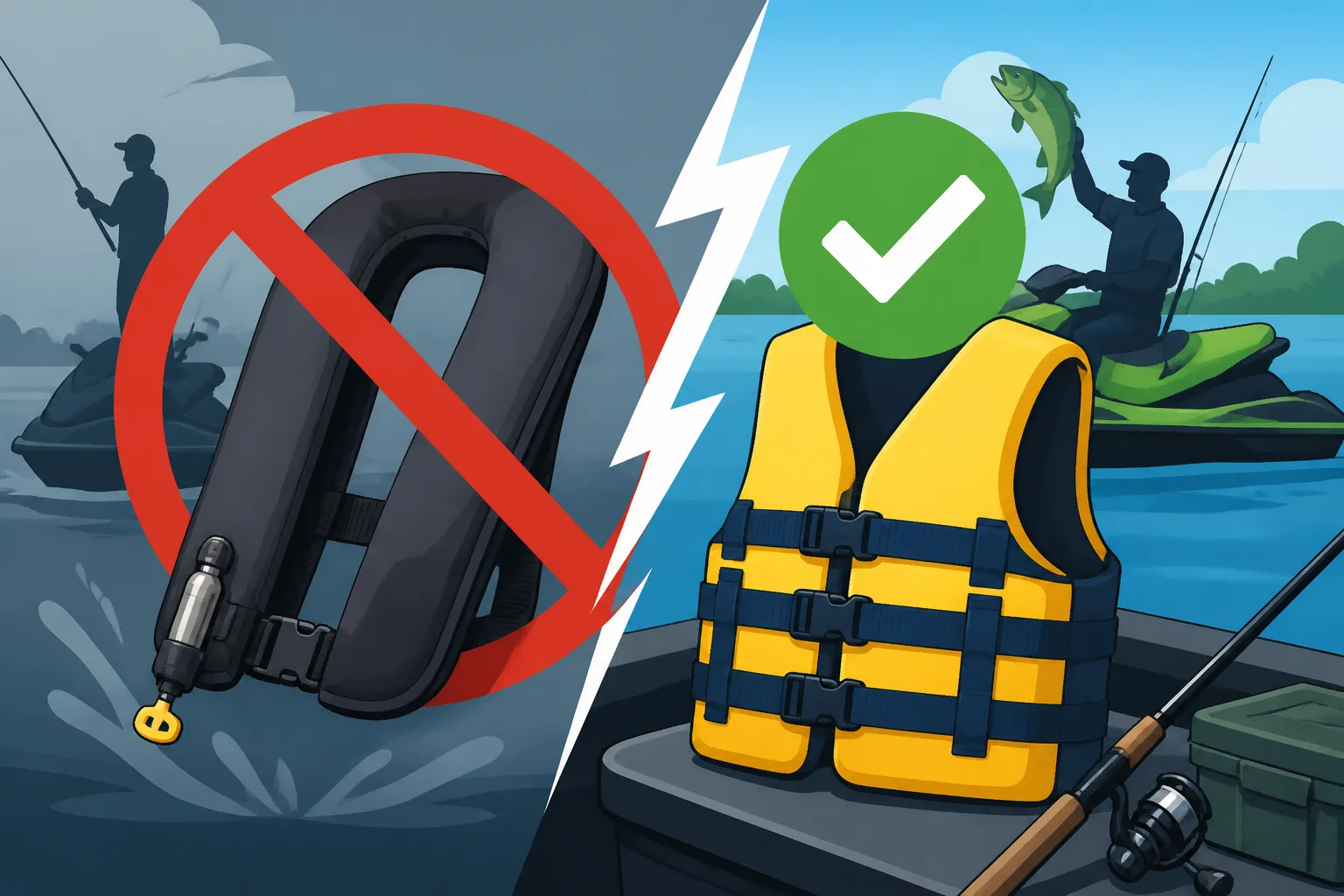
Now, here's where the nuance comes in regarding inflatable life jackets. Many inflatable PFDs are indeed US Coast Guard (USCG) approved, often classified as Type V (Special Use Devices). This means they are approved for specific activities or conditions, and often require continuous wear to be considered compliant. However, the catch for PWC use is that many inflatable vests are not approved for "impact sports," "water skiing," or activities where you might be thrown into the water at high speeds. The USCG approval on an inflatable vest typically specifies its intended use, and if it doesn't explicitly state approval for PWC use, then it's not compliant in Indiana.
Imagine you're cruising on your PWC and hit an unexpected wake, sending you flying. If you're wearing an inflatable vest that requires you to pull a cord to inflate it, are you going to be able to do that in the split second you're airborne, or if you hit the water and get the wind knocked out of you? Probably not. Even auto-inflating vests, which trigger upon water immersion, can have a slight delay or might not fully inflate if parts of the vest are trapped under your body or gear. Indiana's rules for PWCs, much like federal guidelines, prioritize immediate, inherent buoyancy in these high-risk scenarios. This is why you'll often see specific language about Life Jacket Rules for Personal Watercraft in Indiana emphasizing inherently buoyant vests.
The material of an inherently buoyant vest, often foam, provides flotation without any action from the wearer. This is the gold standard for PWC safety because it offers instant flotation regardless of the circumstances of your entry into the water. Inflatables, while comfortable and less bulky, introduce a potential point of failure – whether it's a pull cord not being engaged, a CO2 cartridge failing, or even just the fabric being punctured. For the unpredictable nature of PWC riding, these potential failures are simply too great a risk for regulatory bodies like Indiana's Department of Natural Resources (DNR) to permit.
Deciphering Life Jacket Types and Their Limitations
Understanding the different types of personal flotation devices (PFDs) is crucial for any boater, but especially for PWC enthusiasts. It's not just about compliance; it's about knowing how your gear will perform when you need it most. The US Coast Guard categorizes PFDs into several types, each with specific design features and intended uses.
The Different Types of PFDs
Let's break down the common types you'll encounter, keeping in mind their relevance to PWC use:
- Type I: Offshore Life Jackets
- These are designed for rough, remote waters where rescue may be delayed. They have the most buoyancy and are designed to turn an unconscious person face-up in the water. They are bulky and not practical for PWC use.
- Type II: Near-Shore Buoyant Vests
- Intended for calm, inland waters where a quick rescue is likely. They are less bulky than Type I but still offer substantial buoyancy and may turn an unconscious person face-up. Still generally too bulky for active PWC riding.
- Type III: Flotation Aids
- This is the most common type for general recreational boating. They are designed for conscious wearers in calm, inland waters. They offer good comfort and mobility but may not turn an unconscious person face-up. Crucially, many Type III vests are inherently buoyant (foam-filled) and explicitly approved for PWC use due to their immediate flotation. This is often the type you'll be looking for.
- Type IV: Throwable Devices
- These are things like buoyant cushions or ring buoys. They are not designed to be worn and are required on some boats in addition to wearable PFDs. They are absolutely not suitable as the primary PFD for a PWC operator or passenger.
- Type V: Special Use Devices
- This category covers a wide range of specialized PFDs, including some inflatables, deck suits, and work vests. A Type V PFD can only be used for the activity specified on its label and must be worn at all times to count as a legal PFD. Many inflatable vests fall into this category, and it's within this group that the PWC compliance issues often arise. If an inflatable Type V vest isn't specifically labeled for "PWC use" or "impact sports," it won't be compliant for PWC riders in Indiana.
For a PWC, the primary focus is on Type III inherently buoyant vests, or a Type V that specifically states it's approved for PWC use. Comfort and freedom of movement are important for PWC riding, which makes the streamlined design of many Type III foam vests a popular choice. When you're shopping at a place like Bass Pro Shops or looking through options on Amazon, it's vital to scrutinize the USCG label for its type and approved uses.
The Manual vs. Automatic Inflation Debate for PWCs
The core problem with inflatable PFDs, whether manual or automatic, for PWC use boils down to the need for immediate and guaranteed buoyancy in a high-impact, high-speed ejection scenario.
-
Manual Inflatable Vests: These require the wearer to pull a cord, which punctures a CO2 cartridge and inflates the vest. The immediate problem for a PWC rider should be obvious. If you're thrown from your PWC at speed, you could be stunned, disoriented, or even knocked unconscious. In any of these situations, you would be unable to pull the cord. Your life jacket, designed to save you, would remain a flat, useless piece of fabric. This is a risk that Indiana's PWC regulations simply won't allow.
-
Automatic Inflatable Vests: These vests contain a water-soluble bobbin that dissolves upon immersion in water, triggering the CO2 cartridge to inflate the vest. While this sounds like a better option, it still presents challenges for PWC safety. There can be a slight delay in inflation, which can feel like an eternity if you're struggling to stay afloat. More critically, if you are injured or rendered unconscious during the impact, even a few seconds of delay can be dangerous. Furthermore, if the vest doesn't fully inflate due to a snag or an unforeseen issue, you're still in trouble. The force of impact from a PWC accident can be significant, and an automatically inflating vest isn't designed to provide the same kind of initial impact protection or immediate flotation that an inherently buoyant foam vest offers. Think about it: a foam vest is always buoyant. An inflatable vest is only buoyant once inflated. This distinction is critical when dealing with the sudden, unpredictable nature of PWC incidents.
The general consensus, reflected in many regulations, is that for activities like PWC riding, where unexpected and potentially violent entry into the water is a real possibility, an inherently buoyant PFD is the safest and most compliant choice. It removes the variables of human action or mechanical inflation, ensuring you have flotation the second you need it.
Practical Safety Concerns Beyond the Rules
While compliance with Indiana's PWC life jacket rules is absolutely essential, there's a deeper layer to this conversation: your personal safety and the well-being of anyone riding with you. The regulations aren't just arbitrary hoops to jump through; they're based on years of accident data and safety research. Understanding these practical safety concerns can really drive home why an inherently buoyant vest is the best choice for PWC activities.
Impact Protection and Buoyancy
One of the often-overlooked aspects of PWC safety is impact protection. When you're riding a PWC, especially at higher speeds, there's always a risk of hitting a wave wrong, encountering unexpected chop, or even colliding with another object. These scenarios can lead to a sudden, high-force ejection from the PWC.
- Minimal Impact Protection with Inflatables: Most inflatable PFDs are designed for buoyancy, not for absorbing impact. They are essentially a bladder that inflates with air. If you're thrown from your PWC and hit the water, or even the PWC itself, an inflatable vest offers very little padding or cushioning. This means a much higher risk of injury to your ribs, torso, and internal organs upon impact.
- Inherent Buoyancy for Immediate Flotation: On the other hand, an inherently buoyant (foam-filled) vest provides a layer of physical padding. This doesn't mean you're invulnerable, but it does offer a degree of protection against blunt force trauma in a sudden fall. More importantly, its buoyancy is instantaneous. There's no inflation mechanism to fail, no cord to pull, no delay. The moment you hit the water, you're floating. This immediate flotation is vital if you're dazed or injured. Imagine falling face-first into the water; an inherently buoyant vest will immediately help right you and keep your airway clear.
This difference isn't just theoretical; it's a real-world factor that can determine the severity of an injury or even survival in a PWC accident. When you consider the physics of being propelled at speed and then abruptly stopped or thrown, the padding and immediate floatation of a foam vest make a huge difference.
The "What If" Scenarios on a PWC
Let's think through some real-life "what if" situations that highlight the critical need for an inherently buoyant vest on a PWC:
- What if you hit a sudden, large wave? You could be launched unexpectedly. If you're wearing an inflatable that requires manual action, you're already in the water before you can even think to pull the cord. If you're disoriented, panicking, or hit your head, that manual vest is essentially useless.
- What if you're riding with a passenger and they fall off unexpectedly? PWC rules apply to passengers too. If they're wearing an inflatable that requires action, and they're not a strong swimmer or are caught off guard, they could be in serious trouble before the vest can be activated.
- What if another PWC or boat doesn't see you and you're involved in a collision? This is a worst-case scenario. Impacts can be severe, leading to immediate injury or unconsciousness. In this situation, an inflatable vest, even an automatic one, might not be able to inflate quickly enough, or at all, if damaged. An inherently buoyant vest, however, would still provide flotation.
- What if you're in cold water? Indiana's lakes, especially in spring or fall, can be surprisingly cold. Cold water shock can cause involuntary gasping, hyperventilation, and disorientation. Having immediate buoyancy is paramount in these conditions to keep your head above water and conserve energy while you recover from the initial shock.
These aren't far-fetched scenarios; they are possibilities every time you take a PWC out on the water. The regulations for Do PWC Riders Need Life Jackets in Indiana? are designed with these exact risks in mind, pushing for the safest possible equipment to mitigate them. It’s about being prepared for the unexpected, and in that regard, inherently buoyant vests offer a significant safety advantage for PWC users.
Choosing the Right Life Jacket for Your Indiana PWC Adventures
Now that we've covered why certain inflatable vests might not be the best (or legal) choice for PWC use in Indiana, let's talk about what does work. Choosing the right life jacket isn't just about avoiding a fine; it's about ensuring your safety and enjoyment on the water.
What to Look For: USCG Approved and Inherently Buoyant
When you're shopping for a life jacket for your PWC, your top priorities should be US Coast Guard approval and inherent buoyancy.
- USCG Approved, Specifically for PWC Use: Always, always, always check the label. The vest must clearly state that it is USCG approved. Beyond that, look for language that specifically mentions approval for "personal watercraft," "tow sports," or "impact sports." Many Type III foam vests carry this designation, making them ideal. If an inflatable vest is a Type V, ensure its label explicitly permits PWC use. If it doesn't say "PWC approved" or something similar, assume it's not compliant for your Jet Ski or WaveRunner in Indiana.
- Inherently Buoyant: This is the key differentiator. An inherently buoyant life jacket gets its flotation from materials like foam, meaning it floats without any activation or inflation. This ensures immediate buoyancy the second you enter the water, regardless of whether you're conscious, injured, or simply surprised. This is the feature that provides the most reliable and immediate safety for the dynamic and sometimes unpredictable nature of PWC riding. The best choices are typically Type III foam vests that are designed to be snug, allowing for maximum mobility while still providing safety.
Think of it this way: your life jacket is your most critical piece of safety gear after the PWC itself. You wouldn't skimp on safety features for your vehicle, so don't do it for your personal flotation device. Prioritizing an inherently buoyant vest is a direct investment in your safety and peace of mind on the water. When reviewing your overall safety, take a look at our Indiana Boater Safety Gear Checklist to ensure you're fully prepared.
Where to Find Compliant PWC Vests
Finding a compliant and comfortable PWC vest is easier than you might think. Many major retailers specialize in boating and water sports gear.
- Specialty Marine Stores: Your local marine supply store or a larger chain like Bass Pro Shops will have a dedicated section for life jackets. The staff are usually knowledgeable and can help you select a vest that's appropriate for PWC use and compliant with Indiana regulations. You'll find a wide variety of brands, styles, and sizes, including vests specifically designed for high-impact water sports.
- Online Retailers: Websites like Amazon offer a vast selection, but you need to be a savvy shopper. Read product descriptions carefully, paying close attention to the USCG approval type and any explicit mentions of PWC suitability. Customer reviews can also provide insight into fit and comfort for active use. Just remember, a vest that's "USCG approved" isn't enough; it needs to be the right kind of USCG approved for PWC.
- Sporting Goods Stores: Many general sporting goods stores also carry a range of life jackets. Again, the key is to examine the label closely for USCG approval and PWC-specific designations.
When shopping, it's also worth considering vests that are specifically labeled as "impact vests" or "wake vests" if they also carry a USCG approval. These often provide additional padding and a snugger fit, which can be beneficial for PWC riding. Many of them are inherently buoyant and meet all the necessary requirements. For those looking for options, check out Best Life Jackets for Jet Skiing on Indiana Lakes.
Maintenance and Fit Are Crucial
Even the best life jacket won't protect you if it doesn't fit correctly or isn't properly maintained.
- Proper Fit: A life jacket should fit snugly but comfortably. It shouldn't ride up around your ears when you lift your arms or if someone pulls up on the shoulders of the vest. A poorly fitting vest can actually be dangerous, hindering your ability to swim or even coming off in the water. Try on vests before you buy them, or if purchasing online, consult sizing charts carefully. Remember, different brands can fit differently, and what fits one person might not fit another. It's especially important to ensure proper fit for younger riders; our guide on Best Life Jacket Sizes for Kids Boating in Indiana offers specific advice.
- Regular Inspection: Before every outing, take a moment to inspect your life jacket. Check for rips, tears, or excessive fading, which can indicate material degradation. Make sure all zippers, buckles, and straps are in good working order. Foam vests should still feel pliable and buoyant, not stiff or waterlogged. Any vest that shows significant signs of wear or damage should be replaced.
- Storage: Store your life jackets in a dry, well-ventilated area, out of direct sunlight. Avoid storing them under heavy objects that could compress the foam and reduce its buoyancy over time.
By diligently selecting the right type of life jacket, ensuring a proper fit, and maintaining it well, you're taking proactive steps to make your Indiana PWC adventures as safe and enjoyable as possible. And remember, the rules about How Many Life Jackets Do You Need on an Indiana Boat apply to PWCs as well, making sure everyone has appropriate gear.
Here's a quick comparison of life jacket types and their suitability for PWC use:
| Life Jacket Type | Buoyancy Type | PWC Suitability (Indiana) | Key Characteristics & Notes |
|---|---|---|---|
| Type I | Inherently Buoyant | Not Suitable | High buoyancy, bulky, designed for offshore. Too restrictive for PWC use. |
| Type II | Inherently Buoyant | Not Ideal / Less Common | Good buoyancy, less bulky than Type I, may turn unconscious wearer face-up. Still often too bulky. |
| Type III | Inherently Buoyant | BEST CHOICE | Designed for comfort and mobility, widely available in PWC-specific designs. Provides instant flotation. |
| Type IV | Inherently Buoyant | Not Suitable | Throwable device (cushion, ring buoy). NOT worn, therefore not compliant as primary PFD for PWCs. |
| Type V (Inflatable) | Inflatable | NOT SUITABLE | Special use device. Most inflatables are NOT approved for high-impact sports or PWC use in Indiana. |
| Type V (Specific PWC) | Inherently Buoyant | Potentially Suitable | If specifically labeled for PWC use and inherently buoyant (foam). Read label carefully. |
When in doubt, always err on the side of caution and choose an inherently buoyant Type III vest that clearly states PWC approval. Investing in your safety will ensure many more happy days on the water. It also helps to be familiar with the Indiana Boater Education Course Requirements for overall water safety knowledge.
Disclaimer
This article is for general informational purposes only and does not constitute professional advice. Laws, prices and regulations vary by location and change over time. Consult a qualified professional for guidance on your specific situation.