Why Inflatable Life Jackets Are Not Allowed on Indiana PWCs
If you've ever geared up for a thrilling day on the water with your personal watercraft (PWC) in Indiana, you might have paused to consider your life jacket. It's a common, and frankly, a bit confusing point for many PWC enthusiasts: why are those sleek, comfortable inflatable life jackets, often seen as cutting-edge safety gear, generally not allowed when you're zipping across an Indiana lake on a jet ski? This guide dives deep into the specific regulations and underlying safety reasons, helping you understand the rules so you can stay safe and compliant on Indiana's beautiful waterways.
The Core Rule: Inflatables and PWCs Don't Mix in Indiana
It can be a head-scratcher when you invest in what seems like a top-tier inflatable life jacket – lightweight, less bulky, and often more comfortable than a traditional foam vest – only to find out it's a no-go for your personal watercraft in Indiana. This isn't just a suggestion; it's a firm regulation designed with your safety in mind. The Indiana Department of Natural Resources (DNR) and federal guidelines are very clear on this distinction, and understanding why is key to enjoying your time on the water without incident or penalty.
The Specific Indiana Regulation
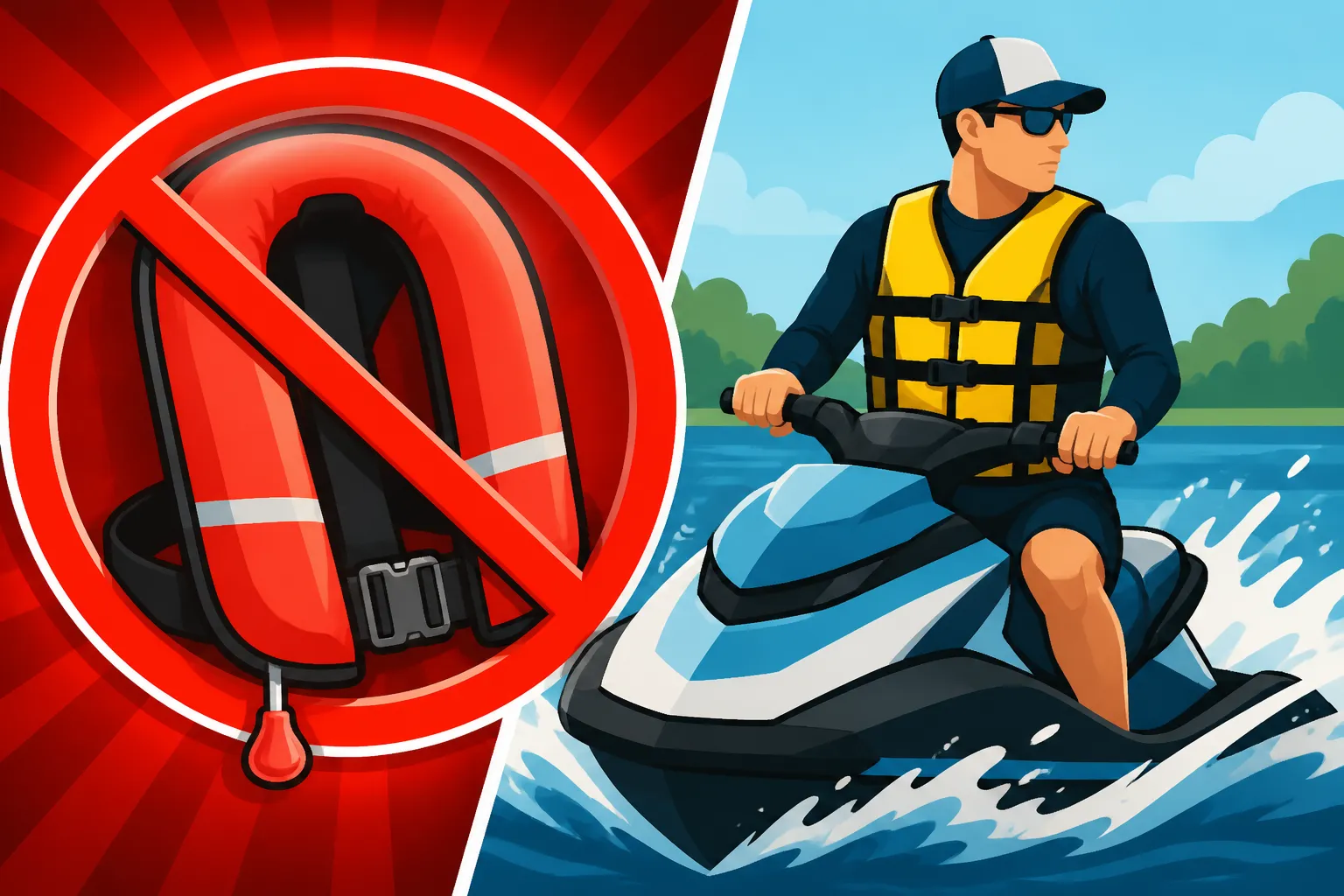
Indiana law, in alignment with U.S. Coast Guard regulations, explicitly states that anyone operating or riding on a personal watercraft must wear a USCG-approved Type I, II, III, or V personal flotation device (PFD). Here's the critical nuance: while Type V PFDs can sometimes be inflatable, the rule for PWCs usually mandates a inherently buoyant PFD, meaning one that floats without needing to be inflated. This stipulation is not unique to Indiana; many states adopt similar rules for the same reasons. For PWC operators and passengers, this almost always means a traditional foam-filled life jacket. It's a hard rule, and conservation officers enforce it diligently across the state's lakes and rivers. If you're heading out, make sure your vest has that USCG approval stamp and is the right type. You can find more comprehensive details on general requirements in Indiana Life Jacket Requirements for Every Boater.
When you're out on Lake Monroe or zipping across Lake Wawasee, seeing an Indiana Conservation Officer pull up to your PWC isn't usually a cause for alarm if you're properly equipped. However, having an inflatable PFD on a PWC is one of those instant red flags. These officers are trained to quickly assess compliance, and an inflatable on a PWC will likely lead to a stop. It’s not about ruining your fun; it’s about preventing serious injuries in a high-risk activity. The rule is designed to be unambiguous precisely because PWC operation involves inherent risks that traditional boating might not.
Federal Standards and State Adaptations
The foundational rules for PFDs come from the U.S. Coast Guard, which sets the standards for approval and usage across the country. States like Indiana then adopt and often refine these federal guidelines into their local statutes. The Coast Guard categorizes PFDs by their performance, not just their type, acknowledging that different water activities carry different risks. For personal watercraft, the concern is primarily with the high-impact nature of potential accidents. Imagine hitting the water at 30-40 miles per hour after being ejected from a PWC – it’s like hitting concrete. In such a scenario, an inflatable PFD requires manual or automatic inflation, and even a split-second delay can be disastrous.
Indiana's adoption of these federal standards isn't arbitrary; it's rooted in decades of boating safety research and incident reporting. While an inflatable life jacket might be perfectly suitable, even preferred, for a leisurely sail or a quiet fishing trip on a pontoon boat, the dynamic and often aggressive nature of PWC riding simply doesn't align with the reliance on inflation. This is why when you're looking for Best Life Jackets for Jet Skiing on Indiana Lakes, you'll consistently see recommendations for traditional, inherently buoyant vests. It's a common misconception that all USCG-approved PFDs are interchangeable for all activities, but as PWC users quickly learn, that's definitely not the case.
The Immediate Impact on PWC Enthusiasts
For many PWC owners, this regulation can feel like an inconvenience. You might have purchased a top-of-the-line inflatable PFD from a place like Bass Pro Shops or found a great deal on Amazon, thinking you were investing in the best safety gear. Discovering that it’s not legal for your primary activity can be frustrating, especially if you enjoy the comfort and low-profile design of inflatables for other water sports. However, the impact extends beyond personal preference. Having the wrong type of PFD means you’re not just risking a fine; you’re genuinely putting yourself and your passengers at a much higher risk of injury or worse in the event of an accident.
This rule directly influences what kind of gear you need to buy and carry. It means if you own a PWC, you absolutely need at least one, and likely several, inherently buoyant life jackets that meet the Type III requirements for active participation. It also means educating anyone who rides with you about this specific rule. Don't assume a guest's inflatable PFD from their kayaking gear will be sufficient for a spin on your PWC. Always have extra, compliant vests on hand. You can check out Life Jacket Rules for Personal Watercraft in Indiana for more specific details about what's required for PWC use. It’s better to be prepared with the correct gear than to face an emergency or a citation because of a misunderstanding.
Understanding the "Why": Safety Concerns Behind the Ban
The decision to disallow inflatable life jackets on personal watercraft isn't arbitrary; it's based on critical safety concerns unique to PWC operation. These vessels are inherently different from other boats, offering a distinct set of thrills but also posing specific risks that necessitate a different approach to personal flotation. When you understand the physics of a PWC accident and the design limitations of inflatable PFDs, the regulation makes a lot more sense.
The Physics of PWC Accidents: High-Speed Falls and Impacts
Picture this: you're cruising on your PWC, enjoying the rush of speed, when suddenly you hit a rogue wake, turn sharply, or perhaps collide with another object or vessel. What happens next is often a high-velocity ejection from the PWC. Unlike falling from a slower-moving boat, hitting the water after being thrown from a PWC at speeds of 20, 30, or even 40+ miles per hour is not like a gentle splash. It's more akin to hitting a solid surface due to the water's surface tension and your body's velocity. This impact can be violent, leading to disorientation, broken bones, or being knocked unconscious.
In such a high-impact situation, an inherently buoyant life jacket immediately provides flotation, keeping your head above water whether you're conscious or not. An inflatable PFD, however, relies on either manual activation (pulling a cord) or automatic activation (a water-soluble bobbin dissolving or hydrostatic pressure). If you're disoriented, injured, or unconscious, manually inflating the vest is simply not an option. Even automatic inflators can have a slight delay, and in critical moments, even a second or two can be the difference between a minor incident and a tragic one. This risk is precisely why the rule exists for PWCs, where sudden, severe impacts are a very real possibility.
Manual Inflation: A Critical Delay in an Emergency
One of the primary safety arguments against inflatable PFDs on PWCs centers on the reliance on manual inflation. Most inflatable life jackets are designed to be manually activated by pulling a cord that punctures a CO2 cartridge, rapidly filling the bladder with air. While this mechanism works well in situations where the wearer is conscious, oriented, and able to react calmly, it's far from ideal for a PWC accident. As discussed, a PWC rider can be thrown violently, potentially losing consciousness or becoming too injured or disoriented to perform the necessary action.
Consider a scenario where a rider is ejected and sustains a head injury upon impact with the water or another object. They might be unconscious or too dazed to think clearly, let alone find and pull a small cord. Even in less severe situations, the shock and panic of being unexpectedly thrown into the water can hinder a person's ability to react quickly and effectively. A traditional foam life jacket, on the other hand, provides immediate and continuous flotation, requiring no action from the wearer. It's a passive safety device that works instantly, which is exactly what's needed for the sudden and often unpredictable nature of PWC mishaps. This distinction is crucial and forms the bedrock of the regulation that forbids Inflatable Vests Fail Indiana PWC Rules.
Risk of Damage and Deflation in High-Impact Scenarios
Beyond the inflation mechanism, there's another concern: the durability of inflatable PFDs in a high-impact environment. While modern inflatables are built tough, they are still essentially bladders of air. A severe impact with the water, or if the rider is dragged across submerged debris or even the PWC itself, could potentially damage the fabric or the inflation mechanism of an inflatable PFD. A puncture or a compromised inflation system renders the PFD useless, leaving the wearer without flotation.
Traditional foam life jackets, while bulkier, are inherently more resilient to impact and abrasion. Their flotation comes from solid foam material, which is far less susceptible to immediate failure from a puncture or blunt force trauma. This robust design offers a greater margin of safety in the rough and tumble world of PWC riding. The goal of the regulation is to ensure that the PFD not only works but continues to work effectively under the most adverse conditions that a PWC accident might present. Carrying an appropriate, undamaged life jacket is part of your Indiana Boater Safety Gear Checklist every time you head out.
What Counts as a PWC in Indiana? Defining Your Vessel
Before you even think about life jackets, it's important to be absolutely clear about what Indiana (and the U.S. Coast Guard) considers a Personal Watercraft (PWC). The definition isn't just a technicality; it directly impacts which safety regulations apply to your vessel and, by extension, to you and your passengers. Understanding this classification is the first step in ensuring you're compliant with all boating laws.
Characteristics of a Personal Watercraft
Generally, a Personal Watercraft (PWC) is defined as a vessel that uses an inboard engine to power a water jet pump as its primary source of propulsion and is designed to be operated by a person sitting, standing, or kneeling on, rather than inside, the vessel. Think of popular models like Jet Skis, WaveRunners, and Sea-Doos. These are all quintessential PWCs. They are known for their speed, maneuverability, and the exhilarating experience of being directly on the water, rather than in a boat.
Key characteristics that define a PWC include:
- Inboard engine with jet pump propulsion: This is almost universal for PWCs.
- Operator position: Riders sit astride, stand, or kneel on the craft.
- Relatively small size: Designed for one to four persons, but often ridden solo or in pairs.
- High power-to-weight ratio: Contributes to their agility and speed.
If your vessel fits this description, then Indiana's PWC-specific regulations, including the life jacket rules, apply to you. It's not just about what it's called; it's about its design and how it's operated. This is critical because the operational characteristics of a PWC are what drive the stricter PFD requirements.
Distinguishing PWCs from Small Boats and Kayaks
Sometimes, new boaters might confuse a small, open boat or even a high-performance kayak with a PWC due to their size or speed. However, there are clear distinctions that affect how they are regulated. A small runabout or fishing boat, even if it's open and fast, requires the operator to sit within the hull, and it typically uses an outboard motor with a propeller, not a jet pump. Similarly, kayaks, canoes, and stand-up paddleboards, even if they have small electric motors attached, are generally considered non-motorized vessels unless their propulsion system exceeds certain thresholds, and they do not have an inboard engine with a jet pump.
The crucial difference lies in the "on rather than in" operation and the specific propulsion system. This distinction matters because the risks associated with being ejected from a PWC at high speeds are significantly different from capsizing a kayak or even falling out of a small fishing boat. The design of PWCs inherently places the rider in a more exposed position, demanding the immediate and foolproof flotation that only an inherently buoyant life jacket can provide. If you're ever in doubt about your vessel's classification, consult the Indiana DNR's boating regulations or even your vessel's owner's manual. Remember, these distinctions also affect other rules, such as Indiana Watercraft Decal Rules for Kayaks and Canoes versus those for motorized craft.
Manufacturer Labels and Your Responsibility
When you purchase a PWC, the manufacturer's documentation will clearly identify it as such. These labels and manuals are your first and best source of information regarding your specific vessel. They'll outline its intended use, safety warnings, and often, references to federal and state boating regulations that apply. It's your responsibility as the owner and operator to read and understand this information.
Beyond the initial purchase, it’s also your responsibility to stay informed about current regulations. Boating laws can occasionally be updated, and what was true last year might have minor changes this year. Relying solely on outdated information or assumptions could lead to legal trouble. Always double-check with official sources like the Indiana DNR website. Ultimately, ignorance of the law is not a defense, especially when it comes to safety on the water. Ensuring you have the correct life jackets, understanding Do PWC Riders Need Life Jackets in Indiana?, and knowing the classification of your vessel are fundamental aspects of safe and responsible PWC operation.
Approved Life Jacket Types for Indiana PWC Riders
So, if inflatable life jackets are out for PWCs in Indiana, what is allowed? This is where the US Coast Guard classification system becomes crucial. For PWC enthusiasts, understanding the types of PFDs that meet legal requirements and offer optimal safety is paramount. It’s not just about having a life jacket, but having the right life jacket.
Type III: The Go-To for Active Boaters
For personal watercraft riders in Indiana, the overwhelmingly preferred and legally compliant life jacket type is the Type III PFD. Also known as a "flotation aid," Type III vests are designed for continuous wear and are generally the most comfortable for active water sports. They are inherently buoyant, meaning they contain foam or other buoyant material that provides flotation without needing to be inflated.
Here's why Type III PFDs are the standard for PWC use:
- Instant Flotation: They provide immediate buoyancy upon entering the water, a critical factor in high-speed PWC accidents where disorientation or unconsciousness is a risk.
- Comfort for Activity: Designed with armholes and necklines that allow for a wide range of motion, they are ideal for the dynamic movements involved in operating a PWC. Many are specifically tailored for watersports, featuring segmented foam and mesh panels for breathability.
- Visibility: Often available in bright, high-visibility colors, which is important for being easily spotted in the water after an incident, especially in busy waterways.
- USCG Approved: When you buy one, look for the USCG approval label, which ensures it meets strict safety standards.
While other inherently buoyant types (Type I and II) are also technically legal, they are typically bulkier and less comfortable, making them impractical for PWC riding. Type I vests are designed for offshore use, offering maximum flotation and face-up turning ability, while Type II vests are for nearshore, providing less flotation than Type I but still designed to turn most unconscious wearers face-up. For the active PWC rider, Type III is the perfect balance of safety and functionality. When you are out shopping, whether in a physical store like Bass Pro Shops or online at Amazon, prioritize vests clearly labeled as USCG-approved Type III for watersports or PWC use. Many of these brands even offer specific PWC vests with features like drain holes and durable outer shells.
Understanding US Coast Guard Approval and Labels
Every legally compliant life jacket in Indiana must carry a U.S. Coast Guard (USCG) approval label. This label is your guarantee that the PFD has met rigorous testing and safety standards. It's not just a sticker; it's a detailed tag that provides crucial information.
What to look for on the label:
- USCG Approval Number: A unique identifier showing it's certified.
- Type of PFD (e.g., Type III): Clearly states the performance type.
- Approval Statement: "Approved for use on all recreational boats…"
- Size and Weight Range: Specifies the wearer's weight and chest size the PFD is designed for. This is incredibly important because a PFD that doesn't fit properly won't perform correctly.
- Usage Limitations: May include warnings or specific instructions, such as not being suitable for certain activities or requiring manual inflation (which would rule it out for PWC use).
- Care Instructions: How to maintain the PFD to ensure its longevity and effectiveness.
It's vital that you check this label before you head out. Don't just assume a life jacket is appropriate because it looks like one. Older PFDs, or those purchased internationally, may not meet current USCG standards. Always ensure the label is legible and the PFD is in good condition. Fading, tears, or straps that no longer secure properly can compromise its effectiveness. In fact, if you're wondering Can You Use an Old Life Jacket on an Indiana Boat?, the answer is often no, if it's damaged or no longer meets current standards.
Comfort and Fit for PWC Use
While safety is non-negotiable, comfort and fit are also incredibly important for PWC life jackets. A PFD that is uncomfortable or ill-fitting is more likely to be worn improperly or, worse, not at all. For PWC operation, where agility and freedom of movement are key, a properly fitting Type III vest makes a huge difference.
- Snug, Not Tight: The PFD should fit snugly, preventing it from riding up around your ears when you're in the water or during sudden movements on the PWC. However, it shouldn't restrict breathing or movement.
- Proper Strapping: All straps should be buckled and tightened. A common mistake is leaving straps loose, which allows the PFD to come off in a high-impact fall.
- Test the Fit: A great way to check the fit is to put it on, tighten it, and then have someone gently pull up on the shoulders of the vest. If it comes up past your ears, it's too big.
- Consider Features: Look for features like multiple adjustment straps, durable zippers, and segmented foam panels that conform to your body. Vests designed specifically for watersports often have these features to enhance comfort and mobility.
Choosing the right size and ensuring a proper fit not only keeps you compliant with regulations but also significantly increases your safety and enjoyment. There are many options out there, including those optimized for comfort for both adults and children. Remember, it's not enough to simply have How Many Life Jackets Do You Need on an Indiana Boat; each one needs to fit the intended wearer and be suitable for the activity.
Consequences of Non-Compliance: Fishing Without the Right Gear
Navigating the waters in Indiana on your PWC should be a joyous experience, but failing to adhere to life jacket regulations can quickly turn fun into frustration. Indiana Conservation Officers are present on our lakes and rivers not to spoil your day, but to ensure everyone's safety. Understanding the penalties for non-compliance can be a strong motivator to always wear the correct type of PFD.
Penalties and Citations for Improper Flotation Devices
If you're caught operating or riding on a PWC in Indiana without a properly worn, USCG-approved, inherently buoyant life jacket, you're looking at a citation. The specific penalties can vary, but generally, a boating infraction like this will result in a fine. These fines are not insignificant and can quickly add up, especially if it's not your first offense. Think about it: that money could have been spent on fuel for more trips or new fishing gear from Bass Pro Shops!
Beyond the monetary cost, there's the inconvenience. Being stopped by a Conservation Officer takes time away from your day on the water. They might issue a warning for a minor, easily corrected issue, but a blatant violation like an incorrect PFD on a PWC is more likely to result in a ticket. Furthermore, in some cases, if the safety violation is severe enough or if you repeatedly ignore warnings, an officer might even terminate your trip and require you to return to shore. It's a clear message: safety is paramount, and these rules are taken seriously.
Enforcement by Indiana Conservation Officers
Indiana Conservation Officers (ICO) are the primary law enforcement agency on the state's waterways. They patrol lakes, rivers, and reservoirs, monitoring for compliance with boating laws, fishing regulations, and environmental protection. They are highly trained and experienced in identifying safety violations, including improper PFD usage on PWCs. Their patrols are proactive, meaning they're actively looking for violations to prevent accidents.
When an ICO approaches your PWC, they'll typically check for:
- Valid Registration: Is your PWC properly registered with current decals? (See Indiana Boat Registration Rules Explained for details)
- Required Safety Equipment: This includes not just life jackets, but also fire extinguishers, sound-producing devices, and navigation lights if applicable. Your Indiana Boater Safety Gear Checklist should always be handy.
- Life Jacket Compliance: They'll specifically check that all persons on board are wearing a USCG-approved, inherently buoyant PFD that fits correctly. They are very familiar with the rule that disallows inflatable PFDs on PWCs.
- Safe Operation: Are you operating the PWC safely, respecting no-wake zones, and avoiding reckless behavior?
The ICO's role is not just punitive; it's educational. They are often willing to explain regulations and offer advice to help boaters stay safe. However, persistent or dangerous non-compliance will lead to enforcement actions. Remember, these officers are experts in boating safety and are there to protect everyone on the water.
Insurance Implications and Liability
While a citation is a direct consequence, there's a broader ripple effect to non-compliance, particularly concerning insurance and liability. In the unfortunate event of a PWC accident, your adherence to safety regulations, or lack thereof, can significantly impact your insurance claim and potential legal liability.
- Insurance Coverage: Most marine insurance policies have clauses that require the policyholder to comply with all applicable boating laws and regulations. If an accident occurs and it's discovered that you or your passenger were not wearing a legally required PFD (or were wearing an unapproved type like an inflatable on a PWC), your insurance company might deny or reduce coverage for damages or injuries. This could leave you on the hook for substantial medical bills, PWC repairs, or even legal defense costs.
- Legal Liability: If someone is injured in an accident involving your PWC, and it's found that you were in violation of PFD laws, you could be deemed negligent. This can open you up to personal liability lawsuits, which can be financially devastating. Even if the accident wasn't directly caused by the life jacket issue, failing to comply with safety regulations can be used to demonstrate a general disregard for safety.
Ultimately, wearing the correct life jacket is not just about avoiding a ticket; it's about protecting yourself, your passengers, and your financial well-being. It's an essential part of responsible boating. Investing in proper, compliant Type III vests, even if it means buying new ones from a retailer like Bass Pro Shops or Amazon specifically for your PWC, is a small price to pay for peace of mind and genuine safety.
Beyond PWCs: Where Inflatable Life Jackets ARE Permitted
It's easy to get the impression that inflatable life jackets are universally frowned upon on Indiana waterways due to the PWC rules. However, that's simply not true! Inflatables are fantastic pieces of safety gear, and they have a very legitimate and often preferred place in many other boating activities. Understanding where they are allowed can help clarify the specific nature of the PWC ban and enable you to use your inflatable PFDs appropriately for other aquatic adventures.
When Inflatables Are a Good Choice
Inflatable life jackets are incredibly popular and for good reason: they offer superior comfort, less bulk, and a more streamlined profile compared to traditional foam vests. This makes them highly desirable for a range of activities where freedom of movement and reduced bulk are valued, and the risk profile is different from high-speed PWC operation.
They are generally considered an excellent choice for:
- Sailboats and Cruisers: For leisurely sailing or cruising, where the risk of sudden, high-impact ejection is minimal, an inflatable PFD allows for unrestricted movement while tending to lines, helming, or simply relaxing on deck.
- Fishing from a Boat: Anglers often appreciate the unencumbered feel of an inflatable PFD, especially when casting or reeling in a big catch. It prevents the constant rubbing and bulk of a foam vest. Many anglers will happily wear a comfortable inflatable while fishing from a bass boat or pontoon.
- Paddling (Kayaking, Canoeing, SUP): While some paddlers prefer traditional foam vests for immediate flotation if they capsize, many enjoy the minimalist feel of a waist-belt inflatable or a manually inflated vest that allows full range of motion for paddling strokes.
- Any activity where sustained wear is desired: If you're going to be on the water for many hours and want continuous PFD protection without the bulk, an inflatable is often the most comfortable option, assuming you're in a situation where manual or automatic inflation is a viable safety strategy.
The key distinction is the nature of the activity. If there's a lower risk of high-speed impact, sudden unconsciousness, or a scenario where manual inflation would be severely hindered, then an inflatable PFD can be a perfectly safe and often superior choice for comfort.
Specific Scenarios for Inflatable PFD Use in Indiana
So, where exactly can you wear your inflatable life jacket in Indiana? Pretty much anywhere except on a PWC or when being towed behind a boat (like on skis or a tube), or if you are under the age where continuous wear of an inherently buoyant PFD is mandated (which in Indiana is generally under 13, but always check current regulations like Kids Fish Free Until Age 18 in Indiana and specific PFD rules for age groups).
Here are some common scenarios where an inflatable PFD is perfectly acceptable in Indiana:
- Boating on Lake Michigan (non-PWC): Whether you're trolling for salmon and steelhead on a larger vessel or just enjoying a cruise, an inflatable PFD is acceptable for adults who are conscious and able to activate it if needed.
- Fishing on Inland Lakes: If you're out on Patoka Lake in a bass boat, or drifting for crappie on Lake Wawasee in a pontoon, an inflatable PFD provides comfortable, compliant flotation.
- Paddleboarding on Quiet Waters: Many stand-up paddleboarders opt for waist-belt inflatables that stay out of the way until needed, provided they are USCG approved and used by adults.
- During Indiana Free Fishing Days: Even though you don't need a license on these special days, all other boating and safety regulations, including PFD requirements for specific vessels and ages, still apply. An adult fishing from a non-PWC vessel can use an inflatable.
The critical thing to remember is that even when permitted, an inflatable PFD still needs to be worn or readily accessible, be in good working order, and be USCG-approved for its intended use. Always check the specific labeling on your inflatable PFD for its performance type (often Type V with specific use limitations) and ensure it's approved for the activity you're undertaking.
Choosing the Right Inflatable for Approved Activities
If you're planning to use an inflatable PFD for activities where it's permitted, a little research into the different types can go a long way. Inflatable PFDs generally come in two main categories:
- Manual Inflatables: Require the wearer to pull a cord to deploy the CO2 cartridge and inflate the vest. These are great for active users who want to avoid accidental inflation.
- Automatic Inflatables: Inflate automatically when submerged in water (often through a water-soluble bobbin that dissolves). These offer a quicker response in the water but can accidentally inflate in heavy rain or spray.
There are also "hydrostatic" automatic inflatables that only inflate once submerged to a certain depth, preventing accidental inflation from splashes. When choosing an inflatable, consider:
- USCG Approval: Always the number one priority.
- Fit and Comfort: Just like foam vests, a good fit is essential.
- Re-arming Kits: Inflatables require re-arming kits (new CO2 cartridge and bobbin) after each inflation, so factor that into your planning.
- Pouch vs. Vest Style: Some inflatables are worn like a small pouch around the waist, while others are full vests.
Whether you're purchasing from a local outdoor retailer or browsing options on Amazon, ensure you're getting a quality, USCG-approved product that is suitable for your specific activity. Knowing when and where to safely use your inflatable PFD ensures you're both compliant with Indiana's boating laws and well-protected on the water.
Table: Approved vs. Disallowed PFDs for Indiana PWCs
To quickly summarize the key differences and help you stay compliant, here's a table outlining what's generally allowed and not allowed for Personal Watercraft (PWC) usage in Indiana.
| Feature / Type | Inherently Buoyant (Foam) PFDs (e.g., Type III) | Inflatable PFDs |
|---|---|---|
| PWC Use in Indiana | YES – REQUIRED | NO – NOT ALLOWED (regardless of USCG approval for other activities) |
| Flotation Mechanism | Immediate, passive flotation from foam material | Relies on manual (pull cord) or automatic (water-activated) CO2 cartridge inflation |
| Suitability for High Impact | Excellent, provides immediate support even if unconscious | Poor, requires conscious action or has potential for delayed/no inflation |
| Comfort for Active Use | Generally good, especially watersports-specific designs | Often superior for comfort due to low bulk |
| Durability in Accidents | Resilient to punctures and tears, maintains flotation after impact | Risk of bladder puncture or inflation mechanism failure in high-impact scenarios |
| Maintenance | Minimal (check for tears, UV damage) | Requires re-arming kits after each inflation, periodic inspection of components |
| Visibility | Often high-visibility colors | Varies, some are brightly colored once inflated |
| General Cost | Typically less expensive | Can be more expensive, plus re-arming kit costs |
This table clearly illustrates why Indiana, following federal guidelines, makes a critical distinction for PWCs. Your best bet for a safe and lawful PWC adventure is always a USCG-approved, inherently buoyant Type III life jacket.
Disclaimer
This article is for general informational purposes only and does not constitute professional advice. Laws, prices and regulations vary by location and change over time. Consult a qualified professional for guidance on your specific situation.