How Long Does It Take a Largemouth Bass to Grow to Trophy Size?
Every angler who's ever cast a line dreams of that one fish – the true giant, the lunker, the kind of bass that makes your heart pound and your reel scream. In Indiana, chasing a trophy largemouth bass is a passion for many, but it's a journey that demands patience and a deep understanding of these incredible fish. This guide will walk you through what it takes for a largemouth bass to reach that coveted trophy size in our Hoosier waters, exploring the factors that influence their growth and the realistic timelines involved.
Defining a "Trophy" Largemouth Bass in Indiana
Before we dive into how long it takes, let's get on the same page about what "trophy size" actually means when we're talking about largemouth bass in Indiana. It's not just a number; it's often a feeling, a memory of a truly exceptional catch. However, for the sake of setting expectations, we can look at generally accepted benchmarks.
What Constitutes a Trophy Bass?
For many, a "trophy" largemouth bass is any fish that breaks the 5-pound mark. That's usually when they start to feel like a real heavyweight, with significant girth and power. A 5-pounder is a fantastic catch in most Indiana lakes and ponds, and something to be genuinely proud of. As you climb higher, say into the 6 to 8-pound range, you're talking about a fish that is truly exceptional and much harder to come by. These are the bass that seasoned anglers spend years, even decades, pursuing. Anything over 8 pounds in Indiana is a legitimate lunker, a fish of a lifetime for most.
Think about it: many local bass tournaments have a "big bass" category, and often the winning fish falls into that 5-7 pound range. It's a testament to how challenging it is to consistently catch larger fish. The sheer fight, the broad shoulders, the way it pulls drag – a 5-pound bass feels substantially different from a 2-pounder. It's a game-changer.
Indiana's State Record and Regional Giants
While our state record largemouth bass is a legendary fish that weighed in at a staggering 14 pounds, 12 ounces, caught way back in 1991 from a private lake in Greene County, it's important to remember that such giants are exceedingly rare. That fish was an anomaly, a perfect storm of genetics, abundant food, and prime growing conditions over many, many years. Most anglers will fish their entire lives without coming close to a state record.
However, many public waters across Indiana consistently produce largemouth bass in the 5 to 8-pound range. Lakes like Monroe Lake: Indiana's Largest Lake for Bass Fishing and Patoka Lake Fishing Guide for Bass and Crappie are renowned for their healthy bass populations and the potential for larger fish. These bigger reservoirs offer extensive cover, deep water, and a robust forage base that allows bass to grow to impressive sizes. Even smaller, well-managed public ponds and private lakes can surprise you with a 7-pound brute if the conditions are right.
The Growth Journey of an Indiana Largemouth Bass
A largemouth bass doesn't just wake up one day as a trophy. Its growth is a continuous journey influenced by a multitude of environmental and biological factors. Understanding these elements can give you a better appreciation for the fish you're targeting and the effort it takes for them to reach impressive sizes.
Key Factors Influencing Bass Growth
Several crucial factors dictate how quickly and how large a largemouth bass will grow in Indiana:
- Genetics: Just like people, some bass are simply predisposed to grow larger and faster. Certain strains of largemouth bass have a genetic blueprint for larger size.
- Forage Availability and Quality: This is arguably the most critical factor. A bass needs a consistent and abundant supply of high-quality food to grow big. This means plenty of baitfish like shad, bluegill, and smaller crappie, as well as crayfish and other invertebrates. Lakes with a strong forage base will produce bigger bass.
- Water Temperature and Growing Season Length: Bass are cold-blooded, so their metabolism is directly tied to water temperature. They grow most rapidly during the warmer months when their metabolism is high, and food is plentiful. In Indiana, our growing season is good, but it's not the year-round warmth of states further south, which means slightly slower growth rates overall compared to, say, Florida.
- Habitat Quality: Healthy habitat provides cover for ambush predators like bass, protecting them from larger predators and giving them ideal hunting grounds. Submerged timber, weed beds, rock piles, and artificial structures are all key. A lake with diverse and abundant cover will generally support a healthier and larger bass population.
- Fishing Pressure: High fishing pressure, especially if anglers are consistently removing larger fish, can impact the average size of bass in a lake. Catch and release practices, particularly for larger breeding fish, are vital for maintaining a healthy population of big bass.
Average Growth Rates in Indiana Waters
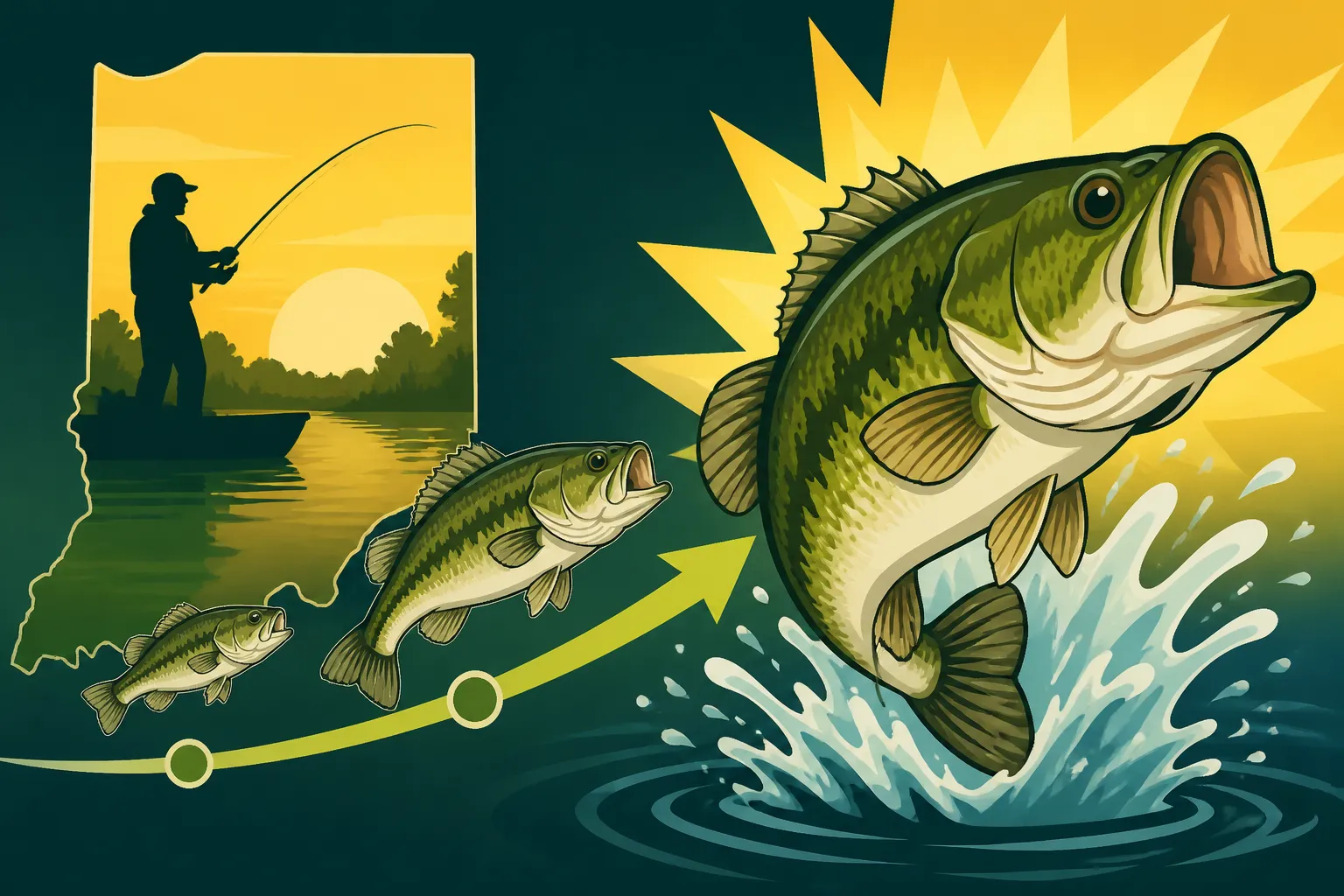
It's tough to put an exact timeline on bass growth because of all these variables, but we can talk about averages. In Indiana, a largemouth bass might grow about 0.5 to 1.5 pounds per year under good conditions, especially in its younger years.
Here's a rough idea of what to expect:
| Age (Years) | Average Length (Inches) | Average Weight (Pounds) | General Status |
|---|---|---|---|
| 1 | 6-10 | 0.2 – 0.75 | Fingerling / Small |
| 2 | 10-14 | 0.75 – 1.5 | Keeper (often limits) |
| 3 | 13-17 | 1.5 – 2.5 | Good Keeper |
| 4-5 | 16-20 | 2.5 – 4.5 | Quality Bass |
| 6-8 | 19-22+ | 5 – 7+ | Trophy Potential |
| 9-12+ | 21-25+ | 8 – 12+ | True Lunker / Rare |
Remember, these are averages! A bass in a nutrient-rich, unpressured private pond could hit 5 pounds faster than one in a heavily fished public reservoir with sparser forage. Conversely, a bass in a stunted, overcrowded pond might never reach 2 pounds. It's a dynamic system.
The Role of Forage and Habitat Quality
Let's drill down a bit on forage and habitat because they're absolutely paramount for growing big bass. Imagine a growing teenager: if they only have junk food, they might get big, but they won't be healthy. A bass needs a diverse "diet" of protein-rich forage. Shad are like fast food for bass, providing a quick energy boost. Bluegill, sunfish, and crappie offer sustained nutrition. Even creatures like frogs, snakes, and ducklings become opportunistic meals for truly large bass.
Lakes and reservoirs with abundant submerged vegetation, fallen timber, and rock formations provide perfect ambush points for bass. This cover allows them to conserve energy while waiting for prey, rather than expending energy chasing food in open water. It also offers protection from eagles, osprey, and even other larger fish. If you're looking for Best Fishing Spots to Catch Trophy Bass in Indiana, you'll often find they're characterized by excellent forage and complex, healthy habitat. Without these two elements working in concert, the chances of a bass reaching trophy status are significantly reduced.
The Timeline to Trophy Status
So, what's the real answer to "how long?" It's not a single number, but rather a range that depends heavily on the factors we've just discussed. Generally speaking, a trophy largemouth bass in Indiana is an older fish, one that has survived numerous seasons and found a way to consistently eat well.
Reaching 3-5 Pounds: The "Good Keeper" Stage
Most Indiana largemouth bass will reach the 3 to 5-pound mark somewhere between 4 to 8 years old. This is a respectable size, a "good keeper" as many anglers would say, and a blast to catch. A bass that hits 5 pounds at a younger age (say, 4-6 years) is often a fish with excellent genetics living in a prime environment with an abundance of food.
These are the fish you're most likely to encounter on a regular basis if you're fishing good bass waters. They've learned a few tricks, they're strong, and they're a challenge on appropriate tackle. Many anglers are perfectly content catching bass of this size, and for good reason—they represent a significant achievement and a great day on the water.
The Elusive 6-8 Pound Mark: A True Challenge
Stepping up to the 6 to 8-pound class is where things get truly exciting, and the timeline lengthens considerably. A bass in this range is typically 8 to 12 years old, or even older. These fish are survivors. They've evaded predators, avoided countless lures, and have mastered the art of finding and consuming large amounts of forage.
Catching a bass in this size range is often a matter of dedication, skill, and a good dose of luck. You need to be fishing the right spots at the right time, with the right techniques, and presenting a lure that looks like a worthwhile meal to an old, wary fish. These are the fish that dominate local bass club weigh-ins and send anglers home with unforgettable stories. Their age means they've seen it all, and they are not easily fooled.
Double-Digit Dreams: The Pinnacle
A double-digit largemouth bass (10 pounds or more) in Indiana is an extremely rare catch. If you land one, you've achieved something truly exceptional. These are ancient fish, often 12-15 years old, sometimes even older. They've likely lived through droughts, harsh winters, and countless angling attempts.
To reach this size, a bass needs a combination of truly outstanding genetics, a lifetime supply of protein-rich forage, minimal stress from fishing pressure, and optimal water conditions year after year. It's why Indiana's state record is so celebrated; it took decades for that fish to grow to such immense proportions. For most anglers, a 10-pound bass is a once-in-a-lifetime encounter, the kind of fish that defines an entire angling career.
Angler Strategies for Targeting Larger Bass
If you're serious about increasing your chances of catching a trophy largemouth bass in Indiana, there are definitely strategies you can employ. It's not just about luck; it's about understanding the fish and its environment.
Understanding Seasonal Patterns and Feeding Habits
Largemouth bass, especially the big ones, are creatures of habit tied to the seasons. Understanding Indiana Fishing Seasons: A Month-by-Month Guide is critical. During the pre-spawn and spawn periods in spring, larger females move shallow, making them more accessible and aggressive. This is often the best time to target a true lunker. In summer, they might move to deeper, cooler water or become more nocturnal feeders. Fall brings another strong feeding bite as they bulk up for winter.
For instance, during the spring, big bass will often be found near spawning flats or shallow cover, preparing to lay their eggs. They are often aggressive and will hit larger baits. As the water warms in summer, they might retreat to deeper structure like ledges, points, or the thermocline, where the water is cooler and oxygen is still plentiful. Knowing these movements and adjusting your approach accordingly is key. For more in-depth knowledge, check out guides on Bass Fishing Techniques for Pre-Spawn and Post-Spawn.
Selecting the Right Gear and Lures
Catching big bass often requires gear designed for the task. You'll want a strong rod with a good backbone, a reliable reel with a smooth drag, and heavier line to handle powerful runs and pull fish out of thick cover. Don't skimp on quality when it comes to lures either. Big bass often prefer bigger meals, so don't be afraid to throw larger swimbaits, deep-diving crankbaits, or substantial jigs.
Many anglers find great success with a Texas rig or Carolina rig, especially when fishing around submerged timber or grass lines. A good selection of these soft plastics and a reliable set of hooks can be found readily on platforms like Amazon, allowing you to stock up for your next trip. Consider investing in a quality fishing scale as well, so you can accurately weigh that trophy bass before a quick, healthy release. Reliable equipment ensures that when that 8-pounder finally bites, you have the best chance of landing it. Learning How to Rig a Texas Rig for Bass is a foundational skill for targeting these larger fish in heavy cover.
Practicing Catch and Release for Future Generations
This point cannot be stressed enough. If you want to see more trophy bass in Indiana, you have to practice responsible catch and release, especially with the larger, older fish. These big females are crucial for the gene pool, producing thousands of eggs each year. Removing them from the population can have a detrimental effect on the future trophy potential of a lake.
Handle big bass with care: use a large, rubberized net, minimize their time out of the water, and support their body weight horizontally. If you're weighing or photographing, do it quickly and gently. A quick release back into the water gives that fish the best chance of survival and the opportunity to grow even larger or contribute to the next generation of giants. It’s an investment in the future of Indiana's bass fishing.
Disclaimer
This article is for general informational purposes only and does not constitute professional advice. Laws, prices and regulations vary by location and change over time. Consult a qualified professional for guidance on your specific situation.