Muskie and Pike Gear for Indiana’s Glacial Lakes
There's nothing quite like the heart-stopping moment a monstrous muskie or a toothy northern pike annihilates your lure in Indiana's glacial lakes. For many anglers, the pursuit of these apex predators becomes an obsession, but it can be incredibly frustrating if you're not equipped with the right gear. This guide is dedicated to helping you navigate the sometimes overwhelming world of muskie and pike tackle, ensuring you're ready for the fight of a lifetime and can confidently land these magnificent fish.
Understanding Muskie and Pike Fishing in Indiana
Fishing for muskie and northern pike in Indiana's glacial lakes isn't just about casting a line; it's about entering a world where patience, precision, and powerful gear meet. These are not your average panfish; they are top-tier predators that demand respect and specialized equipment. The unique characteristics of Indiana's northern lakes, carved by ancient glaciers, create ideal habitats for these giants, but also present specific challenges for anglers. We're talking about clear, deep waters with varying structures, from weed beds to sharp drop-offs, all of which influence how these fish behave and, consequently, how we need to approach them.
The Allure of Trophy Fish in Glacial Lakes
Indiana's northern glacial lakes, particularly those in counties like Kosciusko and Steuben, are renowned for producing some truly incredible muskie and northern pike. There's a certain mystique about targeting a fish that can exceed 40 or even 50 inches – a true freshwater trophy. Many anglers dedicate entire seasons, or even lifetimes, to catching just one "fish of a thousand casts." This isn't just a saying; it's a testament to the challenge and the immense reward that comes from outsmarting such a formidable creature. The rush you feel when a massive muskie follows your lure right to the boat, or when a pike explodes on a topwater bait, is unparalleled. It's an adrenaline-fueled experience that keeps you coming back, despite the long hours and often cold conditions. Knowing that the next cast could be the one that connects you with a personal best or even a state record is a powerful motivator.
Key Differences Between Muskie and Northern Pike Behavior
While often grouped together, muskie and northern pike have distinct behaviors that can influence your gear choices and fishing strategy. Both are aggressive, ambush predators, but their typical sizes and fighting styles differ. Muskie, often referred to as "the fish of 10,000 casts," tend to be larger, more solitary, and can be incredibly elusive. They often inhabit deeper, more structured areas or heavy cover, lurking and waiting for the opportune moment. When hooked, a muskie is famous for powerful runs, head shakes, and often acrobatic jumps. Pike, on the other hand, are generally more numerous, though they too can grow to impressive sizes, especially in certain Indiana lakes. They tend to be a bit less picky, more prone to striking aggressively, and are often found in weedier, shallower bays, especially in spring and fall. While they might not always have the sheer brute force of a giant muskie, a big pike will put up an incredible fight with powerful short runs and a lot of thrashing near the boat. Understanding these subtle differences is the first step in assembling the right tackle, helping you anticipate the fight and prepare for whatever bites. If you want to dive deeper into identification, check out Muskie vs Northern Pike: How to Tell the Difference.
Essential Rod and Reel Setups for Muskie and Pike
When it comes to muskie and pike fishing, you absolutely cannot skimp on your rod and reel setup. This isn't the time for your lightweight bass gear or your grandpa's old spinning rod. These fish are powerful, built like torpedoes, and can easily snap inadequate equipment or spool a reel in seconds. You need a system that can not only cast large, heavy lures all day long but also withstand the immense pressure of battling a true freshwater behemoth. Think of your rod and reel as the engine of your muskie and pike fishing machine – it needs to be robust, reliable, and capable of delivering serious torque.
Heavy-Duty Casting Rods: Power and Length
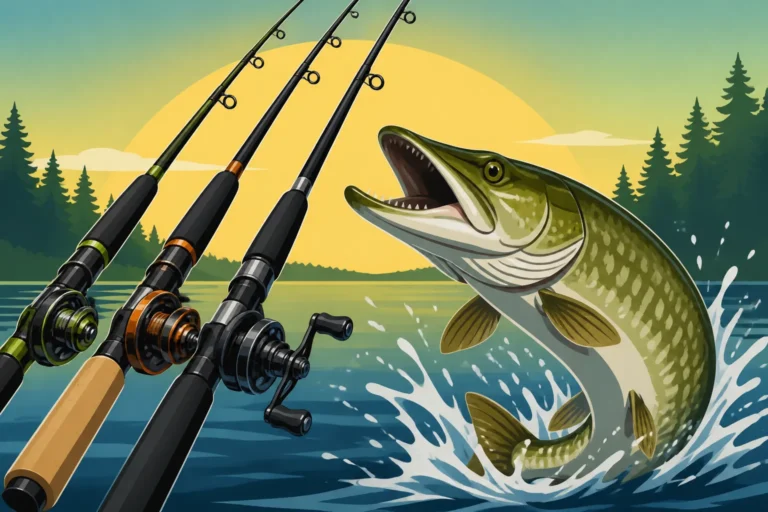
Muskie and pike rods are beasts compared to most other freshwater rods. They need to be long, typically ranging from 7 feet 6 inches to 9 feet or even longer, with a heavy or extra-heavy power rating and a fast to extra-fast action. The extra length is crucial for several reasons. First, it allows you to make longer casts with those ridiculously heavy lures, covering more water and reaching distant structure. Second, the length provides better leverage when fighting a powerful fish, especially when trying to turn its head during a run or keep it away from heavy cover. Third, it helps facilitate the all-important "figure eight" maneuver at the boat, a common tactic to trigger a strike from a following muskie. A fast action tip is important for quick hook sets, especially when using single-hook baits or when a fish attacks at the end of a long cast. When choosing a rod, consider brands known for their muskie-specific lines, as they've designed these rods for the unique stresses of this type of fishing. For more details, explore articles like Best Rods for Muskie Fishing and Best Heavy Tackle for Pike Fishing in Indiana.
Baitcasting Reels: Gearing Up for Battle
For muskie and pike, a high-quality baitcasting reel is the only real option. Spinning reels, even heavy-duty ones, simply aren't designed to handle the line capacity, drag power, or casting weight required for most muskie and pike presentations. You'll want a heavy-duty, low-profile baitcaster or a round baitcaster, known for its robust construction and exceptional drag system. Look for a reel with a strong, smooth drag that can be cranked down without fear of slipping or seizing up. Gear ratio is also important; while some anglers prefer a faster retrieve for burning bucktails, a mid-range ratio (around 6.x:1) offers a good balance of speed and power for most applications. Line capacity is paramount – you need a reel that can hold at least 100-150 yards of heavy braided line, sometimes more. The internal components should be durable, ideally with stainless steel gears and multiple ball bearings for smooth operation under heavy load. A comfortable, oversized handle and knobs are also a huge plus, as you'll be cranking those big lures for hours on end.
| Rod/Reel Component | Muskie Fishing Focus | Pike Fishing Focus | Key Considerations |
|---|---|---|---|
| Rod Length | 8' to 9' + | 7' 6" to 8' 6" | Longer for leverage, casting heavy baits, figure-eight. |
| Rod Power | Extra-Heavy (XH) | Heavy (H) to Extra-Heavy (XH) | Must handle large lures and powerful fish. |
| Rod Action | Fast to Extra-Fast | Fast | Essential for strong hook sets with large hooks. |
| Reel Type | Heavy-duty Baitcaster (Low-profile or Round) | Heavy-duty Baitcaster (Low-profile or Round) | Spinning reels generally inadequate for casting weight and drag. |
| Gear Ratio | 5.x:1 to 6.x:1 | 6.x:1 to 7.x:1 | Balance of power for retrieve vs. speed for burning baits. |
| Drag System | Powerful, Smooth, Reliable | Powerful, Smooth, Reliable | Non-negotiable; prevents break-offs and allows control. |
| Line Capacity | 100-150+ yards of 80-100lb braid | 100-150+ yards of 65-80lb braid | Need enough line for long runs and large diameter. |
| Handle/Knobs | Oversized, Ergonomic | Oversized, Ergonomic | Reduces fatigue during long casting sessions and fights. |
Line, Leaders, and Terminal Tackle: The Unbreakable Connection
You can have the best rod and reel money can buy, but if your line, leaders, and terminal tackle aren't up to snuff, all that investment is for naught. These are the critical points of contact between you and the fish, and they endure immense stress. Muskie and pike have mouths full of razor-sharp teeth, capable of severing standard fishing line with alarming ease. Thinking about tying directly to your lure without a leader? That's a surefire way to donate your expensive baits to the bottom of the lake and leave a muskie with an unwanted piercing. Every component in this part of your setup needs to be robust, secure, and specifically designed to withstand the brutal power and sharp implements of these toothy predators.
Braided Line: Strength and Sensitivity
When targeting muskie and pike, braided line is the undisputed champion. Forget monofilament or fluorocarbon as your main line; they simply don't offer the strength, abrasion resistance, or sensitivity required. For muskie, you'll want to spool up with 80 to 100-pound test braided line. For pike, 65 to 80-pound test is usually sufficient, though heavier is never a bad idea. This heavy braid might seem like overkill, but it's essential. It provides incredible knot strength, is virtually stretch-free (offering unmatched sensitivity for detecting subtle bites and feeling your lure's action), and has superior abrasion resistance against rocks, wood, and even the fish's rough scales. The lack of stretch also means more direct power transmission for powerful hook sets and easier control over a fighting fish. Using a bright color braid can also be beneficial, as it allows you to easily track your line in the water, which is particularly helpful during the figure-eight maneuver at the boat or when navigating heavy cover.
Wire Leaders: Preventing Cut-Offs
This is where many beginners go wrong, and it’s arguably the most critical component for muskie and pike fishing: the wire leader. These fish have mouths full of needle-sharp teeth that can slice through even heavy braided line like butter. A strong, bite-proof leader is absolutely non-negotiable. There are several types of wire leaders available, each with its own advantages. Stranded steel leaders, often coated, are very flexible and kink-resistant. Fluorocarbon leaders, while not "wire," are extremely abrasion-resistant and virtually invisible underwater, making them popular for clear water situations, though they should be quite heavy (100-150 lb test) and checked frequently for nicks. Titanium leaders are exceptionally durable, kink-resistant, and last a very long time. Length is important, too; leaders should generally be 12-18 inches long to prevent the fish from getting its teeth on your main line. Always use high-quality leaders designed specifically for muskie and pike. You can find a great selection at retailers like Bass Pro Shops or on Amazon. For a deeper dive into this vital gear, check out Wire Leaders for Muskie Fishing in Indiana's Glacial Lakes.
High-Quality Swivels and Snaps
The unsung heroes of your terminal tackle are high-quality swivels and snaps. When you're constantly casting heavy lures that spin, wobble, and dive, line twist becomes a real problem, weakening your line and making for a miserable fishing experience. A robust ball-bearing swivel will eliminate line twist, keeping your braid healthy and your presentations looking natural. Don't skimp on these; cheap swivels will seize up under pressure. As for snaps, you'll be changing lures frequently to find what the fish are keying in on, and a high-quality snap allows for quick and easy lure changes. Look for heavy-duty, coast-lock snaps or similar designs that are rated for incredible breaking strength – often 100 pounds or more. Crucially, ensure the snap is strong enough to withstand violent strikes and powerful head shakes without bending open. A bent snap means a lost lure and, more importantly, a lost fish. Inspect your snaps regularly for any signs of fatigue or damage, and replace them often.
Lures for Enticing Indiana's Apex Predators
Muskie and northern pike are opportunistic predators, but they can also be incredibly selective, often preferring certain lure types, sizes, and colors depending on the conditions, time of year, and even their mood. Building a diverse tackle box with a variety of proven muskie and pike lures is essential for success on Indiana's glacial lakes. You'll need baits that can cover different depths, mimic various forage, and generate different actions to trigger those strikes. Remember, these fish are primarily sight feeders, so visual appeal and commotion are key. Don't be afraid to throw truly massive baits; muskie and pike are known for their willingness to attack lures that seem ridiculously large compared to their actual size, especially when they're feeding aggressively.
Large Crankbaits and Jerkbaits
Crankbaits and jerkbaits are staples for muskie and pike, offering different profiles and actions to entice a strike. Large, deep-diving crankbaits are excellent for targeting fish holding in deeper water or along prominent drop-offs and contours. They create a lot of vibration and often feature loud rattles, which can draw fish from a distance. Trolling these baits is also a very effective technique, particularly for covering large areas quickly and finding active fish. Jerkbaits, on the other hand, are designed to be worked with a retrieve-pause-jerk cadence, creating an erratic, wounded-baitfish action that often drives muskie and pike into a frenzied strike. These lures can be suspending, floating, or sinking, allowing you to present them at various depths. They are particularly effective when fish are somewhat lethargic or holding tight to structure. Many jerkbaits are quite large, some over a foot long, perfectly mimicking the substantial meals these predators prefer.
Bucktails and Spinnerbaits
When it comes to covering water and generating aggressive reaction strikes, bucktails and spinnerbaits are incredibly effective. Bucktails, essentially weighted inline spinners adorned with bucktail or synthetic hair, are famous for their flash, vibration, and rhythmic thumping. They are highly versatile and can be retrieved at various speeds, from a slow roll to a blistering pace, often prompting follows and strikes. Double-bladed bucktails are particularly popular for the increased flash and vibration they produce. Spinnerbaits, with their large skirted bodies and single or double blades, are excellent for fishing over weed beds, through sparse cover, or along shorelines. Their weedless design makes them ideal for areas where other lures might snag. Both lure types are relatively easy to cast, even in larger sizes, and are often the first baits muskie and pike anglers tie on to prospect new areas or when the fish are aggressive. Having a range of sizes and color patterns is crucial; sometimes, a subtle change in blade color or skirt pattern is all it takes to trigger a bite. What's the Best Lure Color for Muskie Fishing? explores these nuances in depth.
Glide Baits and Topwaters
For those truly explosive, heart-stopping strikes, glide baits and topwater lures are in a league of their own. Glide baits are designed to be retrieved with a smooth, side-to-side gliding motion, mimicking a dying or injured baitfish. They are often worked with pauses and subtle twitches, and their unique action can be incredibly seductive to cautious muskie. These are often considered "art baits" due to their intricate designs and often handcrafted nature, and they can be incredibly effective when other presentations fail. Then there are topwater lures – from large walk-the-dog baits and poppers to prop baits – which provide some of the most exciting strikes in all of freshwater fishing. Picture a giant muskie or pike erupting on the surface, engulfing your lure in a violent splash! Topwater action is usually best in low-light conditions (dawn, dusk, or overcast days) or during warmer water periods when fish are more active near the surface. The visual thrill alone makes them a must-have in any muskie and pike angler's arsenal, especially when fishing over shallow weed beds or along emergent vegetation. Remember, selecting the right lure often comes down to experimentation on a given day. You can often find a wide variety of these specialized lures available from online retailers like Amazon, or by visiting a dedicated fishing store like Bass Pro Shops for hands-on selection and expert advice.
Landing and Handling Gear: Safety for You and the Fish
Landing a muskie or pike isn't just about celebrating your catch; it's about doing so safely, both for yourself and for the fish. These powerful predators have sharp teeth, strong jaws, and are incredibly acrobatic, even when boatside. Trying to hand-land a thrashing muskie is a recipe for serious injury and can also cause irreparable harm to the fish. Proper landing and handling gear is not an accessory; it's a fundamental part of responsible muskie and pike fishing that ensures the survival of these magnificent creatures if you plan to release them, and protects you from their formidable defenses. Never go out targeting these species without this essential equipment.
Large Landing Nets and Grippers
The cornerstone of safe muskie and pike handling is a large, muskie-specific landing net. These nets are enormous compared to typical bass or walleye nets, featuring a wide hoop, a deep bag, and a sturdy, often extendable, handle. The deep, rubberized or knotless mesh bag is crucial for several reasons: it prevents the fish from thrashing out, protects its delicate slime coat and fins, and minimizes entanglement of hooks. Never use a traditional knotted nylon net, as it can strip the fish's protective slime and damage its fins. Once the fish is in the net, it’s contained, allowing you to quickly secure it and begin the unhooking process. Additionally, a sturdy fish gripper, often made of stainless steel or durable plastic, can be invaluable. These grippers allow you to firmly hold the fish by its lower jaw, providing control while keeping your hands safely away from its teeth. Ensure the gripper is designed for large, heavy fish and has a comfortable, non-slip handle. For example, some anglers prefer those with a built-in scale. You can find excellent options for landing nets in sizes appropriate for large muskie at retailers like Bass Pro Shops. For specific recommendations, refer to Best Nets for Landing Muskie in Indiana.
Essential Tools for Hook Removal
Once a muskie or pike is in the net or secured with a gripper, the clock starts ticking. These fish are powerful and can easily injure themselves if left out of the water too long or allowed to thrash. Quick and efficient hook removal is paramount. You'll need a specialized set of tools to achieve this.
- Long-Nosed Pliers or Forceps: These are indispensable. Choose a pair with strong, serrated jaws and a length of at least 11-12 inches to reach deep-set hooks while keeping your fingers safe. The longer the better, really.
- Bolt Cutters or Jaw Spreaders: Sometimes, hooks are so deeply embedded or swallowed that conventional pliers won't work without causing significant damage to the fish. In these situations, bolt cutters become a humane option, allowing you to quickly snip the hook shank close to the fish's mouth, letting the barb fall free. Jaw spreaders are used to carefully hold the fish's mouth open, giving you a clear view and access to the hooks. Use jaw spreaders with extreme caution and only when absolutely necessary, as improper use can cause severe injury to the fish's jaw.
- Release Tool/Hook Remover: There are dedicated hook removal tools designed for large, toothy fish that can quickly dislodge hooks with a single push or twist. These can be particularly useful for quickly releasing fish with hooks set in the lip or corner of the mouth.
Always have these tools readily accessible and organized in your boat. Practicing their use beforehand, perhaps on a dummy lure, can save valuable time and stress when you have a live, angry muskie on board.
Specialized Gear for the Serious Angler
Once you've got the basics covered – the robust rod and reel, the unbreakable line, the bite-proof leaders, and a selection of proven lures – you'll quickly realize that muskie and pike fishing often demands a bit more. These fish aren't always easy to find, and once you do, you need to be prepared for everything from organizing your extensive lure collection to pinpointing subtle structure. This is where specialized gear comes into play, enhancing your efficiency, comfort, and ultimately, your chances of success on Indiana's glacial lakes. Investing in these items can turn a frustrating day into a productive one, allowing you to focus on the chase rather than fumbling with disorganization or missing key information.
Tackle Storage and Organization
Muskie and pike lures are not small. They're often bulky, heavy, and feature multiple large treble hooks, which can quickly turn a messy tackle box into a dangerous tangled disaster. Proper tackle storage is crucial for protecting your expensive lures, keeping hooks sharp, and most importantly, preventing painful accidents. You'll need large, heavy-duty tackle boxes or dedicated muskie/pike lure boxes that can accommodate oversized baits. Many anglers opt for large utility trays or specialized "guide boxes" that have extra-deep compartments or customizable dividers. The goal is to keep each lure separate to prevent hooks from tangling, dulling, or snagging fingers. Investing in boxes with clear lids can also be a huge time-saver, allowing you to quickly identify the bait you need without opening every compartment. A dedicated, organized tackle system means less time searching and more time casting, especially when you need to make a quick lure change because the fish are acting picky. Learn more about optimal setup in Best Tackle Box Organizers for Anglers.
Electronics for Locating Fish and Structure
In a sport where covering water and finding subtle holding spots is key, modern marine electronics are invaluable. A good fish finder with GPS and mapping capabilities can dramatically improve your success rate.
- Sonar (2D/Down/Side Imaging): Advanced sonar units allow you to literally "see" the underwater world. 2D sonar gives you a traditional view of fish arches and bottom contours. Down Imaging provides a photo-like view directly beneath your boat, helping you distinguish between logs, rocks, and fish. Side Imaging expands your view to the sides of your boat, scanning vast areas for submerged weed lines, rock piles, drop-offs, and even individual fish that might be holding off to the side. These technologies are crucial for understanding the underwater topography of Indiana's glacial lakes and identifying potential muskie and pike ambush points.
- GPS and Mapping: Integrated GPS with detailed lake maps (often pre-loaded or downloadable) is essential for navigation, marking productive waypoints (like that submerged stump where you had a follow last year), and staying on track, especially in large lakes. It allows you to revisit productive spots with precision and to explore new areas systematically.
- LakeMaster and Navionics: These are popular mapping cards that provide incredibly detailed contours, depths, and navigation aids for many Indiana lakes. Having these on your unit can give you a significant advantage in understanding the fish's environment.
With these tools, you're not just casting randomly; you're actively hunting, using technology to peel back the surface of the water and gain a crucial edge.
Specialized Apparel for Long Days on the Water
Muskie and pike fishing often involves long, arduous days on the water, sometimes in less-than-ideal weather conditions. Being comfortable and protected is not just about enjoyment; it's about endurance and safety.
- Sun Protection: Whether it's a sunny summer day or a bright winter outing, UV rays can be brutal. Long-sleeved, breathable fishing shirts with UPF protection, wide-brimmed hats, and polarized sunglasses are essential. Polarized sunglasses, in particular, cut glare, allowing you to see into the water and spot followers or structure, a huge advantage in muskie fishing.
- Rain Gear: Indiana weather can be unpredictable. High-quality rain gear – a waterproof jacket and bibs – will keep you dry and warm, allowing you to continue fishing effectively when others might be heading for shore. Look for breathable fabrics that can withstand heavy downpours.
- Layered Clothing: Especially during spring and fall muskie seasons, temperatures can fluctuate wildly. Dressing in layers allows you to adapt to changing conditions, staying warm in the morning chill and shedding layers as the day heats up.
- Comfortable Footwear: You'll be standing and moving around the boat a lot. Waterproof, comfortable boat shoes or boots with good grip are important for stability and comfort.
Remember, a serious angler is a prepared angler. Having the right apparel ensures you can focus on the fishing, not on being cold, wet, or sunburnt.
Maintaining Your Muskie and Pike Gear
You've invested your hard-earned money and time into acquiring top-notch muskie and pike gear. Now, the next crucial step is ensuring that gear lasts, performs optimally, and is ready for action whenever you hit the water. Neglecting your equipment can lead to premature wear, costly breakdowns, and, worst of all, a lost fish when a component fails. Proper maintenance isn't just about saving money; it's about ensuring reliability and maximizing your chances of success in a sport where every detail matters. These powerful fish put tremendous stress on your tackle, so taking the time for regular care is non-negotiable for serious anglers.
Rod and Reel Care and Storage
Your rods and reels are the workhorses of your muskie and pike setup, and they deserve meticulous care.
- Rods: After each outing, especially if fishing in rain or spray, wipe down your rods with a damp cloth to remove any dirt, slime, or water spots. Pay close attention to the guides, ensuring no line residue or grit has built up. Check guide inserts for any cracks or damage, as these can fray your line. Store rods upright or horizontally on a rack, never leaning them against a wall where they can warp or get damaged. Avoid leaving them exposed to direct sunlight for prolonged periods, as UV rays can degrade the blanks.
- Reels: Reels are intricate machines that operate under immense pressure. After every trip, especially on a rainy day, give your reel a quick wipe-down with a soft cloth. Once or twice a season (or more frequently if you fish often), a deeper cleaning and lubrication are necessary. This usually involves removing the side plate, cleaning out old grease and grime, and applying fresh, manufacturer-recommended reel oil and grease to gears, bearings, and moving parts. Never submerge your reel. If it gets wet, open it up, dry it thoroughly, and re-lubricate. Store reels in a padded case or box to protect them from bumps and scratches. Always back off the drag completely when storing your reel to relieve tension on the drag washers, prolonging their life and ensuring smooth performance when you need it most.
Lure Maintenance and Sharpening Hooks
Your lures are what ultimately interact with the fish, and their effectiveness hinges on being in prime condition.
- Lure Cleaning: After each use, especially if fishing in murky or dirty water, rinse your lures thoroughly with fresh water to remove any slime, weed fragments, or grit. Pay extra attention to swivels, split rings, and hooks. Allow them to air dry completely before storing them to prevent rust. If you notice any rust forming on hooks or split rings, address it immediately.
- Hook Sharpening and Replacement: This is critical! Muskie and pike have tough, bony mouths, and a dull hook is almost guaranteed to result in a missed strike or a lost fish. Carry a good quality hook sharpener with you and touch up your hooks frequently throughout the day, especially after hitting bottom, rocks, or even after catching a fish. Run your fingernail over the hook point; if it slides, it's dull. If it digs in, it's sharp. If hooks become bent, excessively dull, or rusted beyond repair, replace them immediately. High-quality replacement treble hooks are a small investment compared to a lost trophy. Always ensure replacement hooks are the same size and gauge as the originals to maintain the lure's intended action.
- Split Ring and Swivel Inspection: The split rings connecting your hooks to the lure, and the swivels on bucktails, are weak points if not maintained. Inspect them for any signs of fatigue, bending, or rust. Replace any suspect components with heavy-duty, high-quality replacements. A split ring failing during a fight is a heartbreaking experience.
By consistently performing these maintenance steps, you're not only protecting your investment but also ensuring that when that giant muskie or pike strikes, your gear is ready to stand up to the challenge.
Disclaimer
This article is for general informational purposes only and does not constitute professional advice. Laws, prices and regulations vary by location and change over time. Consult a qualified professional for guidance on your specific situation.