Does a Canoe Need a Decal in Indiana?
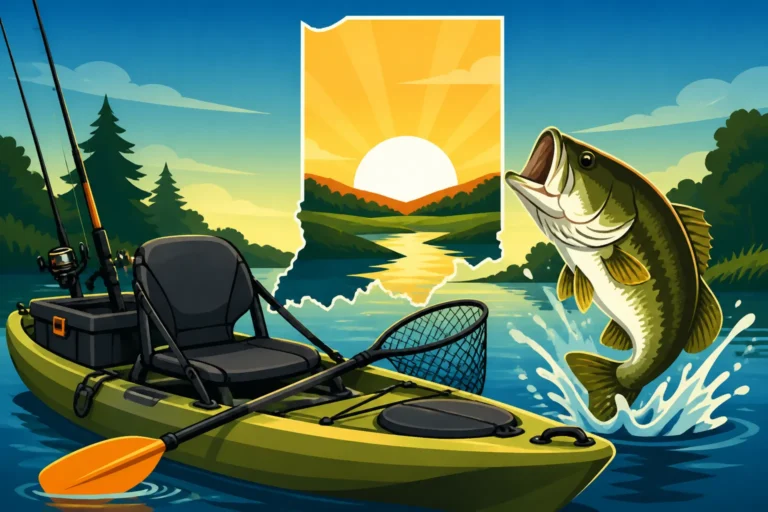
It can be incredibly confusing trying to figure out all the boating regulations in Indiana, especially when you're just trying to enjoy a peaceful day on the water with your canoe. You might be wondering, "Does my canoe need a special sticker or decal, or can I just launch it?" This guide is here to untangle that very question, making sure you understand exactly what's required for your paddle-powered or even subtly motorized canoe in the Hoosier State.
Understanding Indiana's Boat Registration Basics
Before we dive specifically into canoes, it helps to understand the foundational rules for boat registration in Indiana. The state, like many others, categorizes vessels based on their propulsion and size, and these classifications dictate whether or not you need to register them and display a decal. It’s all about safety, identification, and ensuring that our beautiful waterways are managed effectively.
The Difference Between Motorized and Non-Motorized Vessels
Here in Indiana, the biggest deciding factor for boat registration isn't necessarily the type of vessel itself (like a canoe, kayak, or rowboat) but rather how it's propelled. If your boat has any kind of motor, no matter how small, it generally needs to be registered with the Bureau of Motor Vehicles (BMV). This applies whether it's an outboard, an inboard, or even a tiny electric trolling motor. This is a crucial distinction because many people assume their small fishing boat or kayak is exempt, only to find out later that the addition of a motor changes everything. Without a motor, most smaller vessels are typically exempt from registration. You can find a complete overview of the rules in Indiana Boat Registration Rules Explained.
Imagine you’ve got a classic aluminum canoe, perfect for a quiet morning on a small lake. If you’re just using paddles, the state sees that very differently than if you decide to attach a little transom-mounted electric motor to make your fishing trips a bit easier. That motor, even if it’s only a few pounds, triggers a whole new set of requirements. This distinction is really at the heart of the "decal or no decal" question for canoe owners.
What Exactly is a Decal in Boating Terms?
When we talk about a "decal" in the context of boat registration, we're usually referring to the small sticker issued by the state BMV that indicates your vessel is properly registered and that its registration is current. This decal often has a year printed on it, showing when the registration expires. Along with the decal, motorized vessels also typically require registration numbers (often referred to as hull numbers) to be displayed on the bow of the boat. These numbers are unique to your vessel and are akin to a license plate on a car, allowing law enforcement and emergency services to identify your boat if needed.
The decal itself is a quick visual cue for conservation officers and other authorities that your boat is compliant with state laws. It’s not just a decorative sticker; it’s proof that you’ve gone through the proper channels and paid any required fees. Failing to display it, or displaying an expired one, can lead to some unwanted conversations with a conservation officer. It’s definitely something you want to get right to avoid any hassle while you're out enjoying the water. For more specifics on what decals apply to what vessels, check out Indiana Watercraft Decal Rules for Kayaks and Canoes.
The Big Question: Does Your Canoe Need a Decal in Indiana?
This is the core question for many canoe enthusiasts, and thankfully, the answer is fairly straightforward, though it comes with an important caveat. Understanding this will save you a headache and potential fines down the line.
The "Propulsion" Factor: Why It Matters for Canoes
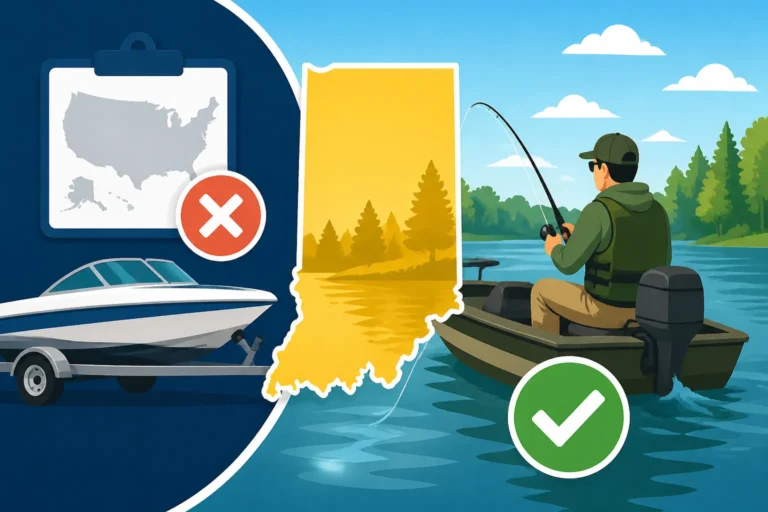
For the vast majority of canoes in Indiana, the answer is no, they do not need a registration decal. This is because most canoes are exclusively paddle-powered vessels. Indiana law specifically exempts non-motorized boats from registration requirements. If you're using your canoe strictly with paddles or oars, you're good to go. You can launch it on public waters without needing to visit the BMV, pay a fee, or affix any stickers or numbers to its hull.
This exemption is a huge relief for many traditional canoeists who simply want to enjoy the tranquility of Indiana's lakes and rivers. It reflects a common-sense approach, recognizing that purely human-powered vessels have a different impact and need for regulation than larger, faster, or motorized boats. So, if your canoe is just you, a paddle, and the water, you can breathe easy. This same rule generally applies to other human-powered craft as well; you might be interested in Do Kayaks Need to Be Registered in Indiana? for similar insights.
When a Canoe Might Need a Decal (The Motor Exception)
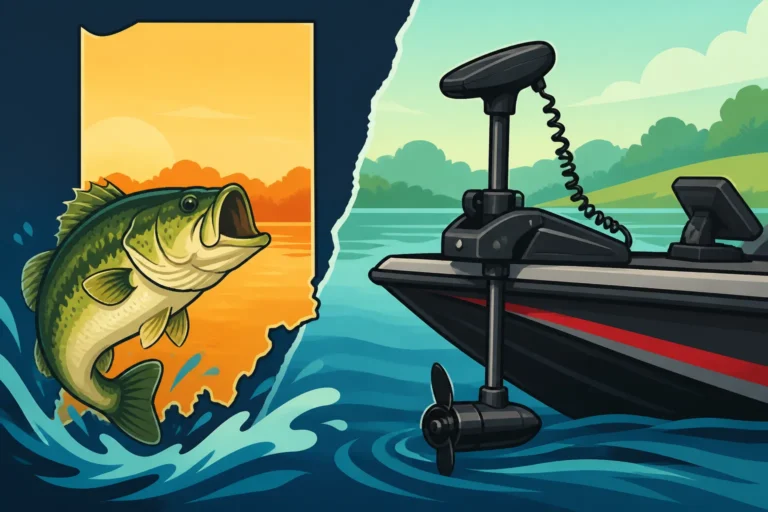
Here’s the critical caveat, and where many canoe owners can unintentionally run afoul of the law: if you attach any motor to your canoe, even a small electric trolling motor, it instantly transforms from an exempt non-motorized vessel into a motorized one. Once a motor is attached, regardless of its size or power, your canoe is no longer exempt and it absolutely needs to be registered and display both registration numbers and a current decal.
This can catch people off guard, especially those who use a small electric motor to help them traverse larger lakes or simply conserve energy during a long day of fishing. They might think, "It's just a little motor, it's basically still a canoe!" But from the state's perspective, a motor is a motor. So, if you're eyeing those handy little trolling motors at a place like Bass Pro Shops or browsing options on Amazon, remember that adding one to your canoe means a trip to the BMV is also in your future. Don't risk getting caught without proper registration; the convenience of a motor isn't worth the penalty.
Navigating the Registration Process for Motorized Canoes
So, you've decided to put a motor on your canoe, or perhaps you bought a canoe that already has one. Now what? The process for registering a motorized canoe is essentially the same as registering any other motorized boat in Indiana. It’s not overly complicated, but it does require attention to detail and a bit of planning.
Steps to Register a Motorized Canoe
The first step is to gather all the necessary paperwork. This typically includes proof of ownership (like a title or a manufacturer's statement of origin if it’s new, or a bill of sale if you bought it used), your Indiana driver's license or state ID, and potentially a signed affidavit if certain documents are missing. You'll then need to visit a local Indiana BMV branch or utilize their online services if applicable. During the registration process, you'll pay the required fees. The cost can vary, but generally, it's an annual fee that helps support the state's waterways and conservation efforts. Understanding How Much Does an Indiana Boat Registration Cost can help you budget for this.
Once registered, you'll receive your certificate of registration, the registration numbers, and the all-important decal. Remember, this registration is not a one-time thing; it usually needs to be renewed annually. How Long Does an Indiana Boat Registration Last can give you more details on renewal periods, but typically, you'll need to stay on top of it to avoid any lapses. Keep your registration certificate on board your canoe whenever you're using it; it's your proof of legal operation.
Displaying Your Decal and Numbers Correctly
Getting your registration numbers and decal isn't enough; you also need to display them correctly on your canoe. The regulations are very specific about this to ensure visibility and easy identification. Your registration numbers must be painted or permanently attached to both sides of the forward half of the hull (the bow), above the waterline. They need to be block characters, at least three inches high, and in a contrasting color to the hull so they're easily readable. There must be a hyphen or space separating the letters and numbers (e.g., IN-1234-AB or IN 1234 AB).
The registration decal, on the other hand, needs to be placed on the left side of the bow, within six inches of the registration numbers. It should be clearly visible and not obstructed by any other gear or markings. These specific placement rules are not arbitrary; they ensure that law enforcement can quickly and accurately identify your vessel from a distance. Proper display is just as important as having the registration in the first place, and it’s a detail that can easily lead to a citation if overlooked. More information on proper placement can be found in Indiana Watercraft Decal Rules for Kayaks and Canoes.
Why These Rules Exist: Safety and Conservation
Sometimes, regulations can feel like a burden, but there's always a good reason behind them, especially when it comes to shared natural resources like our lakes and rivers. Indiana's boat registration and decal requirements are put in place with public safety and environmental conservation firmly in mind.
Identifying Vessels for Emergency Services
One of the most crucial reasons for boat registration and visible decals is identification, particularly in emergency situations. Imagine a scenario where a canoe overturns on a large lake, and the occupants are separated from their vessel. If that canoe is motorized and registered, emergency services have a distinct registration number to reference. This number can be traced back to the owner, providing vital information about who was last using the boat, their planned route, or even descriptions of the individuals, which can be critical for search and rescue operations.
Without registration, an abandoned or capsized canoe would be much harder to trace, delaying vital rescue efforts. It’s a layer of safety that, while you hope you never need it, is invaluable when things go wrong on the water. This system works hand-in-hand with things like Indiana Fishing License Requirements Explained to ensure that all users of our waterways are accounted for and can be aided if necessary.
Funding Indiana's Waterways and Fisheries
Beyond immediate safety, the fees collected from boat registrations (and fishing licenses, for that matter) play a significant role in funding the management and conservation of Indiana's aquatic resources. These funds go towards crucial programs such as maintaining public boat ramps and access points, stocking fish in lakes and rivers, conducting research on fish populations, and supporting conservation officers who patrol our waters.
When you pay your boat registration fee, you're directly contributing to the health and accessibility of the very places you love to paddle and fish. It's an investment in the future of Indiana's outdoor recreation, ensuring that generations to come can also enjoy the state's natural beauty. Understanding that these fees are not just another tax, but rather a direct contribution to preserving our fishing heritage, can make the process feel a lot less like a chore. The money helps keep our waters clean, our fish populations healthy, and our access points well-maintained. Just as Indiana Fishing License Costs for Residents and Nonresidents contribute to these efforts, so do boat registration fees. Failure to register can lead to penalties and fines, as highlighted in What Happens if You Boat Without Registration in Indiana?, which ultimately diverts resources from these important programs.
Important Considerations for Canoe Owners
Being a responsible canoe owner in Indiana involves more than just knowing whether or not you need a decal. There are other important considerations that can enhance your safety, ensure compliance, and make your time on the water more enjoyable.
Staying Up-to-Date on Regulations
Boating and fishing regulations, while generally stable, can sometimes change. New laws might be introduced, or existing ones might be modified to adapt to changing environmental conditions, new technologies, or safety concerns. It’s your responsibility as a boat owner and angler to stay informed about the most current rules. The Indiana BMV website and the Indiana Department of Natural Resources (DNR) are your go-to sources for official and up-to-date information.
Before each boating season, or if you plan to explore a new body of water, it's always a good idea to quickly review the regulations. This prevents you from inadvertently violating a rule you weren't aware of. For instance, knowing the Indiana Boat Registration Renewal Deadline is key to avoiding an expired registration, and a simple check of the DNR website can confirm any changes to fishing or boating rules. Many outdoor enthusiasts bookmark these pages or sign up for newsletters to get updates directly.
Essential Safety Gear Beyond Registration
While a decal signifies legal compliance, it doesn't guarantee safety. Every canoe, whether motorized or not, should carry essential safety gear. The absolute top priority is a U.S. Coast Guard-approved life jacket for every person on board. Even strong swimmers can be overwhelmed by cold water or unexpected currents, and a life jacket is your best defense. Indiana Life Jacket Requirements for Every Boater outlines these critical rules. Beyond life jackets, consider paddles (even for motorized canoes, as a backup), a whistle or other sound-producing device to signal distress, and navigation lights if you'll be on the water after sunset or before sunrise.
Other items like a small first-aid kit, a bailing device (like a small bucket or sponge), and a small anchor can also be invaluable. Even if you're just paddling a quiet pond, being prepared for the unexpected is part of being a responsible boater. You can find a wide range of these safety essentials at retailers like Bass Pro Shops or online at Amazon, making it easy to outfit your canoe for maximum safety. Always double-check How Many Life Jackets Do You Need on an Indiana Boat to ensure you're fully compliant and prepared for any situation.
Summary of Canoe Decal Requirements in Indiana
To help clarify everything, here's a quick summary of when a canoe does or does not need a decal in Indiana:
| Canoe Type | Propulsion Method | Indiana Registration Required? | Decal Needed? | Notes |
|---|---|---|---|---|
| Traditional Canoe | Paddles, Oars (Human-Powered) | No | No | Most common scenario. Enjoy without bureaucracy! |
| Motorized Canoe | Electric Trolling Motor | Yes | Yes | Any motor (even small electric) triggers registration. |
| Motorized Canoe | Small Gas Outboard Motor | Yes | Yes | Same as electric; motor changes classification. |
| Sailing Canoe | Sail (Primary Propulsion) | Check Specifics | Check Specifics | Typically motorized vessel rules apply if motor is also present. |
Disclaimer
This article is for general informational purposes only and does not constitute professional advice. Laws, prices and regulations vary by location and change over time. Consult a qualified professional for guidance on your specific situation.