How to Fish a Texas Rig for Bass
Have you ever found yourself casting into a beautiful patch of lily pads or near a submerged log, only to get instantly snagged and frustrated? Or perhaps you've felt overwhelmed by the sheer number of bass fishing techniques out there, wondering which one truly excels in those challenging, cover-filled areas. This guide is dedicated to tackling those very frustrations by diving deep into the Texas Rig – a time-tested, weedless workhorse that will transform your bass fishing success in Indiana's varied waters.
Understanding the Texas Rig: A Weedless Workhorse
The Texas Rig is arguably one of the most fundamental and effective presentations for bass fishing, especially when you're dealing with cover that would make other rigs weep. It's a method born out of necessity, developed by anglers in Texas (hence the name!) who needed a way to fish through dense vegetation and timber without constantly losing their lures. For us Hoosier anglers, this rig is an absolute game-changer when we're facing thick weeds, brush piles, or flooded timber on lakes like Monroe or Patoka.
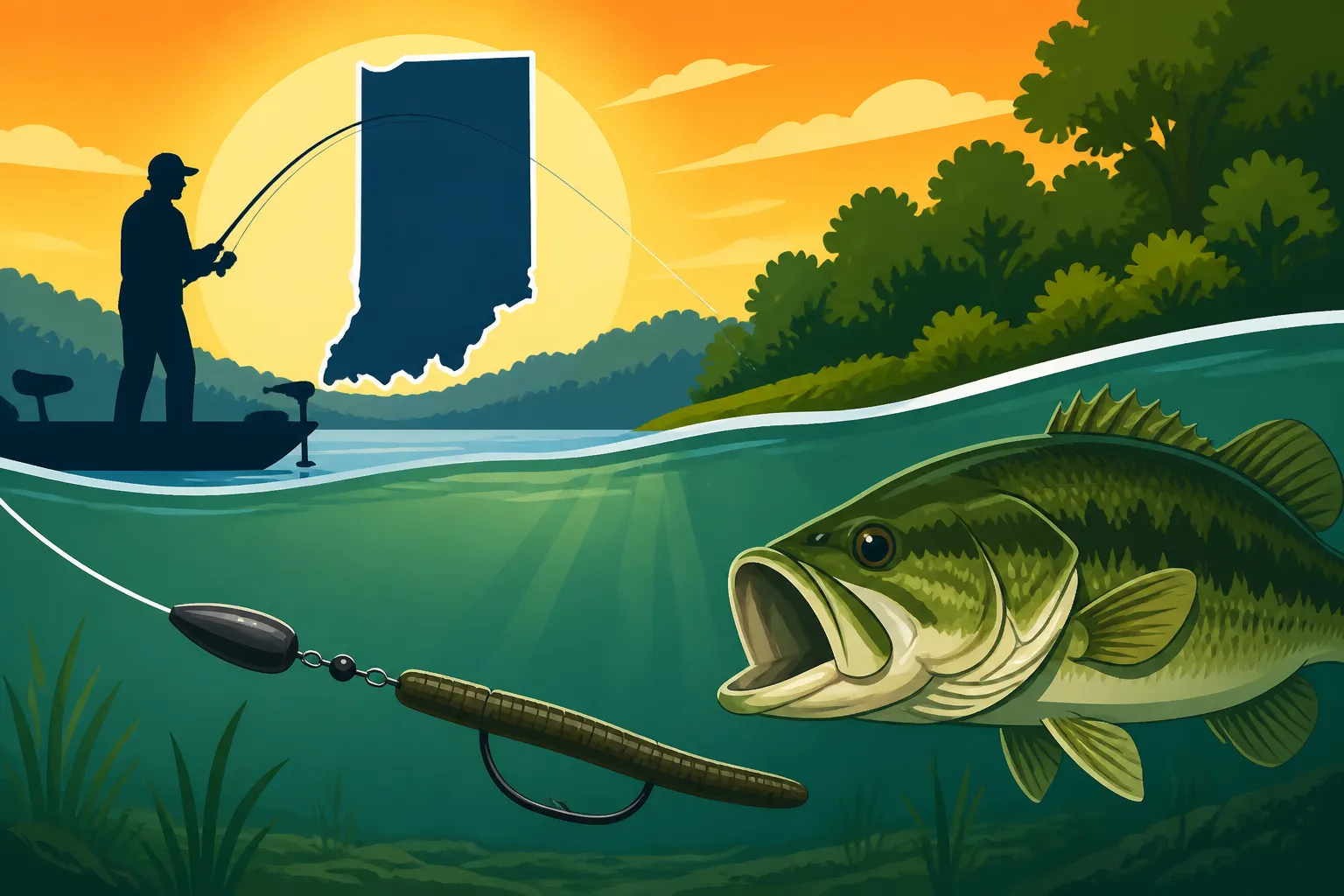
At its core, the Texas Rig consists of a soft plastic bait, an offset worm hook, and a bullet-shaped weight. The magic lies in how these components come together to create a virtually snag-proof setup. The hook point is actually embedded into the body of the soft plastic, making it "weedless." This means you can cast it into the gnarliest cover imaginable, where big bass love to hide, and retrieve it with minimal hang-ups. It's not just about avoiding snags; it's about confidently putting your bait where the fish live, which is half the battle when targeting elusive largemouth bass.
Components of a Texas Rig
To truly appreciate the genius of the Texas Rig, it helps to understand each piece of the puzzle and why it's there. Every component plays a crucial role in its effectiveness and versatility.
First up, the worm hook. This isn't just any hook; typically, you'll use an Extra Wide Gap (EWG) hook or an offset shank hook. The unique bend and wide gap of these hooks are specifically designed to allow the hook point to be buried in the soft plastic while still providing enough clearance to "get a bite" and set the hook firmly when a bass strikes. Choosing the right size is critical – too small, and it won't penetrate the plastic properly; too large, and it'll affect the bait's action. Generally, you'll match the hook size to the length and bulk of your soft plastic, ensuring about a half-inch of the bait is past the hook point when rigged.
Next, we have the bullet weight. This is usually made of lead or tungsten. Tungsten is often preferred because it's much denser than lead, meaning you get a smaller profile for the same weight, which translates to a more compact presentation and better feel of the bottom. These weights have a tapered, bullet-like shape, which allows them to slip through grass, reeds, and wood with far less resistance than a traditional round or egg sinker. The weight slides freely on your line above the hook, allowing the bait to have a more natural, uninhibited fall and movement. This free-sliding action can be key to presenting your lure in a lifelike manner as it descends through the water column or over structure.
Finally, the star of the show: the soft plastic bait. This is where you can really get creative! Worms are the classic choice, ranging from 4-inch finesse worms to large 10-inch ribbon tails. Creature baits, crawfish imitations, and even flukes can also be Texas Rigged. The key is to select a soft plastic that has good action and a profile that mimics local forage. For Indiana waters, common colors like green pumpkin, junebug, or black and blue are often highly effective, especially when trying to mimic crayfish or bluegill. The softness of the plastic is important too, as it allows for better hook penetration when a bass bites down.
Why the Texas Rig is a Bass Angler's Best Friend
If you fish in Indiana, you know our lakes and rivers offer incredible bass fishing, but they also come with their fair share of challenging cover. This is precisely where the Texas Rig shines and earns its reputation as a bass angler's best friend.
Its primary superpower is its weedless design. Imagine pitching your bait right into the heart of a dense lily pad field on Lake Wawasee or dropping it into a tangle of submerged timber in a remote cove on Brookville Lake. With a traditional jig or exposed hook, you'd be snagged instantly, spending more time freeing your lure than actually fishing. The Texas Rig, with its buried hook point, glides through these obstacles like a dream. This confidence to fish where the big bass hide is invaluable. You're not just casting near the cover; you're putting your bait in it, triggering bites from fish that feel safe and unpressured. This capability directly increases your chances of connecting with quality fish that shy away from open water presentations.
Beyond its weedless nature, the Texas Rig boasts incredible versatility. You can fish it slowly, dragging it along the bottom to imitate a foraging creature. You can hop it, mimicking a crawfish scurrying away. Or, you can pitch and flip it precisely into tight spots, letting it fall vertically into cover. This adaptability means one rig can be effective in a multitude of situations, from shallow weedy flats in the spring to deep ledges and brush piles in the summer. It's an excellent choice when targeting bass during the post-spawn when they tend to relate tightly to structure.
The natural presentation it offers is another huge advantage. Because the bullet weight slides freely above the hook, the soft plastic bait can flutter, undulate, and move independently as it falls or is worked. This creates a very lifelike action that often fools even the most wary bass. A bass isn't just seeing a lure; it's seeing something that looks, moves, and feels like natural prey. This subtle, nuanced action, combined with the weedless aspect, makes the Texas Rig a consistent producer for many Indiana anglers, whether they are new to the sport or seasoned pros. For those looking to dive deeper into how to catch largemouth bass in Indiana, understanding this rig is a critical first step.
Rigging Your Texas Rig Step-by-Step
Alright, let's get down to brass tacks: actually putting this thing together. It might seem a little daunting at first glance, but once you do it a few times, it becomes second nature. A properly rigged Texas Rig is the foundation of its effectiveness, so pay close attention to these steps.
Choosing Your Components Wisely for Indiana Bass
Before you even start tying knots, take a moment to select the right components for your specific fishing situation. This isn't a one-size-fits-all deal; what works for a small pond might not cut it on a big reservoir.
Hook Size Based on Bait Size: This is paramount. A good rule of thumb is to ensure the hook point will exit the plastic near the middle of its body when rigged, allowing for ample hook gap. For a 4-inch worm or creature bait, a 2/0 or 3/0 hook is usually a safe bet. Moving up to a 6-inch worm might call for a 3/0 or 4/0, and for those big 8-10 inch worms or bulky creature baits, you'll want a 5/0 or even 6/0 hook. If you find yourself missing a lot of fish, sometimes upsizing or downsizing your hook can make a difference. Many anglers find a good selection of quality hooks and weights on platforms like Amazon.
Weight Selection Based on Depth, Cover, and Desired Fall Rate: This is where the art comes in.
- 1/8 oz to 1/4 oz: Ideal for shallow water (less than 10 feet), sparse cover, or when you want a very slow, subtle fall. Great for finicky bass or calm conditions.
- 3/8 oz to 1/2 oz: Your workhorse weights. Good for most situations, medium depths, and moderate cover. This is a great starting point for many Indiana lakes.
- 3/4 oz to 1 oz+: For deep water, heavy current (like the Wabash River), or punching through extremely dense vegetation such as thick matted grass or hydrilla. These heavier weights get your bait down quickly and help you maintain contact in heavy cover.
Remember, the heavier the weight, the faster the fall, and the less natural your bait might appear to a wary bass. Tungsten weights, as mentioned, are a great investment because their smaller size makes them less prone to snags and provides better sensitivity.
Bait Type and Color Considerations for Local Conditions: Think about what the bass are eating. In clear water lakes, natural colors like green pumpkin, watermelon, or natural craw are often best. If the water is stained or muddy, or on overcast days, darker colors like black and blue, junebug, or even red shad can be more visible. Creature baits excel at mimicking crawfish, while straight-tail or ribbon-tail worms can imitate various forage or simply provide an enticing, subtle action. During the bass spawn in Indiana, a slow-moving creature bait can be deadly around beds. Experimentation is key, and having a variety of soft plastics in your tackle box is always a good idea.
Here's a quick reference table for common hook and bait pairings:
| Soft Plastic Length | Recommended EWG/Offset Hook Size |
|---|---|
| 4 inches | 2/0 – 3/0 |
| 5-6 inches | 3/0 – 4/0 |
| 7-8 inches | 4/0 – 5/0 |
| 9-10+ inches | 5/0 – 6/0 |
| Small Creature Bait | 2/0 – 3/0 |
| Large Creature Bait | 4/0 – 5/0 |
The Rigging Process
Now that you've got your components, let's put it all together. Take your time with these steps, as a well-rigged Texas Rig is crucial for a weedless presentation and good hookups.
Step 1: Thread the Line Through the Bullet Weight. Start by taking your fishing line and threading it through the narrow, pointed end of your bullet weight. The weight should slide freely up and down your line. This free-sliding action is what gives the Texas Rig its natural fall and helps transmit subtle bites directly to your rod tip.
Step 2: Tie on the Hook. Next, you'll tie your chosen worm hook to the end of your fishing line. A strong, reliable knot is essential here. The Palomar knot is an excellent choice for its strength and ease of tying, especially with fluorocarbon or braided lines. If you're more comfortable with an improved clinch knot, that works too, just make sure it's cinched down tightly. Trim any excess tag end close to the knot.
Step 3: Insert Hook Tip into the Head of the Plastic. Take your soft plastic bait. Insert the very tip of your hook into the center of the head of the bait, just enough to get it started. You want it to go in straight, aiming directly down the center of the bait's body. Push it in about a quarter to half an inch, depending on the size of your bait.
Step 4: Thread the Plastic Up the Shank. Once the hook tip is embedded, push the hook through the plastic until the eye of the hook and the knot are snug against the head of the bait. The plastic should be threaded straight along the shank of the hook. This keeps the bait from sliding down and ensures a straight presentation.
Step 5: Rotate the Hook and Re-insert for Weedless Setup. Now, this is the critical step for achieving that weedless presentation. Rotate the hook 180 degrees so the hook point is facing the body of the plastic. Then, measure where the hook point will naturally rest on the underside of the plastic. Gently flex the soft plastic, and insert the hook point into the body of the plastic, bringing it out just barely under the surface. You want the hook point to be hidden or "skin-hooked" (just beneath the surface), not fully exposed. The plastic should lay straight and natural, not bunched up or kinked.
Step 6: Test the Rigging for Straightness and Weedlessness. Give your bait a gentle tug and observe it. It should hang straight, not banana-shaped or lopsided. This ensures a natural presentation in the water. Then, run the rigged bait over your hand or a piece of carpet. If it snags, the hook point isn't quite buried enough, or your plastic might be kinked. Adjust it until it glides smoothly. A perfectly rigged Texas Rig will swim or fall through the water without spinning or looking unnatural, which is key to triggering strikes from wary bass in Indiana's lakes and rivers. This setup is a staple for a reason, and mastering it will significantly improve your bass fishing game.
Mastering the Retrieve: Techniques for Texas Rig Bass Fishing
Once your Texas Rig is perfectly tied and threaded, the next challenge is bringing it to life in the water. The beauty of this rig is its adaptability, allowing for several effective retrieve techniques depending on the cover, depth, and the mood of the bass. Remember, the goal is often to imitate a crawfish, a worm, or another bottom-dwelling creature.
Common Retrieves for Different Cover
Your retrieve isn't just about reeling; it's about controlling your bait's action and making it look like an easy meal. Each retrieve style is designed to be effective in specific scenarios you'll encounter on Indiana's diverse fishing grounds.
The Dragging Retrieve is perhaps the simplest and most effective starting point. Once your Texas Rig hits the bottom, simply engage your reel and slowly drag the bait along. Don't reel constantly; instead, use your rod tip to pull the bait a few feet, then reel up the slack. This methodical retrieve is fantastic for sparse cover, flat bottoms, or areas with scattered rock. It kicks up a little puff of silt, mimicking a crawfish or a worm burrowing, which can attract curious bass. This slow presentation is often ideal when bass are sluggish or the water is cold, making it a good choice for early spring or late fall fishing.
For a more active presentation, try the Hopping Retrieve. This technique involves letting your weight hit the bottom, then sharply snapping your rod tip upward a foot or two, letting the bait hop off the bottom, and then allowing it to fall back down on a slack line. Reel in the slack as it falls. This mimics a crawfish trying to escape or a baitfish struggling, making it incredibly effective around rocky bottoms, ledges, or submerged stumps. The key is to feel for that "thump" as the weight hits bottom and then wait for the subtle "tick" of a bass picking it up on the fall. This retrieve can be particularly productive in reservoirs like Patoka Lake, where bass often relate to irregular bottom contours.
When you're dealing with extremely dense cover—think thick matted grass, fallen trees, or dock pilings—the Pitching/Flipping Retrieve becomes your best friend. This is a short-distance, precision casting technique. You'll typically pitch your bait underhand or flip it gently into a small opening in the cover, letting it plummet straight down. The goal is to get your bait into those tiny, high-percentage spots where bass ambush prey. Once it hits bottom, you can lightly shake the rod tip to give the bait some action, or slowly lift and drop it a few times before retrieving and pitching to the next spot. This approach is paramount for fishing thick cover on many of Indiana's lakes, especially during the warmer months when bass burrow deep into vegetation.
Finally, for certain soft plastics like creature baits or even stick worms, a Swimming Retrieve can be effective. This involves a more continuous, steady retrieve, often with a slight pause or twitch to impart action. While not as common for traditional Texas Rigs, it can work when bass are more active and chasing bait. The weight helps the bait track true, and the action of the soft plastic's tails or appendages does the work. This can be a great way to cover water quickly and find active fish, especially around the edges of weed lines or submerged timber.
When and Where to Use a Texas Rig in Indiana
Knowing how to fish the Texas Rig is one thing, but knowing when and where to deploy it in the vast waters of Indiana is where you truly become a master angler. This rig isn't always the answer, but in specific situations, it's virtually unbeatable.
The Texas Rig truly excels when you're faced with heavy cover. This includes classic bass hangouts like lily pads, dense aquatic vegetation, thick brush piles, and fallen trees. Many of Indiana's lakes, such as Lake Monroe or Lake Wawasee, are rich with these types of features. When you see a gnarly-looking log jam or a patch of reeds that screams "big bass," that's your cue to reach for a Texas Rig. It glides through these obstacles, minimizing snags and maximizing your time with your bait in the strike zone. Docks and boat lifts also count as heavy cover, offering shade and structure, and the Texas Rig can be skipped or pitched precisely into these tight spots where other lures would get hung up.
From a seasonal considerations perspective, the Texas Rig is incredibly versatile and can produce year-round. It's particularly potent during the post-spawn and throughout the summer months. After bass finish spawning, they're often hungry and seeking refuge in the thickest cover available, recovering and ambushing unsuspecting prey. During the heat of summer, they'll retreat to deep weed lines, brush piles, or shady areas under docks, all of which are prime Texas Rig territory. As the water cools in the fall, bass may still relate to heavy cover as they feed up for winter, making the Texas Rig a solid choice then too. Even in winter, a very slow drag with a light weight can pick off lethargic bass holding tight to deep structure. For specific insights into bass activity, refer to our comprehensive guide on Largemouth Bass Fishing in Indiana.
Let's talk specific Indiana lakes and rivers.
- Monroe Lake: Indiana's largest inland lake, Monroe is famous for its bass fishing and features extensive areas of flooded timber, stump fields, and numerous coves with laydowns. The Texas Rig is indispensable here, allowing you to pick apart these structures where trophy bass hide. You can find more targeted advice in our guide to Monroe Lake: Indiana's Largest Lake for Bass Fishing.
- Patoka Lake: Another prime bass fishery, Patoka has lots of standing timber and deep brush piles, especially in its numerous arms and coves. Dragging a Texas Rig with a creature bait through these areas can be incredibly effective for both largemouth and even some of the lake's abundant crappie.
- Wabash River: While primarily known for catfish, the Wabash and its tributaries also hold good populations of smallmouth and largemouth bass. When fishing the Wabash River, look for current breaks created by fallen trees, rock piles, or eddy lines. A heavier Texas Rig can punch through the current and get down to where bass are holding, offering a natural presentation that works well in the river's often stained waters. You might find our guide on Fishing the Wabash River in Indiana helpful for these scenarios.
- Lake Wawasee: Known for its clear waters and abundant vegetation, especially around shorelines and flats. Flipping a Texas Rig into lily pads or thick grass is a classic and effective technique here, especially for larger bass lurking beneath the canopy.
Essentially, if you're fishing any Indiana water with substantial cover, a Texas Rig should be one of the first rigs you consider. It's a reliable, efficient, and incredibly effective way to put your bait where the big ones live and consistently catch bass.
Troubleshooting and Advanced Tips
Even with the best rigging and retrieve techniques, you might encounter some common frustrations with the Texas Rig. Learning to troubleshoot these issues and explore advanced variations will further hone your skills and increase your success rate on Indiana's bass waters.
Dealing with Snags and Missed Bites
Despite its weedless design, the Texas Rig isn't entirely snag-proof, and sometimes, those subtle bass bites can be hard to convert into hooksets. Let's tackle these common headaches.
Minimizing Snags: While the Texas Rig is excellent at navigating cover, it's not foolproof. The main culprit for snags, even with a properly rigged Texas Rig, is often the line tie on your hook catching on branches or grass. To minimize this, ensure your knot is snug and trimmed tight. Also, when retrieving through heavy cover, maintain a slight tension on your line. This keeps the bullet weight pressed against the head of your soft plastic, forming a more streamlined, snag-resistant unit. If you're constantly getting snagged on the retrieve, consider pegging your weight (more on this below). A pegged weight makes the entire rig a single, compact unit that slides through cover even better. When you do feel a snag, don't just yank. Often, shaking your rod tip on a slack line or giving a series of gentle pulls can free the bait. If all else fails, a "bow and arrow" technique (pulling your line straight back, then releasing) can sometimes pop it free.
Missed Bites: This is perhaps the most frustrating aspect of Texas Rig fishing. You feel the "thump," you set the hook, and… nothing. This can be due to several factors.
- Light Bite: Bass, especially in cold water or under heavy fishing pressure, can be incredibly subtle. They might just "tick" the bait or swim off with it gently. You need to be incredibly attentive to your line and rod tip. Sometimes the line will just jump or move sideways, or your rod tip will load up slightly.
- Fish Spitting It: If the bass hits and spits the bait before you can set the hook, it could be that your hook isn't sharp enough, or the bait is too bulky for the hook size. Always check your hook points regularly for sharpness; a small hook sharpener can be found on Amazon and is a crucial tool.
- Improper Hookset: With a Texas Rig, you need a powerful, sweeping hookset. Instead of a short wrist flick, imagine trying to set a nail with a hammer. Reel down until you feel the fish, point your rod tip at the fish, then quickly and forcefully sweep your rod upwards and to the side, leaning into it. This drives the hook through the plastic and into the bass's mouth.
- Timing: Don't set the hook on the first "thump." Often, a bass will grab the tail or mouth the bait. Give them a second to fully engulf it before winding down and setting the hook. This takes practice and intuition.
To improve your hookup ratio, consider using a stout rod with a fast action. This provides the backbone needed to drive the hook home. Paired with braided line, which has zero stretch, you'll have maximum sensitivity and hook-setting power. For more on selecting the right gear, check out our guide on the Best Fishing Rods and Reels for Freshwater Fishing.
Texas Rig Variations and Enhancements
The basic Texas Rig is fantastic, but there are ways to modify it or try similar rigs to suit even more specific conditions.
Pegging the Weight: This is a simple but impactful modification. Pegging involves placing a small rubber stopper or a toothpick into the hole of your bullet weight, pinning it in place against the head of your soft plastic.
- When to peg: Use a pegged weight when fishing in extremely dense cover (like punching through thick mats of hydrilla or reeds), in strong current, or when you want a very aggressive, direct fall. It keeps the weight and bait together, creating a more compact and streamlined presentation that slips through cover more efficiently.
- Why to peg: It prevents the weight from sliding up your line, which can happen in heavy cover and lead to snags or poor hooksets. It also concentrates the weight directly at the head of the bait, helping it to penetrate dense vegetation. However, a pegged weight can sometimes inhibit the bait's natural action on the fall, making it less subtle.
Different Plastics for Different Situations: Don't be afraid to experiment with the vast array of soft plastics available.
- Flukes (soft jerkbaits): Texas Rigged flukes, like a Zoom Super Fluke, are excellent for imitating baitfish. Fish them with a weightless Texas Rig or a very light weight for a slow, darting fall, twitching your rod tip to create an erratic swimming action.
- Senkos (stick worms): These are fantastic weightless or with a very light Texas Rig. Their natural shimmy on the fall is incredibly appealing to bass. They are a go-to for many anglers fishing clear water or pressured areas.
- Ribbon-tail worms: These provide a lot of action with their undulating tails, even on a slow retrieve. Great for drawing attention in stained water or when you want a bit more flash.
- Crawfish imitations: Critical for fishing rocky bottoms, ledges, or when bass are keying in on crawfish. Dragging or hopping these along the bottom can be deadly.
Adding Scent or Rattles: Bass rely heavily on their sense of smell and lateral line system.
- Scent: Applying a quality fishing scent to your soft plastic can increase strikes and encourage bass to hold onto the bait longer, giving you more time to set the hook. Brands like Berkley PowerBait or Pro-Cure offer effective gels and sprays.
- Rattles: Inserting a small glass or plastic rattle into your soft plastic can add an auditory element, especially useful in stained or muddy water, deep water, or when bass are lethargic. The clicking sound can draw fish from further away. Both scents and rattles are readily available on Amazon.
Considering Alternatives: While the Texas Rig is king in heavy cover, sometimes a slightly different presentation is better.
- Carolina Rig: This rig positions the weight (usually a heavier egg sinker) above a swivel, with a leader (often 18-36 inches) between the swivel and the hook/bait. The bait then floats or drifts more freely above the bottom, making it excellent for covering large flats, points, and deep structure, especially when bass are scattered. It’s also a fantastic way to fish a crawfish imitation with a natural, subtle drift.
- Neko Rig: A newer, finesse-oriented technique, the Neko Rig involves inserting a nail weight into one end of a straight worm and hooking the worm O-ring style, usually with a small weedless hook. This gives the worm a unique, nose-down jigging action that can be incredibly effective for pressured fish or in lighter cover. It’s less weedless than a Texas Rig but offers a different, enticing presentation.
By understanding these nuances and adapting your approach, you'll transform the Texas Rig from a basic setup into a dynamic tool, ready to conquer any bass fishing challenge Indiana's waters throw your way. Don't forget, having a full tackle box with various types of bait is essential for any angler looking to catch the Best Bass Fishing Lakes in Indiana.
Disclaimer
Fishing regulations can change, and it is every angler's responsibility to stay informed. Always consult the latest Indiana Department of Natural Resources (DNR) fishing guide for current rules, regulations, and licensing requirements before heading out on the water. This article is for informational purposes only and does not constitute legal advice.