Best Time of Year for Muskie Fishing in Indiana
If you're an angler in Indiana with your heart set on catching a muskellunge, you know it's not just about showing up with a rod and reel. These elusive, toothy predators, often called "the fish of 10,000 casts," demand patience, skill, and, perhaps most importantly, impeccable timing. This comprehensive guide will walk you through the seasonal nuances of muskie fishing in Indiana, helping you understand when and where to find these magnificent fish throughout the year.
Understanding the Muskie's Seasonal Habits in Indiana
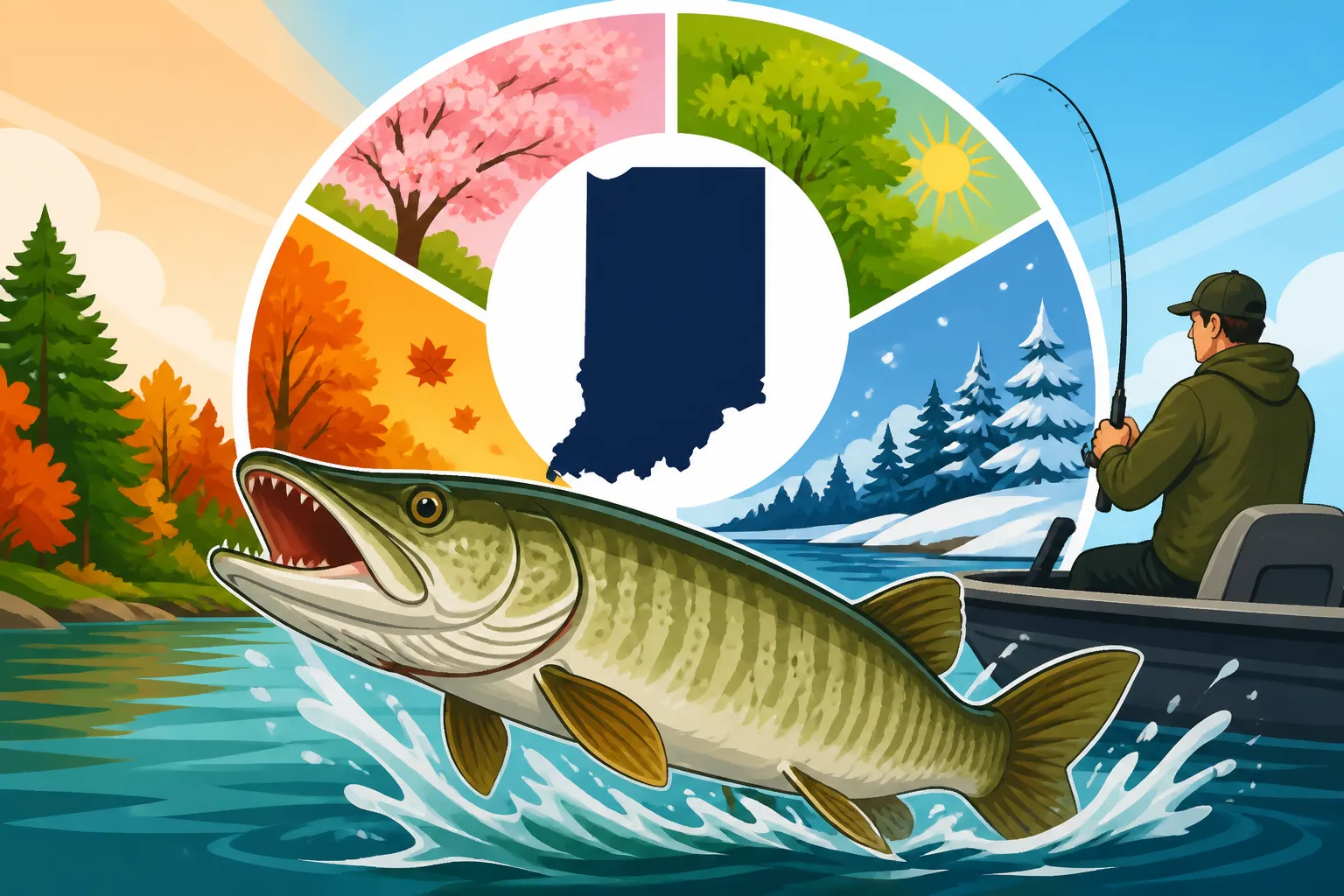
Muskie behavior is heavily influenced by water temperature and the changing seasons, much like many other top predators. Knowing their patterns can significantly improve your chances of a successful outing on Indiana's diverse lakes and rivers. Each season presents unique opportunities and challenges, requiring different tactics and locations.
Spring Awakening and Pre-Spawn Activity
As the ice retreats and Indiana's waters begin to warm in early spring (typically March and April), muskie slowly start to shake off their winter lethargy. This is a fascinating period for muskie anglers, as the fish are transitioning from deep, inactive haunts to shallower areas.
During late March and through April, water temperatures usually hover in the 40s to low 50s Fahrenheit. Muskie, especially the larger females, will be looking to feed heavily before their spawn. They'll often stage in areas adjacent to shallow bays, weed flats, or rocky points that are among the first to warm up. Think of those northern Indiana glacial lakes like Webster Lake or the Tippecanoe Chain, where sun-exposed shallows can really draw them in. They might not be incredibly aggressive just yet, but they're definitely on the prowl for an easy meal to build up energy reserves. Early spring fishing can be a bit slower, but the rewards can be huge if you hit it right, as these fish are often less pressured and more concentrated. Remember that regulations for specific lakes can vary, so always check the latest rules before heading out.
Summer Patterns: Deep Water and Thermocline
Once the water temperatures climb into the 60s and 70s Fahrenheit, typically from June through August, muskie will establish their summer patterns. This usually means they move to deeper, cooler water, often relating to the thermocline (the layer where warm surface water meets cooler deep water).
During the heat of summer, muskie will often hold on deeper breaklines, humps, offshore weed beds, or submerged timber. They're still feeding, but their activity might be concentrated during periods of low light, like dawn, dusk, or even at night. On a lake like Lake Wawasee, you might find them suspended over deep water, especially if there's a good concentration of baitfish. They become more elusive, requiring anglers to use larger baits that imitate their preferred prey, and to cover a lot of water. Trolling or systematically casting large bucktails, crankbaits, or glide baits over deep structure can be effective. It’s also crucial to be mindful of water temperatures; if the surface water gets too hot, fighting a muskie can be extremely stressful for the fish, and a proper release is paramount for their survival. If you're looking for Best Muskie Fishing Lakes in Indiana, you'll find that many of the top spots become deep-water challenges in summer.
Fall: The Absolute Best Time for Indiana Muskie
Hands down, if you want to maximize your chances of catching a trophy muskie in Indiana, autumn is your golden ticket. The cooling water revitalizes these apex predators, triggering an intense feeding frenzy as they prepare for the long winter ahead.
The Peak Feeding Frenzy
From September through early November, as lake temperatures drop from the 60s into the 50s and even high 40s, muskie become incredibly active and aggressive. This is when they really bulk up, chasing down large meals with a ferocity rarely seen at other times of the year.
The cooling water signals a major change in muskie behavior. They move from their deep summer haunts back into shallower areas, congregating around points, weed edges, rock bars, and prominent structures where baitfish are abundant. This is the prime time to cast big spinnerbaits, crankbaits, jerkbaits, and soft plastics. The muskie are actively hunting, making them more susceptible to well-presented lures. Many anglers consider October and early November to be the absolute sweet spot. Areas in Kosciusko County, famous for their glacial lakes, really shine during this period. For specific lure recommendations, you might find our guide on Best Muskie Lures for Fall Fishing helpful, and you can often find a great selection of these on Amazon. This period is also when you're most likely to encounter a true leviathan, as the big females are putting on serious weight. If you plan your trip for the Best Fall Months for Muskie Fishing in Kosciusko County Indiana, you'll be giving yourself the best possible shot.
Late Fall and Winter Holdovers
Even as temperatures continue to plummet in late November and December, muskie fishing can remain productive, though it demands a different approach. The fishing might slow down considerably, but the fish you do encounter are often larger and even more robust.
In late fall, as water temperatures dip into the low 40s and even high 30s before ice-up, muskie will typically move back to deeper, stable water. However, they will still make forays into shallower areas, especially if there's a warm spell or if a large school of baitfish is present. Slower presentations are key during this time. Glide baits, large soft plastics, and even live bait (where permitted) fished deliberately can entice strikes. Fishing during this period requires immense patience and a willingness to brave the cold, but it can yield some of the biggest muskie of the year. Think of lakes known for their big fish, like James Lake, where the Indiana state record muskie was caught. Even in the coldest open water conditions, these fish are still present and can be coaxed into biting. Understanding James Lake and Indiana's State Muskie Record can give you an idea of the caliber of fish present even in late season.
Gear and Strategy for Indiana's Muskie Seasons
Successfully targeting muskie throughout the year requires more than just good timing; it also demands the right equipment and a keen understanding of their preferred habitats. Adaptability is the muskie angler's best friend.
Essential Gear Considerations for Each Season
Your choice of rod, reel, line, and lures should evolve with the seasons, matching the muskie's changing behavior and the conditions you'll encounter.
- Rods and Reels: For muskie, heavy-duty gear is a must. A stout, fast-action muskie rod, typically 8 to 9.5 feet long, paired with a high-quality baitcasting reel capable of handling heavy lines and big baits, is essential. In spring and summer, when muskie might be in heavy cover or deeper, you'll want something with a bit more backbone for leverage. For fall, when you're casting massive lures, a slightly longer rod can aid in casting distance and fatigue reduction. Many excellent muskie rods and reels are available on platforms like Amazon, but always prioritize durability and power. Our guide on Best Rods for Muskie Fishing offers more in-depth advice.
- Line: Braided line, usually 65 to 100-pound test, is standard for muskie fishing due to its strength, sensitivity, and lack of stretch. Always use a heavy fluorocarbon or wire leader to prevent bite-offs from their razor-sharp teeth. Don't skimp here; a cheap leader is a guaranteed way to lose a trophy fish. Learning about Wire Leaders for Muskie Fishing in Indiana's Glacial Lakes is vital for any serious muskie angler.
- Lures:
- Spring: Smaller bucktails (single-bladed), crankbaits, and jerkbaits around 6-8 inches can be effective. Muskie might not want to chase huge baits yet.
- Summer: Transition to larger bucktails (double-bladed), deep-diving crankbaits, and glide baits. Spinnerbaits in various sizes are also a go-to.
- Fall: Go big! Large bucktails (10+ inches), magnum crankbaits, large soft plastics, and even massive jerkbaits are the norm. This is the time to throw those 12-16 inch baits you've been eyeing.
Locating Muskie Throughout the Year
Muskie are masters of their environment, constantly adapting their locations based on food, temperature, and cover. Understanding these factors is key to finding them.
In spring, focus on warming bays, shallow flats, and areas with emerging weed growth. These spots offer cover and are prime locations for baitfish to congregate. As summer progresses, shift your attention to deeper structure: main lake points, humps, sharp breaklines, and the deep edges of weed beds. A good depth finder can be invaluable here. During fall, muskie often return to shallower to mid-depth areas, especially around green weeds that are still providing oxygen and holding bait. Look for classic ambush points like submerged timber, rock piles, or irregular contours on the lake bottom. The key is to constantly be searching for concentrations of baitfish and areas that offer muskie an advantage in ambushing prey. Exploring Indiana's Glacial Lake District: Home to Muskie, Pike, and Walleye will show you many lakes where these patterns consistently play out.
Maximizing Your Chances: Tips for Every Season
Regardless of the time of year, muskie fishing demands a particular mindset and approach. It's a sport of dedication, and every tip can make a difference.
Patience and Persistence
There's a reason they're called the "fish of 10,000 casts." Muskie fishing is not for the faint of heart. You might fish for hours, even days, without a strike. The biggest mistake an angler can make is giving up too soon or losing focus. Every cast needs to be made with intent, and you always need to be ready for that sudden, violent strike. Maintain a positive attitude, keep casting, and trust that your efforts will eventually pay off. Many muskie anglers find solace in the challenge itself, knowing that every cast brings them one step closer to a truly memorable fish.
Understanding Water Conditions
Paying close attention to environmental factors beyond just the calendar month can be a game-changer. Water temperature is perhaps the most critical factor, dictating muskie metabolism and location. Keep a thermometer handy. Barometric pressure changes can also influence muskie activity; often, falling pressure before a storm can trigger a bite, while high, stable pressure can make them lethargic. Wind can be your friend, too, creating current and concentrating baitfish along windblown shores, which in turn attracts muskie. Finally, water clarity plays a role. In clearer waters, muskie might be deeper or require more subtle presentations, while in stained waters, they might be shallower and respond to flashier, more vibrantly colored lures. Always try to understand what's happening beneath the surface, not just on top.
| Season | Best Timeframe | Water Temperature (F) | Key Muskie Behavior | Recommended Lures / Tactics |
|---|---|---|---|---|
| Spring | March – Early May | 40s – Low 50s | Pre-spawn feeding, moving to warming shallows | Smaller bucktails, jerkbaits, crankbaits, slower retrieves |
| Summer | June – August | Mid 60s – Mid 70s | Deeper structure, thermocline, low-light feeding | Large bucktails, deep crankbaits, glide baits, trolling at dawn/dusk |
| Fall | September – Mid November | Low 60s – High 40s | Peak feeding frenzy, bulking up for winter, very aggressive | Magnum bucktails, large jerkbaits, soft plastics, aggressive casting |
| Late Fall | Late November – December | Low 40s – High 30s | Deeper, stable water, slower but still feeding opportunities | Large, slow-moving baits, glide baits, live bait (where permitted), vertical jigging |
Disclaimer
Fishing regulations can change, and it's always your responsibility to check the latest Indiana Department of Natural Resources (IDNR) rules and regulations before heading out on the water. This guide is for informational purposes only and does not substitute for official legal guidelines.