How to Catch Catfish: Bottom Fishing and Trotline Techniques
Many Indiana anglers often find themselves staring at still lines, wondering why those elusive, hard-fighting catfish aren't biting. The challenge of consistently catching big channel cats, flatheads, or even blue catfish can feel daunting, especially when trying to master specific techniques like bottom fishing or setting a trotline. This comprehensive guide will cut through the guesswork, detailing everything you need to know about understanding catfish behavior, selecting the right gear, and executing effective bottom fishing and trotline strategies to significantly improve your catch rates across Indiana's waters.
Understanding Indiana's Catfish Species
Before you even think about casting a line or setting a trotline, it's crucial to understand the different types of catfish you'll encounter in Indiana and what makes each species tick. Each has its own preferences when it comes to habitat, diet, and how they respond to various fishing techniques. Knowing these nuances can dramatically increase your chances of success.
The Mighty Channel Catfish
The channel catfish is, without a doubt, the most widespread and commonly caught catfish species throughout Indiana. You'll find them in nearly every river, reservoir, and even many ponds across the state. They're easily identifiable by their slender bodies, deeply forked tails, and a smattering of small black spots on their sides, though these spots can fade in older, larger fish. Channel cats are opportunistic feeders, meaning they'll eat just about anything, from insects and small fish to decaying matter and prepared baits. This makes them a fantastic target for anglers of all skill levels, as they're often willing to bite.
Their omnivorous diet and adaptability allow channel catfish to thrive in a wide range of environments. While they prefer warmer water, they can be found from shallow flats to deeper channels, often congregating around submerged structure like logs, rock piles, or bridge pilings. During the hotter summer months, when most other species become sluggish, channel cats remain quite active, making them a popular target for night fishing. Understanding their behavior is key to consistent catches, as they move and feed differently depending on water temperature and current.
The Elusive Flathead Catfish
If you're looking for a true monster, the flathead catfish is your target. These brutes are known for their massive size, reaching weights of over 50 pounds in Indiana's larger rivers. Unlike their channel cat cousins, flatheads have a distinct, flattened head (hence the name), a square or slightly rounded tail, and a mottled, brownish-yellow coloration. They are strictly piscivorous, meaning they prefer live bait – think bluegill, sunfish, or even carp. They are ambush predators, often holding tight to heavy cover like logjams, submerged trees, or undercut banks, waiting for an unsuspecting meal to swim by.
Flatheads are most commonly found in the larger river systems of Indiana, such as the Wabash River, White River, and Ohio River, where dense cover and abundant baitfish provide ideal hunting grounds. They are less common in reservoirs compared to channel cats, though some large impoundments may hold decent populations. Targeting flatheads requires patience, robust gear, and an understanding of their predatory nature. You won't typically find them schooling or aggressively chasing prepared baits; instead, you need to present a lively meal directly in their strike zone, often at night when they are most active.
The Hard-Fighting Blue Catfish
While less common than channel cats, the blue catfish is another prized species found in significant numbers in certain Indiana waters, particularly in the Ohio River and its major tributaries, as well as some reservoirs like Lake Monroe. Blues are characterized by their sleek, silvery-blue bodies, deeply forked tails, and a pronounced humped back on larger specimens. They can grow to immense sizes, often rivaling or even surpassing flatheads in weight, with many anglers reporting catches well over 50 pounds. Like channel cats, they have an omnivorous diet but tend to prefer fresh cut bait and live bait, especially as they grow larger.
Blue catfish are often associated with deep, open water, preferring strong currents and vast expanses of the main river channel or deep sections of reservoirs. They are known to form large schools, particularly smaller fish, which can lead to incredible fishing action once a school is located. For trophy hunters, targeting larger blue cats often involves fishing deeper holes, current seams, and ledges with substantial cut bait. Their powerful runs and immense size make them a formidable opponent on the end of a line, providing an unforgettable angling experience for those who pursue them.
Essential Gear for Indiana Catfishing
When you're chasing catfish in Indiana, especially if you're targeting the larger flatheads and blue cats, you simply cannot skimp on your equipment. These fish are powerful, and weak gear will lead to heartbreak. Having the right rods, reels, line, and terminal tackle is paramount to not only landing these formidable adversaries but also doing so safely and efficiently.
Rods, Reels, and Line: Your Foundation
For most catfishing in Indiana, you'll want to lean towards heavy-action rods. A good catfish rod will typically be between 7 and 10 feet long, offering enough backbone to handle a powerful fish while still providing leverage for casting heavy baits and sinkers. Medium-heavy to heavy power rods are ideal, with a fast or moderate-fast action that allows for sensitive bite detection but quickly transitions to power for setting the hook and fighting the fish. Popular brands offer excellent catfish-specific rods that are designed to withstand the abuse these fish can dish out. For those looking for robust options, a quick search on Amazon reveals many great choices, often with high ratings from fellow anglers.
Pairing your heavy-action rod with a stout reel is equally important. For serious catfishing, many seasoned anglers prefer baitcasting reels due to their power, line capacity, and durability. Look for models with a strong drag system – capable of putting out at least 15-20 pounds of drag pressure – and a robust gear ratio for cranking in heavy fish and tackle. For those who prefer spinning gear or are just starting out, a large, heavy-duty spinning reel in the 6000-8000 series can also be effective, especially when paired with a strong braided line. Remember, the stronger the fish, the more torque your reel will need to handle.
Speaking of line, braided line has become the go-to choice for many catfish anglers due to its incredible strength-to-diameter ratio, zero stretch, and enhanced sensitivity. A good starting point is 50 to 80-pound test braided line, which allows you to feel even the most subtle bites and provides the power needed to pull a big cat out of heavy cover. If you prefer monofilament, opt for heavy-duty lines in the 20 to 40-pound test range, understanding that you'll sacrifice some sensitivity and strength compared to braid. A good compromise can be using braided mainline with a heavy monofilament or fluorocarbon leader, offering abrasion resistance near the hook.
Terminal Tackle: Hooks, Sinkers, and Swivels
Your terminal tackle is where the rubber meets the road, or rather, where the hook meets the fish. For catfish, circle hooks are almost universally recommended. They are designed to hook fish in the corner of the mouth, reducing gut-hooking and making for easier, safer releases, especially important if you plan on practicing catch-and-release or for smaller fish. Sizes can vary from 5/0 to 10/0 or even larger, depending on the size of your bait and the target species. For channel cats, 5/0 to 8/0 is usually sufficient, while flatheads and big blue cats might require 8/0 to 10/0 hooks.
Sinkers (or weights) are essential for getting your bait down to where the catfish are. The weight you choose will depend on the current, depth, and the type of rig you're using. Egg sinkers and no-roll sinkers are popular choices for bottom fishing, as they allow your line to slide freely, making it harder for fish to feel resistance. Pyramid sinkers are great in strong currents as they dig into the bottom. Carry a variety of weights, from 1 ounce to 6 ounces or more, to adapt to changing conditions. Always ensure your sinker is heavy enough to hold your bait in place against the current without dragging excessively.
Swivels are the unsung heroes of terminal tackle, preventing line twist, especially when using cut bait or fishing in current. Heavy-duty barrel swivels or ball bearing swivels in sizes 1/0 to 4/0 are generally appropriate. They create a clean break in your rig, allowing the leader to move naturally and preventing your mainline from twisting into a mess. Many anglers also use a snap swivel above their leader to quickly change out rigs or sinkers without retying. When selecting swivels, always opt for the strongest ones you can find to match your line and target fish.
Beyond the Rod: Nets, Rod Holders, and Accessories
While rods, reels, and line are fundamental, a few key accessories can make your catfishing trip much more enjoyable and successful. First and foremost, a sturdy landing net is invaluable. For larger catfish, you'll need a net with a wide hoop and deep, rubberized mesh to prevent tangles and protect the fish's slime coat. Trying to hoist a 30-pound flathead into a boat by the line alone is a recipe for disaster. This is especially true for those aiming for trophy fish in deeper waters.
Rod holders are also a must-have for bottom fishing, whether you're fishing from the bank or a boat. Bank anglers often use sturdy metal spike rod holders that push into the ground, while boat anglers will want robust, adjustable rod holders mounted to their gunwales. These allow you to fish multiple rods simultaneously, keep your rod tips angled correctly, and provide a secure place for your rod while you wait for a bite. Just remember to use rod holders with a quick-release mechanism so you can grab your rod immediately when a fish strikes.
Other essential accessories include heavy-duty pliers or jaw spreaders for hook removal, especially with toothy flatheads; a sharp fillet knife if you plan to keep your catch; and a measuring tape or bump board to ensure your fish meets Indiana Catfish Regulations and Bag Limits Guide. Don't forget a cooler with ice to keep your bait fresh and your catch prime for the dinner table. Having these items on hand can truly elevate your fishing experience, making it safer and more productive.
Choosing the Right Bait for Catfish Success
Catfish are known for their willingness to eat a wide variety of offerings, but not all baits are created equal. The most effective bait often depends on the species you're targeting, the time of year, and the specific water body you're fishing in Indiana. Understanding bait preferences is a critical step towards consistent success.
Natural Baits: The Power of Freshness
When it comes to tempting big catfish, especially flatheads and larger blue cats, fresh natural baits are often the undeniable champions. Cut bait, in particular, is a top choice. Shad, skipjack herring, common carp, or even panfish like bluegill (check local regulations on using game fish as bait) can be cut into chunks or strips. The key is to use fresh, oily fish, as the scent trail they emit underwater is irresistible to cruising catfish. For blue catfish in rivers like the Ohio or Wabash, a piece of fresh cut bait from a skipjack or shad is often the most potent offering. The strong scent and oily discharge travel far downstream, drawing in distant fish.
Live bait is another phenomenal choice, particularly if you're targeting those elusive flathead catfish. Flatheads have a strong preference for live, struggling prey. Small bluegill, sunfish, creek chubs, or even bullheads make excellent live bait options. The movement of a lively baitfish sends out vibrations that flatheads, being ambush predators, can detect from a distance. Hook live bait through the back, above the lateral line, or through the lips to keep them active on the hook. This allows them to swim naturally and attract attention. Just be sure to use appropriate hook sizes to present the bait effectively without hindering its movement.
Lastly, traditional earthworms and nightcrawlers are always a reliable option, especially for smaller channel catfish and bullheads. While they might not entice the giant flatheads, a big wad of nightcrawlers can be incredibly effective for putting plenty of eating-sized channel cats in the cooler. They are easy to acquire, simple to rig, and universally appealing. Don't underestimate the power of a simple worm when the catfish are in a feeding mood, particularly in ponds or smaller rivers where baitfish might be less abundant.
Prepared Baits: Stink Baits and Dough Balls
For channel catfish, prepared baits often shine. Stink baits, as their name implies, are designed to emit a powerful odor that catfish find irresistible. These can range from commercially produced cheese-based baits to concoctions made from blood, liver, or other odorous ingredients. Catfish have an incredible sense of smell, and these pungent baits can draw them in from a considerable distance. They are particularly effective when the water is warm and murky, conditions under which catfish rely heavily on their olfactory senses.
Dough balls, made from various ingredients like flour, cornmeal, and flavoring agents, are another popular choice for channel catfish. While not as "stinky" as dedicated stink baits, they often carry a distinct flavor profile that channel cats enjoy. Some anglers even use grape kool-aid, garlic powder, or anise oil to enhance their homemade dough baits. These baits are typically fished on a treble hook or a special bait holder spring hook to keep them from falling off. They are a good option for anglers who prefer a less messy alternative to some of the stronger stink baits.
When using prepared baits, it's important to keep them fresh and potent. Many commercial stink baits come in tubs or jars and should be stored properly to maintain their efficacy. Applying a small amount frequently, or using a bait "sponge" to hold the scent, can enhance your chances. While these baits are very successful for channel cats, it's worth noting they are generally less effective for targeting flathead catfish, which prefer live or fresh cut bait.
Live Baits: Tempting the Trophy Hunters
Revisiting live bait, specifically for trophy hunters, it's worth emphasizing their role in pursuing larger, predatory catfish. As mentioned, flatheads are almost exclusively live bait eaters. The type of live bait you use matters, and often, it's about matching the forage naturally present in the water body you're fishing. In the Wabash River, for instance, lively bluegill or even small carp are excellent choices. Hooking these baits correctly is key to ensuring they remain active and attractive.
For bigger blue catfish, while cut bait is often preferred, a large live baitfish can also be incredibly effective. A 6-8 inch live shad, skipjack, or even a small carp presented near deep-water structure can trigger aggressive strikes from the biggest blues. The visual appeal and frantic movements of a live baitfish in the water column can be an irresistible trigger for a large, opportunistic predator. Always check Indiana Fishing Regulations and Bag Limits Guide to ensure the legality of using certain fish as bait in your specific area.
When acquiring live bait, you can often catch your own using small hooks and worms or purchase them from local bait shops. Keeping them healthy in a livewell or aerated bait bucket is crucial for their effectiveness. A sluggish or dying baitfish will not attract the same attention as a vibrant, active one. Consider the current conditions: in slack water, a more active bait might be better, while in strong current, a slightly less vigorous one might stay on the hook better. The choice of bait is often the first step in creating a successful fishing story.
| Bait Type | Target Species | Best For | Notes |
|---|---|---|---|
| Fresh Cut Bait | Blue Catfish, Flathead Catfish | Large rivers, deep holes | Shad, skipjack, carp. Oily and smelly. |
| Live Bait | Flathead Catfish, Large Blue Cats | Heavy cover, ambush points | Bluegill, sunfish, creek chubs. Must be lively. |
| Worms/Nightcrawlers | Channel Catfish, Bullheads | Ponds, smaller rivers | Easy to use, universally appealing for smaller cats. |
| Stink Bait | Channel Catfish | Warm, murky water | Commercial or homemade, strong scent. Less effective for flatheads. |
| Dough Balls | Channel Catfish | Ponds, calmer waters | Various recipes, less messy than stink bait. |
Mastering Bottom Fishing Techniques
Bottom fishing is arguably the most popular and effective method for catching catfish in Indiana. It's a versatile technique that can be adapted to various water conditions, from slow-moving rivers to large reservoirs. The core idea is simple: get your bait to the bottom where catfish often feed. However, mastering it involves more than just casting and waiting.
The Classic Carolina Rig Explained
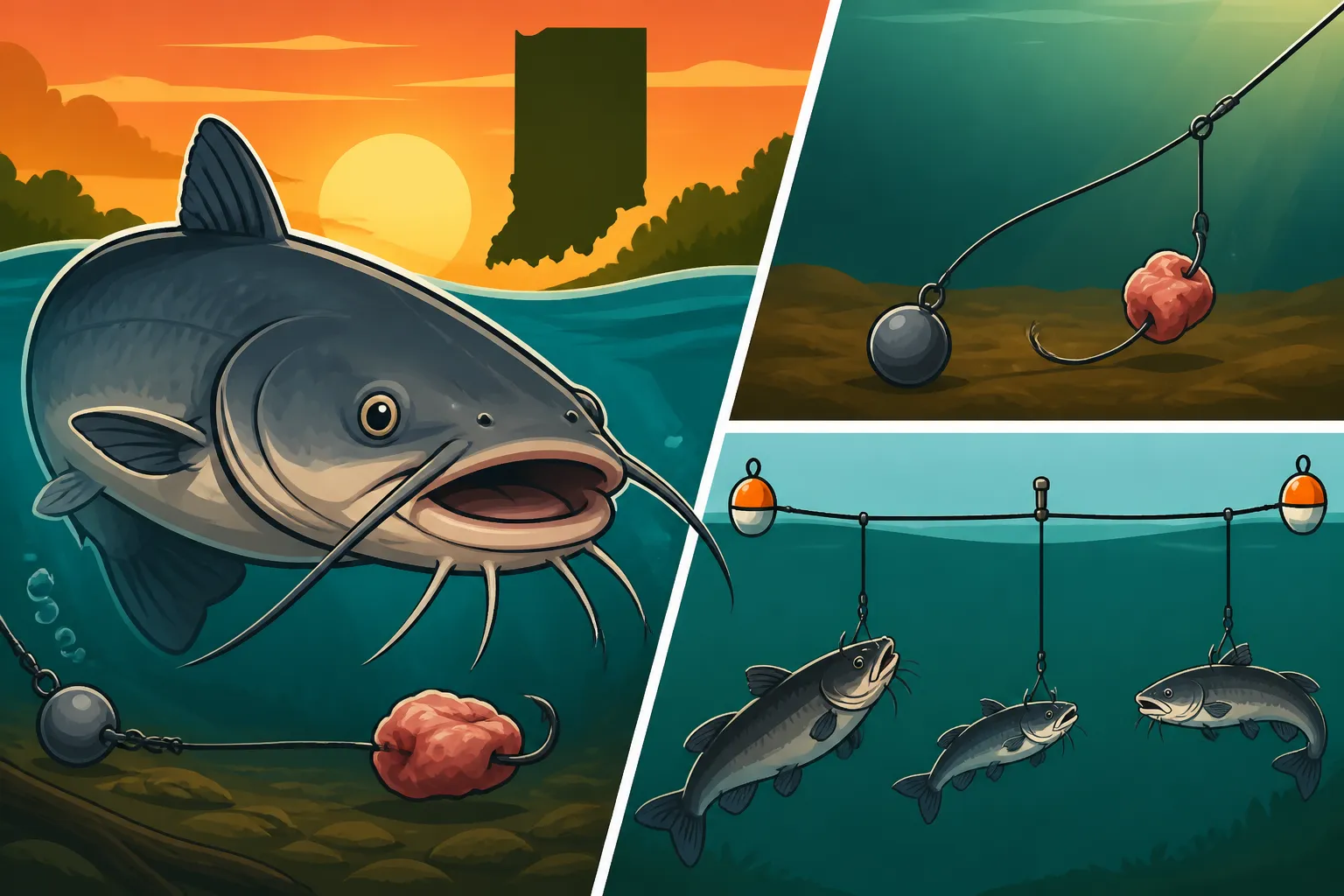
The Carolina Rig is a staple for bottom fishing, and for good reason: it’s incredibly effective and relatively simple to tie. This rig allows your bait to move freely and naturally with the current while the sinker holds the main line in place, which is crucial for enticing wary catfish. To tie a Carolina Rig, start by threading an egg sinker (or a no-roll sinker) onto your main line. The weight of the sinker will depend on the current and depth, but typically ranges from 1 to 4 ounces in most Indiana waters. After the sinker, slide a bead onto your main line. The bead protects your knot from being abraded by the sinker during casting and retrieves.
Next, tie a heavy-duty barrel swivel to the end of your main line. The swivel acts as a stopper for the sinker and bead, preventing them from sliding down to your hook. From the other end of the swivel, tie a leader line, typically 12 to 24 inches long. The leader should be made of a slightly lighter breaking strength monofilament or fluorocarbon than your main line, or at least equal strength, to provide some stretch and abrasion resistance. Finally, tie your catfish hook (a circle hook is highly recommended) to the end of the leader. When a catfish picks up the bait, it feels less resistance because the line slides freely through the sinker, allowing it to take the bait deeper into its mouth before the angler detects the bite. This rig is fantastic for fishing everything from deep river channels to expansive lake bottoms, letting your bait waft tantalizingly in the current.
Advanced Bottom Rigs for Specific Conditions
While the Carolina Rig is a workhorse, there are other bottom rigs that can be more advantageous depending on the specific conditions you face in Indiana. One such rig is the Santee Cooper Rig, which is essentially a Carolina Rig with a small float added to the leader, typically 6-10 inches above the hook. This float serves to lift your bait off the bottom, presenting it just above snags, vegetation, or silt, making it more visible and accessible to catfish. It’s particularly effective in lakes and rivers with soft, mucky bottoms or when fishing over submerged structure where your bait might otherwise disappear into the debris. The buoyancy of the float also gives your bait a more natural appearance, mimicking a suspended piece of food.
Another effective rig is the Three-Way Swivel Rig (also known as a Wolf River Rig), which is excellent for strong currents or when you need to cover a specific area. This rig uses a three-way swivel to attach your main line, a dropline with a sinker, and a leader with your hook. The dropline for the sinker is usually shorter than the leader for the hook, allowing your bait to drift naturally just off the bottom while the sinker holds firm. This minimizes snags on the main bait line and allows for a dynamic presentation. This rig shines in faster-moving sections of the Wabash River or the Ohio River, letting your bait gently bounce along without getting hung up constantly, all while keeping it in the catfish strike zone. It's also a great setup if you're trying to target fish holding tight to rock piles or other bottom structures.
For those situations where a fish finder shows catfish suspended a few feet off the bottom, a slip bobber rig can be highly effective, even if it's not strictly a "bottom" rig in the traditional sense. While not directly on the bottom, it's used to present bait precisely at a specific depth, which might be just off the bottom. You can use it with a heavier sinker to hold the bait still or let it drift naturally. This rig allows you to easily adjust the depth of your bait without re-tying, which is a huge advantage when you're trying to dial in the bite.
Strategy: Still Fishing vs. Drifting
When bottom fishing for catfish in Indiana, you generally have two main strategic approaches: still fishing or drift fishing. Each has its merits and is best suited for different situations. Still fishing involves casting your bait out, letting it settle on the bottom, and leaving it in one place, waiting for a fish to find it. This strategy is highly effective when you've identified a specific hotspot, such as a deep hole, a logjam, a drop-off, or a current break. You might fish multiple rods from a single anchored position, casting to different angles or depths around the structure.
Still fishing is often favored by bank anglers, who might not have the mobility of a boat. It's also excellent for night fishing, where stealth and scent presentation are key. When still fishing, it’s crucial to use enough weight to keep your bait firmly in place against the current. Many anglers set their rods in Best Catfish Rods for Indiana Rivers rod holders and wait patiently, allowing the scent of their bait to draw in catfish. This technique requires patience but can be incredibly rewarding when you hit a honey hole.
Drift fishing, on the other hand, is a more active approach where you allow your boat, and thus your bait, to slowly move with the current or wind, covering a larger area. This is particularly effective in rivers or large lakes where catfish might be scattered or actively cruising for food. By covering more water, you increase your chances of presenting your bait to an active fish. For drift fishing, you typically use slightly lighter sinkers than still fishing, just enough to keep your bait near the bottom without constantly snagging, but still allowing it to tumble and roll naturally. You can either let the boat drift freely, or use a trolling motor (even a powerful electric one) to control your speed and direction precisely.
This method is fantastic for locating schools of blue catfish or finding where flatheads are holding along extensive river banks. You're essentially presenting your bait to many fish over a broad area, increasing your odds of a hook-up. When drift fishing, pay close attention to your rod tips for any slight taps or changes in tension, as catfish bites can sometimes be subtle, especially when the bait is moving. Monitoring your fish finder (many great options are available on Amazon for freshwater lakes) can also help you identify promising depths or structures as you drift over them.
Exploring Trotline Fishing in Indiana
Trotline fishing is a time-honored tradition in Indiana, particularly for anglers looking to catch a good number of catfish for a family fish fry. It’s a method that allows you to present multiple baits simultaneously, increasing your chances of success. However, it comes with its own set of rules, responsibilities, and specific techniques that must be followed carefully.
Understanding Indiana Trotline Regulations
Before you even think about buying or constructing a trotline, you absolutely must familiarize yourself with Indiana's specific regulations for their use. These rules are in place to manage fish populations, prevent overfishing, and ensure public safety. First and foremost, a valid Indiana Fishing License Requirements Explained is required for anyone setting a trotline. Without it, you could face significant penalties.
Key regulations typically include limitations on the number of hooks per line, the total length of the trotline, and specific tagging requirements. For instance, in Indiana, a trotline can have no more than 50 hooks and must be clearly tagged with the user's name and address or their DNR customer ID number. This tag helps authorities identify the owner and ensures accountability. Furthermore, trotlines are generally prohibited in certain waters, such as lakes entirely within state parks or fish and wildlife areas, and usually cannot be set within 150 feet of a public access site. It’s also illegal to use trotlines that span more than half the width of any stream or river. Always check the current Indiana Fishing Regulations issued by the DNR, as rules can change. Ignoring these rules can lead to hefty fines and confiscation of your gear, making it critical to be well-informed before you start.
Setting Up and Deploying Your Trotline
The physical setup of a trotline involves a main line to which multiple baited hooks are attached via shorter "stagings" or drop lines. The main line should be heavy-duty, usually 150-300 lb test braided nylon or polypropylene rope, designed to withstand the pull of large fish and the forces of current. The stagings, which hold the hooks, are typically 1 to 2 feet long and made of slightly lighter line (80-100 lb test monofilament or braided line) to break away if a hook gets badly snagged, saving your main line. Hooks should be strong, sharp circle hooks (4/0 to 8/0 are common), designed to prevent gut-hooking.
Deployment is critical. You'll need two anchor points: one for each end of the trotline. In rivers, these are typically heavy weights (like cinder blocks or specialized trotline anchors) dropped from a boat, positioned strategically to hold the line in place. You'll want to place the trotline in areas where catfish are likely to travel or feed, such as along deep channels, near logjams, or across points. The line should be set taut enough to prevent excessive slack, but not so tight that it can't move slightly with the current. The depth at which you set your hooks will depend on where the fish are holding – often just off the bottom, but sometimes suspended in the water column.
Baiting the hooks is the next step. As discussed earlier, fresh cut bait (shad, skipjack) is often preferred for river catfishing, attracting a wide range of channel, blue, and flathead catfish. Place a piece of bait on each hook, ensuring it's securely attached so it won't be easily knocked off by current or smaller fish. For anglers targeting trophy flatheads, a live bluegill on a sturdy hook, placed strategically, can be incredibly effective. Consider the flow of the current; ideally, your baits should drift naturally with the water, presenting an irresistible target.
Checking, Maintaining, and Retrieving Your Trotline
Once your trotline is deployed, the work isn't over. Regular checking is essential for both success and ethical fishing. Indiana regulations generally require trotlines to be checked at least once every 24 hours. However, for best results and fish welfare, checking them every 8-12 hours, or even more frequently if possible, is recommended. This minimizes stress on caught fish, ensures your baits are still fresh and on the hooks, and allows you to remove any unwanted bycatch. When checking, approach your trotline slowly and carefully, preferably from the up-current side, to avoid spooking fish.
Maintenance involves replacing lost baits, re-tying any frayed stagings, and removing any debris that might have collected on the line. Strong currents can put a lot of strain on your line, and sometimes a snag or a large fish can cause damage. Always carry extra hooks, line, and a knife for quick repairs. Use a sturdy pair of gloves to protect your hands from hooks and sharp fins, as well as a large net to safely land fish.
Retrieving a trotline involves pulling it back into your boat or from the bank, removing any remaining fish, and carefully coiling the line and hooks for storage. This prevents tangles and makes the next deployment much smoother. Any fish that are not being kept should be released quickly and gently. If you encounter any illegal fish or bycatch, release them immediately and unharmed. Proper retrieval and storage ensure the longevity of your gear and your readiness for future catfishing excursions. By adhering to these steps, you can successfully and responsibly utilize trotlines to harvest some of Indiana’s finest catfish.
Prime Catfishing Locations and Timing in Indiana
Indiana offers a fantastic array of waters for catfishing, from its mighty rivers to sprawling reservoirs and countless smaller lakes and ponds. Knowing where to go and, just as importantly, when to go, is key to maximizing your success. Catfish movements and feeding patterns are heavily influenced by habitat, water temperature, and time of day.
Top Rivers and Lakes for Catfish Action
For river anglers, Indiana's major waterways are absolute hotspots. The Wabash River is arguably the king of catfish rivers in the state, holding incredible populations of channel, flathead, and blue catfish. Its vastness, diverse structure (including numerous logjams, deep bends, and feeder creek mouths), and abundant baitfish make it a prime target. Anglers often find success targeting the deeper holes and current seams, especially around cities like Lafayette, Terre Haute, and Vincennes. For those seeking the biggest flatheads, the heaviest logjams along the Wabash are where these ambush predators lurk. You can find excellent advice on Best Rigs for Catfish Fishing in the Wabash River specifically.
The White River (both the East and West Forks) also offers excellent catfishing opportunities, particularly for channel and flathead catfish. While perhaps not as vast as the Wabash, it still boasts significant depths and structures in its lower reaches. The Ohio River, forming Indiana's southern border, is a powerhouse for blue catfish, with trophy-sized fish regularly caught from its deep navigation channels and strong currents. Anglers often focus on areas downstream from dams or large tributaries where baitfish congregate. Other notable rivers like the Tippecanoe River and the St. Joseph River also hold good populations of channel cats, especially in their lower, slower-moving sections.
When it comes to lakes and reservoirs, Monroe Lake near Bloomington is a top choice. As Indiana's largest inland lake, it offers extensive coves, points, and deep channels where channel catfish thrive. It's also known to hold some impressive blue catfish. Anglers often find success near timbered areas, creek channels, and main lake points. Patoka Lake in southern Indiana is another excellent reservoir, known for its strong channel cat population and decent numbers of flatheads. The numerous standing timber areas and flooded creek beds provide ideal cover. Smaller lakes and ponds scattered across the state, even those in local parks, can also provide surprisingly good channel catfishing, especially for beginners or those seeking eating-sized fish. Exploring local bodies of water using online maps can reveal hidden gems.
Seasonal Strategies for Year-Round Catfishing
Catfish can be caught year-round in Indiana, but your approach will need to shift with the seasons. Spring is a fantastic time, especially as water temperatures rise into the 60s Fahrenheit. Catfish become more active and begin moving into shallower areas in rivers and creek arms of reservoirs, staging for the spawn. This is a great time to target them with fresh cut bait or nightcrawlers in tributary mouths or protected bays. The fish are often hungry after winter and eager to feed.
As summer fully sets in, with water temperatures consistently warm, catfishing often reaches its peak. Channel catfish are incredibly active during the summer, particularly from late evening through the night, making Night Fishing Techniques for Catfish highly effective. Flatheads will be holding tight to their heavy cover, still preferring live bait, while blue catfish might school in deeper sections of large rivers or reservoirs. Strong currents in rivers can concentrate fish, making current breaks and deep holes prime targets. This is when prepared baits for channel cats really shine.
Fall sees catfish continuing to feed heavily as they prepare for winter. As water temperatures drop, they may become more active during the day and can be found transitioning from summer patterns to deeper wintering holes. Larger fish, especially blue and flathead cats, can be caught consistently as they bulk up. Baits like large cut bait are still very effective. Finally, winter catfishing is often overlooked but can be highly productive, especially for large blue cats in major rivers. These fish will congregate in deep, stable wintering holes. While the bite might be slower, the fish caught can often be impressive in size. Jigging with cut bait or small chunks of meat can be effective in these deep-water scenarios.
Best Times of Day and Night for Bites
While catfish can be caught at any time of day, there are certainly peak periods that offer better chances for success. For channel catfish, dawn and dusk are often prime feeding times, when light levels are low, and they feel more secure moving into shallower areas to forage. However, as noted, night fishing is perhaps the most productive time for channel cats, especially during the warm summer months. They are nocturnal hunters, and once the sun goes down, they become incredibly active, using their excellent sense of smell and touch to find food. Many dedicated catfishermen swear by night fishing for cooler temperatures and bigger bites.
Flathead catfish are even more nocturnal than channel cats. Their preferred method of ambushing live bait makes them particularly active under the cover of darkness. If you're targeting flatheads with live bait, fishing from late evening until well after midnight will significantly increase your odds. They'll venture out from their daytime cover to hunt, and presenting a lively bait near their haunts during these hours is your best bet.
Blue catfish can be a bit more versatile. While they also feed actively at night, especially large ones, schools of smaller to medium-sized blues can often be caught during the daytime, particularly if they are in deep current breaks or feeding on abundant baitfish. In larger river systems, the slack water periods around early morning and late afternoon can also be productive. Monitoring the solunar tables can give you a general idea of peak feeding windows, but ultimately, consistent fishing effort during these known peak times will yield the best results.
Ensuring Safety and Compliance on the Water
Responsible catfishing in Indiana isn't just about catching fish; it's also about understanding and adhering to regulations, practicing safe handling, and ensuring everyone's safety on and off the water. Being well-informed protects both you and the valuable fish populations you're pursuing.
Indiana Catfish Regulations and Limits
Indiana has specific regulations designed to manage its diverse fish populations, including catfish. Before you head out, always consult the current Indiana Fishing Guide published by the DNR, as rules can change annually. Generally, there are daily bag limits and sometimes size limits for specific catfish species. For instance, channel catfish often have a generous daily bag limit, while blue catfish and flathead catfish may have more restrictive limits, sometimes including a slot limit or a maximum number of fish over a certain size to protect larger breeding individuals. Violating these regulations can result in significant fines and the loss of your fishing privileges, so it's vital to be compliant. You can learn more about general rules in the Indiana Fishing Regulations and Bag Limits Guide.
Beyond hook and line fishing, special regulations apply to alternative methods like trotlines, as discussed earlier. These typically involve strict rules regarding the number of hooks, identification tags, placement restrictions, and checking frequency. For example, trotlines must be checked at least once every 24 hours. Failure to properly tag your trotline or check it within the required timeframe can lead to penalties. If you're unsure about any specific rule, contact the Indiana DNR directly; it's always better to ask than to unknowingly break the law. Remember that What Happens If You Fish Without a License in Indiana? can be a costly lesson, so always ensure your license is current.
Safe Handling and Release Practices
Once you've hooked a catfish, especially a large one, safe handling is paramount for both your safety and the fish's well-being. Catfish have sharp spines on their dorsal and pectoral fins that can deliver a painful poke. Always use heavy-duty gloves when handling larger catfish to protect your hands. For flathead catfish, which have powerful jaws, jaw spreaders can be helpful when removing hooks. A large, sturdy landing net is also indispensable for bringing big fish into the boat safely without overstressing your line or the fish.
If you plan to release a catfish, do so quickly and gently. Use pliers or a hook remover to extract the hook, being careful not to damage the fish's gills or internal organs. If the fish is deeply hooked, it may be better to cut the line as close to the hook as possible rather than risk further injury. Support the fish horizontally and allow it to recover in the water before releasing it. For larger fish, a gentle "revival" by holding it in the current until it can swim strongly on its own significantly increases its survival rate. Responsible angling means ensuring the health of the fishery for future generations.
Boating and Bank Fishing Safety
Whether you're fishing from a boat or the bank, safety should always be your top priority. If you're using a boat, ensure it's properly registered according to Indiana Boat Registration Rules Explained and that you have all required safety gear onboard. This includes Coast Guard-approved Best Life Jackets for Indiana Boaters for everyone, a throwable flotation device, a fire extinguisher, navigation lights (if fishing at night), and an audible signaling device. Always tell someone where you're going and when you expect to return. Be aware of changing weather conditions and know your limitations on the water.
Bank fishing also carries risks. Be mindful of unstable banks, slippery surfaces, and deep water. If fishing at night, carry a reliable headlamp or flashlight. Be aware of your surroundings, especially if you're in an area with wildlife or other potential hazards. Never leave fishing lines unattended where they could pose a hazard to people or wildlife. Always clean up your fishing area, packing out all trash and discarded lines, leaving no trace behind. By practicing good judgment and adhering to safety protocols, you ensure that your catfishing adventures remain enjoyable and accident-free.
Disclaimer
The information provided in this guide is for general informational purposes only. While we strive to provide accurate and up-to-date information, fishing regulations and conditions in Indiana can change. Always consult the latest official Indiana Department of Natural Resources (DNR) fishing guide or website for the most current rules and regulations before engaging in any fishing activities. Local conditions, weather, and fish behavior can vary significantly, and personal safety should always be your top priority.