Where to Catch Striped Bass on Patoka Lake in Indiana
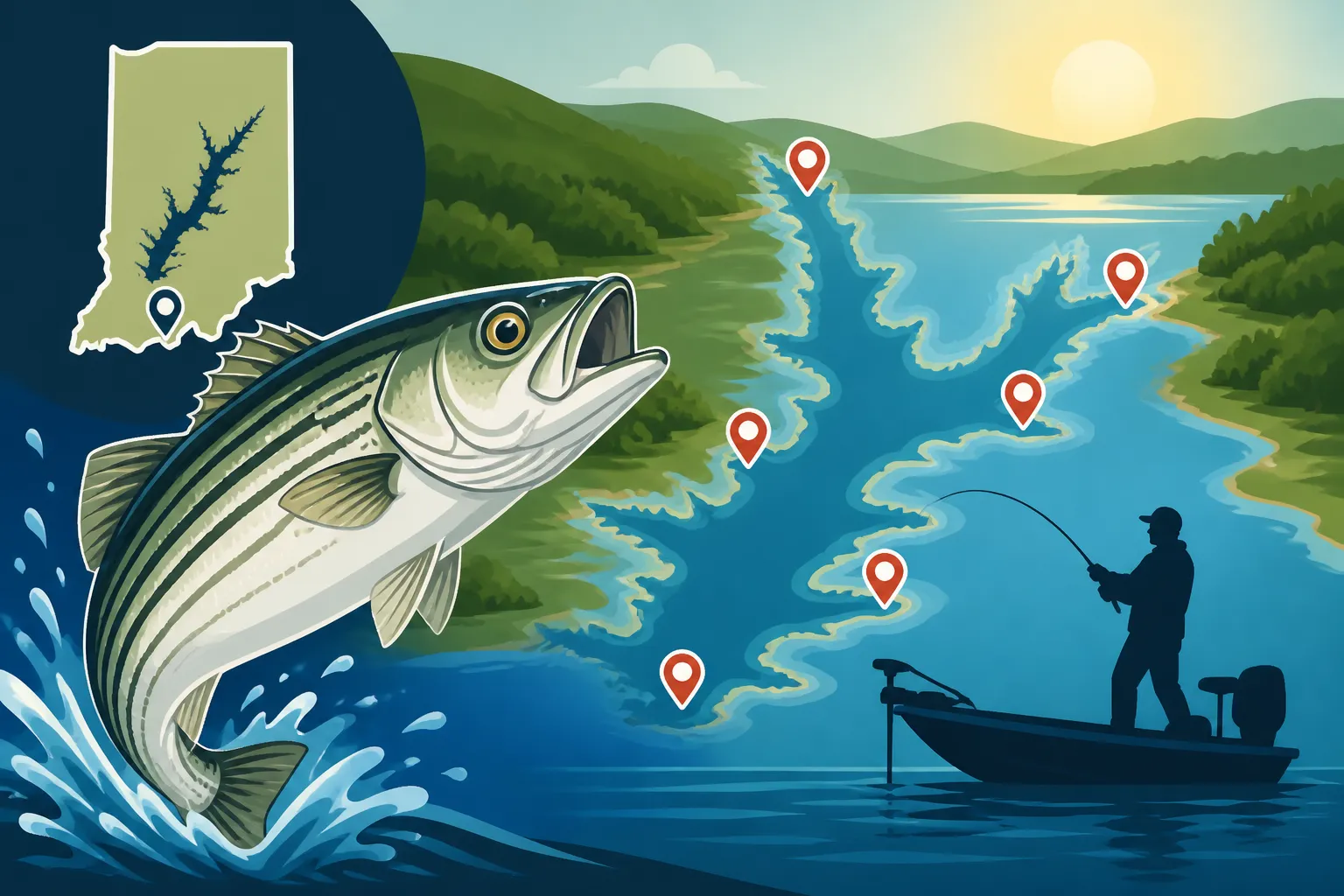
Finding the powerful striped bass in a massive body of water like Patoka Lake can feel like searching for a needle in a haystack. This majestic reservoir, stretching across multiple counties in Southern Indiana, offers incredible fishing opportunities, but its sheer size can be overwhelming for anglers specifically targeting these hard-fighting fish. This guide is designed to cut through the confusion, revealing the prime locations and effective strategies to help you successfully land striped bass on Patoka Lake, making your next fishing trip far more productive and enjoyable.
Understanding Patoka Lake's Striped Bass Fishery
Patoka Lake isn't just a pretty face; it's a carefully managed fishery that holds some truly exciting game fish, with the striped bass being a prime example. These aren't your typical pond bluegill; stripers are built for speed and power, offering an exhilarating fight that keeps anglers coming back for more.
Why Patoka Lake is a Prime Spot for Stripers
Patoka Lake, Indiana's second-largest inland reservoir, boasts over 8,800 acres of water and more than 160 miles of shoreline. This expansive, deep-water environment, with its abundant forage base—primarily gizzard shad—creates an ideal habitat for striped bass. The Indiana Department of Natural Resources (IDNR) regularly stocks hybrid striped bass (often referred to simply as "wipers" or "stripers") into Patoka Lake, ensuring a healthy and thriving population for anglers to pursue. These fish are a cross between a striped bass and a white bass, combining the fighting prowess and size potential of the purebred striper with the hardiness and faster growth rate of the white bass.
What truly sets Patoka apart for stripers is its structure. Beneath the surface, you'll find submerged creek channels, timber, ledges, and vast open water areas that provide both ambush points and schooling grounds for baitfish. The lake's deep main basin and cooler, oxygen-rich waters during the hotter months are crucial for these larger, more active predators. While catching them can certainly be a challenge, requiring patience and the right approach, the reward of battling a feisty Patoka Lake striper is an experience every angler should have. The lake’s diverse underwater landscape offers a variety of environments, from shallow flats to sharp drop-offs, catering to the seasonal movements of both the stripers and their preferred prey.
Identifying Striped Bass and Their Behavior
Before you can catch them, you need to know what you're looking for! The hybrid striped bass, or wiper, found in Patoka Lake, typically has a silver body with several distinct dark, broken stripes running horizontally along its sides. Unlike the purebred white bass, which has fewer and often fainter stripes, the wiper’s stripes are usually more pronounced and don't always run in perfectly straight lines, often appearing somewhat disjointed. They can grow to impressive sizes in Patoka, with many anglers reporting catches in the 5-10 pound range, and even larger trophies occasionally making an appearance. If you're curious about their lineage, you can delve deeper into Hybrid Striped Bass (Wiper): Indiana's Hard-Fighting Sport Fish, which outlines what makes these fish such formidable opponents.
These powerful fish are highly migratory and typically school in open water, often suspending over deep channels or around baitfish concentrations. Their behavior is largely dictated by the availability of food and water temperature. They are active predators, constantly on the hunt for schools of gizzard shad, which makes locating the baitfish key to finding the stripers. While they can be caught throughout the day, their activity often peaks during dawn and dusk, and sometimes even at night, especially during the warmer months when they move to shallower feeding grounds under the cover of darkness. Understanding their schooling nature means that where you catch one, you're likely to find more, so paying close attention to your electronics and the movements of bait is crucial. For a broader perspective on targeting these incredible game fish, consider reading up on Striped Bass Fishing in Indiana Reservoirs.
Key Locations for Striped Bass on Patoka Lake
Patoka Lake is vast, but like any large fishery, certain areas consistently hold more fish than others, especially when it comes to a specific species like striped bass. Knowing where to focus your efforts can drastically improve your chances of success.
Main Lake Body and Deep Water Access
The main lake body of Patoka, particularly the areas closer to the dam and the expansive open water basin, are absolute hotspots for striped bass. These deep sections provide the stripers with the cooler, oxygenated water they prefer, especially when summer temperatures soar. Look for areas where the main river channel winds through the lake, creating pronounced depth changes and underwater ledges. These channels act as highways for baitfish and, consequently, for the stripers that pursue them.
Specific areas like the deeper water around the Newton-Stewart State Recreation Area and the Patoka Lake Dam are perennial favorites. The dam face itself often attracts schooling baitfish, which in turn draws in the predators. However, don't just hug the dam; venture out into the open water nearby. Stripers are often suspended, sometimes in huge schools, anywhere from 15 to 40 feet deep, following the thermocline during warmer months. Using your boat's electronics to scan these deeper, open water sections for bait balls and larger fish arches is paramount. These vast, featureless (to the naked eye) areas are where these pelagic hunters truly thrive, using the open expanse to corral and ambush their prey.
Here's a quick reference for common striper zones and optimal conditions:
| Location Type | Depth Range (feet) | Key Features | Best Conditions | Notes |
|---|---|---|---|---|
| Main Basin / Open Water | 20-50 | Suspended baitfish, thermocline | Summer heat, stable weather | Use electronics to find schools. Trolling effective. |
| Near the Dam | 30-60 | Deep structure, current | Year-round, especially cooler months | Vertical jigging, live bait. Watch for current breaks. |
| Submerged Creek Channels | 15-40 | Ledges, humps, timber | Spring, Fall transitions | Stripers ambush prey along these "highways." |
| Major Points / Humps | 10-35 | Structure, baitfish congregation | Early morning, late evening | Trolling around points, casting crankbaits. |
| Large Creek Arms (mouths) | 10-30 | Inflow, shad concentrations | Spring runoff, fall bait migration | Fan cast, troll the main channel within the arm. |
Locating Structure and Submerged Cover
While open water is prime, stripers will often relate to significant underwater structure, especially when baitfish are holding there. Submerged humps, long tapering points that drop into deep water, and the edges of old creek channels are crucial. These features provide a break in the otherwise uniform bottom, concentrating baitfish and creating ambush points for opportunistic stripers. Areas with standing timber, particularly if it's near a channel or a deep break, are also worth investigating. The trees provide cover and attract bait, which in turn draws in the wipers.
To effectively pinpoint these structures, a good fish finder is indispensable. Modern units with side imaging or down imaging capabilities allow you to scan wide areas and clearly identify these underwater features, including individual trees, rock piles, and even schools of fish holding tight to the bottom or suspended above it. Focus on contour lines on your map that indicate sharp drop-offs or shelves. Often, stripers will cruise these edges, moving up to feed on baitfish that are holding shallower. If you're looking to upgrade your electronics to better locate these elusive fish, you might find valuable insights in a guide like Best Fish Finders for Indiana Lake Fishing. Understanding Patoka Lake’s diverse underwater terrain, from its broad main channels to its intricate creek arm features, is key to success, as explored in a broader sense in the Patoka Lake Fishing Guide for Bass and Crappie.
Inflow Areas and Creek Arms
Don't neglect the larger creek arms and inflow areas of Patoka Lake, especially during certain times of the year. The Lick Fork and Painter Creek arms, for example, are known for holding significant concentrations of baitfish. In the spring, when water temperatures begin to rise and runoff occurs, baitfish will move into these shallower, warmer areas, and the stripers will follow them. Similarly, in the fall, as baitfish migrate back into the main lake from the creeks, the mouths of these arms become prime feeding grounds for predatory stripers.
Rain events can also be a game-changer for these areas. Fresh inflows can wash nutrients and small organisms into the lake, attracting baitfish and creating a feeding frenzy. Focus on the main channel running through these creek arms, particularly where it intersects with submerged points or structure. Trolling or casting large crankbaits and swimbaits along these channels, especially during periods of increased water flow, can be incredibly productive. Keep an eye on your sonar for dense schools of bait; where there's bait, stripers are usually not far behind.
Techniques and Timing for Patoka Lake Stripers
Catching striped bass on Patoka Lake isn't just about showing up; it's about employing the right tactics at the right time. These powerful fish demand a thoughtful approach, combining knowledge of their habits with effective presentation strategies.
Trolling and Downrigging for Open Water Stripers
When fishing the vast open water sections of Patoka Lake, especially the main basin and areas near the dam, trolling is arguably one of the most effective ways to cover water and find schooling stripers. Stripers are constantly on the move, chasing baitfish across expansive areas, and trolling allows you to systematically search large swaths of water. You'll want to employ deep-diving crankbaits that mimic the local gizzard shad, often in chrome, blue, or shad patterns. Lures like the Rapala Deep Tail Dancer, Bandit Walleye Deep, or SPRO Little John DD are popular choices. Experiment with different colors and sizes until you find what the fish are keying in on.
Varying your trolling speed, typically between 2.5 and 4.0 mph, is crucial, as stripers often react to changes in lure action. Using planer boards can help you spread out your lines, covering a wider path and reducing tangles, especially when targeting fish that are spread horizontally. For deeper presentations, especially when stripers are holding tight to the thermocline in summer, downriggers are invaluable. They allow you to precisely position your lures at specific depths, directly into the feeding zone. While often associated with salmon and steelhead, the principles of Trolling Techniques for Salmon and Steelhead can be easily adapted to target Patoka Lake's stripers, allowing you to present your baits effectively at various depths. Similarly, understanding the seasonal transitions of effective baits, as discussed in Best Lure Choices for Summer Fishing, can provide insights into what colors and actions might tempt a striper.
Live Bait and Jigging Strategies
While trolling covers water, sometimes the most direct path to a Patoka Lake striper is with live bait. Gizzard shad, threadfin shad, or large shiners are irresistible to these predatory fish. Live bait fishing is especially potent when stripers are concentrated in specific areas, such as around submerged humps, along creek channels, or near the dam. You can fish live bait in several ways: freeline them out with a weighted float, use a Carolina rig to present them near the bottom, or even suspend them beneath a balloon while drifting.
For vertical presentations over schools you've located on your fish finder, jigging spoons or heavy jigs can be incredibly effective. When you see a dense school of stripers hugging a piece of structure or suspended in open water, dropping a 1/2 to 1-ounce jigging spoon directly into them and working it with a sharp, erratic retrieve can trigger aggressive strikes. This method is particularly deadly during early morning, late evening, or even at night, when stripers are actively feeding. The aggressive nature of these fish means that a well-presented jig can often lead to multiple hook-ups. Considering that species like catfish also show increased activity during low light, drawing parallels from Best Time of Day to Catch Catfish in Indiana can help underscore the importance of dawn, dusk, and nighttime for aggressive feeders. For those new to using live bait, a guide like Best Live Bait Choices for Beginners can offer excellent starting points.
Seasonal Considerations and Best Times
The best time to target striped bass on Patoka Lake varies significantly with the seasons, as their behavior and location shift with water temperature and baitfish movements.
- Spring (March-May): As water temperatures rise into the 50s and 60s, stripers become highly active and can often be found chasing bait into the backs of larger creek arms like Lick Fork and Painter Creek. They'll also patrol shallow main lake points. This is a great time for casting crankbaits, swimbaits, and even topwater lures during low-light conditions.
- Summer (June-August): This is when Patoka's stripers move to deeper, cooler water. Look for them suspended in the main lake basin, especially around the dam, following the thermocline, or holding on submerged humps. Trolling with downriggers and deep-diving crankbaits is highly effective, as is live bait fishing directly over marked schools. Night fishing can also be productive as they push bait into shallower areas.
- Fall (September-November): As water temperatures cool, stripers become incredibly active again. They'll often move shallower, chasing vast schools of baitfish into creek mouths and along main lake points. Trolling remains effective, but casting large crankbaits, jerkbaits, and topwater lures can produce explosive strikes, especially during the morning and evening hours.
- Winter (December-February): While challenging, winter fishing for stripers can yield some of the largest fish. They tend to school tightly in deep water, often near the dam or in the deepest sections of the main lake. Vertical jigging with spoons or live bait fished slowly over marked schools is the primary technique. Patience is key in the colder months.
Understanding these seasonal patterns, which influence all fishing in the state, can be further explored in resources like Best Time of Year to Fish in Indiana.
Essential Gear and Tips for Success
Successfully tackling Patoka Lake's striped bass requires more than just knowing where they are; you need the right tools and a smart approach to handle these powerful fish.
Rods, Reels, and Line for Hard-Fighting Stripers
When you hook into a Patoka Lake striper, you'll immediately understand why robust gear is non-negotiable. These fish make powerful runs and put a significant strain on your tackle. For most situations, a medium-heavy to heavy action casting rod, around 7 to 7.5 feet long, paired with a stout baitcasting reel capable of holding at least 150-200 yards of line, is ideal. Look for reels with a smooth, reliable drag system, as this will be your best friend when a big striper decides to make a dash for it.
Line choice is also critical. Many experienced striper anglers opt for 30-50 pound braided line as their main line due to its incredible strength, lack of stretch for solid hooksets, and thin diameter for better casting distance and lure depth. To that, you'll want to add a 20-30 pound fluorocarbon leader. Fluorocarbon is nearly invisible underwater, providing a stealthy presentation, and its abrasion resistance is crucial when fishing around structure or dealing with the striper's rough mouth. Always check your knots and leaders regularly, as a compromise here can mean the difference between landing a trophy and telling a "one that got away" story.
Using Electronics to Locate Schools
We've touched on it before, but it bears repeating: electronics are your eyes underwater, and they are absolutely paramount for consistently finding striped bass on Patoka Lake. Stripers are pelagic, meaning they often swim in open water, sometimes suspending at various depths, which makes visual identification from the surface nearly impossible. A quality fish finder with clear sonar, down imaging, and especially side imaging capabilities, will allow you to scan vast areas quickly and efficiently.
When cruising Patoka Lake, keep a close eye on your screen for large, dense schools of baitfish—these will appear as large, often mushroom-shaped clouds on your sonar. Where you find the bait, you'll often find the stripers, which will show up as larger, distinct arches or blobs on the edges of or directly within the bait schools. Pay attention to sudden changes in depth, humps, and submerged creek channels, as these are natural gathering points. GPS mapping on your unit is also invaluable for marking productive spots, tracking your trolling paths, and navigating safely. Many professional guides, often found through services like FishingBooker, rely heavily on their advanced electronics to put clients on fish day after day, showcasing just how essential these tools are for serious striper anglers. A quick session with a knowledgeable guide might even give you some excellent insights into how to best interpret your sonar for Patoka's unique contours.
Safety and Regulations Specific to Stripers
While the thrill of the catch is undeniable, fishing responsibly and safely is paramount. Patoka Lake is a large body of water, and conditions can change rapidly. Always ensure you have appropriate safety gear, including enough life jackets for everyone on board, a whistle or horn, and a first-aid kit. Even strong swimmers should wear a life jacket, especially if you're alone or if the water is cold. When operating a boat, especially at high speeds while trolling, remain vigilant for other boaters, swimmers, and obstacles.
Beyond general boating safety, it's crucial to be aware of the specific Indiana Fishing Regulations and Bag Limits Guide that apply to striped bass and other species in Indiana. These regulations are in place to ensure the health and sustainability of the fishery. Always check the current Indiana Fishing Guide (available from the IDNR website or bait shops) before your trip. Know the daily bag limits and any length restrictions for striped bass or hybrid striped bass. If you're practicing catch and release, handle the fish carefully, minimizing their time out of water, and use appropriate tools like de-hookers to ensure a healthy release. Remember that Patoka Lake is home to a wide array of fish species; understanding the rules for each ensures a healthy ecosystem for all, as detailed in articles like How Many Fish Species Live in Indiana Waters?.
Disclaimer
Please note: Fishing conditions, regulations, and fish behavior can change. Always check the latest Indiana Department of Natural Resources (IDNR) regulations before your trip. This guide is for informational purposes only and does not guarantee fishing success.