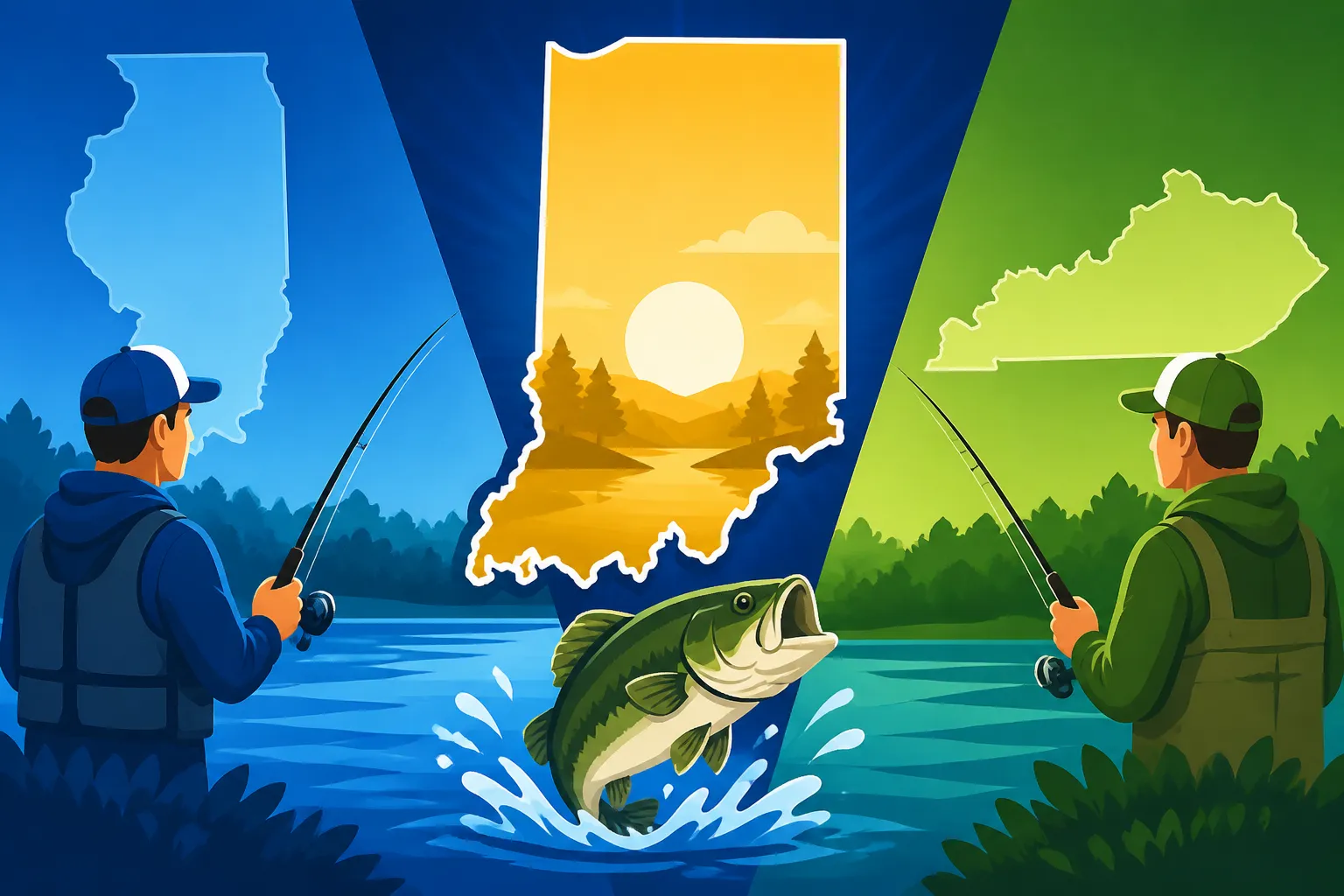
Illinois and Kentucky Anglers Fishing in Indiana: License Rules
Crossing state lines for a fishing trip is exciting – new waters, new challenges, and hopefully, new catches! But for our angling friends coming from Illinois or Kentucky, figuring out Indiana’s fishing license rules can feel like trying to untangle a particularly stubborn fishing knot. It's frustrating to think you've got everything in order, only to realize you might be overlooking a crucial detail. This guide is here to cut through that confusion, giving Illinois and Kentucky anglers a clear roadmap to legally and enjoyably fish in the Hoosier State.
The Essentials of Indiana Nonresident Fishing Licenses
Let's face it, nobody wants a fishing trip ruined by a conservation officer because of a paperwork oversight. The first thing you need to understand, whether you're from Illinois or Kentucky, is that if you're fishing in Indiana waters, you generally need an Indiana fishing license. It sounds simple, but the nuances are important.
Why You Need an Indiana License to Fish Here
Think about it this way: when you're driving your car across state lines, you adhere to the traffic laws of the state you're in, even if your driver's license is from another state. Fishing licenses operate on a similar principle. Each state manages its own natural resources, including fish populations, and the revenue from license sales directly funds conservation efforts, stocking programs, and habitat restoration within that state. So, even if you’re a proud Illinois resident with a valid Illinois fishing license, or a seasoned Kentucky angler with your bluegrass state permit, that license doesn't grant you permission to fish in Indiana's lakes, rivers, or streams.
This is often where the biggest headaches come in. You might be fishing a river that flows between states, like the Ohio River, and assume your home state license covers it. But as we'll delve into, that's not always the case. The Indiana Department of Natural Resources (IDNR) needs to know who's fishing in their waters to properly manage them, and your license helps them do just that. It's not about trying to squeeze more money out of anglers; it's about supporting the very ecosystems we love to explore. For a full breakdown, check out our guide on Indiana Fishing License Requirements Explained.
Understanding Nonresident License Options and Costs
Indiana offers several fishing license options specifically for nonresidents, designed to accommodate different trip lengths and budgets. It's not a one-size-fits-all situation, and choosing the right one can save you money and hassle.
The most common option is the annual nonresident license. This is perfect if you plan on visiting Indiana multiple times throughout the year, perhaps for a spring bass tournament on Monroe Lake, a summer family trip to Lake Wawasee, or a fall salmon run on Lake Michigan. The cost for a Nonresident Annual Fishing License Cost might seem a bit higher than your home state's resident license, but remember, you're contributing to Indiana's specific conservation efforts.
If your visit is a one-off or a short weekend getaway, Indiana also offers short-term nonresident licenses. These are incredibly convenient and often more cost-effective for brief trips. You can opt for a Nonresident 1-Day Fishing License Cost in Indiana or a Nonresident 7-Day Fishing License Cost in Indiana. These short-term licenses are a lifesaver for those spur-of-the-moment fishing trips or when you’re just passing through and decide to wet a line. It’s always smart to calculate which option makes the most sense for your planned excursions. If you're wondering Is a 1-Day or 7-Day License Cheaper for a Short Trip?, a quick mental math usually sorts it out.
Here's a quick overview of typical nonresident license costs, though prices can always change, so it's best to confirm on the official IDNR website:
| License Type | Typical Cost (Nonresident) | Duration | Best For |
|---|---|---|---|
| Annual All-Species Fishing | ~$60 | April – March | Multiple trips throughout the fishing year |
| 7-Day All-Species Fishing | ~$20 | 7 Consecutive Days | Week-long vacations or extended trips |
| 1-Day All-Species Fishing | ~$9 | 1 Day | Quick day trips, testing new waters |
| Trout/Salmon Stamp (Additional) | ~$11 | Annual | Required if fishing for trout/salmon |
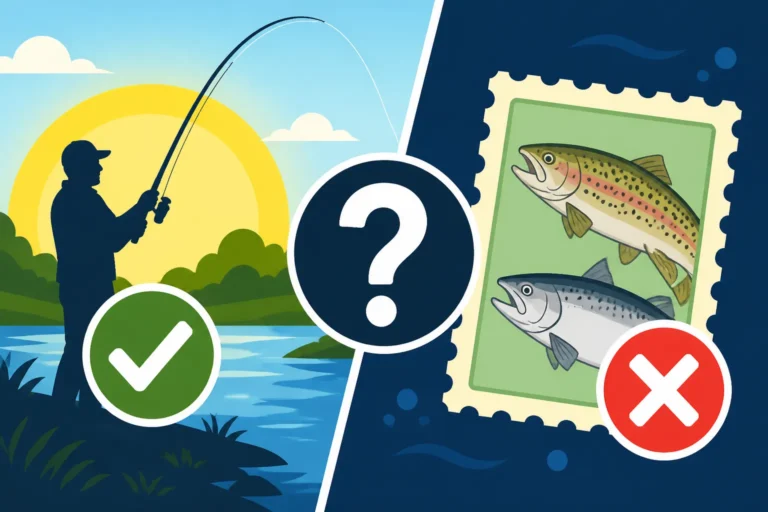
Remember, if you plan to target trout or salmon, especially in Lake Michigan tributaries or stocked streams, you'll also need to purchase an additional Indiana Trout and Salmon Stamp Requirements. This stamp is separate from your base fishing license and helps fund those specific programs.
Navigating Reciprocity Agreements (Or Lack Thereof)
This is where things can get truly perplexing, especially when you're dealing with rivers and bodies of water that form state borders. Many anglers hope for reciprocal agreements where one state's license is honored in adjacent waters of another state. It makes sense, right? Less hassle, more fishing! But the reality is often more complex, and sometimes, those agreements simply don't exist in the way you might expect.
The Reality of Border Water Rules
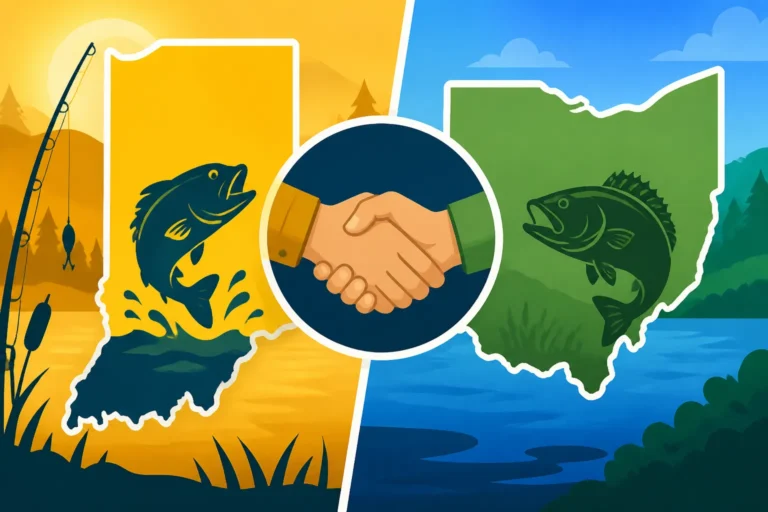
The idea of reciprocity is fantastic, and some states do have agreements for certain border waters. However, when it comes to Indiana's borders with Illinois and Kentucky, especially for the major rivers, the general rule is that you need the license for the state whose waters you are fishing in. This means if you're standing on the Indiana bank of a river, or if your boat is anchored in what's legally defined as Indiana territory, you need an Indiana license. Conversely, if you're on the Illinois side, you'd need an Illinois license.
The Ohio River, for instance, which borders Indiana and Kentucky, has some specific rules that might vary from other border waters. It's a prime example of where anglers can get confused. Many assume a Kentucky license is all they need, or vice-versa, but it's crucial to understand the nuances of jurisdiction. Always consult the most current regulations from both states' wildlife agencies to be absolutely sure. This is where the old adage "ignorance is no excuse" truly applies.
Specifics for Illinois Anglers
For our friends coming from Illinois, fishing in Indiana typically means needing an Indiana fishing license. There aren't widespread, blanket reciprocity agreements that allow an Illinois license to be used in Indiana's inland lakes or the majority of its rivers. If you're eyeing a trip to the Best Fishing Spots Near Chicago, Indiana or wanting to explore the streams that flow into Lake Michigan from the Indiana side, your Illinois license won't cut it.
The main area of potential confusion for Illinois anglers might be the extreme northwest corner of Indiana, particularly around the Lake Michigan shoreline and its tributaries. While Lake Michigan itself is a massive shared resource, the specific regulations, including license requirements, are generally state-specific. So, if you're launching your boat from Michigan City or fishing off a pier in Portage, you'll need that Indiana nonresident fishing license. This is detailed further in our Lake Michigan Fishing Rules for Indiana Anglers guide.
Imagine this scenario: you're planning a trip to the Indiana Dunes National Park, hoping to fish Trail Creek for steelhead in the fall. You've got your trusty rod and reel, a selection of PowerBait and spawn sacs, and your Illinois license tucked safely in your wallet. Everything feels right. But unless you've also purchased an Indiana fishing license and the required Do You Need a Trout and Salmon Stamp to Fish for Trout?, you'd be fishing illegally once you cast into Indiana waters. It’s a common oversight that can lead to an unexpected conversation with a conservation officer instead of a tug on your line.
Specifics for Kentucky Anglers
Kentucky anglers face a similar situation when it comes to Indiana waters, especially along the Ohio River. While the Ohio River forms a significant border between the two states, general reciprocity for an entire state's fishing waters is rare. For the Ohio River itself, there are specific agreements. Currently, an Indiana resident fishing license is recognized by Kentucky if you are fishing the main stem of the Ohio River (not its tributaries) from a boat or bank on either side. However, a Kentucky license generally does not permit you to fish in Indiana's inland waters like Patoka Lake, Monroe Lake, or the countless smaller lakes and streams.
It’s a bit like playing two different sports with different rulebooks. You might be a pro in one, but you need to learn the rules of the other to play on their field. So, if you're heading north from Kentucky to target bass in one of Indiana's fantastic reservoirs, or perhaps chase some crappie in a state park lake, you absolutely need to obtain an Indiana nonresident fishing license. Any fishing in Indiana's inland waters requires an Indiana license, regardless of your Kentucky residency status.
So, while your Kentucky license might allow you to fish certain stretches of the Ohio River from an Indiana boat ramp, don't assume it covers you for a trip to a pristine lake just a few miles inland. Always verify the specific rules for the body of water you intend to fish. Our dedicated article, Indiana Fishing License Reciprocity With Illinois and Kentucky, delves into these specific border water agreements in more detail, and it’s always a good idea to refresh your memory before crossing any lines.
Practical Advice for Cross-State Anglers
Now that we've cleared up the "why" and "what" of needing an Indiana license, let's talk about the "how." Getting your license should be as easy as possible, so you can spend less time on paperwork and more time on the water.
Where to Purchase Your Indiana License
Thankfully, Indiana has made it incredibly convenient for nonresidents to purchase fishing licenses. You have a few straightforward options, so pick the one that works best for your travel plans.
The easiest and often most recommended method is to purchase your license online. The Indiana Department of Natural Resources (IDNR) website provides a seamless portal for purchasing all types of hunting and fishing licenses. It's available 24/7, which means you can buy your license from the comfort of your couch in Springfield, Illinois, or Lexington, Kentucky, before you even hit the road. This also means you can quickly get a 1-day license if you decide last-minute to stop at a promising looking pond on your way through the state. Our guide on Buying a Fishing License Online in Indiana walks you through the steps. Once purchased, you can often print a temporary copy or simply save the digital version on your phone – always a good idea to have proof readily accessible.
If you prefer a more traditional route, or if you're already in Indiana and need a license on the fly, you can purchase one in person. Most reputable bait and tackle shops across the state, as well as many sporting goods stores, are authorized license vendors. Look for signs that say "Indiana Fishing Licenses Sold Here." This option has the added benefit of allowing you to pick the brain of local experts about current fishing conditions, hot spots, or the best bait to use for local species. Even big box retailers like Walmart often have a customer service desk where you can purchase licenses. Just be prepared for potential lines during peak seasons.
Lastly, you can also purchase licenses by phone through the IDNR's designated sales channels. This offers a good middle ground if you prefer to speak with someone but can't get to a physical location.
Essential Gear and Rules for Visiting Anglers
Beyond just the license, there are a few other things visiting anglers from Illinois and Kentucky should keep in mind to ensure a smooth and legal trip to Indiana.
First off, always have your license on you. Whether it's a physical printout, a digital copy on your phone, or your actual ID card with the license number, conservation officers will want to see proof. While having it readily available, also consider having a backup plan. What if your phone battery dies? A laminated printout might be old school, but it’s reliable.
Next, familiarize yourself with Indiana's specific fishing regulations and bag limits. These can vary significantly from what you're used to in Illinois or Kentucky. For example, Indiana has specific length and daily bag limits for species like largemouth bass, walleye, and panfish that might differ from your home state. Imagine catching a limit of beautiful crappie, only to realize Indiana's daily limit for that species is different! This information is usually included with your license purchase, or you can find it in the current Indiana Fishing Guide published by the IDNR. Our comprehensive guide on Indiana Fishing Regulations and Bag Limits Guide is a great resource.
Don't forget your gear. While your favorite rod and reel from home will certainly work, consider if you need any specialized tackle for Indiana's waters. For example, if you're hitting Lake Michigan, you might need heavier gear than you typically use in smaller ponds back in Illinois. If you’re targeting species like muskie in the northern glacial lakes, specific lures and stout lines are a must. Many anglers will do a quick search on Amazon for specific Indiana fishing tackle or even just a good waterproof tackle box to keep everything organized. A good pair of polarized sunglasses is also invaluable for spotting fish and structure in new waters.
It's also worth noting that Indiana has specific rules about invasive species. Before you move your boat from one lake to another, or even cross state lines, make sure it's clean, drained, and dry to prevent the spread of unwanted plants and animals. This protects the health of Indiana’s waters, ensuring great fishing for everyone.
Avoiding Common Pitfalls and Penalties
No one wants to deal with fines or legal trouble, especially when all you wanted to do was enjoy a peaceful day on the water. Understanding the potential consequences of not following Indiana's fishing license rules can help you avoid unpleasant surprises.
The Consequences of Fishing Without a License
Fishing without a valid Indiana fishing license when one is required is a direct violation of state law. This isn't just a slap on the wrist; it can lead to significant penalties. Typically, fishing without a license is considered a Class C misdemeanor in Indiana. While the exact fine can vary depending on the county and the discretion of the court, you can generally expect a fine.
A first offense might set you back a couple hundred dollars, plus court costs. And it's not just the monetary penalty; you could also face having your fishing gear confiscated, which is a major blow to any angler. Worse yet, repeat offenses or more serious violations (like exceeding bag limits or fishing in closed areas) can lead to even steeper fines, community service, and even the suspension of your fishing privileges in Indiana and potentially other states through interstate compacts.
Imagine driving all the way from Frankfort, Kentucky, to fish Brookville Lake, having a fantastic day, only to be stopped and cited for not having an Indiana license. Suddenly, that $9 one-day license you skipped seems like a bargain compared to a $200+ fine and a ruined trip. It's a common story that can easily be avoided with a bit of planning. Our detailed article, Penalties and Fines for Fishing Without a License, provides even more insight into what can happen.
Double-Checking Before You Cast
The absolute best way to avoid any issues is to double-check everything before you even make your first cast. This means confirming you have the correct Indiana nonresident fishing license, that it's valid for the current fishing year (which runs from April 1st to March 31st in Indiana, not a calendar year!), and that you understand the specific regulations for the body of water you're fishing.
Before heading out, a quick visit to the IDNR website is always a smart move. Regulations can change, and staying up-to-date ensures you're always on the right side of the law. Also, consider downloading the IDNR’s official fishing guide or even a reputable fishing app to your phone. These can be invaluable resources while you’re out on the water, providing instant access to rules, limits, and even fish identification guides. You can find many fishing apps on Amazon that work well for identifying fish species common in Indiana.
If you have any doubts whatsoever, especially regarding reciprocity on border waters, make a call to the Indiana Department of Natural Resources Law Enforcement Division. They are there to help clarify any confusion and would much rather answer a question than write a citation.
Ultimately, being a responsible angler from Illinois or Kentucky means respecting Indiana’s natural resources and the rules put in place to protect them. A little bit of homework goes a long way in ensuring your fishing trip to the Hoosier State is filled with memorable catches, not costly mistakes.
Disclaimer
Please note that fishing regulations and license costs can change. While every effort has been made to provide accurate and up-to-date information, it is always the angler's responsibility to consult the current Indiana Department of Natural Resources (IDNR) regulations before fishing.