Fishing License Rules for Illinois Residents Visiting the State
It's incredibly frustrating when you're an Illinois angler dreaming of a fishing trip to Indiana, only to be hit with a wall of confusing license requirements. You just want to know if your Illinois license works, what Indiana's rules are, and how to get everything squared away without a headache. This guide is here to untangle all those regulations, specifically for our friends crossing the border from Illinois, ensuring your next Hoosier State fishing adventure is smooth sailing.
Understanding Indiana's Nonresident Fishing License Requirements
Planning a fishing trip from Illinois to Indiana means stepping into a different regulatory landscape. It’s easy to assume that because you have a valid license in your home state, it might cover you across the border, but unfortunately, that's rarely the case. Indiana has its own set of rules, and as a nonresident, you'll need to understand them fully to avoid any unwelcome surprises or fines.
Who Needs a License and Who Doesn't When Visiting Indiana
First things first, let's clarify who actually needs an Indiana fishing license. If you're an Illinois resident aged 18 or older, you absolutely need an Indiana fishing license to cast a line in any public waters. This isn't just for big lakes or rivers; it applies to virtually all public ponds, streams, and reservoirs within Indiana's borders. There’s a common misconception that if you’re only fishing for a few hours, or from the bank, you might be exempt, but that's simply not true. The Indiana Department of Natural Resources (DNR) is quite clear: if you’re 18 or older and not an Indiana resident, you need a nonresident license.
Now, there are a couple of key exceptions, which are helpful to know. First, if you're an Illinois resident under the age of 18, you are actually exempt from needing a fishing license in Indiana. This is fantastic news for families bringing their kids along, as it makes youth fishing trips much simpler. You don't need to worry about purchasing a separate youth license or figuring out the specific age cutoffs; it’s straightforward: under 18 means no license required. Another exception is during Indiana's designated Indiana Free Fishing Days Guide, which usually occur a few times a year. On these specific dates, both residents and nonresidents can fish without a license. These days are a great opportunity to explore Indiana's waters and get a feel for the fishing here without the initial cost of a license, but remember they are only for specific, published days.
The Different Nonresident License Options
When you're looking to purchase an Indiana fishing license as an Illinois resident, you'll find a few options tailored to different trip lengths. This flexibility is really helpful, whether you're just popping over for a day or planning a longer vacation. Understanding these options is key to picking the most cost-effective and appropriate license for your angling plans. You can find more comprehensive details on the options in our Indiana Nonresident Fishing License Guide.
The most popular options for visitors are:
- Nonresident 1-Day Fishing License: This is perfect if you’re just making a quick day trip across the border. Maybe you heard the bass are biting at a specific lake for just one afternoon, or you have a family gathering near an Indiana waterway and want to squeeze in a few hours of fishing. The Nonresident 1-Day Fishing License Price: $9 is very budget-friendly, making it an excellent choice for impromptu adventures. However, remember it’s strictly for one calendar day, so if your trip spans part of two days, you’d need two of these or opt for a longer duration.
- Nonresident 7-Day Fishing License: If your visit to Indiana is a bit longer, perhaps a weekend getaway or even a full week’s vacation, the 7-day license is likely your best bet. It provides coverage for seven consecutive days, giving you ample time to explore different fishing spots without constantly worrying about your license expiring. At a Nonresident 7-Day Fishing License Price: $20, it often works out to be more economical than buying multiple 1-day licenses if you plan to fish more than two days within a week. This is ideal for those extended stays at places like Lake Monroe or Patoka Lake.
- Nonresident Annual Fishing License: For the dedicated Illinois angler who plans multiple trips to Indiana throughout the year, the annual license is the most comprehensive and often the most cost-effective option in the long run. Priced at Indiana Nonresident Annual Fishing License Cost: $60, it covers you from April 1st of one year through March 31st of the next. If you anticipate making three or more trips that last more than a day each, or if you simply prefer the peace of mind of having year-round coverage, this is the way to go. It eliminates the hassle of purchasing a new short-term license for every visit.
Here's a quick comparison of the nonresident license options:
| License Type | Price (Approx.) | Duration | Ideal Use Case |
|---|---|---|---|
| Nonresident 1-Day | $9 | 1 Calendar Day | Quick, impromptu fishing trips; single-day excursions. |
| Nonresident 7-Day | $20 | 7 Consecutive Days | Weekend trips, short vacations, or if fishing 2-3 times in a week. |
| Nonresident Annual | $60 | April 1 – March 31 | Frequent visitors, multiple trips per year, ultimate convenience. |
Do You Need a Trout and Salmon Stamp?
This is a question that often trips up nonresident anglers, especially those planning to visit Indiana’s iconic Lake Michigan shoreline. Beyond your basic fishing license, Indiana requires a special stamp if you intend to fish for certain species in specific waters. The Indiana Trout and Salmon Stamp Requirements are pretty clear: if you are fishing for trout or salmon, you need this stamp.
This applies overwhelmingly to those targeting Chinook salmon, Coho salmon, steelhead (rainbow trout), brown trout, and lake trout in Lake Michigan and its tributaries. If you're venturing out onto Lake Michigan from a port like Michigan City or East Chicago, or fishing the lower stretches of rivers like Trail Creek during the salmon and steelhead runs, you absolutely need this stamp. The Do You Need a Trout and Salmon Stamp to Fish for Trout? guide explains this in detail. It’s an additional cost, generally around Indiana Trout and Salmon Stamp Cost: $11 for nonresidents, but it’s a non-negotiable requirement if these species are on your target list. For Illinois anglers specifically looking to participate in the thrilling fall salmon run on Lake Michigan, purchasing this stamp along with your nonresident fishing license is crucial.
If your plans are purely for inland lakes and rivers, targeting species like bass, bluegill, crappie, or catfish, then the trout/salmon stamp is generally not required. Always double-check your specific fishing location and target species to be certain, as a few inland waters might have special trout stockings that would necessitate the stamp.
Navigating Reciprocity Agreements with Illinois
Many Illinois anglers naturally wonder if their home state's fishing license has any reciprocal agreements with Indiana. It's a logical thought, especially when states share border waters. Unfortunately, the reality of reciprocity is often more complex than people hope.
The Reality of Reciprocity Across State Lines
It's a common and understandable assumption: "If I have a valid Illinois fishing license, surely it works in Indiana, especially on shared waters, right?" The unfortunate truth is, for most situations, no, your Illinois fishing license does not grant you the right to fish in Indiana waters. Indiana, like most states, maintains its own jurisdiction over its natural resources, and that includes requiring its own fishing licenses for nonresidents. While some states have specific, limited reciprocity agreements for border waters (often rivers or small shared lakes), these are exceptions, not the rule.
For the vast majority of Indiana's lakes, rivers, and streams, if you're an Illinois resident and you're 18 or older, you must possess an Indiana nonresident fishing license. This means if you're planning to fish anywhere like Monroe Lake, Patoka Lake, or the Wabash River within Indiana's boundaries, your Illinois license is not valid. You need to purchase an Indiana license, as detailed in the previous section, to be legally compliant. Trying to fish solely with an Illinois license in these waters could lead to a citation and fines, which nobody wants when they're trying to enjoy a peaceful day on the water. Our comprehensive guide on Indiana Fishing License Reciprocity With Illinois and Kentucky further clarifies these often-misunderstood rules.
Specific Rules for Border Waters
While widespread reciprocity for a general fishing license is rare, border waters sometimes have unique arrangements. For Illinois and Indiana, the most significant "border water" is, without a doubt, Lake Michigan. This massive body of water is shared by multiple states, and its vastness and complex ecosystem often lead to special rules.
For Lake Michigan, the general rule is that you must be licensed by the state in whose waters you are fishing. This means if you launch your boat from an Indiana port or are fishing from an Indiana pier (like those in Michigan City or Portage), you need an Indiana fishing license and, if targeting salmon or trout, an Indiana trout/salmon stamp. If you drift into Illinois waters, theoretically, you would then need an Illinois license. This can become a logistical challenge for boaters.
However, there's a practical side to this. Many anglers stay within sight of the launching state's shoreline, and enforcement usually follows that. It's always safest to have the license for the state from which you launched and primarily intend to fish. For a deeper dive into these complex regulations, especially for those targeting big game fish, check out our article on Lake Michigan Fishing Rules for Indiana Anglers. These rules are designed to protect the shared fishery and ensure proper management by each state’s DNR, so adhering to them is not just about avoiding fines, but also about supporting sustainable fishing practices.
Why Lake Michigan Has Its Own Rules
Lake Michigan is a truly special case due to its interstate nature and the specific management of its highly prized salmon and trout fisheries. Unlike a small river, there isn't a simple line in the middle that divides jurisdiction. Each bordering state (Indiana, Illinois, Michigan, Wisconsin) manages its own section of the lake, including stocking programs, creel limits, and license requirements. This fragmented management is largely due to historical state sovereignty and the distinct approaches each state takes to conservation and sportfishing.
Furthermore, the fish themselves don't carry passports. Salmon and trout, especially, are highly migratory. A fish stocked by Indiana could easily swim into Illinois waters and vice-versa. This constant movement makes strict border enforcement challenging, but the licensing system is a way for each state to track angler effort, collect revenue for conservation, and manage their specific allocations of stocked fish. The money from your Indiana trout/salmon stamp, for instance, goes directly back into Indiana's salmon and trout programs, supporting everything from hatchery operations to habitat improvement in tributary streams. This is why, when you buy a specialized reel or heavy-duty line from a retailer like Amazon for your Lake Michigan adventure, you also need to invest in the correct licenses and stamps to legally participate in the fishery that those funds support. It's a system designed to sustain the resource for everyone, even if it feels a little cumbersome when you're crossing state lines.
How to Purchase Your Indiana Nonresident Fishing License
Alright, so you understand you need an Indiana nonresident fishing license. Now, how do you actually get one without too much hassle? Thankfully, the Indiana DNR has made the process relatively straightforward, offering both online and in-person options to suit different preferences and schedules.
Buying Online: The Easiest Option
For most Illinois residents, purchasing your Indiana fishing license online is by far the easiest and most convenient method. You can do it from the comfort of your home, any time of day or night, and have your license in hand (or on your phone) within minutes. This means no detours, no waiting in line, and no need to find a physical vendor when you just want to get to the water. Our article, Buying a Fishing License Online in Indiana, provides a step-by-step guide.
Here's a breakdown of the typical online purchase process:
- Visit the Official Indiana DNR Website: Always start at the official Indiana DNR website to ensure you're getting a legitimate license and not falling for a third-party scam.
- Navigate to the Licensing Section: Look for "Licenses," "Permits," or "Fishing & Hunting Licenses."
- Select Nonresident Fishing License: You'll be prompted to choose your residency status and the type of license you need (1-day, 7-day, or annual). Don't forget to add the Trout/Salmon Stamp if you'll be fishing for those species, especially on Lake Michigan! The website should guide you through adding any necessary endorsements.
- Provide Personal Information: You'll need to enter standard personal details, including your full name, address, date of birth, and usually some form of identification like a driver's license number. Make sure all information is accurate to avoid issues.
- Review and Pay: Double-check your license selections and personal information before proceeding to payment. The website will display the total cost, including any processing fees. You can typically pay with a credit or debit card.
- Print or Save Your License: Once the transaction is complete, you'll usually receive an email confirmation with a link to your digital license. You can print this out to carry a physical copy, or simply save it to your smartphone. Having it readily accessible on your phone is usually sufficient, but a printed backup tucked into your tackle box, alongside your favorite bait from Amazon, is never a bad idea.
The digital license is immediately valid, allowing you to hit the water without delay. This convenience is a huge plus for spontaneous trips.
In-Person Options and What to Bring
While online is king for convenience, sometimes you prefer to buy in person, or perhaps you're already in Indiana and realized you forgot your license. No worries, you still have options!
Indiana has a network of authorized license vendors across the state, including many bait and tackle shops, sporting goods stores, and even some county clerk's offices. You can often find a list of these vendors on the Indiana DNR website or by doing a quick search for "Indiana fishing license vendors near me."
When purchasing in person, it's always a good idea to bring:
- Valid Photo ID: A current driver's license or state ID from Illinois is essential to prove your identity and residency status.
- Proof of Address: While your driver's license usually covers this, sometimes an additional document might be requested if there are any discrepancies.
- Payment Method: Cash or credit/debit card, depending on the vendor.
The process is generally quick. The vendor will enter your information into their system, process the payment, and print out your license on the spot. It’s a reliable method, especially if you have questions you want to ask a local expert about the best fishing spots or bait for the area.
Avoiding Common Mistakes During Purchase
To ensure your license purchase goes smoothly and legally, keep these common pitfalls in mind:
- Incorrect Residency Status: Make absolutely sure you select "Nonresident." Accidentally purchasing a "Resident" license will invalidate it and could lead to issues if checked by a conservation officer.
- Forgetting the Trout/Salmon Stamp: This is a big one for Lake Michigan anglers. If you’re targeting trout or salmon and don't have the stamp, your license is incomplete for those species. It's an easy add-on during the online purchase process or when talking to a vendor.
- Ignoring the License Year: Indiana's fishing license year runs from April 1st through March 31st of the following year. This isn't a calendar year! If you buy an annual license in, say, September, it will still expire on March 31st. This is important for annual license holders to understand so they don't get caught off guard. You'll need a new license every April 1, as discussed in the Indiana Anglers Need a New License Every April 1 article.
- Using Unofficial Websites: Always use the official Indiana DNR licensing portal. Third-party sites might look legitimate but could charge exorbitant fees or provide invalid licenses. If you're unsure, just search directly for "Indiana DNR fishing license."
- Not Carrying Your License: Once purchased, you must carry your license with you while fishing. A digital copy on your phone is generally accepted, but make sure your phone is charged! Many anglers print a backup and keep it laminated in their wallet or tackle box. This is as important as having your proper fishing net from Amazon ready for your catch.
Essential Regulations Beyond the License for Illinois Visitors
Obtaining your Indiana nonresident fishing license is a fantastic first step, but it’s just one piece of the puzzle. To ensure a truly enjoyable and legal fishing trip, Illinois visitors must also be aware of Indiana’s general fishing regulations, bag limits, and specific rules for unique waters like Lake Michigan. Ignorance of the law is never an excuse, and conservation officers are serious about protecting Indiana’s aquatic resources.
Understanding Indiana's Fishing Regulations and Bag Limits
Indiana's fishing regulations are designed to manage fish populations and ensure sustainable angling for everyone. These rules dictate everything from how many fish you can keep (bag limits) to the minimum sizes for certain species (length limits). These can vary significantly by species and even by specific body of water, so it's critical to familiarize yourself with them before you cast your line. Our Indiana Fishing Regulations and Bag Limits Guide offers a comprehensive overview.
Here are some general areas where you'll find regulations:
- Daily Bag Limits: This refers to the maximum number of fish of a particular species or group of species you can keep in a single day. For example, Indiana has a statewide combined daily bag limit of 5 for largemouth, smallmouth, and spotted bass. Panfish like bluegill and crappie often have more generous limits, but it’s important to know the specifics for each species you target. The Indiana Panfish Daily Limits by Species covers this in detail.
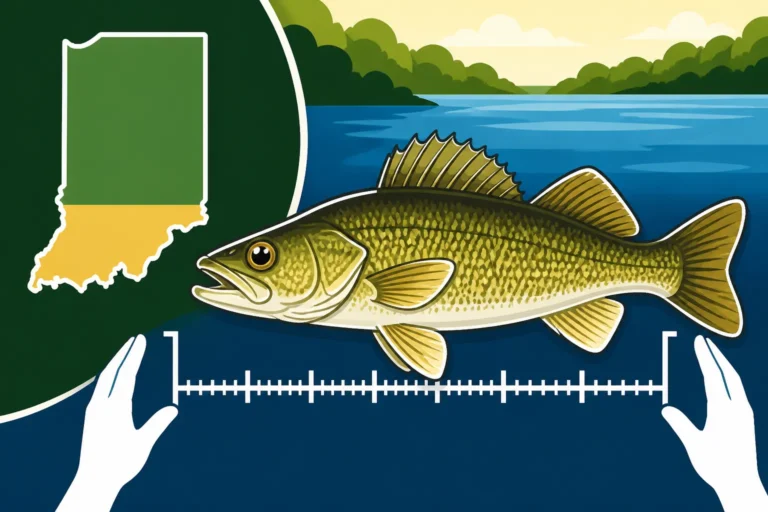
- Length Limits: Many popular sport fish have minimum length limits, meaning any fish caught below that size must be immediately and carefully released. Walleye, for instance, typically have a 16-inch minimum length limit north of State Road 26. However, some lakes, like Bass Lake or Lake George, have unique exceptions, so always check the specific rules for your chosen fishing spot. Our article on Indiana Walleye Length Limits by Lake is a great resource.
- Gear Restrictions: Certain types of gear or methods might be prohibited or restricted in specific areas. This could include limitations on the number of rods you can use, the legality of trotlines or jug fishing (which are generally restricted to certain waters and require specific permits), or even bait restrictions in some sensitive areas.
- Closed Seasons/Areas: While many species are open year-round, there might be specific closed seasons for certain fish during spawning periods, or areas that are permanently closed to fishing to protect sensitive habitats.
The best way to stay informed is to always consult the current Indiana Fishing Guide, which is published annually by the DNR. It’s available for free at license vendors and online on the DNR website. Having a copy, either physical or digital, is just as important as having a well-stocked tackle box from Amazon.
Lake Michigan Specific Regulations for Nonresidents
As we've discussed, Lake Michigan is a world unto itself when it comes to fishing. The sheer size of the lake, coupled with its unique cold-water fisheries for salmon and trout, means it has a distinct set of regulations that often differ from Indiana's inland waters. For Illinois residents venturing onto Lake Michigan from an Indiana port, paying close attention to these differences is paramount.
Key areas where Lake Michigan rules diverge include:
- Trout and Salmon Stamps: We've already covered this, but it bears repeating: if you're targeting trout or salmon in Lake Michigan, the additional stamp is required on top of your fishing license.
- Bag and Length Limits for Salmon and Trout: These species have very specific daily bag and minimum length limits that are designed to manage a valuable, put-grow-and-take fishery. For example, there are combined daily bag limits for Chinook and Coho salmon, and separate limits for steelhead, lake trout, and brown trout. These limits are often lower than what you might find for other species elsewhere in Indiana.
- Special Considerations for Tributaries: During the fall spawning runs, the lower sections of Lake Michigan tributaries (like Trail Creek, Little Calumet River) that flow into the lake can also have special regulations, including specific gear restrictions or even temporary closures to protect spawning fish.
- Navigational Rules: While not strictly fishing regulations, remember that boating on Lake Michigan comes with its own set of rules, including safety equipment requirements and navigation laws. Always be aware of weather conditions, which can change rapidly on such a large body of water.
Always consult the dedicated Lake Michigan section of the Indiana Fishing Guide or visit the DNR website specifically for Lake Michigan regulations before your trip. This ensures you're fully prepared for the dynamic environment of this Great Lake.
Penalties for Non-Compliance
Fishing without a proper license or violating other fishing regulations in Indiana is not just a minor oversight; it can carry significant legal consequences. Conservation officers patrol Indiana's waterways regularly, and they are authorized to issue citations and levy fines for violations.
The penalties can vary depending on the severity of the offense and whether it's a first-time or repeat violation. Fishing without a license, for instance, is typically a Class C infraction, which can result in fines ranging from a couple of hundred dollars to several hundred dollars, plus court costs. This makes the cost of a nonresident license seem quite negligible in comparison! Our guide on Penalties and Fines for Fishing Without a License offers more detailed information.
Beyond monetary fines, serious or repeated offenses could potentially lead to the suspension of your fishing privileges in Indiana, and possibly even impact your fishing license eligibility in your home state of Illinois due to interstate compacts. These penalties are in place to deter illegal fishing and protect Indiana's natural resources for everyone. Imagine getting a fine that costs more than a new high-end rod and reel combo you just picked up from Amazon – it's a real buzzkill for any fishing trip.
Therefore, the best advice is always to fish smart, fish legally, and carry your valid Indiana nonresident fishing license and any required stamps with you at all times. It's a small investment for peace of mind and the enjoyment of Indiana’s fantastic fishing opportunities.
Disclaimer
Please note that fishing regulations can change. While every effort has been made to provide accurate and up-to-date information, it is your responsibility to verify all current rules and regulations with the official Indiana Department of Natural Resources (DNR) before engaging in any fishing activities. This guide is for informational purposes only and should not be considered legal advice.