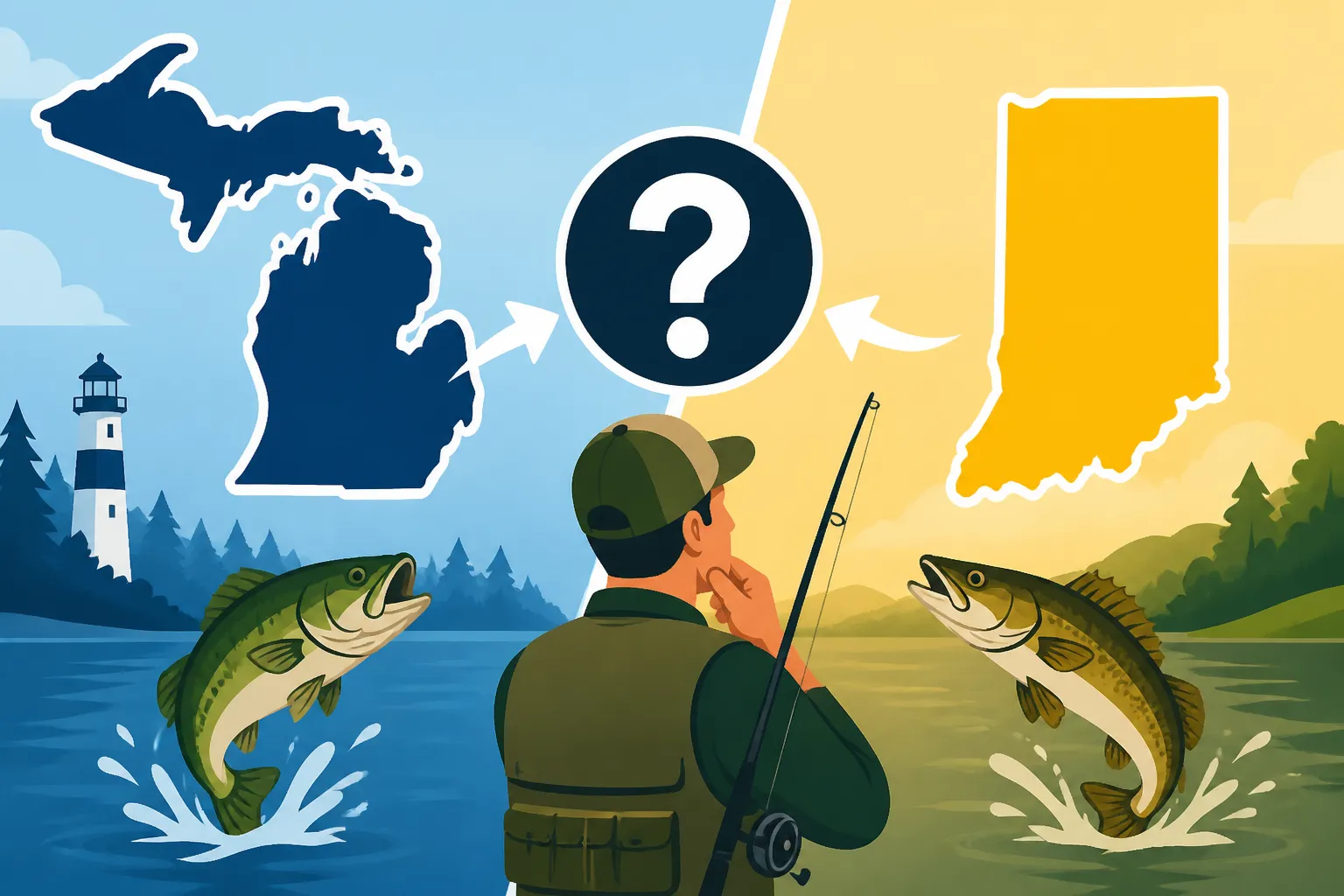
Does a Michigan Fishing License Work in Indiana?
It's a common and understandable frustration for anglers who love to fish diverse waters: you've got a valid fishing license for your home state, but when you cross a state line into new territory, does that license still cover you? If you're a Michigan resident eyeing the fantastic fishing opportunities in Indiana, you're likely asking if your Michigan fishing license will actually let you cast your line in the Hoosier State. The quick answer is generally no, and this comprehensive guide will explain why, and what you need to do to ensure you're fishing legally in Indiana.
The Straight Answer: No Direct Reciprocity Between Michigan and Indiana
When you purchase a fishing license, whether it's from Michigan or Indiana, you're buying a permit that is specific to the natural resources and regulations of that state. It's a system designed to fund the conservation, management, and enforcement efforts within those specific state borders.
Why Your Michigan License Isn't Valid in Indiana
Most states, including Indiana, operate independently when it comes to managing their fisheries and wildlife. This means that the funds generated from selling an Indiana Resident Annual Fishing License Cost or any other license in Indiana go directly towards supporting the Indiana Department of Natural Resources (IDNR) in their efforts to stock lakes, monitor fish populations, maintain public access sites, and enforce fishing laws within Indiana. The same goes for your Michigan license – those funds support Michigan's conservation efforts. Because the funding and regulatory oversight are distinct, a license issued by Michigan does not automatically grant you fishing privileges in Indiana waters. This applies whether you're planning a week-long trip to Monroe Lake or just thinking about a quick cast in a small pond near the state border. Each state requires its own permit for fishing within its jurisdiction.
What Reciprocity Usually Means (and Why it Doesn't Apply Here)
"Reciprocity" in fishing licenses generally refers to an agreement between two states that allows a license from one state to be valid in specific shared border waters of the other. For example, some states that share a river might have a reciprocal agreement for that particular river. However, Indiana and Michigan do not have a general reciprocal fishing license agreement that would allow a Michigan license to be used in Indiana's inland lakes and rivers, or even across all of Lake Michigan. While they share a boundary on Lake Michigan, the jurisdiction on the lake is typically divided, and anglers are expected to adhere to the rules and licensing requirements of the specific state's waters they are fishing in. This means that a Michigan fishing license doesn't "work" in Indiana waters, even if those waters are part of the same Great Lake. You will need an Indiana license if you're in Indiana's portion of Lake Michigan.
Getting Your Indiana Fishing License as a Michigan Resident
Since your Michigan license won't cut it, the next step for any visiting angler from the Wolverine State is to secure an Indiana nonresident fishing license. This isn't a complicated process, but it's crucial to understand your options and any additional requirements.
Essential Licenses for Out-of-State Anglers
As a Michigan resident, you'll need to purchase an Indiana nonresident fishing license. The good news is that Indiana offers several flexible options to fit your trip length and budget. For those planning a full season of fishing or frequent visits, the Nonresident Annual Fishing License Cost: $60 is often the most economical choice. It's valid from April 1st of the current year until March 31st of the following year, so it covers a full year of fishing opportunities. If your visit is shorter, Indiana also provides a Nonresident 7-Day Fishing License Price: $20, perfect for a week-long vacation, or a Nonresident 1-Day Fishing License Price: $9 if you're just passing through for a single day of angling. These short-term options are fantastic for maximizing your enjoyment without overspending, and you can easily compare their value based on your planned stay. Always double-check the current prices on the official Indiana DNR website, as they can occasionally be updated.
The Often-Forgotten Trout and Salmon Stamp
Here's where many anglers, especially those heading to Lake Michigan, can sometimes get tripped up. If your fishing plans in Indiana include targeting or possessing trout or salmon, you'll need more than just a general nonresident fishing license. Indiana requires an additional Indiana Trout and Salmon Stamp Requirements. This stamp is crucial if you're going after species like Chinook salmon, Coho salmon, steelhead, or brown trout in Lake Michigan and its tributaries, or even in any inland waters where these species are stocked. The Indiana Trout and Salmon Stamp Cost: $11 is a small addition, but it's absolutely necessary for compliance. Without it, even if you have a valid general fishing license, you could face penalties for possessing these specific fish. So, when planning your budget, factor in the Total Cost of an Indiana Fishing License With the Trout Stamp to ensure you're fully covered for all the species you hope to catch.
How to Purchase Your Indiana License
Thankfully, obtaining an Indiana fishing license as a visiting angler is incredibly convenient. The quickest and often preferred method is to purchase your license online directly through the Indiana Department of Natural Resources (IDNR) website. This allows you to complete the transaction from the comfort of your home in Michigan before you even hit the road. Many anglers find this option incredibly helpful for last-minute trip planning or simply to have everything in order well in advance. You'll receive a digital copy that you can store on your phone, or you can print a physical copy. For those who prefer a more traditional approach, licenses can also be purchased in person at numerous authorized retailers across Indiana, including many bait shops, sporting goods stores, and county clerks' offices. This is a great way to support local businesses while you're visiting. For instance, you might find a great deal on fishing line or a new tackle box at a local bait shop that also sells licenses. While you can't buy your license on general e-commerce sites, you can certainly purchase fishing gear and apparel on platforms like Amazon before your trip to ensure you're well-equipped. For detailed steps, check out our guide on Buying a Fishing License Online in Indiana.
Fishing Lake Michigan: Where Boundaries Blur (But Licenses Don't)
Lake Michigan is a vast and incredible fishery, shared by four states: Indiana, Michigan, Illinois, and Wisconsin. While it might seem like one continuous body of water, each state maintains strict jurisdiction over its own portion, and this is especially important for licensing.
Understanding Lake Michigan's Jurisdictional Waters
Even though you can see the Michigan shoreline from Indiana's Lake Michigan coast, the waters are clearly divided by state lines. Indiana's jurisdiction typically extends from its shoreline out into the lake, marking a specific area where Indiana fishing regulations and licensing requirements apply. This means that if you launch your boat from a marina in Michigan City, Indiana, and fish anywhere within what are considered Indiana waters, you must possess a valid Indiana fishing license, along with any necessary stamps like the Trout and Salmon Stamp. The challenge on a large, open body of water like Lake Michigan is often knowing exactly where these invisible lines are. While GPS can help, it's generally best to err on the side of caution. If there's any doubt about which state's waters you're in, having the appropriate license for the state you're operating from is always the safest bet. Our guide on What a Michigan Resident Needs Before Crossing the State Line to Fish offers more detail on navigating this.
Specific Regulations for Indiana's Lake Michigan Fishery
Beyond just the licensing, it's absolutely critical to remember that Lake Michigan Fishing Rules for Indiana Anglers can differ significantly from Michigan's. This isn't just about what license you hold, but about what you can legally catch and keep. Bag limits, minimum size requirements, and even closed seasons for specific species of trout and salmon can vary between the states. For example, Indiana might have a different daily creel limit for lake trout or a distinct size restriction for Chinook salmon compared to Michigan. These regulations are put in place by the IDNR to manage Indiana's specific portion of the Lake Michigan fishery sustainably. Before you even head out, take the time to review the most current Indiana fishing regulations for Lake Michigan, particularly if you're targeting species that migrate across state lines. This due diligence ensures you comply with local laws and contribute to the long-term health of this magnificent resource.
What Happens If You're Caught Without an Indiana License?
It's tempting to think that since you have a license from a neighboring state, you might get a pass if you're "just across the border." However, fishing without the correct license in Indiana waters can lead to significant headaches and financial penalties.
Penalties and Fines for Non-Compliance
Being caught fishing in Indiana without a valid Indiana fishing license can lead to serious consequences. Conservation officers are diligent in enforcing fishing laws, and ignorance is rarely accepted as an excuse. The Penalties and Fines for Fishing Without a License can include a substantial monetary fine, which often far exceeds the cost of purchasing the proper license in the first place. In some cases, you might also face additional penalties, such as the confiscation of your fishing gear or even your catch. Repeated offenses can lead to more severe fines and could even result in the suspension of your fishing privileges in Indiana for a period. It's a risk that simply isn't worth taking, especially given the ease and affordability of obtaining a nonresident license. Think of it this way: a basic 1-day license costs less than a fancy lure you might find on Amazon, but the fine for not having it can easily be hundreds of dollars.
The Importance of Being Prepared
The best way to avoid any issues with law enforcement is to always be prepared. Before embarking on any fishing trip to Indiana, whether it's to an inland lake or the mighty Lake Michigan, take a few minutes to confirm that you have all the necessary licenses and stamps. This means verifying that your Indiana nonresident fishing license is current and that you have a valid Trout and Salmon Stamp if you plan to target those species. Keep your license (either a physical copy or a digital image on your phone) readily accessible at all times while fishing. Officers will ask to see it, and having it on hand ensures a smooth interaction. Regularly consulting the official Indiana Department of Natural Resources (IDNR) website for the latest regulations and license information is a smart practice for any angler. This ensures you have all the facts about Indiana Fishing License Options for Visiting Anglers and are ready to enjoy your time on the water without worry.
Indiana Nonresident Fishing License Options
Here's a quick overview of the main nonresident fishing license options available in Indiana, which Michigan anglers should consider before their trip:
| License Type | Current Cost (Approx.) | Details |
|---|---|---|
| Annual Nonresident License | $60 | Valid from April 1 to March 31 of the following year. Best for frequent visitors. |
| 7-Day Nonresident License | $20 | Valid for seven consecutive days from the date of purchase. |
| 1-Day Nonresident License | $9 | Valid for one calendar day from the date of purchase. |
| Trout and Salmon Stamp (Add-on) | $11 | Required in addition to a general license for possessing trout or salmon. |
Disclaimer
The information provided in this guide is for general informational purposes only and is not legal advice. Fishing regulations and license requirements can change. Always consult the official Indiana Department of Natural Resources (IDNR) website or contact them directly for the most current and accurate information before engaging in any fishing activities.