How to Choose an Anchor for a Small Boat
You've got your small fishing boat, maybe it's a trusty Jon boat, a zippy kayak, or a classic canoe, and you've finally pinpointed that perfect patch of lily pads or that submerged brush pile where you just know the fish are hiding. You drop your anchor with anticipation, only to feel that dreaded drag, or worse, a complete failure to set, sending you slowly but surely drifting away from your prime spot. It's incredibly frustrating, and it’s a common challenge for small boat anglers across Indiana's diverse waters. This guide is here to walk you through exactly how to choose the right anchor for your small boat, ensuring you can stay put, fish smarter, and enjoy your time on the water without constantly battling the elements.
The Unique Challenges of Anchoring a Small Boat in Indiana
It's a familiar scenario for many of us who love to fish Indiana's lakes, rivers, and even those quiet farm ponds. You've got your smaller craft – maybe it's a trusty Jon boat, a nimble kayak, a canoe, or even a small utility boat with a modest outboard. You've found that perfect honey hole, the one spot where the bass are biting, or the crappie are stacked. You drop your anchor, confident it'll hold, only to find yourself slowly but surely drifting away, your carefully planned cast now off-target. Frustrating, right? It's not just about the size of your boat; it's about understanding the specific conditions you'll face and how your anchor interacts with them.
Why Small Boats Need Specific Anchoring Considerations
When you're dealing with a smaller boat, every little bit of wind, current, or even the subtle pull of your own line can have a significant impact on your position. Unlike larger vessels with heavy anchors and powerful engines to maintain position, our smaller boats are far more susceptible to being pushed around. This means the anchor you choose needs to be efficient, effective, and ideally, easy to retrieve without a huge struggle. You're not trying to hold a yacht in a hurricane; you're trying to keep a fishing platform stable in conditions that might feel calm but are constantly working against you. The wrong anchor can turn a peaceful day on the water into a constant battle against the elements, diverting your focus from the fish to your drifting position.
Think about fishing a smaller lake or a river in Indiana. The bottom might be soft mud in one spot, then rocky gravel just a few yards over, or covered in thick vegetation. A "one-size-fits-all" anchor rarely works well across all these varying conditions, and dragging an anchor through prime fishing spots can spook fish. Plus, you’re likely trying to minimize weight and maximize space in your smaller craft, so a monstrous anchor isn't practical or desirable. It's a balance of holding power, weight, and versatility. Speaking of essential gear, if you're out on the water, don't forget to check out What Gear Do You Need to Start Bass Fishing? for more tips on what to bring along. Every piece of equipment, from your rod to your anchor, plays a role in your overall success and enjoyment.
Common Anchoring Frustrations for Indiana Anglers
We've all been there. You've meticulously scouted a spot on Monroe Lake, found a promising drop-off, and carefully lowered your anchor. Then a slight breeze picks up, and before you know it, you're halfway to the next cove. Or maybe you're fishing a shallow, weedy cove on Patoka Lake, and your heavy fluke anchor just buries itself in the muck, becoming an impossible task to pull free. These frustrations aren't just minor inconveniences; they can ruin a fishing trip, turning a relaxing pastime into a wrestling match with your gear. Trying to wrestle a stuck anchor or constantly reposition your boat takes away from the actual joy of fishing.
Another common headache is when your anchor just doesn't set properly on a hard, rocky bottom. You feel it scrape and slide, never quite digging in, leaving your boat to bounce around, often in areas where fish like smallmouth bass might be hugging the rocks. This is especially true in some of Indiana's clearer, rockier glacial lakes up north. The truth is, different types of lake and river bottoms demand different anchor designs, and being prepared with the right tool for the job makes all the difference. It's not about brute force with an oversized anchor; it's about using the right design to exploit the bottom type and achieve maximum holding power with minimal effort. This foresight saves you time, energy, and stops you from accidentally spooking fish in your perfect spot, allowing you to focus on landing that next big catch.
Key Anchor Types and When to Use Them on Indiana Waters
Choosing the right anchor for your small boat doesn't have to be a mystery. It boils down to understanding the basic designs and how they perform on different types of lake and river bottoms you'll encounter across Indiana. Each anchor type has its strengths and weaknesses, and knowing these can save you a lot of grief and ensure you stay exactly where you want to be.
Fluke (Danforth) Anchors: The Go-To for Soft Bottoms
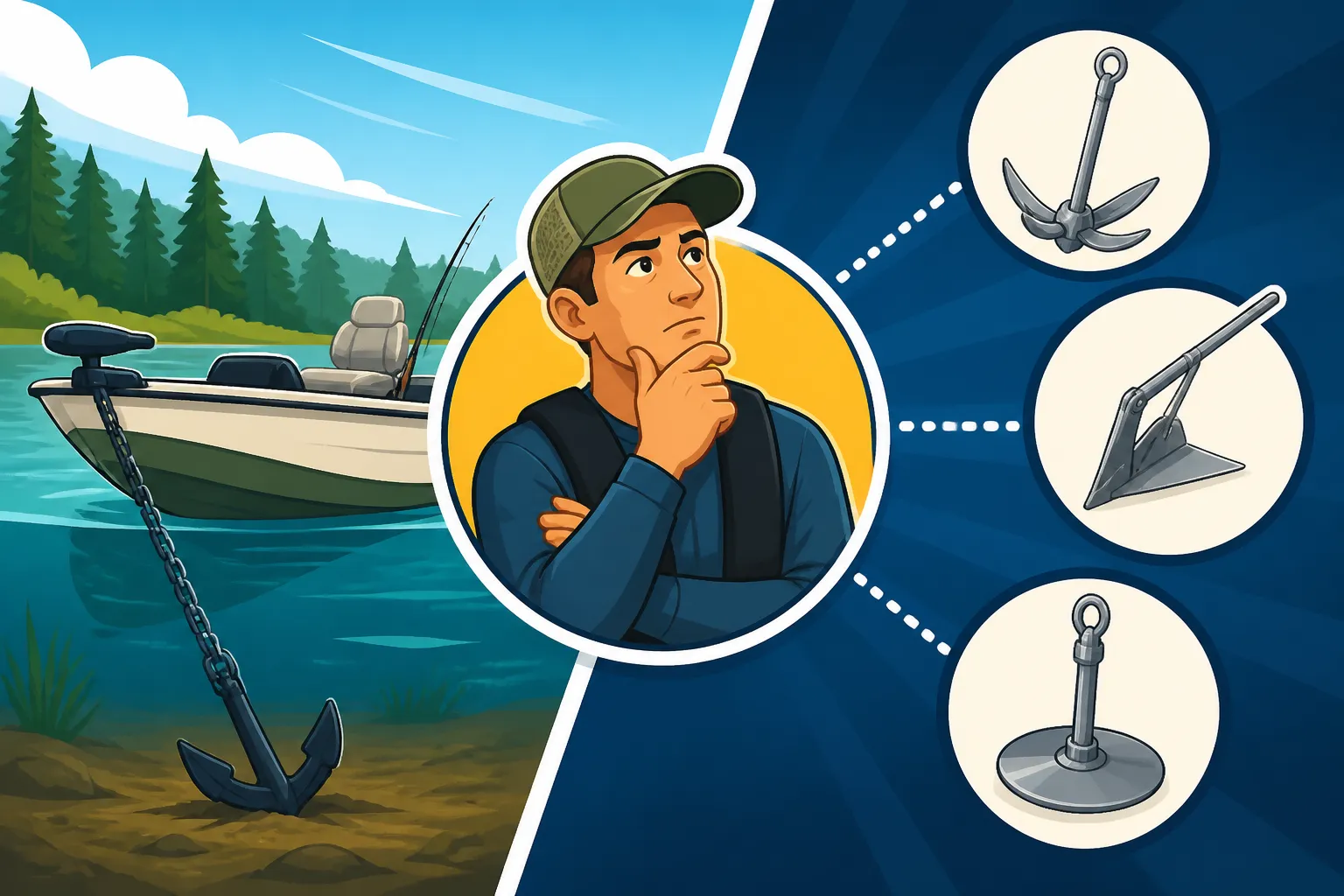
The fluke anchor, often referred to as a Danforth anchor, is probably one of the most common types you'll see on smaller recreational boats. It features two large, flat flukes that pivot on a stock and are designed to dig deep into soft bottoms like sand, mud, or silt. This makes them fantastic for many of Indiana's lakebeds, which frequently feature soft, silty conditions, especially in shallower coves and feeder creek areas. When pulled horizontally, those wide flukes really grab and bury themselves, providing excellent holding power for their weight. It's an efficient design that maximizes resistance in softer substrates.
However, a fluke anchor's strength on soft bottoms can be its downfall elsewhere. On rocky or heavily vegetated bottoms, those wide flukes struggle to penetrate and can simply slide over the top or get tangled in weeds. If you find yourself fishing a spot with a lot of heavy aquatic growth, a fluke might frustrate you by not setting at all, or worse, collecting a huge wad of weeds that makes retrieval a nightmare. For general lake fishing where the bottom is mostly soft, a small fluke anchor is a great choice, offering a lot of bang for your buck in terms of holding power per pound. Many entry-level boat kits or individual anchors you find at places like Bass Pro Shops or on Amazon will often be this style, providing a reliable starting point for many anglers.
Grapnel Anchors: Ideal for Rocky or Weedy Spots
Grapnel anchors look a bit like a grappling hook, with four or more prongs (flukes) that can fold in for storage or spread out to grab onto things. These are absolute lifesavers when you're fishing areas with rocky bottoms, submerged timber, or heavy weeds – basically, anything a fluke anchor would just slide over or get tangled in. The prongs can hook onto rocks, branches, or root systems, giving you a surprisingly strong hold for such a compact design. This makes them particularly useful in rivers or smaller, rock-bottomed lakes or around docks and pilings where there's plenty of structure to grab. Their design allows them to cling where other anchors might fail.
The downside? On soft, muddy, or sandy bottoms, a grapnel anchor often struggles. The prongs might just sink in without finding anything solid to hook onto, leading to poor holding power. They can also get notoriously stuck if they hook too well into a crevice or a large piece of submerged structure, which can be a real headache. Many kayak and canoe anglers swear by small grapnel anchors because they are compact and effective for specific conditions. If you're navigating smaller river systems like portions of the Tippecanoe River or fishing around submerged cover, a grapnel anchor can be incredibly effective. Consider pairing this with a lightweight Best Kayaks for Fishing Indiana Lakes setup for maximum maneuverability and holding power, truly optimizing your fishing experience in tricky spots.
River Anchors: Designed to Resist Current
If you spend a lot of time fishing Indiana's rivers like the Wabash or White River, you know that current is a constant factor. Standard anchors designed for lakes often struggle in moving water because they're built to resist horizontal drag on a static bottom. That's where a river anchor comes in. These anchors are typically pyramid-shaped or have a mushroom-like design, often with cleats or a textured surface, and they rely heavily on their weight and shape to dig into the riverbed and resist the pull of the current. They aren't about flukes digging deep; they're about sheer mass and a shape that allows them to wedge themselves into the river bottom, holding against the relentless flow of the water.
While excellent in current, river anchors are generally heavier for their holding power compared to fluke anchors in still water. They can also be a pain to retrieve from heavily snagged river bottoms, as their wedging action can sometimes make them difficult to free. Their effectiveness truly shines when the current is the primary force you're fighting. If you're drifting down a river, trying to pick apart a log jam, or holding position in a strong flow, a dedicated river anchor is your best friend. For those who frequently fish Indiana's moving waters, having one of these on board is almost a necessity to prevent constant drifting and allow precise presentation to fish holding in current breaks.
Box Anchors: Versatility for Diverse Conditions
The box anchor is a more specialized design, gaining popularity among small boat anglers for its versatility and innovative approach to anchoring. It's essentially a compact box shape with flukes or planes that open up when deployed, creating resistance on multiple axes. What makes them unique is their ability to set quickly in a variety of bottom types – from soft mud to rocky patches – and their ease of retrieval. They often don't dig as deep as a fluke but spread their holding power more broadly, relying on sheer surface area and resistance, making them less prone to getting stuck in deep mud or rock crevices.
One of the big advantages of a box anchor is that they tend to retrieve cleanly. When you pull up on the line, they often collapse or release their hold easily, which is a huge plus if you're constantly moving from spot to spot or fishing around obstacles. They can be a bit bulkier than a folded grapnel, but their consistent performance across different bottoms can make them worth the space, especially for those who fish a wide range of Indiana waters, from the quiet coves of Mississinewa Lake to the open expanses of Lake Monroe. They offer a good balance for anglers who don't want to carry multiple specialized anchors, simplifying their gear while maintaining effective holding power.
Here's a quick comparison table of these common anchor types:
| Anchor Type | Primary Bottom Type | Holding Mechanism | Pros | Cons | Best For |
|---|---|---|---|---|---|
| Fluke (Danforth) | Sand, Mud, Silt | Flukes dig into soft bottom | Excellent holding in soft bottom, lightweight for its power | Poor in rock/weeds, can slide on hard bottom, collects weeds | Most Indiana lakes with soft, silty bottoms |
| Grapnel | Rock, Weeds, Submerged Timber | Prongs hook onto structure or vegetation | Compact, good for snags & hard bottoms, effective in dense cover | Poor in soft mud/sand, can get very stuck in deep crevices | Kayaks, canoes, rocky rivers, areas with heavy cover |
| River (Pyramid/Mushroom) | Mud, Sand, Gravel (in current) | Weight & shape resist current, wedges into bottom | Excellent in current, prevents drifting in moving water | Heavy for holding power in still water, can snag easily, bulky | Rivers, strong current areas, narrow channels |
| Box | Varied (mud, sand, rock) | Multiple planes create broad resistance and suction | Sets quickly, easy retrieval, versatile across bottom types | Can be bulkier than other types when deployed, not ideal for extreme currents | Anglers who fish diverse bottom types, frequent spot movers |
Matching Your Anchor to Your Small Boat and Fishing Needs
Choosing the perfect anchor isn't just about the bottom type; it's also about your boat itself, the typical conditions you face, and how you actually fish. A little thought into these factors can ensure you're not over-anchored, under-anchored, or stuck with a system that's more trouble than it's worth. Every piece of your gear should work in harmony with your vessel and fishing style.
Considering Your Boat's Size and Weight
This might seem obvious, but it's a critical starting point. A 10-foot Jon boat used for bluegill fishing in a calm pond doesn't need the same anchor as a 16-foot aluminum bass boat tackling a windy day on Lake Monroe. The general rule of thumb is that heavier boats require heavier anchors or anchors with more aggressive holding power to resist wind and current. However, with small boats, you also want to avoid an anchor that's excessively heavy for easy deployment and retrieval. If you're fishing from a kayak, for instance, a 1.5-3 lb grapnel might be perfect. For a 12-14 foot aluminum boat, you might look at a 5-10 lb fluke anchor. The goal is adequate holding power without making the anchor a burden to manage.
It’s about balancing the anchor’s weight with its design to achieve adequate holding power without adding unnecessary bulk to your small craft. Remember, you're not just moving the anchor itself, but also the chain and rope, which adds to the total weight you're managing. When looking for anchors, consider the recommendations often found on products from brands like Bass Pro Shops, which usually provide guidelines based on boat length. This also ties into how you plan to launch and recover your boat, as discussed in Boat Trailer and Ramp Tips for Indiana Lakes, as a heavier anchor can impact overall weight and handling.
Accounting for Wind and Current Conditions
Indiana's weather can be notoriously fickle. A glassy calm morning can turn into a blustery afternoon with whitecaps in a heartbeat, especially on larger bodies of water like Lake Michigan or some of our big reservoirs. Strong winds and currents put immense strain on your anchor. If you frequently fish in open areas, or during windy conditions, you'll need an anchor with significantly more holding power than if you stick to sheltered coves. The surface area of a small boat, even a low-profile one, acts like a sail in the wind, increasing the drag on your anchor.
For small boats, if you anticipate significant wind or current, it’s often better to go slightly up in anchor size or choose a more aggressive anchor type. A small boat catches a lot of wind, so even a moderate breeze can make you drag anchor if you're under-gunned. This is where a river anchor shines in moving water, or a larger fluke anchor might be necessary in a windy lake scenario. Always err on the side of caution. It’s better to have a slightly oversized anchor that holds perfectly than one that drags and forces you to constantly reposition, wasting valuable fishing time. Remember that a properly registered boat is also key to safe operation in varying conditions; you can learn more here: Indiana Boat Registration Rules Explained.
Understanding Anchor Rode (Chain and Rope)
The anchor itself is only half the equation; the anchor rode (the chain and rope combined) is just as crucial, if not more so, for effective anchoring. The chain portion of the rode is essential. It provides weight along the bottom, creating a horizontal pull on the anchor shank that helps the anchor dig in and set properly. Without chain, your anchor line would lift directly up from the anchor, causing it to pop out of the bottom with minimal effort because it wouldn't be able to achieve the correct angle to dig in. Even for a small boat, this critical piece cannot be overlooked.
The length of your entire anchor rode is also vital. The general rule of thumb is to use an anchor rode length that is at least a 7:1 scope for rope in calm conditions. This means if you're anchoring in 10 feet of water, you should ideally have at least 70 feet of rope deployed. For a small boat with a chain-rope combination, a common practical recommendation is a minimum of 5-7 feet of galvanized chain, followed by enough rope to achieve a scope (ratio of rode length to water depth plus freeboard) of at least 5:1 or 7:1 in good conditions. If it's windy or there's a strong current, you'll need an even higher scope, sometimes up to 10:1. Having enough rope is crucial; don't skimp! You can find quality anchor rope and chain sets available at retailers like Amazon. Properly sized Best Trolling Motors for Indiana Farm Ponds can also help you manage your boat's position slightly if you need to adjust without re-anchoring.
Beyond the Anchor: Essential Gear and Techniques for Secure Anchoring
Having the right anchor is a fantastic start, but it's just one piece of the puzzle. To truly master anchoring your small boat on Indiana's waters, you need to think about the accompanying gear and proper deployment techniques. These small details can drastically improve your success and safety on the water, turning a potential struggle into a seamless operation.
Essential Anchoring Accessories
Even the best anchor needs the right supporting cast. Here’s what you should consider for your small boat to make your anchoring system complete and effective:
- Anchor Rope: Make sure it's durable marine-grade rope, usually nylon, which has a good amount of stretch to absorb shock from waves and wind. The diameter should be comfortable to handle and appropriate for the size of your boat. Don't use cheap utility rope; it can fray, stretch too much, or degrade quickly in UV light, becoming a safety hazard over time.
- Anchor Chain: As discussed, this is non-negotiable for effective anchoring. Even for a kayak, a few feet of galvanized chain will help immensely in creating that crucial horizontal pull. Choose galvanized chain for corrosion resistance and longevity.
- Shackles/Connectors: Use sturdy stainless steel or galvanized shackles to connect your anchor to the chain and the chain to the rope. Inspect these regularly for wear and tear, as a failed shackle means a lost anchor.
- Anchor Buoy/Marker: If you're fishing in busy areas, or want to easily find your anchor again if you need to cut the line (as a last resort for a snag), a small, brightly colored anchor buoy can be invaluable. It marks the location of your anchor, helping you avoid running it over or losing it.
- Anchor Retrieval Ring: These clever devices, often available at Bass Pro Shops, allow you to pull your anchor up from the chain side, effectively reversing the anchor's setting direction and making retrieval much easier, especially from snags. They’re a game-changer for grapnel users and can save you from cutting your line.
- Line Winder/Bag: Keep your anchor rope neatly coiled and ready for deployment. A dedicated anchor bag or winder can prevent tangles, keep mud and debris off your boat deck, and make deploying and retrieving much smoother. This also prevents tripping hazards.
Equipping yourself with these accessories isn't just about convenience; it's about making your anchoring safer and more efficient, so you can focus on the fishing itself. If you're looking to upgrade your overall boating experience, you might also be interested in other gear like Best Fish Finders for Indiana Lake Fishing to help locate those elusive spots and identify bottom composition.
Proper Deployment and Retrieval Techniques
Knowing how to deploy and retrieve your anchor is just as important as what anchor you choose. Many common anchoring problems stem from improper technique, even with the perfect gear. Following these steps can prevent frustrating snags and ensure your anchor holds firm.
Deployment:
- Approach Slowly: Approach your desired spot against the wind or current. This gives you more control over your boat's drift and placement.
- Estimate Scope: Once you're slightly past where you want to end up, estimate the necessary anchor rode length based on water depth and anticipated conditions (at least 5:1, ideally 7:1 or more).
- Drop, Don't Throw: Gently lower the anchor and chain until it hits the bottom. This prevents tangles in the rope, reduces splash (which can spook fish), and ensures the anchor lands correctly.
- Pay Out Rode: As your boat drifts backward with the wind/current, steadily pay out the anchor rope. This allows the anchor to set properly without dragging.
- Let it Set: Once you've paid out the appropriate scope, cleat off the rope and let the boat pull against the anchor for a moment. You should feel the anchor dig in and the boat stop its drift. If you're still drifting, pay out more scope or try resetting.
- Confirm Hold: Look for a fixed point on shore to confirm your boat is holding steady. Double-check for any subtle movement.
Retrieval:
- Motor Towards Anchor: Slowly motor or paddle directly towards your anchor, taking up slack as you go. This reduces the strain on the anchor and helps it release its hold naturally as the pull becomes vertical.
- Vertical Pull: Once you're directly over the anchor, pull straight up with short, strong tugs. The vertical pull should dislodge most anchors from the bottom.
- Clean and Stow: Once retrieved, clean any mud or weeds off your anchor and coil your rope neatly in its bag or winder. A good Best Coolers for Keeping Fish Fresh on a Boat can hold your catch while you manage your gear.
For stubborn snags, especially with grapnel anchors in rocky areas, don't just pull harder. Try motoring in a slow circle around the anchor or letting the current work on it from a different angle. If all else fails and it's a deep snag, using an anchor retrieval ring can often save your anchor by allowing you to pull it from the crown end, reversing the direction of pull. It's truly a frustration saver when dealing with those tricky spots. This careful attention to detail will keep your boat stable and your fishing hassle-free. Also, remember to ensure you have enough life jackets for everyone on board, as safety always comes first! Best Life Jackets for Indiana Boaters is a good resource for that.
Practical Tips for Small Boat Anchoring
Beyond the basics, a few seasoned tricks can make your small boat anchoring even more effective and enjoyable:
- Practice Makes Perfect: If you're new to anchoring, practice in a low-stakes environment, like a calm, shallow area with a known, clear bottom. Get a feel for deployment, setting, and retrieval without the pressure of a hot bite.
- Know Your Bottom: Utilize a fish finder if you have one to identify bottom composition. Sand, mud, rock, and weeds all require different anchor types and approaches. Best Fish Finders for Indiana Lake Fishing can really help here, often showing you the hardness and texture of the lakebed.
- Consider a Second Anchor: For really windy days or strong currents, deploying a second, lighter anchor off the stern (using the same scope principles) can provide incredible stability and prevent your bow from swinging, creating a much more stable fishing platform. Just make sure you can manage two lines safely without tangles.
- "Breakaway" Rig: For grapnel anchors in very snaggy areas, some anglers rig them with a "breakaway" system using zip ties or light twine. This allows the anchor to break free if it gets hopelessly stuck, preventing you from losing the entire anchor. You essentially attach your rode to the crown of the anchor and secure the shank end with a weak link that will snap under extreme tension, letting you retrieve the main anchor.
- Don't Over-Anchor: While tempting to use a massive anchor for absolute security, an excessively heavy anchor can be a safety hazard in a small boat, making it difficult to deploy and retrieve, especially if you're alone. Find the right balance for your boat size and typical conditions. An anchor that's too heavy can also strain your boat's structure or create storage issues.
- Keep Your Gear Organized: A tangled anchor rope is a nightmare, especially when you need to deploy quickly. Invest in a good anchor bag or winder to keep your rode neat and ready for action. This also helps prevent damage to the rope and keeps your boat cleaner. Good tackle box organizers, like those discussed in Best Tackle Box Organizers for Anglers, are just as important for your fishing gear as an anchor bag is for your anchor.
By combining the right anchor with proper technique and essential accessories, you'll transform your small boat anchoring from a source of frustration into a seamless and enjoyable part of your Indiana fishing adventure. Get out there, stay put, and catch some fish!
Disclaimer
This article is for general informational purposes only and does not constitute professional advice. Laws, prices and regulations vary by location and change over time. Consult a qualified professional for guidance on your specific situation.