Can You Use an Old Life Jacket on an Indiana Boat?
It's a common scenario for many Indiana anglers: you're getting ready for the fishing season, you dig out the old tackle box, dust off the rods, and then you come across a stack of life jackets. Maybe they've been stored in the garage, the shed, or tucked away in the boat since last year. The big question then hits you: "Can I still use these old life jackets?" It's a vital query that goes beyond mere convenience, delving right into safety and compliance with Indiana's boating regulations. This guide will walk you through exactly what Indiana law requires and, more importantly, how to inspect those potentially aged personal flotation devices (PFDs) to ensure they're truly safe and legal to use on our beautiful Hoosier waters.
The Core Rule: What Indiana Law Says About Life Jackets
When it comes to boating in Indiana, the law isn't just about having a life jacket on board; it's about having the right kind of life jacket, in the right condition, for each person on your vessel. This might seem like a simple concept, but the nuances can sometimes catch even seasoned boaters off guard.
Approved and Serviceable: The Two Golden Standards
The most critical thing to understand is that every life jacket on your boat must meet two fundamental criteria: it must be "approved" and it must be "serviceable." Neglecting either of these can not only put lives at risk but also lead to fines if you're stopped by the Indiana Department of Natural Resources (DNR) or other law enforcement.
An "approved" life jacket means it has been certified by the U.S. Coast Guard (USCG). This isn't just a suggestion; it's a legal requirement. You'll find a clear label on the inside of every legitimate life jacket, stating its USCG approval, its type (Type I, II, III, IV, or V), and its intended use. If that label is missing, illegible, or if the jacket itself doesn't bear any USCG approval, it’s not legal for use on Indiana waters, regardless of how good it looks. It's really that simple. A jacket might feel like it floats, but without that official stamp, it's just a piece of gear, not a legally recognized safety device. This rule applies to everyone, from those enjoying a quiet afternoon of fishing on Lake Monroe to adrenaline junkies on personal watercraft. Understanding Indiana Life Jacket Requirements for Every Boater is paramount for compliance.
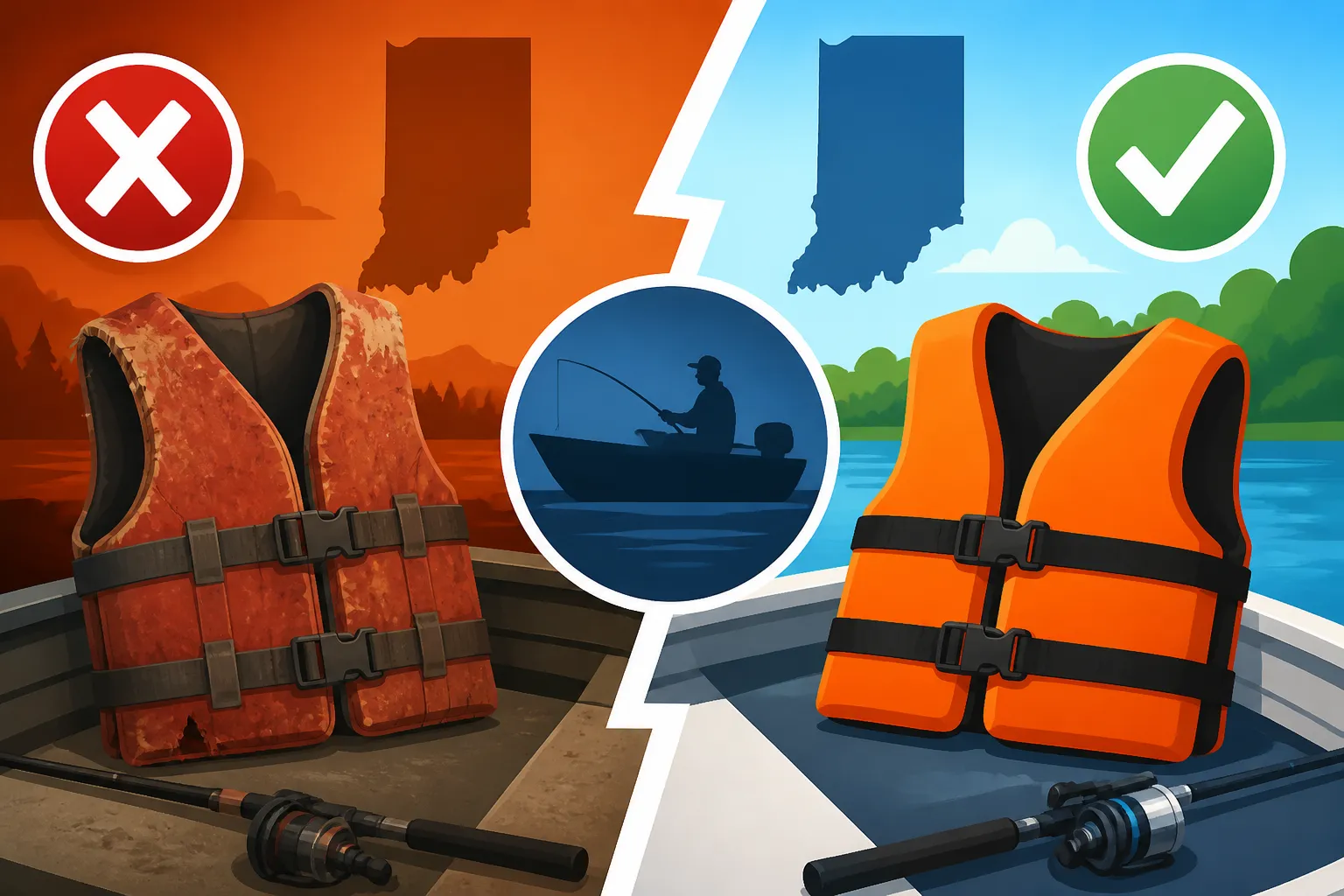
"Serviceable" is where the condition of an old life jacket truly comes into play. A serviceable life jacket is one that is in good, working condition, free from major defects that would impair its performance. This means no rips, no tears, no mildew, no broken buckles, no missing straps, and no waterlogging. It must be readily accessible for each person on board and fit them appropriately. Imagine trying to put on a jacket with a broken zipper or a snapped buckle in a sudden emergency—it just won't work. The spirit of the law here is clear: the life jacket needs to be able to do its job effectively if and when it's needed. This is why a thorough inspection is so crucial, especially for those jackets that have seen a few seasons.
Life Jacket Types and Requirements
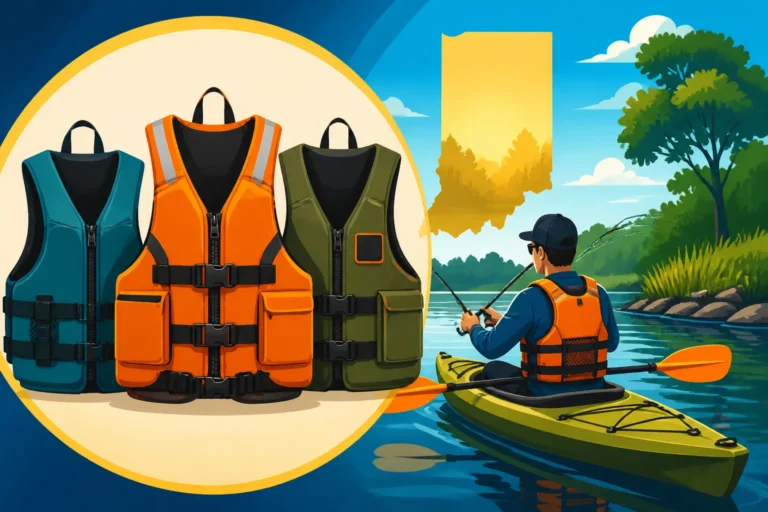
Indiana law generally aligns with federal USCG regulations regarding the types of life jackets. Most recreational boaters will use Type II or Type III PFDs, which are designed for general boating activities. Type IIs are often vest-style and provide good flotation, while Type IIIs are typically more comfortable for continuous wear, like those often worn by anglers or paddlers.
It's important to remember that all children under the age of 13 must wear a USCG-approved life jacket while on board any recreational boat in Indiana waters, unless they are inside a totally enclosed cabin. For adults, you just need to have one readily available for each person. However, wearing it is always the safest option, especially if you're out on larger bodies of water like Lake Michigan. If you're considering a short trip or just fishing from shore, you might want to consider Nonresident 1-Day Fishing License Price: $9 to make sure you're covered for fishing, and always ensure your safety gear is top-notch. For those venturing onto the big lake, you'll find that Lake Michigan Fishing Regulations Are Different From the Rest of the State in many aspects, including how you approach safety gear.
Then there are special considerations, like those who enjoy watersports. If you're being towed behind a boat (skiing, tubing, wakeboarding), you must wear an appropriate Type I, II, or III PFD. Inflatable PFDs, while popular for comfort, have specific restrictions. They are generally considered Type V and must be worn to count towards the carriage requirements, and they are typically not approved for persons under 16 or for watersports. For more specific details on what inflatable vests can and cannot do, especially concerning personal watercraft, you can refer to information on Why Inflatable Vests Fail Indiana PWC Rules. Always check the label of your inflatable PFD carefully for its approved uses.
Beyond the Law: How to Inspect Your Old Life Jacket for Safety
Even if your old life jacket has that coveted USCG approval stamp, it's meaningless if the jacket itself has degraded to the point of being unsafe. A thorough, hands-on inspection is your next crucial step. Don't just glance at it; really get in there and check every component.
Fabric Integrity: The First Line of Defense
When you pull out an old life jacket, especially one that's been stored in a hot shed or exposed to sun, the first thing you need to assess is the fabric itself. Run your hands over the entire surface. Does it feel stiff, brittle, or cracked? These are tell-tale signs of sun damage and material degradation. Over time, UV rays break down synthetic fabrics, making them weak and prone to tearing. What might look like a sturdy canvas can, in reality, be fragile and give way under pressure.
Next, visually inspect for any tears, snags, or abrasions. Pay particular attention to high-wear areas like shoulders, armholes, and around the buckles. Even small cuts or punctures can compromise the integrity of the outer shell, allowing water to seep into the flotation material, which is a major no-no. Remember, a life jacket's job is to keep you afloat. If its outer layer is compromised, it’s not doing its job correctly. Imagine a sudden fall into cold water; that small tear could expand rapidly, leading to a much larger problem.
Finally, check for signs of mildew or mold. Not only does mildew smell terrible, but it also weakens fabric fibers over time. Those dark spots you see aren't just cosmetic; they indicate a breakdown of the material that can lead to tears. If your jacket is heavily mildewed, it’s likely past its prime. Proper storage is key to preventing this, but once it's set in, it's hard to reverse the damage.
Stitching, Straps, Buckles, and Zippers: The Connecting Pieces
The fabric is one thing, but a life jacket is only as good as what holds it all together. Every piece of stitching, every strap, buckle, and zipper plays a critical role in keeping the jacket on you and functioning correctly in the water.
Start with the stitching. Give every seam a gentle tug. Are there any loose threads? Are the seams unraveling? If the stitching looks weak or is coming apart, the jacket's structural integrity is compromised. This is especially true for the straps that cinch the jacket tight around your body. These are load-bearing points, and if the stitching fails, the jacket could easily slip off or ride up, rendering it useless. You need to ensure those connections are as strong as the day the jacket was made.
Move on to the straps. Are they faded, frayed, or stretched out? Nylon straps, like fabric, degrade with UV exposure and general wear and tear. If a strap looks thin or worn, its strength is questionable. Check how they are secured to the jacket; again, look for solid stitching. Then, test the buckles. Snap them together and pull firmly. Do they hold securely, or do they feel loose and prone to popping open? Buckles can become brittle with age or UV exposure, especially plastic ones, and a broken buckle means the jacket can't be properly secured. A life jacket that constantly rides up is not a safe life jacket.
Zippers are another common point of failure. If your jacket has a zipper, zip it all the way up and down a few times. Does it snag? Do the teeth separate after zipping? A failing zipper can prevent the jacket from closing properly, which can be just as dangerous as a broken buckle. For jackets designed to be worn for extended periods, like many Type III PFDs used for fishing, a fully functioning zipper is crucial for both comfort and security.
Flotation Material: The Heart of the Jacket
This is arguably the most critical component of any life jacket, and it's also the hardest to assess accurately without getting in the water. Most modern life jackets use closed-cell foam for flotation.
Your goal is to check for any signs that this foam has been compromised. Squeeze different parts of the jacket. Does the foam feel crushed, lumpy, or stiff in certain areas? If the foam inside feels hard or has lost its pliability, it's likely waterlogged or degraded. Waterlogging happens when the foam cells break down, absorbing water and losing buoyancy. This is a common issue with older PFDs, especially if they've been stored incorrectly or were submerged frequently. A waterlogged life jacket simply won't float you effectively, turning a safety device into a dangerous liability.
Another test for the foam is to try it on. If you notice a significant difference in how it fits or floats compared to when it was new, that could indicate a problem. While you ideally want to test it in the water, a thorough squeeze test and visual inspection for unevenness can give you a good indication. If the foam feels thin or has moved around inside the jacket, creating empty pockets, it's not going to provide uniform buoyancy. This means it might keep your head above water, but not in a stable, comfortable position, which is essential in an emergency.
Here's a quick reference table for common life jacket issues:
| Issue Type | Specific Problem | Why It's a Problem for Safety |
|---|---|---|
| Fabric Integrity | Tears, snags, abrasions | Compromises outer shell, allows water in, weakens structure |
| Sun-faded, brittle fabric | Weakens material, prone to tearing under stress | |
| Heavy mildew or mold | Degrades fabric fibers, indicates poor condition | |
| Hardware | Loose or unraveling stitching | Jacket integrity compromised, straps can detach |
| Frayed or stretched straps | Reduces strength, won't hold jacket securely | |
| Cracked or broken buckles | Prevents proper securing of the jacket | |
| Stuck or broken zippers | Jacket won't close, reduces effectiveness | |
| Flotation Material | Crushed, lumpy, stiff foam | Indicates degraded or waterlogged foam, reduced buoyancy |
| Foam shifted or missing | Uneven buoyancy, reduced flotation capacity | |
| Evidence of waterlogging | Jacket becomes heavy, won't float effectively | |
| USCG Label | Missing or illegible label | Not legally compliant, cannot verify approval |
When an Old Life Jacket Just Won't Cut It: Signs It's Time for a New One
Sometimes, you just have to face the music: that old trusty life jacket has seen better days, and it's time to retire it. Knowing when to make that call is crucial for your safety and the safety of your passengers. It’s not about sentimentality; it’s about functionality.
Obvious Damage: No Questions Asked
Any significant physical damage is an immediate red flag. We're talking about large rips or tears in the fabric that expose the inner flotation material. If you can see the foam inside, it's done. Likewise, if the seams are busted open, or if any of the major buckles or zippers are broken beyond repair, the life jacket cannot be properly secured and therefore cannot perform its function. Imagine falling out of your boat near Monroe Lake: Indiana's Largest Lake for Bass Fishing; you need your PFD to stay on you and keep you afloat. A compromised jacket won't do that.
Heavy sun fading might seem cosmetic, but as we discussed, it often signifies UV degradation. If the colors are dramatically washed out, especially on the top surfaces that see the most sun, the fabric is likely weak and brittle. A light tug or even the stress of being wet could cause it to tear right off. Similarly, persistent mold or mildew that has truly embedded itself into the fabric fibers—not just surface spots that can be cleaned—means the material is breaking down and losing its strength. It's a sign of organic decay that weakens the structural integrity.
Subtler Signs: The Dangers You Might Miss
Beyond the obvious, there are often more subtle indicators that a life jacket is no longer reliable. The condition of the flotation material is critical but can be tricky to evaluate. If the foam feels hard, compacted, or unevenly distributed, it's a strong sign that it has degraded or become waterlogged. A good life jacket should have pliable, consistent flotation throughout. If it feels like you're squeezing a wet sponge, it's definitely absorbing water and has lost much of its intended buoyancy. A simple test is to hold it underwater; if it struggles to pop back to the surface or feels significantly heavier than a new one, it’s probably waterlogged.
Another subtle but dangerous sign is a change in fit or overall comfort. An old jacket might feel looser, or the straps might not cinch as tightly as they once did, even when fully adjusted. This could indicate stretched-out fabric or straps that have lost their elasticity. A life jacket that doesn't fit snugly can ride up around your ears in the water, obstructing your vision and making it harder to breathe. It essentially becomes a flotation collar rather than a full body support system. This is especially dangerous for children, whose life jackets must fit perfectly. When checking options, remember that Best Life Jacket Sizes for Kids Boating in Indiana are crucial for their safety.
Lastly, inspect the USCG approval label itself. Is it still legible? Over time, these labels can fade, tear, or completely disappear. If you can't read the USCG approval, the type, or the weight capacity, the life jacket is no longer legally compliant, even if the jacket itself appears to be in good shape. It might seem minor, but if the DNR asks to see the label and you can't provide it, you could face penalties. It simply won't pass inspection, and a life jacket that doesn't meet the legal requirements is effectively no life jacket at all.
Making the Right Choice: Buying New Life Jackets for Your Boat
If your inspection reveals that your old life jackets are ready for retirement, don't despair! Replacing them is an investment in safety that will give you peace of mind for years to come. The good news is there's a huge variety of modern, comfortable, and highly effective PFDs available.
Prioritizing Fit and Comfort for All Ages
When buying new life jackets, fit and comfort should be at the top of your list, second only to USCG approval. A life jacket that doesn't fit properly won't work effectively, and one that's uncomfortable is less likely to be worn. For adults, ensure the jacket is snug but allows for full range of motion. It shouldn't ride up when you lift your arms. Many anglers prefer Type III vests for their comfort, which makes them much more likely to be worn throughout a long day of fishing on the Tippecanoe River. Brands like Onyx and Stearns offer great options that are both comfortable and robust. You can find a wide selection at retailers like Bass Pro Shops or explore many choices online through Amazon.
For children, proper fit is even more critical. Their jackets should be snug enough that you cannot pull the jacket up over their ears when they are standing with arms raised. Always check the weight range specified on the USCG label, and never buy a jacket for a child to "grow into." Children need a jacket that fits them now. There are specialized infant and child PFDs designed to keep a child's face out of the water, even if they're unconscious. Consider bright colors for children's life jackets, as they greatly enhance visibility in the water. For more information, you can always consult resources like Kids Fish Free Until Age 18 in Indiana to understand the holistic approach to safety and participation for younger anglers.
Choosing the Right Type for Your Activities
Consider the type of boating and fishing you'll be doing most often.
- General Boating & Fishing: Type II (vest style) or Type III (comfortable, often with pockets) are ideal. They offer good flotation and are designed for calm inland waters where rescue is likely to be swift. Many of the Best Type III Life Jackets for Indiana Anglers are designed with features like large pockets and tool attachment points.
- Watersports: If you're into waterskiing, wakeboarding, or tubing, you'll need a Type III impact-rated vest. These are designed to withstand the forces of high-speed falls while still providing flotation.
- Paddling (Kayak, Canoe, SUP): Many paddlers opt for Type III vests with larger armholes and mesh backs for increased mobility and ventilation. Some even have minimalist designs that interfere less with paddling strokes. If you're interested in kayak fishing, a specific type of PFD that allows for maximum movement and gear attachment might be a good idea.
- Open Water (Lake Michigan): While Type IIIs are acceptable, if you're venturing further offshore on Lake Michigan, a Type I might offer superior flotation and the ability to turn an unconscious person face-up in the water more reliably. These are typically bulkier but provide the highest level of offshore safety. Understanding Lake Michigan Fishing Rules for Indiana Anglers is important for all aspects of safety on larger bodies of water.
Where to Purchase Your New Life Jackets
You have several excellent options for purchasing new, USCG-approved life jackets. Local sporting goods stores like Cabela's or Bass Pro Shops are fantastic because you can try on different styles and sizes to ensure a perfect fit. Their staff are also often knowledgeable and can help guide you to the right type for your specific needs. It's often helpful to try on life jackets while wearing the kind of clothing you typically fish in.
Online retailers like Amazon offer an enormous selection, often with competitive pricing. While you can't try them on in person, detailed sizing charts and customer reviews can help you make an informed decision. Just be sure to double-check that any life jacket you purchase online clearly states its USCG approval and is from a reputable manufacturer. Always buy from trusted brands that adhere to safety standards. If you're looking for Best Life Jackets for Indiana Boaters, many reliable options are readily available through these channels.
Another good resource might be marine supply stores or even larger department stores with a sporting goods section. Wherever you buy, the key is to ensure that the life jacket is brand new, undamaged, has a clear USCG approval label, and fits the intended wearer properly. Investing in new, reliable life jackets is one of the smartest safety decisions you can make before hitting Indiana's waters.
Disclaimer
This article is for general informational purposes only and does not constitute professional advice. Laws, prices and regulations vary by location and change over time. Consult a qualified professional for guidance on your specific situation.