What Does a Saugeye Look Like Compared to a Walleye?
It's a familiar moment for many Indiana anglers: you reel in a beautiful fish, it looks a lot like a walleye, but something about it just seems… off. Is it a walleye, or is it that feisty hybrid, the saugeye? Distinguishing between these two popular sport fish can be surprisingly tricky, leading to confusion, especially when you're trying to adhere to specific length and bag limits. This guide is here to clear up that confusion, diving deep into the subtle yet definitive characteristics that will help you identify whether you've landed a true walleye or a hard-fighting saugeye.
The Family Resemblance: Why Walleye and Saugeye Get Confused
Let's be honest, at first glance, a walleye and a saugeye can look almost identical. They both belong to the perch family, have that distinct elongated body, similar fin structures, and those often-elusive eyes that seem to glow in the dark, giving the walleye its name. This close resemblance isn't a coincidence; it's because the saugeye is actually a hybrid, a cross between a female walleye and a male sauger. Nature, or in this case, often human intervention through stocking programs, has created a fish that shares many traits with both its parents.
This familial connection is precisely why anglers often struggle with identification, particularly if they're new to fishing Indiana's diverse waters. You might be fishing a lake known for its excellent walleye population, only to pull out something that just doesn't quite fit the mold. The confusion can lead to accidental violations of regulations, or simply a nagging question in your mind about what you actually caught. Understanding their origins is the first step in appreciating the subtle differences that set them apart.
Walleye: The Hoosier State Classic
The walleye (Sander vitreus) is a true icon in Indiana fishing. Known for its delicious white meat and challenging bite, it's a favorite target for many anglers across the state. These fish are native to many of Indiana's natural lakes and larger rivers, and they're also widely stocked in numerous reservoirs to enhance fishing opportunities. When you catch a walleye, you're generally looking at a fish with a streamlined body, typically an olive-gold to dark green coloration on its back, fading to a creamy white belly. Walleye Identification: Olive-Gold Color and White-Tipped Tail covers these features in more detail.
Walleye tend to prefer cooler, deeper waters, especially during the warmer months, often congregating around structures, drop-offs, and points. They are predominantly nocturnal feeders, which is why night fishing for walleye can be incredibly productive. Anglers often appreciate the subtle bite of a walleye, which requires a keen sense of touch and patience. Catching a nice walleye, especially a legal keeper, is a point of pride for many, a testament to their skill and understanding of the water.
Saugeye: The Hybrid Hard-Hitter
Now, let's talk about the saugeye (Sander canadensis x Sander vitreus). This isn't a naturally occurring species; it's a carefully bred hybrid. State fisheries departments, including Indiana's, often stock saugeye because they combine some of the best traits of both parent species. They tend to grow faster and larger than saugers, and they are generally more tolerant of warmer, murkier water conditions and lower oxygen levels than pure walleye. This hardiness makes them excellent candidates for stocking in many of Indiana's reservoirs and lakes that might not be ideal for pure walleye.
The saugeye offers a fantastic fishing experience, often putting up a stronger fight than a comparably sized walleye. They can be found in many of the same types of structures and depths as walleye, but their increased adaptability means they might be more active in conditions where walleye would be sluggish. Anglers who discover a good saugeye bite often become dedicated fans, enjoying the thrill of the catch and the quality of the table fare. Knowing Where Does Indiana Stock Saugeye? can give you a heads-up on where you might encounter these fish.
Key Visual Differences: Spotting the Definitive Tells
The real challenge comes down to those critical visual cues. When you've got a fish in your hand, perhaps wet and slimy, it can be hard to pick out the subtle details. But there are specific characteristics, passed down from their sauger parent, that reliably distinguish a saugeye from a walleye. Paying close attention to these features is paramount, especially if you're fishing in an area with different regulations for each species.
It's not just about curiosity; it's also about compliance. Misidentifying your catch could lead to unknowingly exceeding a bag limit or keeping an undersized fish, which could result in a citation. So, let's break down the most reliable identification markers. Having a good, waterproof fish identification guide, easily found on Amazon, can be incredibly helpful for quick reference on the water.
Dorsal Fin Distinctions
This is often the most reliable way to tell the difference. Both walleye and saugeye have two dorsal fins: a spiny anterior dorsal fin and a soft-rayed posterior one.
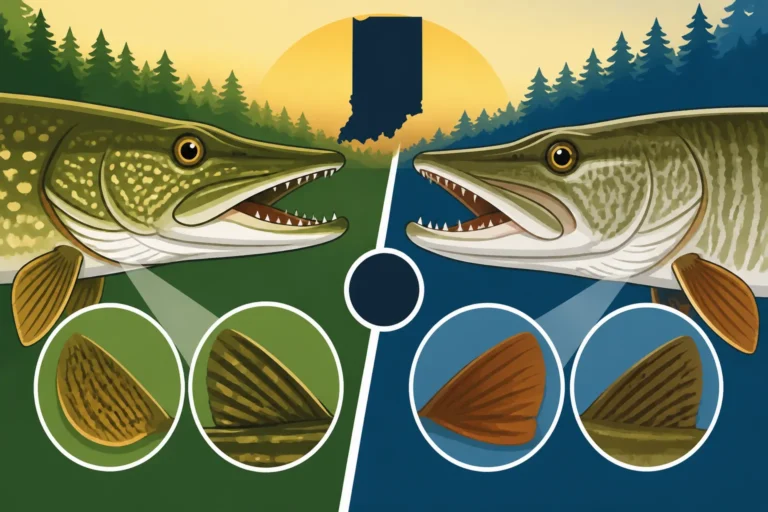
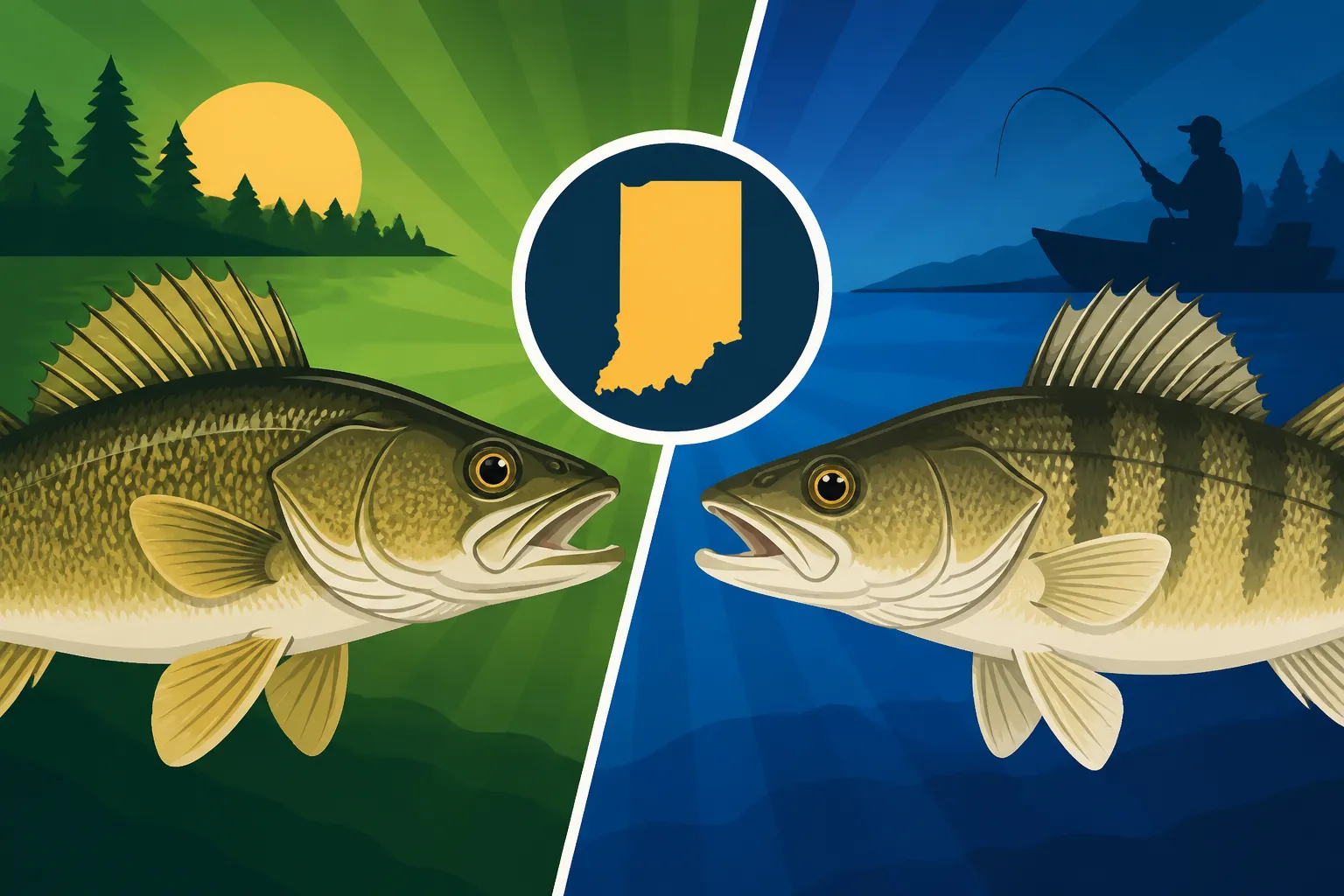
- Walleye: Look closely at the first (spiny) dorsal fin. A true walleye will almost always have a distinct, dark, often black, blotch or spot on the trailing edge of this fin. It's usually quite prominent and easy to see. Think of it as a signature mark.
- Saugeye: The saugeye, inheriting traits from its sauger parent, will typically lack this prominent dark spot on its first dorsal fin. Instead, the first dorsal fin of a saugeye (and sauger) is usually marked with distinct, evenly spaced dark spots or bars that run across the entire fin, rather than one solid blotch. Sometimes, a saugeye might have a very faint, almost ghostly blotch, but it won't be as dark and defined as on a walleye.
This single feature is so consistent that many experienced anglers don't even need to look at other characteristics. If you see that big, dark blotch on the first dorsal fin, it's a walleye. If you see evenly distributed spots or bars, and no distinct blotch, you're likely holding a saugeye.
Body Markings and Coloration
While both fish share a similar overall body shape, their patterns and hues can offer another strong clue, especially when the dorsal fin isn't immediately clear.
- Walleye: Walleye generally exhibit a more uniform coloration. Their backs are typically an even olive-green, gold, or brownish hue, fading smoothly into lighter sides and a white belly. While they might have some faint mottling, it's usually not distinct or patterned. The flanks are often fairly clean, without strong vertical bars or blotches.
- Saugeye: Saugeye often display a more mottled, blotchy pattern on their sides, reminiscent of camouflage. They typically have distinct, dark, saddle-like blotches or vertical bars running down their flanks, a direct inheritance from the sauger. These markings are usually much more pronounced than any subtle mottling you might see on a walleye. The overall body color of a saugeye can also appear more golden-brown or even yellowish, rather than the greener tones of many walleye. Saugeye Identification: Spotting a Walleye-Sauger Hybrid further elaborates on these patterns.
Imagine a walleye as having a sleek, somewhat understated paint job, while a saugeye has a more rugged, patterned, almost military-style finish. If you're comparing two fish side-by-side, these differences can be striking.
Pectoral Fin and Tail Fin
Don't forget to examine the other fins, as they provide additional, strong evidence. The tail fin, in particular, has a very characteristic feature on walleye.
- Walleye: The most distinctive feature of a walleye's tail fin (caudal fin) is the prominent, milky-white tip on the lower lobe. This white tip is usually quite broad and bright, almost glowing. It's another signature mark for the species. Their pectoral fins (the pair of fins behind the gills) are typically clear or only faintly marked.
- Saugeye: Saugeye generally lack that distinct white tip on the lower lobe of their tail fin. If there is any white, it's usually much smaller, less defined, or completely absent. Instead, the tail fin of a saugeye often has distinct dark spots or vertical bars, much like the first dorsal fin, which are inherited from the sauger. Similarly, the pectoral fins of a saugeye may also have noticeable spots or bars, rather than being clear.
This combination of the dorsal fin, body markings, and tail fin tips provides a robust set of identification criteria. It's rare for all these features to be ambiguous on a single fish.
Beyond Appearance: Habitat and Other Clues
Sometimes, despite carefully examining all the visual cues, you might still feel a little uncertain. This is where understanding their preferred habitats, stocking practices, and even some very subtle anatomical details can help solidify your identification. Remember, these fish coexist in many Indiana waters, so location isn't always a definitive tell, but it can certainly lean you one way or the other.
For anglers looking to improve their identification skills, it's worth investing in a quality fish handling net and a soft measuring board to ensure you can safely and accurately observe your catch without harming it. These items, and even specialty scales, are widely available on Amazon.
Habitat and Stocking Patterns
While both can inhabit similar areas, there are some tendencies that can hint at which species you're dealing with.
- Walleye: Walleye are often found in larger, clearer lakes and deep rivers. They thrive in waters with ample oxygen and tend to seek out rocky structures, gravel beds, and areas with submerged timber. Indiana has natural walleye populations in some of its northern glacial lakes and large river systems, and they are also stocked in many reservoirs throughout the state. If you're fishing a natural lake, especially in northern Indiana, your chances of catching a pure walleye might be higher.
- Saugeye: Saugeye are primarily found in waters where they have been actively stocked by fisheries management. They are particularly popular in many of Indiana's large flood control reservoirs, such as Monroe Lake, Patoka Lake, and Brookville Lake. Reservoirs Known for Trophy Saugeye are often places where these hardy hybrids thrive. Their ability to tolerate warmer and murkier conditions means they can do well in environments that might stress a pure walleye. If you're fishing one of these major reservoirs, especially south of State Road 26, you should definitely be on the lookout for saugeye.
Knowing the stocking history of the water you're fishing can be a powerful supplemental tool for identification. However, it's not foolproof, as some waters might contain both or have natural walleye populations alongside stocked saugeye.
Gill Cover Scales and Jaw Structure
These are much more subtle and often require a closer inspection, but they can be definitive if you're still in doubt after checking the fins and body.
- Walleye: A walleye's cheek (operculum or gill cover) is usually smooth to the touch. It might have a few scales, but generally, it's not a distinctly rough patch. Their mouths are fairly large, extending back to the middle of the eye, and they possess impressive canine teeth for grasping prey.
- Saugeye: The saugeye often has a rougher patch of scales on its cheek, sometimes covering a significant portion of the operculum. This scaled cheek is a trait inherited from the sauger parent. If you gently run your finger over the gill cover and feel a distinctly rough, sandpaper-like texture due to embedded scales, it's a very strong indicator of a saugeye or sauger. Their teeth are similar to walleye, but some anglers report a slightly less pronounced "canine" appearance, though this can be highly subjective.
While you might not always want to stick your finger in a fish's mouth to check teeth, checking the gill plate scales is a fairly safe and reliable method once you've landed the fish.
Comparison Table: Walleye vs. Saugeye at a Glance
To make things a bit easier when you're out on the water, here's a quick comparison of the key identification features:
| Feature | Walleye | Saugeye |
|---|---|---|
| First Dorsal Fin | Distinct, dark/black spot on trailing edge | Multiple distinct spots/bars across entire fin, NO single dark blotch |
| Body Color/Markings | Uniform olive-gold/green, smooth sides | Mottled, blotchy, distinct saddle-like bars/patches on sides |
| Caudal (Tail) Fin | Prominent, milky-white tip on lower lobe | Lacks distinct white tip, often spotted/barred throughout |
| Pectoral Fin | Generally clear, no prominent markings | Often has distinct spots or bars |
| Gill Cover (Cheek) | Smooth, few or no scales | Rough patch of scales on operculum (gill cover) |
| Typical Habitat | Clearer, cooler lakes & rivers; widespread | Reservoirs, often tolerates warmer/murkier water; stocked |
Remember this table, perhaps even save it to your phone or print a small waterproof copy to take with you. When you're standing lakeside, trying to make that quick identification, these points will be your best friends. What's the Difference Between Walleye and Saugeye? provides a similar, deeper dive into these comparisons.
Why Accurate Identification Matters for Anglers
Beyond simply knowing what you caught, accurate identification is crucial for responsible and legal fishing in Indiana. Fisheries management relies on specific regulations for different species to maintain healthy populations. Walleye and saugeye often have distinct size and bag limits, and mistakenly keeping the wrong species could lead to unwanted legal trouble.
For instance, you might be fishing a lake with a minimum length limit of 14 inches for walleye, but an 18-inch limit for saugeye. If you catch a 16-inch saugeye and mistake it for a walleye, you've just kept an undersized fish. Not only is this illegal, but it also impacts the conservation efforts for that particular species. Understanding these rules, which are detailed in guides like Indiana Fishing Regulations and Bag Limits Guide, is part of being a good steward of our natural resources.
Moreover, knowing what you've caught can help you refine your fishing techniques. While both respond to similar lures and baits, subtle differences in their behavior and preferred structure might lead you to adjust your approach for better success. For example, Best Lures for Saugeye Fishing might suggest different strategies than typical walleye approaches. Every fish you identify correctly helps you learn more about its habits, making you a more effective and knowledgeable angler.
Ultimately, whether you're chasing the classic walleye or the aggressive saugeye, Indiana offers fantastic opportunities for both. By taking the time to learn these identification tips, you'll not only avoid potential penalties but also gain a deeper appreciation for the unique characteristics of each species and enhance your overall fishing experience.
Disclaimer
This article is for general informational purposes only and does not constitute professional advice. Laws, prices and regulations vary by location and change over time. Consult a qualified professional for guidance on your specific situation.