Chinook Salmon vs Coho Salmon: Size and Color Differences
It's incredibly frustrating when you're out on the water, you've landed a beautiful salmon, and then you find yourself squinting, trying to figure out if it's a Chinook or a Coho. Both are fantastic sport fish, but knowing the difference can be key for understanding regulations, identifying patterns, or even just bragging rights! This guide is here to walk you through the distinct size and color differences that will help you confidently identify Chinook and Coho salmon in Indiana's Lake Michigan fishery.
The Kings and the Silvers: A General Overview of Chinook and Coho Salmon
When you're out fishing the vast expanse of Lake Michigan, especially along Indiana's scenic shoreline, you're likely targeting two of the most popular salmon species: Chinook and Coho. Both offer thrilling battles and make for excellent table fare, but they have distinct characteristics that make each a unique challenge and reward for anglers. Understanding these foundational differences can really elevate your fishing game, helping you tailor your approach to what's biting.
Chinook Salmon: The King of Lake Michigan
Chinook salmon, often affectionately called "Kings" by seasoned anglers, truly live up to their regal name. These are generally the largest and most powerful salmon you'll encounter in Lake Michigan. They grow fast and fight hard, often making long, powerful runs that will test your drag and your biceps. Catching a mature Chinook is often the pinnacle of a Lake Michigan fishing trip. They spend their lives primarily in the deeper, cooler waters of the lake, feeding voraciously on baitfish like alewives.
When a King hits, it's usually with an authoritative strike that leaves no doubt something substantial is on the other end. Their sheer size and strength mean that even a "smaller" Chinook can feel like a freight train. Many anglers specifically target Kings for the challenge they present, and the reward of a cooler full of impressive fillets. You'll often find dedicated anglers heading out at Best Time of Day to Catch Salmon on Lake Michigan in Indiana to pursue these formidable fish.
Coho Salmon: The Agile Silver Bullet
Coho salmon, known by many as "Silvers" due to their striking, chrome-bright scales when fresh from the lake, are celebrated for their acrobatic fights. While typically smaller than Chinooks, what they lack in brute strength, they more than make up for in aerial displays and thrilling headshakes. A Coho on the line is known for its jumps and erratic movements, making for an exciting and unpredictable battle that keeps anglers on their toes. They tend to spend more time closer to the surface than Kings, often making them a favorite target for both trollers and those fishing near structure.
Coho salmon are often among the first salmon to show up in the spring and can be found closer to shore, sometimes even from piers and breakwaters, especially during Coho Salmon Run Timing in Indiana. Their aggressive nature and willingness to strike a variety of lures make them a fantastic target for anglers of all skill levels. They're quick, they're feisty, and they provide an unforgettable experience on light to medium tackle.
Key Physical Distinctions: Size and Color That Set Them Apart
Alright, let's get down to the nitty-gritty of identification. When you've got a fish in the net, you want to know for sure what you've caught. While both are undeniably salmon, there are several key physical traits that, once you know them, make distinguishing a Chinook from a Coho relatively straightforward. It’s all about looking at the details.
Telling Them Apart by Mouth and Tail
This is probably the most reliable way to differentiate between a Chinook and a Coho, especially when they're fresh out of the water and before spawning colors really set in. Forget the general "silver" or "dark" descriptions for a moment; look inside their mouth and at their tail.
First, let's talk about the mouth and gums. Gently lift the gill plate or open the mouth of your salmon. A Chinook salmon will have a black gum line on its lower jaw, often extending all the way around the mouth. It's a very distinct feature. In contrast, a Coho salmon will have a white or very pale gum line along the lower jaw. This is a consistent and clear indicator, regardless of the fish's overall body color or condition. It's like a secret handshake that only salmon know!
Next, inspect the tail (caudal fin). A Chinook salmon will typically have spots on both the upper and lower lobes of its tail. These spots can sometimes be faint or worn, but they are generally present on both halves. On the other hand, a Coho salmon will usually have spots only on the upper lobe of its tail, with the lower lobe being mostly spot-free. The spots on a Coho's tail also tend to be smaller and more spread out compared to a Chinook's. Also, pay attention to the overall shape of the tail. Chinook tails often appear more deeply forked or at least V-shaped, while Coho tails can sometimes appear more squared off, though this is a less reliable indicator than the gum line and spot placement.
Body Shape and Overall Coloration
While the mouth and tail are your best bet, observing the overall body shape and coloration can also provide clues, especially with experience. However, remember that fish coloration can vary greatly depending on water conditions, diet, and proximity to spawning.
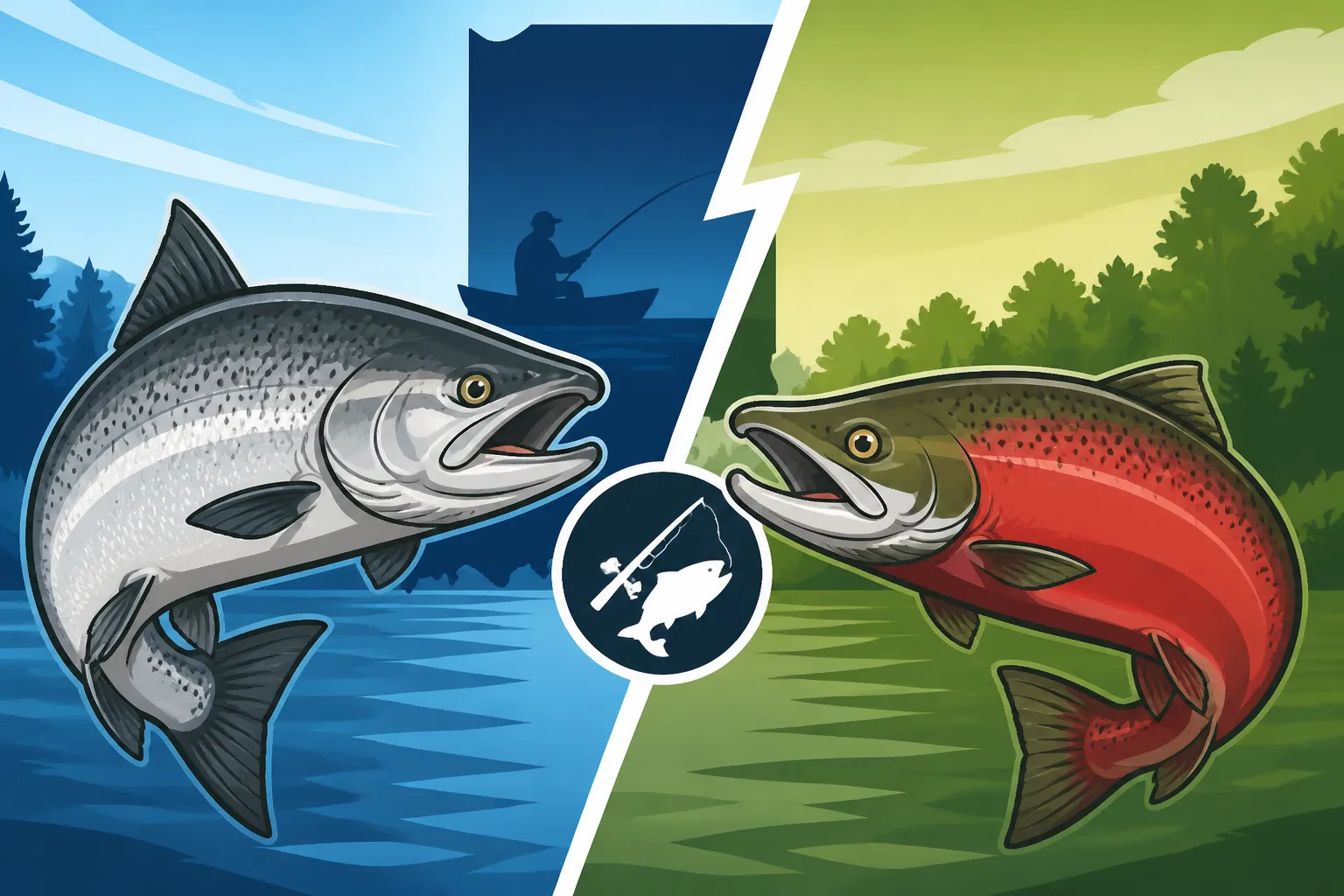
Chinook salmon generally have a more robust, heavy-bodied appearance. They are built for power and often look thicker through the shoulders. Their overall body color can range from a deep blue-green on the back to bright silver on the sides, fading to a white belly. During their spawning run, particularly as they enter rivers, their bodies will darken considerably, often taking on a bronze, dark green, or even almost black hue, and developing a reddish tint along their sides. The scales can become embedded and rough, giving them a very different look from their prime lake phase. This darkening is a natural part of their life cycle, and understanding it is key to identifying What Does a Coho Salmon Look Like During Spawning Season? versus a lake-bright fish.
Coho salmon, while still powerful, often have a more torpedo-shaped, slender, and streamlined body. They appear more athletic and less bulky than a King. Their lake phase coloration is typically a striking metallic blue or green on the back, with brilliant, almost chrome-like silver sides and a white belly. This makes them truly live up to their "Silver" moniker. As they prepare for spawning, Coho also undergo a dramatic transformation. They develop a pronounced reddish-pink stripe along their sides, often deepening to a vivid crimson, with their backs becoming dark green or olive. Their snouts can become more pronounced and hooked, especially in males.
Size Expectations in Indiana's Lake Michigan Fishery
Size is often the first thing an angler notices, and it's a good general indicator, though certainly not foolproof. Both species grow, but their growth rates and maximum sizes in Lake Michigan tend to be quite different.
Chinook salmon are the undisputed heavyweights of Lake Michigan. They commonly reach sizes of 15 to 25 pounds, and landing one in the 30-pound range is a real trophy for many anglers. Fish exceeding 40 pounds are caught regularly, and even larger specimens are certainly possible. The Indiana state record Chinook is a testament to their size potential in these waters. When you hook into something that feels like it's trying to pull your arm off, there's a good chance it's a King. They pack on weight quickly, feeding heavily on the abundant baitfish.
Coho salmon, while excellent fighters, generally run smaller than Chinooks. A typical Coho caught in Indiana waters will weigh between 5 and 12 pounds. Catching one in the 15 to 20-pound range is considered a fantastic catch and approaches trophy status for the species. While they may not reach the sheer mass of a King, their spirited fight, often involving acrobatic leaps and quick direction changes, makes every pound feel like a lot more! You might be able to find a selection of reels on platforms like Amazon that are perfectly suited for these energetic fish, offering the right balance of drag and line capacity.
Here's a quick comparison table to help solidify these distinctions:
| Feature | Chinook Salmon (King) | Coho Salmon (Silver) |
|---|---|---|
| Lower Gum Line | Black | White or Pale |
| Tail Spots | Spots on both upper and lower lobes | Spots primarily on upper lobe, lower lobe mostly clear |
| Body Shape | More robust, heavy-bodied, powerful | More streamlined, slender, agile |
| Lake Color | Deep blue-green/silver, fading to white belly | Metallic blue/green back, bright chrome sides, white belly |
| Spawning Color | Dark bronze/green/black, reddish tint on sides | Dark green/olive back, vivid red/pink stripe on sides |
| Average Size | 15-25 lbs (up to 40+ lbs) | 5-12 lbs (up to 20 lbs) |
| Fight Style | Long, powerful runs, deep dives | Acrobatic jumps, erratic surface runs, headshakes |
Angling Experience: How Their Differences Affect the Catch
Knowing the visual differences between Chinook and Coho salmon isn't just for identification; it actually impacts how you fish for them, what gear you use, and when and where you might find them. These distinct behaviors are what make targeting each species such a unique and rewarding challenge for Lake Michigan anglers. If you're looking to optimize your chances, understanding these nuances is crucial.
The Fight: Power vs. Agility
The battle you'll experience when hooking a Chinook versus a Coho is fundamentally different, and it's something every angler comes to appreciate. It's like comparing a heavyweight boxer to a nimble martial artist – both are formidable, but their tactics are distinct.
When a Chinook hits your line, be prepared for raw power. Their fight is characterized by long, screaming runs that spool off line at an alarming rate. They tend to stay deep, pulling hard and making powerful surges. You'll often feel like you're trying to stop a runaway freight train. The fight is typically a test of endurance, both for you and your gear. Strong rods with backbone, reliable reels with smooth drag, and durable line are essential. You might even want to look at heavy-duty gear options available on Amazon to handle these powerful fish. If you're Trolling Gear Setup for Indiana's Lake Michigan Salmon, ensure your reels are properly set and your drag is butter-smooth, because a King will expose any weakness in your setup.
Coho salmon, on the other hand, are celebrated for their acrobatic displays. When you hook a Coho, don't be surprised if it immediately launches itself out of the water, shaking its head violently, trying to throw the hook. They are notorious for their aerial antics, quick changes in direction, and fast, darting runs that keep you guessing. Their fight is more about agility and excitement, demanding quicker reflexes and precise rod work to keep tension during their jumps. While they might not pull with the sustained force of a Chinook, their unpredictable nature makes every catch a heart-pounding experience. Lighter tackle can make these fights even more exhilarating.
Preferred Baits and Lures
Because of their differing feeding habits and how they patrol the water column, Chinooks and Cohos often respond better to different presentations. It’s not a hard-and-fast rule, as a hungry salmon will hit almost anything, but there are definitely tendencies.
For Chinook salmon, especially the bigger ones, larger presentations often work best. They are opportunistic predators that key in on baitfish like alewives and smelt. Large spoons, like those from familiar brands, in chrome, green, blue, or silver patterns are highly effective. Meat rigs, which often involve a strip of cut bait (like herring or alewife) fished behind a flasher or dodger, are also deadly for Kings. J-plugs and magnum crankbaits that mimic larger baitfish can also entice strikes. When targeting Kings, anglers are often focused on Chinook Salmon Fishing on Indiana's Lake Michigan Shore, where these larger baits are standard.
Coho salmon can be a bit more aggressive and less picky, often hitting a wider variety of baits. Smaller spoons, dodgers and flies, and small crankbaits are perennial favorites. Bright, flashy colors like orange, pink, and chartreuse are often particularly effective for Coho. They also respond very well to bright-colored dodgers or flashers paired with a small fly or squid imitation. Since Cohos often feed higher in the water column, shallower presentations or trolling techniques that keep lures closer to the surface can be very productive. They're also more frequently caught by pier anglers using spawn sacs or casting spoons.
When and Where to Find Them in Indiana
While both salmon species inhabit Lake Michigan, their preferred habitats and seasonal movements can differ, leading anglers to specific locations or depths at certain times of the year. Understanding these patterns is key to successful Fall Salmon Run Timing on Lake Michigan in Indiana.
Chinook salmon tend to prefer deeper, cooler water throughout much of the year. In the spring and early summer, they might be found deeper offshore, following baitfish schools. As summer progresses, they often hold around thermoclines. However, come late summer and fall, they begin their migration towards spawning grounds. This is when they move closer to shore and into river mouths, especially those along Indiana's coast. Many anglers will spend countless hours fishing for them around the port areas and river channels of cities like Michigan City and East Chicago. Reading Water Clarity to Find Chinook Salmon in Fall becomes critical during this period.
Coho salmon are often the earliest arrivals in the spring, frequently found closer to shore, sometimes even within casting distance of piers and breakwaters. They are known for their strong spring and early summer bites. As the water warms, they might move a bit deeper, but generally remain more accessible than Kings. Their fall run also brings them close to shore and into rivers, often overlapping with the Chinook run but sometimes preceding it slightly or using different sections of the rivers. The good news for anglers is that during the peak fall run, you can often find both species in the same general areas. However, paying attention to the specific patterns of Best Salmon Fishing Spots on Lake Michigan in Indiana for each species can drastically improve your success.
Culinary Delights: What to Expect from Your Catch
Beyond the thrill of the catch and the challenge of identification, one of the biggest rewards of salmon fishing is bringing home some delicious fillets. Both Chinook and Coho salmon are highly regarded as table fare, but like fine wines, they offer slightly different experiences when it comes to flavor and texture. Knowing what to expect can help you decide how to prepare your catch for the ultimate culinary experience.
Flavor and Texture Differences
The taste and texture of salmon can be influenced by their diet, age, and proximity to spawning. Generally, salmon caught in the open lake, especially before their spawning run truly begins, will offer the best eating quality.
Chinook salmon, especially the larger ones, are renowned for their rich, buttery flavor and firm, flaky texture. Their flesh is typically a deep orange-red, indicating a high fat content. This higher fat content contributes to their incredibly moist and succulent meat, making them a favorite for grilling, baking, or smoking. The richness of a fresh King fillet is truly something special, and it holds up well to robust seasonings. When you're dreaming of a substantial, satisfying salmon meal, a Chinook is often the ideal choice. The richness of the fat marbles beautifully through the flesh, making it incredibly tender and flavorful.
Coho salmon tend to have a milder, more delicate flavor compared to Chinooks. Their flesh is typically a vibrant reddish-orange, and while still rich in beneficial omega-3s, their fat content is usually a bit lower than a prime King. This results in a slightly firmer, yet still flaky, texture. Coho salmon is incredibly versatile in the kitchen, its milder profile making it suitable for a wider range of preparations that might be overpowered by the richness of a Chinook. It's fantastic baked, pan-seared, or even used in lighter dishes like salads or wraps. If you prefer a less intense salmon flavor, or if you're looking to let other ingredients shine in your dish, Coho is an excellent option.
Handling Your Catch for the Best Table Fare
No matter which species you've caught, proper handling of your salmon from the moment it comes aboard is paramount to ensuring the best possible table quality. A poorly handled fish, regardless of species, will never taste as good as one that's been cared for correctly.
The absolute first step is to bleed your fish immediately after landing it. This is a game-changer for flavor and extends the shelf life of the meat. Simply cut the gills or sever the artery just below the gills, and allow the fish to bleed out in a bucket of water or over the side of the boat. The goal is to remove as much blood as possible from the flesh. You'll notice the meat looks much cleaner and brighter if it's properly bled.
Once bled, get your fish on ice as quickly as possible. A cooler full of ice (or an ice/water slurry) is essential. Keeping the fish cold slows down spoilage and bacterial growth, preserving the firm texture and fresh taste. Don't just toss it in a warm cooler; pack it thoroughly with ice, making sure the ice is in contact with as much of the fish as possible. A good quality cooler can be a great investment, and you can find many highly-rated options on Amazon that will keep your catch perfectly chilled. This attention to detail from the moment of capture to the moment it hits your plate will ensure that whether it's a mighty Chinook or an agile Coho, your Indiana salmon fishing experience culminates in a truly delicious meal.
Disclaimer
This article is for general informational purposes only and does not constitute professional advice. Laws, prices and regulations vary by location and change over time. Consult a qualified professional for guidance on your specific situation.