Channel Catfish Identification: Spots and Forked Tail
It can be incredibly frustrating when you're out on the water, you reel in a great fish, and then you're left scratching your head, wondering exactly what kind of catfish you've just landed. Indiana waters are home to several catfish species, and while they might look similar at first glance, each has its own distinct characteristics. This guide is here to cut through the confusion and help you confidently identify a Channel Catfish every time, focusing on those tell-tale spots and that famous forked tail.
The Hallmarks of an Indiana Channel Catfish
When you're targeting catfish in Indiana, the Channel Catfish is often the star of the show. They're widespread, feisty, and make for excellent table fare. But how do you truly know it's a channel cat and not a blue cat or a flathead? It all comes down to paying close attention to a few key physical attributes.
Distinctive Coloration and Spotting
One of the most immediate identifiers for a Channel Catfish, especially a younger one, is its coloration and the presence of spots. Picture this: you've just pulled a fish from a clear, flowing river. What color is it?
Channel cats can display a fascinating range of colors depending on their environment and age. Typically, you'll find them sporting an olive-green to a steely blue-gray on their back and upper sides. This coloration often transitions to a lighter, silvery hue along their flanks, culminating in a pristine white to creamy yellow belly. Fish caught in muddy, stained waters might appear darker, almost blackish, while those from clearer, sandy bottoms could be lighter and more iridescent.
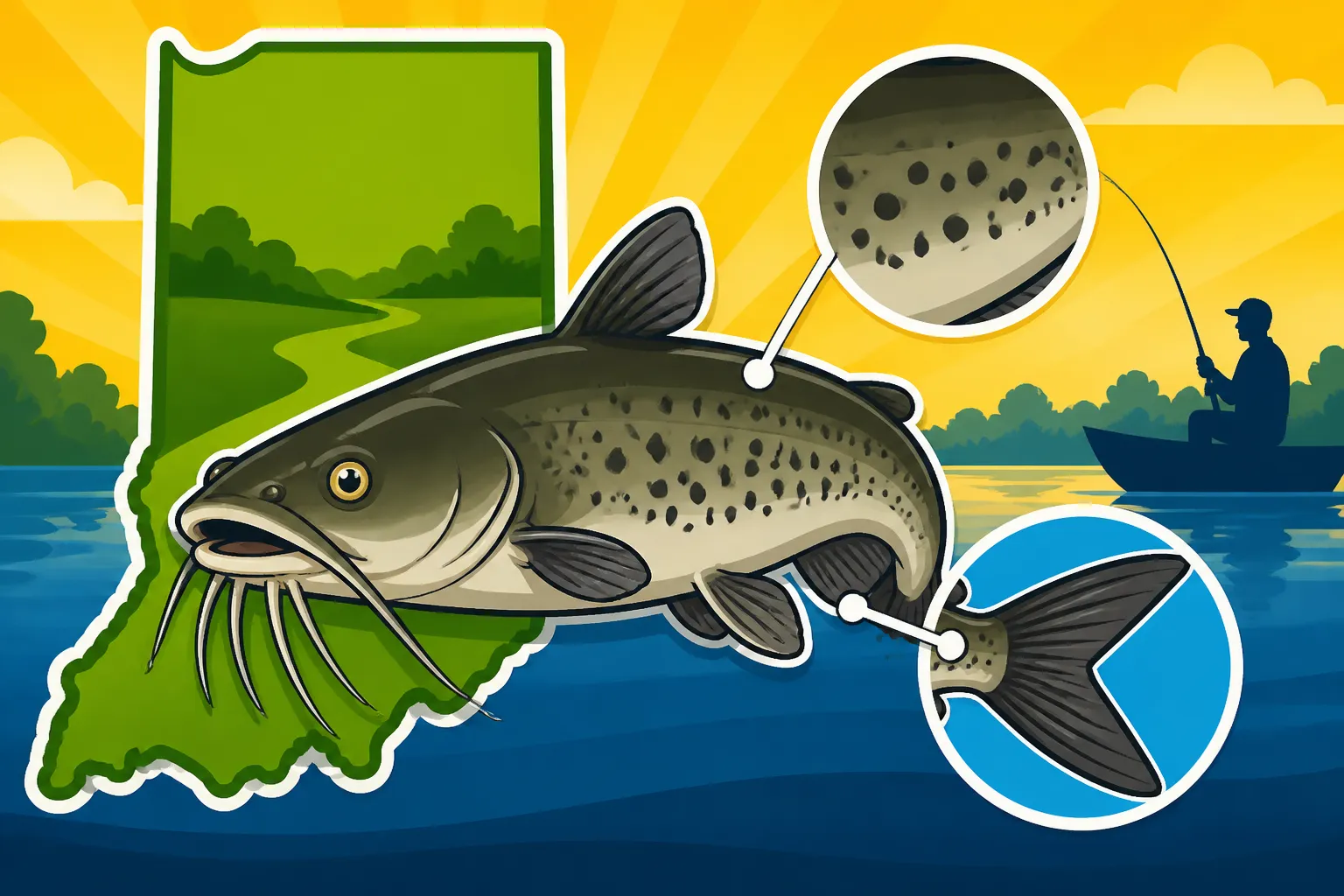
But the real giveaway, and what gives them part of their name, are those irregular dark spots. These spots are often small, round, and scattered randomly across their sides, sometimes extending onto their fins. Think of them like nature's freckles. It’s important to note, however, that these spots tend to be more pronounced and vibrant on younger, smaller Channel Catfish. As the fish grows older and larger, these spots can fade significantly, sometimes disappearing almost entirely on very mature specimens. So, if you catch a big, old channel cat without many spots, don't immediately rule it out – it just means it's lived a long, full life! You can often find great visual guides and comparison charts for identifying these color patterns online, or even in dedicated field guides available on platforms like Amazon.
The Signature Forked Tail
If the spots are the Channel Cat's freckles, then its tail is its unmistakable signature. This is arguably the most defining characteristic that sets it apart from many other catfish species you'll encounter in Indiana.
The Channel Catfish possesses a deeply forked caudal fin, or tail. Imagine a "V" shape, clear and pronounced, almost like a swallow's tail. This deeply indented fin is a consistent feature across all ages and sizes of Channel Catfish. When you hold the fish, you'll see that the upper and lower lobes of the tail fin are distinctly separated by a deep, sharp notch. This isn't just a minor indentation; it's a fundamental split in the fin.
This deeply forked tail isn't just for show; it's a functional adaptation. It allows the Channel Catfish to be a swift and agile swimmer, capable of darting after prey and navigating currents with ease. Compare this to the tails of other common Indiana catfish: Flathead Catfish, for instance, have a much straighter, almost square or slightly notched tail, appearing much less elegant. Blue Catfish also have a forked tail, but it's generally less deeply incised and more symmetrical than that of a Channel Catfish. The clarity of this distinction makes the tail fin a primary point of identification, often visible even before you've fully landed the fish. If you're wondering Channel Catfish Identification: Spots and Forked Tail are the best ways to tell.
Other Key Identification Features
While the spots and the deeply forked tail are your primary clues, a true catfish connoisseur knows to look at the whole picture. There are several other subtle, yet crucial, features that can help confirm your Channel Catfish identification, especially when you're dealing with older, less spotted fish or those from murky waters.
Barbels: Nature's Whiskers
Every catfish has barbels, those whisker-like protrusions around their mouth, but their number and placement can offer additional clues to identification. Channel Catfish typically have eight barbels:
- Four chin barbels: These are located on the underside of their chin.
- Two maxillary barbels: These are the longest ones, extending from the corners of their mouth, resembling actual whiskers.
- Two nasal barbels: These are smaller and located near their nostrils.
These barbels are packed with taste buds and are incredibly sensitive, acting like mobile sensory organs. They allow the Channel Catfish to "taste" and "feel" its way through dark or turbid waters, helping them locate food along the bottom or hidden in vegetation. They are essentially their primary hunting tools in low-visibility conditions. The color of these barbels can also be helpful; Channel Catfish usually have barbels that are lighter in color than their body, often whitish or grayish, which contrasts with the darker, sometimes black, barbels of bullheads.
Anal Fin Shape and Ray Count
This might sound like a detail only a biologist would care about, but trust me, for a serious angler, the anal fin can be a definitive identifier, especially when trying to differentiate a Channel Cat from a Blue Catfish.
The anal fin is the fin located on the underside of the fish, between the anus and the tail fin. For a Channel Catfish, this fin has a distinctive rounded edge. It's not perfectly straight or angular; rather, it has a gentle curve to its outer margin.
Even more specifically, anglers often count the rays within this fin. Channel Catfish typically have between 24 and 29 rays in their anal fin. This number is usually what separates them definitively from the Blue Catfish, which has a straighter-edged anal fin and a higher ray count, generally 30 or more. While it might take a bit of practice to accurately count the rays on a wriggling fish, it's a technique that provides an almost foolproof identification. You can usually see the individual rays by fanning out the fin gently. This is a subtle but powerful piece of information, especially when you're looking at a fish that might have faded spots or other ambiguous features. Knowing how to count these rays can save you a headache later, especially if you're fishing areas where different species have different regulations.
Body Shape and Size
Channel Catfish have a relatively slender and streamlined body compared to their heftier cousins. They are built for speed and agility in rivers and large lakes. Their body tapers gracefully from head to tail, giving them an almost torpedo-like appearance.
In Indiana waters, Channel Catfish are commonly caught in the 12-to-24-inch range, with many anglers landing fish around 1-5 pounds. However, they can grow significantly larger! It's not uncommon to hear tales of Channel Cats pushing into the 30-inch mark and weighing over 15 pounds, especially in well-managed lakes and rivers. While these trophy-sized fish are less common, they are definitely out there, putting up an incredible fight. How Big Do Channel Catfish Get in Indiana? delves deeper into their growth potential. The average size you'll encounter will largely depend on the specific body of water you're fishing and the available forage.
Distinguishing Channel Cats from Similar Species in Indiana
Indiana is home to more than just Channel Catfish. You'll also find Blue Catfish, Flathead Catfish, and various species of bullheads. Knowing the subtle differences between these can prevent misidentification, which is crucial for adhering to regulations and understanding the fish you're targeting.
Channel Catfish vs. Blue Catfish
This is perhaps the most common identification challenge for anglers in certain Indiana waters, especially the larger rivers and reservoirs where both species thrive. Both have forked tails, so that's where the deeper dive into specifics becomes critical.
| Feature | Channel Catfish | Blue Catfish |
|---|---|---|
| Tail Fin | Deeply forked, often V-shaped | Forked, but less deeply incised, more symmetrical |
| Anal Fin | Rounded outer edge, 24-29 rays | Straight outer edge, 30-35+ rays |
| Spots | Present, especially on younger fish; fade with age | Absent or very rare (usually only very young fish) |
| Body Color | Olive-green to blue-gray, often mottled | Steel blue to slate gray, silvery belly |
| Head Shape | More rounded snout | More humped head, prominent dorsal hump |
The anal fin ray count is your ultimate tie-breaker here. If you're counting 30 or more rays with a straight edge, you've likely got a Blue Catfish. If it's rounded and has fewer rays, it's a Channel Cat. While Blue Cats are known to grow much larger than Channel Cats, size alone isn't always a reliable identifier for smaller fish. Knowing these differences is important for adhering to Indiana Fishing Regulations and Bag Limits Guide which may have different rules for different species.
Channel Catfish vs. Flathead Catfish
Flatheads are a completely different beast compared to channels and blues. Their unique appearance makes them relatively easier to distinguish once you know what to look for.
- Head Shape: The Flathead Catfish lives up to its name with a distinctively broad, flattened head. Imagine it like a shovel. A Channel Cat's head is more rounded and proportional to its body.
- Jaw: A Flathead's lower jaw protrudes significantly beyond its upper jaw, giving it a somewhat grumpy, underbite appearance. Channel Catfish have jaws that are more even.
- Tail Fin: This is a huge difference. Flatheads have a square or only slightly notched tail fin, almost paddle-shaped, completely lacking the deep fork of a Channel Cat.
- Coloration: Flatheads are typically mottled brown and yellow, with dark brown or black patterns, allowing them to camouflage effectively in rocky or woody cover. Channel Cats are more uniformly colored, as we've discussed.
- Eyes: Flatheads have smaller eyes relative to their head size, often appearing to be set higher up on their flattened head.
If you reel in a fish with a flat head, a jutting jaw, and a square tail, you can be confident it's a Flathead Catfish, not a Channel.
Channel Catfish vs. Bullheads (Black, Brown, Yellow)
Bullheads are the smaller, often overlooked members of the catfish family, but they are very common in Indiana ponds, lakes, and slower rivers. Distinguishing them from Channel Catfish is usually quite straightforward due to their significant size difference and distinct tail.
- Size: Bullheads are generally much smaller than adult Channel Catfish, rarely exceeding 15-18 inches, with most catches being under a foot long.
- Tail Fin: This is the most obvious difference. Bullheads have a rounded or very slightly notched tail fin, absolutely not deeply forked like a Channel Cat.
- Body Shape: Bullheads are stockier, chunkier fish, often appearing more "stubby" than the streamlined Channel Cat.
- Barbels: While both have eight barbels, bullheads typically have dark, often black, chin barbels, contrasting with the lighter barbels of the Channel Cat.
- Skin: Bullheads often have a somewhat rougher, slimier feel to their skin compared to the smoother skin of a Channel Cat.
If you catch a small, stocky catfish with a rounded tail, it's almost certainly a bullhead. They're often fantastic for beginner anglers, but they aren't the Channel Cat you might be hoping for.
Why Accurate Identification Matters
You might think, "A fish is a fish, right?" But for a responsible and successful angler, accurate fish identification is far from a trivial matter. It directly impacts your adherence to fishing laws and can significantly boost your angling success.
Compliance with Regulations
This is the big one. State fishing regulations, set by the Indiana Department of Natural Resources (DNR), are in place to protect fish populations and ensure sustainable fishing for everyone. These regulations often differ between species. For instance, there might be specific size limits (minimum or slot limits) or daily bag limits that apply to Channel Catfish but not to Flathead Catfish, or vice-versa.
Imagine you're fishing a popular reservoir, and you pull in a large catfish. If you mistake a small Blue Catfish for a Channel Catfish, and there's a different length or creel limit for each, you could unintentionally violate the law. Fishing without proper identification could lead to hefty fines, confiscation of your catch, and even loss of fishing privileges. This is why it's so important to be absolutely sure before you keep a fish. Always double-check the current Indiana Fishing Regulations and Bag Limits Guide before heading out, perhaps even keeping a small laminated guide or an app on your phone. Even experienced anglers sometimes need a refresher, and ignorance of the law is never an excuse.
Enhancing Your Fishing Success
Beyond legality, understanding the specific species you're encountering dramatically improves your ability to catch more fish, and more of the right fish. Different species of catfish have different preferred habitats, feeding behaviors, and responses to various baits and techniques.
- Bait and Lure Selection: Channel Catfish are primarily opportunistic omnivores, known to hit everything from cut bait and stink baits to worms, shrimp, and even artificial lures like jigs and crankbaits. In contrast, Flathead Catfish are almost exclusively predators, preferring live bait. Blue Catfish, especially larger ones, also lean towards live or fresh cut bait. If you're using a hot dog when a flathead only wants a live bluegill, you'll be out of luck! For instance, if you're targeting Channel Cats, knowing their diet helps you pick the Best Bait for Channel Catfish in Indiana Rivers. You can find a huge variety of specialized catfish baits and rigs on Amazon to try out.
- Technique Selection: Understanding the species also guides your fishing technique. Channel Cats are often caught bottom fishing, but they'll also cruise in the middle and upper water columns, especially during low light. Catfish Bottom Fishing Techniques are popular for them. Flatheads prefer heavy cover like fallen trees and log jams, and often require a more patient, ambush-style approach. Blue Cats can be found in deep channels or vast open water.
- Timing and Location: Knowing what species lives where and when they are most active is key. Channel Cats are famously active at night, while Flatheads are also nocturnal. How to Catch Catfish at Night is a technique often employed. Understanding these nuances helps you decide where to cast, at what depth, and even what time of day to be on the water. For a comprehensive overview of how to target these amazing fish, check out Channel Catfish Fishing in Indiana: The Complete Guide.
By confidently identifying the fish you're catching, you're not just being a responsible angler; you're becoming a more effective one. It allows you to refine your approach, experiment with the right gear, and ultimately enjoy a more productive and rewarding fishing experience in Indiana's abundant waters.
Disclaimer
This article is for general informational purposes only and does not constitute professional advice. Laws, prices and regulations vary by location and change over time. Consult a qualified professional for guidance on your specific situation.