Chinook Salmon Fishing on Indiana’s Lake Michigan Shore
The thrill of Lake Michigan fishing can be truly exhilarating, but for many anglers, the sheer vastness of the water and the powerful, elusive nature of its inhabitants can feel overwhelming. You might find yourself staring out at the horizon, wondering where to even begin in your quest for one of the lake's most prized catches: the magnificent Chinook salmon. This guide is here to demystify the process, offering you a comprehensive look at how to successfully pursue Chinook salmon right off Indiana's stunning Lake Michigan shoreline, turning that initial intimidation into triumphant confidence.
The Majestic Chinook: Understanding Lake Michigan's King Salmon
There's a reason they call them "King Salmon." Chinook salmon are one of Lake Michigan's most sought-after species, renowned for their incredible size, strength, and the relentless fight they put up once hooked. Understanding these powerful fish, from how to identify them to their seasonal behaviors, is your first step toward a successful outing on Indiana's big lake.
Identifying Chinook Salmon: What to Look For
When you pull a fish out of Lake Michigan, especially during the busy fall run, it can sometimes be a quick moment of confusion trying to tell exactly what you've got. Chinook salmon have some distinct characteristics that help set them apart. Look for their silvery sides, a slightly forked tail, and small, irregular black spots covering their back and both lobes of their tail fin. Their mouth typically has a black gum line, which is a key identifier when distinguishing them from other salmon species like Coho. You can learn more about differentiating them by checking out our guide on Chinook vs Coho Salmon: Key Differences for Anglers.
These kings of the lake can grow quite large, making them an exciting challenge for any angler. While smaller "juvenile" Chinook might be caught throughout the year, mature fish returning to spawn in the fall can easily exceed 20 pounds, with some reaching upwards of 30 or even 40 pounds. Imagine the sheer power of a fish that size at the end of your line! Their muscular bodies and broad tails are built for speed and endurance, ensuring a memorable battle.
Many anglers dream of catching a true trophy Chinook, and Indiana's waters have certainly produced some giants over the years. Understanding these physical traits not only helps you identify your catch but also appreciate the impressive fish you're targeting. It’s not just about the fight; it’s about recognizing the incredible creature you’ve managed to outsmart.
Chinook's Life Cycle and Habits in Lake Michigan
Chinook salmon were introduced to Lake Michigan decades ago to help control invasive alewife populations, and they've since established a thriving fishery. These fish typically spend 3-4 years in the open waters of the lake, feeding voraciously on smaller baitfish like alewives and smelt. During this time, they grow rapidly, building up the size and strength that make them such formidable sport fish.
Their life culminates in a dramatic spawning migration. Starting in late summer and intensifying through fall, mature Chinook salmon begin to stage near river mouths and harbor entrances along the Indiana shoreline. They undergo significant physical changes, becoming darker in color, and for males, developing a pronounced kype (hooked jaw). This is when they are most accessible to shore and pier anglers, as they gather before making their final push upstream to reproduce. This annual event is a prime time for anglers to target them.
After spawning, adult Chinook salmon complete their life cycle and perish, making their journey to reproduce a truly epic final act. This natural cycle means that while the open lake fishery offers opportunities year-round, the fall run along the shore is a specific, high-intensity period driven by their biological imperative. Knowing this helps you understand why timing and location are so critical for success.
Mastering the Hunt: When and Where to Find Chinook in Indiana
Catching Chinook salmon on Lake Michigan isn't just about having the right gear; it's crucially about being in the right place at the right time. The vastness of Lake Michigan means you need to narrow down your focus, especially when targeting these migratory fish.
Peak Seasons: Targeting Chinook Year-Round (and the Fall Run)
While the fall run gets all the glory, Chinook salmon can actually be caught in Lake Michigan throughout the year. In the spring and early summer, offshore boat anglers target them in deeper, cooler waters, often far from shore. They're actively feeding then, sometimes in depths of 50 to 150 feet or more, following temperature breaks and schools of baitfish. This can be fantastic fishing, but it typically requires specialized boats and trolling setups.
As summer progresses and water temperatures begin to cool slightly, Chinook start to move closer to shore, particularly towards river mouths and harbors. This pre-spawn staging begins in late August and builds through September and October, becoming what everyone eagerly anticipates: the famous fall salmon run. During this time, thousands of fish congregate, offering incredible opportunities for both boat and shore anglers. For a detailed look at this exciting period, check out our guide on Fall Salmon Run Fishing on Lake Michigan in Indiana.
The fall run is arguably the most exciting time for many Indiana anglers, as fish become accessible from piers, breakwalls, and smaller boats. The aggressive nature of these pre-spawn fish, combined with their sheer numbers, makes for an unforgettable experience. However, always remember that their behavior is tied to water temperature and current, so staying flexible and monitoring conditions is key.
Here’s a general seasonal breakdown to help you plan your Chinook pursuit:
| Season | Typical Location | Primary Method | Key Considerations |
|---|---|---|---|
| Spring | Deeper offshore waters (30-100+ feet) | Trolling with spoons, flies, plugs | Following baitfish, water temp breaks |
| Early Summer | Deeper offshore waters, thermal breaks | Trolling | Fish disperse, may be harder to locate |
| Late Summer | Beginning to move closer to river mouths/harbors | Trolling, some pier/shore casting starts | Pre-spawn staging, looking for cooler water |
| Fall | River mouths, harbors, piers, nearshore | Trolling, casting spoons/plugs, skein | Peak spawning run, aggressive, accessible fish |
| Winter | Less common, deep offshore (if accessible) | Limited trolling, very challenging | Primarily target other species like steelhead |
Prime Indiana Hotspots and Access Points
Indiana's Lake Michigan shoreline, though relatively short, offers some fantastic opportunities for Chinook salmon fishing. The key is to focus on areas where these migratory fish naturally congregate. Harbors, river mouths, and the protective breakwalls surrounding them are absolute magnets for staging salmon, especially during the fall run.
Michigan City is often considered a prime destination, with its bustling harbor and access to Trail Creek. Anglers can fish from the main pier, the Lighthouse pier, or launch boats into the lake. Further west, the harbors of East Chicago, Hammond, and Portage also draw in significant numbers of salmon. These areas offer both boat ramps for those with vessels and excellent shore or pier fishing opportunities for anglers without a boat. For specific spot recommendations, our guide on Best Salmon Fishing Spots on Lake Michigan in Indiana is an invaluable resource.
Even if you don't have a boat, don't underestimate the potential of fishing from the piers and breakwalls. Heavy casting gear, patience, and the right bait or lure can yield incredible results, especially during peak migration periods. These public access points make the thrill of Lake Michigan Chinook fishing accessible to everyone. Just be sure to check local regulations for each pier or harbor, as some rules might vary slightly.
Reading Lake Michigan's Waters
Lake Michigan is a vast and dynamic environment, and successful Chinook fishing often comes down to understanding the subtle cues the water provides. Water temperature is arguably the most critical factor for salmon. Chinook prefer cooler water, generally in the 45-60°F range. During hotter months, this means they'll seek out deeper thermoclines, while in the fall, cooler nearshore waters draw them in. Look for "temperature breaks" where cooler water meets warmer water, as these can concentrate baitfish and, in turn, salmon.
Currents also play a significant role, especially near river mouths and harbors. Salmon will often orient themselves into the current, waiting for an opportune moment to move upstream. Strong currents can also carry baitfish and present a natural feeding lane. Additionally, keep an eye on water clarity. While Chinook aren't as finicky as some species, extremely turbid water from heavy rains can sometimes push them out or make them harder to entice.
Finally, observing signs of baitfish, like alewives or smelt, is crucial. If you see baitfish on your fish finder or notice birds diving, chances are larger predators like Chinook salmon are not far behind. Paying attention to these environmental factors will significantly increase your chances of locating and catching these magnificent fish.
Arming Yourself: Gear and Techniques for Indiana Chinook
Chinook salmon are powerful fish that demand robust gear and specific techniques. Whether you're trolling from a boat or casting from a pier, having the right setup is paramount to turning a hook-up into a landed fish.
Trolling Strategies from the Boat
For boat anglers, trolling is the predominant method for targeting Chinook salmon in Lake Michigan. This involves using a boat to pull lures through the water at specific depths and speeds, mimicking baitfish. Downriggers are indispensable tools for this, allowing you to present lures precisely at the depth where salmon are feeding, often deep below the surface. They typically consist of a heavy cannonball weight, a cable, and a release clip that holds your fishing line. When a fish strikes, your line pops free, and you fight the fish directly. For a deeper dive, check out Downrigger Basics for Indiana Lake Michigan Anglers.
Planer boards are another key trolling accessory, especially for spreading multiple lines horizontally away from the boat, covering a wider swath of water. This is incredibly effective when fish are scattered or feeding in a wider lane. Combining downriggers for vertical depth control and planer boards for horizontal spread allows you to efficiently search large areas of water. You can find a wide array of specialized trolling gear, from rods to downrigger weights, on platforms like Amazon.
When it comes to lures, a variety work well for Chinook. Large spoons, often in flashy colors like silver, blue, green, or chartreuse, are perennial favorites. Plug baits that mimic wounded baitfish, and flasher/fly combinations (where a large attractor, the flasher, precedes a smaller fly lure) are also highly effective. Experiment with different colors and patterns, as salmon can be surprisingly selective on any given day. Typical trolling speeds for Chinook range from 2.0 to 3.5 miles per hour, but again, letting the fish tell you what they prefer is key. For more in-depth setup information, refer to Trolling Gear Setup for Indiana's Lake Michigan Salmon.
Shore and Pier Fishing Tactics for King Salmon
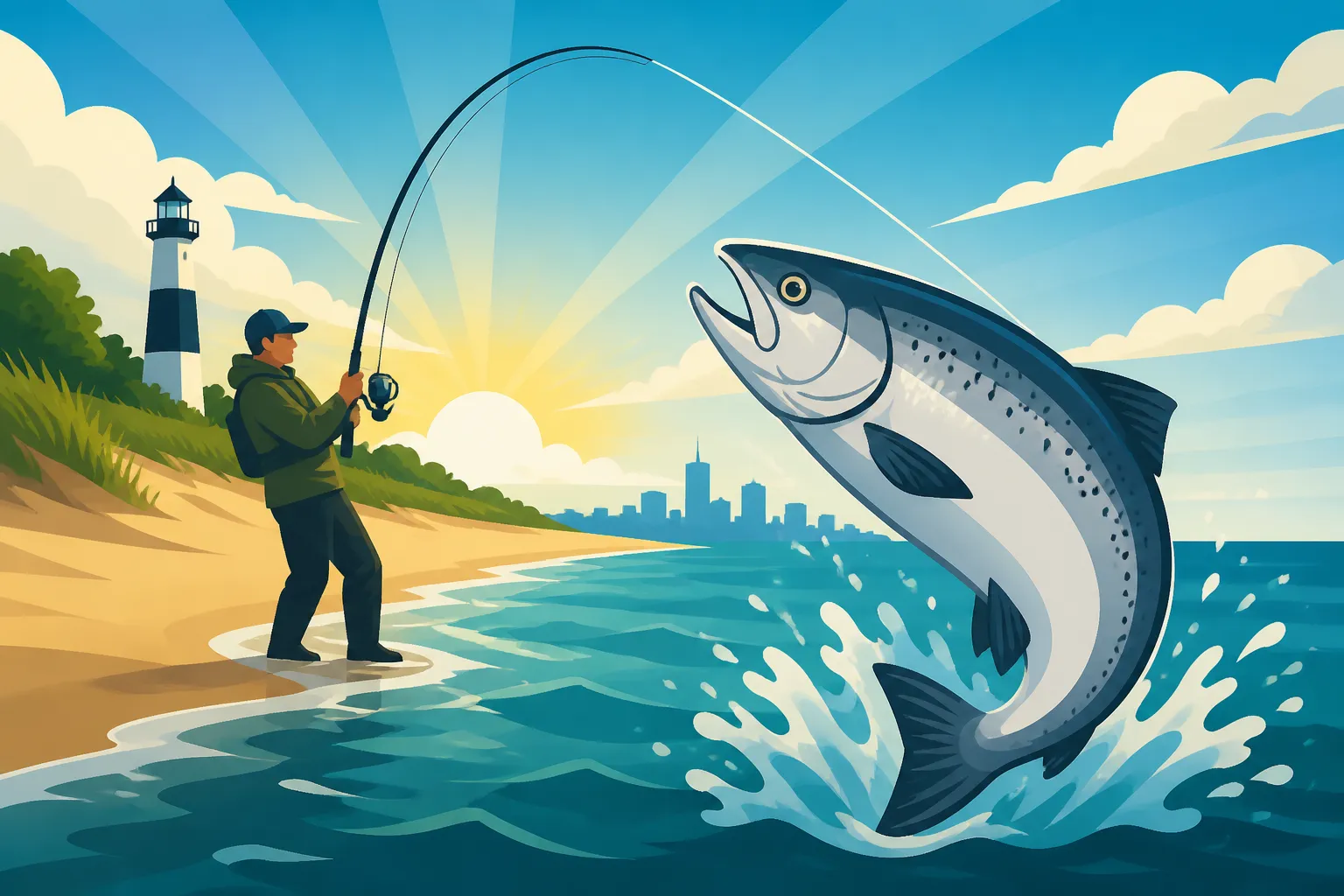
Not everyone has a boat equipped for Lake Michigan, and that's perfectly fine! Shore and pier fishing for Chinook salmon can be incredibly productive, especially during the peak fall run when fish gather close to river mouths and harbor entrances. The key here is casting power and durability. You'll need a long, heavy-action rod – think 9 to 12 feet – paired with a robust spinning reel spooled with strong braided line, typically 20-30 pound test, often with a fluorocarbon leader. Our guide on Best Rods for Trolling Lake Michigan Salmon might focus on boat rods, but the principles of strong, durable gear apply equally to heavy pier setups.
When fishing from shore or a pier, spoons are still king. Larger casting spoons (1/2 to 1 oz or more) in metallic finishes or bright colors like orange, chartreuse, or firetiger are excellent choices. Cast them out as far as you can and retrieve them with a steady, moderate retrieve, perhaps adding a subtle twitch here and there. Many anglers also find success using fresh or cured salmon skein (eggs) under a bobber or fished on the bottom, especially when fish are staging just outside river mouths.
Timing is absolutely crucial for pier and shore anglers. Dawn and dusk are prime feeding times, but during the fall run, salmon can be active throughout the day, especially if conditions are cloudy or the water is churned. Fishing after a good rain can also be productive, as it often prompts fish to move closer to the river mouths. For more about optimal fishing times, check out Best Time of Day to Catch Salmon on Lake Michigan. Patience is a virtue in this style of fishing, but the reward of hooking into a massive King salmon from terra firma is unparalleled.
Essential Tackle and Line Considerations
The power of a Chinook salmon means your tackle needs to be up to the challenge. For rods, whether trolling or casting, you'll want something with a medium-heavy to heavy action and plenty of backbone. Rods in the 7-to-10 foot range are common for trolling, offering good leverage, while pier rods will be longer for casting distance. Pair these with high-quality baitcasting or spinning reels known for their strong drags and line capacity.
Line choice is critical. Many anglers prefer braided line as their main line due to its incredible strength-to-diameter ratio and lack of stretch, which provides excellent sensitivity. A common setup involves 30-50 pound braided main line, often followed by a 10-20 foot fluorocarbon leader in the 15-25 pound test range. Fluorocarbon is nearly invisible underwater and offers good abrasion resistance, which is vital when fighting fish around structure or their sharp teeth.
Don't forget the small but mighty components! High-quality swivels, snap swivels, and split rings are essential to prevent line twist and ensure your lures run true. Having a good landing net with a long handle is also a must, especially when fishing from a pier, as trying to hand-land a thrashing King salmon is a recipe for disaster. Preparing your tackle box with these essentials, which you can easily source from a place like Amazon, before your trip will save you headaches on the water. Make sure you have all your basics covered with our comprehensive guide on What to Bring for Indiana's Fall Salmon Run.
Responsible Angling: Rules, Safety, and Preservation
Fishing for Chinook salmon in Lake Michigan is an incredible experience, but it comes with the responsibility of adhering to regulations, prioritizing safety, and contributing to the health of the fishery.
Navigating Indiana's Salmon Regulations
Before you even make your first cast, it's absolutely crucial to understand the current fishing regulations for Lake Michigan in Indiana. This includes possession limits, size restrictions, and specific gear rules. Regulations can change, so always consult the latest Indiana Fishing Guide provided by the DNR. Generally, you'll need a valid Indiana fishing license, and if you plan to target salmon or trout, you'll also need a valid Indiana Trout and Salmon Stamp. Our guide on Lake Michigan Fishing Rules for Indiana Anglers provides a detailed overview, but always double-check the most up-to-date official sources before heading out.
One common area of confusion is distinguishing between Chinook and other salmonids like Coho or Brown Trout, especially when regulations for each species might differ. Taking the time to properly identify your catch before keeping it is not only respectful of the law but also helps preserve the fishery. For instance, knowing the distinct characteristics discussed in Chinook vs Coho Salmon: Key Differences for Anglers can prevent accidental violations.
Ignoring these rules can lead to hefty fines and confiscation of gear, truly spoiling what should be a memorable day on the water. It’s always better to be informed and compliant, ensuring your fishing trip is both enjoyable and legal.
Staying Safe on Lake Michigan
Lake Michigan is a vast and powerful body of water that demands respect. Weather conditions can change rapidly, turning a calm day into a dangerous one in a matter of minutes. Always check the marine forecast before heading out, whether by boat or to a pier. If you're boating, ensure your vessel is in good working order, you have enough fuel, and you know how to operate all safety equipment. For those venturing out in a boat, it's helpful to know How Big of a Boat Do You Need for Lake Michigan Salmon Fishing to manage expectations on open water conditions.
Personal flotation devices (PFDs), or life jackets, are non-negotiable. Anyone on a boat should wear one, or at least have one readily accessible, especially in cooler weather or rough conditions. Beyond life jackets, carry a marine radio or fully charged cell phone (though cell service can be spotty far from shore), flares, a whistle or horn, and a first-aid kit. Many essential safety items, from PFDs to marine emergency kits, are easily found on platforms like Amazon. Even on piers, be mindful of slippery surfaces, especially in wet or icy conditions, and never turn your back on the waves.
Let someone know your float plan (where you're going and when you expect to return) if you're boating, and never fish alone in remote areas. Your safety and the safety of those with you should always be your top priority, ensuring that your pursuit of Chinook salmon is a thrilling adventure, not a dangerous one.
Handling Your Catch: From Net to Table
Once you've successfully landed a magnificent Chinook salmon, proper handling ensures the quality of your fish and contributes to ethical angling. Use a large, knotless landing net to safely bring the fish into the boat or onto the pier, minimizing stress and injury to the fish and yourself. If you plan to release a fish, handle it as little as possible with wet hands, and try to keep it in the water. For fish you intend to keep, dispatching it quickly and bleeding it immediately will significantly improve the taste and texture of the meat.
Place your kept fish on ice as soon as possible. A cooler full of ice is not just for drinks; it's essential for preserving your catch. Rapid cooling slows down spoilage and bacterial growth, ensuring that your King salmon makes for excellent table fare. Some anglers even bring insulated kill bags to further protect their fish from the elements.
Beyond handling, consider the broader impact of your fishing. Practicing catch and release for smaller fish or those you don't intend to keep is vital for the long-term health of the fishery. Familiarize yourself with how to properly release a fish, minimizing harm to maximize its chances of survival. Being a responsible angler means not just following the rules, but actively participating in the conservation of this incredible natural resource for future generations. For example, if you accidentally catch a Lake Michigan Brown Trout Fishing Spots in Indiana that is undersized, knowing how to release it properly helps protect that species.
Disclaimer
This article is for general informational purposes only and does not constitute professional advice. Laws, prices and regulations vary by location and change over time. Consult a qualified professional for guidance on your specific situation.