Northern Pike Identification: Light Spots on a Dark Body
There's nothing quite like the thrill of a big fish hitting your line, especially when you're out on the waters of Indiana. But amidst all the excitement, have you ever reeled in a powerful, toothy predator and found yourself wondering, "Is this a pike, or something else?" It's a common dilemma, and one that can have real implications for regulations, safety, and simply knowing your quarry. This guide is here to help you confidently identify the magnificent northern pike by looking at its distinct features, particularly its signature light spots on a dark body, so you'll always know exactly what you've got on the end of your line.
Why Accurate Northern Pike Identification is So Important
Identifying your catch correctly isn't just about bragging rights (though those are certainly a perk!). For anglers in Indiana, it's crucial for several practical reasons. First and foremost, fishing regulations are often species-specific. Minimum length limits, daily bag limits, and even seasons can vary wildly between different fish species. Misidentifying a northern pike, especially if you confuse it with a muskellunge, could lead to inadvertently violating regulations, which nobody wants after a great day on the water.
Beyond the legalities, knowing your fish helps you handle it safely. Northern pike are renowned for their sharp teeth, and understanding that you've hooked one means you'll approach landing and unhooking with the appropriate caution and tools. Trying to lip a pike like a bass is a recipe for a trip to the emergency room! Correct identification also enhances your fishing experience, allowing you to tailor your techniques and gear for future success. If you know what you're catching, you can better understand how to catch more of them. It also helps you appreciate the biodiversity of Indiana's incredible waterways.
Key Identification Features of Northern Pike
Northern pike are truly distinctive fish, but sometimes their similarities to other species can be deceiving. Let's break down the tell-tale signs that scream "Northern Pike!" from the moment you lay eyes on them. They're often described by their "light spots on a dark body," and while that's a great starting point, there's so much more to notice.
Body Coloration and Spotting Pattern
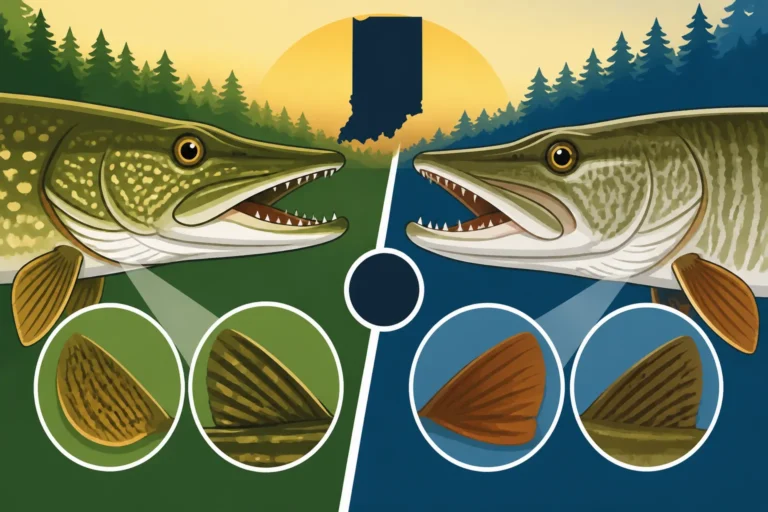
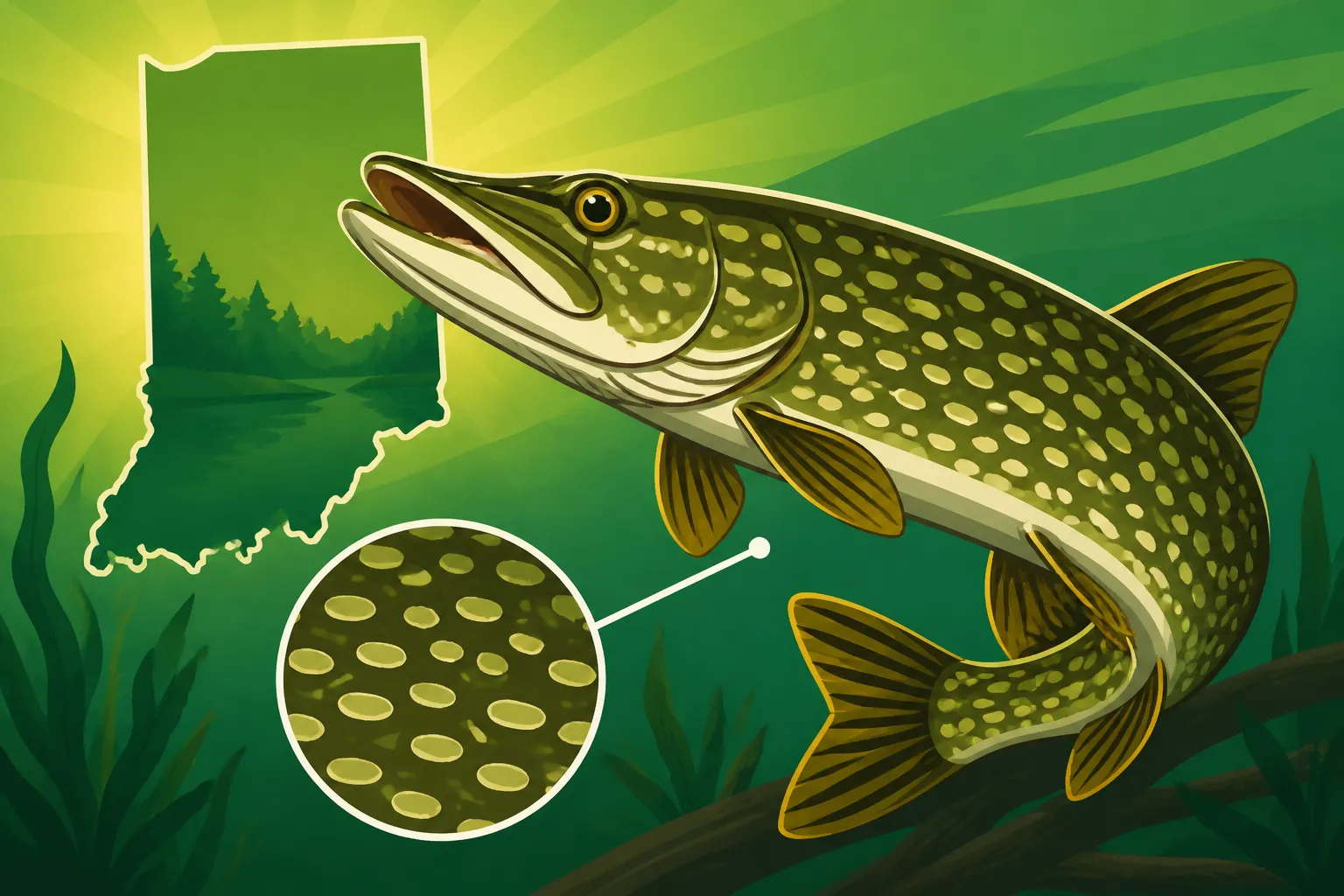
The most iconic feature of the northern pike, and the focus of our discussion today, is its coloration. Pike typically have a dark green to olive-green body on their back and sides, which often fades to a creamy white or yellowish belly. The key identifier, though, is the pattern of light, often bean-shaped or elongated yellowish-white spots that are scattered across that darker background. These spots don't form distinct horizontal or vertical bars like some other fish; instead, they appear randomly distributed, giving the fish a mottled or spotted look. Imagine dappled sunlight filtering through reeds onto the fish – that's the kind of pattern you're looking for. This is a primary differentiator when you compare it to a muskellunge, which tends to have dark markings on a lighter background, or sometimes no markings at all. Sometimes, the spots can look almost like iridescent patches, especially when the fish is fresh out of the water.
Fin Characteristics
Another surefire way to identify a northern pike is by examining its fins, particularly the dorsal and anal fins. These fins are set far back on the body, very close to the caudal (tail) fin. This "back-set" placement gives the pike a torpedo-like appearance, perfectly suited for ambush predation. The fins themselves are often a greenish or yellowish color, sometimes with a reddish tint, and may feature dark spots or mottling. This fin placement is a consistent characteristic across all northern pike and really emphasizes their sleek, predatory design. It's almost like their propulsion system is pushed to the very rear of their body for maximum acceleration.
Head and Jaw Structure
The head of a northern pike is unmistakable once you know what to look for. It's long and somewhat flattened, often described as having a "duckbill" shape due to its broad, elongated snout. Their mouths are large, extending back past the eye, and are filled with rows of incredibly sharp, needle-like teeth. These teeth are designed for grasping and holding onto slippery prey, making them a formidable predator in the food chain. When you look at a pike's profile, that long, flat head with its formidable mouth really stands out. You'll often see these features clearly displayed in fishing guides or even on the packaging of some of the heavy-duty pike lures available on Amazon.
Scale Pattern on Operculum
This is perhaps the most critical and definitive characteristic for distinguishing a northern pike from its close relative, the muskellunge. The operculum is the bony flap that covers and protects the gills. On a northern pike, the entire upper half of the operculum is fully scaled, while the lower half is bare. This might seem like a small detail, but it's a consistent and reliable indicator. When you lift that gill plate, you'll clearly see scales on the top portion and smooth skin below. This specific scale pattern is the secret handshake of the northern pike world, and it's something every serious angler should know.
Distinguishing Northern Pike from Similar Fish
In Indiana, the most common identification challenge for northern pike comes from its cousin, the muskellunge. While they share a similar body shape and predatory nature, there are clear ways to tell them apart. It’s also good to know how they differ from other fish you might encounter.
Pike vs. Muskie: The Operculum is Key
This is the big one! Many anglers, especially those new to fishing Indiana's glacial lakes, can get these two magnificent fish confused. They're both long, slender, and have powerful jaws. However, remember that operculum detail we just talked about? That's your golden ticket.
- Northern Pike: Has scales on the entire upper half of its operculum (gill cover). The lower half is bare.
- Muskellunge: Has no scales on the lower half of its operculum, and usually only scales on the upper portion or sometimes no scales at all on the entire operculum, often appearing completely bare on the cheek and gill plate.
Think of it this way: Pike are more "scaled up" on the operculum.
Beyond the gill plate, look at the body markings. As mentioned, pike have light spots on a dark background. Muskies, on the other hand, typically have dark markings (spots, bars, or vertical stripes) on a lighter background. Some muskies can even appear almost spotless, especially if they are a "clear" muskie strain, making the operculum scale pattern even more vital for identification. You can delve deeper into the specific differences by checking out Muskie vs Northern Pike: How to Tell the Difference for a detailed comparison.
Pike vs. Pickerel
While less common in many Indiana waters, chain pickerel are another member of the pike family (Esocidae) that might occasionally cause confusion, particularly in some ponds or slower-moving waters. Pickerel are generally much smaller than northern pike, rarely exceeding a few pounds. Their most distinctive marking is a dark, chain-like or reticulated pattern on their sides, which is very different from the distinct light spots of a pike. Additionally, pickerel have scales completely covering both their operculum and cheek, unlike the pike's partially scaled operculum. If you're fishing smaller waters, it's worth knowing the difference, but in most of Indiana's larger lakes where pike thrive, you'll be dealing mostly with pike or muskie.
Pike vs. Walleye
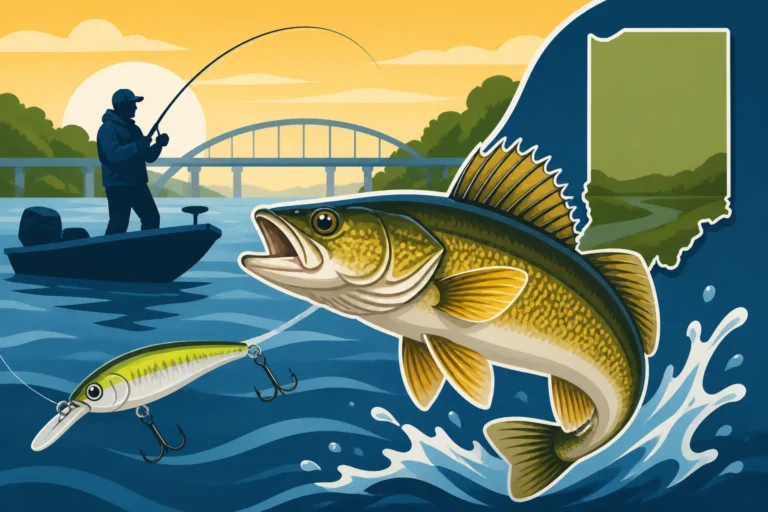
At first glance, it might seem unlikely to confuse a pike with a walleye, but new anglers or those fishing in low light conditions might sometimes mix them up, especially if they're only focusing on size. Walleye are also long and slender, but their coloration is vastly different. Walleye generally have an olive or golden-brown body with darker mottling or faint vertical bars, and most importantly, a distinct white tip on their lower tail fin. They lack the prominent light spots on a dark body that define the pike. Their mouths are also not as broad or duckbill-shaped, and while they have teeth, they aren't quite the needle-sharp array you find in a pike. Always look for that white tail tip and the absence of light spots to confirm a walleye.
Here's a quick comparison table to help solidify the differences:
| Feature | Northern Pike | Muskellunge | Walleye |
|---|---|---|---|
| Body Markings | Light spots on a dark background | Dark spots, bars, or clear on a lighter background | Olive/gold, faint mottling/bars, no distinct spots |
| Operculum | Fully scaled on upper half, bare on lower | No scales on lower half, few or no scales on upper | Fully scaled on both halves |
| Cheek | Fully scaled | Few or no scales | Fully scaled |
| Snout Shape | Long, flat, "duckbill" | Long, flat, "duckbill" | More pointed, less flattened |
| Tail Fin | Forked, often dark or mottled | Forked, often dark or mottled | Forked, distinct white tip on lower lobe |
| Max Size | Large (up to 20+ lbs in Indiana) | Very large (often 30+ lbs in Indiana) | Medium (up to 10-15 lbs in Indiana) |
Habitat and Behavior Clues for Identification
Sometimes, where and how a fish acts can give you hints about what species it is even before you get a clear visual. Northern pike have very distinct preferences when it comes to their environment and how they behave, which can aid in identification.
Where to Find Northern Pike in Indiana
Northern pike are ambush predators, and their preferred habitats reflect this. In Indiana, you'll typically find them in cooler, clear waters, often associated with dense weed beds, submerged timber, or other forms of cover. They love to lie in wait, perfectly camouflaged by their spotted patterns, ready to dart out and strike unsuspecting prey.
Some of Indiana's best pike fishing can be found in the northern glacial lakes. Areas like Kosciusko County's Best Lakes for Northern Pike are well-known hotspots. These lakes offer the ideal combination of depth, cool temperatures, and abundant vegetation that pike thrive in. You'll often find them cruising the edges of drop-offs, lurking in pockets within expansive weed flats, or holding tight to cover along shorelines, especially in the spring and fall. Shallow, weedy bays are also prime real estate for these fish. If you're fishing in these types of locations and hook a powerful, toothy fish, the odds are good you've got a northern pike. For a deeper dive into their natural range, check out Indiana's Glacial Lake District: Home to Muskie, Pike, and Walleye.
Fighting Style and Aggression
Northern pike are known for their aggressive strikes and powerful fights. When you hook a pike, especially a larger one, be prepared for a strong, sudden run and often spectacular aerial displays. They might thrash their heads vigorously, jump out of the water, and pull hard against your line. This high-energy fight is characteristic of a pike.
Their aggression also extends to their feeding habits. Pike are not shy; they'll often strike large, flashy lures with incredible force. If you're using spoons, large spinnerbaits, or even big crankbaits and you get a jarring, almost violent strike, it's a strong clue that you've got a pike on the other end. This aggressive nature is part of what makes them such a popular sport fish. When you're fishing for Best Bait for Northern Pike in Indiana Lakes, you'll notice many of the recommended baits are chosen for their ability to provoke these aggressive strikes.
Understanding these habitat and behavioral traits, combined with the visual cues of their light spots on a dark body and the critical operculum scale pattern, will make you a much more confident and successful angler in Indiana's waters. Being able to quickly and accurately identify your catch means you can enjoy the moment, handle the fish responsibly, and ensure you're always fishing within the rules. And remember, a good pair of pliers or a jaw spreader, easily found on Amazon, is your best friend when dealing with those sharp pike teeth!
Responsible Handling and Release of Northern Pike
Once you've confidently identified your catch as a northern pike, it's essential to handle it with care, especially if you plan to release it. Pike are robust fish, but their unique anatomy and aggressive nature require specific handling techniques to ensure their survival. Many anglers practice catch-and-release, especially with larger trophy fish, and doing so properly is key to maintaining healthy fish populations.
Tools for Safe Handling
Because of those razor-sharp teeth and powerful jaws, directly handling a pike with bare hands is extremely risky. You'll want to have a few essential tools on hand:
- Long-nosed Pliers: These are indispensable for reaching hooks deep inside a pike's mouth. The longer the better, as it keeps your fingers away from danger. A good pair of robust fishing pliers can be a game-changer.
- Jaw Spreader: A jaw spreader, often used for muskie as well, is a tool that gently holds a pike's mouth open, allowing you clear access to retrieve your lure without the risk of the fish clamping down. This is particularly useful for deeply hooked fish.
- Large Landing Net: A net with a wide opening and rubberized mesh is ideal. Rubberized mesh protects the fish's slime coat (which is its first line of defense against disease) and prevents hooks from getting tangled. Trying to lift a large pike by the line alone can cause internal damage.
- Gloves (Optional, but Recommended): Heavy-duty, fish-handling gloves can provide an extra layer of protection, though they don't replace the need for pliers and a spreader.
Using these tools not only protects you from injury but also minimizes stress and physical damage to the fish, increasing its chances of survival post-release. When you're getting ready for your next outing, consider picking up a set of these tools, readily available on Amazon, to ensure you're prepared for any toothy encounter.
Proper Release Techniques
Once you've removed the hook, the goal is to get the pike back into the water quickly and gently.
- Support the Fish: If you've brought the fish into the boat for a quick photo, support its body horizontally with one hand under its belly and the other gently gripping the base of its tail. Avoid holding it vertically by the jaw or gills, as this can severely damage its spine and internal organs, especially on larger fish.
- Minimize Air Time: Pike are adapted to living in water, and prolonged exposure to air is stressful and damaging to their gills. Aim to keep the fish out of water for the absolute minimum amount of time necessary for de-hooking and a quick photo.
- Revive if Necessary: Gently place the fish back into the water, head-first, and hold it upright. If the fish seems sluggish, gently move it back and forth to force water over its gills. This "pumps" water through its respiratory system, helping it regain oxygen and recover. Release it only when it shows strong signs of being able to swim away on its own.
- Cut the Line (Last Resort): If a fish is deeply hooked in a way that would cause extensive damage to remove the hook, it's often better to cut the line as close to the hook as possible. Hooks made of carbon steel will eventually rust out, and the fish has a better chance of survival than if you try to force the hook out and cause severe trauma.
By following these responsible handling and release practices, you're contributing to the health and sustainability of Indiana's northern pike fishery, ensuring that these impressive predators continue to thrive for future generations of anglers. Whether you're targeting a trophy or just enjoying a day on the water, understanding How Big Do Muskellunge Get in Indiana Waters? or How Big Do Northern Pike Get in Indiana Waters? will help you appreciate these fish even more.
Conclusion: Becoming a Pike Identification Pro
By now, you should feel much more confident in your ability to identify a northern pike when you encounter one in Indiana's waters. It really comes down to a few key features: the distinct pattern of light spots on a dark body, the duckbill-shaped head, and most importantly, the specific scale pattern on its operculum (gill cover)—remember, it's fully scaled on the upper half, bare on the lower.
Knowing these details is not just academic; it's empowering. It means you can adhere to important regulations, protect yourself from their formidable teeth, and truly appreciate the incredible creature you've managed to outwit. From the initial strike to the moment of release, being able to identify your catch enhances every aspect of your fishing adventure. So, the next time you feel that powerful tug on your line, you’ll be ready to greet that sleek, spotted predator with confidence and respect. Happy fishing, and may your lines stay tight with plenty of Indiana pike!
Disclaimer
This article is for general informational purposes only and does not constitute professional advice. Laws, prices and regulations vary by location and change over time. Consult a qualified professional for guidance on your specific situation.