Where to Catch Smallmouth Bass on the White River
Trying to pin down the best spots for smallmouth bass on Indiana's White River can feel like a real puzzle, especially with such a long and winding waterway. It’s easy to get overwhelmed wondering where to even start, and if you’re anything like me, you want to maximize your time on the water. This guide is going to cut through the guesswork, sharing tried-and-true locations, techniques, and seasonal tips to help you consistently hook into those feisty smallmouth along the White River.
Understanding the White River's Smallmouth Habitat
The White River is a magnificent system, stretching across a huge part of Indiana. It's not just one type of water; you'll find everything from slow, meandering pools to swift, rocky runs, and understanding these different environments is key to finding smallmouth. These bronze beauties thrive in particular conditions, and knowing what to look for can make all the difference between a slow day and a banner day.
North vs. South Fork Dynamics
The White River actually consists of two main branches: the West Fork and the East Fork. When most people talk about "the White River" and smallmouth, they're often referring to the West Fork, especially the sections north of Indianapolis. This fork generally offers more of the classic smallmouth habitat: rocky bottoms, current breaks, and varied structure. The East Fork, while also holding fish, can be a bit more sluggish and wider in many areas, leaning more towards largemouth or catfish in its lower stretches.
The West Fork, particularly from Muncie down through Noblesville and into the Indianapolis area, presents a prime smallmouth fishery. Here, the river still maintains a good current, often has a healthy rock and gravel substrate, and boasts plenty of woody debris and undercut banks that smallmouth absolutely love. As you move further south of Indianapolis, the river tends to widen, slow down, and become more turbid, making smallmouth a bit harder to target consistently, though they are certainly still present.
Prime Structural Features for Smallmouth
Smallmouth bass are ambush predators, and they love to hide in places where they can dart out and surprise their prey. On the White River, this means looking for specific types of structure and cover. Think about anything that breaks the current or provides shelter.
Fallen trees, often called "laydowns" or "snags," are goldmines. The branches create intricate hiding spots, and the main trunk provides a current break. Smallmouth will sit on the downstream side, waiting for food to drift by. Rock piles, rip-rap along bridge abutments, and gravel bars are equally important. These hard-bottom areas attract baitfish and crayfish, which are staple foods for smallmouth. Also, keep an eye out for current seams where faster water meets slower water. These are natural feeding lanes. Deeper pockets or scour holes just downstream from rapids or riffles are also excellent spots, offering both cover and an easy meal delivery system. For those who enjoy deeper dives into river fishing, understanding Best Techniques for Smallmouth Bass in Rivers can greatly enhance your success.
Key Locations for Smallmouth Bass on the White River
While smallmouth can be found throughout significant portions of the White River, some stretches are simply more productive due to their habitat features and accessibility. These are the areas where you're most likely to have consistent success.
Upper West Fork: Muncie to Noblesville
This section of the White River is often considered the heart of its smallmouth fishery. North of Indianapolis, the river is generally narrower, shallower, and features more abundant rock and gravel beds, along with a good mix of riffles, runs, and pools.
Areas around Muncie, Anderson, and Noblesville are particularly productive. You’ll find plenty of public access points here. Consider exploring around the Canoe/Kayak Launch sites near Muncie or the various parks in Noblesville like Potter’s Bridge Park or Hague Road Nature Haven. These locations typically have good current, rocky bottom structure, and plenty of submerged timber, all perfect for smallmouth. Many anglers have reported great success floating these stretches in kayaks or canoes, allowing them to quietly cover more water and hit those less-pressured spots. Remember that the Smallmouth Bass Daily Limit in Indiana Rivers is an important regulation to keep in mind, so always be aware of the current rules. If you're planning a trip, platforms like FishingBooker can sometimes help you find local guides who know these specific honey holes.
Central West Fork: Indianapolis Urban Stretch
It might surprise some, but even within the Indianapolis metropolitan area, the White River can hold some fantastic smallmouth bass. The key here is to look for areas where the riverbed still has some rock and gravel, and where there are plenty of bridges, dams, or urban structures that create current breaks and deeper holes.
Popular spots include sections near Broad Ripple, Riverside Park, and even downtown Indianapolis, particularly around the White River State Park area. While heavily trafficked, these urban stretches benefit from extensive rip-rap under bridges and along banks, as well as remnants of old dam structures that create current eddies. These areas often have surprisingly good populations of smallmouth, especially during periods of stable water levels. Access can be found at public parks or along greenways. If you're looking for broader ideas, Best Fishing Spots Near Indianapolis, Indiana offers more options beyond just smallmouth on the White River. You might even find local guides on FishingBooker who specialize in urban river fishing.
Lower West Fork Transition Zones
As the White River moves south of Indianapolis, it gradually transitions into a wider, slower, and often muddier river. However, this doesn't mean smallmouth disappear entirely. They simply become more concentrated in specific types of habitat.
Focus on areas where tributaries enter the main river, as these can bring in cooler, cleaner water and create current seams that attract baitfish and, in turn, smallmouth. Also, look for any remaining rock or gravel formations, as well as significant logjams or deep bends where the current has scoured out substantial holes. Counties further south like Morgan or Greene might not offer the same consistent smallmouth action as the northern stretches, but isolated pockets can still yield impressive fish for patient anglers. This section requires a keen eye for subtle changes in current and bottom composition.
Best Techniques and Baits for White River Smallmouth
Smallmouth bass are aggressive and will hit a wide variety of baits, but matching your presentation to the river conditions and their feeding mood is crucial. What works one day might not work the next, so flexibility is key.
Lure Selection for River Conditions
When fishing the White River for smallmouth, it's wise to have a versatile tackle box. For rocky, current-laden areas, jigs are almost always a top producer. Small tube jigs (2.5-3.5 inches) in greens, browns, or natural crayfish colors rigged on 1/8 to 1/4 ounce jig heads are deadly. They imitate crayfish perfectly and can be bounced along the bottom or slowly dragged. Small finesse jigs with creature baits or craw trailers are also excellent.
Crankbaits are another essential. Shallow-diving crankbaits that mimic shad or crawfish work wonders in shallower riffles and runs. Look for models that dive 3-6 feet. Jerkbaits, especially those with a neutral buoyancy, can be incredibly effective when twitched through deeper pools or along current breaks. Their erratic action often triggers reaction strikes. Spinnerbaits, particularly those with willow leaf blades for clearer water or Colorado blades for stained water, can cover a lot of water and entice aggressive fish. When the water is a bit stained, a chartreuse or white spinnerbait can be highly visible.
| Lure Type | Best Conditions | Presentation Tip |
|---|---|---|
| Tube Jigs | Rocky bottoms, current breaks, clear to stained water | Hop or drag slowly along the bottom; mimic a crayfish |
| Shallow Crankbaits | Riffles, runs, shallower pools (3-6 ft deep) | Cast upstream or across current, retrieve with varying speeds |
| Jerkbaits | Deeper pools, current seams, clear to slightly stained | Twitch-twitch-pause; long pauses can be key |
| Spinnerbaits | Covering water, aggressive fish, stained water | Steady retrieve, slow roll over structure; vary blade sizes/colors |
| Soft Plastics (rigged) | Finesse fishing, post-front conditions, clear water | Texas rig, Carolina rig, or Ned rig on soft plastics (worms, creatures) |
Live Bait Options
While artificial lures are incredibly fun and effective, sometimes nothing beats live bait for a stubborn smallmouth. Live crayfish are the absolute king for White River smallmouth. If you can catch them locally, they are irresistible. Rig them with a light wire hook through the tail and let them drift naturally in the current or bounce them along the bottom.
Minnows, shiners, or small chub are also excellent options. Hook them through the lip or dorsal fin and present them under a bobber or free-lined in the current. Worms, like nightcrawlers, can also work, especially after a rain when they wash into the river. Presenting live bait naturally, with minimal weight if possible, is usually the most effective approach. For a general overview of baits, Best Bait for Largemouth Bass in Indiana Lakes might provide some crossover ideas, though river dynamics often favor different presentations.
Seasonal Considerations for White River Smallmouth
Fishing for smallmouth on the White River is a year-round pursuit, but your approach will need to change with the seasons. Water temperature, river levels, and fish behavior are all dictated by the time of year.
Spring Aggression
Spring is arguably one of the best times to target smallmouth bass on the White River. As water temperatures rise into the 50s and 60s Fahrenheit, smallmouth become incredibly active, preparing for and then engaging in their spawn.
Early spring, before the spawn, sees smallmouth moving into shallower, rocky areas to feed aggressively. This is a great time for crankbaits, spinnerbaits, and tube jigs. As the water warms further and they begin to spawn (typically late April through May, depending on the year), they become very protective of their nests in shallow, hard-bottom areas. While sight-fishing for bedding fish is possible, many anglers focus on the pre-spawn and post-spawn periods when fish are more actively feeding. Be mindful of fishing pressure during the spawn, and practice catch-and-release to protect future generations. Remember, Indiana Fishing Seasons: A Month-by-Month Guide offers more detail on seasonal fishing across the state.
Summer Patterns and Low Water Challenges
Summer fishing can be fantastic, but it often brings lower, clearer water conditions on the White River, especially during dry spells. Smallmouth will typically move to deeper pools, current breaks, and areas with overhead cover to escape the bright sun and find cooler water.
During summer, early morning and late evening bites are often the best. Night fishing can also be productive. Topwater lures can be explosive at dawn and dusk. During the day, focus on fishing jigs, soft plastics, and deep-diving crankbaits in the shade of fallen trees, undercut banks, or in the deeper sections of pools. Low water can also concentrate fish, making them easier to locate but also more susceptible to pressure. Keep an eye on river gauges; extremely low water can make navigation difficult, particularly for those floating.
Fall Feeding Frenzy
Just like in spring, fall can be an incredible time for smallmouth bass on the White River. As water temperatures begin to drop, smallmouth start to feed heavily, packing on weight for the upcoming winter. This is when they become incredibly aggressive.
Look for smallmouth to stack up in deeper holes and along current breaks, but they will readily move into shallower feeding flats during active periods. Crankbaits, jerkbaits, and larger tube jigs can be highly effective. The fall colors are breathtaking along the river, making for a truly enjoyable fishing experience. Pay close attention to current seams and ambush points, as fish will be less spread out and more concentrated on easy meals.
Essential Gear for White River Smallmouth Anglers
Having the right gear makes a huge difference in your success and enjoyment on the White River. You don't need to break the bank, but having reliable equipment suited for river fishing is crucial.
Rods, Reels, and Line
For smallmouth bass on the White River, a medium-light to medium power spinning rod, 6'6" to 7'0" in length, is a versatile choice. This allows for accurate casting of lighter baits and has enough backbone to handle a fighting smallmouth in current. Pair it with a 2500-3000 size spinning reel spooled with 8-10 lb braided line, tied to a 6-8 lb fluorocarbon leader. The braid offers sensitivity and strength, while the fluorocarbon leader provides invisibility and abrasion resistance against rocks and logs. For those who prefer baitcasting, a medium power rod with a fast action, coupled with a comparable reel, works well for heavier lures like larger spinnerbaits or crankbaits. For more detailed gear selection, refer to Best Rods and Reels for Indiana Largemouth Bass, which offers useful insights that can be adapted for smallmouth.
Wading and Watercraft Considerations
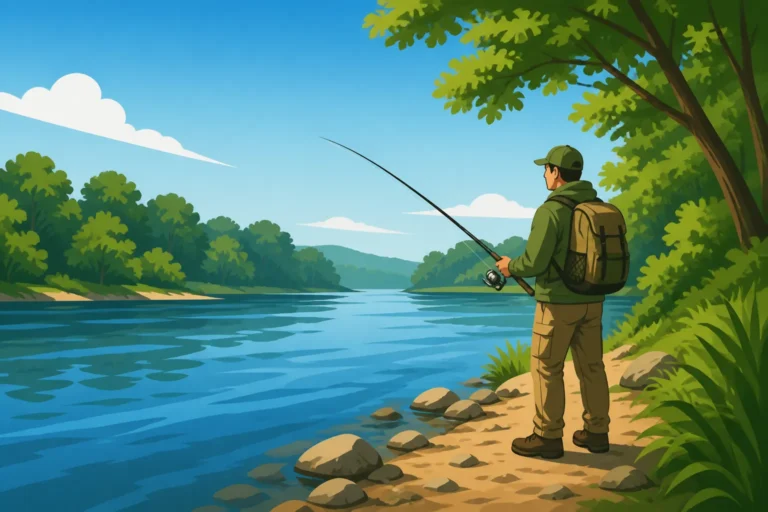
Many anglers find that wading is the most effective way to fish the White River for smallmouth, especially in the shallower northern sections. Good quality chest waders and wading boots with felt or sticky rubber soles are essential for navigating rocky, slippery bottoms and dealing with varying water depths. Always use a wading staff for stability, especially in current.
For covering more water, a kayak, canoe, or small jon boat is invaluable. These allow you to drift silently downstream, hitting countless potential smallmouth hideouts. Be sure to understand the water levels and potential hazards (like low-head dams) before launching. Always wear a life jacket, even in calm water, as river conditions can change quickly. For those who prefer to explore with guides, FishingBooker lists local experts who can provide a safe and productive day on the water.
Essential Accessories
Beyond your rod and reel, a few key accessories will make your White River smallmouth trip more successful and enjoyable. Polarized sunglasses are non-negotiable; they cut glare and allow you to spot submerged structure and even fish. A good pair of pliers or forceps for hook removal is crucial, especially with treble-hooked crankbaits and feisty smallmouth. Carry a small tackle bag or vest that allows easy access to your most-used lures.
Don't forget a first-aid kit, plenty of water, and sun protection (hat, sunscreen). If you plan on keeping fish, a small cooler with ice is a must. And always, always pack out everything you pack in. Let's keep the White River beautiful for everyone. For general river safety and etiquette, check out resources on Fishing the White River in Indiana.
Disclaimer
Please note that fishing regulations, conditions, and fish populations can change. Always consult the latest Indiana Department of Natural Resources (DNR) fishing regulations before heading out. This guide provides general information and best practices based on common angling experiences.