Top Fishing Spots Near South Bend, Indiana
Finding the perfect fishing spot near a bustling city like South Bend can sometimes feel like searching for a needle in a haystack. You know there's water around, but figuring out where the fish are biting, what species you can target, and where you can actually access the water often takes more effort than the fishing itself. This guide is designed to cut through that noise, offering you a comprehensive look at the top fishing spots in and around South Bend, Indiana, complete with insights on what to expect, how to prepare, and how to make the most of your angling adventures.
The Allure of Fishing Near South Bend
South Bend, situated in northern Indiana, offers a unique advantage for anglers. It's close enough to the immense fishery of Lake Michigan for big water adventures, yet surrounded by numerous rivers, streams, and inland lakes that provide diverse opportunities for everything from panfish to trophy bass. This blend means that whether you're a seasoned angler with specialized gear or a family just looking for a relaxing afternoon with a bobber, you won't have to travel far to find your perfect spot.
Understanding the Local Waters
The waterways around South Bend are primarily influenced by the St. Joseph River system and its tributaries, which eventually drain into Lake Michigan. This connection means that many species, particularly trout and salmon, use these river systems for their spawning runs, creating exciting seasonal opportunities. Inland, you'll find a mix of natural glacial lakes and smaller impoundments, each with its own character and resident fish populations. Understanding this diverse aquatic landscape is key to planning a successful fishing trip. The sheer variety here is impressive, making it a fantastic base for exploring different types of fishing, from calm pond fishing to more adventurous river and lake excursions.
Why South Bend is a Prime Fishing Hub
South Bend isn't just a place to live; it's a gateway to some truly fantastic fishing experiences. Its location means you're never too far from a prime spot. The local parks and conservation areas provide easy public access, often with amenities like boat ramps, fishing piers, and bait shops nearby. Plus, the Indiana Department of Natural Resources (IDNR) actively manages these fisheries, stocking certain species and enforcing regulations to ensure healthy fish populations for generations to come. This makes planning a trip relatively straightforward, especially if you utilize resources like online booking platforms to find local guides or charters that know the waters best, like those found on FishingBooker. They can help you navigate the nuances of each spot, ensuring you make the most of your time on the water.
Prime River Fishing Destinations
Rivers near South Bend offer dynamic and often less crowded fishing experiences. The changing currents and varied structures provide exciting challenges and rewarding catches.
St. Joseph River: A Northern Indiana Gem
The St. Joseph River, often affectionately called the "St. Joe," is undoubtedly the crown jewel of fishing near South Bend. Flowing right through the city, it’s renowned for its incredible runs of salmon and steelhead, particularly in the fall and spring. Anglers flock to its banks and launch boats to intercept these powerful migratory fish. But it's not just about the anadromous species; the St. Joe also holds healthy populations of smallmouth bass, northern pike, walleye, and various panfish.
Around the Twin Branch Dam area in Mishawaka, just east of South Bend, fishing can be exceptional, especially during the fall salmon runs. Here, fish congregate below the dam, offering excellent bank fishing opportunities. Further downstream, closer to the city, boat access becomes more prevalent, allowing anglers to target deeper holes and submerged structures where fish often hold. Knowing the Fishing the St. Joseph River in Indiana article can give you specific tactics. The river's varied flow means you might be drifting bait one day and casting spinners the next, adapting your technique to the conditions and target species.
Kankakee River: Unsung Hero of the Wetlands
A bit further afield, but absolutely worth the drive, is the Kankakee River, particularly the stretches within the Kankakee Fish and Wildlife Area. Often overlooked by those focused on the St. Joe, the Kankakee offers a completely different, wilder fishing experience. This river is famous for its excellent populations of northern pike, largemouth bass, and various catfish species, thriving in the slower, marshier sections of the river. It's a true hidden gem for anglers who appreciate a more serene setting.
The Kankakee's unique character comes from its extensive wetlands, providing abundant cover and food for fish. You'll often find yourself casting into lily pads, submerged timber, and brush piles – classic cover for big bass and pike. While boat access can be limited in some areas due to the shallow nature of the river, numerous spots along its banks and within the wildlife area offer great shore fishing. Anglers targeting catfish will find success with bottom rigs, especially during twilight hours or after dark, while those after pike and bass will do well with spinnerbaits, crankbaits, and topwater lures fished around structure.
Yellow River: Smaller, But Full of Surprises
The Yellow River, a tributary of the Kankakee, offers a more intimate fishing experience. While smaller in scale, it can be incredibly productive, especially for smallmouth bass and panfish. Its winding channels and varied depths provide ample opportunities for wade fishing or launching a small canoe or kayak. It's the kind of river where you can escape the crowds and enjoy a peaceful day on the water, often with surprising catches.
Access points along the Yellow River are typically smaller and less developed than those on the larger rivers. Many anglers find success by exploring county road bridges or smaller public easements. Smallmouth bass here are aggressive and will readily strike small crankbaits, jigs, or live bait like hellgrammites and crawfish. For panfish, a simple setup with a worm under a bobber can yield plenty of bluegill and crappie, making it a fantastic spot for introducing kids to fishing. Remember to check local regulations before heading out, as Indiana Fishing Regulations and Bag Limits Guide details can vary.
Top Lakes and Reservoirs for Anglers
If you prefer the expansiveness of open water or the quiet charm of an inland lake, the South Bend area has you covered.
Lake Michigan's Indiana Shoreline Access
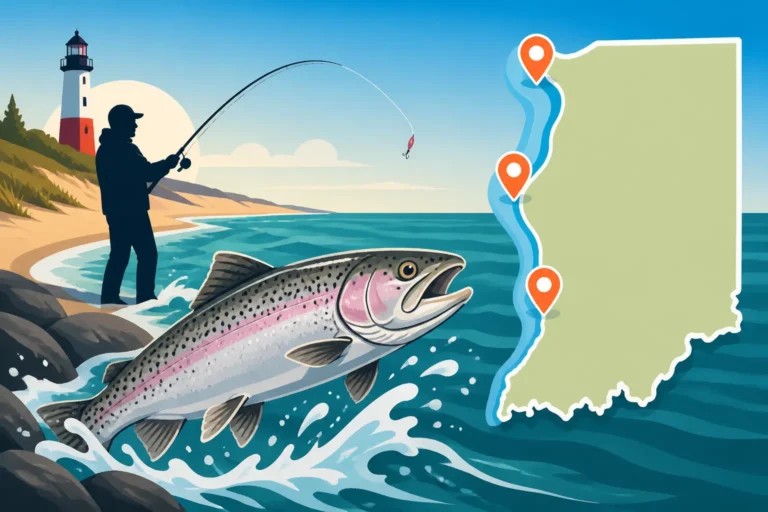
While not directly in South Bend, the Indiana shoreline of Lake Michigan is a short drive away and offers some of the most exciting big-water fishing opportunities in the state. From the piers of Michigan City to the charter boats out of Portage, you can target trophy salmon (Chinook and Coho) and steelhead, as well as brown trout and lake trout. It's a completely different experience from river fishing, requiring specialized gear and tactics, but the potential for truly massive fish is unparalleled.
Pier fishing along Lake Michigan is a popular option, especially during the spring and fall runs. Anglers often use spawn bags, spoons, or live bait to entice salmon and steelhead as they stage near the harbors before heading into tributary rivers. For those looking for a truly epic adventure, booking a charter trip is highly recommended. These experienced captains know exactly where the fish are holding in the vast expanse of Lake Michigan and have all the necessary Lake Michigan Trolling Gear Guide for Indiana Anglers setup. Even if you're not on a charter, understanding Lake Michigan Fishing Rules for Indiana Anglers is crucial, as they can differ significantly from inland regulations.
Potato Creek State Park: Family-Friendly Fishing
Just south of South Bend, Potato Creek State Park boasts Worster Lake, a fantastic destination for family fishing and a great spot for beginners. This large, man-made lake is known for its healthy populations of largemouth bass, bluegill, crappie, and catfish. The park offers numerous amenities, including boat rentals, fishing piers, and plenty of shoreline access, making it incredibly convenient for a day trip.
Worster Lake is managed for quality fishing, and you'll find plenty of opportunities for various species. Largemouth bass anglers will find success around submerged timber, weed lines, and the lake's many coves. For panfish, simply fishing with crickets, worms, or small jigs near structure or brush piles can yield a cooler full of delicious bluegill and crappie. The lake also has a good population of channel catfish, which can be caught on stink baits or cut bait, especially in the deeper channels. It’s a wonderful place to introduce kids to fishing, with plenty of space and a high likelihood of catching something. Remember to check if Do Indiana Residents Under 18 Need a Fishing License? applies to your little anglers.
Smaller Lakes and Ponds for Quick Trips
Beyond the major rivers and Lake Michigan, several smaller lakes and ponds dot the landscape around South Bend, offering excellent opportunities for a quick fishing fix or a less crowded experience. These can be perfect for targeting panfish or smaller bass, especially if you're short on time or prefer quieter waters.
- Crumstown Conservation Club: Located southwest of South Bend, this area offers several ponds and lakes that are regularly stocked. While membership is typically required, it's a fantastic local resource for consistent panfish action and occasional bass. The managed environment often means better fishing success rates and well-maintained facilities.
- Pine Lake (LaPorte): While a bit further west, Pine Lake in LaPorte is a beautiful natural lake known for its good bass and panfish populations. It offers public boat ramps and plenty of fishing access, making it a viable option for a half-day trip. It's a great example of the glacial lakes found in northern Indiana, often holding diverse species.
These smaller bodies of water often respond well to simpler techniques. A lightweight spinning rod with a bobber and live bait, or small inline spinners and jigs, can be incredibly effective. They are also ideal for kayak or canoe fishing, allowing you to quietly explore coves and shallow areas that larger boats might miss. For those without a boat, these ponds often have easily accessible banks or small docks.
Gear, Tactics, and Seasonal Considerations
To truly succeed when fishing near South Bend, it helps to be prepared with the right gear and knowledge of seasonal patterns.
Essential Gear for Northern Indiana Waters
Your gear selection will largely depend on what you're targeting and where. However, a versatile setup can get you started for most freshwater species.
- Rods and Reels: For general-purpose fishing (bass, panfish, walleye), a medium-action spinning rod (6'6" to 7') paired with a 2500-3000 series spinning reel spooled with 8-10 lb monofilament or braided line is a solid choice. If you're tackling larger species like salmon or pike, a heavier rod with a baitcasting reel might be preferred. A great resource is our guide on Best Fishing Rods and Reels for Freshwater Fishing.
- Tackle Box Basics:
- Lures: A selection of crankbaits, spinnerbaits, plastic worms (Texas rig is popular for bass), and jigs (small for panfish, larger for bass/walleye) will cover many situations.
- Live Bait: Worms, minnows, and crickets are universal attractors for panfish, bass, and catfish. Always have some on hand, especially for new spots.
- Terminal Tackle: Hooks (various sizes, including Aberdeen for panfish and worm hooks for bass), sinkers (split shot, bullet weights), swivels, and bobbers (slip bobbers are versatile) are non-negotiables.
- Accessories: Pliers, a measuring tape (for length limits), a small net, sun protection (hat, sunglasses, sunscreen), and insect repellent are crucial for a comfortable and compliant outing. Don't forget a cooler with ice to keep your catch fresh!
Seasonal Strategies for Success
The changing seasons dramatically impact where fish are, what they're eating, and how they behave. Understanding these patterns is key to consistent success in the South Bend area. You can learn more about this in our Best Time of Year to Fish in Indiana guide.
- Spring (April – May): This is prime time for many species as water temperatures rise.
- Rivers (St. Joe): Steelhead and salmon runs are strong, with fish moving upstream to spawn. Focus on current seams, deeper pools, and dam structures.
- Lakes/Ponds: Largemouth bass move into shallower waters for their pre-spawn and spawning phases. Crappie and bluegill are also very active in the shallows, often found near submerged brush and docks. Early spring also sees active northern pike in weedy areas. Use jigs, small crankbaits, and live minnows for panfish. For bass, try spinnerbaits or plastic worms.
- Summer (June – August): Fish tend to move to deeper, cooler water or become active during low light hours.
- Rivers: Smallmouth bass remain active, but you might need to target deeper holes or shaded areas. Catfish become very active at night or during overcast days.
- Lakes/Ponds: Largemouth bass often relate to deeper structure or dense vegetation. Early morning and late evening topwater action can be fantastic. Panfish can be found around submerged cover or deeper weed lines. Consider night fishing for catfish.
- Fall (September – November): A truly exciting time, especially on the St. Joseph River and Lake Michigan.
- Rivers (St. Joe): The fall salmon run (Chinook and Coho) is legendary, drawing anglers from all over. Steelhead also begin to show up. Focus on the same areas as spring runs. Our Lake Michigan Salmon and Steelhead Run Guide in Indiana provides great detail.
- Lakes/Ponds: Fish go on a feeding frenzy before winter, making bass, walleye, and pike very active. Look for baitfish schools. Crankbaits, jerkbaits, and swimbaits can be very effective.
- Winter (December – March): While many put their rods away, dedicated anglers find success with ice fishing or by targeting specific species in open water.
- Ice Fishing: Many smaller lakes and ponds freeze over, offering opportunities for bluegill, crappie, perch, and even pike through the ice. Always check ice thickness for safety.
- Open Water: The St. Joseph River, especially downstream, often remains open and can provide opportunities for late-season steelhead or cold-water smallmouth. FishingBooker might even connect you with guides specializing in these colder weather techniques.
Here’s a quick overview of some top spots and their prime targets:
| Fishing Spot | Primary Target Species | Best Time of Year | Notable Features |
|---|---|---|---|
| St. Joseph River | Salmon, Steelhead, Smallmouth Bass | Spring, Fall | Migratory runs, scenic, diverse fishing opportunities |
| Kankakee River (FWA) | Northern Pike, Largemouth Bass, Catfish | Spring, Summer, Fall | Wild, marshy feel, great for wading or small boats |
| Yellow River | Smallmouth Bass, Panfish | Spring, Summer | Quiet, intimate, good for canoes/kayaks |
| Lake Michigan (Indiana Shoreline) | Chinook/Coho Salmon, Steelhead, Trout | Spring, Fall | Big water, pier fishing, charter opportunities |
| Potato Creek State Park | Largemouth Bass, Bluegill, Crappie, Catfish | Spring, Summer, Fall | Family-friendly, rentals, ample shore access |
| Crumstown Conservation Club | Panfish, Largemouth Bass | Spring, Summer, Fall | Managed ponds, consistent catches, quiet |
Remember that local bait shops are invaluable resources for up-to-the-minute fishing reports and advice. They often know what's biting, on what, and where, making them a crucial stop before any fishing adventure around South Bend.
Disclaimer
Please note that fishing regulations, conditions, and access points can change. Always consult the latest Indiana Department of Natural Resources (IDNR) regulations before you head out, and prioritize safety on the water. This guide is for informational purposes and should not be considered legal advice.