Indiana Fishing License Reciprocity Explained for Border Anglers
It's a common frustration for anglers who live near Indiana's borders: "Do I need a separate license for every state, or does my Indiana license cover that little stretch of river that technically crosses into Ohio?" Navigating fishing license reciprocity can feel like trying to untangle a stubborn knot in your fishing line. This guide will meticulously unravel those rules, explaining exactly when your Indiana fishing license will be honored by neighboring states and, more importantly, when you absolutely need to purchase an additional permit to stay on the right side of the law.
Understanding Fishing License Reciprocity
For many folks, the idea of "reciprocity" sounds like something out of a legal textbook, but when it comes to fishing, it simply means an agreement between two states to honor each other's fishing licenses in specific, shared bodies of water. It's a fantastic concept designed to make life easier for anglers who live along state lines, preventing them from needing to buy multiple licenses for a single fishing trip that might span both sides of a river or lake. However, these agreements aren't universal, and they almost always come with very specific conditions. Misunderstanding these conditions can lead to hefty fines, ruining an otherwise perfect day on the water.
What Reciprocity Truly Means for Anglers
In practical terms, reciprocity means that if you possess a valid fishing license from Indiana, and Indiana has a reciprocity agreement with, say, Ohio, you might be able to fish certain boundary waters without needing an Ohio license. This is incredibly convenient if your favorite fishing spot is right on the state line, like the Ohio River. But here's the critical nuance: these agreements only apply to the designated boundary waters. They do not mean your Indiana license is valid for fishing in a lake entirely within Ohio, or vice-versa. Think of it like a handshake agreement over a shared fence, not an open invitation to roam freely across the entire property. These rules are usually in place to manage fish populations and ensure fair enforcement across shared natural resources.
Why Reciprocity Matters for Border Anglers
Imagine living in Evansville, right on the Ohio River. Without reciprocity, if you wanted to fish from an Indiana bank, you'd need an Indiana license. But if your line drifted into Kentucky waters, or you decided to launch your boat from a Kentucky ramp and fish the river, you'd technically need a Kentucky license too. That's two licenses just for one river! Reciprocity aims to eliminate this kind of headache, allowing you to focus on the fish, not the paperwork. It's especially vital for those who regularly fish major boundary waters like the Ohio River, Lake Michigan, or the St. Joseph River, where state lines can be easily crossed without even realizing it. Knowing the ins and outs of these agreements can save you not only money but also the stress of a potential citation. You can easily find detailed information on specific state-by-state agreements, or even pick up a local fishing map that highlights these boundaries, sometimes available for purchase on Amazon.
Indiana's Reciprocity Agreements by State
Indiana shares borders with four other states: Ohio, Michigan, Illinois, and Kentucky. Each of these borders has its own set of rules, and it's essential to understand them individually because what applies to the Ohio River definitely won't apply to Lake Michigan. Let's break down what to expect when you're casting lines near the state lines.
Indiana Fishing License Reciprocity With Ohio
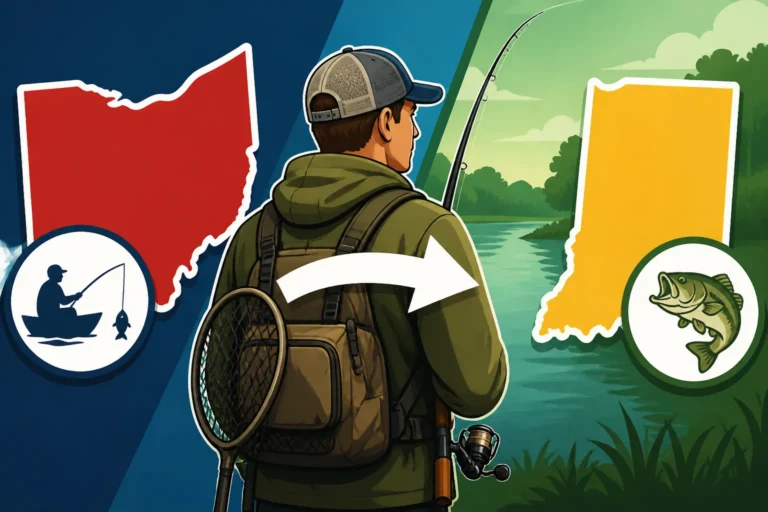
Good news for anglers on the eastern border! Indiana does have a reciprocity agreement with Ohio. This agreement specifically covers the Ohio River. If you hold a valid fishing license from either Indiana or Ohio, you are generally permitted to fish the main stem of the Ohio River that forms the boundary between the two states. This means if you're an Indiana resident with an Indiana license, you can fish the Ohio River from an Indiana boat, an Ohio boat, or from either bank without needing an Ohio license. The same applies to Ohio residents with an Ohio license.
However, there's a crucial caveat: this reciprocity applies only to the main stem of the Ohio River. It does not extend into the tributaries that flow into the Ohio River. For example, if you're fishing the Ohio River and decide to venture upstream into a creek that's entirely within Ohio's borders, your Indiana license will no longer be valid, and you'll need an Ohio fishing license. The same rule applies if you're an Ohio angler coming into an Indiana tributary. Always remember, the agreement is specifically for the boundary waters, not inland waters of the adjacent state. You can learn more about specific rules in our guide on Indiana Fishing License Reciprocity With Ohio.
Indiana Fishing License Reciprocity With Michigan
The situation with Michigan is a bit more nuanced, especially concerning Lake Michigan and shared inland waters. While many anglers would love a seamless experience across the Great Lake, the reality is a bit more complex. For the most part, there is not a broad reciprocity agreement that allows an Indiana fishing license to be used in Michigan waters, or a Michigan license in Indiana waters, especially on Lake Michigan itself.
If you are fishing Lake Michigan from an Indiana boat, you need an Indiana fishing license. If you cross into Michigan waters (which can be as simple as drifting a mile or two north), you are then subject to Michigan's fishing regulations and license requirements. This means you would need a valid Michigan fishing license, along with any necessary stamps (like a salmon/trout stamp if you're targeting those species in Michigan). The state lines are very real, even on the open water. Similarly, for rivers like the St. Joseph River, which flows through both states, you generally need the license for the state you are physically in or from which you are launching. For detailed rules on the Great Lake, consult our guide on Lake Michigan Fishing Rules for Indiana Anglers. Understanding these distinctions is critical, as violating Lake Michigan fishing rules can lead to significant penalties.
Indiana Fishing License Reciprocity With Illinois and Kentucky
Just like with Ohio, Indiana has established reciprocity agreements with both Illinois and Kentucky for the Ohio River and, in the case of Illinois, a portion of the Wabash River.
- Kentucky: The agreement with Kentucky mirrors that of Ohio. If you have a valid Indiana fishing license, you can fish the main stem of the Ohio River bordering Indiana and Kentucky, whether you're on an Indiana boat, a Kentucky boat, or fishing from either bank. As before, this does not extend into any Kentucky tributaries or inland waters. You'll need a Kentucky license if you plan to fish anywhere other than the main Ohio River boundary. For more specific details, check out Indiana Fishing License Reciprocity With Illinois and Kentucky.
- Illinois: The reciprocity with Illinois covers both the Ohio River and the Wabash River where they form a boundary between Indiana and Illinois. This is fantastic news for anglers who frequent these rivers. An Indiana fishing license allows you to fish the main stem of these boundary waters, regardless of which side you are on or from which state you launched your boat. Again, this agreement is strictly for the boundary waters and does not permit you to fish in Illinois's inland lakes or tributaries without an Illinois fishing license.
These agreements are huge for anglers, reducing the hassle and cost of fishing on these significant waterways. However, the caveat about inland waters and tributaries is absolutely non-negotiable. Always know your precise location and the specific rules governing that body of water.
Navigating Specific Scenarios and Avoiding Penalties
Even with reciprocity agreements in place, there are still many situations that can cause confusion. Understanding these nuances and knowing how to get clarification can save you from a ruined fishing trip and potential legal trouble. It's a common fear to accidentally cross a line and find yourself in hot water, and frankly, it's a valid concern given the complexities.
The Trout and Salmon Stamp Dilemma
Here's where things can get particularly tricky. Even if you're fishing a boundary water where your Indiana license is honored, specific stamps might still be required by the adjacent state if you're targeting certain species. For instance, if you're fishing for salmon or trout in a reciprocal water body, and the other state requires a trout and salmon stamp in addition to their base license, you might still be obligated to purchase that stamp from their state, even if your Indiana base license is considered valid.
This is a gray area that varies. For Lake Michigan, for example, if you have an Indiana fishing license and an Indiana Trout and Salmon Stamp, that covers you in Indiana waters. However, if you drift into Michigan waters, your Indiana stamp is not valid, and you would need a Michigan equivalent. It's crucial to check the specific regulations for the species you're targeting and the exact location, especially if those species are highly regulated or require special endorsements. When in doubt, it's always safer to err on the side of caution and purchase the appropriate stamp from both states if you plan on crossing into their waters for specific species.
When a Nonresident License is Your Only Option
Sometimes, reciprocity simply isn't an option. For instance, if you're an Indiana resident planning a fishing trip to an inland lake in Illinois, your Indiana license won't cut it. In these cases, you'll need to purchase a nonresident fishing license for the state you're visiting. This is also true for areas like Lake Michigan, where, as discussed, general reciprocity doesn't apply across the entire lake. If you launch from Indiana and fish exclusively in Indiana waters, your Indiana license is fine. But if you motor into Michigan waters, you'll need a Michigan nonresident license.
Nonresident licenses usually come at a higher cost than resident licenses, and there are various options, such as an Nonresident 1-Day Fishing License Cost in Indiana or a Nonresident 7-Day Fishing License Cost in Indiana, which can be perfect for short trips. Make sure to factor this into your trip budget. Always double-check the exact requirements for How to Get an Indiana Fishing License or the equivalent for any other state you plan to fish in.
Penalties for Fishing Without a Proper License
The consequences of fishing without a proper license or stamp are serious and can quickly turn a relaxing day into a costly headache. In Indiana, fishing without a license is a Class C infraction. This can result in fines, court costs, and potentially even the confiscation of your fishing gear. The exact penalties can vary by county and the discretion of the enforcing officer, but generally, a first offense for fishing without a license can range from a few hundred dollars to more, not including court fees.
Moreover, if you're caught fishing in an adjacent state without their proper license (even if you have an Indiana license that you thought covered you), you'll be subject to their state's penalties for nonresident anglers, which can sometimes be even higher. This underscores why taking the time to understand these reciprocity rules is so important. A quick phone call to the Indiana Department of Natural Resources (IDNR) or the equivalent agency in the bordering state before your trip can save you a significant amount of money and stress. For more on this, read our article on Penalties and Fines for Fishing Without a License.
Ensuring You're Always Compliant on the Water
The best way to enjoy your time fishing near state borders is to be absolutely certain you're compliant with all regulations. Nobody wants to be the angler getting lectured by a conservation officer, especially when you thought you were doing everything right. A little preparation goes a long way.
Essential Checks Before You Cast Off
Before you even load your boat or head to the bank, there are a few critical steps you should take to ensure you're squared away:
- Identify Your Exact Fishing Location: Are you on a shared boundary river (like the Ohio or Wabash), or are you entering inland waters of another state? This is the most crucial distinction. Tools like GPS on your fish finder, mapping apps on your phone, or even physical maps purchased from retailers like Amazon can help you pinpoint your location accurately.
- Verify Reciprocity Agreements: Double-check the current regulations for Indiana and the bordering state. These rules can occasionally change, so relying on outdated information is a big risk. The Indiana Department of Natural Resources (IDNR) website is your go-to source for Indiana's rules. For other states, visit their respective wildlife agency websites.
- Check for Special Stamps: If you're targeting species like trout or salmon, confirm whether special stamps are required by either state, even in reciprocal waters. The Indiana Trout and Salmon Stamp Requirements will clarify things for Indiana, but you'll need to check the other state too.
- Consider Nonresident Licenses: If you're in doubt, or if you plan to fish extensively in another state's waters beyond the reciprocal areas, simply buy a nonresident license for that state. It's better to be over-prepared than under-licensed. You can often purchase these online from the relevant state's DNR website.
- Review Bag and Length Limits: Even with reciprocity for licenses, bag and length limits can sometimes vary slightly by state on shared waters. Always consult the Indiana Fishing Regulations and Bag Limits Guide and the other state's rules to avoid accidental violations.
Where to Find Official Information
Your best source for accurate and up-to-date information will always be the official state wildlife agencies. For Indiana, that's the Indiana Department of Natural Resources (IDNR). Their website (in.gov/dnr) contains comprehensive fishing guides, regulation summaries, and direct links to purchase licenses.
For other states:
- Ohio: Ohio Department of Natural Resources (ODNR)
- Michigan: Michigan Department of Natural Resources (MDNR)
- Illinois: Illinois Department of Natural Resources (IDNR – yes, same acronym, different state!)
- Kentucky: Kentucky Department of Fish and Wildlife Resources (KDFWR)
These websites will provide the definitive answers regarding Indiana Fishing License Costs for Residents and Nonresidents, reciprocity, and all other regulations. Don't rely solely on word-of-mouth or old fishing forums. Things change, and the official sources are the only ones that matter when a conservation officer is checking your paperwork.
A Quick Reference for Border Anglers
To make things a bit clearer, here's a table summarizing Indiana's general reciprocity agreements with its bordering states. Remember, this is a general overview, and specific details, especially regarding tributaries or species-specific stamps, should always be verified with the official state regulations.
| Bordering State | Shared Waters with Reciprocity | General Rule | Important Caveats |
|---|---|---|---|
| Ohio | Ohio River (main stem) | Indiana or Ohio license valid on river | Does NOT include tributaries or inland Ohio waters. |
| Michigan | None (for Lake Michigan) | Separate licenses required on Lake Michigan | Indiana license for Indiana waters, Michigan license for Michigan waters. |
| Illinois | Ohio River (main stem), Wabash River (boundary portion) | Indiana or Illinois license valid on river | Does NOT include tributaries or inland Illinois waters. |
| Kentucky | Ohio River (main stem) | Indiana or Kentucky license valid on river | Does NOT include tributaries or inland Kentucky waters. |
This table should give you a quick visual reference, but remember, the detailed explanations above are critical for understanding the nuances. Always prioritize current, official information before heading out! If you ever need to get an Indiana license, remember that Buying a Fishing License Online in Indiana is often the quickest and easiest way.
Disclaimer
The information provided in this guide is for informational purposes only and is subject to change. While we strive to provide accurate and up-to-date content, fishing regulations, license requirements, and reciprocity agreements can be updated by state agencies without prior notice. Always consult the official websites of the Indiana Department of Natural Resources (IDNR) and the relevant bordering state's wildlife agency for the most current and authoritative information before engaging in any fishing activities. Compliance with all applicable laws and regulations is the sole responsibility of the angler.