Where to Catch Muskie on James Lake
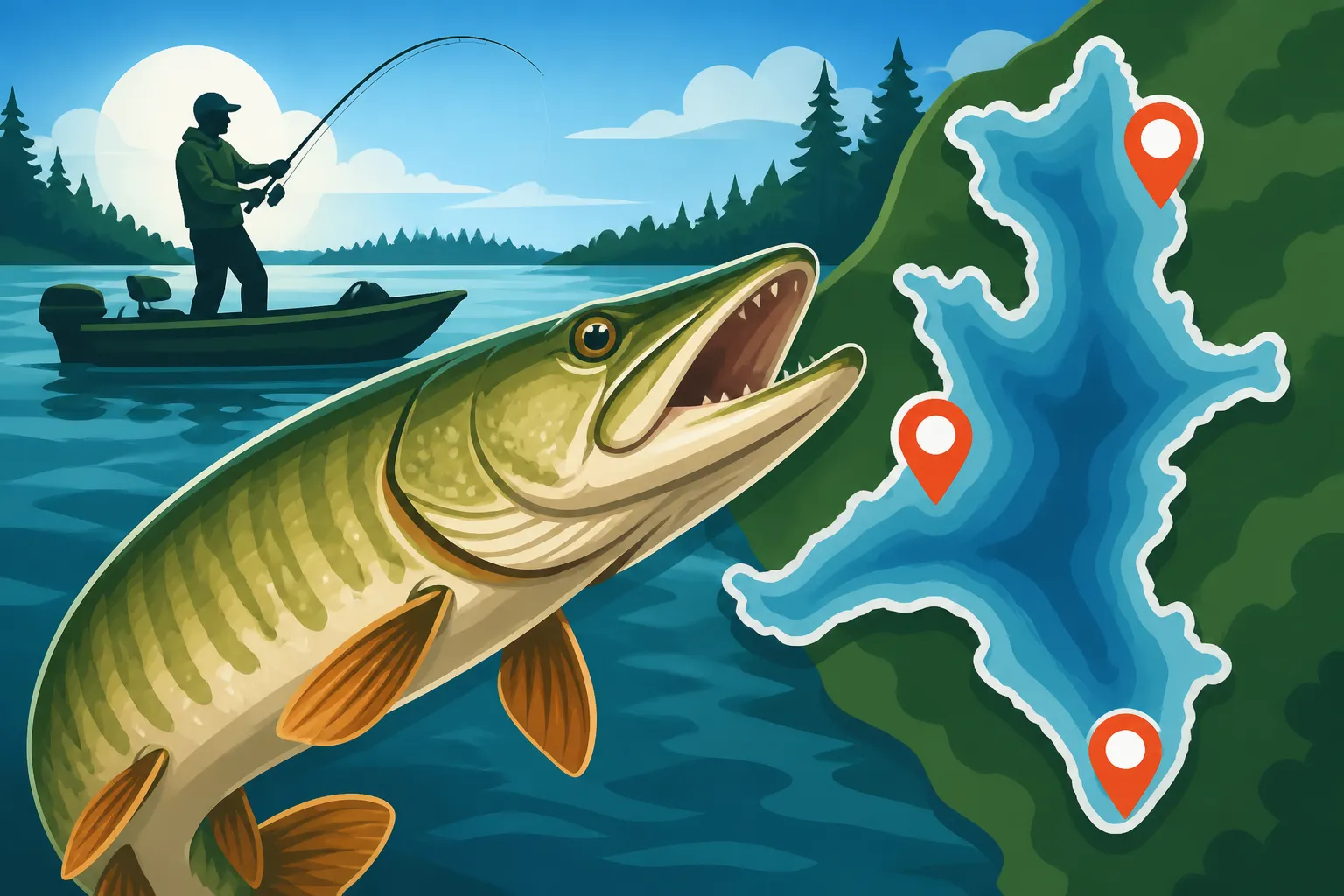
Chasing muskie is a dream for many anglers, but the reality is, these "fish of a thousand casts" live up to their reputation for being incredibly elusive. You've heard whispers of giants lurking in James Lake, but knowing where to actually find them in this beautiful Steuben County gem can feel like trying to solve a complex puzzle. This comprehensive guide is here to cut through the guesswork, pinpointing the prime locations and strategies on James Lake to help you finally connect with one of Indiana's most prized freshwater predators.
Decoding James Lake's Muskie Habitat
James Lake isn't just a pretty face; it's a deep, clear glacial lake with a complex underwater topography that muskie absolutely love. Unlike some shallower, murkier lakes, James Lake offers diverse structure that appeals to these apex predators, from sharp drop-offs to expansive weed flats and even connecting channels. Understanding these key areas is your first step to consistently finding muskie.
Deep Water Drop-offs and Extensive Weed Lines
Muskie are ambush predators, and they adore holding tight to structure that allows them to suddenly dart out and attack unsuspecting prey. On James Lake, this often means focusing your efforts around the pronounced deep water drop-offs. These aren't just subtle inclines; we're talking about areas where the lake bed quickly plunges from, say, 10-15 feet down to 25-40 feet or more. The edge of these drop-offs, especially where they intersect with healthy, dense weed lines, is muskie paradise. Think about it: they can sit just on the deep side, camouflaged by the darker water, waiting for baitfish or even smaller game fish to venture too close to the cover.
You'll often find these muskie holding just outside the deepest edge of cabbage weeds, coontail, or even some of the deeper milfoil beds. These weeds provide not only cover for the muskie but also act as a magnet for their primary food sources. Spend time mapping out these transitions using your fish finder, paying close attention to any irregularities along the weed edge—a small point, a bend, or even a gap in the weeds can be a key ambush point. Remember, these fish aren't always in the densest part of the weeds, but rather on the fringes, ready to strike. The deeper, cooler water offers them refuge during warmer months, while the weed lines offer a pantry and protection.
Channels and Connecting Waters
One of the unique aspects of James Lake, and a major factor in its muskie population, is its connection to Lake Gage. This natural channel provides a significant thoroughfare for fish movement, including muskie, especially during seasonal transitions or in response to changes in baitfish patterns. These connecting waters act as highways, and muskie will often patrol them, waiting for food to pass through.
The narrower parts of the channel, where water flow might be more pronounced, can create natural funnels for baitfish, making them excellent spots for muskie to stage. Look for areas where the channel widens slightly into a basin or where it narrows significantly, creating a pinch point. Don't overlook the mouths of these channels either, both where James Lake connects to Lake Gage and any smaller, less obvious cuts. Muskie will often position themselves at these entrances, especially during dawn and dusk, to intercept migrating prey. Keep an eye on any current created by these connections, as muskie are efficient swimmers and will often face into the current, conserving energy while waiting for an easy meal. This is a critical area to explore if you're looking for where to catch Muskie on James Lake, and it provides a different kind of structure compared to the main lake basin.
Rocky Points and Submerged Structure
While weeds and drop-offs are paramount, James Lake also boasts some excellent rocky points and submerged structure that muskie utilize. These areas provide hard cover, which can hold heat, attract different baitfish species, and offer another ambush opportunity. A rocky point that extends out into deeper water is a classic muskie haunt. The rocks themselves provide friction for current, attracting invertebrate life that smaller fish feed on, which in turn draws in the bigger predators.
Beyond visible points, keep an eye out for submerged humps, rock piles, or even old cribs or brush piles that might have been placed by previous generations of anglers or naturally occur. These hidden gems are often revealed through careful navigation with your depth finder. Once you locate a promising piece of submerged structure, approach it cautiously and work it thoroughly from multiple angles. Muskie might hug these structures tightly, making precise casts essential. Sometimes, a single boulder in an otherwise featureless flat can be enough to hold a giant muskie, so don't dismiss even small anomalies on your sonar. These hard structures are especially productive during periods of lower light or when muskie are less inclined to relate to dense vegetation.
Here’s a quick overview of primary muskie locations on James Lake:
| Location Type | Key Characteristics | Why Muskie Love It | Best Conditions |
|---|---|---|---|
| Deep Drop-offs | Rapid depth changes (15ft to 40ft+), often near weedlines | Ambush points, deep-water refuge, access to food | Sunny days, warmer water temps, open water fishing |
| Dense Weed Lines | Cabbage, coontail, milfoil beds at depth transition | Cover, oxygenated water, prime baitfish habitat | Overcast, post-front, or low-light conditions |
| Channels/Connecting | Passageways to Lake Gage, pinch points | Fish migration routes, current breaks, baitfish funnels | Seasonal migrations (spring/fall), stable weather |
| Rocky Points | Hard structure extending into deeper water | Ambush points, current breaks, attracts varied prey | Early season, cooler water, low light |
| Submerged Structure | Humps, rock piles, brush piles (hidden) | Isolated ambush points, thermal refuge, baitfish magnets | Anytime, requires good electronics for finding |
Proven Techniques and Lures for James Lake Muskie
Once you've identified potential muskie holding areas on James Lake, the next challenge is convincing one to strike. Muskie fishing isn't just about showing up; it's about persistent, methodical application of proven techniques with the right tackle. Remember, these fish are predators of opportunity, but they can also be incredibly finicky.
Casting Large Baits with Precision
Casting is arguably the most popular and often most effective method for targeting muskie on James Lake, especially when working those critical weed edges, rocky points, and channel openings. The key is using large baits that imitate the forage muskie are accustomed to. We're talking about baits often 8-12 inches long, sometimes even larger. Think about the types of prey muskie feed on: sizable panfish, suckers, perch, and even small bass. Your lure needs to mimic this.
Common choices include large bucktails, which are fantastic for covering water quickly and often provoke a reaction strike due to their flash and vibration. Consider brands like Musky Mayhem or Mepps Musky Killers. Crankbaits, especially those with a wide wobbling action that can dive to the desired depths, are also excellent. Deep-diving crankbaits that bump the tops of submerged weeds or scrape along those deep drop-offs can be incredibly effective. Glide baits, like those from Salmo or Svartzonker, offer a slower, more erratic side-to-side action that can be irresistible to a following muskie. Topwater lures are exhilarating during low-light conditions or over shallow flats, providing explosive strikes that will get your heart pounding.
Precision casting is paramount. You need to be able to place your lure exactly where you suspect a muskie is hiding—tight to a weed line, just over a submerged rock, or right into the mouth of a channel. Don't just cast aimlessly. Every cast should have a purpose, working through a likely ambush zone. And always, always perform a "figure-eight" at the side of the boat before lifting your lure out of the water. Many muskie will follow a lure right to the boat, and this last-ditch effort often provokes a strike. It's a common frustration when a giant fish appears out of nowhere, but this technique is a game-changer. For more on specific techniques, check out our guide on Muskie Casting Techniques.
Trolling the Lake's Depths and Structure
While casting is great for working specific spots, trolling can be incredibly effective for covering larger expanses of James Lake, particularly those deeper basins and extensive drop-off edges that might hold suspended fish. Trolling allows you to present large baits at consistent depths and speeds over prolonged periods, covering water efficiently and often triggering strikes from muskie that aren't actively chasing.
For trolling, you'll want to use even larger crankbaits or specialized trolling lures that run deep. Consider lures designed for big water that can reach depths of 20, 30, or even 40 feet. Using a combination of lead core line, weighted trolling leaders, or even planer boards can help you achieve precise depth control and spread out your presentation. Pay close attention to your speed; muskie often prefer a slower, more deliberate retrieve, but don't be afraid to experiment with bursts of speed or subtle turns that make your lure change action.
When trolling, focus on maintaining your lure in the "strike zone"—that specific depth where you're marking baitfish or seeing interesting structure on your fish finder. Your electronics become your best friend here, helping you stay on those contours and drop-offs. If you’re visiting from out of state or just want a leg up, sometimes booking a local guide through platforms like FishingBooker can provide invaluable insights into the best trolling runs and depth curves on James Lake. They often have years of experience and track records of successful trips. Remember, the goal is to systematically work promising areas, allowing your baits to draw out those deep-dwelling muskie. For more insights on Best Time of Year for Muskie Fishing in Indiana, consider how seasonal patterns impact trolling success.
Seasonal Strategies for James Lake Muskie
Muskie behavior on James Lake changes dramatically with the seasons, and adapting your approach is key to consistent success.
- Spring (Post-Spawn): After the ice melts and water temperatures begin to rise, muskie will move into shallower bays and flats where water warms fastest. They’re recovering from the spawn and often quite aggressive. Focus on shallow-running crankbaits, gliders, and bucktails around new green weeds. This is a great time for targeting pre-spawn fish as well.
- Summer: As water temperatures peak, muskie will often retreat to deeper, cooler water, relating closely to those deep weed lines, thermoclines, and submerged structures. They might become more lethargic during midday, making dawn, dusk, and even night fishing productive. Deep-diving baits, large soft plastics, and even slow-trolled presentations become effective. During the hottest parts of summer, muskie can be incredibly tough to entice.
- Fall: This is prime time for trophy muskie on James Lake, and why many anglers consider it the Best Time of Year for Muskie Fishing in Indiana. As water temperatures drop, muskie go on a feeding frenzy, bulking up for winter. They'll often move back into shallower areas during cooler mornings and evenings, then retreat to mid-depths during the day. Big, heavy baits are the name of the game: large crankbaits, jerkbaits, and even dead baits can be highly effective. The fall run often sees muskie actively chasing larger prey items, making it an exciting time to be on the water. Make sure you're equipped with the Best Muskie Lures for Fall Fishing.
- Winter (Ice Fishing): While challenging, some dedicated anglers target muskie through the ice on James Lake. This typically involves large tip-ups rigged with live suckers or large cut bait. Locate deep points, humps, or structures near deep water. Patience is essential, as bites can be few and far between, but the rewards can be enormous.
Essential Gear and Planning Your James Lake Muskie Trip
Muskie fishing isn't just about the fish; it's about the entire experience, and having the right gear can make or break your trip, both in terms of success and safety. The sheer power of these fish demands robust equipment, and proper planning ensures you're ready for anything James Lake throws at you.
Rods, Reels, and Line for Serious Muskie
When it comes to muskie fishing, "heavy duty" is the mantra. You absolutely cannot skimp on your tackle. For casting, you'll want a heavy to extra-heavy power baitcasting rod, typically 7'6" to 9' in length. These longer rods provide better casting distance for those large lures and offer superior leverage when fighting a powerful muskie. Pair this with a high-quality baitcasting reel designed for muskie, featuring a strong drag system and a high line capacity. Look for reels with a low gear ratio for powerful retrieves and models known for their durability. If you need some recommendations, our guide on Best Rods for Muskie Fishing can help you pick the right setup.
For line, braided superline is the only way to go. You'll need heavy test, typically 80-100 lb test, to handle the heavy lures, powerful hook sets, and brutal fights. Monofilament and fluorocarbon simply don't have the abrasion resistance or strength needed. And this is crucial: you must use a heavy wire leader. Muskie have rows of razor-sharp teeth that will effortlessly cut through braided line. A solid, heavy-duty fluorocarbon leader of 100-150 lb test, or a braided steel leader, is non-negotiable. This isn't just about losing a fish; it's about safety for both you and the fish during release. For more on this, consult our detailed article on Wire Leaders for Muskie Fishing in Indiana's Glacial Lakes.
The Importance of a Good Net and Release Tools
Landing a muskie safely and efficiently, and then releasing it unharmed, requires specialized tools. A large, rubberized landing net is an absolute must. We're talking about a net with a hoop at least 30-40 inches wide and a deep, tangle-free, knotless rubber mesh bag. This prevents the muskie's fins and gills from getting damaged and minimizes the risk of lures tangling in the net. Trying to land a large muskie without one is asking for trouble—for both you and the fish. Having a quality net is so important it's worth reading our guide on the Best Nets for Landing Muskie in Indiana.
Beyond the net, a set of long-nose pliers or a jaw spreader is essential for removing hooks safely. Muskie can be notoriously difficult to unhook, and their teeth are dangerous. A jaw spreader helps keep their mouth open, and long pliers allow you to reach in without risking your fingers. A bolt cutter is also a good idea for cutting hooks if they're deeply embedded and cannot be safely removed otherwise. Your personal safety and the fish's well-being depend on having these tools readily accessible.
Working with a Guide or Scouting the Waters Yourself
Deciding whether to hire a guide or tackle James Lake on your own depends on your experience level, time constraints, and budget. For anglers new to muskie fishing or unfamiliar with James Lake's nuances, a local guide can be an invaluable asset. They know the lake like the back of their hand, understand the seasonal patterns, and can teach you the ropes quickly. You can often find reputable guides through fishing forums, local tackle shops, or even by browsing services like FishingBooker, which lists experienced charters. A guide can significantly reduce your "fish of a thousand casts" count, putting you on fish faster and teaching you critical techniques.
If you prefer to go it alone, be prepared to do your homework. Get a detailed map of James Lake, pay attention to bathymetry, and spend considerable time idling around, using your electronics to identify those key drop-offs, weed beds, and submerged structures. Utilize resources like the Indiana DNR's lake mapping data. The "Boat Ramp Locals Use to Reach James Lake's Muskie Water" is a great starting point for launching your vessel and beginning your exploration. Consider dedicating your first few trips primarily to scouting, rather than just fishing, to truly learn the lake's contours and muskie haunts. Patience, observation, and a willingness to learn from every cast are your greatest allies when scouting for these magnificent fish.
Ultimately, James Lake offers a fantastic opportunity for serious muskie anglers in Indiana's glacial lake region. While they live up to their reputation for being tough to catch, understanding their habitat, employing the right techniques, and being properly geared up will dramatically increase your chances of experiencing the thrill of a James Lake muskie. Indiana's Muskellunge Fishing in Indiana: What Anglers Need to Know covers many general aspects that are good to review as well.
Disclaimer
Fishing conditions and regulations can change rapidly. Always check the latest Indiana Department of Natural Resources (DNR) regulations before heading out on any fishing trip. This guide is for informational purposes only and does not guarantee fishing success. Practice responsible angling, including catch and release for muskie, to ensure the health of the fishery for future generations.