Do Neighboring States Honor an Indiana Fishing License?
It's incredibly frustrating, isn't it? You've got your Indiana fishing license, you're ready to hit the water, and then you start thinking, "Wait, what if I cross state lines? Does my license still count?" This is a super common point of confusion for anglers who live near or plan to visit our beautiful Hoosier state's borders. This guide is here to clear up that confusion, diving deep into Indiana's fishing license reciprocity with its neighbors and helping you stay on the right side of the law while enjoying your time on the water.
Understanding Fishing License Reciprocity: The Short Answer
Let's get right to it: generally speaking, your Indiana fishing license doesn't automatically grant you permission to fish in a neighboring state's waters. I know, it's a bummer. You wish one license would cover everything, especially when you're just a short cast away from another state's shoreline. But the reality is a bit more nuanced, with very specific exceptions for shared waterways.
The General Rule: No Automatic Reciprocity
Think of fishing licenses as state-specific permits. Each state manages its own fisheries, sets its own regulations, and collects revenue from license sales to fund conservation efforts, stocking programs, and enforcement. If Indiana were to honor every other state's license, and vice versa, it would create a logistical nightmare and severely impact their ability to manage their own aquatic resources. This is why, for the vast majority of fishing spots, if you cast your line in Ohio, Michigan, Illinois, or Kentucky waters, you'll need a license from that specific state.
It's a system that can definitely feel like a hassle, particularly if you live right on a border and frequently fish both sides of a river or lake. You might wonder why they can't just make it simpler for us anglers. The truth is, balancing state revenue, conservation needs, and angler convenience is a complex dance, and states err on the side of ensuring their resources are protected and funded by those who utilize them. So, while it's frustrating to buy multiple licenses, it's a necessary part of how our fisheries are managed.
Border Waters and Special Agreements
Now, there's a really important exception to that general rule: special reciprocity agreements for shared border waters. These agreements are usually forged between state wildlife agencies to simplify things for anglers who fish rivers or lakes that physically divide two states. Instead of needing two licenses to fish both sides of a narrow river, these agreements allow you to fish the shared water body with either state's license.
However, and this is crucial, these agreements are rarely universal. They apply only to the specific shared water body, often with very defined boundaries. For instance, an agreement for the main stem of a river might not extend to its tributaries or backwaters that lie entirely within one state. These are truly exceptions, not the rule, and understanding their precise scope is key to avoiding an unexpected citation. It’s always best to be armed with the exact information before you hit the water, rather than relying on hearsay or assumptions.
Indiana's Reciprocity Agreements with Neighboring States
Indiana shares borders with Ohio, Michigan, Illinois, and Kentucky, and each border presents a slightly different scenario when it comes to fishing license reciprocity. Let's break down where you might find some flexibility and where you definitely need a separate license.
Ohio River Reciprocity
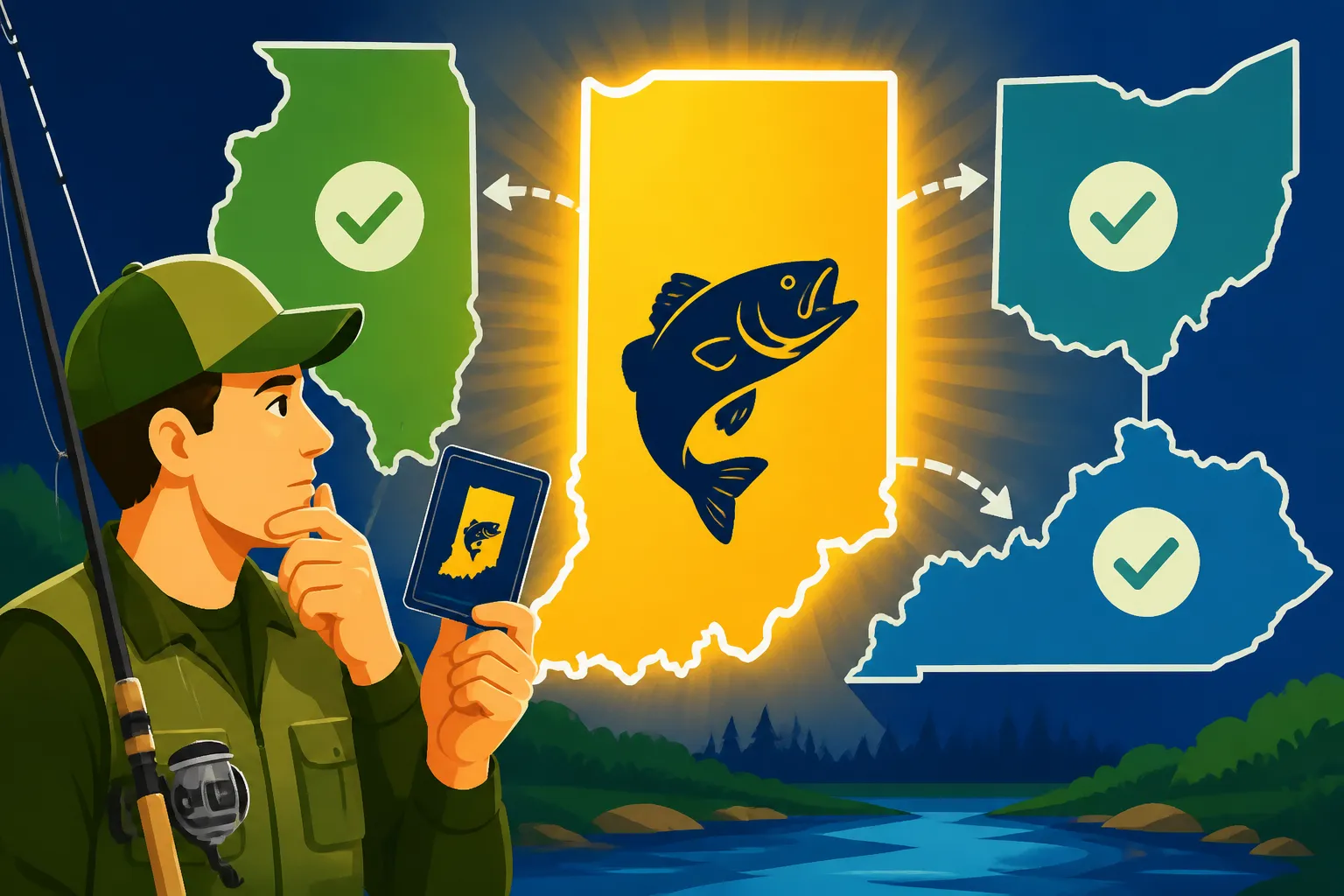
This is probably the most significant area of reciprocity for Indiana anglers! Indiana has a special agreement with both Ohio and Kentucky concerning the main stem of the Ohio River. This means that if you possess a valid fishing license from Indiana, Ohio, or Kentucky, you can legally fish the Ohio River proper, from bank to bank, regardless of which state's license you hold.
This is a huge relief for many anglers who love to chase sauger, catfish, or hybrid striped bass in this mighty river. However, be absolutely clear on the limits of this agreement:
- Main Stem Only: This reciprocity generally applies only to the main channel of the Ohio River. As soon as you move into a tributary or embayment that is entirely within one state (e.g., a creek on the Indiana side that flows into the Ohio River), you must possess the license for the state that the tributary is in. So, if you're fishing a small creek emptying into the Ohio on the Indiana side, you need an Indiana license. If you're on a Kentucky creek, a Kentucky license.
- Specific Species & Regulations: While your license is valid, you still need to be aware of and follow the specific fishing regulations, bag limits, and length limits of the state whose waters you are actively fishing from, or the regulations of the state whose license you hold if there's a conflict. It's often safer to adhere to the most restrictive rules if you're unsure.
For more detailed information on specific agreements, you can dive into Indiana Fishing License Reciprocity With Ohio and Indiana Fishing License Reciprocity With Illinois and Kentucky. These resources can provide crucial specifics to ensure your trip goes smoothly.
Wabash River and Illinois Border Waters
When it comes to the Wabash River, which forms a significant portion of the border between Indiana and Illinois, the situation is a little less clear-cut than the Ohio River. Unlike the comprehensive Ohio River agreement, there isn't a broad, blanket reciprocity for the entire length of the Wabash between Indiana and Illinois.
Historically, agreements for the Wabash have been more localized or species-specific, if they exist at all. This means that if you're fishing the Wabash River and plan to cross over to the Illinois side or launch from an Illinois ramp, you will likely need an Illinois fishing license. The same goes for any specific lakes or smaller rivers that might lie directly on the border but are not part of a clearly defined reciprocal agreement. Always check with both the Indiana Department of Natural Resources (IDNR) and the Illinois Department of Natural Resources (IDNR) for the most up-to-date and specific regulations regarding any shared stretch of the Wabash. When in doubt, it’s always better to purchase the additional license than risk a citation.
Lake Michigan and Northern Borders
Lake Michigan is a vast and unique fishery, shared by Indiana, Michigan, Illinois, and Wisconsin. The temptation to hop between states while pursuing salmon and steelhead is strong, but unfortunately, your Indiana fishing license doesn't grant you permission to fish in the Michigan or Illinois portions of Lake Michigan.
- State-Specific Waters: Lake Michigan is divided into state waters, and you must possess a valid fishing license for the state whose waters you are actively fishing in. If you launch your boat from Michigan City, Indiana, and then troll northward into Michigan waters, you'll need a Michigan fishing license. Similarly, if you head west towards Illinois waters, an Illinois license is required. The invisible lines on the lake are very real to conservation officers.
- Trout and Salmon Stamps: On top of the general fishing license, remember that if you're targeting trout or salmon on Lake Michigan, you'll also need a valid Trout and Salmon Stamp from the state whose waters you are fishing in. This is an additional requirement in many states, including Indiana, for these specific species.
For comprehensive details about fishing this incredible Great Lake, you'll want to review Lake Michigan Fishing Rules for Indiana Anglers. If you're planning a trip further north or west, be sure to consult Does a Michigan Fishing License Work in Indiana? and Fishing License Rules for Illinois Residents Visiting the State to ensure you're fully prepared.
Other Border Waters (Michigan, Illinois, Kentucky)
Beyond the major rivers and Lake Michigan, there are countless smaller lakes, ponds, and streams that sit very close to or even straddle state lines. For these bodies of water, the general rule of "no automatic reciprocity" almost always applies.
- Michigan and Smaller Lakes: Along the Indiana-Michigan border, there are numerous small glacial lakes. While they might be beautiful and productive, don't assume your Indiana license is valid if you cross into Michigan waters or vice-versa. Always secure a Michigan fishing license if you intend to fish on their side.
- Kentucky and Inland Waters: The Ohio River is the primary area of reciprocity with Kentucky. For any inland lakes or rivers in Kentucky, even those very close to the Indiana border, you will need a Kentucky fishing license.
- Always Verify: The takeaway here is simple: if it's not the main stem of the Ohio River, assume you need a separate license for each state you plan to fish in. The rules are designed to be quite strict to protect each state's fisheries, so it’s always safer to assume you need an extra license rather than hope for reciprocity. For a quick reference on what's allowed, check out pages like Indiana Fishing License Reciprocity With Michigan and Fishing License Rules for Kentucky Residents Visiting Indiana.
Navigating Multi-State Fishing Trips
Planning a fishing trip that crosses state lines can feel like a bureaucratic maze, but with a bit of foresight, you can navigate it smoothly. The key is proactive research and understanding that different states have different rules, even for the same species.
The Importance of Checking Each State's DNR
Seriously, this cannot be stressed enough. Before you even pack your rods, you need to visit the official Department of Natural Resources (DNR) website for every single state you intend to fish in. These websites are your authoritative source for current licensing requirements, regulations, bag limits, length limits, and any specific reciprocal agreements. Regulations can change annually, so relying on outdated information or word-of-mouth is a recipe for trouble.
Why is this so important? Because fishing without a proper license, or violating local regulations, can lead to stiff penalties. Imagine spending a beautiful day on the water, only to be approached by a conservation officer and hit with a hefty fine or even have your gear confiscated. In Indiana, for instance, fishing without a license can result in significant financial penalties, which you can learn more about by checking out What Happens If You Fish Without a License in Indiana?. It's a quick way to turn a relaxing trip into a costly headache. Save yourself the stress and do your homework beforehand.
Planning Your License Purchases
Once you know which states you'll be fishing in, you can start planning your license purchases. States typically offer a variety of options to suit different trip durations and angler needs:
- Annual Nonresident Licenses: If you plan on making multiple trips to a neighboring state throughout the year, an annual nonresident license might be your most cost-effective option.
- Short-Term Nonresident Licenses: For a weekend getaway or a quick day trip, most states offer 1-day, 3-day, or 7-day nonresident fishing licenses. These are perfect for visiting anglers who just want to spend a short amount of time on the water without committing to a full year. For example, a Nonresident 1-Day Fishing License Price: $9 might be ideal for a quick visit, while a Nonresident 7-Day Fishing License Price: $20 could cover a longer vacation. Compare the costs to see what makes the most sense for your budget and schedule.
- Online or Local Vendors: Most states allow you to purchase licenses online through their DNR website. It's usually a quick and easy process, and you can often print a temporary license immediately. Alternatively, you can typically purchase licenses from local bait shops, sporting goods stores, or even some county clerk offices. For how to get your Indiana license, you can look up Buying a Fishing License Online in Indiana.
Once you've sorted out your licenses, you might be looking for some new fishing gear or accessories to make your multi-state trip a success. Sites like Amazon offer a massive selection of everything from new rods and reels to tackle boxes and waders, all from the comfort of your home. It’s a convenient way to get everything you need delivered right to your door before you hit the road.
Essential Gear and Rules Beyond the License
Remember that a fishing license is just one piece of the puzzle. Each state also has its own specific rules regarding:
- Bag Limits: How many fish of a certain species you can keep in a day.
- Length Limits: Minimum or maximum lengths for keeping certain fish.
- Season Dates: When specific species are in season and can be legally harvested.
- Bait Restrictions: Certain live baits might be prohibited in some waters to prevent the spread of invasive species.
- Gear Restrictions: Some areas might have limitations on the number of lines you can use, or types of tackle (e.g., no treble hooks in certain streams during trout season).
A classic example of varying regulations is walleye length limits, which can even differ from lake to lake within the same state, as seen in Indiana Walleye Length Limits by Lake. Or, consider the very distinct rules governing Lake Michigan Fishing Regulations Are Different From the Rest of the State compared to inland lakes.
It's not just about what license you have, but what you can actually do with it. A good reference book on local species or a new tackle box to help organize different state's-specific gear can be found on Amazon, making it easier to adapt to changing rules. Always carry a copy of the regulations (either printed or accessible on your phone) for the state you're fishing in, alongside your license. It's your ultimate cheat sheet for staying legal and ensuring a stress-free fishing adventure.
Common Misconceptions About Fishing Licenses
There are a few common myths floating around that can get anglers into hot water when it comes to licenses. Let's debunk them right now to ensure you're fully informed.
"If I'm on a boat, the boat's license covers me."
This is a really common misconception, especially among groups fishing from a single vessel. The truth is, in nearly all cases, a fishing license is issued to an individual, not to a boat. Every person actively engaged in fishing on board a boat, regardless of who owns the boat or where it's registered, typically needs their own valid fishing license for the waters they are fishing in.
Think of it like a driver's license: each driver needs their own, even if they're driving the same car. The same principle applies to fishing. So, if you're taking your family or friends out on Lake Monroe, everyone over the legal age limit for needing a license in Indiana needs their own. This ensures that everyone contributes to the conservation efforts and adheres to the regulations set forth for individual anglers.
"My guide has a license, so I don't need one."
Another widespread myth, particularly if you're hiring a fishing guide for a trip. While your fishing guide will undoubtedly have their own licenses, permits, and potentially special commercial guide licenses, these do not extend to cover their clients' individual fishing privileges. A guide's license allows them to operate a business and provide services, but each client is still responsible for possessing their own valid fishing license for the state and waters they are fishing in.
Before you book a guided trip, always confirm with your guide what licenses you, as the client, will need to purchase beforehand. They are usually very knowledgeable about the requirements and can point you in the right direction. It's part of ensuring a professional and legal experience for everyone involved.
"Free Fishing Days apply everywhere."
Free Fishing Days are fantastic opportunities for new anglers to try out fishing without the upfront cost of a license, or for seasoned anglers to introduce friends and family to the sport. Indiana, for example, offers several Indiana Free Fishing Days Guide throughout the year, often in May, June, and September. These days are a wonderful initiative to get more people hooked on fishing.
However, a crucial point often overlooked is that these free fishing days are state-specific. An Indiana Free Fishing Day only applies to Indiana waters. It does not mean you can cross into Ohio, Michigan, Illinois, or Kentucky on those days and fish their waters without a license. Each state designates its own specific free fishing days, and they rarely align perfectly. So, if you plan to fish across state lines, even on a free fishing day, you'll still need to check the local regulations for that specific state. You might even wonder Can Nonresidents Fish Free on Indiana's Free Fishing Days?, and the answer is usually yes, but only within Indiana's borders. Always confirm the details for the specific state you intend to fish.
Indiana Fishing License Reciprocity Summary
To give you a clear, concise overview of Indiana's reciprocity status with its immediate neighbors, here's a handy table:
| Neighboring State | Shared Waterway | Reciprocity Status | Notes on Reciprocity |
|---|---|---|---|
| Ohio | Ohio River | Yes | Applies to main stem only. Indiana, Ohio, or Kentucky license is valid. Tributaries require state-specific license. |
| Kentucky | Ohio River | Yes | Applies to main stem only. Indiana, Ohio, or Kentucky license is valid. Tributaries require state-specific license. |
| Illinois | Wabash River | Limited/None | No broad reciprocity agreement. Specific local exceptions may apply, always verify with DNRs. Illinois license generally required for Illinois waters. |
| Illinois | Lake Michigan | No | Indiana license NOT valid in Illinois waters of Lake Michigan. Illinois license required. |
| Michigan | Lake Michigan | No | Indiana license NOT valid in Michigan waters of Lake Michigan. Michigan license required. |
| Michigan | Inland Lakes | No | No reciprocity for shared inland lakes or border streams. Michigan license required for Michigan waters. |
This table should serve as a quick reference, but remember, laws and agreements can change. Always use this as a starting point and confirm details with the official state DNR websites before your trip.
Disclaimer
Please remember that fishing regulations and reciprocity agreements are subject to change. While this guide provides comprehensive and up-to-date information, it is crucial to always consult the official Indiana Department of Natural Resources (IDNR) website and the relevant wildlife agencies of any neighboring states before engaging in fishing activities. Your fishing license and adherence to all regulations are your personal responsibility.