Best Crankbaits for Indiana Largemouth Bass
There's nothing quite like the thrill of a big largemouth bass absolutely smashing a crankbait, but if you've spent any time on Indiana's diverse waterways, you know that not every crankbait is created equal. From the shallow, murky backwaters of a farm pond to the deep, clear ledges of our larger reservoirs, choosing the right crankbait can feel like a guessing game. This guide is here to cut through the confusion and help you select the perfect crankbaits to tempt those Indiana largemouth bass, no matter where you're casting your line.
Understanding Crankbaits for Indiana Largemouth
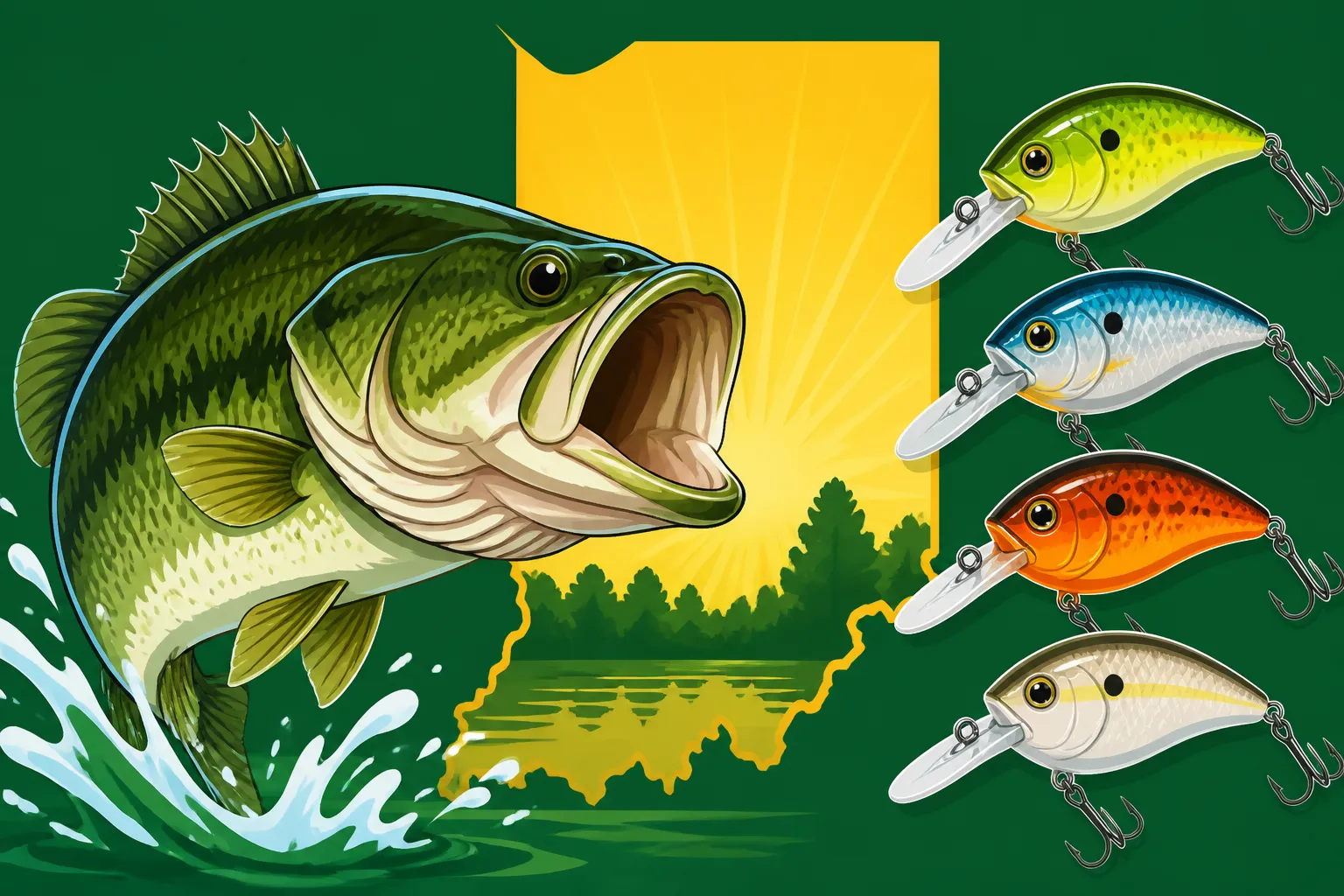
Crankbaits are incredibly effective tools for bass fishing because they mimic baitfish and crawfish, two primary food sources for largemouth bass across Indiana. Their unique diving ability and erratic action often provoke powerful strike reactions, even from bass that aren't actively feeding. But to really unlock their potential, you need to understand the nuances of what makes each type of crankbait tick.
The Basics: What Makes a Crankbait Effective?
At its core, a crankbait is a hard-bodied lure designed to dive when retrieved. However, a lot of subtle features dictate its performance and, ultimately, its success. Think about the variety of water conditions and cover you encounter, whether you're pitching into fallen timber on Patoka Lake or slow-rolling over rock piles in Monroe.
First, consider the shape and size of the lure. Some crankbaits are slender, mimicking minnows and shad, while others are short and stout, better resembling crawfish or bluegill. The size should generally match the forage the bass are keying in on. If bass are feeding on smaller baitfish, a compact crankbait will be more effective than a large one.
Next up is buoyancy. Most crankbaits are floating, meaning they'll float to the surface when you pause your retrieve. This is a crucial feature for fishing around heavy cover, as it allows you to pause the lure and let it float up over snags. Some specialized crankbaits are suspending, meaning they stay at a specific depth when paused, which can be dynamite in colder water when bass are lethargic.
The lip design is arguably the most critical feature. The size, shape, and angle of the lip determine how deep the crankbait dives and its action in the water. A large, steeply angled lip means a deep diver, while a small, more horizontal lip typically creates a shallower-running lure with a wider wobble. The lip also helps the bait deflect off cover, which is often when a bass decides to strike.
Finally, many crankbaits feature rattles inside their bodies. These internal BBs create sound and vibration, helping bass locate the lure in stained or murky water or drawing them in from a greater distance. Some anglers swear by loud rattles, while others prefer silent baits in clear water or when fish are pressured. It's often a matter of experimentation on any given day.
Diving Depths: Matching Your Crankbait to Indiana Waters
One of the biggest challenges anglers face is choosing a crankbait that reaches the right depth. Indiana's waterways vary dramatically, from shallow, bowl-shaped ponds to deep, stratified reservoirs. Using a crankbait that runs too deep will constantly snag, while one that runs too shallow will miss the strike zone entirely.
Shallow-diving crankbaits typically run from 0-5 feet deep. These are your go-to lures for fishing shallow flats, points, riprap banks, and around emergent vegetation or fallen trees. They're perfect for farm ponds, small lakes, and the shallow coves of larger impoundments where bass might be cruising for baitfish or holding tight to cover. Think about those early morning bites in spring or late evening feeds in summer when bass move up from deeper water.
Medium-diving crankbaits hit depths between 6-12 feet. This category offers incredible versatility and is often a workhorse for many Indiana anglers. They excel when bass are holding slightly deeper on submerged grass lines, stump fields, or secondary points. These are fantastic for exploring the mid-range depths of lakes like Salamonie or Mississinewa, where the bottom contours offer a variety of ambush points. They can also be effective in river systems where bass might be holding in slightly deeper pockets or current breaks.
Deep-diving crankbaits are designed to reach depths of 12 feet or more, with some models plunging past 20 feet. These are essential for tackling our deeper reservoirs, such as Brookville Lake or the main lake points of Monroe Lake, especially during the warmer months when bass often retreat to cooler, deeper water or suspend over deep structure. Fishing these baits effectively requires different techniques and gear, but the reward of connecting with a deep-water giant is absolutely worth the effort. Knowing the specific depth you need to reach is key, so pay attention to your electronics if you have them, or use a depth finder.
Top Crankbait Categories for Indiana Largemouth
Now that we understand the basics, let's dive into the specific types of crankbaits that consistently catch Indiana largemouth bass. Each category has its own strengths and ideal scenarios, so having a few of each in your tackle box will make you a more versatile angler.
Squarebill Crankbaits: The Shallow Water Powerhouse
When you're fishing shallow, gnarly cover in Indiana, a squarebill crankbait is often your best friend. These lures are characterized by their distinct square-shaped lip, which gives them a wide, erratic wobble and, critically, helps them deflect off wood, rocks, and other obstacles without getting snagged as easily as a round-billed crankbait.
When to use them: Squarebills shine in depths from 0-8 feet. They are absolute killers around fallen trees, boat docks, rock piles, riprap banks, and shallow grass beds. Imagine you're fishing a small, murky pond in southern Indiana, or working the flooded timber in a spring-fed reservoir. These are prime locations for a squarebill. Their ability to "hunt" side-to-side and then kick off cover creates an irresistible erratic action that triggers reaction strikes.
How to retrieve them: The beauty of a squarebill is in its simplicity. Cast it out, and start reeling. The key is to make contact with cover. When you feel it hit a branch or rock, pause for a split second, then rip it free. That sudden change in direction often makes a bass commit. Vary your retrieve speed – sometimes a fast, aggressive retrieve is best, other times a slower, grinding retrieve that really digs into the bottom will trigger strikes. For fishing around heavy cover, consider heavier line, like 15-20 lb monofilament or fluorocarbon, to help prevent break-offs.
If you're looking for a great squarebill, you'll find plenty of options at Bass Pro Shops or even on Amazon. Brands like Strike King and KVD are well-known for their squarebill offerings, providing a range of sizes and colors perfect for Indiana waters. For more general advice on what bass eat, check out our guide on Best Bait for Largemouth Bass in Indiana Lakes.
Medium-Diving Crankbaits: Versatility for Varying Depths
The medium-diving crankbait is the workhorse of many bass anglers, and for good reason. It’s incredibly versatile, bridging the gap between shallow and deep, making it ideal for a vast array of Indiana fishing scenarios. These baits typically feature a rounded or slightly flattened lip that allows them to dive into that sweet spot of 6 to 12 feet.
Target depths and typical structures: You'll find yourself reaching for a medium diver when bass are positioned on submerged grass lines, the edges of stump fields, offshore humps, or main lake points. They are fantastic for dissecting drop-offs and channel swings in central Indiana reservoirs. Picture yourself casting along a transitional depth on Lake Freeman, where the bottom drops from 8 to 15 feet; a medium diver can effectively cover both ranges as it hunts its way back. They are also excellent for covering large areas quickly, helping you locate active fish that are roaming slightly deeper.
Discuss their utility in lakes and rivers: Lakes like Patoka Lake and Mississinewa Lake are perfect proving grounds for medium-diving crankbaits. Here, you'll encounter extensive submerged timber, creek channels, and tapering points where bass frequently hold. In river systems, such as sections of the White River or Tippecanoe River, a medium diver can be used to probe deeper eddies, current seams, and areas downstream of natural obstructions where bass might be ambushing prey. The trick is to keep that lure consistently hitting structure or ticking the bottom, mimicking a frantic baitfish. These crankbaits come in a huge array of colors, so consider local forage, like shad patterns or crawfish imitations, depending on the season and location. For an even deeper dive into specific locations, consider exploring Patoka Lake Fishing Guide for Bass and Crappie.
Deep-Diving Crankbaits: Reaching the Thermocline and Ledges
When the summer sun heats Indiana's larger reservoirs, or during cold front conditions, largemouth bass often retreat to deeper, cooler water. This is when deep-diving crankbaits become indispensable. These lures are instantly recognizable by their extra-long, often steeply angled lips, designed to dig down quickly and stay in the strike zone for as long as possible.
When and where to use them: Deep divers are tailor-made for targeting bass holding on deep ledges, humps, points, and channel swings in large, deep impoundments like Brookville Lake or Monroe Lake. They can reach depths of 15-25 feet, sometimes even more, making them ideal for probing the thermocline where baitfish and bass often congregate in summer. You’ll use these baits to scour offshore structure that shallower baits simply can't touch. During colder months, when bass often group up on deep contour lines, a deep diver can be a game-changer.
Techniques for getting them down: Getting a deep diver to its maximum depth requires a few specific techniques. First, use a long cast – the longer the cast, the more line is out, allowing the bait to dive deeper on its retrieve. Second, choose the right line: thinner diameter fluorocarbon line (10-14 lb test) will cut through the water more efficiently than monofilament, letting the bait get deeper. A steady, consistent retrieve is usually best, but don't be afraid to incorporate pauses or speed changes if you're not getting bites. It’s crucial to make that bait "dig" and collide with bottom structure. When you feel it bump, keep reeling through it, as that deflection is often what triggers a strike.
Deep cranking can be physically demanding, but the reward of a big, deep-water bass is worth it. For more insights on the state's largest lakes, consult our Monroe Lake: Indiana's Largest Lake for Bass Fishing article.
Color, Sound, and Retrieve: Maximizing Crankbait Success in Indiana
Beyond just depth and shape, the color, sound, and how you work your crankbait are critical factors in coaxing Indiana largemouth into biting. These elements allow you to fine-tune your presentation to current conditions, from gin-clear glacial lakes to chocolate-milk-stained rivers.
Choosing the Right Color: Matching Forage and Water Clarity
Selecting the right color isn't just about what looks pretty; it's about mimicking nature or providing a strong visual contrast. Think about the variety of water clarities you'll encounter across Indiana.
Natural colors vs. bright/chartreuse: In general, if you're fishing in clear water, like many of our northern glacial lakes in Kosciusko or Steuben Counties, natural baitfish patterns are often best. Colors that imitate shad, bluegill, or crawfish will be more subtle and convincing. Think about shades of chrome, silver, white, and subtle greens or browns. These patterns don't spook fish and appear more realistic.
However, when you're dealing with stained or muddy water, which is common in many southern Indiana reservoirs or river systems after a good rain, visibility is low. This is where brighter, more aggressive colors shine. Chartreuse, fire tiger, red, and bright orange crankbaits stand out dramatically, providing a strong visual target for bass. These "reaction" colors often trigger strikes when bass can't rely solely on their sight. Many anglers have great success with red crawfish patterns in early spring when water is cooler and often muddier.
The best strategy is to have a range of colors and let the fish tell you what they prefer. Start with natural colors in clear water and brighter ones in murky conditions, then adjust based on bites. For more on what bass are eating, you might find Best Bait for Largemouth Bass in Indiana Lakes helpful.
Sound and Vibration: Calling in Bass from a Distance
Just like color, the presence or absence of sound in a crankbait can be a huge factor, especially in Indiana's varied fishing environments. Many crankbaits come with internal rattles, while others are completely silent.
Rattling vs. silent:
Rattling crankbaits contain small BBs or pellets inside their bodies that create noise and vibration as the lure moves through the water. This sound travels further than the visual profile of the lure, allowing bass to detect it from a greater distance. This is particularly effective in:
- Stained or muddy water: When visual cues are limited, sound helps bass pinpoint the lure.
- Windy conditions: The chop on the water's surface can diffuse light, making sound even more important.
- Active fish: When bass are aggressive and feeding, the extra commotion can grab their attention and trigger a territorial strike.
- Deep water: Sound can travel well underwater, helping to draw bass up from deeper ledges or cover.
Silent crankbaits, on the other hand, produce no internal noise. These are often preferred in:
- Clear, highly pressured water: In lakes where bass see a lot of lures, a silent approach can be less alarming and more natural.
- Shallow water: Sometimes, in very shallow water, a loud rattle can be too much and actually spook wary bass.
- Finesse situations: When bass are lethargic or easily spooked, a subtle, vibration-only presentation can be more effective.
The rule of thumb: more noise in less visibility. But again, experimentation is key. Have both options handy!
Retrieval Techniques: The Art of the Crankbait
It's not enough to simply cast and reel. The way you retrieve your crankbait is paramount to its effectiveness. A crankbait needs to look alive, vulnerable, and sometimes, panicked, to draw strikes.
Steady retrieve: This is the basic, consistent retrieve. It works well for covering water and often for medium-diving crankbaits where you want to maintain a consistent depth. However, it can sometimes be too monotonous for lethargic bass.
Stop-and-go: This technique involves reeling for a few seconds, then pausing briefly (1-3 seconds), and then resuming your retrieve. For floating crankbaits, the pause allows the lure to float up slightly, mimicking a struggling baitfish or a crawfish trying to escape. This change of pace often triggers a reaction. For suspending crankbaits, the pause makes the lure hang motionless, which can be irresistible to bass.
Deflection: This is perhaps the most critical technique for crankbaits, especially squarebills. The goal is to make the crankbait "deflect" off of cover like rocks, stumps, or logs. When your crankbait hits an obstruction, the sudden, erratic change in direction often provokes an immediate, aggressive strike. To do this, cast your lure so it will intercept cover, and when you feel it make contact, give your rod a slight twitch or keep reeling to help it kick off the obstacle. This mimics a fleeing prey item perfectly. Many Indiana anglers targeting shallow cover will "crash" their squarebills into anything they can find.
Vary your retrieve until you find what the bass prefer that day. Sometimes a slow, methodical retrieve is best, other times a burning retrieve will draw violent strikes. For general tips on bass fishing techniques, check out Bass Fishing Techniques for Beginners.
Gear Pairing and Maintenance for Indiana Crankbait Fishing
Even the best crankbait in the world won't perform optimally if it's not paired with the right rod, reel, and line. Additionally, a little maintenance goes a long way in keeping your lures in prime condition and hooks needle-sharp.
Rods, Reels, and Line: The Right Setup for Crankbaits
Choosing the right gear specifically for crankbait fishing will dramatically increase your hook-up ratio and enjoyment on the water.
Rods: For most crankbait applications, you'll want a medium-heavy power rod with a moderate or moderate-fast action.
- Power (Medium-Heavy): This gives you enough backbone to cast heavier crankbaits and to horse a big bass out of cover.
- Action (Moderate to Moderate-Fast): This is key. A moderate action rod has a more parabolic bend throughout its length, which acts like a shock absorber. When a bass strikes a crankbait, they often swipe at it, and the treble hooks can tear out of their mouth with a stiff, fast-action rod. A moderate action allows the rod to load up, keep tension on the fish, and prevent the hooks from tearing free, especially when using lighter treble hooks. It also helps you make long casts more effortlessly, which is crucial for deep diving crankbaits. For more info on rods and reels, take a look at Best Rods and Reels for Indiana Largemouth Bass.
Reels: A baitcasting reel is generally preferred for crankbait fishing because it allows for longer casts and better control. The gear ratio is an important consideration:
- Lower Gear Ratios (5.1:1 to 6.4:1): These are excellent for deep-diving crankbaits as they provide more torque, making it easier to retrieve baits that pull hard through the water. They also encourage a slower, more consistent retrieve, which can be deadly.
- Higher Gear Ratios (7.1:1 and up): While great for other techniques, a faster reel can make it harder to maintain a consistent retrieve for deep divers and might pull squarebills too quickly from cover. Stick to moderate ratios for crankbaits.
Line: The type and size of your fishing line significantly impact a crankbait's performance.
- Fluorocarbon: This is a popular choice for crankbait fishing because it is nearly invisible underwater, has low stretch for better sensitivity, and, most importantly, sinks. Its sinking property helps crankbaits dive deeper and get to their target depth faster. Typically, 10-14 lb test is common for most crankbaits.
- Monofilament: Monofilament line floats and has more stretch than fluorocarbon. While it might prevent crankbaits from diving as deep, its stretch can be beneficial with treble hooks, acting as an extra shock absorber. It’s also very abrasion-resistant, which is great for fishing around heavy cover with squarebills. Lighter monofilament (10-12 lb) can be used for shallow-diving baits where maximum depth isn't the goal.
- Braided Line: While super sensitive and strong, braid's lack of stretch and high visibility make it less ideal directly tied to crankbaits. If used, typically anglers will add a fluorocarbon leader.
Essential Crankbait Accessories and Maintenance Tips
Keeping your crankbaits and associated gear in top shape will ensure they perform their best when you need them.
Split Ring Pliers: These small, specialized pliers are invaluable for quickly changing out dull or bent hooks on your crankbaits. You'll want to inspect your hooks regularly, especially after fishing around rocky or woody cover.
Hook Sharpeners: Crankbaits often come with decent hooks, but they can dull quickly from bumping off rocks or even just from being stored. A small hook sharpener is a must-have tool to keep your trebles razor-sharp, improving your hook-up ratio significantly. A sharp hook means the difference between a fish that gets away and one you put in the boat.
Storage: Proper storage prevents crankbaits from tangling and keeps their hooks from dulling or rusting. Tackle boxes with individual compartments are ideal. Many anglers keep their most used crankbaits organized by depth or color for quick access. Bass Pro Shops and Amazon offer a wide selection of tackle storage solutions. For general tackle organization, check out Best Tackle Box Organizers for Anglers.
Regular Inspection: After each outing, give your crankbaits a quick once-over. Check for bent hooks, damaged lips, or cracks in the body. A damaged lip can cause a crankbait to run improperly or "track" off to one side. Sometimes, a slight tweak with pliers can fix a bent lip, but often, a damaged lure needs to be replaced.
By understanding the characteristics of various crankbaits and pairing them with the right gear and techniques, you'll be well on your way to dialing in those Indiana largemouth bass, turning frustrating days into successful ones.
Here's a quick reference table to help you choose the right crankbait for your Indiana fishing adventures:
| Crankbait Type | Primary Depth Range | Ideal Cover/Structure | Best Water Clarity | Typical Forage Mimicked | Key Feature / Action |
|---|---|---|---|---|---|
| Squarebill | 0-8 feet | Wood, Rocks, Riprap, Shallow Grass | Stained to Clear | Crawfish, Bluegill | Wide wobble, Deflects easily |
| Medium Diver | 6-12 feet | Submerged Grass, Humps, Points, Stumps | Varied | Shad, Minnows | Versatile wobble, Consistent dive |
| Deep Diver | 12-25+ feet | Ledges, Deep Points, Channels | Clear to Stained | Shad, Larger Baitfish | Aggressive dive, Deep penetration |
Disclaimer
This article is for general informational purposes only and does not constitute professional advice. Laws, prices and regulations vary by location and change over time. Consult a qualified professional for guidance on your specific situation.