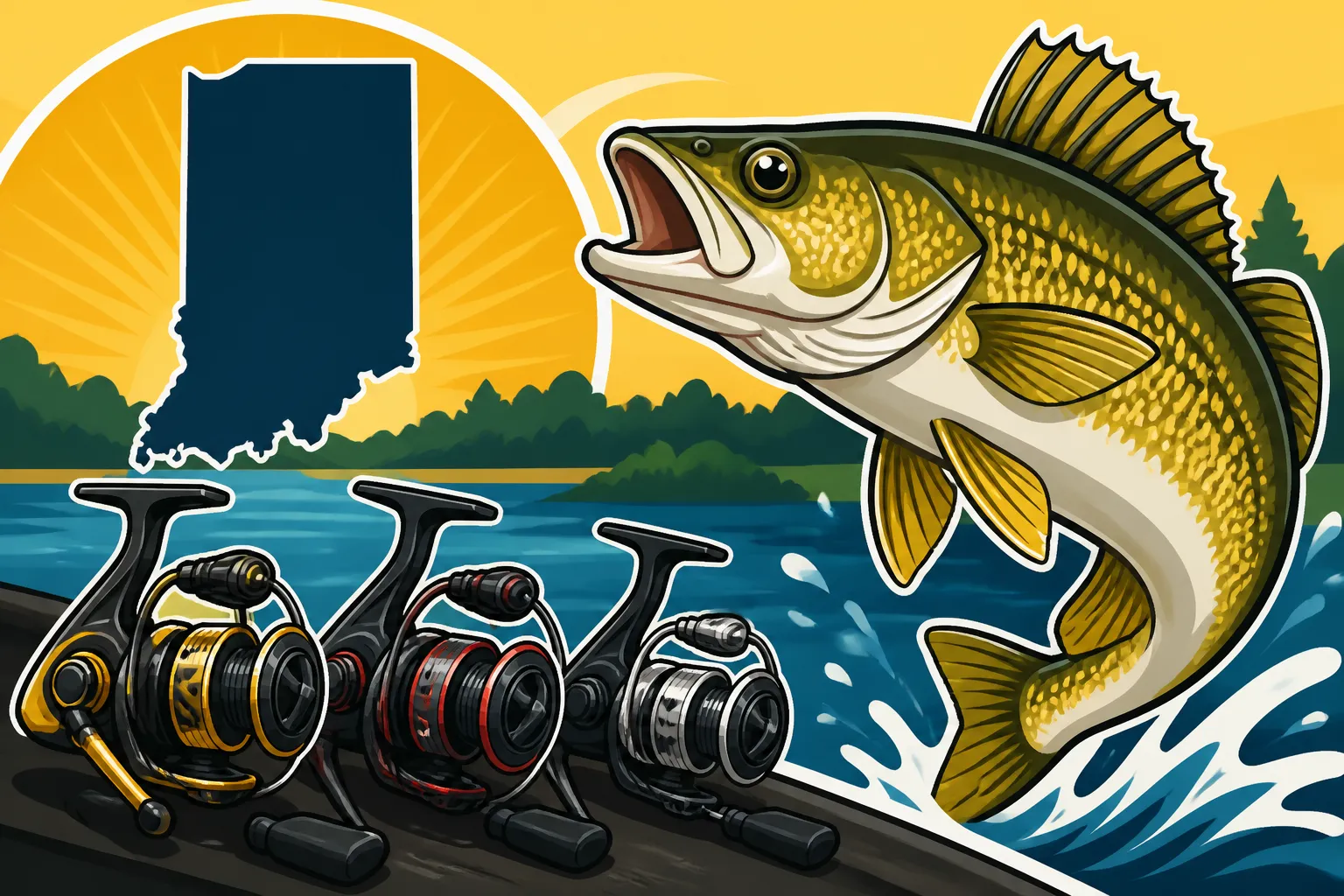
Best Reels for Walleye Fishing on Indiana Lakes
Choosing the right reel for walleye fishing in Indiana can sometimes feel like trying to navigate a dense fog on Lake Michigan – there are so many options, and it’s hard to see which one will truly help you reel in that elusive catch. Many anglers, myself included, have spent countless hours agonizing over gear choices, only to find that an ill-suited reel can turn a promising day into a frustrating tangle. This guide is here to cut through that confusion, helping you understand the specific features that make a reel shine when targeting walleye across Indiana's diverse waters, from our deep glacial lakes to our winding rivers.
Understanding Walleye Fishing in Indiana
Walleye are one of Indiana's most sought-after game fish, known for their delicious fillets and their cunning, often subtle, bite. But what makes them so special, and why does your reel choice matter so much? It all comes down to their behavior and the varied environments they inhabit here in the Hoosier State.
The Walleye's Fight and Habitat
Walleye, often called "pickerel" by some of the older folks around here, are a fantastic challenge for anglers. They're typically ambush predators, preferring to hang out in deeper, cooler waters, often near structure or drop-offs. When you hook into a good walleye, especially one of those beauties over the Walleye Minimum Length North of State Road 26 or from a big reservoir, you’ll feel a solid, sustained fight. They're not usually known for acrobatic jumps like a bass, but rather strong, deep runs and head shakes that can test your drag system to its limits.
In Indiana, you might find them lurking in the clear, deep glacial lakes of the northeast, like Lake Wawasee or the lakes up in Kosciusko County, where they often hold to deep flats and humps. Then you have our sprawling reservoirs like Monroe Lake or Patoka Lake, which offer different types of structure, from old creek channels to submerged timber. Even some of our larger rivers, like the Wabash or St. Joseph, hold populations of river walleye, where current becomes a major factor. Each of these environments and the walleye within them demand a reel that can perform under specific conditions, providing both power and finesse.
Common Walleye Fishing Techniques
To effectively pursue walleye in Indiana, anglers employ a variety of techniques, each with its own demands on your equipment. Understanding these techniques is the first step in choosing the right reel.
- Trolling: This is a classic walleye method, especially on larger lakes and reservoirs. It involves dragging lures or bait behind a moving boat, often using planer boards or downriggers to cover large areas and present baits at specific depths. Trolling demands a reel with good line capacity, a smooth drag, and often a line counter for precise depth control. It’s a patient game, but when you hit that sweet spot, the action can be incredible. You can learn more about this approach in our Walleye Trolling Techniques guide.
- Jigging: Whether vertical jigging over structure, snap jigging, or pitching jigs to points, this active technique is incredibly effective for walleye. It requires a reel that's sensitive, allows for quick line retrieval to stay in contact with the bait, and offers excellent control. Jigging is particularly popular on many of Indiana's lakes when fish are concentrated on specific features. Check out our Walleye Jigging Techniques for more in-depth tips.
- Casting: This technique involves casting lures (like crankbaits, jerkbaits, or even swimbaits) or live bait rigs to specific spots, often around weed lines, rock piles, or shorelines. A good casting reel needs to be able to throw lures accurately and retrieve them efficiently. It's often employed in shallower waters or when fish are actively feeding in predictable areas.
- Live Bait Rigs: Drifting or slowly trolling live bait (like nightcrawlers on a crawler harness, or minnows on a slip bobber rig) is another highly effective method. Reels used for live bait need a smooth drag and often a "baitrunner" or free-spool feature to allow fish to take the bait naturally before setting the hook.
Key Features to Look for in a Walleye Reel
When you're standing in front of the reel display, whether at your local bait shop, browsing through the options at Bass Pro Shops, or scrolling online on Amazon, it can be overwhelming. Knowing what specs truly matter for walleye fishing will help you narrow down the choices considerably.
Gear Ratio and Retrieve Speed
The gear ratio of a reel tells you how many times the spool rotates with one full turn of the handle. This directly translates to how fast you can retrieve your line. For walleye fishing, you'll want to consider a few things:
- Medium to Fast Ratios (6.0:1 to 7.5:1+): These are generally preferred for jigging and casting applications. A faster retrieve allows you to quickly pick up slack, especially important when a walleye strikes subtly or when you need to keep your bait moving actively. If you're snap-jigging or trying to elicit reaction strikes, a fast reel helps you manage your lure's action effectively. Imagine you're working a jig off a deep ledge; a quick retrieve helps you feel those light bites and react instantly.
- Moderate Ratios (4.5:1 to 5.5:1): These ratios are often ideal for trolling. A slower retrieve provides more torque, which is beneficial when you're pulling heavier crankbaits or deep-diving lures through the water, or battling a strong fish from deeper depths. This steadier retrieve also helps maintain a consistent lure speed, which can be critical for triggering bites when trolling.
Drag System and Smoothness
The drag system is arguably one of the most critical components of any fishing reel, especially when you're targeting fish like walleye that can make powerful runs. A good drag system needs to be:
- Smooth and Consistent: When a walleye takes off, you want the line to peel off the spool without any jerking, sticking, or hesitation. A smooth drag prevents line breaks, protects your rod and knots, and absorbs the shock of a fish's fight. A "sticky" drag can cause sudden tension, snapping lighter lines or pulling hooks.
- Adjustable: The ability to finely tune your drag is essential. You need to be able to set it light enough not to break your line on a sudden run, but tight enough to apply pressure and wear the fish down. Quality reels will have micro-adjustments that allow for precise settings. Look for reels with multi-disc drag systems, as they typically offer a smoother performance under pressure.
Line Capacity and Type Compatibility
Walleye fishing often involves targeting fish in deeper water or making long casts, which means line capacity is a major consideration.
- Sufficient Line Capacity: For general walleye fishing on Indiana lakes, you'll want a reel that can hold at least 150-200 yards of your chosen line. If you're planning to troll deep or in very large bodies of water like Lake Michigan (though walleye aren't the primary target there, you might occasionally catch one while targeting other species), you might want even more. Running out of line when a big walleye takes off is a truly heartbreaking experience.
- Line Type Compatibility: Most modern reels are designed to handle various line types, but some excel with specific ones.
- Monofilament (Mono): Stretchy, forgiving, good for topwater or when some shock absorption is desired.
- Fluorocarbon (Fluoro): Low stretch, nearly invisible underwater, excellent sensitivity, and abrasion resistance. Great for clear water and jigging.
- Braided Line: No stretch, incredibly strong for its diameter, excellent sensitivity, and long casting capabilities. Many walleye anglers swear by braid for its ability to feel subtle bites, especially in deeper water or when Walleye Trolling Techniques are employed. Just remember to use a fluorocarbon leader for stealth. Ensure your reel's spool is braid-ready or use backing to prevent slippage.
Durability and Construction
Walleye fishing isn't always glamorous; it can involve cold mornings, bumpy boat rides, and the occasional reel dropped on the deck. A durable reel is an investment that will pay off over many seasons.
- Quality Materials: Look for reels constructed from robust materials like aluminum, graphite composites, or even carbon fiber for lighter weight and strength. Internal components, like gears and bearings, should be made of corrosion-resistant metals.
- Sealed Bearings: Reels with sealed bearings offer better protection against water, dirt, and grime, extending the life and smoothness of the reel. This is particularly important if you frequently fish in less-than-ideal weather or near splashing waves.
- Comfort and Ergonomics: While not strictly about durability, a comfortable reel handle and a reel that balances well with your rod will reduce fatigue over a long day of fishing. This often comes down to personal preference, so if you can, try holding a few different models.
Top Reel Types for Indiana Walleye Anglers
Now that we know what features to look for, let's break down the types of reels that are most effective for different walleye fishing scenarios in Indiana.
Spinning Reels for Jigging and Casting
Spinning reels are probably the most common and versatile reels you'll find in an angler's arsenal, and for good reason. They are incredibly user-friendly and perform exceptionally well for many walleye techniques.
- Ideal Uses: Spinning reels excel at jigging, casting lighter lures, and fishing with live bait rigs. Their open-face design makes them easy to cast with minimal backlash, perfect for beginners and seasoned pros alike. They are fantastic for detecting those light walleye bites because of their direct line feel. When you're standing on a dock or casting from shore into a specific spot on a lake, a spinning reel gives you that precision.
- Recommended Sizes: For walleye in Indiana, look for spinning reels in the 2500 to 3500 series range. A 2500 size is great for lighter presentations and smaller walleye, while a 3000 or 3500 offers a bit more line capacity and cranking power for larger fish or heavier jigs.
- Advantages: Ease of use, excellent for light lures, great sensitivity, and good for light line. Many anglers find them more forgiving when dealing with windy conditions for casting. If you're introducing someone new to walleye fishing, a quality spinning reel is a great starting point.
- Considerations: While versatile, larger spinning reels may not have the same raw cranking power as a baitcaster for pulling deep-diving crankbaits or for heavy trolling.
Baitcasting Reels for Trolling and Heavier Lures
Baitcasting reels offer superior power, control, and accuracy for certain techniques, making them a favorite among experienced walleye anglers, especially when heavier presentations are required.
- Ideal Uses: Baitcasters truly shine when you're trolling heavy crankbaits or bottom bouncers for walleye. Their direct-drive retrieve and robust construction handle the constant pressure of pulling lures through water much better than most spinning reels. They are also excellent for casting heavier jigs or larger crankbaits with pinpoint accuracy, provided you've mastered the technique to avoid backlashes.
- Recommended Sizes: For walleye, a low-profile baitcaster in the 100 to 200 size range is usually sufficient for casting and lighter trolling. If you're strictly trolling heavier setups or want maximum line capacity, a round-profile baitcaster (often in a 20 or 30 size) might be a better choice.
- Advantages: Increased power and torque for retrieving heavy lures or fighting larger fish, superior casting accuracy (with practice), and better control over the lure presentation in many situations.
- Considerations: They have a steeper learning curve than spinning reels, with backlashes being a common frustration for beginners. They are generally less suitable for very light lures.
Line Counter Reels for Precision Trolling
For serious walleye trollers, especially on vast open waters, a line counter reel is an indispensable tool. It takes the guesswork out of presenting your lure at the exact depth and distance.
- Ideal Uses: If your primary walleye strategy involves trolling, whether with crankbaits, spoons, or crawler harnesses, a line counter reel is a game-changer. It allows you to precisely replicate successful presentations by knowing exactly how much line you have out. This is particularly valuable when you find a productive depth or pattern and want to repeat it. It’s also crucial when working with specific dive curves for different lures.
- How They Work: These reels have a built-in counter that measures the amount of line released from the spool, typically in feet. You spool them up, zero out the counter, and then deploy your lure. Knowing you have, say, 75 feet of line out on one side and 70 feet on the other can be the difference between catching fish and simply dragging lures.
- Advantages: Unmatched precision for trolling depth and distance, easy replication of successful patterns, and often built with robust components for demanding trolling applications. This is especially helpful on large bodies of water where walleye can suspend at very specific depths.
- Considerations: Line counter reels are almost exclusively used for trolling and are less versatile for casting or jigging. They tend to be bulkier than standard baitcasters.
Matching Your Reel to Indiana's Walleye Waters
Indiana offers a fantastic variety of fishing environments, and understanding how these impact your reel choice is key to success.
Glacial Lakes and Deep Water Tactics
Indiana's glacial lakes, particularly in the northern part of the state, are known for their clear, often deep waters, and their populations of walleye, pike, and even muskie. Lakes like Lake Wawasee, Tippecanoe, and some of the smaller, interconnected lakes are prime walleye territory.
- Challenges: Walleye here often suspend in open water, relate to deep humps, or patrol expansive flats. Clear water means fish can be spooky, requiring longer casts or stealthier approaches. Deep water demands reliable drag and often more line capacity.
- Reel Recommendations:
- Trolling: Line counter baitcasting reels are king here. They allow you to accurately hit precise depths with crankbaits or spinner rigs, crucial for suspended walleye. You might be targeting deeper water, which means more line out, and a line counter helps you stay consistent.
- Jigging/Casting: Mid-sized spinning reels (2500-3500) are excellent for vertical jigging structure or casting jerkbaits along deep weed lines. The sensitivity helps detect light bites in deep water, and a smooth drag is vital for those deep-water battles. You can learn more about these fascinating fisheries in Indiana's Glacial Lake District: Home to Muskie, Pike, and Walleye.
Reservoirs and Structure Fishing
Indiana's reservoirs like Monroe, Patoka, Brookville, and Mississinewa offer different types of walleye fishing. These lakes often have extensive submerged timber, creek channels, and points, providing ample structure for walleye to ambush prey.
- Challenges: Navigating submerged timber can mean snags, so strong line and reels are important. Walleye might be shallower or deeper depending on the time of year and forage.
- Reel Recommendations:
- Jigging/Casting: Both spinning and baitcasting reels have a place here. Spinning reels are great for pitching jigs to submerged trees or along riprap, offering good accuracy and feel. For casting heavier crankbaits or working deep-diving lures along creek channels, a baitcaster provides the necessary power and control.
- Trolling: While perhaps not as prevalent as in the glacial lakes, trolling can still be highly effective in reservoirs. A line counter reel can still be valuable for covering open water areas or following specific depth contours. For specific tactics, our guide on Patoka Lake Fishing Guide for Bass and Crappie touches on some similar water characteristics.
River Walleye Considerations
While less common, some of Indiana's larger rivers, such as parts of the Wabash or St. Joseph, hold walleye populations. River fishing presents unique challenges, primarily due to current.
- Challenges: Current adds resistance, demanding reels with strong gears and good torque. Snags are also common, requiring durable equipment.
- Reel Recommendations:
- Jigging/Bottom Bouncing: Spinning reels (3000-4000 size) are often favored for vertical jigging or drifting live bait rigs in current. Their open spool allows line to peel off smoothly with the current, while a strong drag system is crucial for fighting fish in moving water.
- Casting: Baitcasting reels can be used for casting heavier crankbaits or large jigs upstream to be worked back with the current, offering the power to battle both the fish and the flow. For more specific insights into river fishing, explore Fishing the St. Joseph River in Indiana.
Reel Comparison for Indiana Walleye Fishing
To help you visualize the best choices, here's a quick comparison of the reel types:
| Reel Type | Primary Use Cases in Indiana Walleye Fishing | Key Strengths | Potential Considerations | Ideal Techniques |
|---|---|---|---|---|
| Spinning Reel | Jigging, casting lighter lures, live bait rigs in lakes/rivers. | Easy to use, excellent sensitivity, good for light line. | Less power for heavy trolling, limited line capacity for very deep runs. | Vertical jigging, casting small crankbaits, slip bobbers. |
| Baitcasting Reel | Trolling heavier lures, casting larger crankbaits, pitching jigs to structure. | High power/torque, superior casting accuracy (with practice), robust. | Learning curve for casting, less ideal for very light lures. | Trolling deep-diving crankbaits, casting large jigs. |
| Line Counter Reel | Precision trolling for walleye in large, open water lakes/reservoirs. | Unmatched depth/distance control, highly repeatable presentations. | Primarily for trolling, generally bulkier. | Trolling with planer boards, bottom bouncers, specific dive curves. |
Ultimately, the best reel for walleye fishing on Indiana lakes depends on your preferred techniques and the specific waters you'll be targeting. Many serious walleye anglers carry a few different setups, each optimized for a particular presentation. Don't be afraid to experiment, and remember that quality gear from reputable brands can make a significant difference in your success and enjoyment on the water.
Disclaimer
This article is for general informational purposes only and does not constitute professional advice. Laws, prices and regulations vary by location and change over time. Consult a qualified professional for guidance on your specific situation.