Best Heavy Tackle for Pike Fishing in Indiana
It's incredibly frustrating when you hook into what feels like a monster northern pike, only to have your rod snap, your line break, or your hook straighten out before you can even get a good look at it. Anglers often underestimate the raw power and aggressive, toothy nature of pike in Indiana's waters, and that underestimation can lead to a lot of heartbreak and lost gear. This guide is here to meticulously detail the specific, heavy-duty tackle required to not only hook but also effectively land these impressive freshwater predators, ensuring your next encounter isn't your last.
Understanding Northern Pike and Why Heavy Tackle is Essential
Northern pike are apex predators in many of Indiana's lakes and rivers, known for their ambush tactics, explosive strikes, and razor-sharp teeth. They're a thrilling fish to target, but they demand respect – and the right gear. Trying to catch a determined pike with bass tackle is like bringing a butter knife to a sword fight; you're just not prepared for the battle ahead.
The Aggressive Nature of Indiana Pike
Picture this: you're casting near a weed line on Lake Wawasee or a submerged log on a northern Indiana glacial lake. Suddenly, your lure stops dead, and then your rod nearly gets ripped from your hands. That's a pike strike. They hit with incredible force, often inhaling the lure completely. Once hooked, they'll make powerful runs, head shakes, and even aerial acrobatics to try and throw the hook. Their aggression isn't just a challenge; it's a testament to their predatory prowess, and your gear needs to be able to withstand that initial shock and the ensuing struggle. They don't just nibble; they attack.
Common Tackle Mistakes When Targeting Pike
Many anglers, especially those accustomed to bass fishing, make the mistake of using gear that's simply too light for northern pike. Here are some of the all-too-common pitfalls:
- Light Rods: A medium-heavy bass rod might feel sturdy, but against a five-pound pike (let alone a twenty-pounder), it can quickly become overmatched, leading to breakage or a lack of control during the fight.
- Thin Monofilament Line: Monofilament is great for many species, but pike teeth can slice through it like butter. A pike's mouth is a minefield of sharp edges, and without proper protection, your line stands no chance.
- No Leader: This is perhaps the biggest mistake. A direct tie to your main line, even if it's braided, will almost certainly result in a bite-off. Pike will find the weakest link, and without a wire leader, that's your line.
- Weak Hooks: Many lures come with standard treble hooks that are fine for smaller fish. However, pike have incredibly strong jaws. These lighter hooks can bend or even break under the pressure, leaving you with just a story about the "one that got away."
If you want to avoid these frustrations, you need to upgrade your arsenal.
The Role of Pike in Indiana's Ecosystem
Northern pike aren't just a thrilling catch; they play a vital role in keeping forage fish populations in check within Indiana's freshwater ecosystems. They are typically found in cooler, vegetated waters, where they can ambush their prey. Lakes in the northern part of the state, particularly those in the glacial lake district like those found in Kosciusko County, are well-known havens for these toothy predators. Understanding their habitat and behavior, which is detailed further in Northern Pike Fishing in Indiana: A Complete Guide, helps you anticipate their strike and prepare your gear accordingly. While they might be voracious, they are also a key indicator of a healthy aquatic environment.
Choosing the Right Rod and Reel for Indiana Pike
The backbone of your pike fishing setup is your rod and reel. These two components need to work in harmony to provide the power to cast heavy lures, detect strikes, absorb shock, and ultimately, control and land a large, thrashing fish.
Rod Specifications: Length, Power, and Action
When selecting a rod for pike, forget about your typical medium-action bass rods. You need something robust.
- Length: A rod between 6 feet 6 inches and 7 feet 6 inches is ideal. Shorter rods can make casting heavy lures a bit more challenging, while longer rods provide better casting distance and leverage, especially useful when battling a powerful fish from shore or a small boat.
- Power: Look for a rod with a medium-heavy (MH) or heavy (H) power rating. This indicates the backbone strength of the rod and its ability to lift and control heavy fish. A medium-heavy rod is often sufficient for most pike encounters in Indiana, but if you're specifically targeting trophy pike, a heavy power rod gives you that extra muscle.
- Action: A fast or extra-fast action is preferred. Action refers to where the rod bends. A fast action means the rod bends primarily in the top third or quarter of the blank. This provides excellent sensitivity for detecting subtle takes (though pike strikes are rarely subtle!) and powerful hook sets, which are crucial for driving a hook through a pike's bony mouth.
Here’s a quick comparison of general rod specifications for pike:
| Rod Specification | Recommendation | Why it Matters for Pike |
|---|---|---|
| Length | 6'6" – 7'6" | Provides good casting distance for larger lures and necessary leverage during the fight. |
| Power | Medium-Heavy to Heavy | Essential for handling heavy lures and effectively fighting powerful, often large, northern pike. Prevents rod breakage. |
| Action | Fast to Extra-Fast | Offers quick hook-setting power to penetrate a pike's bony mouth and good sensitivity to detect strikes. |
Reel Types and Gear Ratios for Pike
For pike fishing, you'll generally be choosing between baitcasting and spinning reels. Both can work, but each has its advantages.
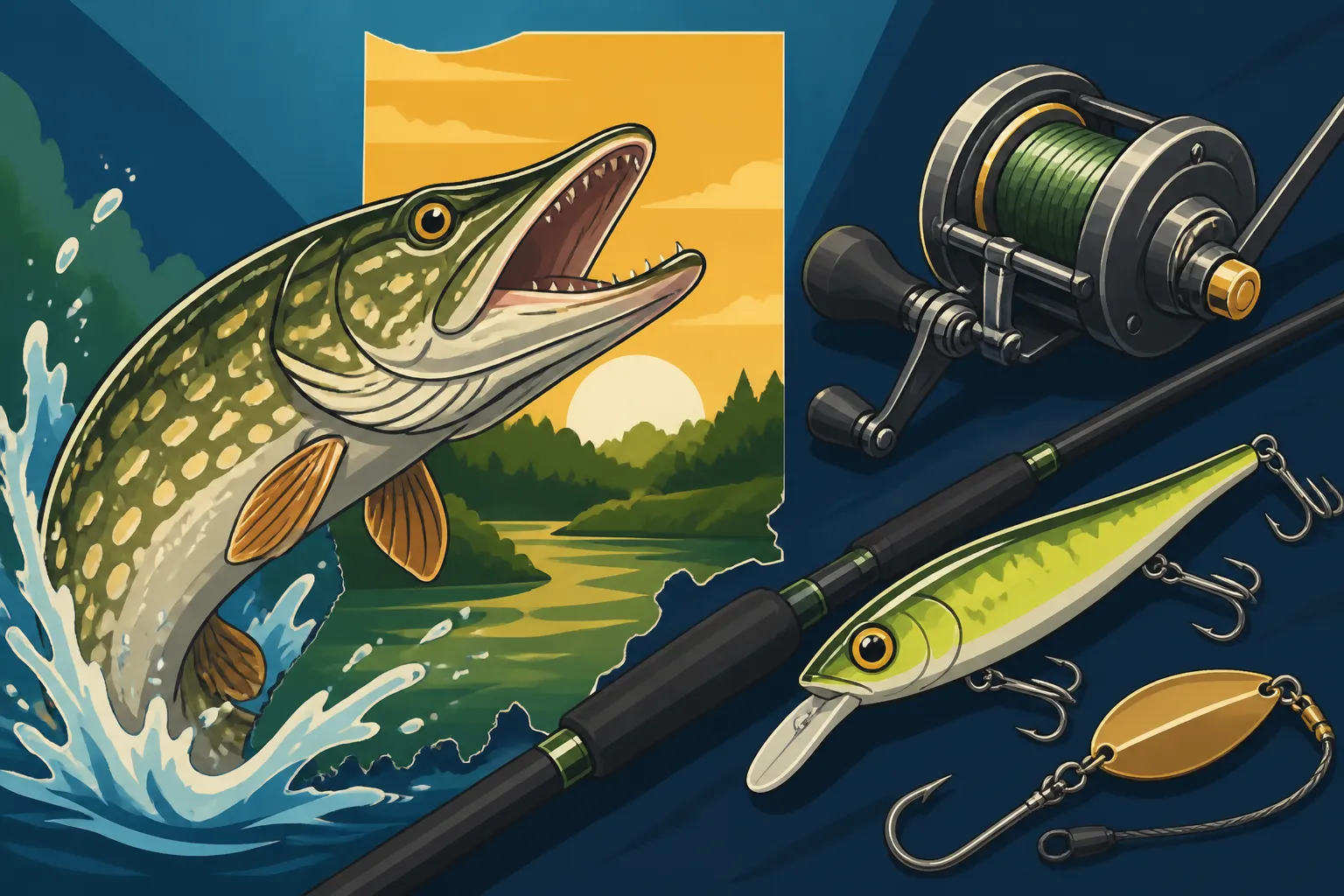
- Baitcasting Reels: These are often the preferred choice for serious pike anglers. They excel at casting heavy lures with precision and offer superior cranking power and drag strength. Look for a reel that fits comfortably in your hand and has a robust all-metal construction for durability. A low-profile baitcaster in the 200-300 size range or a round baitcaster in the 5000-6000 size range should suffice.
- Spinning Reels: While less common for the heaviest pike applications, a large, sturdy spinning reel (size 4000-6000) paired with a medium-heavy or heavy spinning rod can be a versatile option, especially for beginners or those who prefer spinning gear. Ensure it has a strong metal body and a smooth, reliable drag.
When it comes to gear ratio, something in the mid-range (6.1:1 to 7.1:1) is generally a good balance. A higher gear ratio helps you quickly retrieve slack line after a strike or retrieve a lure rapidly if needed, while a slightly lower ratio provides more torque for winching in big fish. You'll find a solid selection of these reels from brands often available at retailers like Bass Pro Shops, which cater to serious anglers.
The Importance of a Strong Drag System
The drag system on your reel is arguably one of the most critical components for pike fishing. Pike are known for their strong, sudden runs, and a weak or sticky drag can spell disaster.
- Smoothness: The drag should dispense line smoothly and consistently, without jerking or catching. A jerky drag can lead to line breaks or pull hooks.
- Strength: Look for a reel with a maximum drag rating of at least 15-20 pounds, if not more. This ensures you have enough stopping power to turn a hard-running fish and keep it away from snags or thick cover.
- Adjustability: Being able to finely adjust your drag during the fight is essential. You want it tight enough to control the fish, but loose enough to prevent line breakage when a large pike decides to bolt. Test your drag regularly to ensure it's functioning optimally. A well-maintained, strong drag system will save you from countless heartbreaks and allow you to fully enjoy the fight.
Line, Leaders, and Terminal Tackle: The Unsung Heroes
Even the best rod and reel combo is useless without the right line and terminal tackle. These are the components that directly interact with the fish, and any weakness here will be exploited by a powerful pike.
Selecting the Right Fishing Line
When it comes to main line for pike, braided line is the undisputed champion.
- Strength and Diameter: Choose braided line with a test strength of 30-65 pounds. While this might seem heavy, braided line has a much thinner diameter than monofilament or fluorocarbon of the same strength, meaning you can load more strong line onto your reel. The lower diameter also helps with casting distance and cutting through water.
- No Stretch: Braid has virtually no stretch, which provides incredible sensitivity for feeling subtle takes (again, rare with pike, but useful) and, more importantly, delivers powerful, direct hook sets to penetrate a pike's bony jaws.
- Abrasion Resistance: While braid is strong, it's not entirely impervious to those razor-sharp pike teeth. However, its overall toughness and knot strength make it the best choice for the main line, especially when paired with a proper leader.
Consider brands that are known for their abrasion resistance and consistent knot strength. You can often find bulk spools of quality braided line on Amazon or at your local tackle shop. How Many Rods Can You Fish With in Indiana? often depends on regulations, but no matter how many rods you have out, each one should be spooled with appropriate line.
Indispensable Wire Leaders
This is non-negotiable: you need a wire leader for pike fishing. Failing to use one is a guaranteed way to lose fish and expensive lures.
- Material: Leaders typically come in steel, titanium, or fluorocarbon-coated wire. Steel is robust and effective, while titanium leaders offer more flexibility and kink resistance. Some anglers opt for heavy-duty fluorocarbon leaders (80-100 lb test) for their near invisibility, but even heavy fluoro can be compromised by a pike's teeth if it gets lodged just right. For maximum protection, stick with wire.
- Length: A leader should be at least 9-12 inches long. This ensures that even if a pike completely engulfs your lure, its teeth won't reach your main braided line.
- Test Strength: Look for wire leaders rated for at least 30-60 pounds. Pre-tied leaders are convenient and often come with strong swivels and snaps already attached. Many anglers prefer to tie their own with crimps for maximum customization and strength. For more specific advice on this, check out Best Wire Leaders for Indiana Muskie Fishing, which offers similar principles for pike.
Hooks, Swivels, and Snaps Built for Battle
Every component of your terminal tackle needs to be heavy-duty.
- Hooks: If your lures come with weak treble hooks, replace them immediately with stronger, heavier-gauge trebles (e.g., VMC, Gamakatsu, or Owner in 2x or 3x strong). For single hook applications, ensure they are stout, sharp, and appropriately sized for the bait.
- Swivels: High-quality barrel or ball-bearing swivels are essential, especially when fishing lures that spin or wobble, as they prevent line twist. Make sure they are rated for a high breaking strength, matching or exceeding your main line and leader.
- Snaps: Use robust, heavy-duty snaps or split rings for attaching lures. Weak snaps can bend open under the pressure of a hard-fighting pike. Many anglers prefer to tie directly to a solid ring or use a strong snap-swivel combination for quick lure changes without compromising strength.
Pike Lures and Baits Requiring Heavy Tackle
Northern pike aren't picky eaters, but they are opportunistic predators. The heavy tackle we've discussed is perfectly suited for presenting the larger, more robust lures and baits that truly entice these fish.
Large Crankbaits and Jerkbaits
Pike are often drawn to large, erratic movements, making these lures incredibly effective.
- Crankbaits: Think big, deep-diving or shallow-running crankbaits, often 5-8 inches long. Their wide wobbling action and loud rattles can call in pike from a distance. The bigger profile mimics larger baitfish, which are exactly what a trophy pike is looking for. Ensure these lures come equipped with strong split rings and treble hooks; if not, upgrade them as mentioned earlier. Colors often mimic local forage like perch, shiners, or bluegill, but bright, obnoxious patterns can also trigger reaction strikes.
- Jerkbaits: Long, slender jerkbaits (6-9 inches) that suspend in the water column are excellent for working over weed beds or along drop-offs. Their stop-and-go retrieve mimics a wounded baitfish, an irresistible target for a hungry pike. Work them with aggressive twitches and pauses, letting the lure hang tantalizingly in the strike zone. These lures, like those found at Bass Pro Shops, are designed to trigger aggressive strikes and require the heavy tackle to handle the impact.
Heavy Spinnerbaits and Inline Spinners
These classics are pike magnets, especially in shallower, weedier environments.
- Spinnerbaits: Large spinnerbaits (3/4 to 1.5 ounces or more) with big Colorado or willow leaf blades create significant flash and vibration, essential for attracting pike in murky water or dense cover. Tandem blade configurations often provide the most attraction. Pair them with a stout trailer hook for short-striking fish. The heavy wire frame of these lures is built to withstand pike abuse.
- Inline Spinners: While some inline spinners are lighter, many manufacturers make heavy-duty versions specifically for pike and muskellunge. These often feature large, single blades and heavier bodies, weighing up to an ounce or more. Their constant flash and vibration are highly effective. Again, ensure the hook quality is top-notch. For effective presentations, understanding Best Bait for Northern Pike in Indiana Lakes will also help you choose the right lure type to start with.
Live Bait Rigs for Big Pike
For many seasoned pike anglers, nothing beats the appeal of live bait for truly large fish. Your heavy tackle is paramount here to manage strong, natural baits and powerful strikes.
- Rigging: Typically, a large shiner, sucker, or golden shiner (4-8 inches) is rigged under a large bobber or on a bottom rig. The heavy rod and reel allow you to cast these heavier setups effectively and absorb the powerful strike of a pike.
- Hooks: Use stout, sharp single or treble hooks (e.g., size 1/0 to 4/0 for single, size 4 to 1 for treble) appropriate for the bait size. Hook placement is crucial for keeping the bait lively and ensuring a solid hook set. Usually, hooking through the back or lips works best.
- Weighting: You'll need enough weight to get your bait down to the desired depth, especially if you're fishing a bottom rig. Heavy slip sinkers or egg sinkers are common.
- Waiting Game: Live bait fishing for pike often requires patience, but when that bobber disappears or your line starts peeling off, you'll be glad you have the heavy gear to handle the ensuing fight.
Essential Accessories for a Successful Pike Trip
Beyond your primary rod, reel, line, and lures, a few key accessories are absolutely vital for a safe, successful, and ethical pike fishing experience. These items aren't just conveniences; they're necessities when dealing with a powerful, toothy fish.
Landing Nets and Grippers
Bringing a pike to the boat or shore safely requires proper tools.
- Landing Net: Forget your small bass net. You need a large, sturdy landing net with a rubberized or knotless mesh. The large hoop size (at least 24-30 inches across) is essential to comfortably scoop a thrashing pike, preventing it from getting tangled or injuring itself. Rubberized or knotless mesh also protects the fish's slime coat and fins, making for a healthier release. A long handle is a bonus, giving you extra reach.
- Fish Grippers: A good pair of lip grippers, like those sold on Amazon, is invaluable. These allow you to safely control a pike by its lower jaw without putting your hands near its teeth. Look for a model with a strong, ergonomic grip and a corrosion-resistant finish. While not meant for lifting truly giant pike by their jaw alone, they are perfect for managing the fish for hook removal and photos. This is especially important for releasing fish unharmed.
Pliers and Cutters for Safe Hook Removal
Pike have extremely sharp teeth, arranged in multiple rows. Reaching in with your fingers to remove a hook is a recipe for a trip to the emergency room.
- Long-Nose Pliers: A heavy-duty, long-nose pliers (8-12 inches) is your best friend for hook removal. The longer reach keeps your hands clear of those sharp teeth. Ensure they have sturdy jaws that won't twist or bend when trying to extract a deeply embedded hook.
- Bolt or Wire Cutters: Sometimes a hook is so deeply embedded, or the fish is so feisty, that the safest option for both you and the fish is to cut the hook. Keep a pair of stout bolt cutters or strong wire cutters handy to snip the hook shank. This allows you to remove the lure quickly and free the fish, minimizing stress. These cutters are also useful for dealing with Wire Leaders for Muskie Fishing in Indiana's Glacial Lakes if you need to re-rig quickly. Always have these on hand – it's a small investment that can prevent big problems.
Storage and Organization for Heavy Tackle
Heavy tackle comes with bigger components, and keeping it organized is key to efficiency and protecting your gear.
- Large Tackle Boxes/Bags: Your standard small tackle box won't cut it. Invest in a large, durable tackle box or a soft-sided tackle bag with multiple compartments and utility trays that can accommodate oversized lures, leader material, and specialized tools. Many purpose-built bags are available that offer ample storage and robust construction.
- Lure Storage: Consider individual lure wraps or dedicated compartments for large jerkbaits and crankbaits to prevent hooks from tangling and damaging other lures or your bag. Some anglers use specialized hard cases with slots for each large lure.
- Rod Storage: When transporting your heavy rods, especially in a boat or vehicle, use rod sleeves or a rod case to protect them from nicks, scratches, and accidental breakage. The tips of heavy rods, while strong, can still be vulnerable. Proper storage ensures your investment lasts for many pike fishing adventures to come. What Gear Do You Need to Start Bass Fishing? also applies to pike; good organization is always essential.
Disclaimer
This article is for general informational purposes only and does not constitute professional advice. Laws, prices and regulations vary by location and change over time. Consult a qualified professional for guidance on your specific situation.