Do Kayaks Need to Be Registered in Indiana?
It can be incredibly confusing trying to figure out all the rules and regulations when you just want to get out on the water, especially with something seemingly simple like a kayak. Many anglers assume their small, paddle-powered craft flies under the radar of state registration, only to find themselves scratching their heads when they consider adding a small electric motor or buying a new model. This guide will cut through the jargon and clearly explain Indiana's kayak registration requirements, helping you understand exactly when your paddle craft needs to be registered and what steps you need to take to stay legal.
The Core Rule: Does Your Kayak Need Registration in Indiana?
Let's get straight to the heart of the matter because this is where most of the confusion arises. In Indiana, the need to register your kayak boils down to one critical factor: how it's propelled. It's not about the length of the boat, the material it's made from, or even how much you paid for it. It's all about whether there's a motor involved.
Understanding "Motorized" vs. "Non-Motorized"
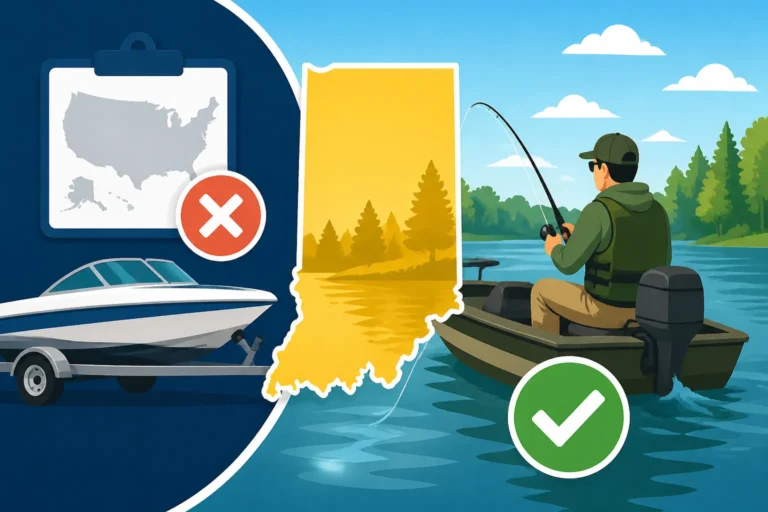
Simply put, if your kayak is exclusively propelled by human power – think paddles, oars, or even pedal drives – then it is considered a non-motorized watercraft, and no, it does not need to be registered with the state of Indiana. This is fantastic news for the vast majority of kayak enthusiasts who enjoy the peace and quiet of paddling their way across lakes and rivers. You can grab your trusty kayak, load it up, and head to your favorite Best Fishing Spots in Indiana without worrying about title transfers or registration fees. This applies whether you're using a sit-on-top, a traditional touring kayak, or even a specialized fishing kayak with a pedal drive system. The key is that the primary means of propulsion is you.
However, the moment you introduce any kind of mechanical propulsion, even a tiny one, your kayak transitions from being a non-motorized craft to a motorized one in the eyes of the law. This distinction is crucial and often catches people off guard.
When Even a Small Trolling Motor Changes Everything
Here's the kicker that many new kayak anglers don't realize: if you attach any motor to your kayak, regardless of its size or horsepower, it immediately falls under Indiana's motorboat registration requirements. This means even a small electric trolling motor, often chosen by kayak anglers to make their fishing trips a bit easier and cover more water, will necessitate registration. Imagine you've decided to upgrade your kayak setup for those long days on Patoka Lake, and you've bought a sleek new electric trolling motor from Bass Pro Shops to help you sneak into those quiet coves. That fantastic convenience also comes with the responsibility of getting your kayak registered.
It doesn't matter if it's a gas motor or an electric one; the presence of mechanical propulsion is the trigger. So, while your buddy's identical kayak, powered only by his paddling, doesn't need registration, yours with that 30-pound thrust trolling motor absolutely does. This is a common pitfall, and enforcement officers do check. The rules are pretty clear: if it has an engine, it's a boat that needs to be registered, just like any larger fishing boat.
How to Register a Motorized Kayak in Indiana
Okay, so you've got a motorized kayak, or you're planning to add a motor, and you know you need to register it. Don't panic! The process, while involving a few steps, is straightforward once you understand what's required. It's similar to registering any other small watercraft in the state. For a more general overview, you might want to read our article on Indiana Boat Registration Rules Explained.
The Step-by-Step Process
Registering your motorized kayak in Indiana primarily involves working with the Bureau of Motor Vehicles (BMV). You'll gather your documents, complete an application, pay any applicable fees, and then receive your registration and decals. It's a system designed for larger boats, but it applies to your motorized kayak just the same. Many folks prefer to handle this in person at their local BMV branch, especially if they have questions, but there are often online options for renewal once you've completed the initial registration.
The initial registration involves proving ownership and ensuring the state has all the necessary information about your vessel. This helps track watercraft, ensures compliance with safety standards, and funds important conservation efforts that benefit all Indiana anglers.
What Documents You'll Need
When you head to the BMV to register your motorized kayak, make sure you have all your ducks in a row. Having the right paperwork can save you a lot of time and frustration. Here's a general list of documents you'll likely need:
- Proof of Ownership: This is paramount. If your kayak is new, you'll need the manufacturer's statement of origin (MSO). If you bought it used, a properly assigned title (if it had one) or a bill of sale will be necessary. Even for a kayak, if it came with a motor, it likely has a serial number that will be part of this documentation.
- Application for Certificate of Title/Registration: You'll fill out specific forms provided by the BMV.
- Proof of Indiana Residency: A valid Indiana driver's license or state ID card will usually suffice.
- Proof of Motor Ownership: If the motor was purchased separately, you might need a bill of sale for that as well.
- Payment for Fees: There will be a fee for the title and the registration. These fees vary, so it's always a good idea to check the current rates on the official Indiana BMV website before you go. Remember, we can't give specific figures here, but assume there will be costs involved.
It's a good idea to call ahead to your local BMV branch or check their website for the most up-to-date requirements for Indiana Motorboat Registration Requirements specifically for smaller vessels like motorized kayaks.
Displaying Your Registration and Decals
Once your motorized kayak is registered, you'll be issued registration numbers and decals. These aren't just pretty stickers; they are legally required to be displayed correctly on your watercraft. The registration numbers must be painted or permanently attached to both sides of the bow (the front half) of your kayak, reading from left to right. They need to be in a block character font, at least three inches high, and in a contrasting color to the hull so they are easily visible.
The registration decal, usually a small sticker indicating the year of validity, must be displayed within six inches of the registration number on the port (left) side of the bow. You'll want to make sure these are firmly affixed and visible at all times. Failure to properly display your registration numbers and decals can lead to a citation, even if you've done all the hard work to register it. Always ensure your Indiana Watercraft Decal Rules for Kayaks and Canoes are met before you launch. And don't forget, you'll need to keep your actual registration document onboard while you're out fishing. Check out our guide on Carrying Boat Registration on Board in Indiana for more details.
What Happens if You Don't Register a Motorized Kayak?
It might seem like a minor detail, especially for something as small as a kayak, but ignoring Indiana's registration laws for motorized watercraft can lead to some inconvenient and costly situations. Nobody wants their peaceful fishing trip interrupted by an enforcement officer, let alone end up with a fine.
Penalties and Fines for Non-Compliance
Operating a motorized kayak in Indiana without proper registration is a violation of state law. Marine patrol officers from the Indiana Department of Natural Resources (DNR) regularly patrol popular waterways, and they are trained to spot unregistered watercraft. If you're caught, the penalties can range from a warning for a first offense to a significant fine. While specific fine amounts are not something we can list here, suffice it to say, they are usually more expensive than the registration itself would have been. Beyond the financial hit, it can also lead to delays in your outing, or even having your watercraft impounded in more severe or repeated cases. It's a disruption no angler wants. For a broader look at the consequences, see our article What Happens if You Boat Without Registration in Indiana?.
Why It's Worth the Effort to Register
Beyond avoiding fines and legal troubles, there are good reasons why going through the registration process for your motorized kayak is a responsible choice. First, it ensures you're a legal operator on Indiana's waterways, contributing to the system that manages and protects our shared aquatic resources. The fees collected from registration often go towards maintaining public access points, boat ramps, and conservation efforts that ultimately benefit the health of fish populations and the quality of your fishing experience.
Secondly, having your kayak properly registered provides an extra layer of identification in case of theft or loss. Your unique registration number links your vessel to you, making it easier for law enforcement to recover it. It offers peace of mind, knowing that you're playing by the rules and protecting your investment. If you've invested in a quality fishing kayak and a good motor, perhaps from Amazon or another reputable retailer, a little paperwork is a small price to pay to protect that investment and ensure your future trips are hassle-free.
Exceptions and Special Considerations for Kayak Anglers
While the general rule is clear – motor means registration – there are always nuances and edge cases that come up. Let's dig into some specific scenarios that might apply to you.
Hand-Propelled Kayaks: No Registration Required (Usually)
To reiterate, if your kayak is only powered by your muscles and a paddle or pedals, you're in the clear. You do not need to register it in Indiana. This is a huge benefit for pure paddlers and pedal-kayakers who appreciate the simplicity and lower barrier to entry that these crafts offer. You can launch your non-motorized kayak at almost any public access point, assuming you're not violating any local ordinances, and enjoy the water without state paperwork. This also applies to canoes, paddleboards, and other similar un-motorized crafts. Just grab your Best Kayak Life Jackets for Paddlers and go!
The Case of the Kayak with a Trolling Motor (Again)
It bears repeating because it's such a common question: what if you have a kayak with a small transom mount for a trolling motor, but you only use it sometimes? Or you only use the trolling motor for a few minutes to get to a spot, then paddle the rest of the time? The answer remains the same: if you have a motor on your kayak, even if it's not constantly in use, and even if it's only 1 horsepower, it needs to be registered. The moment that motor is affixed and capable of propelling the vessel, it triggers the registration requirement. There's no gray area for "occasional use" or "small motor" when it comes to the core registration rule. You'll need to follow all the steps for Indiana Motorboat Registration Requirements.
Out-of-State Kayaks Visiting Indiana
What if you're visiting Indiana from a neighboring state, like Ohio or Michigan, and you want to bring your motorized kayak? Generally, if your motorized kayak is properly registered in your home state, Indiana will honor that registration for a limited period (usually up to 60 consecutive days). This is part of what's called reciprocity agreements between states. So, if you're planning a week-long fishing trip to one of Indiana's beautiful reservoirs, your out-of-state registration should be fine. However, if you're moving to Indiana or plan to use your motorized kayak in the state for an extended period beyond that reciprocal window, you will eventually need to register it in Indiana. It's always best to review the specific guidelines laid out in Out-of-State Boat Registration Rules for Indiana Waters to avoid any surprises.
Comparison of Motorized vs. Non-Motorized Kayak Rules
To help clarify the differences, here's a quick comparison of the rules for the two main types of kayaks in Indiana:
| Feature | Non-Motorized Kayak (Paddle/Pedal Only) | Motorized Kayak (Any Motor Attached) |
|---|---|---|
| State Registration | Not Required | Required |
| Title Required | Not Required | Required if value meets threshold |
| Decals Display | Not Required | Required (Numbers & Decals) |
| Proof of Ownership | Recommended (Bill of Sale) | Required (MSO, Title, Bill of Sale) |
| Boater Education Card | Generally Not Required | Required for certain age/HP limits |
| On-board Paperwork | Not Required | Required (Registration Card) |
| Enforcement Focus | Safety Gear (Life Jackets, Whistle) | Safety Gear + Registration |
This table highlights the fundamental difference that the addition of a motor makes. Even a tiny electric motor means your kayak falls under the same regulatory umbrella as much larger powerboats. Whether you're considering a new kayak or just thinking about adding some Kayak Fishing Gear for Indiana Waters, understanding these basics is crucial.
Wrapping Up Your Kayak Registration Questions
Navigating the rules for watercraft can sometimes feel like trying to untangle a particularly stubborn fishing line. But when it comes to kayaks in Indiana, the core principle is quite clear: if it has a motor, it needs to be registered. If it's purely human-powered, you're good to go without the extra paperwork.
Taking the time to understand these regulations ensures your time on the water is spent enjoying the casting, the scenery, and the peace, rather than worrying about potential fines or legal troubles. Whether you're exploring the serene waters of a small pond or tackling one of the Best Fishing Lakes in Indiana, knowing you're in compliance means you can focus on what truly matters: the thrill of the catch. So, check your kayak, ensure it meets the requirements, and get out there and enjoy Indiana's incredible fishing opportunities!
Disclaimer
This article is for general informational purposes only and does not constitute professional advice. Laws, prices and regulations vary by location and change over time. Consult a qualified professional for guidance on your specific situation.