Life Jacket Rules for Personal Watercraft in Indiana
Navigating the waters on a personal watercraft (PWC) like a Jet Ski, WaveRunner, or Sea-Doo is one of the most exhilarating ways to experience Indiana's beautiful lakes and rivers. However, many riders, especially those new to the sport or visiting from out of state, can feel a bit lost when it comes to the specific life jacket requirements for these powerful machines. This guide will cut through the confusion, clearly outlining Indiana's life jacket rules for personal watercraft, why they exist, and how to ensure you're always riding safely and legally.
Understanding Indiana's PWC Life Jacket Mandate
When you're out on the water, whether it's Lake Monroe or the glacial lakes up north, safety is always paramount. Personal watercraft come with their own unique set of operating characteristics, and state regulations reflect that. It's not just about having a life jacket on board; it's about wearing the right one, correctly, at all times.
The 'Wear It' Requirement for Personal Watercraft
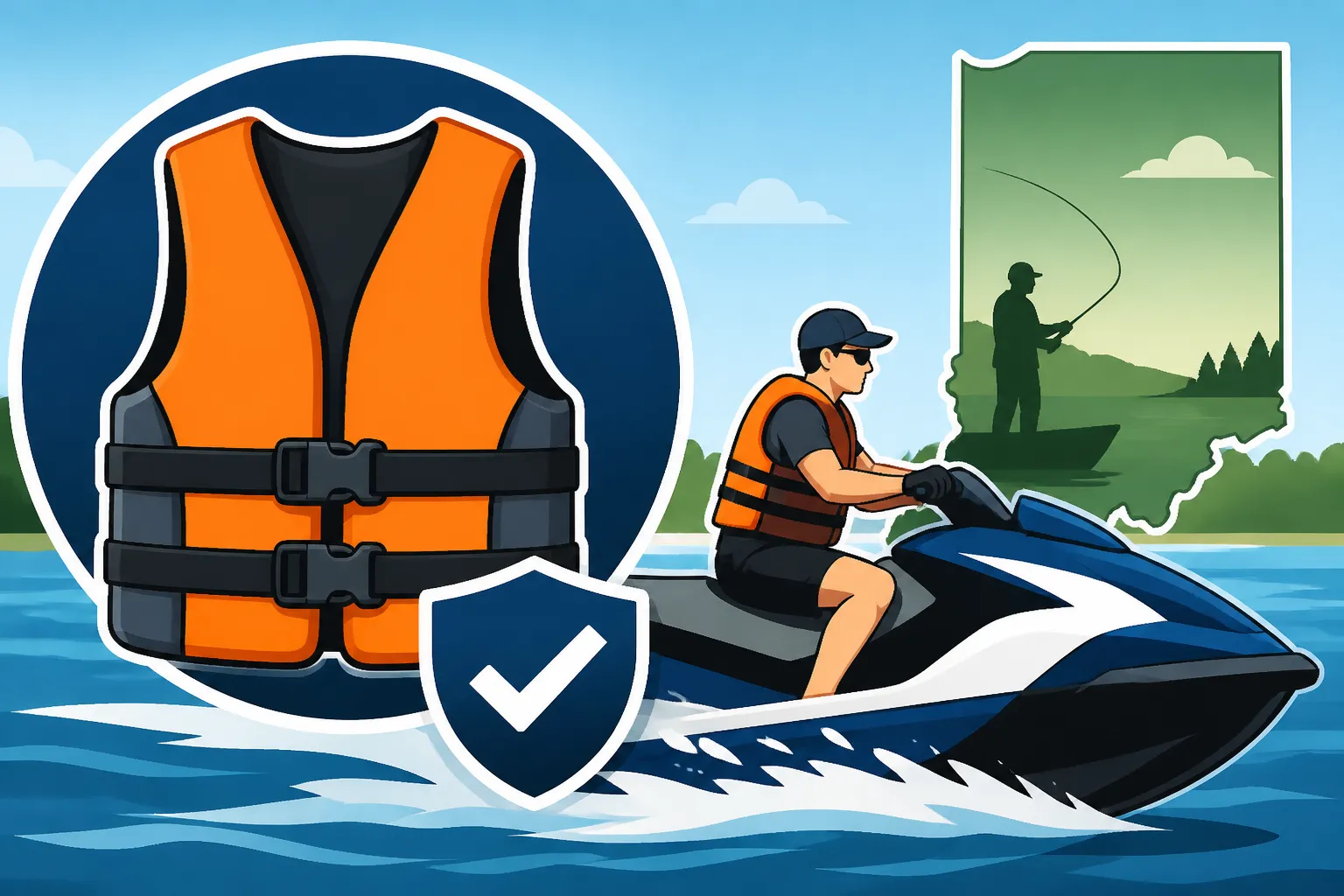
Unlike larger boats where you might only need enough life jackets for everyone on board, PWC operation in Indiana has a much stricter rule: if you're on a personal watercraft, you must be wearing a U.S. Coast Guard (USCG) approved life jacket. There's no exception for strong swimmers, short rides, or calm waters. This isn't merely a suggestion; it's a legal mandate designed to protect you. Imagine falling off at speed; without a life jacket securely fastened, you could quickly become disoriented or incapacitated in the water. The rule ensures that you're immediately buoyant and visible should an unexpected spill occur. This immediate flotation can be the difference between a minor incident and a serious one, especially if you're knocked unconscious or separated from your PWC.
For more on general state rules, you can read about Do PWC Riders Need Life Jackets in Indiana?.
Why PWC Rules Are Different from Other Boats
You might wonder why PWC rules are so different from, say, a pontoon boat or a fishing boat, where passengers often only need to have a life jacket accessible. The distinction comes down to the inherent nature of personal watercraft. PWCs are designed for speed, agility, and often, dynamic maneuvers. Riders are typically exposed, not inside a hull, and are very susceptible to being ejected during sharp turns, waves, or sudden stops. When you're thrown from a PWC, it often happens quickly and unexpectedly, leaving little to no time to grab a stowed life jacket.
Consider the physics: a PWC can instantly change direction, often at high speeds. If a rider isn't properly wearing a life jacket, the force of impact with the water or the speed at which they become submerged can be incredibly dangerous. The "wear it" rule minimizes the risk of drowning by ensuring immediate flotation, giving rescue personnel more time to locate and assist. It's a proactive safety measure that accounts for the unique dynamics of PWC operation, acknowledging the higher risk of sudden ejection compared to other vessels. It’s also important to note that a PWC, by its very nature, is a smaller vessel that offers less inherent stability and protection than a larger boat.
What Constitutes a Personal Watercraft (PWC) in Indiana?
It's important to know exactly what kind of vessel falls under the PWC regulations. In Indiana, a personal watercraft is defined as a vessel that uses an inboard motor powering a water jet pump as its primary source of propulsion and is designed to be operated by a person or persons sitting, standing, or kneeling on rather than within the confines of a hull. This definition covers all the popular brands you see on the water, like Sea-Doo, Yamaha WaveRunner, and Kawasaki Jet Ski.
This distinction is crucial because some smaller boats, like certain inflatable boats or small tenders, might look similar but operate differently and therefore fall under different regulations. If your vessel requires you to straddle or sit on top of the hull, and it's jet-propelled, it's almost certainly a PWC in Indiana's eyes. Knowing this helps you correctly apply the life jacket rules and avoid any misunderstandings with marine patrol or conservation officers.
Specific Life Jacket Types Approved for PWC Use
Not all life jackets are created equal, especially when it comes to the demands of personal watercraft riding. Understanding the different types and their ratings is key to choosing a life jacket that not only meets Indiana's legal requirements but also offers the best protection for PWC activities.
US Coast Guard Approved: The Gold Standard
First and foremost, any life jacket you wear on an Indiana PWC must be U.S. Coast Guard (USCG) approved. This isn't just a label; it signifies that the jacket has undergone rigorous testing to ensure it meets specific safety and performance standards for flotation, visibility, and durability. Look for the USCG approval stamp clearly printed on the inside label of the life jacket. Without this stamp, regardless of how buoyant or well-made a vest seems, it simply doesn't meet the legal requirement.
Buying a USCG-approved life jacket ensures you're getting a product designed for safety. These jackets are rated by type, which indicates their intended use and flotation capability. When browsing for options, whether at your local Bass Pro Shops or online through Amazon, always double-check for that crucial USCG approval. It's your guarantee that the jacket is built to save lives, not just provide some generic flotation.
The Importance of Type I, II, III, and V Ratings
USCG-approved life jackets are categorized into different types based on their design and flotation performance. For PWC use, you're primarily looking at Type II, Type III, and Type V personal flotation devices (PFDs).
- Type I (Offshore PFDs): These offer the most buoyancy and are designed for rough, open, or remote water where rescue may be delayed. They're bulky and often uncomfortable for active PWC use, but they are legal.
- Type II (Near-Shore Buoyancy Vests): These provide less buoyancy than Type I but are still good for calm, inland waters. They are more comfortable than Type I and will turn most unconscious wearers face-up.
- Type III (Flotation Aids): These are the most common choice for PWC riders. They offer excellent freedom of movement and are comfortable for continuous wear. They're designed for conscious wearers in calm, inland waters where a quick rescue is likely. A Type III PFD will not reliably turn an unconscious person face-up.
- Type V (Special Use Devices): These are designed for specific activities and must be worn to be considered legal. Many PWC-specific vests fall into this category, often combining the comfort and mobility of a Type III with additional features.
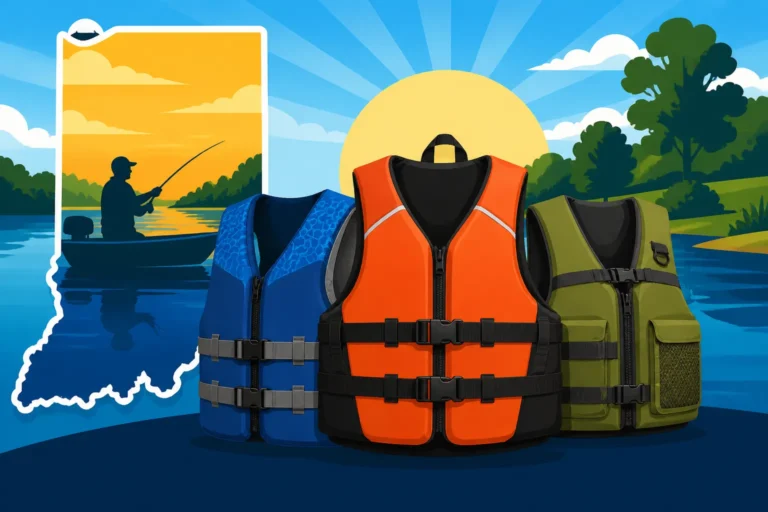
For PWC use, most riders gravitate towards Type III or Type V vests due to their comfort and range of motion. They allow you to lean, turn, and move freely without feeling restricted, which is essential for safely operating a PWC. When you're searching for Best Life Jackets for Indiana Bass Fishing, you'll find similar considerations for comfort and mobility apply, just adapted for a different activity.
Why Inflatable Life Jackets Are Generally Not Recommended for PWCs
This is a really important point that often catches people off guard. While inflatable life jackets are USCG-approved and popular for some boating activities due to their low profile, they are generally not permitted for use on personal watercraft in Indiana. The key reason? Most inflatable PFDs require active deployment by the wearer (pulling a cord or manually inflating) or rely on a water-sensing mechanism that might not activate instantly during the rapid, high-impact ejection typical of a PWC fall.
If you're thrown from a PWC at speed, you could be stunned, disoriented, or even knocked unconscious, rendering you unable to inflate a manual vest. An automatic inflatable might not submerge enough or quickly enough to deploy effectively in all scenarios. The immediate and guaranteed buoyancy of a inherently buoyant (foam-filled) PFD is critical in these situations. Indiana regulations, aligning with many other states, prioritize this immediate and passive flotation for PWC riders. So, save your fancy inflatable for the sailboat and stick to a traditional foam vest when hitting the waves on your PWC. You can find more detail on this specific rule in Why Inflatable Life Jackets Are Not Allowed on Indiana PWCs.
Ensuring Proper Fit and Condition for Safety
Even the best, most expensive life jacket won't do its job if it doesn't fit correctly or is in poor condition. A well-fitting, well-maintained life jacket is your first line of defense on the water, and it's a critical component of safe PWC operation.
The Snug Test: How to Check for Correct Fit
A life jacket should fit snugly, almost like a glove, but still allow for comfortable movement. Here’s a simple "snug test" you can perform to ensure a proper fit:
- Put it on: Don the life jacket and zip or buckle all closures.
- Tighten the straps: Pull all adjustable straps until the jacket feels secure, but not overly restrictive.
- Lift test: Have someone grab the top of the shoulder straps and gently pull upwards. If the jacket rides up past your ears or chin, it's too loose. A properly fitting jacket should stay put, with no more than an inch or two of upward movement.
- Movement check: Mimic the movements you'd make on a PWC – leaning, twisting, reaching. The jacket should allow full range of motion without chafing or riding up excessively.
A life jacket that's too loose can ride up around your face and head in the water, becoming a hindrance rather than a help. One that's too tight can restrict breathing or movement, making your ride uncomfortable and potentially unsafe. This snug fit is especially important for active sports like PWC riding, where constant movement means a loose jacket can easily shift out of position.
Inspecting Your Life Jacket for Wear and Tear
Life jackets don't last forever. Over time, exposure to sun, saltwater (if you're on Lake Michigan), chlorine, and general use can degrade the materials, reducing its effectiveness. Before every season, and periodically throughout, give your life jacket a thorough inspection:
- Fabric: Check for rips, tears, or holes in the outer shell. Even small punctures can compromise the flotation material inside.
- Straps and Buckles: Examine all straps for fraying or weakening. Test buckles and zippers to ensure they fasten securely and don't slip.
- Stitching: Look for loose or broken stitching, especially around stress points like armholes and seams.
- Flotation Material: Squeeze the foam panels. They should feel resilient and uniform. If they feel lumpy, stiff, or waterlogged, the flotation material might be compromised.
- Color Fading: Excessive fading can be an indicator of sun damage, which weakens the fabric.
If you find any significant damage, it's time to replace the life jacket. A damaged life jacket is a false sense of security and won't perform as intended in an emergency. Retailers like Bass Pro Shops or online platforms like Amazon offer a wide variety of replacement options.
Life Jacket Sizing for Different Riders
Life jackets are sized by weight and sometimes chest circumference, not necessarily by age or general clothing size. It's crucial that each rider has a life jacket appropriate for their body.
- Adults: Adult life jackets are typically rated for individuals weighing 90 pounds or more. Within the adult category, there might be "universal," "oversize," or specific chest measurements. Always check the label.
- Children: Children's life jackets are categorized by weight range, such as "Infant" (under 30 lbs), "Child" (30-50 lbs), and "Youth" (50-90 lbs). It's incredibly important that children wear a jacket specifically designed for their weight range to ensure maximum safety. A jacket that's too big will ride up, while one that's too small won't provide adequate flotation.
It’s tempting to buy one "multi-purpose" life jacket for the family, but safety dictates that everyone, especially children, has a properly sized and fitted PFD. For detailed guidance on kids' vests, refer to Best Life Jacket Sizes for Kids Boating in Indiana. When buying for multiple people, you might consider creating a table to keep track:
| Rider Name | Weight Range | Chest Size | USCG Type | Purchase Location | Notes |
|---|---|---|---|---|---|
| Sarah | 90+ lbs | 34-38 in | Type III | Bass Pro Shops | Good mobility for PWC |
| Tom | 90+ lbs | 40-44 in | Type III | Amazon | Needs snug fit |
| Emily | 50-90 lbs | N/A | Type II | Local Marine Store | Youth size |
| Max | 30-50 lbs | N/A | Type II | Bass Pro Shops | Child size, extra snug |
This simple table can help you ensure everyone in your family or group has the correct, legally compliant life jacket for their PWC adventure.
Common Misconceptions and Legal Consequences
Despite the clear rules, some misconceptions persist regarding life jacket usage on PWCs. Understanding these and the potential repercussions of non-compliance is vital for a worry-free day on the water.
The Myth of the "Extra" Life Jacket on a PWC
A common misunderstanding is that simply having an extra life jacket on board the PWC is sufficient, much like it would be on a larger boat. Some riders mistakenly believe that if they're a good swimmer, they don't need to wear it, as long as one is readily available. This is a dangerous myth and a direct violation of Indiana law for personal watercraft. The rule is explicit: every person operating or riding on a PWC must wear a USCG-approved life jacket.
There's no room for interpretation here. If you're pulled over by conservation officers or marine patrol, and you're not wearing your life jacket, you'll likely receive a citation, even if a spare is tucked under the seat. The rationale, as discussed, is the speed and suddenness with which an accident can occur on a PWC, leaving no time for donning a vest. So, shed the misconception – wear it, every single time. The only exception to the "wear it" rule on a PWC is if you are operating during a period where the specific life jacket requirements are temporarily suspended, such as during designated Indiana Free Fishing Days, but even then, it's always safest to wear one.
Penalties for Non-Compliance with PWC Life Jacket Laws
Ignoring Indiana's PWC life jacket rules isn't just risky; it can be costly. If you're caught operating or riding a PWC without a properly worn, USCG-approved life jacket, you can face fines and penalties. While the exact figures can fluctuate, violations of boating regulations, including life jacket requirements, can result in significant financial penalties. Beyond the immediate fine, repeat offenses can lead to increased penalties or even more serious consequences.
More importantly than the legal repercussions, consider the human cost. Failing to wear a life jacket puts your life, and potentially the lives of others, at serious risk. No amount of fun on the water is worth jeopardizing your safety or the well-being of your loved ones. Conservation officers prioritize safety, and these rules are in place to prevent tragedies. Don't test the system; always comply. For a general overview of penalties, you can look into What Happens If You Fish Without a License in Indiana?, though PWC violations have their own specific set of consequences.
How Law Enforcement Enforces PWC Safety
Indiana's conservation officers and local marine patrol units actively enforce PWC safety regulations across the state's waterways. They conduct routine patrols, especially during peak boating seasons and holidays, keeping a close eye on personal watercraft activity. They are trained to identify common violations, and an improperly worn or absent life jacket is one of the easiest to spot.
Enforcement often involves a visible presence on the water, with officers approaching PWCs to perform safety checks. They'll verify registration, check for required safety equipment like fire extinguishers and sound-producing devices, and, critically, ensure all riders are wearing appropriate life jackets. These officers aren't trying to spoil your fun; they're working to ensure everyone can enjoy Indiana's waters safely. A friendly wave and a clearly visible, properly worn life jacket go a long way in demonstrating your commitment to safety and compliance.
Where to Find Compliant Life Jackets and Essential Gear
Once you understand the rules, the next step is to equip yourself properly. Finding the right gear is easy, and there are many options to ensure you're safe and comfortable on your PWC.
Shopping for PWC-Specific Life Jackets
When you're ready to purchase a life jacket for your PWC, you have a few excellent avenues. Local marine supply stores, sporting goods retailers like Bass Pro Shops, and major online marketplaces like Amazon all offer a wide selection. When shopping, prioritize these features:
- USCG Approval: Absolutely non-negotiable. Look for the label.
- Type Rating: Aim for Type III or Type V, as these provide the best balance of safety and mobility for PWC activities.
- Fit: Try it on if possible. If buying online, consult sizing charts carefully and read reviews. Look for multiple adjustment straps to customize the fit.
- Material: Opt for durable, quick-drying materials that can withstand sun and water exposure.
- Visibility: Bright colors are always a plus for increased visibility on the water, especially if you ever become separated from your PWC.
Many brands specifically design "PWC vests" or "wake vests" that meet Type III or V requirements and are tailored for the dynamic movements of personal watercraft riding. These often feature larger armholes, flexible panels, and strong zippers and buckles to keep them secure during high-speed activity.
Additional Safety Gear for Personal Watercraft
While the life jacket is king, it's not the only piece of safety gear you should consider for your PWC. A few other items can significantly enhance your safety and compliance:
- Sound-Producing Device: A whistle or horn is required by law. Many PFDs now come with an integrated whistle, but a standalone marine horn is also a good idea.
- Fire Extinguisher: While not always required on smaller PWCs, it's a wise addition, especially for older models. Check current regulations for your specific PWC.
- Visual Distress Signals (VDS): Required for nighttime operation on coastal waters (like Lake Michigan) but a good idea for any extended trip on larger Indiana lakes.
- Kill Switch Lanyard: Most PWCs come with these, but always ensure it's attached to you or your life jacket so the engine cuts off if you fall off.
- First-Aid Kit: A small, waterproof kit is always prudent for minor injuries.
Putting together an Indiana Boater Safety Gear Checklist can help you remember everything you need before heading out on the water.
The Value of Boater Education for PWC Riders
Beyond just following the rules, investing in boater education is one of the best things any PWC operator can do for their safety and the safety of others. Indiana offers boater safety courses that cover everything from navigation rules and hazard avoidance to emergency procedures and, of course, proper safety equipment use.
Taking a course will not only make you a more confident and competent PWC operator but can also be legally required for certain age groups in Indiana. Even if not mandatory for you, the knowledge gained is invaluable. It helps you understand why certain rules exist, not just what the rules are. A well-educated boater is a safer boater, and a safer boater ensures that everyone can enjoy Indiana's beautiful waterways without incident. You can find more information about these educational opportunities in Indiana Boater Education Course Requirements.
Disclaimer
This article is for general informational purposes only and does not constitute professional advice. Laws, prices and regulations vary by location and change over time. Consult a qualified professional for guidance on your specific situation.