Crappie Size Limits and Regulations in Indiana
One of the most common headaches for any angler, especially when you’re targeting popular panfish like crappie, is keeping track of all the rules and regulations. You’re out on the water, having a great day, and suddenly you start second-guessing yourself: "How many crappie can I keep again? Is there a minimum size for these?" It's a real buzzkill, and the last thing you want is to inadvertently break a rule. This guide is here to clear up all that confusion specifically around crappie size limits and regulations in Indiana, so you can fish with confidence and peace of mind.
Navigating Indiana's Crappie Size and Daily Bag Limits
When it comes to crappie fishing in Indiana, the rules are generally straightforward, but it’s crucial to understand the specifics to avoid any mix-ups. The Indiana Department of Natural Resources (DNR) sets these regulations with the long-term health of our fisheries in mind, balancing angler enjoyment with conservation. For most of us out on the lake, the primary concern will be the daily bag limit.
Understanding the Statewide Daily Limit for Crappie
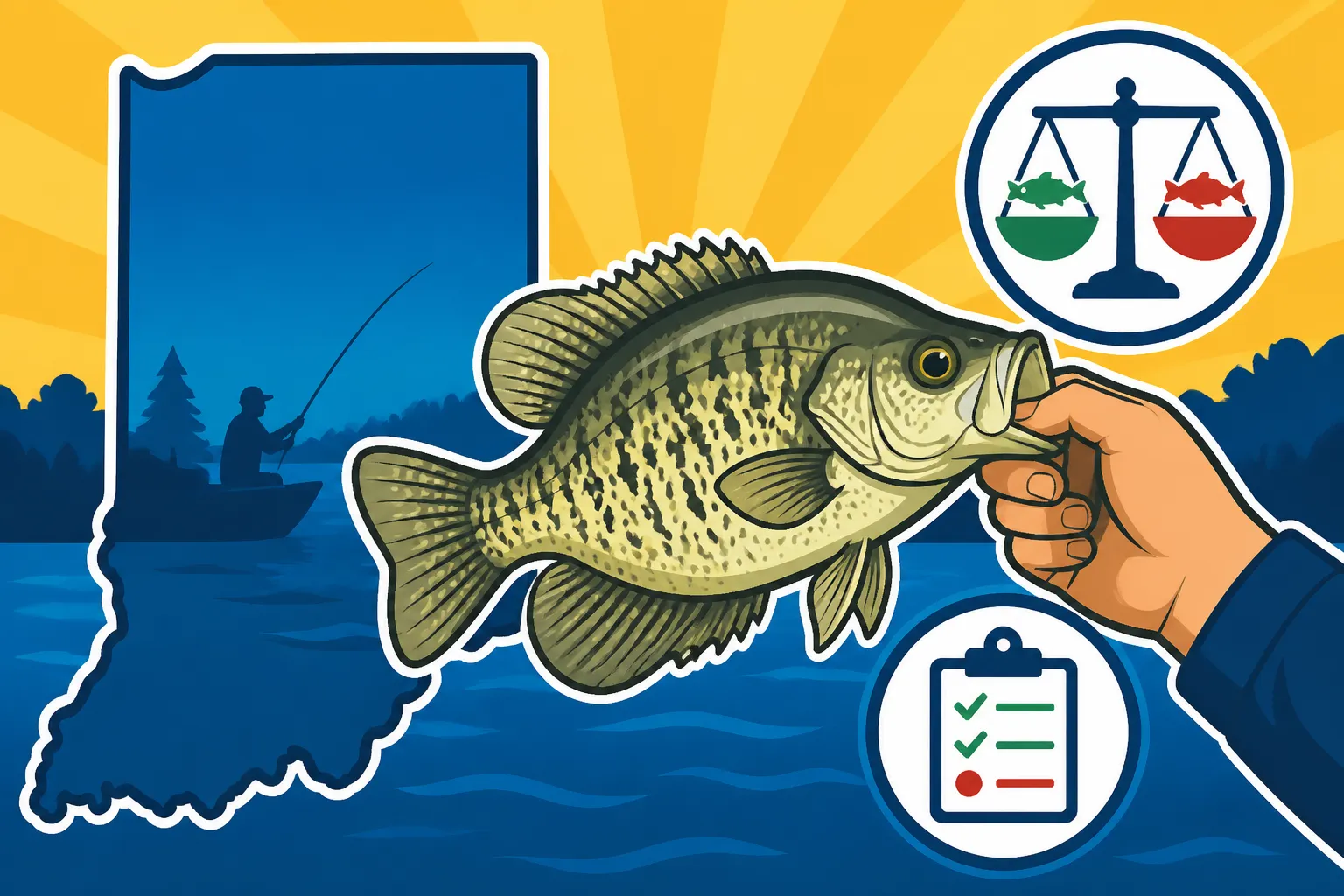
Indiana has a generous daily bag limit for crappie, which means you can bring home a good mess of fish for dinner. The statewide daily bag limit for crappie is 25 fish per species. This "per species" part is really important. Indiana waters are home to both Black Crappie and White Crappie, and while they look similar, they are indeed distinct species. What this means in practice is that you could, theoretically, keep 25 Black Crappie and 25 White Crappie in a single day, for a total of 50 crappie. However, most anglers typically don't differentiate between the two while fishing unless they're very keen on identification, and usually just stick to a combined count of 25. It’s always best to err on the side of caution if you're not certain about species identification. This limit applies to all public waters in Indiana unless a specific body of water has a special regulation posted. For more details on what you can keep, you might want to read our article on Indiana Panfish Daily Limits by Species.
Keeping track of your catch can be tricky, especially on a hot bite. A simple clicker or tally counter, easily found on Amazon or at any sporting goods store, can be a lifesaver. Just click once for every fish you put in the livewell or cooler. This little habit prevents that late-day panic where you’re trying to remember if that last one made you hit your limit. Remember, this limit is for daily possession, meaning the number of fish you can have in your possession from that day’s fishing activity. If you're out for multiple days and staying at a cabin or camp, any crappie you’ve already processed and stored (e.g., filleted and frozen) from previous days' legal limits typically don't count towards your current daily limit, but this can be a grey area, so always ensure your daily fresh catch is within the limit.
Are There Size Limits for Crappie in Indiana?
Here's some good news for crappie enthusiasts: generally speaking, there are no statewide minimum size limits for crappie in Indiana. This is a significant difference compared to species like bass or walleye, where specific length requirements are common. This means that if you catch a crappie, regardless of its size, and you are within your daily bag limit, you are legally allowed to keep it. This often makes crappie fishing a fantastic option for beginners and kids, as they don't have to worry about the added complexity of measuring fish accurately while on the boat or shore. If you're bringing the family out, make sure you know Indiana Fishing License Requirements Explained before you go!
However, it's absolutely vital to remember that "generally speaking" isn't "always." While statewide regulations don't impose a minimum size, local exceptions can and do exist. Always, always check the specific regulations for the body of water you intend to fish. These exceptions are often posted at boat ramps, in local bait shops, or, most reliably, in the official Indiana Fishing Guide published by the DNR each year. For instance, a particular lake managed for trophy crappie might have an experimental slot limit or minimum size. Such instances are rare for crappie, but staying informed is part of being a responsible angler. Never assume; always verify. These specific rules are put in place by biologists to manage the population in that particular body of water, perhaps due to unique ecological factors or specific management goals.
Why These Regulations Are So Important for Crappie Fisheries
It's easy to look at a daily bag limit and think it's just another rule to follow, but these regulations are truly fundamental to maintaining healthy and vibrant crappie populations across Indiana. They're not just arbitrary numbers; they're carefully considered measures designed to ensure that the joy of crappie fishing can be experienced by generations to come.
Protecting Crappie Populations for Future Generations
Crappie are prolific breeders, but they can also be susceptible to overfishing, especially in smaller lakes and ponds where fishing pressure is high. The 25-fish daily bag limit, even without a size restriction, acts as a crucial safeguard. Without such limits, it would be all too easy for a few dedicated anglers to deplete a local population, taking out too many fish before they have a chance to reproduce effectively or grow to a desirable size. Think about a small farm pond: if everyone kept 100 crappie every time they went out, that pond would be barren in no time.
By limiting the number of fish an individual can harvest, the DNR helps ensure that enough crappie remain in the water to sustain the population. This allows for natural reproduction, keeps the food chain balanced, and maintains genetic diversity within the species. Healthy crappie populations, in turn, provide a stable food source for larger predatory fish like bass and even for birds and other wildlife. It's a delicate ecosystem, and every regulation plays a part in keeping it in balance. This conservation effort allows anglers to enjoy fantastic fishing experiences year after year, and contributes to the overall ecological health of Indiana's waterways.
Ensuring Quality Fishing Experiences for Everyone
Beyond pure conservation, regulations also contribute directly to the quality of your fishing trip. Imagine heading to your favorite crappie spot, only to find that every fish you catch is barely bigger than your thumb. That's a frustrating scenario, and it's often the result of an unbalanced fishery, sometimes due to excessive harvest of larger, more desirable fish. The daily bag limit, while not a size limit, helps manage the overall pressure on the crappie population.
When a fishery is well-managed, crappie have the opportunity to grow to a good eating size. While there isn't a statewide size limit for crappie, many anglers choose to voluntarily release smaller fish, opting to keep only those that offer a good fillet. This personal choice, combined with the legal limits, helps maintain a robust population with a healthy mix of sizes. It means when you do hook into a crappie, there's a better chance it'll be a "keeper" in terms of your personal preference. It's about providing a sustainable resource where anglers can consistently find fish that are both fun to catch and rewarding to take home for the dinner table. If you're looking for where to find those quality fish, check out Best Crappie Lakes in Indiana.
Practical Strategies for Staying Within Indiana's Crappie Rules
Knowing the rules is one thing, but actually implementing them while you’re out on the water can be another challenge entirely. The excitement of a hot bite, the distractions of the elements, or simply losing count can lead to unintentional violations. Developing a few good habits can make all the difference, ensuring you stay legal and enjoy your time fishing without worry.
Accurate Measurement and Counting on the Water
Even though there isn't a statewide size limit for crappie, keeping track of your catch is still paramount for staying within the daily bag limit. As mentioned, a simple counter is your best friend. Tie it to your belt loop or a lanyard around your neck, and make it a habit to click it every single time a crappie goes into your cooler or livewell. Don't rely on memory; a good day of crappie fishing can quickly turn into dozens of fish, and it’s easy to lose count. You can find inexpensive, waterproof clickers on Amazon that are perfect for this.
While you might not be measuring every crappie for legal size, having a small measuring board or tape handy is still excellent practice. It's useful for other species that do have size limits, and it's great for satisfying your own curiosity about how big that crappie actually is. Plus, you might want to establish your own personal size preference for keeping crappie, only keeping fish above a certain length. This voluntary release of smaller fish further contributes to a healthy fishery. A sturdy, floating measuring board can be a valuable addition to your tackle box, and many fishing brands offer them with easy-to-read markings. For more ideas on essential gear, our guide to Best Tackle for Crappie Fishing in Indiana can help.
When to Release and When to Keep Your Crappie
Since there's no statewide size limit, the decision of which crappie to keep often comes down to personal preference and ethics. Many anglers choose to practice selective harvesting, meaning they only keep crappie above a certain size—say, 8 or 9 inches—even if smaller ones are legal. This practice helps to ensure that smaller crappie have more time to grow, potentially contributing to future spawning cycles and larger fish for everyone. It's a fantastic way to contribute to the health of the fishery even beyond the letter of the law.
When you do decide to release a crappie, especially a smaller one, do so quickly and gently. Minimize its time out of the water, handle it with wet hands to protect its slime coat, and avoid squeezing it tightly. If it's hooked deep, consider cutting the line rather than trying to rip the hook out, as this can cause fatal damage. Releasing fish properly increases their chances of survival and contributes to a robust and sustainable crappie population. If you're thinking about a multi-day trip, remember to bring a reliable cooler (you can find a wide range on Amazon) to keep your legal catch fresh.
Staying Informed About Local Exceptions and Updates
The most critical strategy for staying legal is to always be informed. Fishing regulations are not static; they can and do change. The Indiana DNR publishes a new fishing guide annually, usually available in print at bait shops and DNR offices, and always online. Before every fishing season, and definitely before heading to a new body of water, take a few minutes to review the latest regulations. This isn't just for crappie; it applies to all species you might target.
Don't rely on word-of-mouth or what someone told you last year. Specific lakes, especially those under special management or involved in research projects, might have unique rules for crappie that differ from the statewide standard. These might include different bag limits, or even a minimum size limit on rare occasions. Look for signage at boat ramps, check the DNR's website, or even call a local conservation officer if you're truly unsure. Being proactive and verifying the rules will save you a lot of potential headaches and ensure your fishing trip is enjoyable and legal.
What Happens If You Exceed Crappie Limits in Indiana?
Nobody wants to imagine getting in trouble while enjoying a peaceful day of fishing, but it's important to understand the consequences of violating fishing regulations. Ignorance of the law is rarely an acceptable excuse, and even an unintentional mistake can lead to an uncomfortable encounter with a conservation officer and potential penalties.
Understanding the Consequences: Fines and Penalties
If you're found to be over the daily bag limit for crappie or any other species, or if you violate any other fishing regulation (like keeping an undersized fish where a size limit applies), you can face a citation. These citations are similar to traffic tickets and come with varying degrees of fines. The specific amount can depend on the severity of the violation, whether it's a first offense, and even the county where the violation occurs. The fines are designed to be a deterrent and to help fund conservation efforts.
Beyond monetary fines, there can be other repercussions. Conservation officers have the authority to confiscate illegally harvested fish, and in more serious or repeat offenses, they may also confiscate fishing gear, and even suspend or revoke your fishing privileges. Imagine having your rods, reels, or even your boat temporarily seized – it's a sobering thought that highlights the importance of adhering to the rules. It's not just about the cost of the fine; it's about the inconvenience, the loss of property, and the impact on your ability to enjoy future fishing trips. For a broader understanding, you might want to review Penalties and Fines for Fishing Without a License, as many of the principles of enforcement apply across various violations.
The Ethical Angler's Responsibility
Ultimately, adhering to crappie size limits and regulations in Indiana isn't just about avoiding penalties; it's about being a responsible and ethical angler. Fishing is a privilege, not a right, and with that privilege comes a responsibility to protect our natural resources. Every angler plays a role in conservation. By following the rules, you are directly contributing to the sustainability of crappie populations and ensuring that Indiana's waters remain vibrant and productive for everyone.
Think about the bigger picture: when you fish responsibly, you're setting a good example for others, especially younger anglers who are just learning the ropes. You're helping to preserve a cherished outdoor tradition. It's a commitment to the environment and to the angling community. So, the next time you're out chasing crappie, take pride in knowing you're not just enjoying a great day on the water, but you're also doing your part to keep Indiana fishing fantastic for all. For those moments when you've done everything right and want to preserve your catch, consider an efficient vacuum sealer, often available on Amazon, to keep your crappie fillets fresh for longer.
| Crappie Regulation Type | Statewide Rule in Indiana | Important Considerations |
|---|---|---|
| Daily Bag Limit | 25 fish per species (Black Crappie and White Crappie are separate species, but often managed as a combined total of 25 by anglers for simplicity). | Keep an accurate count using a clicker or tally. The limit is for daily possession, meaning freshly caught fish from that day. |
| Size Limit | Generally, NO statewide minimum size limit. | Always check for specific local regulations on the body of water you are fishing, as rare exceptions for particular lakes or management areas could exist. |
| Species ID | While not a size limit, distinguishing between Black and White Crappie is important if you intend to harvest 25 of each. | Black crappie typically have irregular spots and 7-8 dorsal fin spines; White crappie have vertical bars and 5-6 dorsal fin spines. If unsure, treat as a combined 25. Learn more with Black Crappie Identification: Spots and Body Shape. |
| License Requirement | Required for residents 18-64 and non-residents 18+. Special licenses/stamps for specific fish (e.g., trout/salmon). | Ensure your Indiana Fishing License Costs for Residents and Nonresidents is current before you head out. |
| Enforcement | Violations can result in fines, confiscation of catch/gear, and loss of fishing privileges. | Ignorance is not an excuse. Always check current regulations annually. |
Disclaimer
This article is for general informational purposes only and does not constitute professional advice. Laws, prices and regulations vary by location and change over time. Consult a qualified professional for guidance on your specific situation.