How Big Do Redear Sunfish Get?
It's incredibly frustrating when you're out on the water, pulling in panfish after panfish, but you're not sure if what you're catching is actually a redear sunfish, let alone how big they're supposed to get in Indiana. Many anglers dream of landing a true "shellcracker," but without understanding their typical size range and growth factors, it can feel like you're just casting blind. This comprehensive guide will clear up all the mystery surrounding redear sunfish size in Indiana, from average catches to trophy potentials, helping you better identify and target these often-overlooked gems.
Understanding Redear Sunfish Size Expectations in Indiana
When you're chasing redear sunfish, often affectionately called "shellcrackers" for their habit of crushing snail shells, it's easy to wonder just how big these panfish can truly get. Unlike some of their bluegill cousins, redear can pack on some impressive size, making them a fantastic target for anglers looking for a heftier fight and a good meal. In Indiana, we have some excellent waters that allow these fish to thrive and reach some pretty respectable dimensions.
Average Size vs. Trophy Potential
For most Indiana anglers, a "good" redear sunfish typically falls into the 8 to 10-inch range. These are robust, healthy fish that put a nice bend in an ultralight rod and offer a satisfying catch. They're fat, full of fight, and make for excellent table fare. You'll find plenty of these in well-managed ponds, lakes, and reservoirs across the state. They're what most folks are happily reeling in on a casual weekend fishing trip. If you're consistently catching redear around this size, you're doing something right, and you've likely found a healthy population. These fish provide consistent action and are perfect for introducing new anglers to the sport because of their willingness to bite and decent fighting spirit.
However, the real excitement comes when you start talking about trophy redear. In Indiana, a true trophy redear sunfish often exceeds 10 inches, pushing into the 11 to 12-inch range, and occasionally even larger. Imagine landing a sunfish that measures over a foot long! These are rare, hard-earned catches that are the result of excellent habitat, abundant food, and sometimes, a bit of angler skill and luck. When you hook into one of these giants, you'll know it. They fight with a surprising strength for their species, often making powerful runs and dogged dives. These fish usually have broad shoulders and a deep body, showcasing years of good living in their watery homes. Targeting these larger fish often means seeking out specific types of habitat and using more refined techniques, which we’ll delve into later.
The Indiana State Record and What It Means
Every angler dreams of catching a state record, and for redear sunfish, Indiana has seen some truly impressive specimens. While I can't give you the exact current record weight or date, historical data shows that redear sunfish pushing over 3 pounds have been landed in the state. Just imagine a sunfish that heavy! These record-breaking fish aren't just an anomaly; they demonstrate the incredible growth potential of redear in optimal conditions.
What does a state record mean for the average angler? It tells us a few things. First, it confirms that the genetics for massive redear exist within Indiana's waters. Second, it highlights the fact that there are specific fisheries or environmental conditions that allow redear to grow to extraordinary sizes. These record fish are almost always found in older, more established water bodies with stable populations of large snails and other invertebrates that make up their primary diet. They also usually come from areas with good cover and minimal fishing pressure, allowing them to live long enough to reach such impressive dimensions. While you might not set a new state record on your next outing, knowing the potential inspires us all to keep searching for that lunker. It also gives us a benchmark to measure our own personal bests against and encourages us to practice catch-and-release with the biggest specimens to ensure future generations of trophy fish.
Key Factors Influencing Redear Sunfish Growth
It's not just about luck when it comes to finding big redear sunfish. Their growth is a complex dance between their environment, what they eat, and even their genetic makeup. Understanding these factors can really help you narrow down where and when to target the biggest "shellcrackers."
Habitat and Water Quality's Role
Just like any living creature, redear sunfish need the right home to grow big and strong. Ideal redear habitat often includes clear, relatively warm waters with plenty of aquatic vegetation and firm bottoms, often with sand or gravel. This isn't just for comfort; it's where their food source, snails, thrive. Lakes and ponds with abundant submerged vegetation like pondweed, coontail, or milfoil are often hotspots. These plants provide cover from predators, places for snails and insects to live, and also help maintain good water quality. Without this vital vegetation, the snail populations would dwindle, directly impacting the redear's ability to fatten up.
Water quality itself plays a huge role. Clean water with stable oxygen levels and moderate temperatures is crucial. Waters that experience frequent drastic changes in temperature, heavy pollution, or low oxygen levels will stress fish, inhibiting their growth. Conversely, a stable, healthy aquatic environment allows redear to put all their energy into growing, rather than simply surviving. Reservoirs like Patoka Lake, known for its crappie and bass, also boast healthy redear populations in its clearer coves. You'll often find that the bodies of water that produce consistent catches of healthy panfish across the board, including bluegill and crappie, also tend to hold larger redear sunfish because the overall ecosystem is in good balance.
Food Availability and Diet
Redear sunfish earned their nickname "shellcrackers" for a very good reason – their diet heavily relies on snails. They have special pharyngeal teeth in their throats that allow them to crush the shells of snails, making this a unique food source among panfish. A water body rich in various snail species is a prime location for big redear. Beyond snails, they'll also munch on aquatic insects, insect larvae, and sometimes even small crustaceans. The more abundant and easily accessible this food supply is, the faster and larger redear can grow.
Think about it: if a redear has to expend a lot of energy searching for scarce food, it's not going to grow as quickly as one that finds a smorgasbord just outside its cover. This is why vegetation is so key – it's where the snails and insects live. When targeting larger redear, consider areas where you see a lot of healthy plant growth, as this often indicates a robust food chain. You can even check out various baits and lures on Amazon to find specific options that imitate their natural prey, like small soft plastics that mimic insect larvae or even small snail patterns, although the latter are less common. Sometimes, simply using a small hook with a piece of nightcrawler or a wax worm can be incredibly effective, as it's a universal food source for many panfish species.
Genetics and Stocking Programs
While habitat and food are huge, we can't forget about genetics. Some redear sunfish are simply predisposed to grow larger than others, much like any animal population. Fisheries management often involves stocking programs where healthy fish are introduced into new or existing water bodies to bolster populations or introduce stronger genetics. If a lake is stocked with redear from a fast-growing strain, the chances of encountering larger fish naturally increase over time.
Indiana's Department of Natural Resources (DNR) works to maintain healthy fish populations, and their stocking efforts for various species can indirectly benefit redear by ensuring overall lake health. While redear might not be as widely stocked as, say, trout or some bass species, their presence is often supported by efforts to create balanced aquatic ecosystems. Healthy parent fish tend to produce healthy, fast-growing offspring. It's also worth noting that in some private pond settings, owners might selectively stock larger, more robust redear to establish a trophy fishery. Knowing if a particular water body has a history of excellent panfish production can often be a clue to good genetics within its redear population.
Finding Bigger Redear: Where and How to Catch Them
So, you're ready to target those larger redear sunfish? Great! It takes a bit more finesse and understanding than just dropping a worm anywhere. Knowing where they prefer to hang out and what techniques are most effective can make all the difference in landing a true shellcracker.
Prime Habitats for Large Redear
Big redear aren't just anywhere; they have specific preferences. As mentioned, look for clear, vegetated areas. This means shallow to moderate depths, usually between 4 to 15 feet, especially near beds of submerged aquatic plants. These weeds are not only home to their favorite snails but also provide critical ambush points and protection. Focus on the edges of these weed beds, particularly where there's a slight drop-off or an opening in the cover. These transition zones are often where bigger fish patrol for food.
Beyond vegetation, large redear also like structure. Think submerged timber, old stumps, brush piles, or even artificial habitat structures. These areas offer additional cover and attract invertebrates. In many Indiana lakes, you'll find these elements, sometimes naturally occurring, sometimes placed by fisheries biologists or local angling groups. During warmer months, they might move a bit deeper to find cooler water and still remain close to food sources. On days with bright sunshine, larger redear often hug the bottom or nestle deep within cover to avoid the harsh light. Check out Best Fishing Lakes in Indiana by Region to identify promising waters for these conditions.
Tackle and Techniques for Trophy Panfish
When it comes to tackle for big redear, think ultralight. A light action spinning rod, perhaps 5 to 6 feet long, paired with a small spinning reel spooled with 2 to 4-pound test monofilament or fluorocarbon line, is ideal. This setup allows for delicate presentations and maximizes the fight of even a modest-sized redear. You can find excellent ultralight combos on Amazon that are perfect for panfish.
As for baits, live bait often reigns supreme for redear. Small red worms, wax worms, or pieces of nightcrawlers fished on a tiny hook (size 8 to 12) under a small bobber are deadly. Don't be afraid to experiment with a small cricket or a beetle larva if you can find them. Artificial lures can also work, especially small jigs (1/32 to 1/16 ounce) tipped with a small plastic grub, tube, or a soft plastic insect imitation. The key is to fish these slowly, allowing the bait to sink naturally into the strike zone near the bottom or within the weed beds. Many anglers have success with a simple slip bobber rig, allowing them to precisely present their bait at a specific depth without spooking wary fish. Remember, redear can be a bit more finicky than bluegill, so a subtle approach is often best. For more ideas on what to use, consider What Does a Redear Sunfish Eat?.
Here's a quick comparison of common panfish sizes you might encounter:
| Species | Typical Catch Size (Indiana) | Trophy Size (Indiana) | Key ID Feature | Preferred Habitat |
|---|---|---|---|---|
| Redear Sunfish | 8-10 inches | 11-13+ inches | Red/orange spot on gill flap, pointed pectorals | Clear, vegetated waters, firm bottom, near snails |
| Bluegill | 6-8 inches | 9-11+ inches | Dark "ear flap" (no color), small mouth, round body | Variety of habitats, often near structure or vegetation |
| Black Crappie | 9-12 inches | 13-16+ inches | Irregular black spots, 7-8 dorsal spines | Submerged brush, timber, open water schools |
| White Crappie | 9-12 inches | 13-16+ inches | Vertical dark bars, 5-6 dorsal spines | Murky water, less vegetation, open water schools |
| Yellow Perch | 7-10 inches | 11-13+ inches | Dark vertical bars, two dorsal fins | Cool, clear lakes, often in schools over sand/gravel |
Best Times to Target Bigger Fish
Timing is everything when pursuing larger redear. The prime seasons are typically late spring and early summer, particularly during their spawning period. This is when they move into shallower waters, often forming "beds" or nests in colonies, making them easier to locate. The spawn usually occurs when water temperatures are consistently in the mid-to-high 70s. During this time, they become more aggressive and protective, making them more willing to strike. You can usually find these beds in 2 to 6 feet of water, often near firm bottoms or sand patches adjacent to weed beds.
Outside of the spawn, early morning and late evening hours tend to be most productive, especially during hot summer days. The fish are more active and feed more aggressively during these cooler periods. Overcast days can also provide good action throughout the day. In the fall, as water temperatures begin to cool, redear can still be caught, often in deeper edges of weed lines or near deeper structure, as they feed heavily to prepare for winter. When it comes to how many you can keep, remember Indiana's Panfish Daily Limit in Indiana: 25 per Species. This applies to redear too, but consider releasing the biggest ones to ensure future generations of lunkers.
Distinguishing Redear from Other Indiana Panfish
One common question I hear from anglers is, "How do I know if it's a redear or just a big bluegill?" It's a fair question, as they share many similarities, and sometimes, hybrid sunfish can make identification even trickier. However, there are some key features that can help you distinguish a redear sunfish from its more common relatives in Indiana waters.
Redear vs. Bluegill: Spotting the Differences
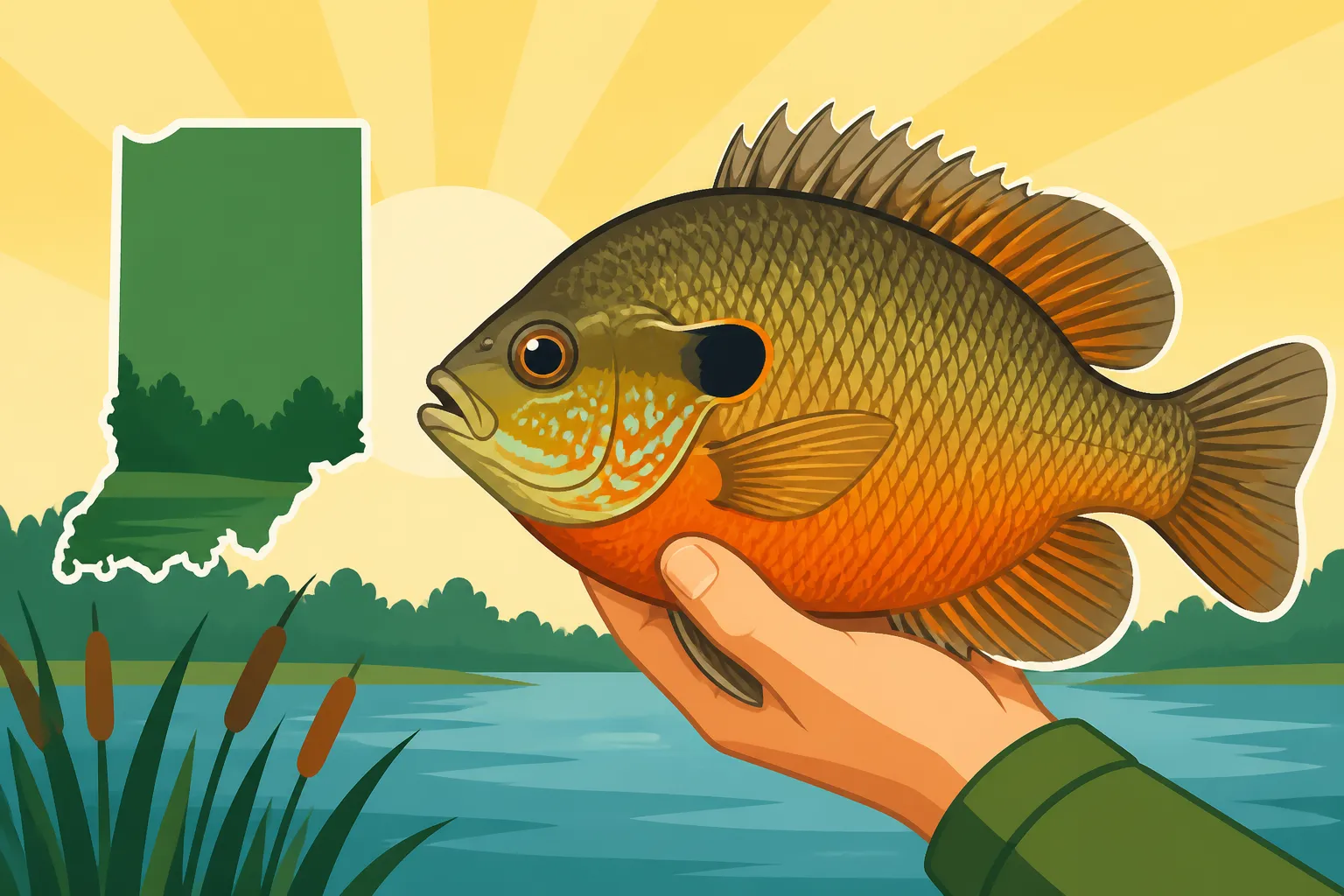
The most reliable way to tell a redear sunfish from a bluegill is by looking at the "ear flap" on the gill cover and the shape of their pectoral fins. A redear sunfish will typically have a distinct red or orange spot or margin on the edge of its gill flap (operculum). This spot is what gives them their "redear" name. Bluegill, on the other hand, will have a solid black "ear flap" with no colored margin. You can learn more about this by reading Redear Sunfish vs Bluegill: How to Tell Them Apart.
Another key difference lies in their pectoral fins. Redear sunfish usually have longer, more pointed pectoral fins compared to the bluegill's shorter, more rounded ones. The mouth of a redear is also slightly smaller and more downward-pointing, adapted for bottom-feeding on snails. Bluegill tend to have a larger, more terminal mouth. While both can be deep-bodied, redear often appear a bit more elongated or "football-shaped" compared to the generally rounder profile of a bluegill, especially when you compare fish of similar length. The overall coloration can also differ, with redear often having a brassier or olive-green hue, sometimes with faint vertical bars, while bluegill can range from dark olive to greenish-blue with more pronounced bars.
Redear vs. Green Sunfish: Unique Markings
Green sunfish are another common panfish in Indiana that can sometimes be confused with redear, especially smaller specimens. However, the differences become quite clear once you know what to look for. The most obvious distinguishing feature is the "ear flap." While green sunfish also have a black ear flap, it often has a distinct light-yellow or orange margin, but it's not the vibrant red or orange spot you'd see on a true redear. More importantly, the green sunfish's mouth is significantly larger, extending back past the middle of the eye, which is a major giveaway. Redear sunfish have a much smaller mouth, as mentioned before.
Additionally, green sunfish tend to have a chunkier, more robust body, a darker olive-green coloration, and often irregular, iridescent blue-green spots on their cheeks and gill covers. Their dorsal fin spines are also typically more pronounced and spiky. If you're comparing two fish side-by-side, the smaller mouth and the prominent red spot on the gill flap will unequivocally point to the redear sunfish. Knowing these distinct markings is important, not just for identification, but also for understanding their different feeding habits and preferred habitats.
Why Size Can Be a Clue, But Not the Only One
While this guide focuses on "How Big Do Redear Sunfish Get?", size can certainly be a clue for identification, but it should never be the only factor. For instance, a very large bluegill might be mistaken for a smaller redear if you're not paying attention to the other physical traits. Both species can exceed 10 inches in optimal conditions, making length alone an unreliable identifier. Always look for that distinctive red ear flap and the shape of the pectoral fins first.
However, if you consistently catch sunfish over 10 inches with the characteristic red ear, you've likely found a productive redear fishery. If you're catching panfish that are universally smaller, say 6-7 inches, but still have the red ear, it might be a younger population or a water body that doesn't support larger growth. Conversely, if you're catching very large panfish without the red ear, you might have discovered some trophy bluegill! Always combine size observations with the anatomical features for accurate identification. This knowledge not only satisfies curiosity but also helps you understand the specific ecology of the waters you're fishing.
Disclaimer
This article is for general informational purposes only and does not constitute professional advice. Laws, prices and regulations vary by location and change over time. Consult a qualified professional for guidance on your specific situation.