Reading Water Clarity to Find Chinook Salmon in Fall
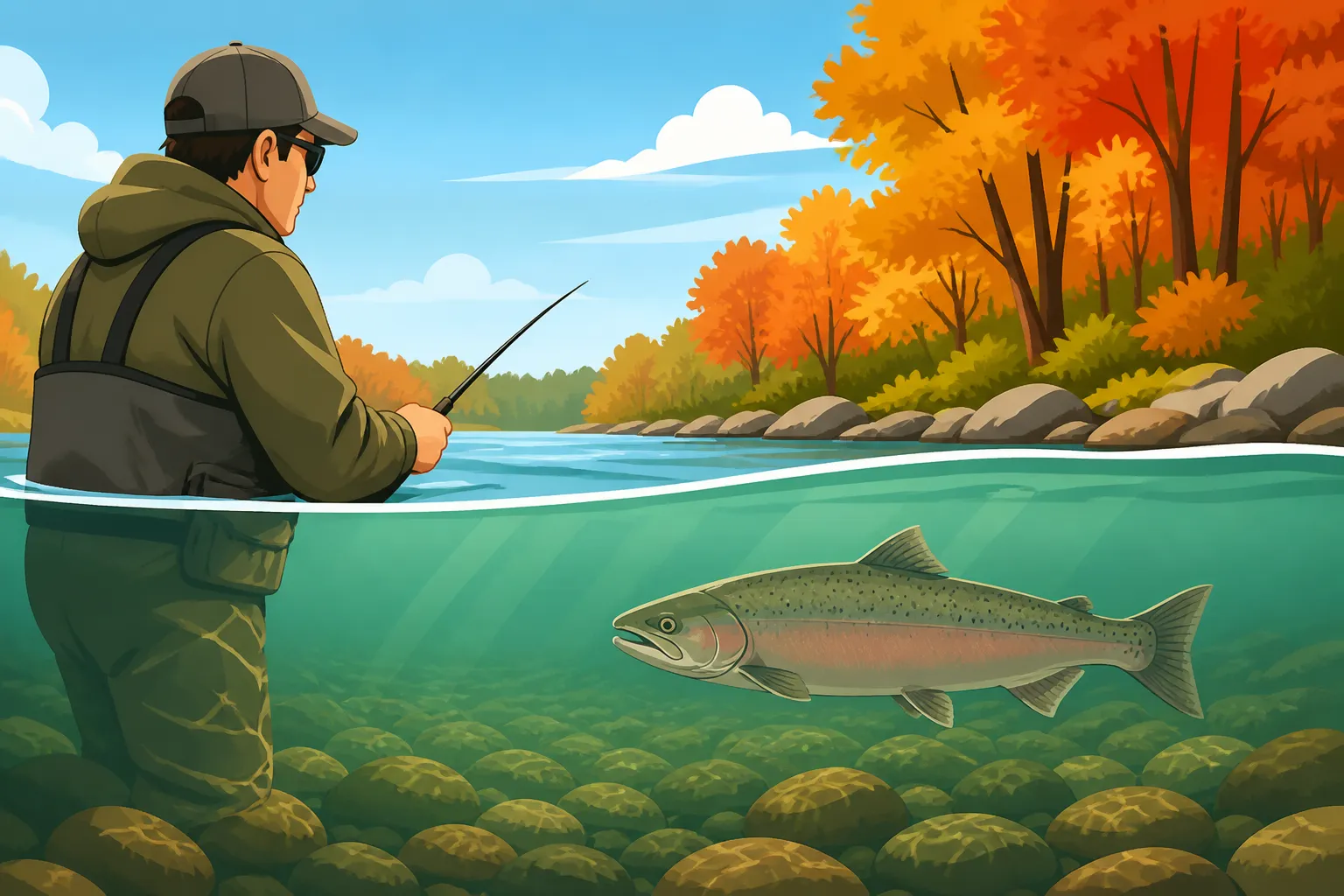
Trying to target fall Chinook salmon in Indiana's Lake Michigan waters can be incredibly rewarding, but it often feels like you're searching for a needle in a haystack, especially when the water conditions are constantly changing. One day it's crystal clear, the next it's a muddy chocolate milk after a heavy rain. This guide is here to unravel the mystery of water clarity and show you how to effectively read the signs to locate those powerful Chinook salmon during their exciting fall run.
Why Water Clarity is a Game-Changer for Fall Chinook Salmon Anglers
When Chinook salmon make their epic journey from the vast expanse of Lake Michigan into the nearshore waters and up the tributaries, they become highly sensitive to their surroundings. Unlike many other species that might tolerate a wider range of conditions, these fish are on a mission, and water clarity plays a crucial role in their behavior, feeding patterns, and even their migration path. Ignoring this factor is like trying to navigate a dense fog without a compass – you're simply going to struggle to find your way, and more importantly, to find the fish.
Understanding Salmon Behavior in Varying Conditions
Chinook salmon, especially in the fall, are driven by instinct. They're preparing to spawn, and while they might not be actively feeding in the same aggressive way they do in the open lake, they are still responsive to visual cues. In clear water, they can be incredibly wary. They've spent their lives in open water, avoiding predators, and they've developed keen eyesight. A bright lure or a clumsy approach can spook them instantly. Conversely, in murky water, their visual advantage is diminished, and they rely more on other senses like smell and the lateral line to detect prey or other fish. This shift in reliance means your tactics need to shift too.
For instance, imagine you're fishing a clear-water scenario near a pier. You cast a bright, shiny spoon, and it might just flash too much, making the salmon bolt. But switch that to a more natural presentation, or even a subtle fly, and you might have better luck. In stained water, however, that same bright spoon might be exactly what's needed to cut through the murk and get noticed. It's a constant dance between adapting to what the water gives you and what the fish are telling you. Many anglers overlook this fundamental principle, sticking to one strategy regardless of conditions, and often come home empty-handed.
The Impact on Bait and Lure Selection
The clearer the water, the more natural and subdued your presentation generally needs to be. Think about it: if you can see your own lure perfectly from 20 feet away, so can a fish, and any unnatural aspect will be glaringly obvious. This is where subtle colors, smaller profiles, and more realistic bait presentations shine. Natural minnow patterns, earthy tones, and even translucent jigs can be highly effective. Conversely, in stained or muddy water, you need to make your offering stand out. Bright, fluorescent colors like chartreuse, orange, or hot pink become your best friends. These colors can be seen even in low light or poor visibility, acting as a beacon for salmon searching by vibration and scent.
Beyond color, consider the action and sound of your lure. Rattling crankbaits, spoons that wobble with a strong vibration, or even soft plastics infused with scent become incredibly valuable in low-visibility conditions. The goal is to maximize their ability to be detected through senses other than sight. You can find a huge variety of these specialized lures and baits online, perhaps even browsing on Amazon for specific colors or rattling versions that local shops might not carry. Don't be afraid to experiment; sometimes the craziest color combination is exactly what those finicky fish are looking for in off-color water. This adaptability is key for success during the Fall Salmon Run Timing on Lake Michigan in Indiana.
Understanding Different Water Conditions and Their Impact
Water clarity isn't just about "clear" or "muddy." There's a spectrum, and each point along that spectrum offers different opportunities and challenges. Being able to discern these subtle differences and react accordingly is what separates the consistently successful anglers from those who only catch fish on perfect days.
Clear Water: When Visibility is High
Clear water offers the salmon unparalleled visibility, which means they can see your line, your boat, and any unnatural movements from a considerable distance. In these conditions, salmon tend to be more skittish and prone to spooking. They'll hold tighter to cover, deeper water, or shaded areas, using the environment to feel more secure. This means you need to prioritize stealth. Long casts are essential to keep your boat or your silhouette away from their direct line of sight. Using lighter fluorocarbon leaders, which are less visible in the water, can also make a huge difference.
Your lure presentation needs to be incredibly natural and subtle. Think smaller profiles, natural colors, and slow, enticing movements. If you're drifting eggs, ensure they look like the real deal, not a neon plastic blob. For spoons or stickbaits, opt for silver, blue, or green shades that mimic natural baitfish. Consider fishing during low-light conditions, like dawn or dusk, when the sun isn't directly overhead, reducing the fish's ability to see your setup. This is often the Best Time of Day to Catch Salmon on Lake Michigan in these conditions.
Stained or Tannic Water: The "Coffee-Colored" Zone
Stained water, often described as having a "tea" or "coffee" tint, is a common condition in many rivers and nearshore areas after a moderate rain or when tannins from decaying leaves leach into the water. This isn't muddy, but it reduces visibility significantly. Salmon in stained water often feel more comfortable and may be more aggressive, as their visual advantage is reduced, and they feel less exposed to predators. This is often a sweet spot for fall fishing.
In these conditions, you want your lures to offer a good contrast against the water. Brighter colors like orange, chartreuse, and hot pink can really shine here. Lures with strong vibrations or rattles become highly effective, as the fish will rely more on their lateral line to detect movement. Scented baits, or adding scent to your artificial lures, can also be a huge advantage. Don't be afraid to fish slightly shallower or in areas you might avoid in clear water, as the salmon will be less inhibited by overhead light.
Muddy Water: Low Visibility and Heavy Flow
Muddy water is the most challenging condition for fall Chinook salmon. This usually occurs after heavy rainfall, when tributaries swell and dump large amounts of sediment into Lake Michigan or its connecting rivers. In truly muddy conditions, visibility can be reduced to just a few inches. Salmon will generally move out of these heavily muddied areas and seek cleaner water. They might drop back into the main lake or find pockets of clearer water near creek mouths, eddies, or deeper sections where the current is less intense.
When facing muddy water, your best bet is often to move to areas less affected by the runoff. If you're fishing a tributary, head downstream towards the main lake or upstream until you find cleaner water. If you're on the lake, look for current breaks or areas where the turbidity line is distinct, marking the boundary between dirty and cleaner water. The salmon will often stage right on the edge of that line. Your lure choices here should focus on maximum visibility and vibration: large, brightly colored crankbaits, heavily scented jigs, or even natural baits like skein (cured salmon eggs) which emit a strong scent. Consider using trolling gear specifically designed for salmon, which can help cover more water to find those cleaner seams. You can research robust Trolling Gear Setup for Indiana's Lake Michigan Salmon to effectively present baits in these challenging conditions.
Reading the Signs: How to Locate Chinook Salmon in Variable Clarity
Knowing the type of water clarity is only half the battle; the real trick is translating that knowledge into finding the fish. Chinook salmon aren't just sitting ducks waiting for your lure; they're constantly moving, reacting to changes in their environment. Learning to read the subtle cues the water provides can significantly increase your chances of success.
Identifying the "Color Line"
One of the most crucial signs to look for, especially in the fall, is what anglers call the "color line" or "break line." This is where two different water clarities meet. After a rain, for example, a muddy river might flow into the clearer waters of Lake Michigan, creating a distinct line. Salmon will often congregate right along this transition, using the murkier water for cover while still being able to dart out into the clearer water to strike or to navigate.
When you find a color line, fish both sides of it and right on it. Position your boat or cast your lure so that it sweeps through this transition zone. Fish are often holding on the dirty side, but facing the clean side, waiting for an unsuspecting baitfish to pass by. Pay attention to how the current affects this line. Is it a sharp, defined edge, or is it more diffused? This can tell you a lot about how fish might be orienting themselves. Sometimes, having a pair of polarized sunglasses, available from retailers like Amazon, can really help you spot these subtle color changes from a distance.
Watching for Surface Activity and Fish Jumps
Even in stained or slightly murky water, fall Chinook salmon will often reveal their presence through surface activity. Keep a keen eye out for splashes, boils, or even full-blown jumps. While they might not be actively feeding at the surface during their spawning run, these movements indicate that fish are present and migrating. This is particularly true in river systems or near shorelines where they are staging before moving further upstream.
If you spot a jump, mark the location mentally or with your electronics. Even if the water is too dirty to see the fish, knowing where they are gives you a starting point. Cast beyond the area of the splash and retrieve your lure through it, or if you're trolling, steer your boat through that zone. Sometimes a group of fish will follow a leader, and one jump can signify a larger school beneath the surface. For deep water, a good fish finder can show you exactly where the salmon are holding, even if you can't see any surface activity.
Using Water Temperature as a Complementary Clue
While water clarity is our main focus here, it's essential to remember that it doesn't operate in a vacuum. Water temperature is another critical factor influencing Chinook salmon behavior, especially during the fall migration. Salmon are cold-blooded creatures, and their activity levels are directly tied to the water temperature. As cooler autumn air drops the water temperature, it triggers their urge to spawn and move into shallower, nearshore areas or up rivers.
Often, areas with a certain clarity will also have a specific temperature range. For example, a river swollen with cold rain might be muddy but also present a temperature shock to the fish, causing them to hold off entering until temperatures stabilize or they find a warmer thermal refuge. Conversely, a warm rain might clear up a bit, but the warmer water could delay their movement. Pay attention to sudden temperature drops or rises. Your boat's electronics, or a simple hand-held thermometer, can provide invaluable data. Combine temperature readings with your observations on water clarity to get the fullest picture of where the Chinook Salmon Fishing on Indiana's Lake Michigan Shore is best on any given day. Remember, it's all about putting together the puzzle pieces!
Gear and Tactics for Varying Water Clarity
Adapting your gear and techniques to match the water clarity is paramount for consistent success. You wouldn't use a bulldozer to plant a flower, and you shouldn't use a heavy jig in crystal clear water when a subtle spoon is needed. Having a versatile tackle box and knowing when to make the switch can dramatically improve your catch rate for fall Chinook.
Selecting the Right Rod, Reel, and Line
For clear water conditions, where stealth is key, consider using a lighter action rod with a sensitive tip. This allows for a more subtle presentation and helps you feel those delicate bites from wary fish. Pair it with a smooth spinning reel spooled with fluorocarbon line or a monofilament main line with a fluorocarbon leader. Fluorocarbon is less visible in water and has excellent abrasion resistance, which is crucial if you're fishing around rocky structures or snags. Look for reputable brands or specific types of fluorocarbon line that are reviewed well on sites like Amazon.
In stained or muddy water, you can often get away with a slightly heavier action rod. The fish are less likely to see your line, so the main concern becomes the ability to cast heavier, more vibration-inducing lures and to handle larger fish that might strike aggressively. A braided main line can be advantageous in these conditions due to its minimal stretch, which helps you feel bites even in heavy current, and its superior strength. You might still use a short fluorocarbon leader, but its length and weight can be adjusted.
| Water Clarity | Recommended Rod Action | Recommended Line Type | Lure Color Focus | Presentation Notes |
|---|---|---|---|---|
| Crystal Clear | Light to Medium-Light | Fluorocarbon Leader (4-8 lb) | Natural, Silver, Blue | Subtle, realistic, long casts, low light preferred |
| Stained/Tannic | Medium to Medium-Heavy | Mono or Braid with Fluoro Leader (8-15 lb) | Orange, Chartreuse, Pink | Vibrating, scented, moderate retrieves, explore shallower |
| Muddy | Medium-Heavy to Heavy | Braid (15-30 lb) with Short Heavy Fluoro Leader | Fluorescent, Bright | Large profile, strong vibration, slow retrieve, scent |
Choosing the Right Lures and Baits
This is where understanding water clarity truly pays off.
- Clear Water: Your go-to lures should be those that mimic natural forage. Thin-profile spoons in silver, blue, or chrome are excellent. Small stickbaits (like Rapalas or Yo-Zuris) in natural baitfish patterns (smelt, alewife) are also very effective. If bait fishing, natural cured eggs, small chunks of shrimp, or even live minnows on a float rig are great options. The goal is realism.
- Stained Water: This is prime time for brighter, more attention-grabbing lures. Firetiger patterns, hot orange, chartreuse, or pink spoons and crankbaits can be incredibly productive. Jigs tipped with brightly colored soft plastics or natural bait also work wonders. Adding scent to any artificial lure is a definite bonus. Don't underestimate the power of a lively wiggling baitfish either, as its vibration will be more easily detected.
- Muddy Water: Go big, go bright, and go smelly! Large, brightly colored crankbaits with aggressive wobbles are excellent. Heavy jigs tipped with large, scent-laden soft plastics or generous chunks of cured salmon roe (skein) are often the only things that will get noticed. Vibrating baits with rattles are a must. Remember, the fish are relying on senses other than sight, so maximize scent and vibration. This also applies to Best Salmon Fishing Spots on Lake Michigan in Indiana where river plumes are common.
Adapting Your Retrieval and Presentation Techniques
How you retrieve your lure or present your bait also needs to change with water clarity.
- Clear Water: Slow and deliberate is often the mantra. A twitch-and-pause retrieve for a stickbait, a slow roll for a spoon, or a natural drift for bait will be most effective. Avoid erratic, unnatural movements that could spook fish. Long casts are essential to keep your distance.
- Stained Water: You can often be a bit more aggressive. A steady retrieve that generates good vibration, or even a slow-to-moderate jigging action, can draw strikes. The reduced visibility means fish have less time to inspect your offering, so a confident presentation works well.
- Muddy Water: A slower, more exaggerated retrieve is usually best. Allow your lures to hang in the strike zone longer. Use powerful jigging motions that displace a lot of water. If trolling, slow down your boat speed to give fish more time to react to your presentation. This might mean making multiple passes over a suspected holding area.
By paying close attention to water clarity and adjusting your approach accordingly, you'll be well on your way to a more successful and rewarding fall Chinook salmon season on Indiana's beautiful Lake Michigan and its vibrant tributaries. Remember, flexibility is your greatest asset in the dynamic world of fishing!
Disclaimer
This article is for general informational purposes only and does not constitute professional advice. Laws, prices and regulations vary by location and change over time. Consult a qualified professional for guidance on your specific situation.