Muskellunge Identification: Spotting Indiana’s Toothiest Fish
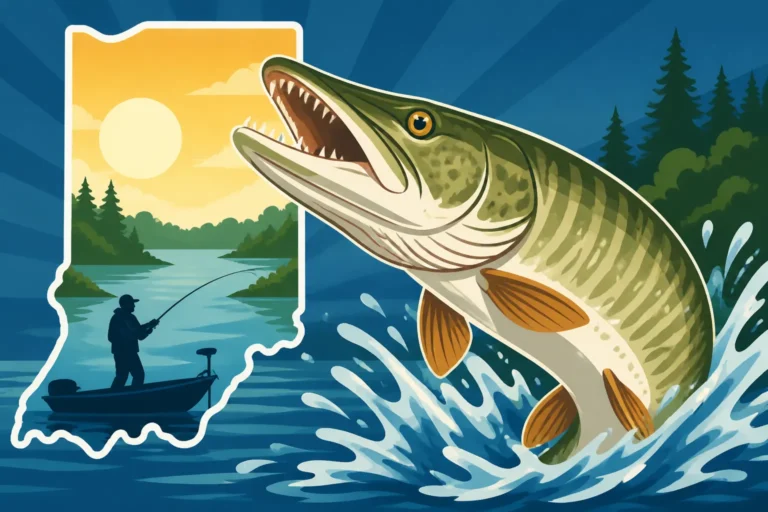
For many anglers in Indiana, the moment you feel that heavy thud on your line, followed by an explosive fight, the immediate question that flashes through your mind isn't "What is it?" but rather, "Is it… the one?" We all dream of landing a magnificent muskellunge, often called a muskie, but correctly identifying this elusive, toothy predator in the heat of the moment, especially when it shares waters with its pike cousins, can be surprisingly challenging. This guide will walk you through the distinct features that set Indiana's muskellunge apart, helping you confidently identify your catch and understand this incredible species.
The Thrill and Challenge of Spotting a Muskie
There's an undeniable mystique around the muskellunge. It’s often considered the ultimate freshwater trophy fish, and for good reason. Their size, power, and elusive nature make every encounter feel like a monumental achievement. But with that excitement comes a critical responsibility: accurate identification.
Why Identification Matters for Indiana Anglers
Proper fish identification isn't just about bragging rights, though a muskie certainly earns them! It's absolutely crucial for adherence to fishing regulations. Indiana has specific Indiana Fishing Regulations and Bag Limits Guide for different species, and misidentifying a muskie as a northern pike, or vice-versa, could lead to accidental violations. For instance, length limits and possession rules can differ significantly between these similar-looking fish. You wouldn't want to mistakenly keep a short muskie because you thought it was a legal-sized pike, or release a trophy pike thinking it was an undersized muskie! Responsible angling means knowing your fish and respecting the rules designed to protect these valuable populations. It's about conserving the species for future generations of anglers to enjoy that same heart-pounding experience.
The Initial Rush: Is It a Pike or a Muskie?
That initial moment of confusion is totally normal. When a long, green, toothy fish breaks the surface or flashes by your boat, the adrenaline surge can make fine details blur. Both muskies and northern pike are sleek, predatory, and often inhabit similar cold-water environments, especially in Indiana's glacial lakes. You've heard the stories: anglers debating for years over a grainy photo, or realizing only after the fact that their "pike" was actually a muskie. This common confusion highlights why having a clear understanding of their distinguishing characteristics before you even cast your line is so important. When you're in the moment, every second counts, especially with catch-and-release efforts, so quick and accurate identification is key.
Key Physical Characteristics of Indiana Muskellunge
While muskies and northern pike might seem like twins at first glance, a closer look reveals several clear differences. These distinctions are the secret handshake that separates the true muskie from its look-alike relatives.
Unique Jawline and Tooth Arrangement
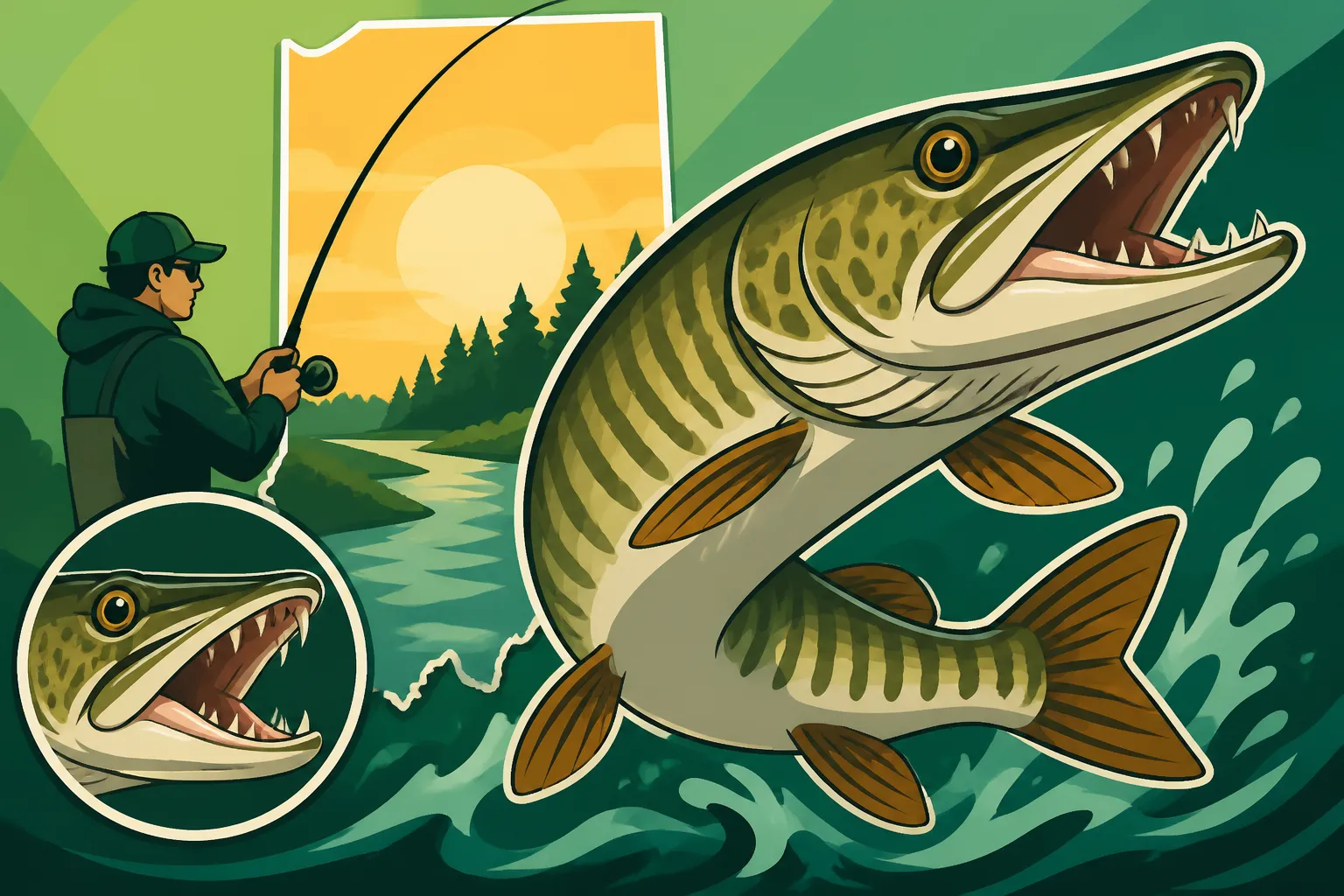
One of the most defining features of a muskellunge is its mouth. Muskies have a distinctive duckbill-like snout that is typically longer and more pointed than a northern pike's. But the real giveaway lies underneath. When you carefully examine the underside of a muskie's lower jaw, you'll notice a specific pattern of sensory pores. These pores are typically arranged in a row of 6 to 9, often forming a consistent line along each side. In contrast, northern pike usually have 5 or fewer pores, and they are often scattered or irregularly spaced. This pore count is a reliable field mark that many seasoned anglers use. As for the teeth, both are incredibly toothy, but muskies generally possess larger, more impressive canines, perfectly suited for ambushing and holding onto prey.
Distinctive Body Markings and Coloration
The body pattern is another major clue, though it can vary quite a bit based on the muskie's specific habitat and even its mood! Generally, Indiana muskies (which are typically the Great Lakes strain, Esox masquinongy) tend to have a lighter body color, ranging from silver to light green or brown, with darker markings. These markings often appear as distinct spots, bars, or blotches, which can sometimes connect to form a tiger-stripe pattern. Think of it like a tiger's stripes or leopard's spots on a lighter background. This is a crucial distinction from the northern pike, which usually has light spots on a darker background. Some muskies might even appear mostly unmarked, especially larger, older individuals, making other identification methods even more important. Having a clear photo can help you compare to a reliable fish identification chart later.
Fin Shape and Location Clues
Pay close attention to the fins! Both fish have similar fin structures, but their shapes and sizes can offer subtle hints. Muskies typically have somewhat larger, more rounded pectoral and pelvic fins than northern pike. The dorsal and anal fins are located far back on the body, close to the tail, in both species. However, the caudal (tail) fin on a muskie tends to be more deeply forked with distinctly pointed tips, almost like a "W" shape. Northern pike often have a tail fin that is less deeply forked and may appear more rounded, sometimes even with a slightly concave trailing edge. These fin differences, while perhaps not as striking as the jaw pores or markings, can certainly help confirm your identification, especially when combined with other features.
Muskellunge vs. Northern Pike: The Most Common Confusion
This is where many anglers trip up. Both species are part of the Esox family, share similar predatory behaviors, and often inhabit the same waters, leading to frequent misidentification. Let's really dig into the key differences to help you confidently tell them apart. It's the classic Muskie vs Northern Pike: How to Tell the Difference challenge.
Comparing Cheek and Gill Cover Scales
This is perhaps the most reliable physical identifier between a muskie and a northern pike, and it's something you can often observe fairly easily, even on a lively fish. Gently (and carefully!) run your finger over the cheek and the operculum (gill cover) of the fish.
- Muskellunge: On a muskie, the upper half of the cheek and the upper half of the gill cover are fully scaled. The lower halves, however, are typically unscaled. This means you'll feel smooth skin rather than scales on the bottom portion of both the cheek and the gill cover.
- Northern Pike: In contrast, a northern pike will have its entire cheek fully scaled, right down to the jaw. Its gill cover will also be scaled on the upper half, but the lower half will be unscaled.
So, the key difference here is the cheek: a muskie's cheek is only half-scaled, while a pike's cheek is fully scaled. This is a consistent and very accurate way to differentiate the two, and a critical detail for any angler in Indiana. You might find a good laminated fish identification card, perhaps available on a site like Amazon, invaluable for quickly referencing these features while on the water.
Tail Fin Differences: Pointed vs. Rounded
While we touched on this earlier, it's worth reiterating due to its importance. The shape of the caudal (tail) fin offers another strong visual clue.
- Muskellunge: A muskie's tail fin is generally more deeply forked, and the tips of the two lobes are noticeably more pointed or sharp. Imagine a somewhat exaggerated "W" shape, where the outer edges taper to distinct points.
- Northern Pike: A northern pike's tail fin, on the other hand, is usually less deeply forked, and the tips of its lobes are typically more rounded or blunter. The overall shape might appear more like a gentle "V" or even slightly convex.
This difference can be particularly clear when the fish is calm or held correctly for a photograph. It's a quick visual check that, when combined with other features, solidifies your identification.
The "Spot vs. Bar" Pattern Debate
The body markings are often the first thing people notice, but they can also be the most confusing because of natural variation. Let's clarify the general patterns:
- Muskellunge: Most Indiana muskies will display dark markings (spots, bars, or blotches) on a lighter background. These can be very distinct spots, or they might form vertical bars, or even connect to create a "tiger muskie" appearance. The key is that the darker pattern sits on top of a lighter base color.
- Northern Pike: Northern pike typically have lighter, often yellowish or whitish, bean-shaped spots or irregular markings on a darker, olive-green background. It's like someone splattered light paint onto a dark canvas.
This distinction is usually quite reliable, but remember that some muskie strains or individual fish can have very faint markings, making it harder to discern. Always combine this observation with the gill plate scales and jaw pores for definitive identification.
Here's a quick comparison table to keep these differences straight:
| Feature | Muskellunge | Northern Pike |
|---|---|---|
| Cheek Scaling | Upper half scaled, lower half unscaled | Entire cheek fully scaled |
| Gill Cover (Operculum) | Upper half scaled, lower half unscaled | Upper half scaled, lower half unscaled |
| Lower Jaw Pores | 6-9 sensory pores per side, usually in a line | 5 or fewer sensory pores per side, often scattered |
| Body Markings | Dark spots, bars, or blotches on a lighter background | Light, often bean-shaped spots on a darker background |
| Tail Fin | Deeply forked with pointed tips | Less deeply forked with rounded tips |
| Overall Shape | Generally more elongated and cylindrical | Often appears slightly chunkier or robust |
Muskellunge in Indiana: Where They Thrive
Indiana might not be as famous for muskies as some other states, but we certainly have some incredible fisheries. Knowing where these fish are typically found can also help you narrow down your identification possibilities. After all, if you're fishing a small pond stocked only with panfish, you're less likely to pull out a muskie!
Known Muskie Strongholds in the State
Our state's muskie population is predominantly found in the northern glacial lakes, which offer the deeper, cooler water and forage necessary for these large predators to thrive. Lakes like Webster Lake, Tippecanoe Lake, Lake Webster, and particularly Lake Wawasee: Indiana's Largest Natural Lake and Its Fish are well-known for their muskie populations. These lakes are regularly stocked by the Indiana DNR to maintain healthy muskie fishing opportunities. Other notable muskie waters include several lakes within the famed Indiana's Glacial Lake District: Home to Muskie, Pike, and Walleye, such as James Lake, which is often associated with the state muskie record. James Lake and Indiana's State Muskie Record provides even more detail on this fantastic fishery. Anglers specifically targeting muskies in these areas will often come equipped with specialized gear, like heavy-duty rods and reels capable of handling the fight, which you can find a wide selection of on platforms like Amazon.
Understanding Habitat and Behavior for Easier Identification
Muskies are ambush predators. They prefer clear, cool waters with plenty of cover, such as weed beds, submerged timber, or rocky drop-offs, from which they can launch their attacks. They are often solitary fish, patiently waiting for prey. Knowing this behavior can sometimes help with identification. If you're working a deep weed line or casting large lures near structure in a known muskie lake and hook into a massive fish that doesn't immediately resemble a typical bass or walleye, your odds of it being a muskie increase significantly. They are also known for their incredible bursts of speed and violent head shakes, which often distinguish their fight from that of a northern pike, which might put up a strong but perhaps less acrobatic battle.
Practical Tips for On-the-Water Identification
Even with all the knowledge in the world, identifying a fish quickly and accurately when it's thrashing next to your boat can be a challenge. Here are some practical tips to make the process smoother and safer for both you and the fish.
Catch-and-Release Considerations for Accurate ID
Muskies are almost universally caught and released, not just because of strict length limits, but also due to their incredible value as a trophy species. This makes quick and safe handling paramount.
- Preparation is Key: Before you even cast, have your tools ready. Long-nose pliers, hook cutters, and a large, knotless landing net or cradling device are essential. A measuring tape, easily purchased on Amazon, should also be on hand.
- Minimize Out-of-Water Time: The less time a muskie spends out of the water, the better its chances of survival. Try to perform identification while the fish is still in the net or partially submerged alongside the boat.
- Handle with Care: Never grab a muskie by the eye sockets or gill plates. Use a wet glove or a specialized "muskie glove" to safely handle the fish by the lower jaw if necessary, ensuring its body is supported horizontally. Avoid vertical hangs.
- Quick Checks: Focus on the key identifiers: the lower jaw pores, the gill plate scaling, and the tail fin shape. A quick glance at the body pattern will reinforce your findings. If you're truly unsure, treat it as the most protected species (the muskie) and release it gently. Learning How to Figure-Eight a Muskie at the Boat before landing can also save valuable time and reduce stress on the fish.
Using Reference Tools and Technology
Don't be afraid to use modern aids!
- Laminated Fish ID Cards: Keep a waterproof, laminated fish identification card or guide in your tackle box. Many of these clearly illustrate the differences between muskies and pike. You can often find excellent options for these practical tools on Amazon, ready to clip to your vest or store in a boat compartment.
- Smartphone Apps: There are several fishing apps available that offer fish identification features. Take a quick, clear photo (while prioritizing the fish's safety and quick release) and consult the app if you have signal.
- Fishing Buddies: Fish with experienced muskie anglers! There's no substitute for hands-on learning from someone who has correctly identified hundreds of these fish. They can point out the subtle nuances you might miss.
- Practice: The more you see and handle fish, the better you'll become at quick identification. Even smaller northern pike can provide good practice for observing the key features like gill plate scaling. Understanding Muskie Casting Techniques and Best Rods for Muskie Fishing will help you get those fish to the boat in the first place, giving you the opportunity to practice your identification skills.
Learning to confidently identify a muskellunge is a rewarding part of the Indiana fishing experience. It not only ensures you're compliant with regulations but deepens your appreciation for these magnificent, toothy creatures. The next time you feel that powerful strike, you'll be ready to make that confident call: "Muskie!"
Disclaimer
This article is for general informational purposes only and does not constitute professional advice. Laws, prices and regulations vary by location and change over time. Consult a qualified professional for guidance on your specific situation.