How to Get an Indiana Fishing License
There’s nothing quite like the feeling of anticipating a bite on your line, the peaceful quiet of an Indiana lake at dawn, or the thrill of a big fish at the end of your hook. But before you even think about baiting up or casting out, there’s one crucial piece of paperwork that can often feel confusing and, let's be honest, a little daunting: getting your Indiana fishing license. Navigating the rules, understanding the different types, and knowing how and where to buy one can feel like a whole quest in itself. Don't worry, friend, you're not alone in feeling this way. This comprehensive guide is here to cut through the confusion and walk you through every single step to secure your Indiana fishing license, ensuring your next angling adventure is perfectly legal and worry-free.
Why You Absolutely Need an Indiana Fishing License
It might seem like a hassle, just another hoop to jump through before you can enjoy your favorite pastime, but holding a valid Indiana fishing license is more than just a bureaucratic formality. It's a cornerstone of responsible angling, protecting you from legal trouble and, more importantly, contributing directly to the health and future of Indiana's incredible fisheries.
The Legal Imperative: Avoiding Fines and Penalties
Let's get straight to it: fishing without a valid license in Indiana is against the law, and the consequences can put a serious damper on your day. Imagine finally getting to your favorite spot, the weather is perfect, and you've got your line in the water for mere minutes, only for a conservation officer to approach and ask for your license. If you don't have one, or if it's expired, that peaceful fishing trip can quickly turn into a costly ordeal.
Indiana Department of Natural Resources (DNR) conservation officers are out there, not to spoil your fun, but to ensure everyone is playing by the rules that protect our natural resources. A citation for fishing without a license typically starts as a Class C misdemeanor, which can carry fines up to $500. And that's just the baseline. Depending on the specifics of the situation, like if you were also violating bag limits or using illegal methods, the penalties could escalate. It’s far cheaper, and significantly less stressful, to simply obtain the proper license upfront. Ignorance of the law is rarely an acceptable excuse in the eyes of the courts, so taking the time to understand the requirements and secure your license is a non-negotiable step before you head to the water. Trust me, the small cost of a license pales in comparison to a court appearance and a hefty fine. For a deeper dive into what could happen, you can read up on the Penalties and Fines for Fishing Without a License.
Supporting Indiana's Conservation Efforts
Beyond avoiding legal headaches, your fishing license plays a vital role in something much larger: the conservation of Indiana's diverse aquatic ecosystems. Every dollar generated from fishing license sales in Indiana goes directly back into programs managed by the Indiana DNR. This isn't just a general fund; it's specifically earmarked for things that directly benefit anglers and the fish they pursue.
Think about it: these funds help manage fish populations, conduct important research, protect and restore crucial fish habitats, and even operate the state fish hatcheries that stock our lakes and rivers. Without these funds, the vibrant fisheries we enjoy today – from the bass-filled waters of Monroe Lake to the walleye havens of the northern glacial lakes – wouldn't be nearly as robust. So, when you purchase your license, you're not just buying permission to fish; you're investing in the future of fishing for yourself, for future generations, and for the health of Indiana's natural environment. It’s a small personal contribution that collectively makes an enormous impact.
Who Needs a License and Who Gets a Pass
The rules around who needs a fishing license in Indiana can sometimes feel a bit like a tangled fishing line – confusing! But it's actually quite straightforward once you break it down by age, residency, and specific circumstances. Understanding these distinctions will ensure you're always on the right side of the law.
Age Requirements: Adults, Teens, and Kids
One of the most common questions from new anglers or families planning a trip is about age limits. In Indiana, the good news for young aspiring anglers is that anyone under the age of 18 does NOT need a fishing license. This is fantastic news for families, as it encourages kids to get out and enjoy the sport without an additional barrier. So, if you're planning a family outing, all your children and any other minors under 18 can fish freely with you.
Once an individual turns 18, the requirement for a valid Indiana fishing license kicks in. This applies to both residents and non-residents alike. However, the upper age limit also has some special considerations for seniors, which we'll get into shortly. For most adults, though, if you're 18 or older and intend to drop a line in any public waters, a license is a must-have. Keep in mind that while kids don't need a license, they are still subject to all other Indiana fishing regulations and bag limits. It's a great opportunity to teach them responsible angling practices from a young age. To clarify the specifics for younger anglers, check out our guide on Free Fishing for Indiana Residents Under 18.
Residency Matters: Defining an Indiana Resident
The cost and availability of certain licenses depend heavily on whether you are considered an Indiana resident or a non-resident. So, how does Indiana define a "resident" for fishing license purposes? Generally, a resident is someone who has lived in Indiana continuously for at least 60 consecutive days immediately preceding the date they apply for a license. This means you can't just move here for a week and claim residency for a cheaper license.
There are also specific provisions for military personnel stationed in Indiana, full-time students attending Indiana educational institutions, and non-resident landowners. If you own land and pay taxes in Indiana but reside primarily in another state, you might qualify for certain resident privileges, but it's always best to verify with the Indiana DNR directly, as these rules can have nuances. The key takeaway is that your primary, continuous domicile determines your residency status, and this will directly impact which license options are available to you and at what price point. The Indiana Fishing License Costs for Residents and Nonresidents article can provide more details on these variations.
Special Exemptions: Private Ponds and Free Fishing Days
While the general rule is "license required," there are a few notable exceptions that can save you some planning or offer a chance to try fishing without the initial investment.
Firstly, if you are fishing in a private pond that is located entirely on your own property, and the pond does not have public access or connect to any public waters, you generally do not need a state fishing license. This is a common scenario for many rural landowners or those with private recreational properties. However, if the pond is accessible by the public, even through a private easement, or if it flows into or out of a public stream or lake, then state licensing rules apply. Always err on the side of caution and assume a license is needed unless you are absolutely certain it's a truly private, enclosed body of water.
Secondly, Indiana offers several "Free Fishing Days" throughout the year. These are special days designated by the state where both residents and non-residents can fish Indiana's public waters without needing a fishing license or a Trout/Salmon Stamp. These days are designed to encourage people of all ages to experience the joy of fishing, perhaps for the very first time. They are fantastic opportunities for beginners to try their hand at fishing without the upfront cost of a license. However, all other fishing regulations, such as bag limits and size restrictions, still apply on Free Fishing Days. It’s always a good idea to check the Indiana DNR website for the specific dates each year. For more information, take a look at our Indiana Free Fishing Days Guide.
Navigating the Types of Indiana Fishing Licenses
Once you've determined that you indeed need a license, the next step is figuring out which one is right for you. Indiana offers a variety of license types tailored to different needs, from annual passes for frequent anglers to short-term options for visitors or those just trying it out.
Annual Licenses: Your Go-To Option
For the vast majority of Indiana residents who plan to fish more than a couple of times a year, the Annual Fishing License is the most cost-effective and convenient choice. This license covers you for an entire Indiana fishing license year, which runs from April 1st through March 31st of the following year. It's important to remember that it's not a calendar year license; it always expires on March 31st, regardless of when you purchased it. So, if you buy it in January, it's still only valid until March 31st. This is a common point of confusion for many anglers, so keep that April 1st start date in mind! Our article on the Indiana Fishing License Year Explained delves deeper into this.
This annual license allows you to fish for most common freshwater species across the state, from bass and panfish in local ponds to catfish in larger rivers. It offers unlimited access to Indiana's public fishing waters for a single, reasonable fee, making it the workhorse of the Indiana fishing license system. If you're passionate about fishing and plan to make it a regular hobby, this is undoubtedly the best value.
Short-Term Options for Quick Trips
Not everyone lives and breathes fishing year-round. Perhaps you're visiting Indiana for a weekend, or you're a resident who only plans a single fishing trip all year. For these scenarios, Indiana offers convenient short-term licenses that provide flexibility without requiring a full annual commitment.
- Non-Resident 1-Day Fishing License: This is perfect for the out-of-state angler passing through or making a quick stop. It allows you to fish for one full calendar day. It's an affordable way for visitors to enjoy Indiana's waters without investing in a full non-resident annual license, which can be significantly more expensive.
- Non-Resident 7-Day Fishing License: If your visit to Indiana is a bit longer, say a week-long vacation to a lake like Patoka or Monroe, the 7-day non-resident license is a great choice. It provides a full week of fishing access, giving you plenty of time to explore different spots and species.
These short-term options are extremely popular with tourists and those who might just be trying fishing for the first time. They provide a low-barrier entry point to enjoy what Indiana's waters have to offer.
Senior and Lifetime (Historic) Licenses
Indiana truly values its senior anglers, offering special license options that provide significant savings and long-term convenience.
- Senior Annual Fishing License: For Indiana residents aged 65 and older, there's a highly discounted annual fishing license. This makes fishing incredibly accessible for seniors who want to continue enjoying their favorite pastime. It functions just like the regular annual license, running from April 1st to March 31st. You can find more details on this specific option in Indiana Senior Fishing License Options.
- Senior Fish-for-Life License: This is an incredible deal for Indiana resident seniors aged 65 and up. It's a one-time purchase that grants you fishing privileges for the rest of your life. No more remembering to renew, no more annual payments. It's truly a "set it and forget it" option that pays for itself quickly if you plan to fish for several years. This license covers basic fishing and also includes the Trout/Salmon Stamp, making it an even better value. It's a beloved option among Indiana's senior fishing community for its simplicity and savings. Our guide on The Senior Fish-for-Life License, Indiana's One-Time Option provides a full breakdown.
It's important to note a historic change: Indiana no longer sells new standard lifetime fishing licenses to the general public. These were discontinued in 2005. If you were fortunate enough to purchase a lifetime license before that date, it remains valid. But for new anglers or those who missed that window, the senior Fish-for-Life is the closest equivalent for long-term savings.
Specialty Licenses and Stamps
Beyond the general fishing licenses, Indiana also requires specific "stamps" or endorsements for certain types of fishing, particularly for highly sought-after species or unique angling opportunities.
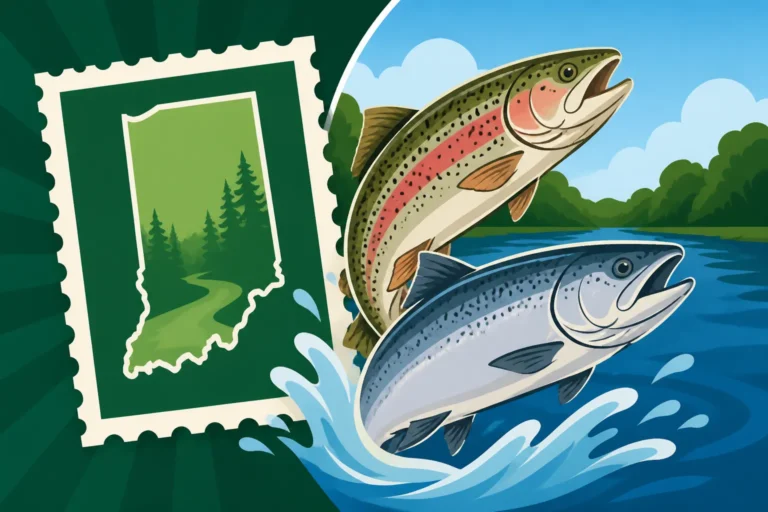
The most common additional requirement is the Trout and Salmon Stamp. If you plan to fish for trout or salmon in Indiana waters, you must purchase this stamp in addition to your regular fishing license. This includes species like Rainbow Trout, Brown Trout, Lake Trout, Chinook Salmon, and Coho Salmon, whether you're targeting them in Lake Michigan, its tributaries, or in inland streams and lakes that are stocked with trout. This stamp helps fund the specific management and stocking programs for these cold-water species, which require different resources than warm-water species. For a clear answer on when you need this, see Do You Need a Trout and Salmon Stamp to Fish for Trout?.
Other less common, but equally important, permits might include specific event permits (like certain fishing tournaments where special rules apply) or unique regulations for certain private lakes or managed ponds that have their own specific permitting. Always double-check the Indiana DNR regulations for the specific body of water you plan to fish, especially if it's a private or managed area.
| License Type | Eligibility | Duration | Typical Cost (Approx.) | Notes |
|---|---|---|---|---|
| Annual Resident Fishing | IN Resident (18-64) | April 1 – March 31 | $23 | Standard choice for most IN residents. |
| Annual Non-Resident Fishing | Non-IN Resident (18+) | April 1 – March 31 | $60 | More expensive due to non-residency. |
| Non-Resident 1-Day Fishing | Non-IN Resident (18+) | 1 Calendar Day | $9 | Great for short visits or trying it out. |
| Non-Resident 7-Day Fishing | Non-IN Resident (18+) | 7 Consecutive Days | $20 | Good for week-long fishing trips to IN. |
| Senior Annual Fishing | IN Resident (65+) | April 1 – March 31 | $3 | Highly discounted for seniors. |
| Senior Fish-for-Life | IN Resident (65+) | Lifetime | $40 | One-time purchase, includes Trout/Salmon Stamp. |
| Trout & Salmon Stamp | All (if fishing for T&S) | April 1 – March 31 | $11 | Required in addition to base license for trout/salmon. |
| Kids Under 18 | All (Under 18) | N/A | Free | No license needed, but rules still apply. |
| Physically Disabled Resident | Qualifying IN Resident | Lifetime | Free | Specific criteria apply, contact DNR. |
| Veteran License | Qualifying IN Resident Vet | Lifetime | Free | Specific criteria apply, contact DNR. |
Note: Costs are approximate and subject to change by the Indiana DNR. Always verify current prices before purchase.
Step-by-Step: How to Purchase Your Indiana Fishing License
Once you know which license you need, the process of actually getting it is surprisingly easy and convenient in Indiana. The state offers several methods to purchase your license, ensuring there's an option that works for everyone, whether you prefer the digital convenience of online buying or the personal touch of a local vendor.
Buying Online: The Easiest Way to Get Licensed
Without a doubt, purchasing your Indiana fishing license online is the most popular and often the most convenient method. The Indiana DNR's online licensing system is user-friendly and accessible 24/7, meaning you can buy your license from the comfort of your home at any time, day or night. This is especially helpful if you suddenly decide on a spur-of-the-moment fishing trip or realize your license has expired just hours before you plan to hit the water.
Here’s a general rundown of the online process:
- Visit the Official Indiana DNR Website: Make sure you're on the official DNR licensing page. A quick search for "Indiana fishing license online" should lead you there.
- Choose Your License Type: Select whether you're a resident or non-resident, and then choose the specific license product (e.g., Annual Resident Fishing License, Non-Resident 7-Day, Senior Fish-for-Life, plus any necessary stamps like the Trout/Salmon Stamp).
- Provide Personal Information: You'll need to enter basic details such as your name, address, date of birth, and driver's license or state ID number. This information helps verify your residency and age for qualification.
- Confirm and Pay: Review your selections and information carefully to ensure accuracy. Then, proceed to payment using a credit or debit card. The system is secure, so your financial information is protected.
- Print or Save Your License: Once the transaction is complete, you'll typically receive an immediate confirmation email with a link to download and print your license. You can also save a digital copy to your smartphone. This instant access means you're legal to fish immediately.
The online portal allows you to easily manage your profile, view past purchases, and renew your license annually. It truly simplifies the entire process. For a detailed walkthrough, our article on Buying a Fishing License Online in Indiana is a great resource.
In-Person Retailers: For That Personal Touch
For those who prefer a more traditional approach, or if you find yourself near a tackle shop and want to chat with a fellow angler, you can still purchase your Indiana fishing license in person. This option is particularly helpful if you have questions about specific regulations for a local body of water or want to pick up some bait or tackle at the same time.
Indiana has a vast network of authorized license vendors across the state. These typically include:
- Sporting Goods Stores: Big box retailers like Bass Pro Shops or Dick's Sporting Goods often have licensing counters.
- Local Bait and Tackle Shops: These smaller, often family-owned shops are a classic place to get your license and invaluable local fishing advice.
- Select Clerk Offices: Some county clerks' offices might also sell licenses.
- Indiana State Parks and Reservoirs: Many property offices at state parks and large reservoirs sell licenses, especially convenient if you're already at your destination.
When purchasing in person, you'll need to bring a valid form of identification (like a driver's license or state ID) to verify your residency and age. The vendor will input your information, process your payment, and print your physical license on the spot. This immediate physical copy is often preferred by anglers who like to have a tangible document in their wallet. This method supports local businesses and can be a great way to get up-to-date local fishing tips. To find a location near you, the Indiana DNR website usually has a "find a vendor" tool.
Purchasing by Phone: Quick and Convenient
Though less common than online or in-person, Indiana also offers the option to purchase your fishing license over the phone. This can be a lifesaver if you're on the go, don't have internet access, or simply prefer to speak with a human representative.
You can typically call the Indiana DNR's licensing division during regular business hours. A customer service representative will guide you through the process, collect your necessary personal information and payment details, and then process your license purchase. Similar to the online method, you'll then receive confirmation and instructions on how to access a printable or digital version of your license. This method bridges the gap between digital self-service and in-person assistance, providing a quick solution when other options aren't ideal.
Understanding Additional Permits and Stamps
While your base fishing license covers a wide array of angling opportunities in Indiana, there are specific situations where you'll need to acquire additional stamps or permits. Failing to do so can be just as problematic as not having a base license, especially if you're targeting specific species.
The Indiana Trout and Salmon Stamp: When You Need It
If your fishing aspirations include pursuing cold-water species like trout or salmon, then the Indiana Trout and Salmon Stamp is an absolute must-have. This isn't an optional add-on; it's a requirement if you intend to fish for these specific species anywhere in Indiana. This includes:
- Lake Michigan and its Tributaries: If you're heading to the northwest corner of the state to target Chinook salmon, Coho salmon, Steelhead (rainbow trout), or brown trout in Lake Michigan or the rivers and streams that flow into it (like the St. Joseph River), you need this stamp. The salmon and steelhead runs in the fall and spring are big draws, and conservation officers frequently check for this stamp in these areas.
- Inland Trout Streams and Lakes: Indiana has numerous smaller streams and lakes that are periodically stocked with trout by the DNR. If you're planning to visit one of these inland trout fisheries, such as those found in our state parks or other designated areas, the stamp is required.
It's crucial to understand that the Trout and Salmon Stamp is in addition to your regular fishing license. It doesn't replace it. Think of it as a specialized endorsement that allows you to participate in these particular fisheries. The funds generated by this stamp are specifically dedicated to the management, stocking, and habitat improvement of Indiana's trout and salmon programs, ensuring these exciting fishing opportunities remain viable. When purchasing your primary fishing license, you'll typically have the option to add the Trout and Salmon Stamp at the same time for convenience. For a comprehensive look at what this stamp covers, consult What the Indiana Trout and Salmon Stamp Covers.
Other Potential Permits and Endorsements
While the Trout and Salmon Stamp is the most common additional requirement, there are other, less frequent situations where specialized permits or endorsements might be necessary:
- Tournament Angler Licenses: If you participate in certain competitive fishing tournaments, particularly those with significant prizes or specific formats, there might be additional state-level or organizational permits required. These are usually clarified by the tournament organizers, but it's always wise to check with the DNR if you have questions about specific event requirements. Our guide on Tournament Angler License Rules and Requirements provides relevant information.
- Special Waterbody Permits: Occasionally, a highly regulated or protected waterbody, or one managed by a specific local authority (not just the state DNR), might have its own localized permit requirements in addition to the state license. This is rare for general public fishing but can occur in very specific circumstances, such as research ponds or private-public partnerships. Always check local signage or authority websites if you're venturing into an unfamiliar or uniquely managed area.
- Federal Permits: While rare for standard freshwater fishing in Indiana, if you were to engage in highly specialized activities like commercial fishing or scientific research involving fish, federal permits might also come into play. For the average recreational angler, this is typically not a concern, but it's worth being aware of the broader regulatory landscape.
For the vast majority of anglers, the only additional consideration beyond their base fishing license will be the Trout and Salmon Stamp. Always review the current Indiana fishing regulations guide, which is updated annually, to stay informed of any changes or specific requirements for your planned fishing adventure.
What About Reciprocity with Neighboring States?
Indiana shares borders with several other states, and with rivers like the Ohio and lakes like Michigan creating shared waterways, it's a common question: "Does my Indiana fishing license work if I cross into Ohio or Michigan?" Or vice-versa. Understanding reciprocity is key to avoiding an unintentional violation when fishing near state lines.
Border Waters: Ohio, Michigan, Illinois, and Kentucky
The concept of "reciprocity" means that one state recognizes the fishing license of another state under specific, agreed-upon conditions, usually for shared boundary waters. Indiana has such agreements, but they are not universal and come with specific stipulations.
- Ohio River: For the Ohio River, generally, an Indiana fishing license is valid for fishing from either the Indiana bank or a boat on the Ohio River, as long as you stay on the Indiana side of the low water mark of the river's north shore. However, if you plan to fish from the Ohio side of the river (including their tributaries) or launch a boat from Ohio, you will need an Ohio fishing license. The agreement usually covers fishing on the shared main body of the river itself, but not venturing into the other state's land or direct tributaries. For full details on this specific border, check out Indiana Fishing License Reciprocity With Ohio.
- Lake Michigan: This massive body of water is shared by multiple states. When fishing Lake Michigan from Indiana's shoreline or within Indiana's territorial waters, your Indiana fishing license is all you need. However, if you venture into the waters legally defined as Michigan's territory, you will absolutely need a Michigan fishing license. This often means careful navigation if you're boating, as crossing state lines on the water can happen quickly. The rule of thumb is: fish where your license is valid. Our guide on Lake Michigan Fishing Rules for Indiana Anglers has more specific information. For those specifically wondering about Michigan's side, see Does a Michigan Fishing License Work in Indiana?.
- Wabash River (Illinois Border): Similar to the Ohio River, there are often specific agreements for portions of the Wabash River that form the border between Indiana and Illinois. Generally, an Indiana license allows you to fish the main stem of the Wabash where it forms the boundary. However, always confirm current regulations with both the Indiana and Illinois DNRs, as these agreements can have specific nuances, especially regarding tributaries or access points from the opposite state. Fishing License Rules for Illinois Residents Visiting the State provides a resource.
- Kentucky: Like Ohio, the Ohio River forms a significant border with Kentucky. The same general principles apply: an Indiana license allows you to fish the waters considered Indiana's jurisdiction on the river. If you plan to fish from Kentucky's side or its tributaries, a Kentucky license is required. For more details, refer to Fishing License Rules for Kentucky Residents Visiting Indiana.
Understanding Shared Water Agreements
The key takeaway with reciprocity is that while it exists, it's rarely a blanket "my license works everywhere" policy. It's almost always specific to the main body of the shared water and does not extend to tributaries, streams, or land-based access points within the neighboring state.
Here are a few important considerations for shared water agreements:
- Always Carry Both: If you frequently fish border waters and sometimes cross into the other state (even unintentionally while boating), it's often easiest and safest to simply purchase a non-resident license for the adjacent state as well. This eliminates any doubt or potential for violation.
- Specific Rules Apply: Even on shared waters, species-specific regulations (like bag limits, size limits, and open seasons) might differ between states. You are always bound by the regulations of the state whose waters you are fishing, regardless of where your license came from. This can get tricky, so be extra diligent in these areas.
- Check Annually: Reciprocity agreements can sometimes change or be updated. Always consult the most current fishing regulation guides from both Indiana and the neighboring state before heading out, especially if you haven't fished those border waters in a while. Don't rely on old information.
While reciprocity simplifies things somewhat, it doesn't eliminate the need for vigilance. A moment of carelessness could turn a relaxing day into a frustrating encounter with a conservation officer. When in doubt, always secure the license for the state you'll be fishing in.
Common Questions and Troubleshooting Your License
Even after understanding all the ins and outs, questions can still pop up. What if you lose your license? How do you keep it current? These are common concerns, and thankfully, Indiana has straightforward answers and processes in place.
Lost Your License? Here's What to Do
It happens to the best of us. Licenses get misplaced, wallets go missing, or that printed paper license takes an unexpected swim. Don't panic! Losing your physical Indiana fishing license doesn't mean you're out of luck or have to buy a whole new one.
If you purchased your license online, the solution is usually very simple:
- Log Back into Your Online Account: The Indiana DNR's online licensing system keeps a record of all your purchases. Simply log in using your credentials.
- Access Your Purchase History: Navigate to your license history, and you should be able to view and re-print your current valid license.
- Save a Digital Copy: This is a great opportunity to save a digital copy (PDF or screenshot) of your license to your smartphone. This way, even if you lose the physical paper, you have an electronic version readily accessible. Many conservation officers are perfectly fine with viewing your license on a phone.
If you purchased your license in person and don't have an online account, you might still be able to retrieve it through the online system by creating an account and linking your past purchases, or by revisiting the vendor where you originally bought it. They often have records and can help you print a duplicate. In any case, avoid fishing without proof of your license, as this can still lead to a citation even if you genuinely had one. A quick stop at a local vendor or a few minutes online can save you a lot of trouble.
Renewing Your License: Keeping It Current
Remember, Indiana's fishing licenses run on a specific schedule: April 1st through March 31st of the following year. This means that every spring, on April 1st, your old license expires, and a new one is required for the upcoming fishing season. Missing this deadline is a very common reason for inadvertent violations.
Renewing your license is as simple as purchasing a new one:
- Online Renewal: The most convenient method is to renew online through the Indiana DNR's licensing portal. You can log into your existing account, and the system will prompt you to renew your expired or soon-to-expire license. It's a quick, guided process. See Renewing an Indiana Fishing License Online for more details.
- In-Person Renewal: You can also renew your license at any authorized vendor. Just bring your ID, and they can process the renewal and print your new license for you.
- By Phone: As with initial purchases, phone renewal is also an option during business hours.
Many anglers set a reminder on their phone or calendar for mid-March each year to ensure they renew their license before the April 1st deadline. This simple habit prevents any interruption to your fishing plans and keeps you compliant year after year.
Understanding the Indiana Fishing License Year
The Indiana fishing license year can be a source of confusion for newcomers and even seasoned anglers who move from other states with different systems. Unlike many other permits or subscriptions that run for a full 12 months from the date of purchase, Indiana fishing licenses are tied to a fixed annual cycle.
- Starts April 1st: Every year, the new fishing license year begins on April 1st.
- Ends March 31st: Regardless of when you purchase your license within that period, it will always expire on March 31st of the following year.
This means if you buy your annual license in, say, September, it's still only valid until the following March 31st, not for a full 12 months from September. Because of this, it's generally most economical to purchase your annual license as close to April 1st as possible to maximize its usable duration. However, if you start fishing later in the year, you'll still need to purchase one, but understand that its validity will be shorter. Knowing this fixed cycle, which we cover in detail in Indiana's Fishing License Year Runs April to March, is crucial for budgeting and planning your fishing outings.
Ensuring Compliance: Carrying and Displaying Your License
Having a valid fishing license is one thing; being able to prove you have one is another. Conservation officers have the authority to request proof of your license, and if you can't produce it, you could still face legal repercussions.
Physical vs. Digital: What's Acceptable
Thankfully, Indiana's DNR has embraced modern technology, offering flexibility in how you carry and display your license:
- Physical Copy: The traditional method is to carry a printed, physical copy of your license. Whether it's the paper printout from your home computer or the card stock version from a retail vendor, a physical copy is always acceptable. Many anglers like to laminate their paper licenses to protect them from water damage and wear and tear.
- Digital Copy: Indiana does accept digital proof of your license. This means you can save a PDF of your license to your smartphone, take a screenshot, or use an official DNR app (if available) to display it. This is incredibly convenient for many, as most people always have their phone with them. Just ensure your phone is charged and readable! If your phone dies or gets wet, you could be without proof. It's always a good idea to have a backup plan or keep a physical copy in your tackle box.
The key is "proof." As long as you can clearly show a conservation officer your valid license information, whether on paper or a screen, you should be fine. However, it's always best to have it readily accessible rather than buried deep within your phone's photo library.
The Importance of Always Having Proof
Imagine this scenario: You're out on the lake, having a fantastic day, and a DNR officer pulls up to your boat for a routine check. They ask for your fishing license. You know you bought it, but it's back home on the fridge, or you just can't find it in your boat bag. Unfortunately, "I have one at home" or "I just can't find it" isn't going to cut it.
The requirement is not just to have a license, but to possess and display it upon request. This is why saving a digital copy to your phone or carrying a laminated physical copy is so important. Without immediate proof, an officer might have no choice but to issue a citation, even if you could prove your license was valid later. This leads to unnecessary stress, time, and potential fines.
Make it a habit: as you're gathering your rods, reels, bait, and tackle before heading out, add "fishing license" to your mental checklist. Ensure it's in your pocket, wallet, tackle box, or easily accessible on your phone. This simple step ensures your fishing trip remains enjoyable and compliant from start to finish.
Disclaimer
The information provided in this guide is intended for general informational purposes only and does not constitute legal advice. Fishing regulations and license requirements are subject to change by the Indiana Department of Natural Resources (DNR). While we strive to keep this information accurate and up-to-date, it is the sole responsibility of each angler to consult the most current official Indiana Fishing Regulation Guide and DNR website before engaging in any fishing activities. Compliance with all state and local laws and regulations is mandatory.