What Does a Largemouth Bass Look Like?
It's happened to all of us: you reel in a beautiful fish, your heart pounding with excitement, only to pause and wonder, "Wait, what exactly is this?" In Indiana, the largemouth bass is one of our most iconic and sought-after game fish, but sometimes it can be a bit tricky to tell them apart from their cousins, the smallmouth and spotted bass. This guide is here to clear up any confusion, helping you confidently identify that chunky green fish at the end of your line by focusing on its distinctive features.
The Classic Profile of an Indiana Largemouth Bass
When you first lay eyes on a largemouth bass, there are a few key characteristics that immediately stand out and really define its identity. These aren't just minor details; they're the bread and butter of telling a largemouth apart from other bass species you might encounter in Indiana's diverse waterways. Getting familiar with these visual cues will make you a much more confident angler, especially when you're targeting specific species.
That Signature Mouth and Jawline
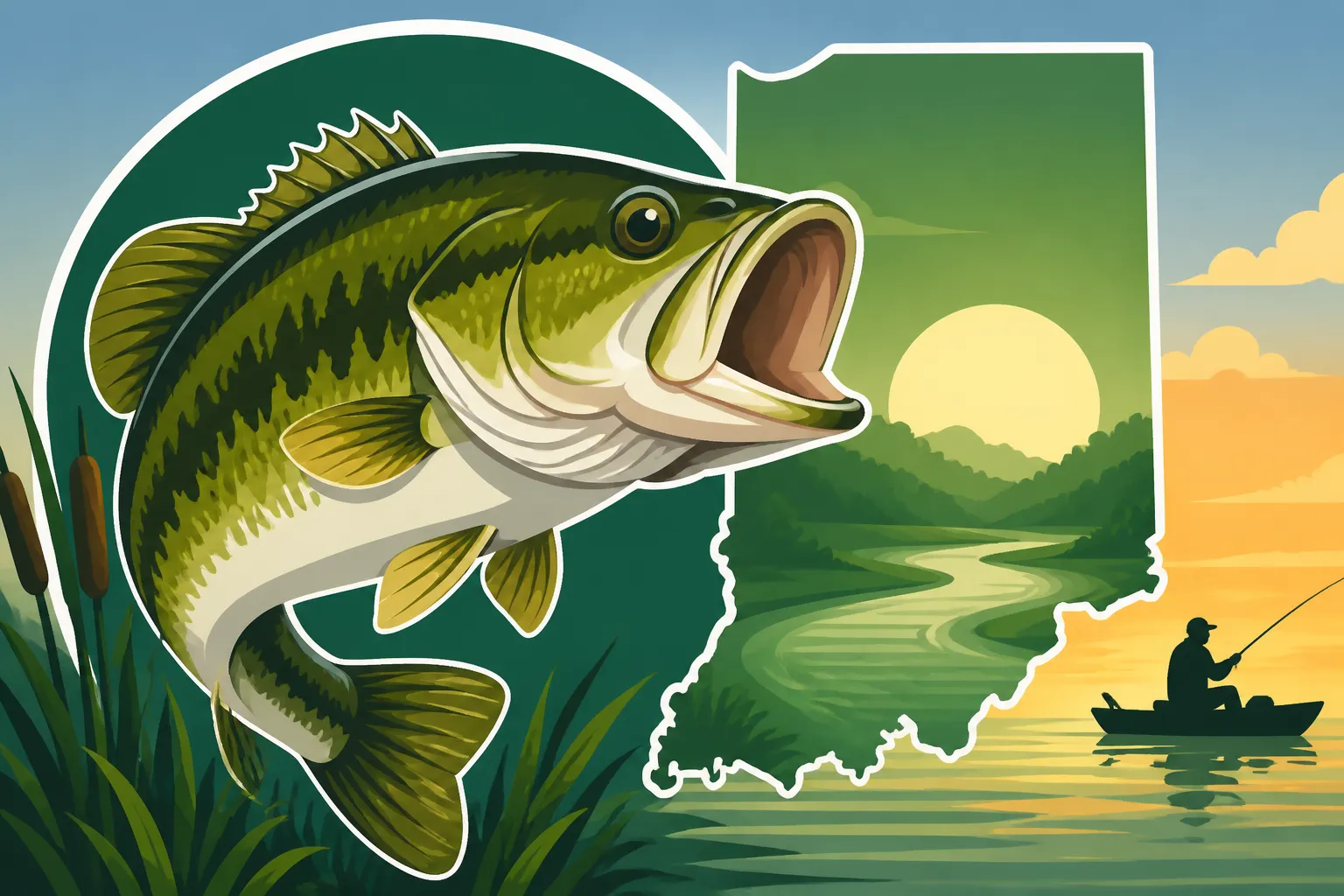
The most obvious and perhaps the most important identifying feature of a largemouth bass is right there in its name: its mouth. These fish truly have a large mouth. What does that mean in practical terms? Well, if you look at the corner of their jaw, where the upper and lower jaw meet, it extends significantly past the back of their eye. Imagine drawing an imaginary vertical line down from the back of the eye; on a largemouth, that jaw hinge will cross that line, often reaching well behind it.
This distinctive jawline isn't just for show; it's a critical adaptation for how they hunt. Their massive, cavernous mouths allow them to engulf surprisingly large prey whole, from smaller fish and crawfish to frogs and even small birds or mice that fall into the water. So, when you're trying to identify your catch, gently open its mouth a bit (being careful of any hooks, of course!) and observe how far back that jaw extends. It's truly a hallmark of the species, unlike some other fish that have much more dainty, forward-facing mouths.
Dorsal Fin Separation: A Key Indicator
Another critical feature to examine, one that often gets overlooked by newer anglers, is the dorsal fin. This is the fin located on the fish's back. In a largemouth bass, the dorsal fin is distinctly separated into two parts by a deep notch. You'll notice a spiny, rigid front section and a softer, rayed rear section. For a largemouth, this notch is very pronounced, almost making it look like two separate fins rather than one continuous one.
Think of it like two distinct hills on a mountain range, rather than one long, rolling ridge. The spiny part will be much stiffer and sharper, designed for defense, while the soft-rayed part is more flexible and used for propulsion and maneuverability. This deep separation is a key characteristic that immediately helps distinguish a largemouth from its smallmouth cousins, which tend to have a more continuous or only slightly notched dorsal fin. Keep an eye out for this detail when you're scrutinizing your catch.
Distinctive Markings and Coloration
Beyond the physical structure, the color and patterns on a largemouth bass are incredibly helpful for identification. While their exact hues can shift depending on where they live, there's a general scheme that remains consistent and tells you a lot about the fish you've caught. Understanding these nuances will not only help with identification but also give you insight into their preferred habitats.
The Lateral Line: A Tell-Tale Stripe
One of the most defining visual characteristics of a largemouth bass is its lateral line. This isn't just any line; it's a sensory organ that runs horizontally along the side of the fish, from its gill plate all the way back to its tail. On a largemouth, this lateral line typically appears as a prominent, dark, horizontal stripe or band. It can sometimes look like a series of connected blotches rather than a solid line, but it's always there and usually quite noticeable.
This stripe might be a very dark, almost black, color against a lighter green background, making it stand out quite clearly. However, don't be surprised if you catch a largemouth where this stripe is a bit faded or broken up, especially in fish from very clear water or those that have adapted to sandy bottoms. The key is that this pattern of a dark horizontal band is consistently present, even if its intensity varies. It’s a bit like a barcode that clearly identifies them among other species.
Body Coloration and Environmental Factors
The overall body coloration of a largemouth bass is generally a beautiful olive green to dark green on its back, gradually fading to lighter green or yellowish-green on its sides, and typically culminating in a stark white belly. This coloring provides excellent camouflage, allowing them to blend seamlessly into their preferred habitats of aquatic vegetation, submerged timber, and muddy bottoms.
However, the exact shade of green can vary quite dramatically. Fish from clear, deep water with plenty of sunlight might appear lighter, sometimes even yellowish or silvery-green. Conversely, bass caught from murky, tannic waters with heavy cover often have a much darker, almost blackish-green back. It’s fascinating how quickly they can adapt their skin pigment to match their surroundings, a testament to their survival instincts. So, while the classic green-to-white gradient is a rule of thumb, always remember that the specific intensity of those colors is highly influenced by the individual fish's environment and diet. Many anglers keep a small, waterproof fish identification guide, which you can often find on Amazon, to compare colors and patterns right there on the water.
Size, Shape, and Habitat Cues in Indiana
Beyond the immediate visual identifiers, the overall build and where you find a largemouth bass can also give you strong clues to its identity. Their body shape is perfectly evolved for their ambush predator lifestyle, and their preferred hangouts often reveal their presence even before you see them. Understanding these broader characteristics helps paint a complete picture of what a largemouth bass looks like.
General Body Shape and Robustness
When you hold a largemouth bass, you'll immediately notice its robust, stocky, and somewhat compressed body. They aren't long and slender like some river fish; instead, they have a deep body profile, especially as they mature and grow. This gives them a powerful, almost football-like appearance. Their deep bodies and strong tails are perfectly designed for explosive bursts of speed from cover, allowing them to ambush unsuspecting prey.
Think of them as built for power and quick strikes rather than sustained, open-water cruising. Their profile tends to be taller than it is wide, and their shoulders can be quite broad, particularly on larger specimens. This substantial build is part of what makes them such a popular sport fish; they put up a fantastic fight on the end of a line. If you're wondering How Big Do Largemouth Bass Get in Indiana?, their robust build definitely hints at their potential for impressive size.
Where You'll Typically Find Them
The appearance of a largemouth bass is intrinsically linked to its habitat. These fish are masters of ambush, which means they prefer environments with plenty of cover where they can hide and wait for prey. In Indiana, you'll typically find them lurking around dense weed beds, lily pads, submerged timber (like fallen trees or brush piles), rock piles, and docks. They love structure – anything that breaks up the open water and provides a vantage point for an attack.
Their dark backs and mottled lateral lines provide excellent camouflage in these environments. Imagine a largemouth nestled deep within a thick mat of lily pads; its coloration makes it virtually invisible from above. Understanding this habitat preference isn't just useful for finding them, but also for confirming your identification. If you're reeling a fish in from thick weeds or a brush pile in a warm, shallow lake, chances are good it's a largemouth. You'll find them in many of the Best Fishing Lakes in Indiana, especially those with ample shallow cover.
Spotting the Difference: Largemouth vs. Their Cousins
While the largemouth bass has many distinctive features, it's not always alone in Indiana's waters. Smallmouth bass and spotted bass are also present, and they can sometimes be confused with their largemouth relatives. Knowing the subtle but significant differences is key to proper identification, especially since regulations and typical habitats can vary between species. For accurate measurement of your catch, a reliable measuring tape or board is essential and can easily be found on Amazon.
Largemouth vs. Smallmouth Bass
This is perhaps the most common identification challenge for Indiana anglers. Both are popular sport fish, but they have key differences:
- Jawline: As we've discussed, the largemouth's jaw extends past the back of its eye. The smallmouth bass, true to its name, has a jaw that typically ends under the middle of its eye or, at most, aligns with the back of the eye, but rarely extends beyond it. This is your number one differentiator.
- Dorsal Fin: The largemouth has that deeply separated dorsal fin, almost appearing as two distinct fins. The smallmouth's dorsal fin is much more continuous, with only a very shallow notch, giving it a more unified appearance.
- Coloration and Markings: Largemouth bass usually have that prominent dark horizontal stripe (lateral line). Smallmouth bass, on the other hand, tend to have vertical bars or blotches along their sides, giving them a "tiger stripe" look. Their coloration is often more bronze, brown, or golden-green, rather than the bright green of a largemouth.
- Body Shape: Largemouth are generally stockier and deeper-bodied. Smallmouth tend to be more torpedo-shaped and streamlined, built for current and open water.
- Habitat: While there's overlap, largemouth prefer warmer, shallower, weedy, and heavily structured waters. Smallmouth typically gravitate towards cooler, clearer water with rocky bottoms and more current, often found in rivers and deeper lake sections. For a deeper dive, check out Largemouth Bass vs Smallmouth Bass: Key Differences.
Largemouth vs. Spotted Bass
Spotted bass are less common in many parts of Indiana compared to largemouth, but they can be found, particularly in some southern reservoirs and rivers. They are often referred to as "Kentucky bass." They look very similar to largemouth, making identification tricky:
- Jawline: This is where it gets a bit more subtle than with smallmouth. A spotted bass's jaw, like a smallmouth's, usually does not extend beyond the back of its eye. It typically aligns with the back edge of the eye, or sometimes slightly short of it. This makes it crucial to compare it to the largemouth's unmistakably longer jaw.
- Lateral Line and Spots: While a largemouth has a dark lateral line that might be blotchy, a spotted bass has a distinct lateral line with prominent rows of dark spots below it, creating a "spotted" pattern on its lower sides. These spots are usually much more defined than any mottling you'd see on a largemouth.
- Tongue Patch: This is the definitive, though more invasive, way to tell them apart. If you can safely and gently feel the tongue of a spotted bass, you will find a small, rough patch of teeth in the center. Largemouth and smallmouth bass do not have this patch. Be extremely careful if you attempt this, as bass have abrasive pads in their mouths.
Here's a quick comparison table to help you keep these bass species straight in your mind:
| Feature | Largemouth Bass | Smallmouth Bass | Spotted Bass |
|---|---|---|---|
| Jawline | Extends well beyond the back of the eye | Ends at or before the middle/back of the eye | Ends at or slightly before the back of the eye |
| Dorsal Fin | Deeply notched, almost two separate fins | Shallowly notched, appears more continuous | Deeply notched, similar to largemouth |
| Lateral Markings | Prominent dark horizontal band (lateral line) | Vertical bars/blotches; often bronze/brown color | Prominent dark lateral line with distinct spots below it |
| Body Shape | Stocky, deep-bodied, compressed | More streamlined, torpedo-shaped | Similar to largemouth, robust |
| Tongue | Smooth | Smooth | Has a rough patch of teeth (palatine patch) |
| Preferred Habitat | Warm, shallow, weedy, heavy cover | Cooler, rocky, clear water, current | Warmer rivers, reservoirs, rocky areas |
By paying close attention to these details, especially the jawline, dorsal fin, and lateral markings, you'll soon become an expert at identifying the majestic largemouth bass and its intriguing cousins in Indiana's waters. This knowledge will not only boost your angling confidence but also help you comply with specific regulations that might apply to different bass species, such as Indiana's Largemouth and Smallmouth Bass Daily Limit: 5 Fish Combined. Happy fishing, Hoosier anglers!
Disclaimer
This article is for general informational purposes only and does not constitute professional advice. Laws, prices and regulations vary by location and change over time. Consult a qualified professional for guidance on your specific situation.