Largemouth Bass Daily Limit in Lakes
It's incredibly frustrating, isn't it, when you're geared up for a perfect day of bass fishing on your favorite Indiana lake, but a nagging doubt about the daily catch limits starts to creep in? You want to do the right thing, follow the rules, and contribute to healthy fish populations, but sometimes those regulations can feel like a tangled mess. This guide is here to clear up any confusion you might have about the largemouth bass daily limit in Indiana lakes, ensuring you can cast with confidence and enjoy your time on the water without worry.
Understanding Indiana's Largemouth Bass Daily Limit
When you’re out on an Indiana lake, whether it’s a big reservoir or a quiet pond, knowing the rules for the fish you’re targeting is paramount. For largemouth bass, Indiana has a specific, clear regulation that applies to most bodies of water, but it's crucial to understand it fully, especially since bass often share a combined limit with other similar species.
The Statewide Standard for Most Lakes
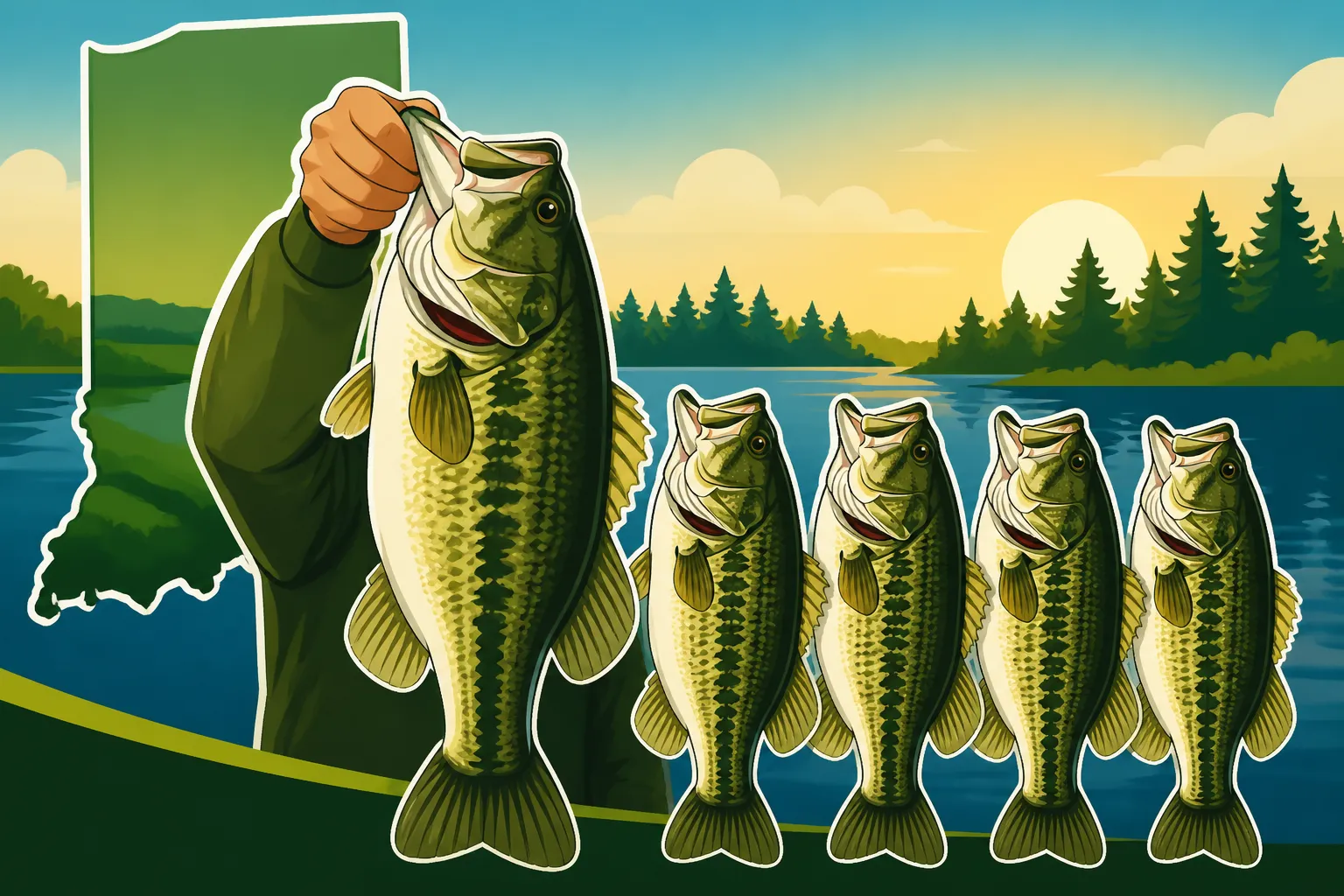
For the vast majority of Indiana's lakes and reservoirs, the daily bag limit for black bass is 5 fish. Now, here's the kicker that often trips people up: "black bass" isn't just largemouth. This category includes largemouth bass, smallmouth bass, and spotted bass, all combined. So, if you catch three largemouth and two smallmouth, you've hit your daily limit of five black bass. It's not five of each species, but five total from that group. This combined limit for Indiana's Statewide Bass Daily Bag Limit is a conservation effort to manage the overall population of these popular sport fish.
Beyond the number, there's usually a size restriction. For largemouth bass in most Indiana waters, there's a 14-inch minimum length limit. This means any largemouth bass you decide to keep must be at least 14 inches long from the tip of its snout to the end of its tail, measured with the tail compressed. If you catch a beautiful 12-inch largemouth, you'll need to gently release it back into the water, even if you haven't hit your five-fish limit yet. These minimum lengths are put in place to ensure that fish have a chance to mature and spawn at least once, contributing to future generations of bass. It's a system designed to keep our fisheries thriving for years to come.
Why These Limits Exist
You might wonder why these specific numbers and lengths are chosen. It's not arbitrary; it's all about conservation and maintaining healthy, sustainable fisheries across our beautiful Hoosier State. The Indiana Department of Natural Resources (DNR) conducts extensive research, surveys fish populations, and analyzes catch rates to determine what limits will best protect the species while still allowing anglers to enjoy their sport.
Imagine a scenario without limits: everyone keeps every bass they catch, regardless of size or number. The bass population would quickly decline, leading to fewer fish, smaller fish, and ultimately, a much less enjoyable fishing experience for everyone. These regulations act as a buffer, ensuring enough fish remain in the system to reproduce and grow, providing a robust and healthy ecosystem. By adhering to the Indiana Fishing Regulations and Bag Limits Guide, we're all playing a part in responsible stewardship of our natural resources. It’s about striking a balance: allowing anglers to enjoy their harvest while safeguarding the future of Indiana fishing.
Navigating Specific Lake Regulations for Bass
While the statewide regulations provide a solid baseline, it's a common misconception that every single lake and river follows the exact same rules. The truth is, some specific bodies of water in Indiana might have unique regulations tailored to their particular fish populations and ecological needs. Ignoring these hyper-local rules could lead to an unwelcome conversation with a conservation officer.
Checking Local Regulations for Your Fishing Spot
Before you even tie on your first lure, it's absolutely critical to double-check the specific regulations for the lake you plan to fish. The best way to do this is by consulting the latest Indiana Fishing Guide, available online through the Indiana DNR website. They have a comprehensive listing of all the state's public waters, and any special regulations for a particular lake will be clearly noted there.
For instance, while the 14-inch minimum length for largemouth is standard, some lakes might have a "slot limit" for bass. This means you can keep bass under a certain size and over another size, but not within a specific "slot." For example, a lake might say you can keep bass under 12 inches and over 18 inches, but any bass between 12 and 18 inches must be released. These types of rules are designed to protect the breeding-size fish, allowing them to grow larger and continue to spawn, which helps improve the quality of the fishery over time. Even popular spots like Monroe Lake or Patoka Lake, known for their bass fishing, might have subtle differences. Always, always verify the rules for your specific destination to avoid any issues.
Understanding Lake-Specific Rules vs. Statewide Rules
It's easy to get confused when statewide rules meet localized exceptions. Think of the statewide rule as the default setting, but certain lakes have custom programming. These lake-specific rules are often implemented when biologists identify a particular issue or opportunity within that specific body of water. Perhaps a lake is experiencing stunted growth in its bass population, so a slot limit is introduced to encourage the harvest of smaller fish and the protection of larger, faster-growing ones. Or maybe a lake is being managed for trophy bass, and a higher minimum length limit is put in place to help those fish reach their full potential.
For largemouth bass, thankfully, the variations are usually not as complex as for some other species like walleye, where exceptions for places like Bass Lake or Lake George are quite common. However, it's still your responsibility as an angler to know. If you're fishing a new lake, don't assume. A quick check on the DNR's fishing guide will tell you everything you need to know. This diligence ensures you're not only compliant but also contributing positively to the health of that particular fishery. Remember, the Combined Bass Limit for Indiana Lakes and Rivers still applies to the total number, even if length limits vary.
More Than Just the Numbers: Practicing Responsible Bass Fishing
While knowing the daily limits and minimum sizes is essential, responsible bass fishing goes far beyond simply counting your catch. It’s about how you interact with the fish, the environment, and fellow anglers. We all want to enjoy fishing for years to come, and that means being a good steward of our natural resources.
The Importance of Catch-and-Release for Larger Bass
Many dedicated bass anglers, even when within the legal daily limit, choose to practice catch-and-release, especially for the larger, older bass. Why? Because these bigger fish, often referred to as "trophy bass," are crucial for the gene pool of the lake. They've proven their ability to survive, grow large, and successfully reproduce. Releasing these impressive specimens ensures they can continue to pass on their strong genetics, contributing to a healthier and more robust bass population. Plus, letting a magnificent 20-inch largemouth go means another angler might get to experience that thrill someday!
It's a personal choice, of course. If you want to keep a couple of legal-sized bass for a delicious meal, that's perfectly fine. But for those truly exceptional catches, many anglers feel a deep satisfaction in watching them swim away strong. This practice is a cornerstone of maintaining Indiana's Best Lakes for Trophy Largemouth Bass and ensuring quality fishing for generations.
Proper Handling Techniques to Ensure Survival
If you're going to release a fish, whether it's an undersized bass or a trophy you've decided to let go, proper handling is absolutely vital for its survival. A poorly handled fish is a stressed fish, and a stressed fish has a much lower chance of making it back to health.
Here are some key tips:
- Minimize Air Exposure: Fish can't breathe air. Keep them in the water as much as possible. If you need to take a photo, do it quickly and hold the fish horizontally with both hands, supporting its belly. Never hold a large bass vertically by its jaw for an extended period, as this can dislocate its jaw or damage its spine.
- Wet Your Hands: Always wet your hands before touching a fish. Dry hands can remove the protective slime coat, making the fish susceptible to disease.
- Use Barbless Hooks (if possible): Barbless hooks, or hooks with pinched barbs, make extraction much easier and cause less damage to the fish's mouth. If you’re not using barbless, a good pair of pliers or a de-hooking tool is essential.
- Quick Release: Get the hook out as quickly and gently as possible. If a fish is deeply hooked, it's often best to cut the line as close to the hook as possible rather than trying to rip it out. The hook will eventually rust and fall out.
- Revive if Necessary: If a fish seems lethargic after being caught, hold it gently in the water, facing into the current (if there is one), and move it back and forth slightly to help water flow over its gills. Release it only when it swims away under its own power.
Learning Bass Fishing Techniques for Beginners often starts with casting and bait selection, but understanding these handling methods is just as crucial for ethical angling.
Keeping Track: Tips for Staying Within Limits
It’s easy to lose count when the fishing is hot, or to misjudge a fish’s length in the excitement of the moment. Nobody wants to accidentally break a regulation, so having a few simple strategies to keep track of your catch can save you a lot of headache and ensure you stay compliant with Indiana's fishing laws.
Simple Counting Methods on the Water
Keeping track of your bass catch doesn't have to be complicated, but it does require a bit of discipline. Here are a few straightforward methods:
- Mental Count (with caution): For short trips or when you're only planning to keep one or two fish, a simple mental count might suffice. However, human memory isn't always reliable, especially after a few hours of casting. If you're anywhere near your limit, it's safer to use a more concrete method.
- Physical Markers: Some anglers use simple physical markers. This could be moving a few spare lures from one side of your tackle box to another for each fish kept, or tying a small knot in a piece of string on your boat.
- Clicker Counter: A small, handheld clicker counter (often used by golfers or crowd counters) is an inexpensive and effective tool. Click it once for each legal fish you decide to keep. You can find these easily on Amazon, often for just a few dollars. It's discreet and accurate.
- Livewell/Stringer Segregation: If you're keeping multiple fish, don't mix your bass with other species if they have different limits. Dedicate a section of your livewell or a specific stringer just for your legal bass, making it easy to see exactly how many you have at a glance.
These simple habits can prevent accidental over-harvesting and ensure you stay within the Indiana Fishing Regulations and Bag Limits Guide at all times.
Essential Gear for Measuring and Handling
Beyond just counting, having the right gear on hand is indispensable for accurately measuring your catch and ensuring proper handling, especially when you're dealing with those tricky minimum length rules.
- Measuring Board or Tape: This is non-negotiable for bass fishing. A proper measuring board allows you to lay the fish flat, compress its tail, and get an accurate measurement without causing undue stress. Many tackle shops, as well as online retailers like Amazon, offer these in various lengths. A simple flexible measuring tape will also work in a pinch, but a dedicated board is more accurate and gentler on the fish.
- Fish Gripper/Lip Gripper: These tools allow you to firmly hold a bass by its lower jaw without putting your fingers near its sharp gill plates or dorsal fins. They're excellent for controlling a fish for measurements or hook removal, especially if you plan to release it. Look for models that float, just in case!
- Long-Nose Pliers or Hemostats: Absolutely essential for safely removing hooks, particularly if the fish has swallowed the bait or if the hook is in a tricky spot. The longer nose allows you to reach into the fish's mouth without having to put your hands inside, minimizing stress for both you and the fish. Again, a good pair can be found on Amazon.
- Landing Net: While not strictly for measuring, a rubberized landing net is fantastic for safely subduing a bass at the boat, especially a larger one. The rubber coating protects the fish's slime coat and fins, unlike some harsher nylon nets. This minimizes the thrashing and damage that can occur when bringing a fish aboard, making hook removal and measurement much smoother.
Having a well-stocked tackle box that includes these items, alongside your Best Rods and Reels for Indiana Largemouth Bass, shows you're a prepared and responsible angler.
Indiana Black Bass Daily Bag Limits and Minimum Lengths
To help clarify the regulations for black bass species in Indiana, here's a quick reference table. Remember, these are statewide general rules, and it's always best to consult the current Indiana Fishing Guide for any specific lake exceptions.
| Species | Daily Bag Limit (Combined) | Minimum Length Limit (Most Waters) | Key Identification Feature |
|---|---|---|---|
| Largemouth Bass | 5 | 14 inches | Jaw extends past eye, dark horizontal stripe, deeply notched dorsal fin. |
| Smallmouth Bass | 5 | 12 inches | Jaw does not extend past eye, vertical bars (not stripe), shallow notched dorsal fin. |
| Spotted Bass | 5 | 12 inches | Small dark spots below horizontal stripe, rough patch on tongue. |
Note: The daily bag limit of 5 fish applies to the combined total of largemouth, smallmouth, and spotted bass. You cannot keep 5 of each.
Disclaimer
Please be aware that fishing regulations, including bag and size limits, can change. While this guide provides the most current information available at the time of writing, it is always the angler's responsibility to check the latest official Indiana Department of Natural Resources (DNR) Fishing Guide before heading out on the water.