Do You Need a Whistle or Horn on an Indiana Boat?
One common point of confusion for boaters hitting Indiana's beautiful lakes and rivers is figuring out exactly what safety gear they really need to have on board. Beyond life jackets and fire extinguishers, many folks wonder about sound-producing devices – specifically, "Do I actually need a whistle or a horn on my Indiana boat?" It's a valid question, and the answer isn't always a simple yes or no, depending on your vessel. This guide will cut through the fog of regulations and clarify precisely what sound signals are required, and why they're so important, to keep you safe and legal on the water.
Understanding the "Why" Behind Sound-Producing Devices
Before we dive into the specifics of whistles and horns, let's talk about why these requirements exist in the first place. It's not just another arbitrary rule designed to make boating more complicated; it's fundamentally about safety. Think of sound signals as a universal language on the water, allowing boaters to communicate intentions, alert others to danger, or signal for help, especially when visual cues are limited.
Preventing Collisions and Announcing Your Presence
Picture this: you're out on Lake Monroe, and a sudden patch of dense fog rolls in, reducing visibility to mere feet. Or maybe you're navigating a winding section of the Tippecanoe River, and another boat is around a blind bend. In these scenarios, simply seeing another vessel might be impossible. That's where a horn or whistle becomes absolutely critical. It's your way of saying, "Hey, I'm here! Don't hit me!" Without such a device, you'd be relying purely on luck, which is a gamble no one wants to take on the water.
This applies even in clear conditions, especially in busy channels or around popular areas like boat ramps. A short blast of a horn can signal your intention to pass, or alert a paddleboarder who might not see your approach. It's a proactive measure that prevents countless close calls and potentially serious accidents.
Signaling for Help in an Emergency
Beyond collision avoidance, sound signals are an indispensable tool for emergency situations. Imagine your engine dies miles from shore on Patoka Lake, or someone on board needs urgent medical attention. A distress signal—a series of prolonged blasts on your horn or whistle—can alert nearby boaters or even search and rescue teams to your predicament.
While flares and visual signals are also important, sound travels through fog, over waves, and can be heard from a greater distance than a small waving arm might be seen. Having a reliable way to make a loud, sustained noise can literally be the difference between a swift rescue and a prolonged, dangerous wait. This vital piece of equipment often gets overlooked until you desperately need it, and by then, it's too late to wish you'd bought one.
What Constitutes a Sound-Producing Device in Indiana?
Okay, so we know why they're important. Now, what exactly qualifies as a "sound-producing device" under Indiana law and Coast Guard regulations? The requirements actually vary depending on the size and type of your vessel. It's not always just a simple whistle, although for smaller boats, that's often exactly what you need.
Manual vs. Powered Sound Signals
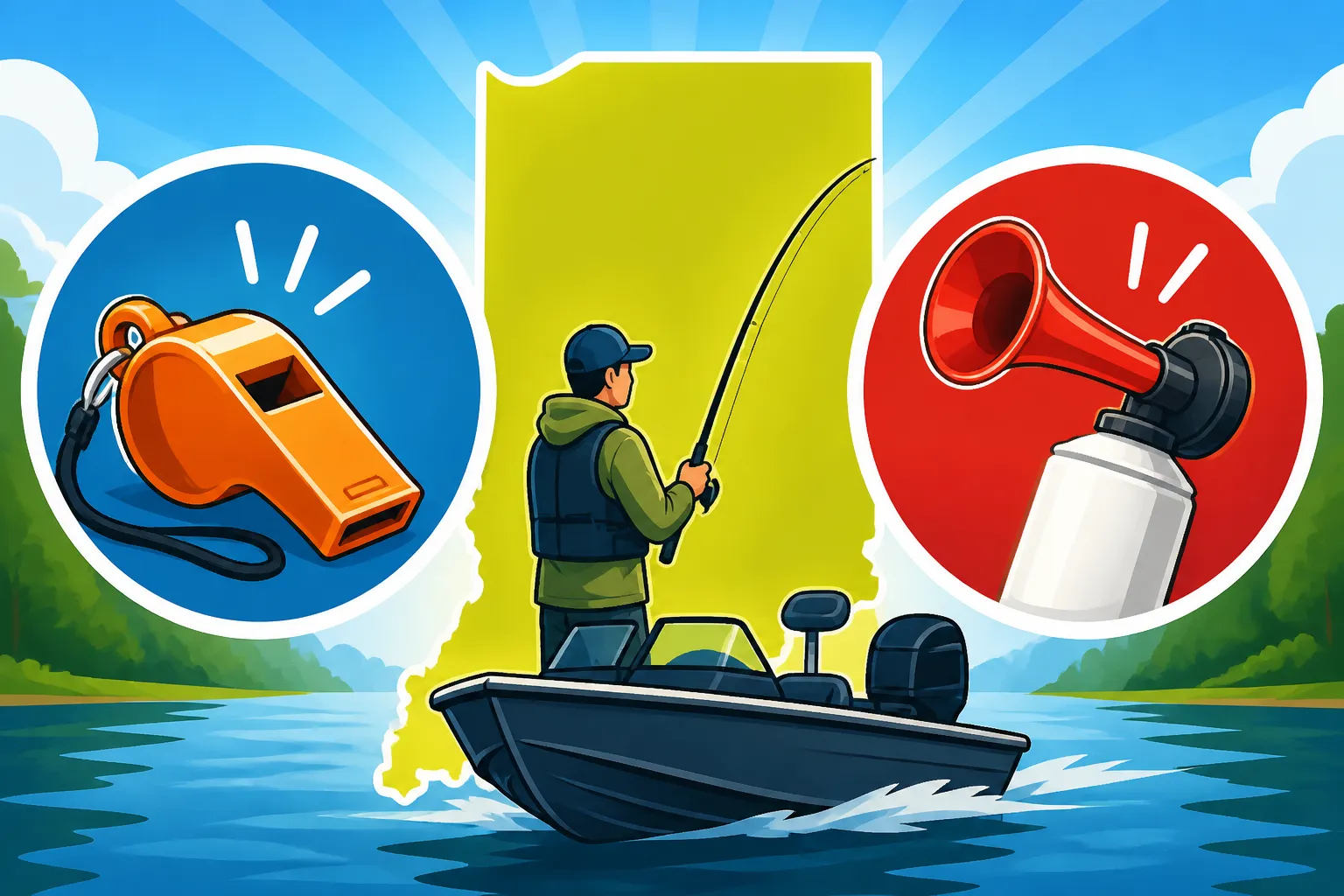
For many small boats, especially those under 12 meters (about 39.4 feet) in length, a basic whistle is sufficient. This can be a mouth-activated whistle, but it needs to be capable of producing a sustained, audible blast for at least two seconds. The key here is "audible." A tiny toy whistle won't cut it. You need something that can really project across the water. Many marine supply stores, including big ones like Bass Pro Shops, carry Coast Guard-approved whistles that meet these standards. They're usually inexpensive and take up hardly any space.
As boats get larger, the requirements often step up to powered horns or even bells. A powered horn ensures a consistent, loud signal that doesn't rely on lung power, which can be critical on larger, noisier vessels or in emergency situations where you might be exhausted. We'll look at the specific length requirements next, but it's important to differentiate between these types.
Whistles, Horns, and Bells: A Breakdown
- Whistle: This is the most common and often minimum requirement for smaller vessels. It's a simple, non-mechanical device that creates sound from your breath. Ensure it's capable of a strong, continuous blast. Many life jackets even come with small, integrated whistles, which is a great start, but always check if it meets the Coast Guard standard for audibility.
- Horn: For larger boats, a powered horn is generally required. These can be electric, air-powered, or even manually operated air horns (the kind with a can of compressed air). The benefit of a powered horn is its volume and consistency. These are usually mounted permanently on the vessel.
- Bell: While less common for recreational boats these days, some larger vessels still require a bell. A bell is typically used in conjunction with a whistle or horn, especially when at anchor in restricted visibility or as part of specific international navigation rules for larger commercial vessels. For most recreational anglers on Indiana lakes, a bell is not a requirement, but it's good to be aware that it exists as a sound-producing device.
The main takeaway here is that not just any sound-maker will do. It needs to meet specific requirements for audibility and sustainability, often outlined by the U.S. Coast Guard, which Indiana generally follows for recreational boating safety.
Indiana's Specific Requirements for Sound-Producing Devices
Now for the nitty-gritty: what does Indiana law actually say? The requirements largely align with federal U.S. Coast Guard regulations, which apply to all navigable waters, including many of Indiana's larger lakes and rivers. This means what's good on Lake Michigan is generally good on Monroe Lake, though specifics can vary slightly for very small vessels.
Boats Less Than 12 Meters (39.4 Feet)
For most recreational boaters in Indiana, your vessel will fall into this category. This includes everything from small fishing boats, canoes, kayaks, and paddleboards to larger runabouts and pontoon boats. The rule for these vessels is straightforward: you must carry a whistle or horn capable of producing an efficient sound signal audible for at least one-half nautical mile.
It doesn't have to be a powered horn; a good old-fashioned mouth-blown whistle is perfectly acceptable, as long as it meets that audibility standard. This is a crucial piece of gear that every single boater, even those in a kayak on a small pond, should have. It's incredibly easy to forget, but just as easy to pick up one from your local sporting goods store or even Amazon when you're stocking up on other fishing supplies. Don't leave shore without it!
Remember, while a canoe or kayak might not have an engine, they are still considered vessels and the operators are subject to navigation rules, especially when on waters shared with larger boats. Having a whistle can be a literal lifesaver if you find yourself in the path of a faster vessel or caught in unexpected fog. If you're looking for more general safety advice, check out Indiana Boater Safety Gear Checklist.
Boats 12 Meters (39.4 Feet) to Less Than 20 Meters (65.6 Feet)
If you're operating a larger vessel, say a substantial cabin cruiser or a larger fishing boat often used on Lake Michigan, the requirements increase. For boats in this length range, you need a whistle or horn and a bell. The whistle or horn must be power-operated and audible for at least one nautical mile. The bell must be of a size that produces an effective sound.
While bells are becoming less common on private recreational craft, they are still a legal requirement for certain larger vessels. If you own a boat in this size class, you're likely already familiar with these more stringent regulations, but it's always good to double-check your gear before the season starts. For those adventurous enough to tackle the big water, remember that Lake Michigan Fishing Rules for Indiana Anglers often have their own unique considerations beyond just basic safety gear.
Boats 20 Meters (65.6 Feet) or Longer
This category typically applies to commercial vessels or very large private yachts, which are less common on Indiana's inland lakes but might be seen on Lake Michigan. For these substantial vessels, the requirements become even more specific, generally demanding a powerful whistle or horn with specific sound characteristics, and a larger bell, both meeting detailed Coast Guard specifications for range and tone.
Since most recreational anglers won't be operating vessels of this size, we won't delve into the precise specs here. However, it highlights the increasing level of safety equipment expected as vessel size and operational complexity grow.
Here's a quick reference table summarizing Indiana's general sound-producing device requirements for recreational vessels:
| Vessel Length (Approx.) | Required Sound-Producing Device | Audibility Requirement | Notes |
|---|---|---|---|
| Under 12 meters (39.4 ft) | Whistle or Horn | 0.5 nautical mile (audible) | Can be mouth-operated. Essential for all. |
| 12 to 20 meters (39.4-65.6 ft) | Power Horn and Bell | 1 nautical mile (horn) | Bell must produce effective sound. |
| Over 20 meters (65.6 ft) | Power Horn and Bell | Specific Coast Guard specs | Less common for recreational boaters. |
Remember: "Efficient sound signal" means it must be loud enough and sustained enough to be heard clearly and interpreted as a signal by other vessels from the specified distance.
Practical Advice and Common Pitfalls
Knowing the rules is one thing; putting them into practice and avoiding common mistakes is another. As an experienced boater, I've seen plenty of folks unintentionally fall short of the requirements or simply not think about how crucial these simple devices are.
Always Have it Accessible and Functional
This might seem obvious, but a whistle tucked away in a closed tackle box at the bottom of a cooler is practically useless in an emergency. Your sound-producing device needs to be readily accessible. For kayakers or small boat owners, this often means having a whistle attached to your life jacket, or on a lanyard around your neck. For larger boats, ensure your powered horn is in working order and easily reachable from the helm.
Test your horn periodically! Wires can corrode, air compressors can fail, and sometimes simple spider webs can clog a horn. A quick, two-second blast before you leave the dock can save you a lot of trouble later. If you use a manual air horn (the kind with a propellant can), always have a spare can, because they always seem to run out at the worst possible moment.
Don't Rely Solely on Your Voice
While yelling for help or to warn another boat might seem like an option, it's rarely effective on the water. Wind, engine noise, and distance severely diminish the reach and clarity of the human voice. A Coast Guard-approved whistle or horn is designed to cut through these obstacles and carry much further. It’s also a distinct, universally recognized signal for boaters.
A small child's voice, for instance, would be completely lost on a busy lake. This is why having a whistle attached to a child's life jacket is an excellent idea, even if they're too young to understand how to use it for distress signals. Any responsible adult can grab it and use it quickly. Speaking of kids, remember that Kids Fish Free Until Age 18 in Indiana, but boat safety rules apply to everyone on board!
Consider a Backup
Even if your boat has a fancy, integrated powered horn, it's never a bad idea to have a simple mouth-blown whistle as a backup. Batteries can die, fuses can blow, and mechanical horns can jam. A simple, reliable whistle requires only your breath and is virtually foolproof. It's a small investment for a significant peace of mind.
This is especially true for those longer excursions or when you're heading out to more remote fishing spots on bodies of water like Brookville Lake or Mississinewa Lake. The further you are from assistance, the more important it is to have redundant safety equipment. When you're packing your gear, take a moment to confirm you have your sound device in your Indiana Boater Safety Gear Checklist.
Learning the Sound Signals
Having the device is one thing; knowing how to use it is another. While recreational boaters aren't usually expected to know every single horn blast signal used by large commercial vessels, there are a few basic signals that are incredibly important for everyone to know:
- One short blast: "I intend to leave you on my port (left) side." (When passing another boat)
- Two short blasts: "I intend to leave you on my starboard (right) side." (When passing another boat)
- Three short blasts: "I am operating astern propulsion" (i.e., reversing).
- Five or more short, rapid blasts: Danger signal! This means "I don't understand your intentions or am unsure of collision danger." Use this to get immediate attention if you feel a collision is imminent or if another boater is doing something unsafe.
- One prolonged blast (4-6 seconds): Used when nearing a bend or obstruction that obscures other vessels.
- One prolonged blast every two minutes (in restricted visibility): For a power-driven vessel making way through water. This helps other vessels locate you in fog or heavy rain.
Knowing these basic signals will not only make you a safer boater but also a more confident one, able to communicate effectively with others on the water.
Penalties for Non-Compliance
So, what happens if you get caught without the required sound-producing device on your Indiana boat? While the primary concern is always safety, there are also legal consequences. Indiana conservation officers and other marine law enforcement agencies do perform safety checks on the water. If your vessel doesn't have the necessary equipment, you could face a citation.
The penalties can vary depending on the specific violation and whether it's a first offense or a repeat issue. Generally, it's considered a misdemeanor, and you could be looking at fines. These fines are often significant enough to make you wish you'd spent a few dollars on a whistle! More importantly, if an accident occurs and you were found to be lacking required safety equipment, it could complicate any insurance claims or legal proceedings. To learn more about potential consequences, you might want to read about Penalties and Fines for Fishing Without a License, as boating violations often carry similar weight.
Even if you don't get a ticket, imagine the feeling of being in a genuinely dangerous situation and realizing you have no way to signal for help or warn another boat. That alone should be enough motivation to ensure you have all your safety gear in order.
Conclusion: Don't Skimp on Sound Safety
The bottom line is clear: if you're operating any kind of boat on Indiana's waters, whether it's a big fishing rig, a quiet kayak, or a pontoon full of friends, you need a sound-producing device. For most recreational boats under 39.4 feet, a simple, Coast Guard-approved whistle is the minimum requirement. For larger vessels, you'll need a powered horn and potentially a bell.
This isn't just about avoiding a ticket; it's about being a responsible, safe boater. A whistle or horn is a cheap, lightweight, and absolutely vital piece of safety equipment that can prevent collisions and call for help when you need it most. So, before you cast off on your next Indiana fishing adventure, do a quick check: are your life jackets accessible, your fire extinguisher charged, and your sound-producing device ready to make some noise? Your safety, and the safety of others on the water, depends on it.
Disclaimer
This article is for general informational purposes only and does not constitute professional advice. Laws, prices and regulations vary by location and change over time. Consult a qualified professional for guidance on your specific situation.