Best Boats for Fishing Patoka Lake in Indiana
Trying to pick the perfect boat for fishing Indiana's massive Patoka Lake can feel like a daunting task, especially with its diverse waters and varying conditions. You need something that can handle everything from calm coves to windy main lake expanses, all while providing the ideal platform for your chosen fishing style. This comprehensive guide will help you navigate the options, highlighting the best boats and key features to ensure your Patoka Lake fishing adventures are comfortable, safe, and successful.
Why Patoka Lake Demands the Right Boat
Patoka Lake isn't just any body of water; it's a sprawling reservoir in southern Indiana, known for its incredible bass, crappie, and catfish populations. But its sheer size and complex geography mean that a "one-size-fits-all" approach to fishing boats simply won't cut it. You need a vessel that's specifically suited to the unique challenges and opportunities this fantastic fishery presents.
Understanding Patoka's Diverse Waters
Imagine Patoka Lake as a series of different fishing environments all rolled into one. You have the vast, open main lake areas, which can get surprisingly choppy, especially when the wind picks up. Then there are the countless coves, fingers, and flooded timber sections that scream "bass and crappie heaven" but require a boat that can navigate tight spaces and shallow water. This diversity means your ideal boat needs to be versatile. You might be trolling open water one moment and pitching jigs into flooded brush the next. A boat that excels only in one of these scenarios will limit your success and enjoyment on Patoka. Patoka Lake Fishing Guide for Bass and Crappie is an excellent resource for understanding these different zones.
The Impact of Patoka's Size and Structure
Patoka Lake is a big lake, stretching over 8,800 acres with nearly 160 miles of shoreline. This isn't a small pond where any johnboat will do. Navigating across long distances, especially to reach those remote, unpressured fishing spots, requires a boat that can cover ground efficiently and comfortably. Beyond its size, Patoka is renowned for its extensive flooded timber, stump fields, and submerged structure. These features are fantastic fish habitats but can be hazardous for boats with deep drafts or exposed propellers. A boat designed with a shallower draft or with good protection for its propulsion system can make a huge difference in accessing these prime areas without risking damage.
How Weather Affects Your Boat Choice on Patoka
Indiana weather can be notoriously unpredictable, and Patoka Lake is no exception. A calm morning can quickly turn into a windy afternoon, whipping up whitecaps on the main lake. If your boat isn't equipped to handle these conditions, you might find yourself stuck in a cove or, worse, having an uncomfortable and potentially unsafe ride back to the ramp. A boat with a higher freeboard (the distance from the water to the top of the boat's side) and a hull design that cuts through waves rather than slaps them can make all the difference on a blustery day. Conversely, if you primarily fish on calm days or in protected coves, you might prioritize stability over wave-cutting ability. The ideal boat for Patoka is often one that offers a good balance, capable of both navigating open water and offering a stable platform in calmer areas.
Popular Boat Types for Patoka Lake
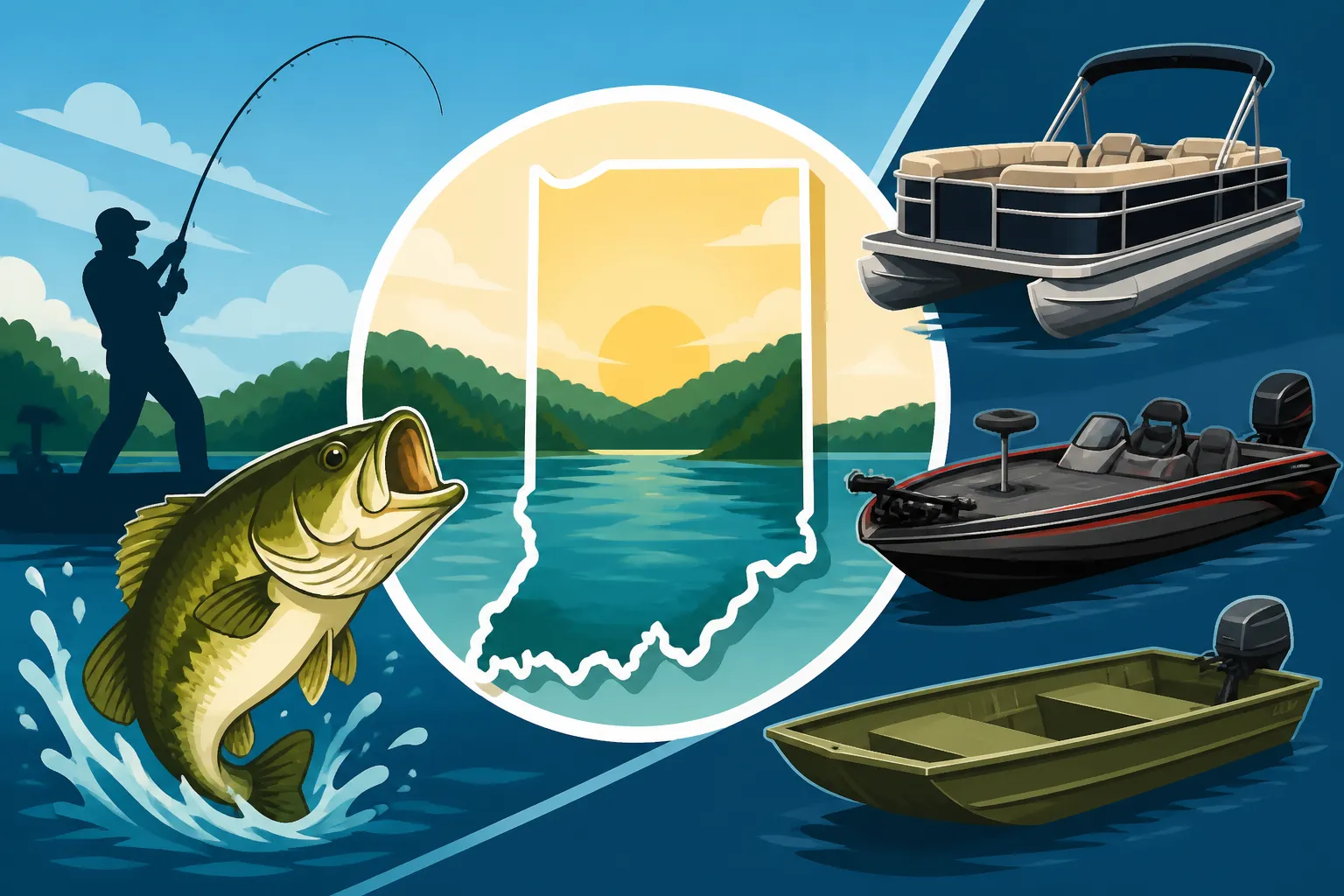
When it comes to choosing a boat for Patoka, you'll find a few types consistently rise to the top for their suitability. Each has its own strengths and weaknesses, so understanding these can help you align your choice with your fishing priorities.
Bass Boats: Speed and Performance for Tournament Anglers
For the serious bass angler or anyone who values speed, performance, and a dedicated fishing platform, a bass boat is often the first choice. These sleek, powerful vessels are designed to get you to your hot spot quickly and provide an unparalleled casting deck. With powerful outboard motors, they can cut across Patoka's main lake in a hurry, maximizing your fishing time. The wide, flat casting decks, often equipped with comfortable pedestal seats, offer excellent visibility and plenty of room for multiple anglers to cast simultaneously.
Modern bass boats come loaded with features crucial for Patoka fishing, like large livewells to keep your catch healthy, abundant storage for rods, tackle, and gear, and integrated electronics mounting options. The ability to run powerful trolling motors at the bow, often with GPS-controlled spot-lock features, is a game-changer for working Patoka's extensive shoreline and timber. However, these benefits come with considerations: bass boats typically have a deeper draft than some other options, which can be an issue in Patoka's shallower, stump-filled coves. They also tend to be a more significant financial investment and can be less comfortable for non-fishing passengers or for simply cruising.
Pontoon Boats: Family Fun and Versatile Fishing Platforms
Pontoons have undergone a revolution in recent years, transforming from slow, leisurely cruisers into legitimate fishing machines. For many families or groups of friends visiting Patoka, a pontoon offers an unbeatable combination of comfort, space, and fishing functionality. Their wide, stable platforms are perfect for accommodating multiple anglers, children, or even just relaxing while you wait for a bite. If you're looking for Family-Friendly Fishing Spots in Indiana, Patoka Lake with a pontoon is a great combination.
Many pontoon manufacturers now offer dedicated "fishing" models with features like aerated livewells, rod holders, swiveling fishing chairs, and even built-in tackle storage. Their shallower draft means they can often access areas that deeper-hulled boats might struggle with, though their size can make navigating very tight timber a challenge. While they won't win any speed races across Patoka, a pontoon equipped with a sufficiently powerful engine can still cover water effectively. They are also incredibly stable, making them a safe and comfortable option when the main lake gets a bit choppy. The main drawbacks are their slower speed, larger footprint for docking/trailering, and perhaps less "serious" fishing aesthetic for some hardcore anglers. However, for a blend of fishing and family enjoyment, they are hard to beat on Patoka Lake.
Jon Boats: Shallow Water Access and Affordability
For anglers on a tighter budget, or those who prioritize accessing very shallow or tight areas of Patoka Lake, a jon boat is an excellent choice. These simple, flat-bottomed boats are rugged, stable, and incredibly versatile. Their shallow draft allows them to glide over submerged stumps and navigate skinny water where other boats would fear to tread, making them ideal for exploring Patoka's numerous shallow coves and backwater areas rich in bass and crappie.
Jon boats are typically made of aluminum, making them lightweight and easy to trailer and launch, even at less developed access points around Patoka. They can be outfitted with small outboards or electric trolling motors, providing quiet propulsion for stealthy approaches to fishing spots. While they lack the amenities of bass boats or pontoons, they offer a customizable canvas. Many anglers add flooring, seats, rod holders, and even basic electronics to tailor their jon boat for Patoka. The main trade-off is comfort and rough-water performance. Their flat bottom can make for a jarring ride in choppy conditions on the main lake, and they generally offer less storage and deck space than larger options. However, for pure utilitarian fishing access, especially in shallow timber, the jon boat remains a highly effective and affordable option.
Deep-V Aluminum Boats: Navigating Choppy Waters
For anglers who want the durability and lower maintenance of aluminum but need better rough-water performance than a jon boat, deep-V aluminum boats are a fantastic compromise. These boats feature a V-shaped hull that allows them to cut through waves, providing a much smoother and drier ride in choppy conditions, which can be a real asset on Patoka's main lake or when faced with unexpected winds.
Deep-V aluminum boats are incredibly versatile, capable of handling a wide range of fishing situations. They typically offer more storage than a jon boat, often with integrated rod lockers and livewells. Many models come equipped with bow-mounted trolling motor platforms, making them highly functional for casting. Their deeper hull provides better stability in rough water, and they can comfortably run larger outboard motors for quicker travel. While they might not be as fast as a fiberglass bass boat, and their draft is deeper than a jon boat, they offer an excellent balance for Patoka's varied conditions. They are also often a more budget-friendly option than comparable fiberglass boats, making them a popular choice for anglers seeking a robust, all-around fishing vessel.
Key Features to Look for in a Patoka Lake Fishing Boat
Once you've narrowed down the type of boat, it's time to dive into the specific features that will make your Patoka Lake fishing trips more productive and enjoyable. These aren't just luxuries; they're essential tools for tackling the unique environment of this Indiana gem.
Engine Power and Fuel Efficiency
Choosing the right engine for your Patoka Lake boat is critical. For larger lakes like Patoka, you'll want an outboard motor with enough horsepower to get you across long distances efficiently, especially if you're frequently moving between far-flung spots. Bass boats, for instance, often run engines in the 150-300 HP range, allowing them to plane quickly and reach speeds that maximize fishing time. Pontoons, while not built for speed, benefit from engines in the 70-150 HP range to move a fully loaded boat comfortably. Even jon boats, when accessorized, can benefit from pushing the upper limit of their rated horsepower for better hole shot and maneuverability.
Fuel efficiency is another significant factor. With rising fuel costs, a modern, four-stroke outboard can save you a considerable amount over the long run, especially if you're spending full days on the water. Many reputable manufacturers offer engines known for their reliability and efficiency. Consider the size of your boat and your typical load (people, gear) when determining the minimum horsepower you'll need. Always err on the side of slightly more power if your budget allows, as an underpowered boat can be frustrating and less safe on a large lake like Patoka.
Storage, Livewells, and Deck Space
Patoka Lake offers opportunities for extended fishing trips, sometimes lasting all day. This means you'll accumulate a good amount of gear – rods, tackle boxes, coolers, rain gear, safety equipment, and snacks. Adequate storage is paramount. Look for boats with dedicated, dry storage compartments that can protect your electronics and personal items from spray and rain. Rod lockers are invaluable for keeping expensive rods safe and organized.
Livewells are non-negotiable for serious Patoka anglers, particularly if you're targeting bass or crappie that you intend to keep or release in a tournament. Ensure the livewell is large enough for your typical catch, well-aerated, and ideally has features like recirculating pumps and timers to keep fish healthy. As for deck space, consider how many people will typically be fishing. A spacious, unobstructed casting deck is a huge advantage for pitching lures to Patoka's abundant timber, while a large open area on a pontoon makes for comfortable family fishing. Think about where you'll stand, sit, and move around, and ensure there's enough room to do so safely and effectively.
Essential Electronics and Trolling Motors
In today's fishing world, electronics are your eyes and ears underwater, and a reliable trolling motor is your silent guide. On a lake with as much structure as Patoka, a quality fish finder with GPS capabilities is essential. Look for units that offer side-imaging and down-imaging, which can reveal submerged timber, rock piles, and fish schools that traditional sonar might miss. GPS is invaluable for marking your hot spots, navigating back to productive areas, and staying safe in low visibility. Many modern units integrate mapping software that details Patoka's contours and structure, available through major outdoor retailers like Bass Pro Shops.
A bow-mounted electric trolling motor, especially one with GPS-controlled features like "spot-lock" or "anchor mode," is a game-changer for fishing Patoka. These motors allow you to hold your position against wind and current, quietly sneak into coves, and precisely follow contours. For smaller boats, a transom-mount electric motor might suffice, but for larger vessels, a powerful bow-mount is highly recommended. Consider the thrust rating (measured in pounds) relative to your boat's weight and length to ensure it can effectively move and hold your boat in windy conditions. Pairing these essentials with reliable marine batteries and charging systems completes your technological arsenal for Patoka.
Considerations for Different Fishing Styles on Patoka
Patoka Lake truly is a multi-species haven, offering incredible angling for everything from largemouth bass to monster catfish. But the "best" boat can vary significantly depending on which species you're primarily targeting and how you like to fish.
Bass Fishing: Agility and Deck Space
If your passion is chasing Patoka's trophy largemouth and smallmouth bass, your boat choice will lean heavily towards agility and casting platforms. Bass boats, with their high-performance engines and expansive front and rear casting decks, are purpose-built for this style of fishing. They allow you to rapidly move between Patoka's countless coves, points, and flooded timber lines, covering a lot of water quickly. The ability to pitch and flip into tight cover demands a stable platform and ample room to execute precise casts.
Beyond dedicated bass boats, some deep-V aluminum boats and even certain fishing-focused pontoons can be rigged effectively for bass. The key is prioritizing a good bow-mounted trolling motor for stealth and precise boat positioning, along with robust electronics to find those hidden fish-holding structures. Ample rod storage is also a must for bass anglers, who often carry a variety of setups for different techniques. You'll want quick access to multiple rods rigged with everything from How to Fish a Texas Rig for Bass to topwater lures.
Crappie and Panfish: Stability and Comfort
Patoka Lake is famous for its crappie fishing, and these tasty panfish draw countless anglers to its waters. When targeting crappie, bluegill, or redear sunfish, stability, comfort, and the ability to hold steady over brush piles or along drop-offs become paramount. Pontoon boats excel in this regard, offering a remarkably stable platform that minimizes rocking, making it ideal for vertical jigging or slow trolling. Their spacious decks also mean multiple anglers can fish comfortably without feeling cramped.
Many crappie anglers also favor well-equipped jon boats or smaller deep-V aluminum boats. These can often get into tighter creeks and shallow backwaters where crappie congregate, especially during the spawn. Features like multiple seat bases for spider-rigging (running several rods off the front) and a well-placed livewell for keeping those papermouths are highly valued. Ultimately, for crappie and panfish, you're looking for a boat that allows you to sit or stand comfortably for extended periods, remain stable while you work your jigs or minnows, and provides easy access to all your bait and tackle. For specific techniques, consider resources like Crappie Jigging Techniques for Beginners.
Catfish and Multi-Species: Durability and Capacity
For those who love the fight of a Patoka Lake channel cat or flathead, or prefer a multi-species approach to fishing, durability and capacity are key. Catfish angling often involves deploying heavy anchor systems, hauling substantial coolers, and dealing with powerful fish. A robust boat that can withstand the rigors of river or lake bottom fishing is ideal. Deep-V aluminum boats, known for their toughness, are excellent choices, offering ample space for bait buckets, heavy tackle, and large stringers.
Larger pontoons also work wonderfully for catfish and multi-species fishing, providing the space for multiple rod holders, coolers, and the necessary gear for setting up multiple lines. Their stability is a huge plus when reeling in a big fish or when you have several people on board. Jon boats, particularly wider models, can also be rigged for catfishing, especially in shallower river sections or backwater areas where smaller boats shine. The most important aspects for this style are a boat that can take a beating, has plenty of room for gear and fish, and offers a comfortable, safe platform for waiting out those big bites. Don't forget that Catfish Bottom Fishing Techniques often require a stationary boat setup.
Budgeting and Where to Find Your Patoka Fishing Boat
Buying a boat is a significant investment, and it's essential to approach it with a clear understanding of your budget, the market, and where to look. Patoka Lake anglers have options ranging from brand new vessels to well-loved used boats, each with its own set of pros and cons.
New vs. Used Boats: Weighing the Costs
The choice between a new and used boat for Patoka Lake boils down to budget, warranty, and customization. A brand new boat offers peace of mind with a full manufacturer's warranty, the latest technology, and the ability to choose every feature exactly as you want it. You'll typically find new boats at authorized dealerships, like those associated with major retailers such as Bass Pro Shops, which can often offer competitive financing options and service packages. The downside, of course, is the higher upfront cost and immediate depreciation once you drive it off the lot.
Used boats, on the other hand, offer significant savings. You can often get more boat for your money, potentially stepping up to a larger model or one with more features that would be out of reach new. The used market is vast, with options available from private sellers, consignment lots, and even online marketplaces like Amazon (for smaller accessories, but sometimes linking to local used listings). The trade-off is that used boats come with less certainty. You might inherit maintenance issues, and they generally don't have warranties. Thorough inspections, including a mechanic's check, are crucial when buying used. It's often helpful to find a boat that has been well-maintained and comes with detailed service records.
Financing and Insurance Considerations
Unless you're paying cash, financing will be a major part of your boat purchase. Banks, credit unions, and marine-specific lenders offer boat loans, typically with longer terms than car loans due to the higher price point. It's wise to get pre-approved for a loan before you start seriously shopping, as this gives you a clear budget and leverage in negotiations. Be sure to factor in interest rates and monthly payments when calculating your overall cost of ownership.
Insurance is another non-negotiable expense for any boat on Patoka Lake. Most states require liability insurance, and if you have a loan, your lender will almost certainly require comprehensive coverage to protect their investment. Marine insurance policies cover everything from damage to your boat and trailer to liability in case of an accident. Costs vary based on the boat's value, size, engine horsepower, your boating experience, and where you'll be storing it. Don't forget to budget for registration fees, which are an ongoing cost, as well as maintenance, storage, and fuel. Understanding these additional expenses upfront will prevent financial surprises down the line. Remember to consult sources like Indiana Boat Registration Rules Explained for specific state requirements.
Reputable Dealers and Online Marketplaces
When you're ready to buy, knowing where to look is just as important as knowing what to look for. Reputable marine dealers, especially those with a strong local presence around Indiana, are often the best bet for new boats. They offer factory warranties, professional service, and a knowledgeable sales staff that can help you configure the right boat for Patoka Lake. Major chains like Bass Pro Shops often have extensive showrooms and can guide you through various models and brands.
For used boats, the options broaden. Local classifieds, dedicated boating websites, and even platforms like Facebook Marketplace are common. You might even find smaller accessories or unique fishing gadgets on Amazon that can enhance your used boat. However, when buying from private sellers, exercise caution. Always inspect the boat thoroughly, ideally with a qualified marine mechanic. Ask for service records, conduct a test drive, and verify the title and registration. While a private sale might offer the best price, the buyer assumes more risk. Dealer consignment lots or used boat brokers can offer a middle ground, providing some vetting of the boat while still offering competitive pricing.
Safety and Navigation on Patoka Lake
No matter what type of boat you choose, safety should always be your top priority on Patoka Lake. Its vastness and sometimes unpredictable conditions demand respect and preparedness. Understanding the necessary safety gear and how to navigate effectively can mean the difference between a great day on the water and a dangerous one.
Essential Safety Gear for Patoka Waters
Indiana, like all states, has specific requirements for boating safety gear, and it's vital to comply with them. Every person on board must have an easily accessible U.S. Coast Guard-approved Indiana Life Jacket Requirements for Every Boater. For boats over 16 feet, you'll also need a throwable flotation device. Beyond flotation, you'll need visual distress signals (flares or a distress flag), an audible signaling device (horn or whistle), navigation lights if operating from dusk till dawn, and a fire extinguisher. These are minimums, and smart anglers often carry more.
Consider adding a first aid kit, a tool kit for minor repairs, a spare propeller, and extra fuel. A reliable VHF radio is also a wise investment for communication, especially on larger lakes where cell service can be spotty. Remember, Patoka is a big lake, and things can change quickly. Being prepared for emergencies isn't just about following the law; it's about ensuring your safety and the safety of your passengers. A quick pre-trip checklist for your Indiana Boater Safety Gear Checklist can save you a lot of trouble.
Navigational Aids and Patoka's Hazards
Navigating Patoka Lake, especially if you're unfamiliar with it, requires more than just a good sense of direction. The lake's vastness and numerous submerged hazards, particularly flooded timber and stump fields, demand attention. A reliable GPS unit with detailed mapping is your best friend here. Many fish finders come with integrated GPS and pre-loaded lake maps that show contours, boat lanes, and common hazards. Using these to mark safe passages and danger zones is crucial.
Always pay attention to buoy markers, which delineate channels and warn of hazards. If you're fishing in areas with dense timber, operate at slower speeds and use your sonar to scan ahead. Overconfidence in these areas is a common cause of propeller and lower unit damage. When running at higher speeds on the main lake, always keep a lookout for other boats, debris, and changing weather patterns. Understanding Water Temperature and Fish Feeding Patterns is one thing, but understanding current conditions for safe navigation is another. By combining proper safety gear with smart navigation techniques, you can ensure a smooth, enjoyable, and safe fishing experience on Patoka Lake.
| Boat Type | Pros | Cons | Ideal Patoka Use Case |
|---|---|---|---|
| Bass Boat | Speed, large casting decks, dedicated fishing features, performance | Expensive, deeper draft, less family-friendly, rougher ride in chop | Tournament bass fishing, quickly covering large areas, targeting structure |
| Pontoon Boat | Stability, comfort, spacious, shallow draft, family-friendly | Slower, less agile, larger footprint | Multi-species family fishing, crappie, relaxing, group trips, calm water |
| Jon Boat | Affordable, shallow draft, durable, customizable, easy to launch | Rough ride in chop, limited amenities, less comfortable | Shallow water access, tight timber, budget-friendly fishing, small impoundments, secondary boat for specific areas |
| Deep-V Aluminum Boat | Durable, good rough-water performance, versatile, more amenities than jon | Not as fast as bass boats, deeper draft than jon, less deck space | All-around fishing, good for choppy main lake, multi-species, balancing performance and durability |
Disclaimer
This article is for general informational purposes only and does not constitute professional advice. Laws, prices and regulations vary by location and change over time. Consult a qualified professional for guidance on your specific situation.