Indiana Boater Education Course Requirements
Navigating the waters of Indiana is a joy, whether you're chasing bass on Monroe Lake, cruising Patoka Lake, or taking on the big waves of Lake Michigan. But with the freedom of the open water comes the responsibility of knowing the rules, and one of the most common questions I hear from fellow Hoosier anglers and boaters is all about boater education. This guide is here to cut through the confusion and lay out exactly what Indiana's boater education course requirements are, who needs to take it, and how you can get certified to safely enjoy our beautiful waterways.
Why Boater Education Matters in Indiana (and Who Needs It)
Let's face it, getting out on the water feels like freedom, a chance to escape the everyday hustle. But that freedom comes with a serious responsibility, not just for your own safety, but for the safety of everyone else sharing the lake or river with you. That's where boater education comes in. It's not just a hoop to jump through; it's about making sure you understand the rules of the road – or, in this case, the rules of the water – to prevent accidents and ensure a smooth, enjoyable experience for everyone.
The Indiana Department of Natural Resources (DNR) has specific regulations designed to keep everyone safe. Without proper knowledge, even a small mistake can lead to big problems, from collisions to environmental damage. Think about all the different types of watercraft out there: kayaks, paddleboards, fishing boats, pontoons, jet skis. Each has its own characteristics, and knowing how to interact safely with them is crucial.
The Importance of Water Safety and Responsible Boating
Responsible boating is more than just avoiding tickets; it's about cultivating a mindset of awareness and respect for the aquatic environment and your fellow water users. Imagine you're out fishing on a peaceful morning, and suddenly another boat comes zooming by too close, creating a huge wake that nearly swamps your small craft. That's the kind of scenario boater education aims to prevent. It teaches you things like proper navigation rules, how to respond to emergencies, and the importance of maintaining your vessel. It also covers critical topics like the dangers of operating a boat under the influence, which is just as serious as drunk driving on land.
Beyond avoiding dangerous situations, a good boater education course instills a sense of confidence. You'll feel more secure in your ability to handle various situations, from docking in a busy marina to navigating through tricky channels or responding to unexpected weather changes. This knowledge allows you to truly relax and enjoy your time on the water, rather than constantly worrying about potential mishaps. It's an investment in countless future memories, whether you're pulling in a big bass or simply enjoying a sunset cruise with family.
Age and Horsepower: Key Factors for Requiring the Course
So, who exactly needs to take this course? In Indiana, the requirement hinges on two main factors: your age and the horsepower of the motor you're operating. It’s not a blanket rule for everyone, which can sometimes lead to confusion. Essentially, if you're a younger boater, or if you're operating a more powerful vessel, the state wants to ensure you have a baseline of knowledge. This makes a lot of sense, as younger operators might have less experience, and higher horsepower boats can inherently create more risk if not handled correctly.
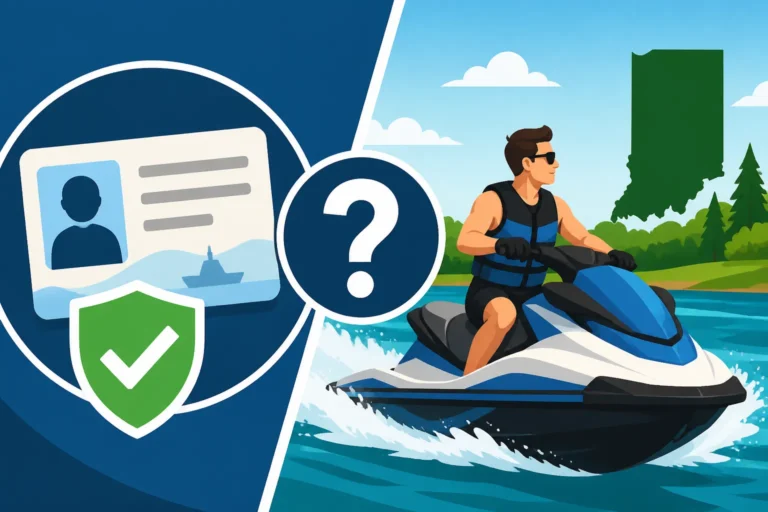
Specifically, if you are under 15 years of age, you cannot legally operate a motorboat with a motor over 10 horsepower. Period. It's a hard stop designed to protect young, inexperienced individuals. However, the rules get a bit more nuanced as you get older. The primary requirement for boater education comes into play for individuals who are 15 years of age or older but were born after December 31, 1985. If you fall into this category and you want to operate a motorboat with an engine greater than 10 horsepower, you absolutely must complete a boater education course approved by the Indiana Department of Natural Resources (DNR). This applies to jet skis and other personal watercraft (PWCs) too, as they almost always exceed the 10 horsepower limit.
Who Absolutely Needs to Take the Indiana Boater Education Course
Understanding who must take the boater education course is crucial, as going out on the water without the proper certification could lead to fines and other penalties. It’s not just about knowing the rules; it’s about proving you know them. The state has set clear guidelines, and while there are some exceptions, it’s always better to be informed than to risk a run-in with the conservation officers. The goal here is to improve safety for everyone on Indiana's diverse waterways, from the placid farm ponds to the bustling main channels of the Ohio River.
Mandatory Requirements for Young and Newer Boaters
Let’s get down to the brass tacks: if you’re 15 years of age or older and were born after December 31, 1985, you must successfully complete an approved boater education course to operate any motorboat that has an engine greater than 10 horsepower. This rule is designed to ensure that boaters who grew up without decades of boating experience under their belt get a formal education on safe operating practices. It covers a significant portion of the boating population today, especially those just getting into the sport or moving up to larger boats. This isn't just a suggestion; it's a legal requirement.
Think of it this way: if you're in your 20s or 30s and want to take your friends out on a pontoon boat on Lake Wawasee, or hit the ski slopes with a powerful tow boat, you'll need that certification. The same goes for zipping around on a personal watercraft like a Jet Ski. These vessels are powerful and require specific knowledge to operate safely, which is exactly what the course provides. Without this certification, you’re not just breaking the law, you’re potentially putting yourself and others at risk. Make sure you understand What Horsepower Requires a License in Indiana? to avoid any surprises.
Exemptions and Special Circumstances
Of course, with any rule, there are usually some exceptions or special circumstances. First and foremost, if you were born on or before December 31, 1985, you are generally exempt from the mandatory boater education requirement. The state essentially grandfathered in older boaters, assuming they've either gained sufficient experience over the years or began boating before these laws were in full effect. This doesn't mean older boaters shouldn't take a course or refresh their knowledge, but it's not legally mandated for them.
Another key exemption is for non-motorized vessels. If you're paddling a canoe, kayaking the Tippecanoe River, or stand-up paddleboarding, you don't need a boater education card. The 10 horsepower threshold is critical here. Similarly, if you're operating a motorboat with an engine that is 10 horsepower or less, you also don't need the certification, regardless of your age or birth year (though remember the "under 15" rule for operating). This often applies to small fishing boats on calm ponds or some trolling motors. Lastly, individuals who are being supervised on board by someone who meets the boater education requirements (i.e., they are certified and old enough) may also be exempt, but this is typically for learning purposes and not for independent operation. Be aware that Can a 14 Year Old Drive a Boat in Indiana? explores these nuances in more detail.
What the Indiana Boater Education Course Covers
So, you know you need to take the course. But what will you actually learn? The Indiana Boater Education Course isn't just about memorizing arbitrary rules; it's a comprehensive program designed to equip you with practical knowledge and skills that will directly contribute to your safety and enjoyment on the water. It covers everything from basic navigation to emergency procedures, ensuring you're well-prepared for a variety of situations. Think of it as getting your driver's license for the water, focusing on the unique challenges and responsibilities that come with operating a boat.
Key Topics and Curriculum Overview
The curriculum for an Indiana-approved boater education course is quite thorough. You'll dive deep into navigation rules, which are essentially the "rules of the road" for boats. This includes understanding right-of-way, how to safely pass other vessels, and the meaning of various navigational aids like buoys and markers. Knowing these prevents collisions and keeps traffic flowing smoothly. You'll also learn about safety equipment requirements, such as what types of life jackets are mandatory for different boats and situations, fire extinguishers, and sound-producing devices. Many of these items can be found at local outdoor retailers like Bass Pro Shops or easily ordered through online platforms such as Amazon.
Beyond equipment, the course covers environmental responsibilities, like proper waste disposal and preventing the spread of aquatic invasive species. This is crucial for preserving Indiana's beautiful natural resources. You’ll also get a robust education on emergency procedures, including what to do in case of a capsizing, fire, or a person overboard situation. Understanding basic first aid and how to call for help on the water are also vital components. Lastly, a significant portion of the course focuses on the dangers of boating under the influence (BUI), emphasizing how alcohol and drugs impair judgment and reaction time, leading to severe penalties and tragic accidents. For a comprehensive look, consider How Long Is the Indiana Boater Safety Course and its detailed curriculum.
Learning Formats: Online vs. In-Person Options
Indiana offers flexibility in how you can complete your boater education, recognizing that different people learn best in different environments. The two primary options are online courses and in-person classes. Each has its own benefits, and the best choice often depends on your learning style, schedule, and preferences.
Online courses have become incredibly popular for their convenience. You can complete the material at your own pace, from the comfort of your home, fitting lessons around your work or family commitments. Many online providers offer interactive modules, quizzes, and multimedia content to keep you engaged. Once you complete the online portion, you'll typically take a final exam, and upon passing, you'll receive your certification. This is an excellent option for self-starters and those with busy schedules. You can explore some of the Best Online Boater Safety Courses for Indiana Residents to find a provider that suits your needs.
In-person classes, often taught by certified instructors from the Indiana DNR or other approved organizations, offer a more traditional classroom experience. These courses allow for direct interaction with an instructor, giving you the opportunity to ask questions in real-time and engage in discussions with other students. For some, the structured environment and peer interaction of an in-person class can lead to better retention of information. These classes might involve hands-on demonstrations or local waterway specifics that an online course can't always provide. Both formats lead to the same official certification, so choose the one that you believe will help you learn the most effectively.
How to Get Your Indiana Boater ID Card
Completing the boater education course is a significant step, but it’s not the final one. To be fully compliant with Indiana law, you’ll need to obtain your official Indiana Boater ID Card, sometimes referred to as a Boating Safety Education Certificate. This card is your proof of certification and must be carried with you when operating a motorboat that requires it. It's similar to having your driver's license in your wallet when you're driving a car.
Steps to Obtaining Your Boating Safety Education Certificate
The process for getting your Boating Safety Education Certificate is straightforward once you’ve passed your course. First, and most obviously, you need to successfully complete an Indiana DNR-approved boater education course. This means passing the final exam, whether it’s an online assessment or an in-person test administered by your instructor. The course provider will typically notify the state of your completion or provide you with a temporary certificate.
Once you’ve passed, you’ll usually apply for your permanent Boater ID Card through the Indiana Bureau of Motor Vehicles (BMV). This often involves filling out a specific application form, sometimes available online or at BMV branch offices, and paying a small processing fee. You might need to submit proof of course completion, such as your temporary certificate or a completion number provided by the course vendor. After processing, the BMV will mail your official Boater ID Card to you. It's important to keep this card safe and accessible, as conservation officers may ask to see it during routine checks on the water. Understanding What Is a BMV Boater ID Card in Indiana? will give you more details on this essential document.
Carrying Your Boater ID Card and Related Documents
Just like your driver's license, your Indiana Boater ID Card isn't much good if it's left at home. You are legally required to carry the card with you whenever you are operating a motorboat that falls under the mandatory education requirements. This means having it on your person or easily accessible on the vessel. It's proof that you've met the state's education standards and are authorized to operate that type of boat.
In addition to your Boater ID Card, you should also ensure you have your Indiana motorboat registration documents on board. For most motorized vessels, including personal watercraft, state registration is mandatory. Indiana Motorboat Registration Requirements detail what you need to know about this. For example, if you're pulling a tube, you might also want to have proof of your boating insurance, even if it's not always legally required, it's certainly a good idea. Always keep these important documents in a waterproof bag or compartment on your boat to protect them from the elements and ensure they are legible if requested by law enforcement. A quick check of your wallet and your boat's document pouch before you leave the dock can save you a lot of hassle later.
Penalties and Enforcement for Non-Compliance
While the goal of boater education is primarily safety and knowledge, there are real consequences for those who choose to ignore the requirements. Indiana conservation officers take waterway safety very seriously, and they patrol lakes and rivers to ensure everyone is following the rules. Getting caught without the proper certification or operating a boat unsafely can lead to fines, inconvenience, and even more severe legal repercussions, particularly if an accident occurs. It's far better to invest the time in getting educated than to face the potential fallout of non-compliance.
What Happens If You're Caught Without Proper Certification
If a conservation officer stops you on the water and you are operating a motorboat over 10 horsepower, were born after December 31, 1985, and are 15 years or older, but you do not have your Boater ID Card, you could be issued a citation. This typically results in a fine. The exact amount can vary depending on the county and the specific circumstances, but it's an avoidable expense that certainly puts a damper on a fun day out. In some cases, the officer might even require you to cease operating the vessel until a properly certified operator can take over.
Beyond the immediate fine, repeated offenses or particularly egregious violations could lead to more severe penalties. It's not just about the money; it's about the principle of responsible boating. The state wants its waterways to be safe for everyone, and those who flout the rules undermine that collective safety. Imagine having your boat impounded, or having your day on the water cut short because you didn't take an online course that only takes a few hours. The minor inconvenience of getting certified is far less disruptive than dealing with the aftermath of a violation. Penalties and Fines for Fishing Without a License can give you an idea of how seriously the state takes recreational rule-breaking, even if the specifics differ slightly for boating.
The Role of Conservation Officers in Water Safety
Indiana's conservation officers are the primary enforcers of boating laws and regulations. These dedicated professionals aren't just there to hand out tickets; their main mission is to ensure public safety on Indiana's diverse waterways, protect natural resources, and educate boaters. They conduct routine patrols, respond to emergencies, and investigate boating accidents. When an officer stops you, they're typically looking for several things: ensuring your boat is registered, that you have the required safety equipment on board (like life jackets), and that you, as the operator, are properly certified.
Their presence is a vital part of maintaining order and safety on the water. They are trained to identify unsafe boating practices, respond to incidents ranging from minor equipment failures to serious collisions, and provide assistance to boaters in distress. Engaging respectfully with conservation officers is always the best approach. They are a resource for information and safety, and by complying with their requests and understanding the laws they enforce, you contribute to a safer environment for all who enjoy Indiana's lakes and rivers. So, the next time you see a conservation officer, remember they're there to help keep your boating experience safe and enjoyable.
Comparing Boater Education Requirements Across States
While we're focusing on Indiana, it's helpful to understand that boater education requirements aren't unique to the Hoosier State. Most states have some form of mandatory boating safety education, especially for younger operators or those handling more powerful vessels. However, the specific age cutoffs, horsepower thresholds, and enforcement mechanisms can vary quite a bit from state to state. This is particularly relevant if you plan to boat in neighboring states or if you're a nonresident visiting Indiana with your boat.
General Trends in Boater Education Across the US
Nationwide, there's a strong trend toward mandatory boater education, driven by the desire to reduce boating accidents and fatalities. Many states, like Indiana, focus their requirements on individuals born after a certain date, often in the mid-1980s or later, or those under a specific age (e.g., 12, 16, or 18 years old). The rationale is that newer and younger boaters may not have grown up with the same informal exposure to boating safety and therefore benefit most from formal instruction.
The type of vessel also plays a significant role. Personal watercraft (PWCs) like Jet Skis are almost universally included in mandatory education requirements due to their speed and maneuverability, which can lead to higher risks if operated improperly. Similarly, motorboats exceeding a certain horsepower (often 10 hp or 15 hp) are usually subject to these laws. States generally accept certifications from other states or from national organizations like the U.S. Coast Guard Auxiliary or the U.S. Power Squadrons, which is good news for interstate boaters. However, it's always wise to double-check the specific rules of any state you plan to visit, as nuances can exist.
Reciprocity with Neighboring States: Ohio, Michigan, Illinois, and Kentucky
For Indiana boaters, understanding reciprocity with our direct neighbors – Ohio, Michigan, Illinois, and Kentucky – is especially important. Many Hoosiers boat on border waters or take their vessels across state lines for fishing trips or vacations. Generally, Indiana recognizes boater education certifications issued by other states, provided the course was approved by the National Association of State Boating Law Administrators (NASBLBLA). This means if you took a NASBLBLA-approved course in Ohio, it should be valid in Indiana, and vice-versa.
However, "generally" is the key word, and it's not a universal free pass. For instance, Indiana Fishing License Reciprocity With Ohio and Indiana Fishing License Reciprocity With Michigan delve into how specific regulations can differ even if the general spirit of the law is similar. While boater education often has good reciprocity, specific operational rules (like age restrictions for unaccompanied operation, towing regulations, or specific safety equipment requirements) can still vary. For example, some states might have stricter age limits for operating a PWC even with a boater education card. The best practice is always to review the boating laws of the specific state you intend to boat in before launching your vessel. A quick search on that state's DNR or equivalent agency website will usually provide all the necessary information, ensuring your trip is legal and enjoyable.
Conclusion: Get Certified, Stay Safe, and Enjoy Indiana's Waters
Boating in Indiana offers unparalleled opportunities for recreation, relaxation, and some fantastic fishing. From the tranquil coves of our southern reservoirs to the vast expanse of Lake Michigan, there’s a perfect waterway for every angler and enthusiast. But to truly enjoy these experiences to the fullest, and to do so responsibly, understanding and adhering to Indiana’s boater education requirements is paramount. It’s not just a legal obligation; it’s a commitment to safety, for yourself, your passengers, and every other person sharing the water.
By taking an approved boater education course, you're investing in valuable knowledge that will serve you for years to come. You'll gain confidence in navigation, learn critical safety procedures, and develop an understanding of what it means to be a responsible steward of our aquatic environments. Whether you choose the flexibility of an online course or the interaction of an in-person class, the outcome is the same: you become a more capable and safer boater. So, check the requirements based on your age and boat's horsepower, get certified, carry your Boater ID Card, and embrace all the wonderful adventures that await you on Indiana’s beautiful waters.
| Category | Requirement Details | Exemptions/Notes |
|---|---|---|
| Operator Age | 15 years or older AND born after December 31, 1985 | Born on or before December 31, 1985, are exempt from mandatory education. |
| Vessel Type | Motorboats with engines greater than 10 horsepower, including Personal Watercraft (PWCs). | Non-motorized vessels (kayaks, canoes, paddleboards) do not require boater education. Motorboats with engines 10 horsepower or less are also exempt (though age restrictions for operation still apply for those under 15). |
| Certification Type | Must complete an Indiana DNR-approved Boater Education Course. | Valid certifications from other states or national organizations (e.g., USCG Auxiliary, US Power Squadrons) that are NASBLBLA-approved are generally recognized by Indiana. |
| Proof of Cert. | Must carry the Indiana Boater ID Card (or equivalent recognized certificate) while operating the vessel. | – |
| Minimum Age to Operate | Under 15 years old: Cannot operate a motorboat over 10 horsepower under any circumstances. 15 years or older with certification: Can operate motorboat over 10 horsepower. | Individuals under 15 may operate motorboats 10 horsepower or less without a Boater ID Card. |
Disclaimer
This article is for general informational purposes only and does not constitute professional advice. Laws, prices and regulations vary by location and change over time. Consult a qualified professional for guidance on your specific situation.