Best Fish Finders for Indiana Lake Fishing
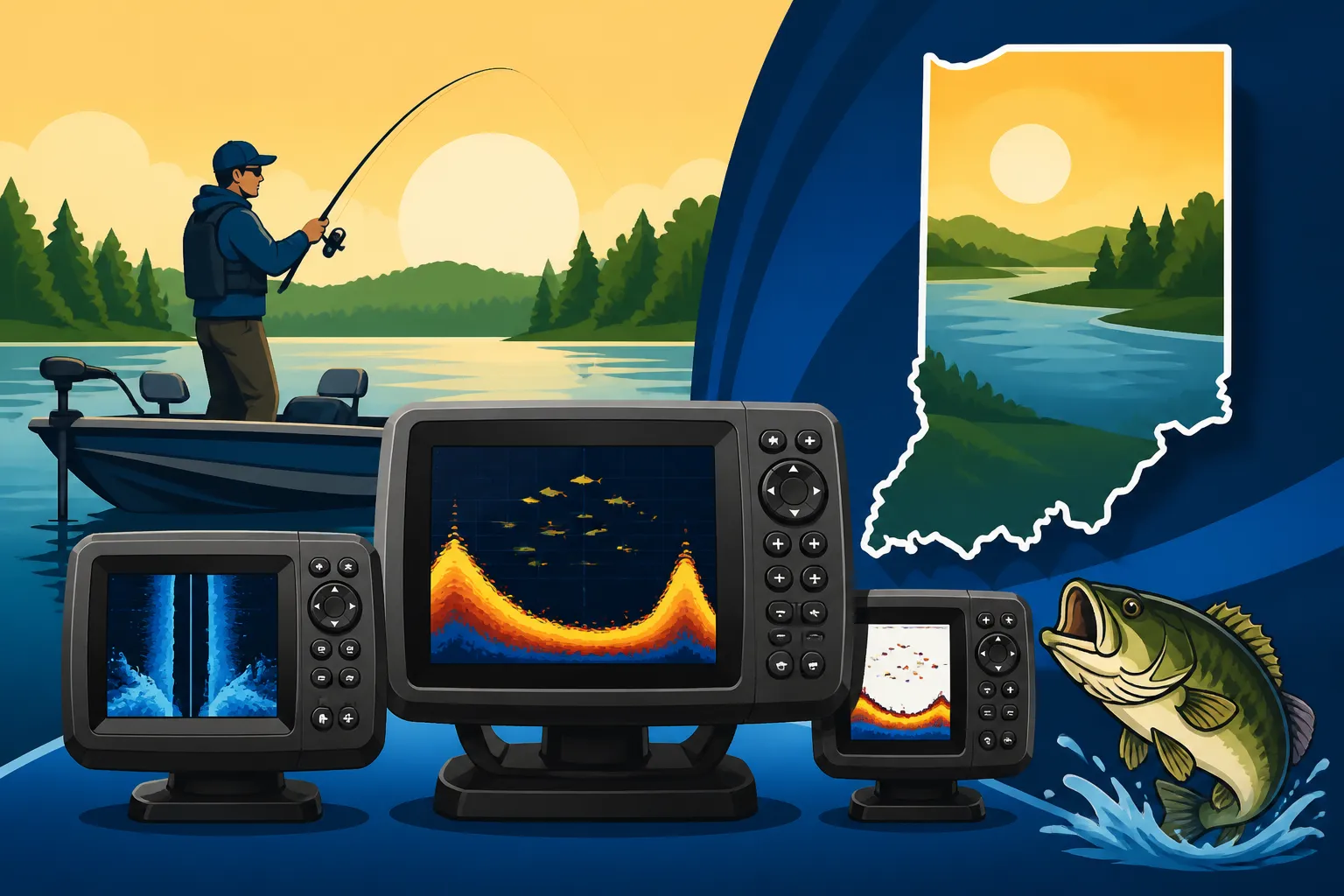
Indiana's lakes, from the vast expanses of Monroe and Patoka to the intricate glacial lakes up north, hold incredible fishing opportunities. But let's be honest, sometimes it feels like you're just casting blind, hoping for a bite in a lake that seems endless. That's where a good fish finder comes in—it transforms guesswork into calculated strategy, letting you see beneath the surface and connect with fish like never before. This guide will walk you through everything you need to know about choosing and using the best fish finder for your Indiana lake adventures, turning those frustrating slow days into memorable catches.
Why a Fish Finder is a Game Changer for Indiana Anglers
For years, many of us relied on local knowledge, intuition, and sheer luck to find fish. We'd look for visible cover, follow the contours of the shoreline, or just try our favorite spots. And while there's still a lot to be said for those classic methods, a fish finder adds an entirely new dimension to your fishing strategy. It’s like getting X-ray vision for your boat, revealing secrets the water has held close. It doesn't just show you fish; it reveals their entire underwater world, helping you understand why they're there.
Beyond Just "Seeing" Fish: Structure and Bottom Composition
When you first think of a fish finder, you probably imagine little fish icons appearing on a screen. While they do that, their real power lies in showing you the entire underwater landscape. Indiana lakes, especially our reservoirs like Monroe and Patoka, are full of submerged creek channels, timber, rock piles, and sudden drop-offs. These are the prime locations where fish congregate. Without a fish finder, locating a subtle humpline or a submerged brush pile in 30 feet of water is nearly impossible.
Moreover, understanding the bottom composition is crucial. Is it soft mud, hard rock, or gravel? Different species prefer different bottoms for feeding and spawning. A good fish finder can distinguish between these, helping you target specific fish like walleye, which often prefer harder bottoms, or catfish, which might be found near softer, muddier areas. This level of detail empowers you to fish smarter, not harder, drastically improving your chances of success, especially when you're exploring new water or trying to replicate a successful trip.
Saving Time and Fuel on Large Lakes
Indiana boasts some seriously big water, like Lake Monroe, our largest inland lake, or the expansive Lake Michigan. Covering these vast areas without any guidance can be a monumental task, leading to endless cruising and burning through precious fuel and daylight hours. A fish finder, especially one equipped with GPS and mapping capabilities, becomes your ultimate scout. Instead of blindly searching, you can quickly identify promising areas—say, a specific depth contour or a submerged point—and head straight there.
Think about it: instead of spending hours trolling or casting over unproductive water, you can zoom directly to that deep channel bend where you marked baitfish and bass last week. This efficiency not only saves you money on gas but also maximizes your actual fishing time. It means more casts in productive zones and less time wondering if you're even in the right neighborhood. For those weekend warrior trips, every minute on the water counts, and a fish finder ensures those minutes are spent wisely.
Understanding the Core Technologies: Sonar, Down Imaging, and Side Imaging
Modern fish finders are marvels of technology, but at their heart, they rely on different forms of sonar to paint a picture of the underwater world. Knowing the differences between traditional sonar, down imaging, and side imaging is crucial for choosing the right unit for your style of fishing and for interpreting what you see on the screen. Each technology offers a unique perspective, and often, the best units combine several to give you a comprehensive view.
Traditional Sonar: The Cone and What It Shows
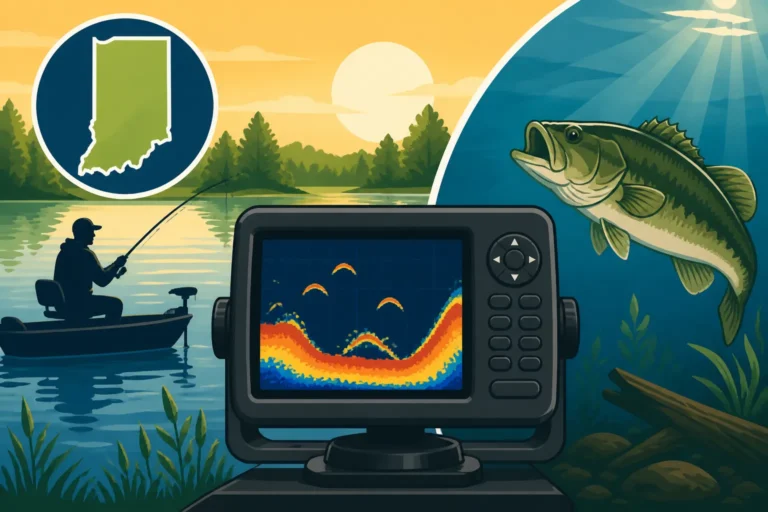
Traditional sonar, often called 2D sonar, uses a cone-shaped beam of sound waves that projects down from your transducer. When these sound waves hit an object—a fish, a log, the lake bottom—they bounce back to the transducer, and the unit interprets these echoes to create an image on your screen. Fish typically appear as "arches" because the fish enters and exits the cone as your boat moves. The size and shape of the arch can even give you clues about the size and movement of the fish.
This technology is excellent for showing you the general depth, the contour of the bottom, and the presence of fish directly beneath your boat. It’s robust, reliable, and works well in various conditions, making it a staple on almost every fish finder. For many Indiana anglers, particularly those fishing in shallower waters or just needing a basic understanding of what’s below, traditional sonar is perfectly adequate. It’s also often the most affordable option, making it a great starting point for anyone new to fish finders.
Down Imaging: A Photo-Like View Beneath Your Boat
Down imaging, sometimes referred to as DownScan or ClearVü, takes sonar to the next level by providing a much more detailed, photo-like view of what's directly beneath your boat. Instead of a wide cone, down imaging uses a very thin, high-frequency beam that scans like a fan. This narrow beam produces incredibly sharp images of structure, baitfish schools, and even individual fish directly below. You'll see submerged trees with distinct branches, rock piles with clear definition, and even subtle changes in bottom texture.
The advantage of down imaging for Indiana lakes is immense. Imagine trying to distinguish between a tangled mess of submerged branches and a solid log on traditional sonar—it can be tough. With down imaging, you see a much clearer rendition, allowing you to precisely place your lure right next to that prime piece of cover where a bass might be hiding. It removes a lot of the guesswork associated with interpreting traditional sonar arches and blobs, giving you confidence in what you’re targeting. This is particularly useful when fishing heavily timbered reservoirs like Patoka Lake or any lake with significant submerged vegetation.
Side Imaging: Expanding Your Search Horizon
Now, if down imaging gives you a detailed look directly below, side imaging (or SideScan, SideVü) extends your vision out to the sides of your boat, often up to 100 feet or more on each side. This technology uses thin, fan-shaped beams that shoot out horizontally, creating a panoramic view of the bottom and structure. It's like having an underwater drone flying next to your boat, taking pictures of the lakebed.
For covering large areas quickly and efficiently, especially on vast Indiana lakes like Monroe or even parts of Lake Michigan, side imaging is an absolute game-changer. You can literally scan hundreds of feet of shoreline, submerged points, or creek channels with each pass, quickly identifying cover, baitfish schools, and individual fish far from your boat's path. Spotting a hidden rock pile 50 feet to your left that you would have completely missed with traditional or down imaging allows you to turn your boat and fish it with precision. This technology is invaluable for finding those elusive schools of crappie holding to submerged brush, or locating walleye relating to a deep break line that runs parallel to your boat. You can essentially "mow the lawn" across a flat and find every piece of structure without ever driving directly over it.
Key Features to Look for in an Indiana Lake Fish Finder
Choosing a fish finder isn't just about picking a brand; it's about understanding the features that will genuinely make a difference on your Indiana fishing excursions. From the type of transducer that sends out the sound waves to the screen you'll be staring at all day, and even the navigation capabilities, each component plays a vital role. Investing in the right features means you'll have a tool that truly enhances your time on the water, rather than one that just takes up space.
Transducer Types and Their Importance for Indiana Depths
The transducer is the unsung hero of any fish finder—it's the part that actually sends and receives the sonar signals. Without a good transducer, even the most expensive head unit won't give you a clear picture. For Indiana lakes, you'll encounter a range of depths, from shallow ponds and rivers to the deeper sections of reservoirs and Lake Michigan. Therefore, selecting a transducer that can handle these varied conditions is paramount.
Most modern fish finders come with "dual-beam" or "CHIRP" transducers. Dual-beam transducers offer two different frequencies, typically 83 kHz (wider cone, good for shallower, general coverage) and 200 kHz (narrower cone, better detail in deeper water or for pinpointing targets). CHIRP (Compressed High-Intensity Radiated Pulse) transducers are even better, as they transmit a range of frequencies, providing much clearer target separation and less noise. This means you can distinguish individual fish from bait balls, or tell a fish apart from a submerged branch, even in deeper water. For instance, if you're targeting suspended crappie in the timber of Patoka Lake, a CHIRP transducer will give you the clarity to see exactly where those fish are holding within the branches. For multi-species anglers across diverse Indiana waters, a quality CHIRP transducer that supports traditional, down, and side imaging frequencies is a solid investment. You'll often find these included with units from popular brands like Humminbird and Lowrance, which are widely available at places like Bass Pro Shops.
Screen Size and Resolution: Clarity on the Water
Imagine trying to read a map with tiny print on a tiny screen in bright sunlight—it's frustrating, right? The same goes for fish finders. The screen size and resolution directly impact how easily and accurately you can interpret the information it’s displaying. While budget often dictates screen size, it's one area where a little extra investment can go a long way, especially for seasoned anglers or those with less-than-perfect eyesight.
A larger screen (7 inches and up) provides more real estate to display multiple sonar views simultaneously—for example, traditional sonar, down imaging, and a GPS map all at once. This multi-view capability is incredibly useful for correlating information. High resolution (measured in pixels, like 800×480 or 1024×600) means crisper images and finer detail, making it easier to discern subtle changes in bottom contour or identify individual fish arches. A bright, sunlight-readable display is also non-negotiable for those sunny Indiana summer days. Consider where you'll mount the unit and how far away you'll typically be from it. If it's mounted far from your console, a larger screen becomes even more important. Some anglers even opt for touchscreens for ease of navigation, though button-operated units are often preferred in rough water or wet conditions.
GPS and Mapping: Navigating Indiana's Lakes and Marking Spots
A fish finder without GPS and mapping capabilities is like having a car without a steering wheel—it'll show you where you are, but not how to get anywhere or where you've been. For serious Indiana lake fishing, integrated GPS is a must-have feature. It allows you to navigate confidently, mark productive spots, and return to them with pinpoint accuracy.
Most units come with a basic worldwide basemap, but the real power comes from detailed lake maps, often referred to as "chartplotting." These maps show contours, depth changes, navigation markers, and points of interest. Brands like Navionics and LakeMaster offer incredibly detailed maps for many Indiana lakes, pinpointing depths, weed lines, and even highlighting submerged timber. With GPS, you can drop "waypoints" on hot spots (e.g., that brush pile holding crappie, a sudden break where walleye are staging, or the exact location where you hooked a trophy bass). You can also create "routes" to navigate to specific areas, and track your boat's path, which is fantastic for pattern fishing or repeating successful trolling passes. Imagine finding a productive ledge on Monroe Lake; with GPS, you can mark it, fish it from multiple angles, and return to it confidently on your next trip. This feature alone can drastically cut down on unproductive search time and help you build a valuable database of productive fishing locations.
Types of Fish Finders for Different Indiana Fishing Styles
Just as there are different ways to fish Indiana waters, there are different types of fish finders designed to complement those styles. Whether you're a bank angler, a kayak enthusiast, or a serious boater with a tournament rig, there's a fish finder configuration that will fit your needs. Understanding these options will help you pick a system that enhances your fishing, rather than feeling like a cumbersome add-on.
Portable Units: Perfect for Bank Anglers and Small Boats
Not everyone has a big bass boat, and that's perfectly fine! Many fantastic fishing opportunities exist for bank anglers, those with small jon boats, or even rental pontoons on Indiana lakes. For these situations, portable fish finders are a godsend. These units are typically self-contained, with a battery, screen, and transducer all in one easy-to-carry package.
Portable fish finders often feature suction-cup transducers that can be attached to the hull of a small boat, or even "float-style" transducers that cast out from shore. Some popular models even connect wirelessly to your smartphone or tablet, turning your device into the display. This flexibility makes them ideal for exploring different shorelines, hitting up smaller local ponds, or using on impromptu trips where setting up a permanent unit isn't feasible. While they might not offer the same high-end features as a fixed-mount system, they provide invaluable information about depth, structure, and the presence of fish—all without the need for complex installation. You can find excellent portable options from brands like Garmin and Humminbird on Amazon, making them easily accessible for any angler. This is a great way for beginners to get started with sonar without a huge upfront commitment.
Fixed-Mount Systems: The Standard for Serious Boaters
For anglers who spend a lot of time on larger boats on Indiana's bigger lakes and reservoirs, a fixed-mount fish finder system is the gold standard. These units are permanently installed on your boat, with the main head unit typically flush-mounted or bracket-mounted at the console, and the transducer through-hull or transom-mounted. This setup offers the most power, largest screens, and the most advanced features, providing a seamless and integrated experience.
Fixed-mount systems allow for multiple transducers (e.g., one for the bow-mounted trolling motor, another at the transom), networking capabilities with other marine electronics like radar or trolling motors, and the ability to handle high-power output for deep-water performance, which could be important if you're fishing the deeper ledges of Monroe or Patoka, or targeting lake trout on Lake Michigan Fishing Rules for Indiana Anglers. These systems are designed for durability and performance in all conditions, making them ideal for tournament anglers or anyone who demands the best from their electronics. Brands like Lowrance, Humminbird, and Garmin dominate this segment, offering a wide range of choices that can be extensively customized to your specific needs. While the initial investment is higher, the long-term benefits in terms of performance and reliability are well worth it for dedicated boaters.
Kayak-Specific Fish Finders: Lightweight and Integrated
Kayak fishing has exploded in popularity across Indiana, offering a stealthy and intimate way to explore lakes and rivers. However, kayaks present unique challenges for fish finder installation due to limited space and battery power. Thankfully, manufacturers have responded with purpose-built kayak fish finders that are compact, energy-efficient, and easy to install.
Many kayak fish finders are designed to integrate seamlessly into a kayak's existing features, with transducers that fit into "ready" areas or can be easily mounted through the scupper holes. Battery life is a key consideration, so these units are often optimized for low power draw. Some even combine fish finding capabilities with GPS in very compact designs, offering a full suite of features in a small package. The ability to see depth, structure, and fish helps kayak anglers precisely cast to submerged cover, navigate safely, and find those hidden honey holes. Companies like Humminbird and Lowrance offer excellent options, often in combo units that save space. If you're looking for gear specifically for your paddle-powered adventures, check out Kayak Fishing Gear for Indiana Waters. The portability and ease of use of these specialized units make them an indispensable tool for Indiana's growing community of kayak anglers.
Top Brands and Models: What's Popular on Indiana Lakes
When you start looking at fish finders, you'll quickly realize there are a few dominant players in the market. These brands have earned their reputation by consistently delivering innovative technology, reliable performance, and user-friendly interfaces. While specific models come and go, understanding the general offerings from these top manufacturers will help you narrow down your choices and find a unit that suits both your fishing style and your budget. Many of these units can be found at local bait shops, larger sporting goods stores like Bass Pro Shops, or online retailers like Amazon.
Entry-Level Options for Beginners
For anglers just dipping their toes into the world of fish finding, or those on a tighter budget, there are excellent entry-level options that provide fundamental sonar capabilities without breaking the bank. These units typically feature traditional 2D sonar and often include basic down imaging, giving you a good understanding of what's beneath your boat.
Look for units with a clear, easy-to-read screen, even if it's smaller, and an intuitive menu system. Models like the Garmin Striker series, Lowrance HOOK Reveal, or Humminbird PiranhaMax are popular choices. They might not have all the bells and whistles of higher-end units, but they will show you depth, bottom contour, and fish arches, which is a massive step up from fishing blind. Many of these also come with basic GPS for marking waypoints, which is incredibly useful for remembering those productive spots on local lakes or ponds. These units are fantastic for a casual weekend angler exploring Best Fishing Lakes in Indiana or even for kids learning the ropes. You can often find great deals on these simpler models through retailers like Amazon, making them very accessible.
Mid-Range Workhorses for All-Around Fishing
If you're ready to step up your game without going all-in on the most expensive systems, mid-range fish finders offer a fantastic balance of features, performance, and value. These units are often the sweet spot for many dedicated Indiana anglers, providing a comprehensive view of the underwater world.
In this category, you'll typically find units that combine traditional 2D sonar with both down imaging and side imaging, giving you a well-rounded picture. Screen sizes usually range from 7 to 9 inches, offering ample space for multi-panel displays. Integrated GPS with detailed mapping capabilities (often requiring separate map card purchases, but worth it) is standard. Brands like the Lowrance HDS LIVE, Humminbird HELIX, and Garmin ECHOMAP UHD series are strong contenders here. These models are popular on boats fishing Monroe Lake: Indiana's Largest Lake for Bass Fishing or Patoka Lake Fishing Guide for Bass and Crappie, where understanding structure and covering water efficiently is key. They offer more powerful transducers, better target separation, and faster processors, which means clearer images and quicker updates. This is where most serious hobbyists find their perfect match, offering the tools to effectively target a variety of species, from bass to walleye and crappie.
High-End Systems for Advanced Anglers
For professional guides, tournament anglers, or anyone who demands the absolute pinnacle of sonar technology, high-end fish finders offer unmatched power, detail, and integration. These systems are designed to give you every possible advantage on the water, turning your boat into a sophisticated fishing machine.
These units boast large, high-resolution screens (10 inches and up), often with advanced networking capabilities to link with trolling motors, multiple transducers, radar, and even engine data. You'll find the most sophisticated CHIRP sonar, hyper-detailed side and down imaging, and cutting-edge features like real-time forward-looking sonar (e.g., Garmin LiveScope, Lowrance ActiveTarget, Humminbird Mega Live). These "live" sonar systems allow you to see fish, structure, and even your lure in real-time as you cast, providing an unprecedented interactive fishing experience. For targeting specific fish in cover, like trophy muskie in Indiana's Glacial Lake District: Home to Muskie, Pike, and Walleye or following elusive walleye schools, these systems offer incredible precision. Brands such as the Garmin GPSMAP series, Lowrance HDS Pro, and Humminbird APEX represent the top tier. While they come with a significant investment, the advanced capabilities can be truly transformational for anglers seeking every possible edge.
Setting Up and Using Your Fish Finder on Indiana Waters
Getting a fish finder is only half the battle; knowing how to properly install it and, more importantly, how to interpret its readings is what truly unlocks its potential. A poorly installed transducer or an incorrectly configured unit can give you misleading information, turning a valuable tool into a source of frustration. Let's dive into getting your new eyes for the water ready for action on Indiana's diverse lakes.
Installation Considerations: Transducer Placement and Wiring
The transducer is the ear and mouth of your fish finder, and its placement is critical for optimal performance. The goal is to ensure it has a clear, unobstructed "view" of the water beneath and around your boat, free from air bubbles or turbulence. For most small to mid-sized boats, a transom-mount transducer is the most common and easiest option. It attaches to the boat's transom, just below the waterline. Ensure it's mounted low enough to be in the water when your boat is on plane, but not so low that it's easily damaged. It also needs to be away from sources of turbulence like strakes or the propeller.
If you have a trolling motor, a separate transducer often mounts directly to the bottom of the motor. This is fantastic for fishing at slower speeds, especially for bass anglers working structure up front. For through-hull transducers (common on larger fiberglass boats), professional installation is usually recommended. Wiring also needs to be done carefully, routing cables away from electrical interference and ensuring waterproof connections. Nothing is more frustrating than a great unit delivering fuzzy images because of a bad install. If you're unsure, many marine shops or even knowledgeable staff at places like Bass Pro Shops can offer advice or even installation services.
Basic Settings and Adjustments: Gain, Sensitivity, Frequency
Once installed, your fish finder won't work perfectly out of the box; it needs some fine-tuning. The most common adjustments you'll make are to gain (or sensitivity) and frequency. Gain controls how much detail the unit shows by amplifying the return echoes. Too low, and you'll miss faint targets like small baitfish or subtle structure. Too high, and you'll get a cluttered screen full of noise. It's a balance you'll adjust based on water depth, clarity, and the type of fishing you're doing. A good rule of thumb is to increase the gain until you start seeing noise, then back it off slightly.
Frequency selection is also important. Lower frequencies (e.g., 50 kHz or 83 kHz) penetrate deeper and cover a wider area, good for deep water or general searching. Higher frequencies (e.g., 200 kHz or Mega Imaging frequencies) provide more detail and better target separation but penetrate less deeply and cover a narrower area, ideal for shallower water or pinpointing specific targets like fish in Lake Wawasee: Indiana's Largest Natural Lake's deeper channels. Experiment with these settings in different conditions to get the clearest picture. Many modern units have an "Auto" mode, which is a great starting point, but don't be afraid to switch to manual mode and tweak the settings for optimal performance.
Interpreting the Screen: Arches, Blobs, and Structure
Learning to read your fish finder's screen effectively is an art that develops with practice. On traditional 2D sonar, fish typically appear as arches. A strong, consistent arch usually indicates a fish directly under your transducer, while partial arches might mean it's on the edge of the cone. The thickness of the arch can sometimes hint at the size of the fish. Baitfish schools often appear as dense, cloud-like blobs.
When using down and side imaging, look for clear, distinct representations of structure. Submerged trees will look like actual trees, rock piles will show up as rough, irregular shapes, and drop-offs will be evident as sharp changes in bottom depth. The shadows created by side imaging are particularly informative—a long shadow behind an object indicates it's standing tall off the bottom, a prime hiding spot for fish. The key is to correlate what you see on the screen with what you feel with your rod or what you know about the lake. Over time, you'll develop an instinct for what those pixels mean, and you'll start connecting the dots between those arches, blobs, and structures to successful catches.
Advanced Tips for Maximizing Your Fish Finder's Potential
Once you're comfortable with the basics, your fish finder can become an even more powerful tool. Mastering some advanced techniques will allow you to unlock deeper insights into fish behavior, identify subtle patterns, and ultimately make you a more consistent and successful angler on Indiana's diverse fisheries. It’s about more than just finding fish; it’s about understanding their habitat.
Using Waypoints to Revisit Productive Spots
One of the most valuable features on any GPS-equipped fish finder is the ability to mark waypoints. Every time you catch a fish, spot a promising piece of structure, or even notice a school of baitfish, hit that "mark" button! These digital breadcrumbs allow you to return to that exact spot later in the day, next week, or even next season. This is incredibly powerful for developing patterns and building a personal "hot spot" map of your favorite lakes.
Imagine you're fishing Best Bass Fishing Lakes in Indiana, and you catch a nice largemouth off a specific rock pile. Mark it. Later, you find a school of crappie suspended around a submerged brush pile on Lake Freeman and Lake Shafer Fishing Guide. Mark it. Over time, you'll build a comprehensive database of productive locations, giving you a huge advantage. Don't just mark where you caught a fish; mark why you caught it—the brush pile, the depth change, the weed line. This historical data is invaluable for predicting where fish might be on different days or in different seasons. You can even name your waypoints descriptive titles like "Crappie Brush 20ft" or "Bass Rock Pile SW End" to make recall easier.
Interpreting Thermoclines and Drop-Offs
Fish aren't randomly distributed throughout the water column; they often relate to specific environmental factors. Two of the most important, especially in deeper Indiana lakes during warmer months, are thermoclines and drop-offs. A thermocline is a distinct layer in the water where the temperature changes rapidly. Many fish, especially sport fish like bass, walleye, and crappie, will orient themselves around the thermocline because it provides optimal temperature and oxygen levels.
On your fish finder, a thermocline will often appear as a faint, hazy line across the screen, usually at a consistent depth. Learning to identify this layer can tell you where to concentrate your efforts. If the thermocline is at 15 feet, you know to focus your lures and baits at or just above that depth. Drop-offs, or sharp changes in depth, are also prime ambush points for predatory fish. Your fish finder's contour lines and bottom imaging will clearly show these features. Fishing parallel to a drop-off, or casting to its edge, can be incredibly productive. Understanding these subtle cues on your screen transforms your fishing from hit-or-miss to a targeted approach.
Software Updates and Community Mapping
Modern fish finders are essentially specialized computers, and like any computer, they benefit from software updates. Manufacturers frequently release updates that improve performance, add new features, or fix bugs. Regularly checking for and installing these updates can keep your unit performing at its peak. It's like getting a free upgrade for your existing hardware.
Even more powerful for many Indiana anglers is the concept of community mapping. Several brands and third-party apps allow users to contribute their sonar logs to create incredibly detailed, high-definition bathymetric maps. Humminbird's AutoChart Live and LakeMaster mapping, Lowrance's Genesis Live, and Garmin's Quickdraw Contours allow you to create your own custom maps in real-time as you drive over the water. But beyond that, some platforms allow you to upload and share these maps (or download maps created by other users) with compatible units. This means you might be able to access incredibly detailed contour maps of smaller, less-charted Indiana lakes, or get even finer detail on popular spots like Monroe Lake Shore Fishing Access Points. This collaborative approach to mapping significantly enhances your ability to find subtle structure and productive areas, truly maximizing the potential of your fish finder.
Common Mistakes to Avoid When Using a Fish Finder
Even with the best fish finder money can buy, mistakes in its use can lead to frustration and missed opportunities. Many anglers, especially beginners, fall into common traps that prevent them from fully leveraging their unit's capabilities. Knowing what to avoid can save you time, effort, and even some fish!
Misinterpreting Sonar Readings
Perhaps the most common mistake is simply not understanding what you're seeing on the screen. A classic example is seeing a "blob" and assuming it's a huge school of fish, when in reality it might be a dense weed bed, a submerged brush pile, or even air bubbles. Similarly, interpreting every arch as a trophy bass can lead to endless fruitless casting.
Take the time to learn what different types of structure look like on your specific unit and settings. Drive over known features—a tree you can see, a rock pile you know is there, a specific type of vegetation—and observe how they appear on your screen. Pay attention to the distinction between fish arches and structure. Also, remember that the speed of your boat affects the appearance of arches; slower speeds create longer arches, while faster speeds create shorter ones. Don't jump to conclusions with every blip; use multiple views (2D, down imaging, side imaging) to cross-reference and confirm what you're seeing. This patience and critical thinking will lead to much more accurate interpretations.
Ignoring Bottom Composition and Structure
Too often, anglers focus solely on finding fish icons and neglect the crucial context of their environment. Fish rarely just hang out in the middle of nowhere; they relate to structure and changes in bottom composition. Ignoring these details is a huge missed opportunity. A "fish" icon over a barren, flat bottom might be a solitary wanderer, but a fish icon tucked tightly into a brush pile or sitting on the edge of a sharp drop-off is a much more promising target.
Your fish finder provides invaluable information about the bottom. Is it soft and muddy (good for catfish, some panfish)? Hard and rocky (walleye, smallmouth)? Or covered in dense vegetation (bass, pike)? Pay attention to how the bottom line appears on your 2D sonar (thicker and brighter for hard bottom, thinner and fainter for soft). Use down imaging to identify specific features like stumps, logs, and rock fields. Understanding the full picture of the underwater terrain allows you to choose the right baits, techniques, and presentations for that specific environment. Don't just look for fish; look for fish habitat. If you're targeting bass, remember their preference for cover, as detailed in Largemouth Bass Fishing in Indiana: The Complete Guide.
Not Adjusting Settings for Different Conditions
Another common oversight is the "set it and forget it" mentality with fish finder settings. Indiana's lakes are dynamic environments—water depth, clarity, temperature, and even boat speed can change dramatically, and your fish finder needs to be adjusted accordingly. What works perfectly in 10 feet of clear water might be useless in 30 feet of murky water.
For example, in very shallow water, you might need to lower your gain to prevent excessive clutter. In deeper water, you might increase it to pick up fainter returns. If you're fishing a very clear lake, you might get excellent detail with higher frequencies, but if the water is stained or muddy, lower frequencies might penetrate better. Wind and waves can introduce air bubbles, affecting transducer performance, so sometimes a slight adjustment to the transducer angle or gain can help. Experiment with your settings throughout the day and in different locations. The "Auto" mode is a good starting point, but don't be afraid to take manual control. A few moments spent tweaking settings can mean the difference between a blank screen and a vivid underwater picture, leading you straight to the fish you're after.
Fish Finder Technology Comparison
To help you visualize the different sonar technologies and their primary applications for Indiana lake fishing, here's a quick comparison. Understanding these distinctions will guide you in choosing the right setup for your angling adventures.
| Technology | View Angle | Ideal Use Case for Indiana Lakes | Pros | Cons |
|---|---|---|---|---|
| Traditional 2D | Cone-shaped, directly below boat | General depth finding, identifying fish arches directly under the boat, basic bottom contour. | Reliable, good in varying depths, excellent for identifying suspended fish. | Less detailed view of structure, can be harder to interpret. |
| Down Imaging | Thin, fan-shaped, directly below boat | High-resolution, photo-like detail of structure, timber, brush piles, and fish directly underneath. | Clear and easy to interpret, excellent for pinpointing cover. | Limited to directly below the boat, narrower coverage than 2D. |
| Side Imaging | Thin, fan-shaped, extends to sides of boat | Scanning large areas for structure, finding fish off to the sides, mapping submerged features quickly. | Wide coverage, efficient for searching, excellent for identifying hidden spots. | Requires more screen space, can be less detailed than down imaging directly below the boat. |
This article is for general informational purposes only and does not constitute professional advice. Laws, prices and regulations vary by location and change over time. Consult a qualified professional for guidance on your specific situation.