Indiana Fishing Boats: A Complete Buying Guide
Choosing the perfect fishing boat for Indiana's incredibly diverse waters can feel like staring at a massive tackle box and not knowing where to begin. You've got everything from tiny farm ponds and winding rivers to expansive reservoirs and, of course, the formidable Lake Michigan. Each body of water demands something a little different, and trying to navigate the sheer volume of boat types, features, and price tags can quickly become overwhelming. This guide is here to cut through the confusion, helping you understand what kind of vessel will best suit your Indiana fishing adventures, ensuring your investment truly enhances your time on the water.
Understanding Indiana's Diverse Waters and Your Fishing Needs
Indiana is a fantastic state for anglers, offering an incredible variety of fishing environments. But this diversity also means there's no single "best" boat for every situation. What works perfectly on a quiet, shallow creek will be utterly insufficient for the rolling waves of Lake Michigan, and vice versa. Before you even start looking at models, it's crucial to honestly assess where you'll be spending most of your time on the water and what kind of fishing you love to do.
Lakes and Reservoirs: Calm Waters to Big Waves
Indiana boasts a wonderful array of lakes and reservoirs, each with its own character. You'll find everything from small, peaceful glacial lakes in the northern part of the state to massive, sprawling reservoirs further south. These waters can range from glass-smooth on a calm morning to surprisingly choppy when the wind kicks up, especially on larger bodies like Monroe Lake or Patoka Lake.
For smaller, calmer lakes, you might prioritize maneuverability and a lighter footprint. Think about those hidden coves you want to reach or those quiet mornings chasing panfish. You don't necessarily need a deep-V hull designed to cut through big waves if you're primarily fishing a 50-acre lake. However, once you start venturing onto the state's larger reservoirs, which can feel more like inland seas, boat size and hull design become critical for both comfort and safety. A larger boat with a more substantial hull can handle the wake from other boats and unexpected changes in weather much more effectively, making for a much more enjoyable day when the conditions aren't perfectly serene.
Rivers and Streams: Current, Obstacles, and Shallow Drafts
Indiana is also crisscrossed by numerous rivers and streams, each presenting its own set of challenges and opportunities for anglers. The Wabash River, the White River, and the Tippecanoe River are just a few examples that offer incredible fishing for species like smallmouth bass and catfish. The key here is often navigating currents, avoiding submerged obstacles like logs and rocks, and accessing shallower sections.
For river fishing, a boat with a shallow draft is often paramount. You don't want to constantly worry about running aground in lower water conditions. Durability is also a significant factor; a hull that can withstand a bump or two against a rock or a log is far more practical than one that's easily damaged. Maneuverability is equally important, allowing you to hold your position in the current, navigate tight bends, and get into prime fishing pockets without fighting the river. Speed might be less of a concern than control and robustness when you're tackling flowing water.
Lake Michigan: Big Water, Big Boat Requirements
Ah, Lake Michigan. This is where Indiana's fishing truly takes on a different dimension. The state's northwest corner touches this Great Lake, offering world-class fishing for salmon and trout. However, Lake Michigan is not to be trifled with. It can be incredibly beautiful and calm one moment, and then unleash powerful waves and dangerous conditions the next. Fishing on Lake Michigan demands a boat that is specifically designed for big water.
You'll need a vessel that can handle significant chop, has a deep-V hull to provide a smoother ride, and offers ample freeboard (the distance from the water to the gunwale) to keep spray and waves out of the boat. Safety features, robust construction, and reliable engines are non-negotiable here. Many anglers targeting salmon and steelhead will also prioritize space for specialized trolling gear like downriggers and planer boards. Don't try to take a small jon boat or a recreational pontoon out on Lake Michigan unless you're staying very close to shore on a perfectly calm day; it's simply not worth the risk. Understanding Lake Michigan Fishing Rules for Indiana Anglers is also vital before heading out.
Types of Fishing Boats Best Suited for Indiana Anglers
Once you've zeroed in on the types of waters you'll be frequenting, it's time to explore the vessels designed to tackle them. Each boat type has its strengths and weaknesses, making some better suited for specific Indiana fishing scenarios than others.
Jon Boats: The Versatile Workhorse for Rivers and Ponds
If you're looking for a simple, rugged, and incredibly versatile boat for smaller Indiana waters, a jon boat is often the answer. These flat-bottomed boats are characterized by their simple, utilitarian design, typically made from aluminum. Their flat bottoms make them ideal for navigating extremely shallow water, often allowing you to access creeks and backwaters where other boats can't go.
Jon boats are lightweight, making them easy to trailer, launch, and even occasionally drag over obstacles (though we don't necessarily recommend that!). They're fantastic for small rivers, calm ponds, and even larger lakes on a calm day if you're staying close to shore. While they might not be the fastest or the smoothest ride in choppy conditions, their affordability and low maintenance make them a popular choice for many Indiana anglers, especially those just getting into boating or who prioritize accessibility. They're excellent for fishing bluegill, crappie, or even smallmouth bass in a shallow river. For more ideas, check out Best Jon Boats for Rivers and Streams.
Bass Boats: Speed and Performance for Serious Tournament Anglers
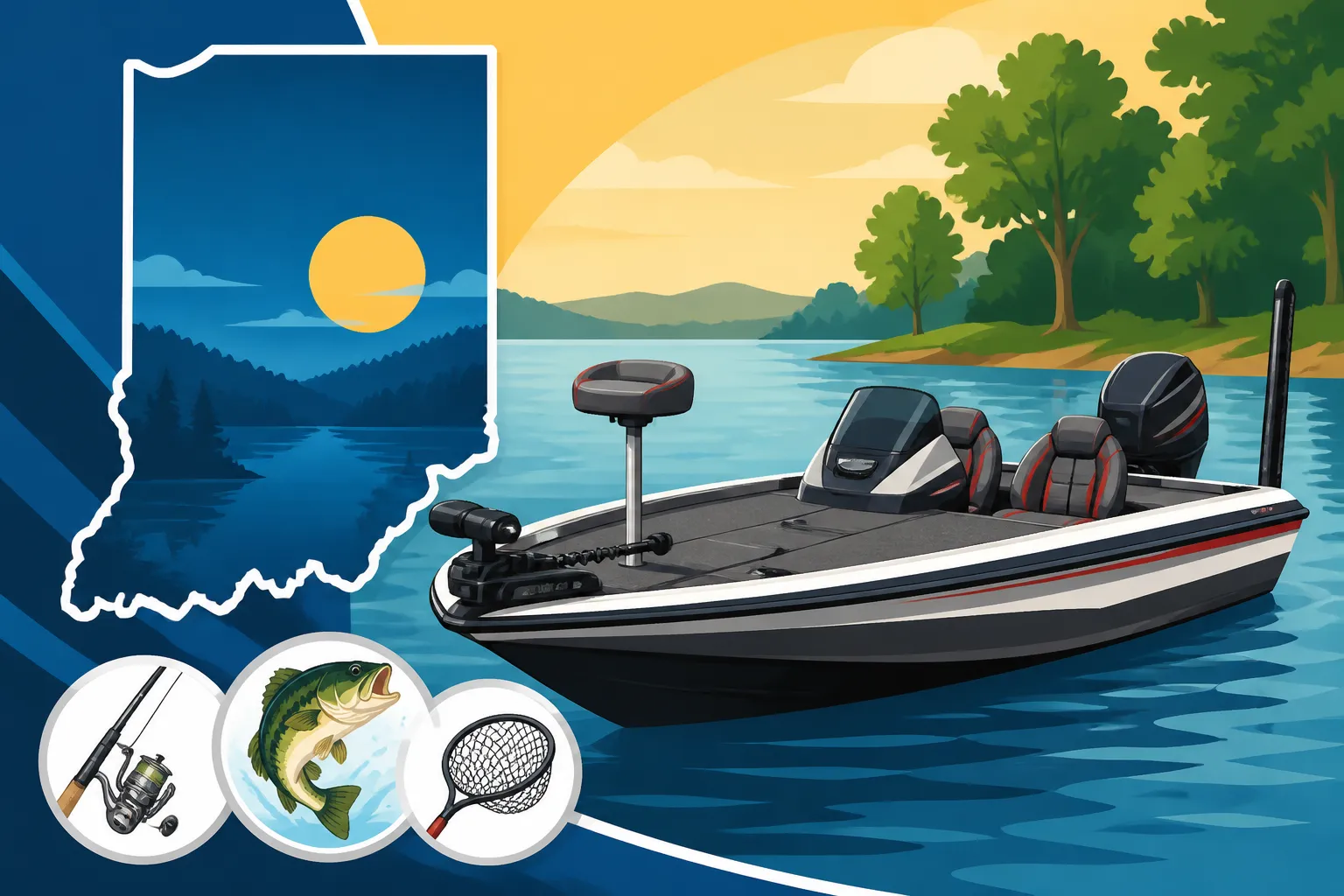
For those obsessed with chasing largemouth and smallmouth bass across Indiana's larger lakes and reservoirs, a dedicated bass boat is often the dream machine. These boats are built for speed, performance, and efficiency, allowing anglers to quickly move from one fishing spot to another, often covering vast distances in a tournament setting. They feature low profiles, powerful outboard engines, and large, comfortable casting decks that provide ample space for multiple anglers to fish simultaneously.
Key features of bass boats include expansive rod lockers to keep dozens of rods protected, multiple livewells with aeration systems to keep tournament catches healthy, and advanced electronics integrated directly into the console and bow. While incredibly effective for their intended purpose, bass boats typically come with a higher price tag and require more substantial trailering vehicles. They also aren't ideal for extremely choppy water or shallow, rocky rivers due to their deep-V or modified-V hulls and often lower freeboard. However, if you're serious about competing or just want to experience bass fishing at its peak, these boats are hard to beat on lakes like Monroe or Patoka. Find out more about Best Bass Boats for Indiana Tournaments.
Aluminum V-Hull and Mod-V Boats: All-Around Lake and River Choices
Stepping up from a basic jon boat, aluminum V-hull and modified-V (mod-V) boats offer a fantastic balance of versatility, durability, and performance for a wide range of Indiana fishing. These boats come in various sizes and configurations, making them suitable for everything from medium-sized rivers to large inland lakes. The V-hull design helps them cut through chop more effectively than a flat-bottomed jon boat, providing a smoother and drier ride when conditions aren't perfect.
Mod-V hulls combine elements of both flat-bottomed and deep-V designs, offering a shallower draft than a full V-hull while still providing improved stability and wave-handling over a jon boat. This makes them incredibly adaptable. You can comfortably fish for walleye in the glacial lakes up north, chase crappie in a reservoir, or even navigate some of the wider sections of Indiana's rivers. They are generally lighter than fiberglass boats of comparable size, making them easier to trailer and launch. Many come equipped with trolling motor mounts, fish finder space, and built-in livewells, making them true multi-purpose fishing machines.
Deep-V Fishing Boats: Conquering Bigger Lakes and Lake Michigan
When your fishing ambitions extend to the largest, choppiest waters Indiana has to offer—especially Lake Michigan—a deep-V fishing boat is likely what you need. These boats are characterized by their pronounced V-shaped hull that runs nearly the entire length of the boat, designed specifically to slice through waves and provide a stable, comfortable, and dry ride in rough conditions. They typically have higher sides (more freeboard) than bass boats or smaller aluminum V-hulls, which is crucial for keeping water out when the waves get big.
Deep-V boats are often built with heavy-gauge aluminum or fiberglass and can accommodate powerful outboard engines. They offer plenty of space for multiple anglers, large amounts of gear, and often feature robust rod holders, integrated fish finders, and ample storage. While they might not be as fast as bass boats or as shallow-drafting as jon boats, their ability to handle challenging conditions on bodies of water like Lake Michigan, Lake Wawasee, or even Brookville Lake on a windy day, makes them indispensable for dedicated big-water anglers. They are especially popular among those targeting salmon, steelhead, and lake trout.
Kayaks and Canoes: Lightweight, Stealthy, and Economical
For anglers who value stealth, simplicity, and direct connection with the water, fishing kayaks and canoes have become incredibly popular in Indiana. These unpowered or minimally powered vessels offer unparalleled access to skinny water, quiet coves, and areas where larger boats simply cannot go. They are also incredibly economical, with a much lower initial cost and minimal ongoing expenses compared to motorized boats.
Modern fishing kayaks, in particular, are designed with anglers in mind. They often feature stable platforms for standing, integrated rod holders, gear tracks for mounting accessories like fish finders or camera mounts, and comfortable seating. While storage is limited, clever rigging can make a kayak surprisingly efficient. Canoes offer more open space and higher weight capacity, often allowing for two anglers or more gear, but can be less stable. Both are fantastic for exploring smaller ponds, quiet streams, and the calmest sections of larger lakes, providing a highly immersive fishing experience. For rigging ideas, check out Kayak Fishing Gear for Indiana Waters. You can find a huge variety of kayaks and canoes, along with accessories, readily available through online retailers like Amazon, making it easy to compare options and read reviews from other paddlers.
Key Features to Consider When Buying Your Fishing Boat
Beyond the general boat type, there are numerous specific features that will make a significant difference in your on-water experience. Paying close attention to these details can help you tailor your choice to your exact fishing style and preferences.
Hull Material and Construction: Aluminum vs. Fiberglass
The material your boat's hull is made from is a fundamental decision that impacts everything from durability and weight to maintenance and cost. The two primary choices for fishing boats are aluminum and fiberglass.
Aluminum boats are celebrated for their toughness and lighter weight. They are generally more resistant to impacts from rocks and submerged logs, making them an excellent choice for rivers and rocky lakes where minor bumps are inevitable. Their lighter weight also translates to easier trailering, better fuel efficiency, and often requires a smaller tow vehicle. Aluminum boats typically have a lower initial cost and can be more forgiving in terms of maintenance. However, they can sometimes offer a rougher ride in choppy water compared to fiberglass, and the hull can be noisier when hitting waves. For a versatile, durable workhorse for various Indiana waters, aluminum is often a solid choice.
Fiberglass boats, on the other hand, are known for their smooth, quiet ride, especially in rough water. The material allows for more complex hull designs, which can be optimized for performance, speed, and comfort. Fiberglass boats tend to be heavier, giving them a more substantial feel on the water and making them less susceptible to being pushed around by wind or waves. They also offer a higher degree of customization in terms of colors and finishes, giving them a sleek, polished look. The downsides include a higher initial cost, more intensive maintenance (gel coat repairs, waxing), and a greater susceptibility to damage from impacts (though repairs are often very strong). For bass boats, deep-V offshore boats, and high-performance vessels, fiberglass is often the material of choice due to its ride quality and aesthetic appeal.
Engine and Propulsion: Outboards, Trolling Motors, and Power Needs
The engine is the heart of your boat, determining its speed, range, and ability to handle various conditions. For most motorized fishing boats in Indiana, you'll be looking at an outboard engine. These come in a wide range of horsepower ratings, from small kickers for jon boats to powerful V6 or V8 engines for bass boats and deep-V rigs.
When choosing an outboard, consider the boat's rated maximum horsepower; never exceed this for safety and performance reasons. Think about the distances you'll be covering and how quickly you need to get there. For instance, a long run across Monroe Lake to your favorite fishing spot might warrant more horsepower than puttering around a small pond. Fuel efficiency is also a key consideration, especially with today's fluctuating gas prices. Many modern outboards are incredibly efficient, but larger engines will always consume more fuel.
Beyond the main engine, a trolling motor is an indispensable tool for almost any serious angler. These electric motors, mounted on the bow or transom, allow for quiet, precise boat positioning, hands-free fishing, and slow presentations. Features like GPS-controlled spot-lock (to hold your position automatically), integrated transducers for fish finders, and remote control options have revolutionized how anglers approach fishing. Consider battery life and thrust when selecting a trolling motor; bigger boats in windier conditions will require more power. For some of the most advanced options, you might find specific models listed at Bass Pro Shops or even general electric trolling motors on Amazon. You can also explore options like Best Trolling Motors for Indiana Bass Boats.
Storage and Livewells: Keeping Your Gear Organized and Your Catch Alive
A fishing boat needs to be a highly functional workspace, and adequate storage is paramount for keeping your gear organized, protected, and easily accessible. Think about what you typically bring on a fishing trip: multiple rods, tackle boxes, safety gear, cooler, rain gear, snacks, and drinks.
Look for boats with dedicated rod lockers that can accommodate the length and number of rods you use. Integrated tackle storage compartments, often near the casting decks, keep your lures and tools within easy reach. Dry storage compartments are essential for protecting electronics, phones, and extra clothing from spray and rain. Some boats even feature built-in cooler spaces or insulated compartments for drinks and food.
If you plan to keep your catch, especially if you're participating in tournaments, livewells are a critical feature. Modern livewells are designed to keep fish alive and healthy, often featuring aerators, recirculators, and timers. Consider the size of the livewell (can it hold the species and number of fish you typically keep?), its location (easy access from the fishing deck), and the quality of its aeration system. Larger boats often have multiple livewells, sometimes even separated to keep different species apart. For species like bass and crappie, a good livewell is invaluable.
Electronics and Navigation: Fish Finders and GPS
In today's angling world, electronics are no longer a luxury; they're an essential part of any serious fishing setup. A good fish finder can dramatically improve your success by showing you underwater structure, depth contours, and, most importantly, where the fish are hiding.
Modern fish finders offer a dazzling array of technologies, including 2D sonar, DownScan, SideScan, and even forward-looking sonar. For Indiana lakes and reservoirs, a unit with GPS and mapping capabilities is incredibly useful for marking waypoints, following contour lines, and navigating safely. Screen size, resolution, and ease of use are all important factors. You can find excellent entry-level and advanced fish finders at retailers like Bass Pro Shops, or browse a wide selection of brands and models on Amazon. Learn more in our guide on Best Fish Finders for Indiana Lake Fishing.
Beyond fish finders, a reliable GPS unit or an integrated chartplotter is crucial for navigation, especially on larger, unfamiliar waters or when fog rolls in. Many fish finders now include robust GPS capabilities, often pre-loaded with detailed lake maps. For those venturing onto Lake Michigan, marine-grade VHF radios are also a critical safety item for communication.
Comfort and Safety Features: Seating, Stability, and Essential Gear
While the primary purpose of a fishing boat is, well, fishing, comfort and safety should never take a back seat. A comfortable boat means you can stay on the water longer and enjoy your time more, while safety features are non-negotiable for peace of mind.
Comfort features include ergonomic seating, plenty of floor space, and a layout that allows for easy movement around the boat. If you plan on long days, comfortable seats, possibly with adjustable pedestals, can make a huge difference. Good stability, especially when standing to cast, is also crucial. Different hull designs offer varying levels of stability, so consider this when making your choice.
Safety is paramount. All boats should carry appropriate safety gear, including correctly sized life jackets for everyone on board, throwable flotation devices, a fire extinguisher, signaling devices (whistle or horn), navigation lights (if operating after sunset), and a first-aid kit. Understanding Indiana's specific boating safety regulations is critical. Remember, you might need different types of life jackets depending on the activity or boat type, so always ensure you have the right ones. Our guide on Indiana Boater Safety Gear Checklist provides more details on what you need to have on board.
New vs. Used Boats: Weighing Your Options
The decision between buying a new or used fishing boat is one that almost every prospective owner faces. Both options have distinct advantages and disadvantages that can significantly impact your budget and overall ownership experience.
The Lure of New: Warranty, Customization, and Latest Tech
There's certainly a special appeal to buying a brand-new fishing boat. When you purchase new, you're getting a vessel fresh from the factory, often with the latest technology, design innovations, and pristine finishes. You'll typically have the opportunity to customize certain aspects of the boat, from engine choices and electronics packages to upholstery colors and graphics, allowing you to tailor it precisely to your preferences.
One of the biggest benefits of a new boat is the manufacturer's warranty. This provides peace of mind, covering major components like the engine, hull, and sometimes even accessories for a set period. If any issues arise, you'll generally have dealer support to help resolve them. Furthermore, financing options for new boats are often more favorable, with lower interest rates and longer repayment terms, making the monthly payments more manageable. While the upfront cost is higher, a new boat often comes with fewer immediate worries and the assurance of modern reliability. Retailers like Bass Pro Shops are excellent places to start if you're considering a new boat, offering a wide selection and knowledgeable staff.
The Value of Used: Cost Savings and Depreciation
For many anglers, the used boat market offers incredible value. Boats, like cars, depreciate significantly in their first few years, meaning you can often acquire a well-maintained, relatively modern vessel for a fraction of the cost of a new one. This allows you to get more boat for your money, perhaps stepping up to a larger size, a more powerful engine, or a higher-end brand than you could afford new.
The key to buying a used boat successfully lies in thorough inspection and patience. You'll want to carefully examine the hull for damage, check the engine's condition (ideally with a compression test or a mechanic's report), inspect the trailer, and ensure all electronics and systems are functioning correctly. While you won't get a factory warranty, some dealers offer limited used boat warranties, and reputable private sellers often provide detailed maintenance records. Purchasing a used boat can be a fantastic way to get on the water without breaking the bank, leaving more room in your budget for essential gear like life jackets, rods, and reels.
Where to Look: Dealerships, Private Sellers, and Online Marketplaces
When you're ready to start your boat hunt, you have several avenues to explore, each with its own set of advantages and considerations.
Boat dealerships are the go-to for new boats, offering a wide selection, financing options, trade-in programs, and after-sale service. They often have certified technicians and can handle all the paperwork, including registration and titling. Many dealerships also carry a selection of pre-owned boats, which have usually been inspected and serviced by their team. Buying from a reputable dealer offers convenience and a certain level of assurance.
Private sellers can be found through local classifieds, marina bulletin boards, or word-of-mouth. Buying directly from an owner can sometimes lead to better deals, as there's no dealership overhead. However, it requires more due diligence on your part, as you'll be responsible for arranging inspections, negotiating the price, and handling all the paperwork yourself. Always insist on seeing the boat in person, preferably with a water test, and get a professional opinion on the engine and hull condition.
Online marketplaces and boating-specific websites have exploded in popularity, offering a vast inventory of both new and used boats from sellers nationwide. Websites like Boat Trader, Facebook Marketplace, and local online classifieds can connect you with thousands of listings. While this offers incredible selection, it also means you might need to travel to view a boat, and you'll still need to exercise caution and perform all the necessary checks as if buying from a private seller. Even general online retailers like Amazon might offer smaller watercraft like inflatable boats or kayaks, but for serious fishing boats, specialized platforms are usually better.
Budgeting for Your Indiana Fishing Boat
The initial sticker price of a boat is just the beginning of your financial commitment. Smart budgeting for an Indiana fishing boat means looking beyond the purchase price and factoring in all the associated costs that come with boat ownership. Overlooking these can lead to unexpected financial strain down the road.
Beyond the Purchase Price: Understanding Hidden Costs
Many first-time boat buyers are surprised by the additional expenses that accumulate after the boat itself is paid for. It's crucial to budget for these from the outset.
- Registration and Titling: In Indiana, most motorized boats and even some non-motorized vessels need to be registered with the Bureau of Motor Vehicles (BMV). There are fees associated with initial registration and annual renewals. This is a recurring cost you absolutely cannot ignore. For detailed information, refer to Indiana Boat Registration Rules Explained.
- Insurance: While not always legally required for smaller boats, boat insurance is a wise investment. It protects your investment against theft, damage, and liability in case of an accident. Premiums vary based on the boat's value, type, and your boating history.
- Maintenance: Boats require regular maintenance, especially the engine. This includes oil changes, filter replacements, winterization, and spring commissioning. Hull cleaning, waxing, and periodic checks of electrical systems and trailers are also necessary. Budget for both routine maintenance and potential unexpected repairs.
- Fuel: If you're buying a motorized boat, fuel costs will be a significant ongoing expense. Larger, more powerful engines consume more fuel, and long days on the water can add up quickly.
- Storage: Where will you keep your boat when it's not in use? If you don't have space at home, you'll need to budget for storage fees at a marina or storage facility. This can be a substantial annual cost, especially for larger boats.
- Accessories and Safety Gear: Beyond the boat itself, you'll need essential safety gear (life jackets, fire extinguisher), dock lines, fenders, an anchor, and perhaps electronics like a fish finder. These items can add up quickly.
Financing Your Boat: Loans and Payment Plans
Unless you're paying cash, you'll likely need to finance your boat purchase. Boat loans are similar to car loans but can sometimes have different terms and interest rates. Most financial institutions and dealerships offer boat financing.
When exploring financing, compare interest rates, loan terms (how many years you'll be paying), and down payment requirements. A larger down payment can reduce your monthly payments and overall interest paid. Be sure to understand the total cost of the loan over its lifetime. Some buyers also consider refinancing options or lines of credit, but always ensure you're making a financially sound decision. Remember, a boat is an investment in leisure, so make sure the payments fit comfortably within your budget without causing undue stress.
Essential Accessories to Factor In
It's easy to get caught up in the excitement of the boat itself and forget about the numerous accessories that are vital for both safety and enjoyment. Many of these aren't included with the boat and need to be purchased separately, so make sure they're part of your overall budget.
- Life Jackets: This is non-negotiable. You need a U.S. Coast Guard-approved life jacket for every person on board, and they must be readily accessible. Ensure they are the correct size and type for your passengers and planned activities. Don't forget PFDs for any children on board. Our guide on Best Life Jackets for Indiana Boaters can help you choose.
- Anchor and Rode: A good anchor, appropriate for your boat size and the types of bottoms you'll encounter (sand, mud, rock), is essential for holding your position. Don't skimp on the anchor line (rode) either; you need sufficient length for safe anchoring.
- Fenders and Dock Lines: Protect your boat from damage when docking against piers or other vessels with fenders. Quality dock lines are crucial for securing your boat safely.
- Safety Kit: Beyond life jackets, a basic safety kit should include a first-aid kit, whistle or horn, paddle (even for motorized boats, as a backup), and a flashlight.
- Fishing Rods and Reels: You'll need appropriate rods and reels for the species you're targeting. Whether you're chasing bass, walleye, or panfish, having the right tackle makes a huge difference. Consider starting with versatile combos and expanding your collection over time. You can learn more about suitable gear in Best Fishing Rods and Reels for Freshwater Fishing.
- Tackle Boxes/Bags: Organization is key to efficient fishing. Invest in durable tackle storage that fits your boat's compartments and your fishing style.
- Cooler: A good cooler is invaluable for keeping drinks, snacks, and your catch fresh throughout the day.
- Trailer: If your boat doesn't come with one, you'll need a suitable trailer for transport. Factor in its cost, maintenance, and registration.
Here's a quick comparison of approximate costs for various boat types to help you visualize your budget:
| Boat Type | Typical Use in Indiana | New Price Range (Approx.) | Used Price Range (Approx.) | Key Considerations |
|---|---|---|---|---|
| Fishing Kayak/Canoe | Ponds, small rivers, calm lakes, stealthy access | Low | Very Low | Portability, accessibility, exercise, minimal storage |
| Jon Boat | Ponds, shallow rivers, small lakes | Low to Mid | Low | Durability, shallow draft, easy to launch/trailer |
| Aluminum V-Hull / Mod-V | Mid-size to large lakes, larger rivers | Mid | Low to Mid | Versatility, durability, good all-around performance |
| Bass Boat | Large lakes, reservoirs, tournaments | High | Mid to High | Speed, performance, specialized fishing features |
| Deep-V Fishing Boat | Large lakes, Lake Michigan, rough water | High | Mid to High | Rough water capability, safety, ample space, trolling |
| Pontoon Boat (Fishing) | Leisurely lake cruising, family fishing on calm lakes | Mid to High | Mid | Stability, comfort, space for multiple anglers, shallow |
Note: Price ranges are highly generalized and can vary wildly based on size, engine, features, age, and condition.
Indiana-Specific Considerations for Boat Ownership
Owning a boat in Indiana comes with specific rules and regulations that are important to understand. Being informed will ensure you're compliant with the law and ready for hassle-free days on the water.
Indiana Boat Registration and Licensing
If your boat has a motor (even an electric trolling motor) or is a sailboat over 16 feet in length, it needs to be registered with the Indiana Bureau of Motor Vehicles (BMV). This involves titling your boat and obtaining a registration decal that must be displayed on the hull. The registration period is typically three years, and renewal is required to stay legal. Even if you purchase a used boat, you'll need to transfer the title and register it in your name.
It's also crucial to carry your registration and title documents on board whenever you're operating the boat, as conservation officers can ask to see them. Failing to register your boat or not carrying the proper documentation can result in fines. For comprehensive details on the process, fees, and requirements, be sure to consult Indiana Boat Registration Rules Explained and remember to factor the How Much Does an Indiana Boat Registration Cost into your annual budget.
Boater Safety Courses and Education
While not all boat operators in Indiana are legally required to complete a boater education course, it's highly recommended for everyone, especially new boat owners. Specifically, anyone born after December 31, 1985, needs to complete a boating safety education course approved by the National Association of State Boating Law Administrators (NASBLA) to operate a motorboat or personal watercraft (PWC) with an engine of 10 horsepower or more.
Completing a course like the one offered by the Indiana Department of Natural Resources (DNR) or other approved providers not only fulfills legal requirements for some but also provides invaluable knowledge on safe boating practices, navigation rules, emergency procedures, and Indiana-specific regulations. It's an investment in your safety and the safety of everyone else on the water. For more information on who needs to take the course and where to find approved programs, check out Indiana Boater Education Course Requirements.
Launching and Trailering in Indiana
Getting your boat to the water and back is a significant part of the boating experience, and it comes with its own set of skills and considerations. Indiana has numerous public boat ramps across its lakes, reservoirs, and rivers, making access generally good.
- Public Boat Ramps: Familiarize yourself with the ramps at your chosen fishing spots. Some ramps are well-maintained concrete pads, while others might be less formal or require four-wheel drive. Be aware of ramp etiquette, especially during busy times; launch and retrieve efficiently to avoid holding up other boaters.
- Trailer Maintenance: Your boat trailer is just as important as your boat. Regularly inspect tires, wheel bearings, lights, and brakes (if equipped). Ensure the hitch is securely fastened and the safety chains are crossed. Proper trailer maintenance prevents breakdowns on the highway and makes launching and retrieving much smoother.
- Safe Towing: Understand your tow vehicle's capacity. Make sure it can safely handle the weight of your boat and trailer. Practice backing up with your trailer in an empty parking lot before heading to a busy boat ramp. Secure all loose items in your boat before towing, and double-check your tie-downs. Our guide on Boat Trailer and Ramp Tips for Indiana Lakes offers helpful advice for navigating these aspects of boat ownership.
Making the Final Decision: Test Drives and Inspections
You've done your research, considered your needs, and narrowed down your options. Now comes one of the most exciting, and crucial, steps: getting out on the water and thoroughly inspecting your potential new boat.
The Importance of a Water Test
Just like you wouldn't buy a car without a test drive, you shouldn't buy a boat without a water test. This is your opportunity to experience the boat firsthand and see how it performs in real-world conditions. A water test allows you to assess several critical factors:
- Engine Performance: Does the engine start easily? Does it accelerate smoothly? Does it reach its optimal RPM range? Listen for any unusual noises or vibrations. Check for steady water pressure from the tell-tale.
- Handling and Ride Quality: How does the boat handle turns? Does it track straight? Is the steering responsive? Pay attention to the ride comfort in different conditions, including any chop. Does it feel stable when you're moving around?
- Ergonomics and Comfort: Do the seats feel comfortable for extended periods? Is there enough space to move around and fish? Are controls easily accessible? Can you see clearly from the helm?
- Systems Check: Test all systems: lights, bilge pump, livewell pumps, fish finder (if installed), horn, and trim/tilt. Ensure everything functions as it should.
- Leaks: While subtle leaks might be hard to spot, check the bilge after a good run for any unusual accumulation of water.
The water test is not just about fun; it's about verifying that the boat meets your expectations and that there are no hidden issues that only become apparent when the boat is under power.
Professional Inspections for Peace of Mind
While your own inspection and water test are valuable, for a significant investment, especially a used boat, a professional marine survey is highly recommended. A qualified marine surveyor will conduct a comprehensive inspection of the boat's hull, deck, structural components, engine, electrical systems, and safety equipment.
They can identify potential issues that an untrained eye might miss, such as hidden damage, previous repairs, signs of stress, or impending mechanical failures. A pre-purchase survey can uncover problems that could cost you thousands down the line, giving you leverage in negotiations or helping you decide to walk away from a problematic vessel. Think of it as a thorough home inspection for your boat; it provides invaluable peace of mind.
Don't Rush It: Patience is Key to Finding the Right Boat
Buying a fishing boat is an exciting endeavor, but it's also a significant financial and personal investment. It's easy to get swept up in the emotion of the moment, but patience is truly your best friend in this process. Don't feel pressured to make a quick decision.
Take your time to research, compare options, ask questions, and conduct all necessary inspections and tests. The right boat for you is out there, and finding it might take a little longer than you initially anticipated. But by being diligent and thoughtful, you'll end up with a vessel that perfectly suits your Indiana fishing adventures, providing countless hours of enjoyment on the water for years to come. Remember, the goal is to make memories, and the right boat will be a faithful companion in that journey.
Disclaimer
This article is for general informational purposes only and does not constitute professional advice. Laws, prices and regulations vary by location and change over time. Consult a qualified professional for guidance on your specific situation.